Author: The Fix

  • Inside Oregon's Massive Marijuana 'Surplus'

    Inside Oregon's Massive Marijuana 'Surplus'

    Just how much of Oregon’s alleged six year marijuana ‘surplus’ is usable product? 

    In January, Oregon officials reported that the state had more than six years’ worth of legal marijuana to satisfy demand. However, according to Vice, much of that “oversupply” is unusable product.

    The same agency that released the six-year stat, the Oregon Liquor Control Commission (OLCC), which regulates the marijuana industry, also admitted that not all of the extra weed would be adequate enough to sell on the legal market.

    “Almost certainly some amount of the existing inventory in the recreational system will never be sold,” the OLCC stated in its January legislative report. “It may become too stale to be sold or is of insufficient quality to compete in the current market environment. In fact, anecdotally some of it may already be waste that has not yet been disposed of.”

    To address the apparent surplus, Oregon legislators enacted legislation this year to limit the number of suppliers when there is a surplus and allow producers to sell cannabis out of state.

    Out With The Old

    But Vice cited accounts of “hundreds of pounds of weed rotting in trash bags,” bringing to light the many reasons that producers may hesitate to dispose of excess product that’s going bad. According to the OLCC, a quarter of the “usable marijuana” flower in the legal production system is from before the 2018 harvest.

    “How much of the official inventory is usually old product or marginal trim is a big question,” writes Vice’s Jon Walker. “Rules on disposal of extra weed, optimism about low quality product eventually having some value, and the raw emotional attachment many longtime growers have to their crop have created incentives to rarely—if ever—throw out flower.”

    A procurement manager at Hydra Distribution, Tim Garrison, explained to Vice that there’s a reason disposing of marijuana is a last priority—it is a “pain in the butt to waste out.”

    Regulations require the disposal of marijuana to be done in a very “specific manner,” and has to be done on camera.

    The result is “hundreds of pounds” of marijuana waste, “just sitting in big black bags” but still accounted for in the legal marijuana supply.

    View the original article at thefix.com

  • The Amazing Johnathan's 25-Year Meth Addiction Chronicled In New Doc

    The Amazing Johnathan's 25-Year Meth Addiction Chronicled In New Doc

    The former Las Vegas headliner gives an open, honest look into his ongoing drug use in the Hulu documentary. 

    A new documentary was released on Hulu over the weekend that follows the Amazing Johnathan, a comedic magician who rose to become a year-round headliner in Las Vegas from 2001 to 2012.

    In 2014, he revealed that due to a chronic heart condition and long-term methamphetamine use, he had one year to live. However, he is still alive today and continues to attempt to do limited tours, which was to be the main subject of the documentary simply titled The Amazing Johnathan Documentary.

    Much of the documentary deals with the filmmaker, Ben Berman, struggling to make his movie about a man who built his career around deception and pranks as the Amazing Johnathan (real name John Szeles) invited other documentary makers to film him at the same time.

    At one turning point, Szeles invites Berman to smoke meth with him on camera.

    According to Szeles, he made the proposal because he felt Berman was focusing too much of the documentary on the drug use.

    “We both wanted a totally honest approach to show how I actually lived, and how I’m still doing drugs,” Szeles told The Los Angeles Times. “But he got a bit too obsessed on that. Every time I went to my bedroom to do drugs, he would try to follow me. I said, ‘I know what you’re gonna do. You’re trying to catch me. You want to do the drug angle so much? Do it with me.’ I thought that would be my way off the hook.”

    Using On Camera

    Though Szeles says that Berman did indeed take a hit from the meth pipe, the documentary does a freeze-frame and blocks out the pipe right before he does, then begins a voice-over from Berman’s lawyer advising him not to take an illegal drug on screen.

    Szeles himself has been open about his drug use, saying he doesn’t recommend anyone do it but that it has helped him remain creative.

    “I’m not one to be told how to live,” he says. “This is how I’ve been for 25 years. I want my life on record, and this is exactly what I do. And I think it’s funny that Disney [which owns Hulu] has a meth documentary.”

    However, he also called himself a “slave” to the drug and that it doesn’t even get him high anymore. He says he takes it “every hour or two.”

    Currently, Szeles is unable to perform because his body begins to lock up after 30 minutes. He uses a motorized scooter to get around and is still waiting for the moment that his heart gives out.

    “It’s been three years since I was supposed to be dead,” he says. “But when it happens, it’s gonna go quick. They say I’ll have an event and it’ll go fast, hopefully.”

    View the original article at thefix.com

  • Nearly Four Tons Of Pot Found In Jalapeño Peppers

    Nearly Four Tons Of Pot Found In Jalapeño Peppers

    Two days before the jalapeño bust, officers found 10,000 pounds of marijuana in a shipment of auto parts.

    A Mexican drug smuggler is in hot water after he was caught transporting nearly four tons of marijuana, worth $2.3 million, hidden in a shipment of jalapeño peppers. 

    The 37-year-old driver, who has not been named, entered the US through the Otay Mesa cargo facility, on the American-Mexican border just east of Tijuana, US Customs and Border Protection revealed in a press release. The truck was initially inspected, and then sent to a secondary screening, where a drug dog indicated that there was cannabis on board. 

    When agents began going through the peppers, they found leafy green substances that tested positive for marijuana. They ultimately pulled 314 packages that contained a total of 7,560 pounds of cannabis from within the containers of peppers.

    “I am proud of the officers for seizing this significant marijuana load,” Otay Mesa Port Director Rosa Hernandez said in a news release. “Not only did they prevent the drugs from reaching our community, they also prevented millions of dollars of potential profit from making it into the hands of  a transnational criminal organization.”

    Although the marijuana being smuggled in a jalapeño pepper shipment caught headlines, it wasn’t the biggest bust at the facility this week.

    Bigger Bust

    On August 13, two days before the pepper bust, officers detected 10,000 pounds of cannabis in a shipment of auto parts. Customs and Border Protection reports that marijuana is the most common illegal substance that comes over the U.S.-Mexican Border.

    From October 2018 through July 2019 the agency seized 225,000 pounds of marijuana, compared to just 81,000 pounds of cocaine, the second most commonly seized illegal substance. 

    Earlier this year, Customs and Border Protection reported that drug cartels were using trucks designed to look like those for the postal service or major brands in order to smuggle drug across the border with less scrutiny.

    Unsuspecting Drivers

    Traffickers have even used drivers who were totally unsuspecting. Last year, a Mexican man who works in the US called the San Diego Sheriff’s Office when he discovered five pounds of unidentified drugs stuck onto his car with a magnet.

    “It’s our feeling that someone targeted this car because he could cross the border every day with the [commuter’ pass and they were probably waiting to collect the narcotics later today,” Sgt. Tim Chantler of the Sheriff’s department said at the time.

    The driver was let off the hook because he called the police, but Chantler said that others need to be aware of the risk. 

    “I would be checking my vehicle every day before I cross the border, because if you get caught at the border you’re going to have a lot of explaining to do,” he said.

    View the original article at thefix.com

  • People Have Used, Abused Opioids For Thousands of Years

    People Have Used, Abused Opioids For Thousands of Years

    PBS explored the history of opium use and its acceptance throughout myriad societies. 

    Thousands of years before Purdue Pharma and other opioid manufacturers were flooding rural America with prescriptions for pain meds, orders for opium were being taken in ancient Mesopotamia, kickstarting humanity’s love affair with the dangerous drugs. 

    According to PBS, the ancient Mesopotamians referred to opium poppies as “joy plants.” Nearly 500 years B.C., the so-called father of medicine, Hippocrates, pointed to the benefits of opium. 

    “Ancient Greeks, Indians, Chinese, Egyptians, Romans, Arabs, people in Middle Ages, Europeans from renaissance to now, knew opium as an ever-approved next-door medicine-a panacea for all maladies,” Sankar Bandyopadhyay, a researcher at Penn State University, wrote in a study published in the journal Neurology

    Bandyopadhyay points out that ancient texts including the Bible and The Odyssey make reference to opium. 

    Accepted, Rejected, Reintroduced

    The view of opium in the West was confounded by religious zealots in the 1300s who saw it as an Eastern tradition, and therefore rejected it. However, it was reintroduced as a pain medication in the 1500s, and use became more widespread. In the 1600s, the Queen of England even instructed her ships to purchase opium from Asia. By the late 1700s, the British East India Company had a lucrative monopoly on the opioid trade. 

    When morphine was isolated in 1805, Western doctors thought that they had developed the first way to harness the pain-relief powers of opioids without putting people at risk for abuse. However, that turned out not to be true. 

    “By 1830s one-third of all lethal poisoning was due to opium—marking the first recognition of a social evil,” Bandyopadhyay writes. 

    When morphine was isolated from opium poppies and eventually heroin and synthetic opioids were developed, the toll of drug use became even worse. People began turning to opioids in an attempt to live pain-free lives. 

    “Recognition of subjective pain as the fifth vital sign, with pressure on providers to prescribe scheduled medicines, added additional strokes to this menace of prehistoric dimensions,” Bandyopadhyay writes. 

    The study points out that “virtually all plants and animals” have receptors for opioids, predisposing people to abuse. 

    “Genetic factors for opioid specific heritable vulnerability contributes to nearly 50% of abuse,” Bandyopadhyay writes. “Prevalence of mood disorders in today’s world add substantial susceptibility.” 

    Bandyopadhyay concludes: “This nemesis has anchors on history, culture, mythology, religion, biology, genetics and psychology. A thorough knowledge of the upstream is necessary for a successful downstream regulation.”

    View the original article at thefix.com

  • All Adults Should Be Asked About Illicit Drug Use, Task Force Finds

    All Adults Should Be Asked About Illicit Drug Use, Task Force Finds

    According to the task force, 10% of American adults have used illegal drugs in the past month.

    All adult patients in the U.S. should be asked about their illicit drug use, according to recommendations released this week by the U.S. Preventive Services Task Force. 

    “Illicit drug use can have a devastating impact on individuals and families,” task force co-vice chair Karina Davidson said in a statement with the release of the recommendation, which is available here. “Clinicians can help by screening their adult patients and connecting people who use illicit drugs to the care they need to get better.”

    According to the task force, 10% of American adults have used illegal drugs in the past month. If doctors ask about this and know about their patients’ drug use, they will be better able to deliver care and connect their patients with evidence-based treatments for drug use and abuse.

    Dr. Gary LeRoy, president-elect of the American Academy of Family Physicians, told The Los Angeles Times that he has been screening patients for drug use for 10 years in his Dayton, Ohio practice.

    “All of us should be keenly aware that on average, one in 10 of our patients are doing drugs—whether we ask them or not—and we’re not going to cause someone to use illicit drugs because we ask the question,” he said. “When you create an atmosphere of trust where you have safe conversations, they appreciate that you ask.”

    LeRoy said that asking all patients about their drug use—of so-called street drugs and misuse of prescription medications—can help doctors get to know their patients better.

    “They say, ‘Oh, I had no idea I already had these people in my practice,’” he said. “When I started asking these questions and providing the service, they came out of the woodwork.”

    The task force considered recommending screenings for everyone in 2008, but opted not to. That has changed at least in part because there are now more proven ways to treat drug addiction, said UCLA internal medicine specialist and task force co-chair Dr. Carol Mangione.

    Treatment & Prevention

    Mangione said, “We don’t want to screen for something unless we know there’s an effective treatment. If you don’t have a treatment that’s effective for people who screen positive, you haven’t really helped.”

    Today, people who talk to their doctor about illicit drug use can be connected with help that is proven to be efficient.

    The recommendation only concerns adults ages 18 and older, but the task force said that doctors should consider asking teens about illicit drug use too.

    “We want to help prevent illicit drug use in teens, so we’re calling for more research on the benefits of screening,” Mangione said in a statement. “Clinicians should continue to use their professional judgement to determine what’s best for their teen patients.”

    View the original article at thefix.com

  • UFC Champ Conor McGregor Under Investigation For Bar Brawl

    UFC Champ Conor McGregor Under Investigation For Bar Brawl

    The MMA fighter reportedly punched an elderly man at a bar in Dublin.

    Conor McGregor is a UFC World Champion. On his Twitter page, he claims that he’s “making history EVERYDAY!!”

    While he didn’t exactly make history this week, he once again made controversy when TMZ unearthed a video of him getting intp a bar brawl with an old man in Dublin.

    As Yahoo reports, McGregor was offering sample shots of whisky to an elderly man at the bar. However, the man made it clear, twice, that he wasn’t interested. McGregor proceeded to pour shots for the other patrons at the bar.

    Then the video skips forward a couple of minutes later. It’s unclear whether McGregor and the elderly man were arguing or not, but McGregor gives him a left hook to the face. Several people then jumped in and pushed McGregor away.

    The police have reportedly seen this video, and TMZ reports there was an investigation after the incident took place, but they did not bring charges against McGregor.

    Dana White Speaks

    UFC president Dana White weighed in on the incident, saying on The Jim Rome Show, “That happened in April, and I knew that happened. They just got the video, and, yeah, it’s pretty bad… Conor has a whiskey now and it was an argument over the whiskey and Conor reaches out and hits him with a left hook. I don’t know the context of it. I don’t know the entire story but he punches a guy, an older man, in the face.”

    White added, “When you deal with fighters, guys who fight for a living, there’s always something. If you look at some of the greatest [fighters], what Tyson went through at his peak. Every time you take a guy who is a professional fighter and you sprinkle a ton of money on top of it, get ready for a disaster.”

    In addition to this incident, McGregor has also recently gotten into trouble for an alleged sexual assault in Ireland, and for destroying a fan’s phone outside a nightclub in Miami, which resulted in charges of felony strong-armed robbery and misdemeanor criminal mischief.

    Another Lawsuit

    McGregor is also facing a lawsuit for reportedly attacking other fighters on a UFC team bus. Fellow UFC fighter Michael Chiesa was reportedly injured in the attack, and is suing McGregor for suffering “severe emotional distress, mental trauma and/or bodily harm,” according to his suit.

    View the original article at thefix.com

  • Kim Richards' Sister Begs "Real Housewives" Star To Enter Treatment

    Kim Richards' Sister Begs "Real Housewives" Star To Enter Treatment

    A source close to the family alleges that Kyle Richards is urging her sister Kim to go back to rehab after a number of public setbacks.

    While they were both child stars back in the Seventies, sisters Kyle and Kim Richards are best known today as reality TV stars on The Real Housewives of Beverly Hills. In the last decade, Kim has been through a number of incidents involving substance abuse and mental health issues, and now her sister Kyle is reportedly urging her to seek treatment again.

    Kim’s Family Is Concerned

    A source close to the sisters told Us Weekly, “Kyle became aware that Kim was struggling in recent weeks and got extremely concerned based on what she was hearing.” While Kyle “isn’t a doctor,” she feels her sister is not “doing well… which is why she is trying to get Kim into treatment.”

    Then another report surfaced that claimed Kim’s children want her to check into rehab as well, because as a source close to the family put it, they’d been “watching [Kim] in a downward spiral for weeks,” which included a trip to the ER at UCLA. “Kim abruptly left against medical advice. No one could find Kim for hours… [her] kids are concerned.”

    The sisters are reportedly on good terms, and as the source continued, “It’s going to be an ongoing conversation… the good news is that Kim is being extremely receptive to Kyle, recognizing she is coming from a place of love. Kyle isn’t giving up and is trying again to get Kim to agree. It’s more for mental health than sobriety issues.”

    Meltdowns, Community Service, and Accountability

    In the past decade, once becoming a reality TV fixture, Kim struggled with her sobriety and mental health in the public eye. After one rehab stint, Kim had a relapse in 2015, and was arrested for public intoxication after an incident at the Beverly Hills Hotel. She was then accused of stealing close to $600 worth of merchandise from a Target store.

    Kim was subsequently put on probation, and had to complete 450 hours of community service and attend mandatory AA meetings before her probation was lifted in September 2018.

    Despite the fact that Kim has had several meltdowns in the public eye, including an attempt at an intervention with Dr. Phil, Kyle told Jenny McCarthy, “If anything, being on [Real Housewives] made her accountable and [Kim] says that as well. She says that it saved her life because, you know, there’s nowhere to hide and everyone knows—now anywhere she goes, people know who she is. She can’t get away with anything! So it actually helped her!”

    View the original article at thefix.com

  • Curing Addiction with Ketamine, NAD+ and Aftercare

    Curing Addiction with Ketamine, NAD+ and Aftercare

    Because of the ketamine treatment, many people feel relief from symptoms of PTSD, depression and anxiety, all of which can be triggers for relapse.

    Justin Hoffman’s relief from post-traumatic stress disorder began with the hiccups. 

    Not the cute and happy kind, but chronic hiccups that had to be treated with morphine and Thorazine in the emergency room. When he mentioned this to a colleague in the treatment industry, that doctor suggested ketamine as a possible treatment. When Hoffman received a dose of ketamine not only did the hiccups stop, but he experienced something unexpected. 

    “I felt like the PTSD that I had been walking around with was gone,” said Hoffman. 

    The experience led to Hoffman partnering with board-certified anesthesiologist Henry Liang to found Klarity Life, a treatment program that will be opening in Las Vegas this fall. The program consists of two aspects. At The House at Klarity Life, Hoffman, the program director, utilizes holistic therapies to facilitate healing in a luxurious setting where clients have private rooms and meals prepared by a private chef. Dr. Liang, the medical director at The Clinic at Klarity Life, gives patients NAD+ and ketamine infusions, as well as supplements, which allows a virtually painless detox.

    Hoffman, nephew of the 1960’s counterculture icon Abbie Hoffman, was familiar with the benefits of nontraditional treatments. After spending 20 years hooked on opioids and trying over 30 rehab programs, he got sober with the help of plant-based medicine. That was six years ago, and since then he has worked to help other people achieve lasting sobriety by combining plant-based medicine with strict aftercare that includes nutrition, exercise and spiritual exploration. 

    “It made sense to open a safe, beautiful place, to teach other people the things that worked for me: like yoga, cryogenic therapy, nature, Qigong,” Hoffman said. “I started to watch the success rate for treating addiction rise from 30 percent with just plant-based medicine to 70 percent with aftercare.” 

    Hoffman had built a business and life around helping other people get sober using plant-based medicine, but when he tried ketamine for the first time he realized that it was an even more powerful tool for helping to treat addiction. 

    NAD+, a component of vitamin B3 (niacin), has long been used to treat withdrawal symptoms. Justin and Dr. Liang realized that the combination of NAD+ and ketamine, coupled with Hoffman’s rigorous aftercare program, would give people with substance use disorder the best chance of lasting sobriety. 

    “It clicked in my head that this is the best choice for addicts, even better than plant-based medicine,” he said.

    The program facilitates healing by pairing The Clinic’s NAD+ and ketamine infusions and supplements with The House’s holistic aftercare regimen of clean eating, therapy, exercise and spiritual restoration. The infusions offer virtually painless detox as well as alleviate depression and PTSD symptoms; the aftercare teaches people how to live a full life without relying on drugs or alcohol. 

    “With this place, I cover all the bases: nutrition, spirituality and recovery,” Hoffman said. “After 30 rehabs and their protocols, I realized how archaic they are. They’re giving meds to cover symptoms. It’s like putting a Band-Aid on a laceration of throat. We don’t want to put a Band-Aid on anything.”

    One of the most appealing parts of Klarity Life is that it offers clients nearly painless detox from almost any drug. Using infusions and supplement management in the first 24-72 hours, people who are dependent can detox without feeling severely ill. By day three to four of infusions, people are typically feeling great, Hoffman said. Infusions continue for eight to ten days, and for the rest of their stay clients focus on learning to live healthy, rewarding lives in recovery. 

    “We have you feeling good right away,” Hoffman said. “The rest of the time we’re working on healthy substitutes for what you’ve been doing in the past.”

    As part of this, Hoffman exposes clients to an array of treatment modalities, from 12 step programs to SMART recovery. By sampling an array of recovery resources, clients can connect with the resources that work best for them. 

    “We want to expose them to all different types of therapy,” Hoffman said. “I want to embrace anything that is saving someone’s life. I’ve lost too many people to say my way is the only way.”

    Because of the ketamine treatment, many people feel relief from symptoms of PTSD, depression and anxiety, all of which can be triggers for relapse. Healing this root cause of addiction, and then building the foundation for a life of healthy habits, is what sets Klarity Life apart, Hoffman said. 

    “We’ve been seeing miracles,” he said. 

    Klarity Life is a boutique rehab program opening this fall in Las Vegas, offering outpatient NAD+ and ketamine infusion therapy and a holistic approach to health and healing.

    View the original article at thefix.com
  • Inside Puddle of Mudd's Wes Scantlin's "Long Road to Recovery"

    Inside Puddle of Mudd's Wes Scantlin's "Long Road to Recovery"

    Scantlin credited a court judge and a supportive team with helping him to get on the right path.

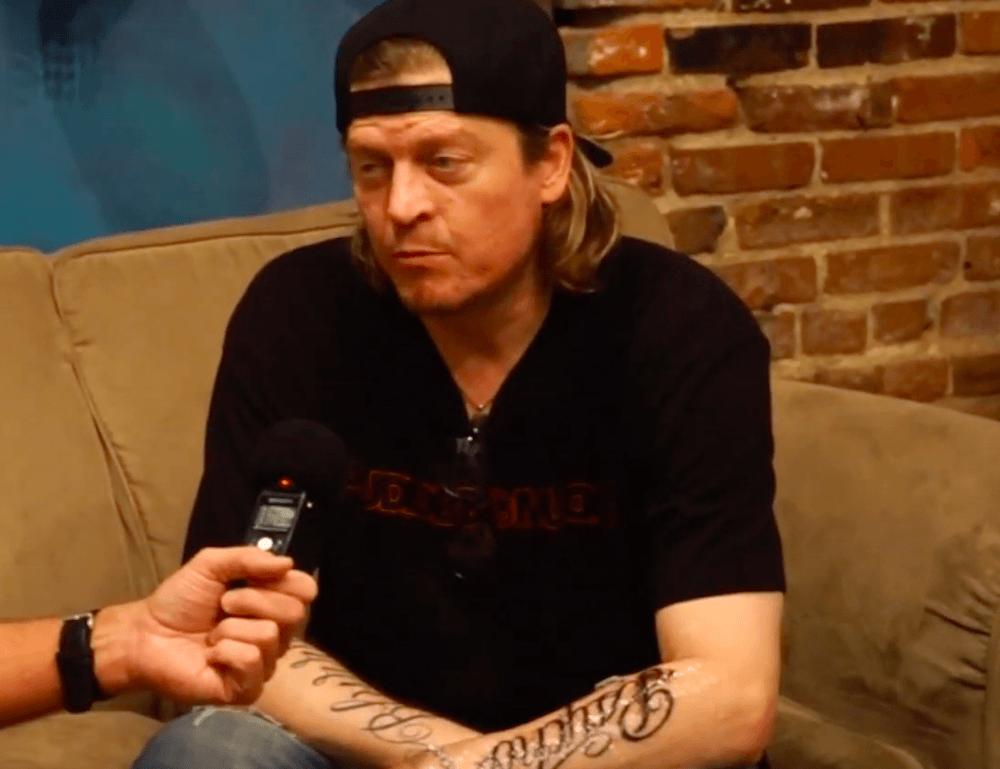
    Wes Scantlin, the lead singer for Puddle of Mudd, took to the airwaves to promote the band’s first new album in a decade, and talk about some of the motivation for his hard-fought sobriety.

    Blabbermouth reported on an interview with the Des Moines, Iowa radio station KAZR to promote the September 13 upcoming release of Welcome to Galvania, where Scantlin shared that his battle against dependency on alcohol and drugs has been a “long road, but it’s well worth it.”

    Scantlin’s dependency issues have made headlines in the media for more than a decade, including arrests in 2012 for cocaine possession and driving under the influence, drunk and disorderly conduct on a flight, leading sheriff’s deputies on a high-speed chase while under the influence of alcohol in 2015—one of several arrests during that year—and a 2017 arrest at Los Angeles International Airport for trying to board a plane with a BB gun.

    Scantlin’s dependency issues have also resulted in several disastrous live performances with Puddle of Mudd, including onstage meltdowns in 2015, an Ohio show where Scantlin’s inebriated state forced the band to delete its official Facebook page, and a 2016 Ohio show where he accused a fan of stealing his home before leaving the stage. 

    Eventually, the negative press and mounting legal problems forced Scantlin to seek treatment at a rehabilitation facility in 2018. He returned to the public spotlight with 11 months of sobriety under his belt that same year, telling Rock Titan magazine that the experience left him feeling great and the band had returned to touring.

    In the KAZR interview, Scantlin said that the revolving door of public intoxication and run-ins with the law had worn him down physically, mentally and spiritually. “It got really, really old,” he said. “I didn’t really want to even do it anymore.” 

    Scantlin credited a court judge (“a really, really awesome judge”) with helping him to get on the right path. “It’s comical, but Judge Corne saves Puddle of Mudd,” he joked. He also surrounded himself with the right support team. In an interview with Consequence of Sound (CoS) in July 2019, he said, “They believe in me and I believe in them.”

    As for the fans, whom he thanked in the CoS interview for “their patience,” he said that he hopes that Welcome to Galvania will be the sign that he and Puddle of Mudd are returning to form. “You could see for a while there where people were just like, ‘Okay, let’s see what you got,’ you know?” he said in the KAZR interview.

    “I hope the new music inspires my fans to live their lives,” he said in a statement. “I’m just trying to crawl under people’s skin and help them through their life musically.”

    View the original article at thefix.com

  • Is Wealth Inequality Causing The Rising Rates Of Mental Illness In The US?

    Is Wealth Inequality Causing The Rising Rates Of Mental Illness In The US?

    A review of 27 different studies on the topic found that countries with more wealth inequality had three times as many mental illness diagnoses than those with less.

    Increasing levels of wealth inequality in the U.S. could be driving rising rates of anxiety, depression, and other mental health problems, according to a report published by Truthout.

    The article cites data collected by the United Nations that backs up the existence of a phenomenon many psychologists refer to as “status anxiety”—chronic stress caused by the awareness of class divides in a society.

    “More unequal societies make us more aware of class and status—people become more concerned with issues of superiority and inferiority and worry more about how others judge them,” says social epidemiologist Richard Wilkinson. “Social life becomes more stressful and people start to withdraw from it. As inequality undermines confidence and feelings of self-worth, mental health inevitably deteriorates.”

    Societal Health

    Wilkinson and his partner Kate Pickett wrote extensively on this issue in their 2009 book The Spirit Level. In the text, they argue that nations with more intense wealth gaps suffer from more issues across all indicators of societal health. This includes mental and physical health as well as crime, drug use, infant mortality rates, community connection and trust, and childhood wellbeing.

    These issues affect everyone in a society—rich and poor.

    Pickett and Wilkinson published a follow-up book in 2018, The Inner Level, looking specifically at mental health under this phenomenon.

    “In less equal societies we see more [diagnoses of] depression… narcissistic personality disorder, schizophrenia—a wide range of worse mental health outcomes,” said Wilkinson. “Mental illness is [often] triggered or exacerbated by issues to do with dominance and subordination.”

    A review of 27 separate studies on the topic also found that countries with more wealth inequality had three times as many mental illness diagnoses than those with less wealth inequality.

    The differences are striking even when you compare individual U.S. states with different levels of wealth inequality. According to Wilkinson, states with high class divisions have low levels of trust for their neighbors, with as little as 15% saying they felt they could trust others. In more equal states, that rises to “60 or 65%.”

    The Racial Disparity

    This is true for other forms of inequality as well, according to Indiana University Professor of Sociology Brea Perry. And those different inequalities overlap and change in nature depending on how you were born.

    “So for example, although we know that there is a clear social gradient in mental health at each increasing level of education, Blacks get a lower return on their educational investment,” said Perry. “Put differently, social class is not nearly as protective of physical and mental health for Black Americans as it is for white Americans in terms of their physical and mental health. And that’s true across all kinds of outcomes. Marginalized groups tend not to see the health benefits of class advantage to the degree that white, cisgender, straight men do.”

    View the original article at thefix.com