Digital detoxing is difficult, and it can be hard to know where to start. Here’s some tried and tested low-effort but-high impact digital detox tips that actually work.
Allow only essential notifications
Let’s make things easier for ourselves.
We probably all know the feeling of being super concentrated on a task, or engaged in a conversation with a friend, when our phone buzzes. The second we check the notification, we interrupt our train of thought. The longer we loiter on our phone, the less likely we are be able to pick up where we left off and resume our stream of productivity.
To lower chances of this interruption in the first place, the first of our digital detox tips is about limiting the number of notifications you receive. Turn anything that you do not need to receive in real time, such as social media and news notifications. This means you have control over when you check your phone: not the other way round.
Leave your phone behind
Next time you go out and you deem it safe and sensible to, leave your phone behind. Whether going for a walk, to someone’s house, or even just running errands, use the outing as an opportunity to put some distance between you and your tech. If you can’t access it, you cannot succumb to the temptation to check your notifications or go on it.
If you don’t have a reason to leave your home, make one! Go for a walk over lunchtime or after work – your mind and body will thank you for it.
If the thought of leaving your phone at home makes you feel anxious: digitally detoxing is definitely the right move for you. Feeling nervous when separated from your phone is a sign of digital addiction, and could be having negative impacts on your productivity, relationships and sleep quality. Therefore, as difficult as it can be, breaking the habit of being accompanied by your phone everywhere you go is a really important step towards developing a healthier tech-life balance.
Make time for the activities you love
Find something to fill up the otherwise dead time you spend on your phone. If you have something you love and look forward to doing – for example baking, running, arts and crafts – you will not feel the need, or even want, to go on your phone. Investing time into doing the things you love will leave you feeling happy and fulfilled. Scrolling mindlessly on your phone will only delay (and possibly even exacerbate) your boredom and leave you feeling lethargic and dissatisfied.
Extend this to your morning and evening routine. Starting and ending the day on your phone is terrible for your self-esteem, productivity and sleep cycle. Find an activity that makes you feel good in the morning and sets you up for a productive day ahead – such as yoga or journaling – and one that relaxes you and helps you to wind down before bed, like reading, jigsaw puzzles or colouring.
Use your tech only when you need to
Often technology does enrich our lives, for example by allowing us to stay in contact with friends and family. Mobile phones in themselves are not harmful, but if we do not use them responsibly we can end up in a detrimental cycle of unhealthy technology use.
To make sure that you are using your phone mindfully, every time you pick it up, ask yourself why exactly you are using your phone. Your friend whom you are meeting for dinner is asking you what time you’d like to meet? Let them know! Agree on a plan, tell them you’re looking forward to catching up in person, and put your phone down. Instagram account @user49235 has liked your photo? You probably don’t need to go on your phone (and if you are receiving notifications like these, please refer to number 1 in our digital detox tips!)
Hold yourself accountable
The constant theme tying all these tips together is accountability. Question your actions: do I need to go on my phone right now? Do I even need my phone with me? Will going on my phone right now make me happy?
Asking yourself these questions will help you to align your digital habits with want you want from your daily life. A digital detox is a kindness to oneself: it separates your work life from your home life, gives you back time to do the activities you love, and promotes more activity and better quality sleep, leading to a healthier, happier day-to-day.
Group Chats. Whether for family, sport, work or pleasure, most of us belong to one or another. With the advent of the pandemic in 2020, these chats became an emotional and practical way to keep in touch with the outside world. However, this period also exposed the problem with group chats, which for many has overshadowed the usefulness that they once provided.
The Work Chat
With the advent of Whatsapp in the early 2010s, many workplaces started using group chats as a method of communication. Why send a lengthy internal email when you can just post to the chat?
In a world where working from home has become the norm, chats acted as a “virtual water cooler” chat for the 21st century. The contents of these chats are felt to be private, with no real world consequences for what was said. But, of course, there are. Not only have there been cases of firings for group chat comments, they also have unforeseen consequences. Bullying and employee burnout are chief among them. The “right to disconnect” movement was partly inspired by the 24/7 modern work week. Work chats also have a negative effect on employee performance, with one study estimating an average of eight minutes from replying to chat to returning to the task at hand.
And the problems with chats has now permeated our homes, in the form of the family group chat.
The Family Chat
When the pandemic hit, the family and friends group chat became more important than ever. With real life communication gone and some families separated by thousands of miles, it seemed the only option. However, the sheer number of members in single groups created the first of many problems: switching off. Constant notifications, and a fear of missing out or FOMO resulted in many users feeling annoyed or even isolated. We have three top tips on how to successfully detox from the family group chat.
1. Mute Notifications
Instead of being constantly annoyed by sounds and banner flashes, simply mute notifications. This will not only enable greater relaxation but also allow you to choose when you go back. This makes it more likely that you’ll be able to use it effectively.
2. Cut Back Daily
A useful analogy for activity on group chats is to think of it like a sauna: stay for a while, then leave. Whilst it might not be in your best interest to stop checking the chat right away, it definitely is in your interests to cut back your daily chat time. Choose specific times in the day to leave the chat alone and engage in activities off screen.
3. Leave the Chat
This is the most drastic but also the most simple of the tips. Taking a break from the constant chatter of family and friends online can be a better way to interact with them off it.
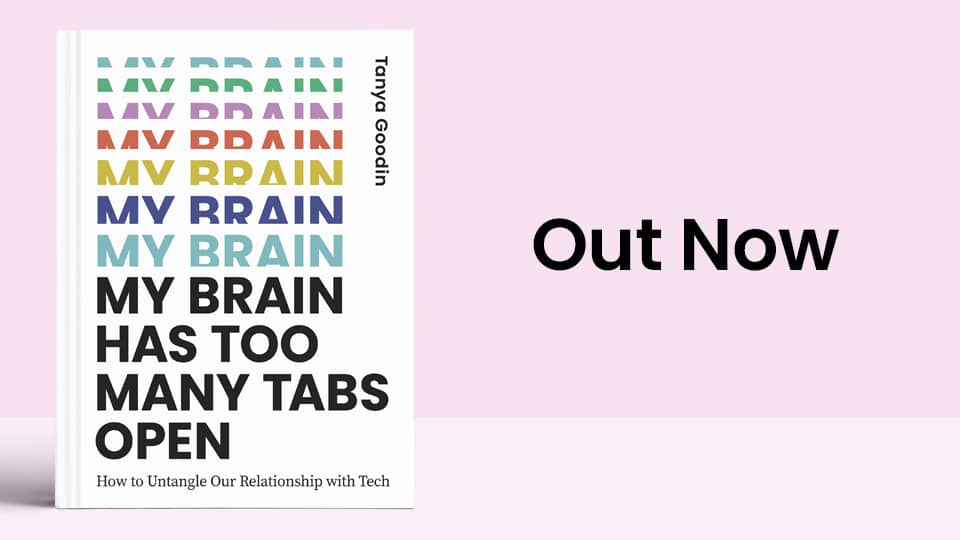
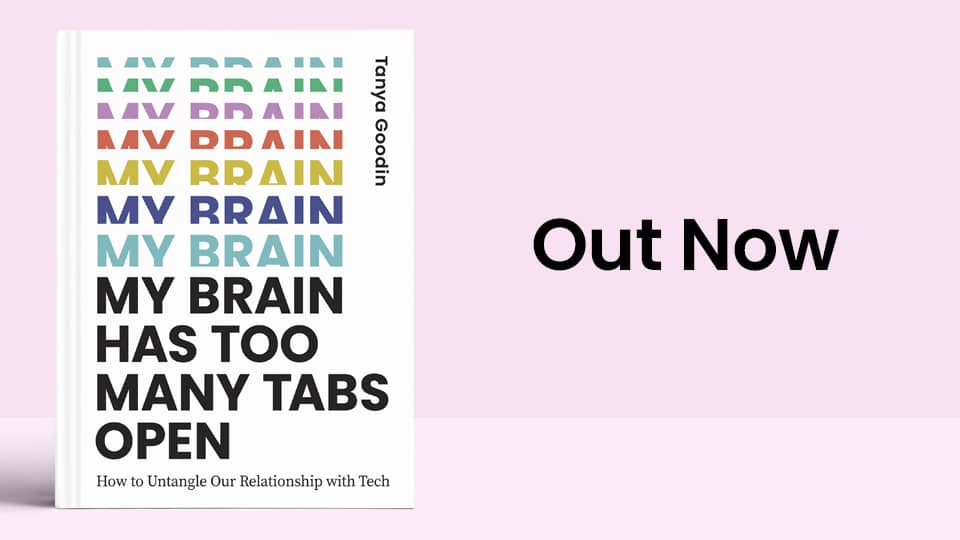
If you are still looking for tips or tricks, our new book, “My Brain Has too Many Tabs Open” written by our founder Tanya Goodin, is available to order from Amazon now.
For many people, especially in the world of finance and consultancy, there is no such thing as a nine to five. However, with the advent of worldwide lockdowns, employees have begun to challenge the old status quo. They ask a simple question: should we have a right to disconnect from work?.
‘Disconnecting’ right now
A common refrain around digital detox is that the twenty-four working day makes it impossible. Especially in the financial services industry, if someone else is awake or a market is opening, the argument is that employees should be too. We’ve written about the problems with tech-work-life balance before, but for many years a legal “Right to Disconnect” has been a pipe dream. But the movement has spread. An EU resolution for disconnection after work hours has passed and there are murmurs that the UK should follow its lead. The French have led in this. In 2017, the French government passed a law requiring a company of more than fifty employees to draw up a charter that must clearly set out how employers could communicate with staff after designated working hours. Ireland has also recently implemented a series of codes and best practices for employers on the subject to “navigate an increasingly digital landscape”.
What are the barriers to disconnection?
Aside from legislation, the biggest barrier to disconnection from work is that companies are more dependent on tech than ever before. Taking email as just one example, the average office worker receives one hundred and twenty-one emails in a day. That’s an average of five every hour of the day and night. Most workers in Britain haven’t worked a traditional ‘9-5’ since well before Covid, making it difficult to formulate any set regular hours into law. That is all before the most obvious question of all: will restricting out-of-hours communication make companies more productive.
Is disconnection productive?
The short answer is yes. Whilst we can’t truly know the implementation effects until laws have been passed, early results are encouraging. In a study done into the effects of disconnection on home and office workers, 80% of Swedish employers reported higher rates of productivity amongst workers, with similar results in France and Brazil. It also found that even amongst neutral organisations, rather than ones who openly support changes, the results were similar. Longer hours, it seems does not equal greater productivity.
The Future of Disconnection
Whilst several countries have passed measures to help employees disconnect, it will surprise few to know that it is far from becoming a reality across the board. The best you can do at the moment is to tailor disconnection to your own individual hours. If you are unsure as to where to start with disconnecting from work, or you want to explore digital detox further, here are some more articles from us on the subject”
Digital detoxing is difficult, and it can be hard to know where to start. Here’s some tried and tested low-effort but-high impact digital detox tips that actually work.
Allow only essential notifications
Let’s make things easier for ourselves.
We probably all know the feeling of being super concentrated on a task, or engaged in a conversation with a friend, when our phone buzzes. The second we check the notification, we interrupt our train of thought. The longer we loiter on our phone, the less likely we are be able to pick up where we left off and resume our stream of productivity.
To lower chances of this interruption in the first place, the first of our digital detox tips is about limiting the number of notifications you receive. Turn anything that you do not need to receive in real time, such as social media and news notifications. This means you have control over when you check your phone: not the other way round.
Leave your phone behind
Next time you go out and you deem it safe and sensible to, leave your phone behind. Whether going for a walk, to someone’s house, or even just running errands, use the outing as an opportunity to put some distance between you and your tech. If you can’t access it, you cannot succumb to the temptation to check your notifications or go on it.
If you don’t have a reason to leave your home, make one! Go for a walk over lunchtime or after work – your mind and body will thank you for it.
If the thought of leaving your phone at home makes you feel anxious: digitally detoxing is definitely the right move for you. Feeling nervous when separated from your phone is a sign of digital addiction, and could be having negative impacts on your productivity, relationships and sleep quality. Therefore, as difficult as it can be, breaking the habit of being accompanied by your phone everywhere you go is a really important step towards developing a healthier tech-life balance.
Make time for the activities you love
Find something to fill up the otherwise dead time you spend on your phone. If you have something you love and look forward to doing – for example baking, running, arts and crafts – you will not feel the need, or even want, to go on your phone. Investing time into doing the things you love will leave you feeling happy and fulfilled. Scrolling mindlessly on your phone will only delay (and possibly even exacerbate) your boredom and leave you feeling lethargic and dissatisfied.
Extend this to your morning and evening routine. Starting and ending the day on your phone is terrible for your self-esteem, productivity and sleep cycle. Find an activity that makes you feel good in the morning and sets you up for a productive day ahead – such as yoga or journaling – and one that relaxes you and helps you to wind down before bed, like reading, jigsaw puzzles or colouring.
Use your tech only when you need to
Often technology does enrich our lives, for example by allowing us to stay in contact with friends and family. Mobile phones in themselves are not harmful, but if we do not use them responsibly we can end up in a detrimental cycle of unhealthy technology use.
To make sure that you are using your phone mindfully, every time you pick it up, ask yourself why exactly you are using your phone. Your friend whom you are meeting for dinner is asking you what time you’d like to meet? Let them know! Agree on a plan, tell them you’re looking forward to catching up in person, and put your phone down. Instagram account @user49235 has liked your photo? You probably don’t need to go on your phone (and if you are receiving notifications like these, please refer to number 1 in our digital detox tips!)
Hold yourself accountable
The constant theme tying all these tips together is accountability. Question your actions: do I need to go on my phone right now? Do I even need my phone with me? Will going on my phone right now make me happy?
Asking yourself these questions will help you to align your digital habits with want you want from your daily life. A digital detox is a kindness to oneself: it separates your work life from your home life, gives you back time to do the activities you love, and promotes more activity and better quality sleep, leading to a healthier, happier day-to-day.
With 26th annual UN Climate Change Conference (COP26) on the horizon, being held in our back garden here in the UK, in Glasgow, many of us are reinvigorated in our desire to cut our carbon emissions. Perhaps you are researching electric cars, bikes, insulation, or a vegan diet? Well we have one more way to help you save the planet, at no cost, whilst maintaining your digital wellbeing at the same time- win win. You just need to turn off your devices once in a while.
There’s a carbon impact from digital activity
If you didn’t realise it already, using your devices has an impact on your carbon footprint. We have to charge them, run WiFi systems, hard drives and more, and all has an impact on the electricity bill and the power each of us uses daily. To put it into perceptive: each email you send costs around 4g of carbon, if it has a photo attached that could go up to 50g. Now think about how many emails, texts, WhatsApps, DMs, and memes you send a day: over the course of a year that adds up.
Sending 65 emails is roughly equivalent to driving 1km in a car
The world’s email usage generates as much CO2 as having an extra seven million cars on the roads.
The first and most obvious solution is to cut down on screen time. Our founder, Tanya Goodin, recently spoke about the workplace app Slack, describing its negative effects on our mental health and the impact it has on our ability to work effectively. Instead she recommended phone calls, limiting information to infrequent emails and even going to speak to a colleague in real life. As we return to the office this is becoming more and more feasible and face to face chats will stop you sending emails and cut down Slack (or similar) spam, give you a change to stretch your legs, and give both parties some time off screen. At home, instead of spending your time on your device why not pick up a new hobby? You could get back into reading or crafting or just get outside again after a long day at work. There are so many options, and each one of them will help save the planet if you cut down on time on your devices doing it.
Learn how to fix it
Unfortunately there is no world where we can just switch off our devices and eliminate our digital environmental impact completely to help save the planet. So we have two other tips to help mitigate the impact when you are online: the first is to use the iFixit community and all their tools. In our podcast It’s Complicated, we talked to iFixit about how hard it is to fix our devices and the need for constant upgrades and they provided solutions: from ways to dispose of your goods more safely to kits to fix your phone yourself and tips and tricks to keep it running longer, they will all help you stop adding to your tech junk drawer.
Carbon offset your digital activity to save the planet
Finally, look into carbon offsetting: you can find out how much your use of your device costs the planet and then pay offset the costs by planting trees or similar carbon reducing practices. Alternatively you could use a carbon-negative phone plan such as the one offered by Honest Mobile so that your phone use at least is not hurting the planet.
If you want to learn more about how to switch off, and the many other ways in which our bad digital habits are impacting our lives – and how to fix them – you can read more in Tanya Goodin’s new book: ‘My Brain Has Too Many Tabs Open’.
Group Chats. Whether for family, sport, work or pleasure, most of us belong to one or another. With the advent of the pandemic in 2020, these chats became an emotional and practical way to keep in touch with the outside world. However, this period also exposed the problem with group chats, which for many has overshadowed the usefulness that they once provided.
The Work Chat
With the advent of Whatsapp in the early 2010s, many workplaces started using group chats as a method of communication. Why send a lengthy internal email when you can just post to the chat?
In a world where working from home has become the norm, chats acted as a “virtual water cooler” chat for the 21st century. The contents of these chats are felt to be private, with no real world consequences for what was said. But, of course, there are. Not only have there been cases of firings for group chat comments, they also have unforeseen consequences. Bullying and employee burnout are chief among them. The “right to disconnect” movement was partly inspired by the 24/7 modern work week. Work chats also have a negative effect on employee performance, with one study estimating an average of eight minutes from replying to chat to returning to the task at hand.
And the problems with chats has now permeated our homes, in the form of the family group chat.
The Family Chat
When the pandemic hit, the family and friends group chat became more important than ever. With real life communication gone and some families separated by thousands of miles, it seemed the only option. However, the sheer number of members in single groups created the first of many problems: switching off. Constant notifications, and a fear of missing out or FOMO resulted in many users feeling annoyed or even isolated. We have three top tips on how to successfully detox from the family group chat.
1. Mute Notifications
Instead of being constantly annoyed by sounds and banner flashes, simply mute notifications. This will not only enable greater relaxation but also allow you to choose when you go back. This makes it more likely that you’ll be able to use it effectively.
2. Cut Back Daily
A useful analogy for activity on group chats is to think of it like a sauna: stay for a while, then leave. Whilst it might not be in your best interest to stop checking the chat right away, it definitely is in your interests to cut back your daily chat time. Choose specific times in the day to leave the chat alone and engage in activities off screen.
3. Leave the Chat
This is the most drastic but also the most simple of the tips. Taking a break from the constant chatter of family and friends online can be a better way to interact with them off it.
If you are still looking for tips or tricks, our new book, “My Brain Has too Many Tabs Open” written by our founder Tanya Goodin, is available to order from Amazon now.
There are many good reasons why you might want to look up from your phone from time to time but, with the 26th annual UN Climate Change Conference (COP26) taking place right now, one of the things you might want to consider is how your phone habits are disconnecting you from nature and the natural world around you.
Why should we connect with nature?
There are a few reasons why we should be worried that we connect with nature less than we used to, and they aren’t all about the planet:
Studies show people with a greater connection to nature are more likely to behave positively towards the environment, wildlife and habitat
Developing an enduring relationship between people and nature is critical for future nature conservation and the health of our planet.
And, there’s lots of evidence of a positive relationship between a person’s connection to nature and their physical and mental health and wellbeing.
How long are we spending with our heads in our phones?
The amount of time we’re absorbed in a screen has risen dramatically in the last five years alone.
The average person checks their phone 262 times a day, a major increase from the 80 times a day average in 2016
The Guardian, November 2021
At its most basic, we’re simply not noticing what’s going on around us in the natural world, or experiencing its benefits for our health, when we spend so much time with our heads in our phones immersing ourselves in the digital, rather than the physical, world.
What benefits do we experience when we connect with nature?
A growing body of research from all across the globe has found that contact with nature in environments such as parks, woodlands and beaches is associated with better health and well-being. This doesn’t mean you need to live in the countryside, living in ‘greener’ urban areas (where you have access to a park or grassy space, or even trees in your street), is also associated with lower cardiovascular disease, obesity, diabetes, mental health, and ultimately mortality.
One famous study even looked at the impact of just being able to see a green space, rather than walk in it. People recovering from operations in a hospital with a view of green space recovered sooner and required fewer painkillers than those who didn’t have a ‘green’ view.
In Japan, ‘shinrin yoku’ the habit of forest bathing (spending time among trees, observing the sights and sounds of nature), is particularly popular. Researchers have found that doing it can lower stress hormone production and blood pressure while boosting the body’s immune system.
What about the benefits to the natural world when we connect with it?
Studies have shown that engaging in simple nature activities is the largest significant contributor to ‘pro-nature’ conservation behaviour. In other words, when we spend more time outside in the natural world we are more likely to want to protect and preserve it because we notice and appreciate its benefits.
“An understanding of the natural world is a source of not only great curiosity, but great fulfilment.”
Sir David Attenborough
Put your phone down to connect with nature more
Ultimately it’s a win:win when you put down your phone and notice and experience the natural world around you. It benefits your physical and mental health, and it benefits the natural word because, as you experience and enjoy it more, you’re more motivated to want to protect it. It’s been a part of our manifesto ever since we launched Time To Log Off, that spending time in nature is the best antidote to mindless screen scrolling. With the UN Climate Change Conference happening right now, there’s no better time to gently remind you to get off your screen and connect with nature today.
“Part of ultrarunning is a desire to be different. And for the drug addict, too, there is a deep need to separate ourselves from the crowd.”
Where does hedonism end and endurance begin? That was the question that rose to the surface of the excitingly murky book I was writing, Everything Harder Than Everyone Else. A follow-up to my addiction memoir, Woman of Substances, this new book looked at some of the key drivers of addictive behavior—impulsivity, agitation, a death wish desire to drive the body into the ground—and the ways in which some people channeled them into extreme pursuits.
I interviewed a bare-knuckle boxer, a deathmatch wrestler, a flesh-hook suspension artist, a porn star-turned-MMA fighter, and more; all of them what I came to term “natural-born leg-jigglers.” Some copped to having been diagnosed with ADHD, and many had a history of trauma, but I wasn’t interested in pathologizing people. I wanted to celebrate the extreme measures they’d gone to, to quiet what ultra-runner Charlie Engle called “squirrels in the brain.”
Personally, I have a strong aversion to running. With combat sports—my preferred punishment—you smash through stray thoughts before they have time to take root. With running, there’s no escaping the infernal looping of your mind. Your circular breathing becomes a backing track for your horrible mantras, whether they are as blandly tedious as, you could stop, you could stop. you could stop, or something more castigating. No wonder runners’ bodies look like anxiety made flesh. No wonder their faces have the jittery eyes of whippets.
So when Charlie, whose running feats have been made him an outlier in the sport, told me, “I myself don’t like it as much as you might think,” I was pretty intrigued.
When we spoke for the book, Charlie was bustling around his kitchen in Raleigh, North Carolina, reheating his coffee. It’s a fair guess to say he’s the sort of guy who’d have to reheat his coffee a lot.
As the story goes, he was eleven years old when he swung himself into a boxcar on a moving freight train, to experience escapism. So began a life of running that no destination could ever satisfy.
Charlie, who’s now fifty-nine, said something about validation early in our conversation that I wound up repeating to everyone I interviewed after him, to watch them nod in recognition. We’d been talking about his crack years, before he pledged his life to endurance races—the six-day benders in which he’d wind up in strange motel rooms with well-appointed women from bad neighborhoods, and smoke until he came to with his wallet missing.
“Part of ultrarunning is a desire to be different,” he told me. “And for the drug addict, too, there is a deep need to separate ourselves from the crowd. Street people would tell me, ‘You could smoke more crack than anybody I’ve ever seen,’ and there was a weird, ‘Yeah, that’s right!’ There’s still a part of me that wants to be validated through doing things that other people can’t.”
Charlie has completed some of the world’s most inhospitable races. At 56, he ran 27 hours straight to celebrate his 27 years of sobriety. If his biggest fear is being “average, at best,” then he’s moving mountains to avoid it.
It helps that he’s goal-oriented in the extreme. In fact, you might call him a high achiever. Even in his drug-bingeing years, which culminated in his car being shot at by dealers, Charlie was the top salesman at the fitness club where he worked.
When he began using drugs—before he’d even hit his teens—they distracted him from his antsiness. He’s noticed a similar restlessness in endurance athletes that comes from a fear of missing out. If there’s a race he doesn’t take part in, he tortures himself that it was surely the best ever. He took control of this fear by starting to plan his own expeditions, which couldn’t be topped.
“I need the physical release of running and the burning off of extra fuel,” he said. “I am that guy with a ball for every space on the roulette wheel. When I start running, all the balls are bouncing and making that chaotic clattering noise. Three or four miles into the run, they all find their slot.”
Even before he quit drugs, Charlie ran. He ran to prove to himself he could. He ran to shake off the day. He ran as a punishment of sorts. He craved depletion. “Running was a convenient and reliable way to purge. I felt badly about my behavior, even if very often my behavior didn’t technically hurt anybody else.”
A common hypothesis is that former drug users who hurl themselves into sport are trading one addiction for another. Maybe so—both pursuits activate the same reward pathways, and when a person gives up one dopaminergic behavior, such as taking drugs, they are likely to seek stimulation elsewhere. In the clinical field, it’s known as cross-addiction.
Some people in my book with histories of addiction wound up doing combat sports or bodybuilding, but it’s long-distance running that seems to be the most prevalent lifestyle swap. High-wire memoirs about this switch include Charlie’s Running Man; Mishka Shubaly’s The Long Run; Rich Roll’s Finding Ultra; Catra Corbett’s Reborn on the Run; and Caleb Daniloff’s Running Ransom Road.
Perhaps it’s the singularity of the experience: the solitary pursuit of a goal, the intoxicating feeling of being an outlier, the meditative quality of the rhythmic movement, the adrenaline rush of triumph; and on the flipside, the self-flagellation that might last as long as a three-day bender. The long-term effects of running can shorten the lifespan, and there have been fatalities mid-race, but they’re tempered by the “runner’s high.” As well as endorphins and serotonin, there’s a boost in anandamide, an endocannabinoid named for the Sanskrit word ananda, meaning “bliss.”
Another commonality in endurance racing is hallucinating. This, combined with runners under stress being forced to drill down to the very essence of self, reminds me of the ego death that psychedelic pilgrims pursue, in order that the shell of our constructed identity might fall away.
For Charlie, part of the attraction is the pursuit of novelty and the chasing of firsts, even though he knows by now that the intensity of that initial high can never be replicated. That explains why he takes such pleasure in the planning of his expeditions. “The absolute best I ever felt in relation to drugs was actually the acquisition of the drug … the idea of what it can be,” he told me. “Once the binge starts, it’s all downhill from there. In a way, running is the same because there’s this weird idea that you’re going to enter a hundred-miler and this time it’s not gonna hurt so much…”
To run an ultra takes a real dedication to suffering. Races have names such as Triple Brutal Extreme Triathlon and Hurt 100. In his book The Rise of the Ultra Runners, Adharanand Finn writes about the hellscapes in race marketing materials that appear irresistible to this breed. “The runners look more like survivors of some near-apocalyptic disaster than sportsmen and women,” he wrote. “It is telling that these are the images they choose to advertise the race. People want to experience this despair, they want to get this close to their own self-destruction.”
I think about a transcontinental US odyssey that Charlie planned, in which he would run 18 hours a day for six weeks. At one point, as he was icing his ankle and beating himself up for losing sensation in his toes, one of the film crew asked him, “Do you consider yourself a compassionate person?”
Charlie looked up. “Yeah. I try to be.”
“Do you feel any compassion at all for yourself?”
Perhaps the psychology of ultrarunners is uncomplicated: they simply prioritize the goal above the body. The meat cage is a mule to be driven, and is viewed dispassionately, whether that be for practical purposes, or from lack of self-regard, or a bit of both.
“Balance is overrated,” Charlie assured—and that’s something he says when giving keynotes to alpha types. “Very few people who’ve actually accomplished anything big, like writing a book or running a marathon or whatever it is, have balance in their lives. If you’re not obsessed with it, then why are you doing it? I don’t even understand how someone can do it just a little bit, whatever it is.”
When he first quit drugs, Charlie felt like taking a knife and surgically removing the addict, so strong was his rejection of that part of his identity. It took three years to figure out that the “addict self” had plenty to offer: tenacity, ingenuity, problem-solving, and stamina. Perfect for the all-or-nothing world of endurance.
Excerpted from Everything Harder Than Everyone Else: Why Some of Us Push Ourselves to Extremes by Jenny Valentish. Available from Amazon, Barnes & Noble, and Bookshop.org.
Financier Abraham Leon Bettinger introduced the term in a 1972 articles as “an acronym for financial technology, combining bank expertise with modern management science techniques and the computer”. When he wrote this, Bettinger was describing the emerging primitive digitalisation of finance, for example the invention of the ATM or the handheld calculator.
Nowadays – for example with the emergence of cryptocurrencies and (exclusively digital) branchless banks – FinTech would be unrecognisable to Bettinger. However, the purpose of FinTech remains unchanged: to automate, enhance and improve financial services.
But can FinTech enhance our lives, or is it simply bad news for our relationships with our phones?
Online Banking
Most of us (80%) will already have installed at least one FinTech application on our phone: a digital banking app. Digital banking has steadily grown in popularity for 15 years, but the pandemic has encouraged the public to resort completely to contactless payment and personal finance management; 46% of people now exclusively use digital banking.
Contactless payments continue to grow in popularity
Online banking is incredibly useful: we can monitor our money with more ease than ever. Our ability to rapidly access our accounts helps us to spot fraud and theft quicker, and to protect ourselves by instantly cancelling our card. Furthermore, it removes the painful process of standing in line for the bank to transfer money and access other financial services.
However, perhaps FinTech is not giving us back as much time as we would hope. Visiting your local bank branch used to be such an inconvenience. Therefore, when a person had to, they would ensure that they were efficient, and sorted multiple issues at once, so that they could minimise their number of visits. Now that ease of access to our bank accounts has increased so dramatically, people are far less mindful of this.
Despite FinTech being designed to save time and effort, banking is still eating up our time. However, if we sort and prioritise our tasks, as we used to have to, we can find that online banking does give us back precious time.
Online banking apps can spare us the time and effort of a trip into our local branch
FinTech is certainly capable of enhancing our experience with financial matters and services. If we are responsible, having FinTech on our mobile phones can give us back valuable time by speeding up personal finance tasks and enabling easier access to financial advice. However, our increased ease of access to financial news and matters could also compromise our digital-life balance: upping our screen time and exacerbating any cases of Nomophobia.
Whether FinTech gives or takes away from our daily lives is up to us. As always, the key here is to retain balance. FinTech was designed to save us effort and time, and if we sort and prioritise our tasks as we used to have to and remain mindful of our hours spent online, we could find that having these apps on our phone really can give us back precious time.
For more about how to get a balanced relationship with the digital world pick up a copy of ‘My Brain Has Too Many Tabs Open‘, out now.
As the 26th annual UN Climate Change Conference (COP26) draws to a close we’ve been thinking about how every area of our lives has a carbon footprint – and how that applies to our digital habits too. So we’ve been on a mission to find out if we can quantify the carbon cost of our digital habits. Here’s what we found out:
Streaming an hour of video a week on a tablet or smartphone uses the same amount of electricity as two new domestic fridges.
One iPhone creates 79kg of CO2 in its lifetime (80% before it’s left the factory) equal to burning 9 gallons of petrol.
‘We don’t think about it because we can’t see the smoke coming out of our computers, but the carbon footprint of IT is huge and growing’
Professor Mike Berners-Lee
It became clear to us as we were researching this piece that all the bags for life and recycling in the world isn’t going to help the planet if we carry on upgrading our phones and sending emails the way we all are at the moment. It may be unpalatable, but our digital habits have a huge carbon impact. Streaming video and music accounts for the biggest big chunk of the world’s internet traffic and it’s a usage that’s exploding.
The five billion plays clocked up by just one music video – the hit 2017 song Despacito – consumed as much electricity as Chad, Guinea-Bissau, Somalia, Sierra Leone and the Central African Republic combined in a single year. Total emissions for streaming just that song are over 250,000 tonnes of CO2.
Rabih Bashroush, EU Eureca project
So, here are some relatively simple fixes if you want to reduce the carbon cost of your own digital habits.
Cutting the carbon cost of your digital habits
Watch your streaming – turn off autoplay next, avoid video when you could use audio.
Switch to TV – terrestrial broadcast TV is a lot more energy efficient than current streaming technologies for popular programmes.
Cut down on emails – limit ‘reply all’, stop sending ‘thanks’ or ‘appreciated’ one or two-word emails, talk in person.
Shut down laptops and desktops when you’re away for more than two hours.
Choose green suppliers – store your data on a green cloud provider which only runs on renewable sources and choose a green search engine like Ecosia which plants a tree for every 45 searches it performs.
Don’t upgrade – don’t opt for automatic upgrades of your phone, choose a reconditioned model when you do, and learn how to fix your device to extend its lifetime.