‘Sharenting’- the phenomenon of over-sharing images and information about your children is a part of everyday life for most children and teenagers today with 81% of children having some form of online presence (through their parents) by the age of 2. In fact, by the age of five, most parents have shared upwards of 1500 images of their children online. With many parents and guardians viewing Facebook folders as the natural progression from family photo-albums this is causing tensions between families across the world.
What is sharenting?
Sharenting is the act of posting about children and minors under your care (either in a personal or professional capacity) without their knowledge/ consent. This can take the obvious form of posting potentially embarrassing images of your children naked in the bath (which 19% of American parents admit to having done) as well as a more nuanced version including using children’s email addresses to sign up to things, tracking your fertility and more. Many seemingly insignificant decisions can have a great impact on your child’s digital footprint so beware.
Why is it a problem?
The first and most obvious problem with sharenting is that by posting images and information about your children online without their consent (either if they are too young or it is done without their knowledge) robs them of the autonomy and agency to decide if they wish to have a digital presence. As adults we are capable of making the decision to bargain for services offered online in exchange surrendering data about ourselves but our children cannot. Plunkett argues that as we learn more about the our cost this can have on our privacy and data, we should be supporting children to maintain analogue lives and avoid the ‘digital dossier’ which may stretch back in their cases to pre-birth?
Not only that but it denies them any control over the perception of themselves presented to the world which may go on to impact career aspirations, friendships and more.
Aside from the consent issues raised by a refusal of many parents to respect the autonomy and wishes of their children there are real security threats to children arising from their parents overuse of social media. For example, studies estimate that by 2030 over 60% of identity fraud will have originated from sharenting.
How to stop
First off we would recommend you delete any images of your children from your social media. Carry out a purge and commit to not posting in the future. If this seems too extreme a reaction you can always find ways to work around these restrictions without compromising the privacy of your children.
Many content creators online do not feel comfortable posting about their children due to their increased exposure to the online world and advanced understanding of the impact this can have. Melanie Murphy for example only posts images of her child with his face turned away from the camera and has not publicly announced his name which could be an option to take.
The most important part of your decision making should be educating yourself and your children about the impact sharenting can have and then giving them the choice (once they are old enough) for things to be posted. For example, you could give them veto power over any posts concerning them, or agree to increase your privacy settings, whatever makes you both feel more comfortable.
The last time David Magee saw his son alive, William told him to write their family’s story in the hopes of helping others. Days later, David found William dead from an accidental drug overdose.
The officer standing in the doorway raised his arm when I stepped forward, blocking my entrance to my son’s apartment. I tried to peer over his blue-uniformed shoulder to gaze around the corner to where the body of my son sat on the couch. My precious William—I saw him take his first breaths at birth, and I’d cried as I looked down at him and pledged to keep him safe forever. Now, within a day of his final breath, I wanted to see him again.
“Please,” I said to the officer.
“Listen,” he said, and I dragged my eyes from straining to see William to the officer’s face. His brown eyes were stern but not unkind. “You don’t want to see this.”
“I do,” I said. “It’s my son.”
He glanced over his shoulder, then back at me. “Death isn’t pretty,” he said. “He’s bloated. His bowels turned loose. That’s what happens when people die and are left alone for a day or more.”
I didn’t say anything. I couldn’t.
“And there’s something else,” he said.
“What?”
“He’s still got a $20 bill rolled up in his hand used for whatever he was snorting.”
I felt the pavement beneath my feet seem to tilt. I reached to steady myself on the splintered doorjamb one of the officers had forced open with a crowbar just minutes before.
At his hip, the officer’s radio squawked. I knew the ambulance would be here soon. “Your son—we found him with his iPad in his lap. It looks like he was checking his email to see what time he was due at work in the morning.”
Yes, William was proud of holding down that job at the Apple Store. He was trying to turn things around.
“It’s typical, really,” the officer continued. “That’s how addicts are. Snorting a fix while hoping to do right and get to work the next day. It’s always about the moment.”
This past year, William had been the chief trainer at the Apple Store, and he’d been talking again about heading to law school, the old dream seeming possible once more now that he was sober. He seemed to have put the troubles of the previous year, with his fits and starts in treatment, behind him. They’d kicked William out of one center in Colorado because he drank a bottle of cough syrup. Another center tossed him out because he and a fellow rehabber successfully schemed over two weeks to purchase one fentanyl pill each from someone in the community with a dental appointment. They swallowed their pills in secret, but glassy eyes ratted them out to other patients, who alerted counselors. When asked, William confessed, hoping the admission might move the counselors to give him a second chance. But they sent him packing back to Nashville, where his rehab treatment had begun. One counselor advised us to let William go homeless. “We’ll drop him off at the Salvation Army with his clothing and $10,” he said. “Often, that’s what it takes.”
We knew that kind of tough-love, hit-rock-bottom stance might be right, but our parental training couldn’t stomach abandoning our son to sleep at the Salvation Army. Instead, my wife and I drove five hours from our home in Mississippi to Nashville to pick him up. He was fidgety but he hugged us firmly, looking into our eyes. We took him to dinner at Ruth’s Chris Steak House, and, Lord, it felt good to see his broad smile, our twenty-two-year-old son adoring us with warm, brown eyes. We told stories and laughed and smiled and swore the bites of rib eye drenched in hot butter were the best we’d ever had.
The next morning, after deep sleep at a Hampton Inn under a thick white comforter with the air conditioner turned down so low William chuckled that he could see his breath, we found a substance treatment program willing to give him another chance.
“This dance from one treatment center to another isn’t unusual,” a counselor explained at intake. “Parents drop their child off for a thirty-day treatment and assume it’s going to be thirty days. But that’s just the tip of the iceberg.” My wife and I exchanged a look; that’s exactly what we’d thought the first time we got William treatment. Thirty days and we’d have our boy home, safe and healthy.
The counselor continued, “If opiates and benzos are involved, it often takes eight or nine thirty-day stays before they find the rhythm of sobriety and self-assuredness. The hard part for them is staying alive that long.”
When we left William in Nashville for that first thirty-day treatment, weeks before Thanksgiving, we imagined we’d have him home for Christmas. In early December, we bought presents that we expected to share, sitting around the tree with our family of five blissfully together. But William needed more treatment. Thanksgiving turned into Christmas, and Christmas turned into the new year, and the new year turned into spring. We missed William so much, but finally, the treatment was beginning to stick. We saw progress in William’s eyes during rare visits, the hollowness carved by substances slowly refilling with remnants of his soul.
Now, when parents ask me how they can tell if their kid is on drugs, I say, “Look into their eyes.” Eyes reveal the truth, and eyes cannot hide lies and pain. In William’s eyes, we saw hopeful glimmers that matched improved posture and demeanor. Progress, however, can become the addict’s worst enemy since renewed strength signals opportunity. Addicts go to rehab because substances knocked them down, yet once they are out of treatment and are feeling more confident, they forget just how quickly they can be knocked down again.
Yet we, too, were feeling confident about William’s prospects. He’d always been scrappy, a hard worker. In college, he ran the four-hundred-meter hurdles in the Southeastern Conference Outdoor Track and Field Championships, despite the fact that he had short legs for a college hurdler. He overcame that by being determined, confident, and quick. And all the time he was competing at the Division 1 level, he was an A student in the Honors College. He’d set his mind on law school and people had told us that with his resumé he could get into most any law school in America.
During that year after his graduation, in 2012, when William was in and out of treatment, I decided to quit my job as a newspaper editor to spend more time with him. I wanted to keep an eye on his progress and be there if he started to slide, so I visited him in Nashville every other week. He worried I was throwing my career away, but I would throw away anything to help him. Also, I had a plan. Instead of the daily grind of editing a newspaper, I thought quitting might provide the opportunity to return to a book project I’d abandoned. The Greatest Fight Ever was my take on the John L. Sullivan versus Jake Kilrain bare-knuckle boxing match of the late 1800s. The Sullivan-Kilrain fight was an epic heavyweight championship held in South Mississippi, lasting seventy-five rounds in sultry July heat, part showmanship theater and part brute brawl. I had researched the story for years and was once excited about explaining its role in the playing—and hyping—of sports today. I enjoyed sharing anecdotes over the years, like how the mayor of New Orleans served as a referee. Or that the notorious Midwestern gunslinger Bat Masterson took bets ringside on the fight, which set the standard for sports’ bigger-than-life culture that continues today.
I had written other books by then, including some that found commercial success, but looking back at them from a distance, I judged none to be as excellent and useful as they could have been. I wanted the Sullivan-Kilrain fight story to change that. But William noticed as we visited that my enthusiasm for the story had evaporated. I wasn’t spending time crafting the manuscript.
“You need to finish your book,” William said that April when I visited him in Nashville. We were eating breakfast at a café known for pancakes, but I was devouring bacon and eggs as William wrestled with a waffle doused with jelly.
“I’m trying,” I said between sips of coffee. “It’s easy to tell a story, but it’s more difficult to tell a good story. That’s what I’m working at.”
“You are a good writer. You can do it if you get focused.”
“It’s hard to immerse yourself in a championship boxing match from the 1800s when you and your family are in the fight of a lifetime,” I said.
William looked at me over his jelly-slathered waffle. He knew I wasn’t just referring to his struggles. I was referring to my own as well. Two years earlier, I’d almost destroyed our family completely through a string of spectacularly bad decisions, and we, individually and collectively, were fragile.
“William,” I said. “I’m worried about you. I’m worried about me. I’m worried about all of us.”
We hadn’t talked so much about my own self-immolation. But now William turned to me. “I’m sorry if the mistakes I’ve made were what made it worse for you. I mean—” he looked off and took a breath. “For so long, I thought drugs were for fun, and I didn’t realize how deep I was in. And then it was too late. I needed them. I’m sorry for making it harder on you and Mom.”
“No, William, don’t put that on yourself. I caused my own problems. And I want to apologize to you too. I’m sorry for when you struggled in college and I was so caught up in my own life or career that I wasn’t there when you needed me. I failed you.”
We went on that way for a while, saying the things that had burdened us, the things we’d needed to say for a long time. That weekend was our best, most direct connection in years. I was glad to sit beside my son over coffee and a breakfast we could live without for conversation we’d been dying for, glad I’d quit a decent editing job, glad even to stop pretending I was writing a book that no longer held my interest.
“Maybe there’s another book you should be writing, Dad,” he said.
“About sports?”
“About us.”
I looked at his plate, the waffle barely eaten. I looked at his eyes, shining with encouragement.
“Do you ever think maybe other people could learn something from hearing about our story? I mean, when we were growing up, no one would have looked at our family, this all-American family that pretty much lacked for nothing, and predict how bad we’d crash. But maybe hearing what happened to us could help people. Maybe that’s the story you should tell.”
“Maybe we should tell it together,” I said after a bite.
“I’m not ready yet,” he said. “But one day, we’ll do it.”
“Yes,” I said, clutching his hand in mine. “One day, we’ll do it.”
We said goodbye then and told each other we loved each other, and I walked to my car.
“Dad,” William called out.
“Yeah?” I turned over my shoulder.
“Make sure you finish that book,” he said.
I stopped. “What book? The Greatest Fight Ever?”
He smiled and waved goodbye.
I wiped tears away, then drove home.
That was the last time I ever saw my firstborn child.
Five sleeps later, William died. He didn’t plan on dying. But the early days of sobriety can be the loneliest days. And it’s never hard for an addict to find an excuse.
Excerpted from Dear William: A Father’s Memoir of Addiction, Recovery, Love, and Loss by David Magee, available November 2, 2021 at Amazon and elsewhere.
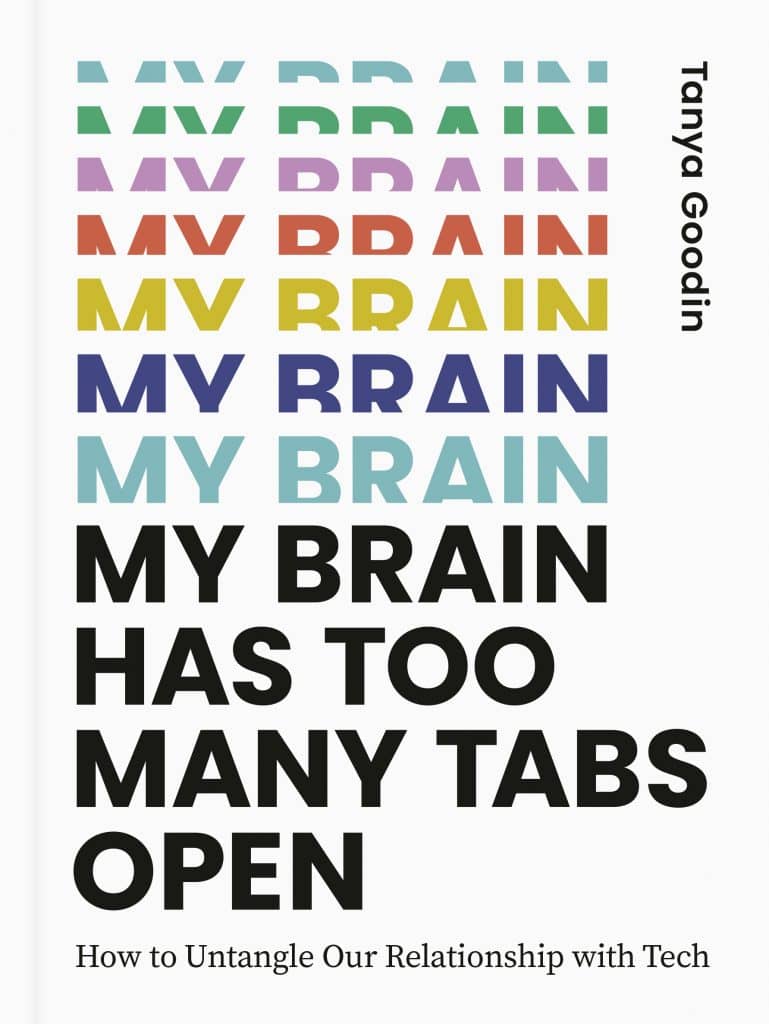
In the past year our digital and physical worlds have collided more than ever, leaving us all painfully aware of the need to log off. This manifests both in our own habits and those of our partners, children, colleagues and friends. Through our founder Tanya Goodin’s new book ‘My Brain Has Too Many Tabs Open‘ you can learn how to recognise harmful practices and find practical strategies to return to a more balanced life.
What does it include?
Goodin’s book is made up of anonymised accounts of people she has worked with throughout her career, from children in schools to bosses in the workplace and even Uber drivers! There are 24 stories in total, divided into the three sections of ‘Loving’, ‘Living’ and ‘Learning‘ to represent the different areas of our lives which the digital world has infiltrated. They are titled with the conversation-starting vocabulary we often use here at Time To Log Off, highlighting the realities of these oft-discussed tropes such as ‘phubbing’ (snubbing someone for your phone) or ‘sharenting’ (over-sharing your children on social media). After each narrative follows diagnostic guides, data and practical advice for improving habits.
The book also includes a thought-provoking manifesto for improved digital citizenship to tackle the bigger picture issues as well as the minutiae of day-to-day annoyances. Taking inspiration from global approaches to tech, such as the Taiwanese government’s focus on civil responsibility online, Goodin highlights a potential positive future and what commitments we must make to get there.
Who is it for?
This book is accessible for everyone. The narrative sections clearly communicate the issues to those with less expertise in the area whilst the data, manifesto and practical tips are provocative for those of all levels of knowledge of the subject. The layout and language are clearly comprehensible for the whole family with bright colours and large graphics breaking up the text throughout. It is well worth a read!
About the author
‘My Brain Has Too Many Tabs Open‘ is Goodin’s third book having previously published two others ‘Off‘ and ‘Stop Staring at Screens‘ which also covered the topic of digital detox and tech addiction. She is also the host of the ‘It’s Complicated’ podcast, an award-winning digital entrepreneur and founder of this movement, Time To Log Off. She was inspired to begin her work in this sphere after a 20+ year career working exclusively in the digital world and experiencing its negative effects before the rest of us did so she truly is an expert in the field.
Where can I find it?
‘My Brain Has Too Many Tabs Open’ can be found in most bookshops as well as online in both kindle and physical form so get reading! Once you have read it, please do leave a review so that others can find it and we can continue the conversation about digital wellbeing.
Eating more fruits, vegetables and nuts can make a meaningful impact on a person’s health – and the planet’s too.
Vegetarian and vegan options have become standard fare in the American diet, from upscale restaurants to fast-food chains. And many people know that the food choices they make affect their own health as well as that of the planet.
But on a daily basis, it’s hard to know how much individual choices, such as buying mixed greens at the grocery store or ordering chicken wings at a sports bar, might translate to overall personal and environmental health. That’s the gap we hope to fill with our research.
Building on this multi-disciplinary expertise, we combined 15 nutritional health-based dietary risk factors with 18 environmental indicators to evaluate, classify and prioritize more than 5,800 individual foods.
Ultimately, we wanted to know: Are drastic dietary changes required to improve our individual health and reduce environmental impacts? And does the entire population need to become vegan to make a meaningful difference for human health and that of the planet?
Putting hard numbers on food choices
In our new study in the research journal Nature Food, we provide some of the first concrete numbers for the health burden of various food choices. We analyzed the individual foods based on their composition to calculate each food item’s net benefits or impacts.
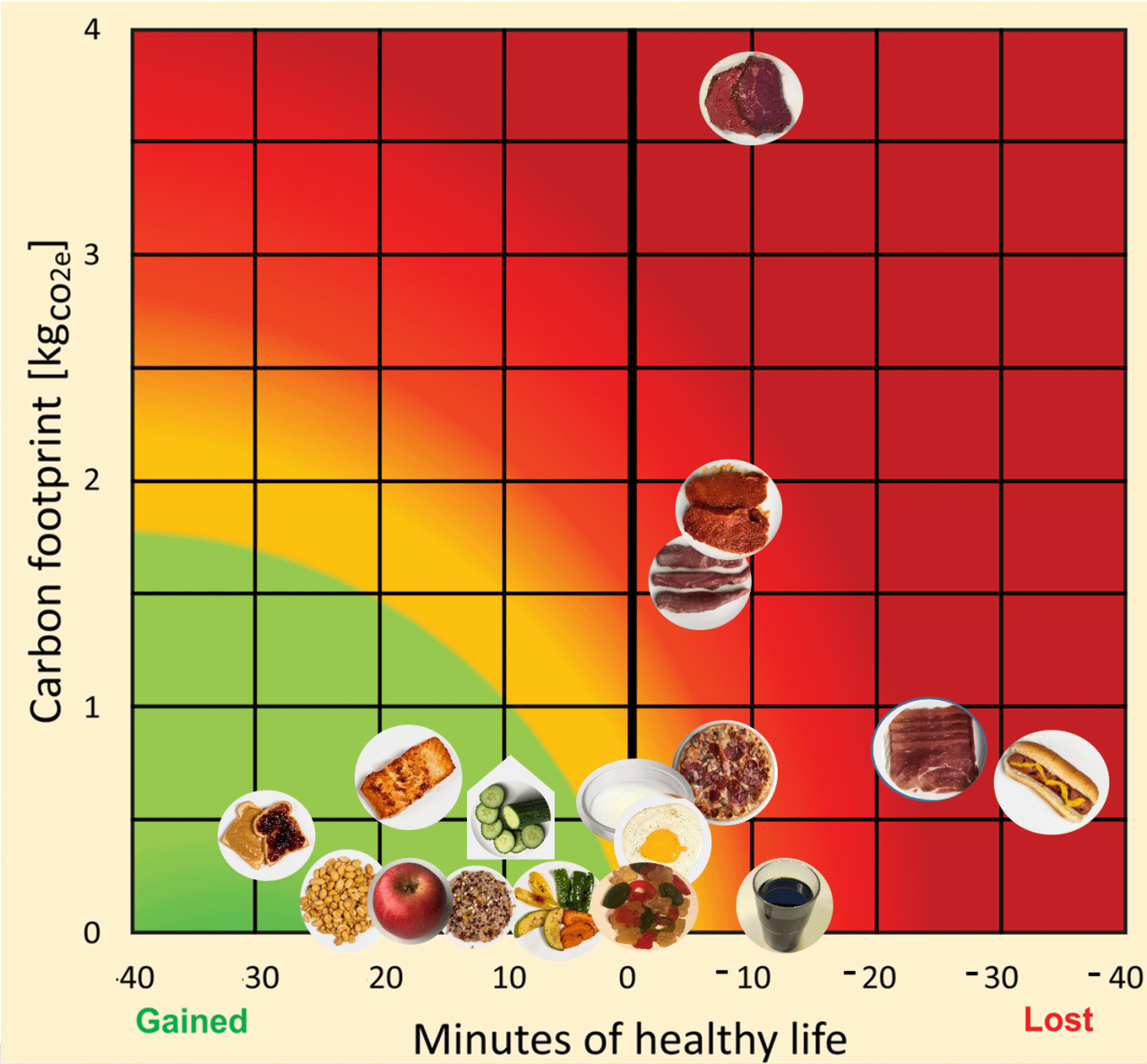
The Health Nutritional Index that we developed turns this information into minutes of life lost or gained per serving size of each food item consumed. For instance, we found that eating one hot dog costs a person 36 minutes of “healthy” life. In comparison, we found that eating a serving size of 30 grams of nuts and seeds provides a gain of 25 minutes of healthy life – that is, an increase in good-quality and disease-free life expectancy.
Our study also showed that substituting only 10% of daily caloric intake of beef and processed meats for a diverse mix of whole grains, fruits, vegetables, nuts, legumes and select seafood could reduce, on average, the dietary carbon footprint of a U.S. consumer by one-third and add 48 healthy minutes of life per day. This is a substantial improvement for such a limited dietary change.
Relative positions of select foods, from apples to hot dogs, are shown on a carbon footprint versus nutritional health map. Foods scoring well, shown in green, have beneficial effects on human health and a low environmental footprint. (Austin Thomason/Michigan Photography and University of Michigan, CC BY-ND)
How did we crunch the numbers?
We based our Health Nutritional Index on a large epidemiological study called the Global Burden of Disease, a comprehensive global study and database that was developed with the help of more than 7,000 researchers around the world. The Global Burden of Disease determines the risks and benefits associated with multiple environmental, metabolic and behavioral factors – including 15 dietary risk factors.
Our team took that population-level epidemiological data and adapted it down to the level of individual foods. Taking into account more than 6,000 risk estimates specific to each age, gender, disease and risk, and the fact that there are about a half-million minutes in a year, we calculated the health burden that comes with consuming one gram’s worth of food for each of the dietary risk factors.
For example, we found that, on average, 0.45 minutes are lost per gram of any processed meat that a person eats in the U.S. We then multiplied this number by the corresponding food profiles that we previously developed. Going back to the example of a hot dog, the 61 grams of processed meat in a hot dog sandwich results in 27 minutes of healthy life lost due to this amount of processed meat alone. Then, when considering the other risk factors, like the sodium and trans fatty acids inside the hot dog – counterbalanced by the benefit of its polyunsaturated fat and fibers – we arrived at the final value of 36 minutes of healthy life lost per hot dog.
We repeated this calculation for more than 5,800 foods and mixed dishes. We then compared scores from the health indices with 18 different environmental metrics, including carbon footprint, water use and air pollution-induced human health impacts. Finally, using this health and environmental nexus, we color-coded each food item as green, yellow or red. Like a traffic light, green foods have beneficial effects on health and a low environmental impact and should be increased in the diet, while red foods should be reduced.
Where do we go from here?
Our study allowed us to identify certain priority actions that people can take to both improve their health and reduce their environmental footprint.
When it comes to environmental sustainability, we found striking variations both within and between animal-based and plant-based foods. For the “red” foods, beef has the largest carbon footprint across its entire life cycle – twice as high as pork or lamb and four times that of poultry and dairy. From a health standpoint, eliminating processed meat and reducing overall sodium consumption provides the largest gain in healthy life compared with all other food types.
Therefore, people might consider eating less of foods that are high in processed meat and beef, followed by pork and lamb. And notably, among plant-based foods, greenhouse-grown vegetables scored poorly on environmental impacts due to the combustion emissions from heating.
Foods that people might consider increasing are those that have high beneficial effects on health and low environmental impacts. We observed a lot of flexibility among these “green” choices, including whole grains, fruits, vegetables, nuts, legumes and low-environmental impact fish and seafood. These items also offer options for all income levels, tastes and cultures.
Our study also shows that when it comes to food sustainability, it is not sufficient to only consider the amount of greenhouse gases emitted – the so-called carbon footprint. Water-saving techniques, such as drip irrigation and the reuse of gray water – or domestic wastewater such as that from sinks and showers – can also make important steps toward lowering the water footprint of food production.
A limitation of our study is that the epidemiological data does not enable us to differentiate within the same food group, such as the health benefits of a watermelon versus an apple. In addition, individual foods always need to be considered within the context of one’s individual diet, considering the maximum level above which foods are not any more beneficial – one cannot live forever by just increasing fruit consumption.
At the same time, our Health Nutrient Index has the potential to be regularly adapted, incorporating new knowledge and data as they become available. And it can be customized worldwide, as has already been done in Switzerland.
It was encouraging to see how small, targeted changes could make such a meaningful difference for both health and environmental sustainability – one meal at a time.
Is Instagram Toxic for Young Girls’ Mental Health?
Years of internal Facebook research, obtained by the Wall Street Journal, appears to show that Instagram may be toxic to significant portions of its young user base, predominantly young girls. However Facebook, in a statement, claim that the data was taken out of context and refute that Instagram is having a negative effect.
The fact that Instagram and other social platforms may be toxic to the mental health of teenagers, in particular teen girls, is of no surprise. We have written about it many times before in fact, including in our founder’s new book: ‘My Brain Has Too Many Tabs Open‘ which comes out on the 21st of September. What is a shock, is that Facebook appear to have been aware of the extent of damage caused to young teens and has done little to change the culture of the app. Changes could, for example, have shifted the focus away from the appearance of bodies and shape and size, which seem to be the main causes of body image issues in young girls. In their expose the WSJ further highlight the economic bonus these users (those under 22) bring to Instagram, with 40% of the app users being under 22 – bringing in roughly $100 billion in annual revenue.
What happens now?
As this story progresses, we will no doubt hear more about the leaked research carried out by Facebook on Instagram and its other subsidiary brands, but we fear the story will stay the same: social media giants are doing little to mitigate the negative impact of their products, and are potentially complicit in the mental health damage caused to their users by neglecting to take this issue seriously.
For more on the dangers of comparison culture, pick up a copy of our new book.
While the pandemic stakes might justify using hard-hitting strategies, the nation’s social and political context right now might cause fear tactics to backfire.
With new, highly transmissible variants of SARS-CoV-2 now spreading, some health professionals have started calling for the use of similar fear-based strategies to persuade people to follow social distancing rules and get vaccinated.
There is compelling evidence that fear can change behavior, and there have been ethical arguments that using fear can be justified, particularly when threats are severe. As public health professors with expertise in history and ethics, we have been open in some situations to using fear in ways that help individuals understand the gravity of a crisis without creating stigma.
But while the pandemic stakes might justify using hard-hitting strategies, the nation’s social and political context right now might cause it to backfire.
Fear as a strategy has waxed and waned
Fear can be a powerful motivator, and it can create strong, lasting memories. Public health officials’ willingness to use it to help change behavior in public health campaigns has waxed and waned for more than a century.
From the late 19th century into the early 1920s, public health campaigns commonly sought to stir fear. Common tropes included flies menacing babies, immigrants represented as a microbial pestilence at the gates of the country, voluptuous female bodies with barely concealed skeletal faces who threatened to weaken a generation of troops with syphilis. The key theme was using fear to control harm from others.
Following World War II, epidemiological data emerged as the foundation of public health, and use of fear fell out of favor. The primary focus at the time was the rise of chronic “lifestyle” diseases, such as heart disease. Early behavioral research concluded fear backfired.An early, influential study, for example, suggested that when people became anxious about behavior, they might tune out or even engage more in dangerous behaviors, like smoking or drinking, to cope with the anxiety stimulated by fear-based messaging.
But by the 1960s, health officials were trying to change behaviors related to smoking, eating and exercise, and they grappled with the limits of data and logic as tools to help the public. They turned again to scare tactics to try to deliver a gut punch. It was not enough to know that some behaviors were deadly. We had to react emotionally.
Although there were concerns about using fear to manipulate people, leading ethicists began to argue that it could help people understand what was in their self-interest. A bit of a scare could help cut through the noise created by industries that made fat, sugar and tobacco alluring. It could help make population-level statistics personal.
NYC Health
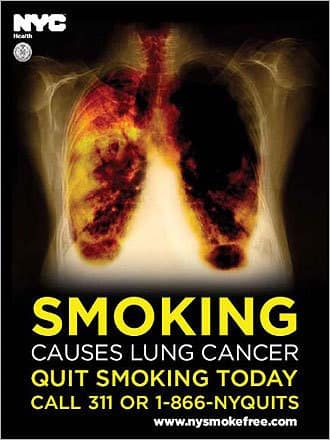
Anti-tobacco campaigns were the first to show the devastating toll of smoking. They used graphic images of diseased lungs, of smokers gasping for breath through tracheotomies and eating through tubes, of clogged arteries and failing hearts. Those campaigns worked.
And then came AIDS. Fear of the disease was hard to untangle from fear of those who suffered the most: gay men, sex workers, drug users, and the black and brown communities. The challenge was to destigmatize, to promote the human rights of those who only stood to be further marginalized if shunned and shamed. When it came to public health campaigns, human rights advocates argued, fear stigmatized and undermined the effort.
When obesity became a public health crisis, and youth smoking rates and vaping experimentation were sounding alarm bells, public health campaigns once again adopted fear to try to shatter complacency. Obesity campaigns sought to stir parental dread about youth obesity. Evidence of the effectiveness of this fear-based approach mounted.
Evidence, ethics and politics
So, why not use fear to drive up vaccination rates and the use of masks, lockdowns and distancing now, at this moment of national fatigue? Why not sear into the national imagination images of makeshift morgues or of people dying alone, intubated in overwhelmed hospitals?
Before we can answer these questions, we must first ask two others: Would fear be ethically acceptable in the context of COVID-19, and would it work?
For people in high-risk groups – those who are older or have underlying conditions that put them at high risk for severe illness or death – the evidence on fear-based appeals suggests that hard-hitting campaigns can work. The strongest case for the efficacy of fear-based appeals comes from smoking: Emotional PSAs put out by organizations like the American Cancer Society beginning in the 1960s proved to be a powerful antidote to tobacco sales ads. Anti-tobacco crusaders found in fear a way to appeal to individuals’ self-interests.
At this political moment, however, there are other considerations.
Health officials have faced armed protesters outside their offices and homes. Many people seem to have lost the capacity to distinguish truth from falsehood.
By instilling fear that government will go too far and erode civil liberties, some groups developed an effective political tool for overriding rationality in the face of science, even the evidence-based recommendations supporting face masks as protection against the coronavirus.
Reliance on fear for public health messaging now could further erode trust in public health officials and scientists at a critical juncture.
The nation desperately needs a strategy that can help break through pandemic denialism and through the politically charged environment, with its threatening and at times hysterical rhetoric that has created opposition to sound public health measures.
Even if ethically warranted, fear-based tactics may be dismissed as just one more example of political manipulation and could carry as much risk as benefit.
Instead, public health officials should boldly urge and, as they have during other crisis periods in the past, emphasize what has been sorely lacking: consistent, credible communication of the science at the national level.
Adolescent Loneliness is Skyrocketing- is Tech the Culprit?
A new report published on the 20th of July in the Journal of Adolescence has found that globally adolescent loneliness has increased dramatically between 2012 and 2018 and that this is due to the proliferation of smartphones during this time. The research was taken from a study of over 1 million 15-16 years old students and was not impacted by the pandemic (as it ended in 2018) which would be expected to have a great impact on teen wellbeing.
Two factors associated with strongly impacting loneliness were smartphone use which resulted in higher loneliness whilst higher unemployment rates resulted in lower loneliness, clearly highlighting that it is screens, and access to them, which is the root cause of this increase in depression in the last 10 years.
This study is particularly striking as the correlation between the rise of smartphone use and adolescent loneliness does not merely follow an increase in depression previously. Depression and loneliness rates had been stable or decreasing in the years up to 2012, marking a sudden shift in this data, along with the proliferation of smartphone use. An earlier study in 2012 had also been identified as the year that smartphone ownership passed 50% in the US meaning that it was a significant time not only for mental health statistics but also technologically.
What does that mean for your teens?
We have been writing about the impact of excess screen exposure on adolescents for many years. This generation (Gen Z) are the first to be raised in a world surrounded by technology, they are the first to never experience childhood without it, and thus we are having to learn with them the impacts that it can have. As smartphone addiction increase in the last 10 years, adolescents have spent less time interacting in person and more time on social media. Unfortunately the refusal of some teens to use social media does not actually benefit them as if their friends still use social media they will be less available for in-person interaction and even when they are face to face those phones can dampen enjoyment through ‘phubbing‘.
Therefore, we recommend encouraging your teens to meet up in person. If you have the means, you could encourage them to host, or simply facilitate that contact in any way you can (such as by driving them if they are able to drive themselves). You can also encourage your teens to practice phone-free interactions both at home and with their friends in order to get the most out of their time with friends, and hopefully reduce loneliness in the long-term.
The optimism generated by vaccines and falling infection rates has blinded many Americans to the deep sorrow and depression of those around them.
Cassandra Rollins’ daughter was still conscious when the ambulance took her away.
Shalondra Rollins, 38, was struggling to breathe as covid overwhelmed her lungs. But before the doors closed, she asked for her cellphone, so she could call her family from the hospital.
It was April 7, 2020 — the last time Rollins would see her daughter or hear her voice.
The hospital rang an hour later to say she was gone. A chaplain later told Rollins that Shalondra had died on a gurney in the hallway. Rollins was left to break the news to Shalondra’s children, ages 13 and 15.
More than a year later, Rollins said, the grief is unrelenting.
Rollins has suffered panic attacks and depression that make it hard to get out of bed. She often startles when the phone rings, fearing that someone else is hurt or dead. If her other daughters don’t pick up when she calls, Rollins phones their neighbors to check on them.
“You would think that as time passes it would get better,” said Rollins, 57, of Jackson, Mississippi. “Sometimes, it is even harder. … This wound right here, time don’t heal it.”
The pandemic — and the political battles and economic devastation that have accompanied it — have inflicted unique forms of torment on mourners, making it harder to move ahead with their lives than with a typical loss, said sociologist Holly Prigerson, co-director of the Cornell Center for Research on End-of-Life Care.
The scale and complexity of pandemic-related grief have created a public health burden that could deplete Americans’ physical and mental health for years, leading to more depression, substance misuse, suicidal thinking, sleep disturbances, heart disease, cancer, high blood pressure and impaired immune function.
“Unequivocally, grief is a public health issue,” said Prigerson, who lost her mother to covid in January. “You could call it the grief pandemic.”
Like many other mourners, Rollins has struggled with feelings of guilt, regret and helplessness — for the loss of her daughter as well as Rollins’ only son, Tyler, who died by suicide seven months earlier.
“I was there to see my mom close her eyes and leave this world,” said Rollins, who was first interviewed by KHN a year ago in a story about covid’s disproportionate effects on communities of color. “The hardest part is that my kids died alone. If it weren’t for this covid, I could have been right there with her” in the ambulance and emergency room. “I could have held her hand.”
The pandemic has prevented many families from gathering and holding funerals, even after deaths caused by conditions other than covid. Prigerson’s research shows that families of patients who die in hospital intensive care units are seven times more likely to develop post-traumatic stress disorder than loved ones of people who die in home hospice.
The polarized political climate has even pitted some family members against one another, with some insisting that the pandemic is a hoax and that loved ones must have died from influenza, rather than covid. People in grief say they’re angry at relatives, neighbors and fellow Americans who failed to take the coronavirus seriously, or who still don’t appreciate how many people have suffered.
“People holler about not being able to have a birthday party,” Rollins said. “We couldn’t even have a funeral.”
Indeed, the optimism generated by vaccines and falling infection rates has blinded many Americans to the deep sorrow and depression of those around them. Some mourners say they will continue wearing their face masks — even in places where mandates have been removed — as a memorial to those lost.
“People say, ‘I can’t wait until life gets back to normal,’” said Heidi Diaz Goff, 30, of the Los Angeles area, who lost her 72-year-old father to covid. “My life will never be normal again.”
Many of those grieving say celebrating the end of the pandemic feels not just premature, but insulting to their loved ones’ memories.
“Grief is invisible in many ways,” said Tashel Bordere, a University of Missouri assistant professor of human development and family science who studies bereavement, particularly in the Black community. “When a loss is invisible and people can’t see it, they may not say ‘I’m sorry for your loss,’ because they don’t know it’s occurred.”
Communities of color, which have experienced disproportionately higher rates of death and job loss from covid, are now carrying a heavier burden.
Black children are more likely than white children to lose a parent to covid. Even before the pandemic, the combination of higher infant and maternal mortality rates, a greater incidence of chronic disease and shorter life expectancies made Black people more likely than others to be grieving a close family member at any point in their lives.
Rollins said everyone she knows has lost someone to covid.
“You wake up every morning, and it’s another day they’re not here,” Rollins said. “You go to bed at night, and it’s the same thing.”
Rollins has been battered by hardships and loss since childhood.
She was the youngest of 11 children raised in the segregated South. Rollins was 5 years old when her older sister Cora, whom she called “Coral,” was stabbed to death at a nightclub, according to news reports. Although Cora’s husband was charged with murder, he was set free after a mistrial.
Rollins gave birth to Shalondra at age 17, and the two were especially close. “We grew up together,” Rollins said.
Just a few months after Shalondra was born, Rollins’ older sister Christine was fatally shot during an argument with another woman. Rollins and her mother helped raise two of the children Christine left behind.
Heartbreak is all too common in the Black community, Bordere said. The accumulated trauma — from violence to chronic illness and racial discrimination — can have a weathering effect, making it harder for people to recover.
“It’s hard to recover from any one experience, because every day there is another loss,” Bordere said. “Grief impacts our ability to think. It impacts our energy levels. Grief doesn’t just show up in tears. It shows up in fatigue, in working less.”
Rollins hoped her children would overcome the obstacles of growing up Black in Mississippi. Shalondra earned an associate’s degree in early childhood education and loved her job as an assistant teacher to kids with special needs. Shalondra, who had been a second mother to her younger siblings, also adopted a cousin’s stepdaughter after the child’s mother died, raising the girl alongside her two children.
Rollins’ son, Tyler, enlisted in the Army after high school, hoping to follow in the footsteps of other men in the family who had military careers.
Yet the hardest losses of Rollins’ life were still to come. In 2019, Tyler killed himself at age 20, leaving behind a wife and unborn child.
“When you see two Army men walking up to your door,” Rollins said, “that’s unexplainable.”
Tyler’s daughter was born the day Shalondra died.
“They called to tell me the baby was born, and I had to tell them about Shalondra,” Rollins said. “I don’t know how to celebrate.”
Shalondra’s death from covid changed her daughters’ lives in multiple ways.
The girls lost their mother, but also the routines that might help mourners adjust to a catastrophic loss. The girls moved in with their grandmother, who lives in their school district. But they have not set foot in a classroom for more than a year, spending their days in virtual school, rather than with friends.
Shalondra’s death eroded their financial security as well, by taking away her income. Rollins, who worked as a substitute teacher before the pandemic, hasn’t had a job since local schools shut down. She owns her own home and receives unemployment insurance, she said, but money is tight.
Makalin Odie, 14, said her mother, as a teacher, would have made online learning easier. “It would be very different with my mom here.”
The girls especially miss their mom on holidays.
“My mom always loved birthdays,” said Alana Odie, 16. “I know that if my mom were here my 16th birthday would have been really special.”
Asked what she loved most about her mother, Alana replied, “I miss everything about her.”
Grief Complicated by Illness
The trauma also has taken a toll on Alana and Makalin’s health. Both teens have begun taking medications for high blood pressure. Alana has been on diabetes medication since before her mom died.
Mental and physical health problems are common after a major loss. “The mental health consequences of the pandemic are real,” Prigerson said. “There are going to be all sorts of ripple effects.”
The stress of losing a loved one to covid increases the risk for prolonged grief disorder, also known as complicated grief, which can lead to serious illness, increase the risk of domestic violence and steer marriages and relationships to fall apart, said Ashton Verdery, an associate professor of sociology and demography at Penn State.
Grief can lead to “broken-heart syndrome,” a temporary condition in which the heart’s main pumping chamber changes shape, affecting its ability to pump blood effectively, Verdery said.
From final farewells to funerals, the pandemic has robbed mourners of nearly everything that helps people cope with catastrophic loss, while piling on additional insults, said the Rev. Alicia Parker, minister of comfort at New Covenant Church of Philadelphia.
“It may be harder for them for many years to come,” Parker said. “We don’t know the fallout yet, because we are still in the middle of it.”
Rollins said she would have liked to arrange a big funeral for Shalondra. Because of restrictions on social gatherings, the family held a small graveside service instead.
Funerals are important cultural traditions, allowing loved ones to give and receive support for a shared loss, Parker said.
“When someone dies, people bring food for you, they talk about your loved one, the pastor may come to the house,” Parker said. “People come from out of town. What happens when people can’t come to your home and people can’t support you? Calling on the phone is not the same.”
While many people are afraid to acknowledge depression, because of the stigma of mental illness, mourners know they can cry and wail at a funeral without being judged, Parker said.
“What happens in the African American house stays in the house,” Parker said. “There’s a lot of things we don’t talk about or share about.”
Funerals play an important psychological role in helping mourners process their loss, Bordere said. The ritual helps mourners move from denying that a loved one is gone to accepting “a new normal in which they will continue their life in the physical absence of the cared-about person.” In many cases, death from covid comes suddenly, depriving people of a chance to mentally prepare for loss. While some families were able to talk to loved ones through FaceTime or similar technologies, many others were unable to say goodbye.
Funerals and burial rites are especially important in the Black community and others that have been marginalized, Bordere said.
“You spare no expense at a Black funeral,” Bordere said. “The broader culture may have devalued this person, but the funeral validates this person’s worth in a society that constantly tries to dehumanize them.”
In the early days of the pandemic, funeral directors afraid of spreading the coronavirus did not allow families to provide clothing for their loved ones’ burials, Parker said. So beloved parents and grandparents were buried in whatever they died in, such as undershirts or hospital gowns.
“They bag them and double-bag them and put them in the ground,” Parker said. “It is an indignity.”
Every day, something reminds Rollins of her losses.
April brought the first anniversary of Shalondra’s death. May brought Teacher Appreciation Week.
Yet Rollins said the memory of her children keeps her going.
When she begins to cry and thinks she will never stop, one thought pulls her from the darkness: “I know they would want me to be happy. I try to live on that.”
Phone Addiction: Spotting The Symptoms And Taking The Next Steps
Phone addiction is a difficult thing to quantify. We all have so many different reasons to use our phone – from monitoring work emails, to sending funny photos to the family group chat – that there is no easy way to define phone addiction through usage patterns. Therefore, we should instead look out for the symptoms.
A popular way of defining phone addiction is through likening it to substance addiction. For example, a 2020 study defined smartphone addiction as ‘several behaviours (that) produce short-term reward that may engender persistent behaviour despite knowledge of adverse consequences’.
Essentially, smartphone addicts use their phones even in situations where it doesn’t benefit them. A 2016 study even listed some of these ‘short-term reward’ behaviours, which include: ‘use in dangerous situations’ (for example, whilst driving), ‘harm or repeated interruptions to work, social or family life’ and ‘anxiety or negative feelings associated with inability to send or receive immediate responses’.
Do you check your phone at the family dinner table or when hanging out with friends? Do you feel stressed when you can’t check your emails or social media? Do you spend time on your phone mindlessly scrolling – when you know you’d rather be doing something else – just because you can?
If you answered yes to any of these, then you are exhibiting signs of phone addiction. But do not worry if you have self-diagnosed yourself because you are not alone; nearly half of the people asked in this American survey consider themselves addicted to their phone. And those are only the people being honest with themselves.
Being brutally honest with yourself is crucial. This is because phone addiction can look different in everyone, so you need to take control of your own habits. Once you have obtained an objective viewpoint from where you can critically evaluate your tech use, you can start identifying problem areas.
1. Motivate Yourself
First, you need to ask yourself why you want to beat your addiction?Breaking habits is hard. To stay motivated, you need to have a solid reason as to why you want to ditch your unhealthy digital reliance.
Is it because you want to spend more time with family and friends? Is it because you want to reinvest the time into developing new hobbies? Is it for your physical health? Whatever the reason, it will help you stay focussed towards achieving your personal goals.
2. Ditch Your Excuses
Sometimes our phone’s role in our daily routine blinds us to the unhealthy relationship we have formed with it. We rely on smartphones from the start to the end of our day, for example to sound alarms or keep track of important dates.
This gives us a reason – and often an excuse – to reach for our phone throughout the day. Therefore, remove your phone from the equation where possible: use an alarm clock and buy a paper diary or calendar. Prove to yourself that you are not so reliant on your phone as you may currently feel.
3. Find a Friend
If cutting down on device usage is something you may struggle with, team up with a friend. It is likely that many of your friends, family and colleagues are also suffering from phone addiction, or at least over-dependence, and could do with a helping hand to tackle it.
Not only will tackling addiction with a friend keep you motivated, having someone to hold you accountable will force you to be honest with your tech use and stick to your goals.
Furthermore, you and your friend can plan activities together to distract yourselves from your screens. Through busying yourselves, you will find that want to check your phones far less pressing and effortlessly cut down your phone time. By finding joy away from screens together, you will both find you establish a more healthy relationship with tech.
How to Break Screen Addiction: 5 Visible Signs That Your Child is Addicted
This past year children have been spending even more time on their screens for education which has made it harder for parents to spot screen addiction. Despite pandemic restrictions being lifted in the UK, this past week saw over 700,000 students isolating at home and forced to continue remote learning. This has led to a 100% increase in time spent on apps by children (spurred in the main by YouTube and TikTok). With these increases both for educational and entertainment purposes, more and more children are showing signs of being addicted to screens, and it is getting harder and harder for parents to delineate addiction from overuse. So, we have put together some visible signs to pick up on to indicate that your child is addicted and needs help.
Loss of interest in other activities
The first and most obvious sign of screen addiction is a loss of interest in other activities. During the pandemic this may have been harder to spot as all ‘other activities’ ground to a halt. However, these need not be hobbies such Girl Guides which were made impossible over the last year. This could instead include: family movie night, going for walks, or playing with the family pet. If your child does show a lack of interest in other activities it may be time to remove their device and allow them the space to reconnect with the world.
Interferes with socialising
A related symptoms could be if your child consistently chooses technology over interaction with others. This could be family, friends, schoolmates or anyone they interact with. You will know your children best and thus be able to judge if their focus on the screen is due to shyness or a prioritisation of that device. Once again, our tip to help with this is to remove the device during sociable times, such as at meal times and when friends come over, so there is no distraction.
Withdrawal symptoms
Once again, a symptom related to those above is that of withdrawal from those around them. Does your child sit alone with their device instead of interacting with those around them? Do they prefer to be alone in their room? Are they quieter than usual, or have they stopped getting involved with other people? These could all mean your child is withdrawing, which can be a symtpom of screen addiction but also deeper mental health conditions such as depression. So, we recommend seeking medical help if you feel it is serious and in the meantime supporting your child to reintegrate with the people around them.
Deceptive behvaiours
Similarly to other addictions, one symptom is that of deception. For example, perhaps they tell you they only use their device for school but you find it is used for social media. Perhaps they set up ways to get around the parental controls, or, perhaps they have found your hiding spot and take the device when they shouldn’t have it. All are symptoms of addiction and need to be responded to with the removal of the device. After a period of detox it can then be reintroduced, perhaps supervised, and trust can be rebuilt.
Only talk about screens
This final symptom is perhaps the most obvious: all they talk about is screens. This could be games, social media, or any other addictive app on their device. If your child cannot have a conversation without bringing the topic back to their screen use then it is time for some space!
We hope you will not recognise any of these symptoms as behaviour your child exhibits. However, if that is not the case, we have plenty of resources throughout our website to help you support your child through this.
For more suggestions on managing your child’s relationship with tech to benefit their mental health, take a look at our new book ‘My Brain Has Too Many Tabs Open‘.