Category: Addiction News

  • Are Pet Prescriptions Contributing To The Opioid Crisis?

    Are Pet Prescriptions Contributing To The Opioid Crisis?

    Some wonder if people with opioid addiction are using their pet’s prescriptions to feed their own addictions instead.

    With the rise of the opioid epidemic, a phenomenon has occurred where painkiller sales for pets have increased, and some wondering if people with opioid addiction are using their pet’s prescriptions to feed their own addictions instead.

    A new study by Penn Medicine and Penn Vet has revealed that in the last 10 years, there has been a 41% increase in opioid prescriptions for pets, yet in the same period, there has only been a 13% jump in pets having to go to the hospital. This has some suspecting that people could be using these prescriptions to get opioids for themselves.

    Study author Jeanmarie Perrone, director of medical toxicology at Penn Medicine told Philly.com, “As we are seeing the opioid epidemic press on, we are identifying other avenues of possible human consumption and misuse. Even where the increase in prescribed veterinary opioids is well intended by the veterinarian, it can mean an increased chance of leftover pills being misused later by household members.”

    Penn Medicine says this is the first study they’ve done in this area, and in gathering data, they looked at pharmacy records at Penn Vet’s Ryan Hospital over a 10-year period and looked at prescription patterns with four kinds of opioids given to pets: tramadol, hydrocodone, codeine tablets, and fentanyl patches.

    An author of this study, Dana Clarke, an assistant professor at the vet school, added, “We found that the increased quantity of opioids prescribed by our hospital was not due to increased patient volume alone. It’s likely our goal of ensuring our patients are pain-free post-operatively, particularly those requiring complex and invasive procedures, has driven our increased prescribing practices during this period.” At the same time, Clarke says, “we don’t know the potential or extent of prescription diversion from animals to humans, and what impact this could have on the human opioid crisis.”

    There has already been concern about people abusing pet meds elsewhere in the country. A similar study was done through the University of Colorado, where they learned that 13% of vets who were surveyed reported that pet owners would injure their pets or make them sick on purpose to get their hands on opioids.

    Last year, the commissioner of the Food and Drug Administration also released a statement concerning possible opioid abuse through pet meds and said that it could “lead to addiction, abuse and overdose in humans who may divert them for their own use.” The FDA told vets to be responsible when prescribing opioids and recommended prescribing different meds whenever they could.

    As a result of these concerns, some veterinarians have already been putting restrictions on how many opioids can be prescribed to an animal, and some vets also perform background checks on some pet owners to look into their histories with opioid prescriptions.

    View the original article at thefix.com

  • Slipknot’s Corey Taylor Talks Social Media Addiction In New Book

    Slipknot’s Corey Taylor Talks Social Media Addiction In New Book

    The singer reveals his battle with social media and addiction in his new book.

    Corey Taylor, the lead singer of Slipknot, has been very open with the public about his struggles with addiction, and in his next book, he’ll be confessing an addiction to social media.

    As Loudwire reports, Taylor will examine the link between addiction and social media in his new book, and it’s apparently something he understands firsthand.

    “There’s a flare in addiction right now and it’s one of the things I’m working on in my new book,” he explains. “There’s a correlation between that and social media – all of the shit that’s been triggered because of social media, the same kind of dopamine trigger. It’s compulsion, gratification, compulsion, gratification. It’s just a constant cycle.”

    Taylor admits he had become addicted to social media himself, adding he had “just gotten separated and I kind of went down a crazy wormhole and I was really depressed . . . I had just been through hell. Before, you’re a single guy, you go out, you play the scene, you do whatever. Now, you’ve got all this crazy shit at your fingertips. For an addict, it was fucking nuts.

    “Instagram, Twitter… it took me a while to get out of it,” Taylor continues. “For about three months solid, that’s all I did, ignoring my fucking duties and shit. The only time I would really fucking get away from it was when I was with my kids. Then the compulsion would come right back and I was like, ‘What is going in?’ It took me so long to settle that compulsion down … If I could get rid of it all, period, I would.”

    As far as Taylor’s belief that his addiction transferred to social media, there is certainly a lot of speculation these days about whether social media could be a true addiction that needs to be taken seriously. Many reports have found a link between social media and depression, and recently Marc Benioff, the CEO of Salesforce made the analogy between social media addiction and the cigarette industry.

    “It’s addictive,” Benioff told CNBC. “It’s not good for you. There’s people trying to get you to use it that even you don’t understand what’s going on. The government needs to really regulate what’s happening.”

    View the original article at thefix.com

  • David and Nic Sheff Help Adolescents Navigate Drugs, Alcohol, and Addiction in New Book

    David and Nic Sheff Help Adolescents Navigate Drugs, Alcohol, and Addiction in New Book

    Nic Sheff: “It’s what I say to kids who are struggling like I struggled. Hold on. Don’t give up. Get help, and it’ll get better.”

    In the new book High, best-selling authors David Sheff and Nic Sheff shift the failed War on Drugs mantra of “Just Say No” to the more enlightened “Just Say Know.” The book comes out on the heels of Amazon Studios’ film Beautiful Boy, which draws equally from David Sheff’s memoir Beautiful Boy: A Father’s Journey Through His Son’s Addiction and Nic Sheff’s memoir Tweak: Growing Up On Methamphetamines. Following the awareness generated by the film, the father-son team hope their new volume will become a comprehensive resource for young people to learn about themselves and addiction and in the process gain the ability to make informed decisions about their own behavior, particularly when it comes to drug and alcohol use.

    Subtitled Everything You Want to Know About Drugs, Alcohol, and Addiction, the book is written for middle-grade (5th to 8th grade) readers and is designed to provide the facts about substances and substance use disorder in language accessible to adolescents. Based on personal experience and years of research, the well-designed resource will help young people accomplish a series of objectives by embracing a new mantra, beginning with the Socratic directive to know thyself, and then use this knowledge to make intelligent, compassionate decisions.

    The following objectives of the Sheff team are constructed as a path to self-awareness:

    1. Know yourself.
    2. Figure out what you want in life.
    3. Weigh the risks of using.
    4. Know the truth and decide.

    As opposed to previous attempts to raise awareness by certain forces, High: Everything You Want To Know About Drugs, Alcohol, And Addiction is not a prescriptive tome with an accusatory voice, telling the reader how to live while wagging a finger back and forth. Instead, the father-son account is a deeply personal attempt to translate the traumatic experience of drug addiction within a family. In the process of this translation, the narrative becomes a caring exploration designed to prevent such trauma from happening in other families. It’s like an archeological dig into the horrors of addiction and the miracle of recovery, focusing on the nuts and bolts that make up both complex processes.

    From the microcosm of their own experiences to the macrocosm of an encyclopedic approach, the authors provide accurate information about substance use disorder and the dangers of a wide variety of addictions. This is not an encyclopedia, but what David and Nic Sheff manage to accomplish in under 220 pages is impressive. They cover a lot of territory in an easy-to-read format.

    The book is divided up into five main sections. The first part is a personal look at Nic Sheff’s struggles with addiction. While detailing how Nic managed to find the path of sustainable sobriety, the authors also provide a basic explanation of substance use disorder and alcohol abuse. The second part of the book is about alcohol and popular drugs in America, with descriptions of the various substances and what they actually do. It separates the myths from the facts. In the third section, the descent from using drugs to becoming addicted is described. A fourth section examines treatment and recovery options while being very honest about the likelihood of relapse. Finally, the last section is a thoughtful dialogue between father and son about what David and Nic Sheff personally have learned about addiction and recovery.

    In the dialogue, David and Nic Sheff have a conversation about why they chose to write together on addiction and their personal investment in the book. Nic discusses how such a book could have helped him when he was first heading into the dark woods of addiction. He says, “If I’d known to pay attention to how I was feeling, maybe I would’ve asked for help. Parents, doctors, counselors — they can help. And even if they didn’t know exactly how to help, they could’ve directed me to someone who could’ve. I really believe that.”

    Hearing his son talk about what could’ve happened as opposed to the devastating crystal meth addiction that actually occurred appears to be painful for David Sheff. What father does not want to go back and save a child from such suffering? When asked by Nic what he learned in the struggle to help his son find a path to long-term recovery, David doesn’t even know where to start.

    With emotion, he says, “I learned how complicated people are — how much we are all dealing with, and that life is really hard, and as a result, people are always looking for something to numb the pain, to distract us, to make us feel better. I learned that we can’t help people with addiction or other problems unless we look at the root of the problems, which are always complex — a combination of factors, including biology, psychology, and environment. And I learned about love. It’s more powerful than almost any other force, and it can help us get through what we don’t think we can survive.” 

    Combining the wisdom of the loving parent and the son in recovery from addiction, David and Nic Sheff apply their hard-earned experience in life and their expertise as writers to create a unique and valuable resource. Most importantly, the book takes complex ideas and makes them accessible to tween and teen readers. From addiction as a family disease and how drugs seduce the brain to the dangers of polydrug use and debunking myths about drugs (is marijuana addictive or not?), the co-authors cover a lot of bases. The aim is to provide a solid base of knowledge about all aspects of alcohol, drugs, and addiction while also keeping young readers engaged.

    Throughout the book there are personal stories from other people with substance use disorders combined with a wide variety of cartoon imagery, interactive questions, and informational graphs. Overall, there is a sense that both David and Nic Sheff know from personal experience what is at stake and they’re taking great care to make sure they attract and keep the attention of their potentially vulnerable readership. The book also includes useful appendices of addiction terminology, emergency phone numbers, and other helpful resources.

    The book closes with a passionate expression of Nic Sheff’s dedication to his ongoing recovery: “It’s what I say to kids who are struggling like I struggled. Hold on. Don’t give up. Get help, and it’ll get better.” 

    David and Nic Sheff’s deepest desire is to save lives. By providing accurate and helpful information within the context of their strong and emotional commitment to recovery, the father and son team take on one of the most challenging problems today. The United States has the highest rate of drug-related deaths in the world, with opioids accounting for the majority of the deaths. In most cases, those deaths are preventable. With High, David and Nic Sheff hope that accurate and accessible information will create understanding and self-knowledge in young people so that when the time comes, they’ll have the confidence to make decisions that may end up saving their own lives.

    View the original article at thefix.com

  • The Link Between Hearing Loss And Depression In The Elderly

    The Link Between Hearing Loss And Depression In The Elderly

    A new study examines the link between depressive symptoms and hearing loss in older Hispanic adults.

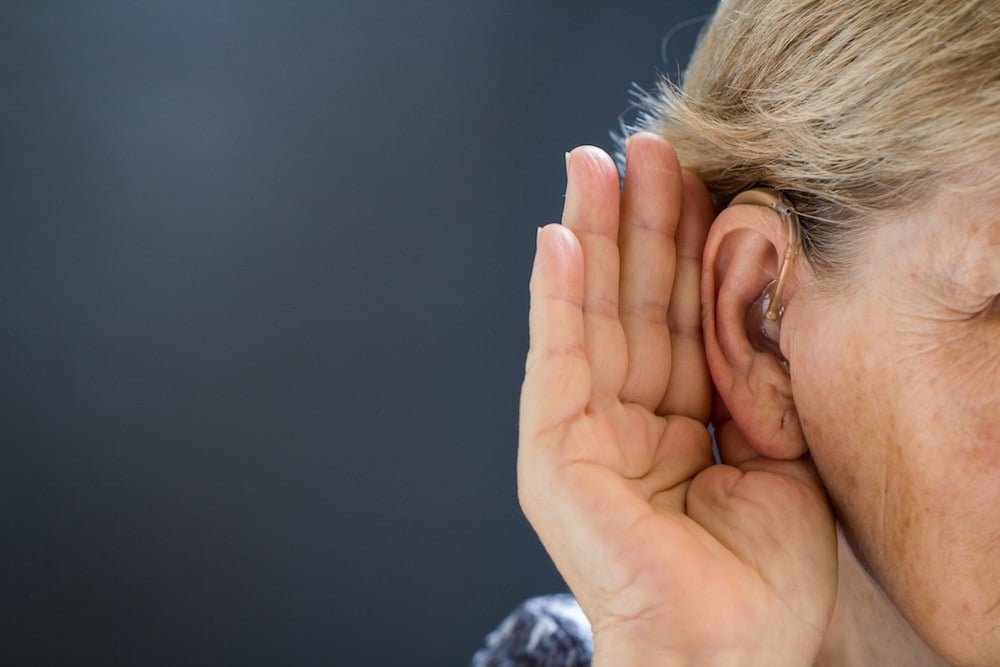
    Having to ask people to repeat themselves or nodding along politely to a conversation they cannot hear is common for the thousands of elderly Americans who live with hearing loss. Now a new study shows that hearing loss isn’t just an inconvenience: It can be a real health threat linked to depression. 

    The study, published in the journal Otolaryngology-Head and Neck Surgery, examined 5,328 Hispanic adults, testing their hearing and screening them for depression.

    Adjusting for other contributing factors to depression like educational level and cardiac health, the researchers found that moderate hearing loss made people nearly twice as likely to suffer from depression. People with severe hearing loss were about four times more likely to be depressed. 

    “People with hearing loss have trouble communicating and tend to become more socially isolated, and social isolation can lead to depression,” Justin S. Golub, assistant professor of otolaryngology-head & neck surgery at Columbia University Vagelos College of Physicians and Surgeons and lead study author told Columbia University Irving Medical Center

    Golub pointed out that the study only found a link, and researchers couldn’t definitively say that hearing loss causes depression. 

    “That would have to be demonstrated in a prospective, randomized trial,” he said. “But it’s understandable how hearing loss could contribute to depressive symptoms.”

    However, the study did find that the likelihood of depression increased with the severity of hearing loss in the individuals who were screened. 

    “The odds of having clinically significant depressive symptoms increased approximately 45% for every 20-dB increase in hearing loss,” the study authors wrote. “Objective hearing loss appears to be associated with clinically significant depressive symptoms in older Hispanic people, with greater hearing loss seemingly associated with greater odds of having depressive symptoms. Given the high prevalence of untreated hearing loss in older adults, hearing loss may be a potentially modifiable risk factor for late-life depression.”

    Hearing loss is the third most common chronic condition for the elderly and has been linked with dementia and cognitive decline. Researchers looked at Hispanics because this group may be under-diagnosed with depression because of language and cultural barriers. The results show the need for more research into hearing loss and depression in the elderly population at large. It also suggests that screening for and treating hearing loss may be an important part of health care for older patients. 

    “Most people over age 70 have at least mild hearing loss, yet relatively few are diagnosed, much less treated, for this condition,” Golub said. “Hearing loss is easy to diagnose and treat, and treatment may be even more important if it can help ease or prevent depression.”

    View the original article at thefix.com
  • Connection Between Addiction, Excess Social Media Use Explored

    Connection Between Addiction, Excess Social Media Use Explored

    A new study’s results could potentially change the way excessive social media use is treated.

    There’s been a lot of debate over whether technology and social media can be addictive, and a study has strengthened the connection between the behaviors of people with substance use disorders and those who use social media excessively. 

    “This result further supports a parallel between individuals with problematic, excessive [social media] use, and individuals with substance use and behavioral addictive disorders,” the authors of the study wrote in the Journal of Behavioral Addictions

    As part of the study, researchers asked individuals about their social media use and its effects on their lives and had them complete the Iowa Gambling Task, a measure used by psychologists to determine decision-making abilities. They found that people who performed poorly on the task were more likely to have excessive social media use. People who abuse drugs also generally performed poorly on the task. 

    “With so many people around the world using social media, it’s critical for us to understand its use,” lead study author Dar Meshi, an assistant professor at Michigan State University, said in a press release. “I believe that social media has tremendous benefits for individuals, but there’s also a dark side when people can’t pull themselves away. We need to better understand this drive so we can determine if excessive social media use should be considered an addiction.”

    Meshi added that with one-third of people on the planet using social media, researchers and health care providers need to better understand the ways this can affect health and social functioning. 

    “Our findings will hopefully motivate the field to take social media overuse seriously,” Meshi said. 

    People with substance use disorders are known for not making the best decisions, something that was also found in people who used social media heavily. 

    Meshi explained, “Decision-making is oftentimes compromised in individuals with substance use disorders. They sometimes fail to learn from their mistakes and continue down a path of negative outcomes. But no one previously looked at this behavior as it relates to excessive social media users, so we investigated this possible parallel between excessive social media users and substance abusers. While we didn’t test for the cause of poor decision-making, we tested for its correlation with problematic social media use.”

    In the study, authors concluded that the results could change how we as a society perceive and potentially treat excessive social media use. 

    “Our results have important societal implications,” they wrote. “Taking this into consideration, our current finding, which demonstrates a behavioral similarity between excessive [social media] use and substance use and behavioral addictive disorders, can influence the beliefs and practices of policy makers, therapists, and tech industry leaders.”

    View the original article at thefix.com

  • Baking Becomes Growing Outlet For Anxiety

    Baking Becomes Growing Outlet For Anxiety

    Some therapists are even prescribing baking for their patients struggling with anxiety.

    For Kelly Caiazzo, relief from her anxiety comes from an unexpected place: cooking and baking. 

    Caiazzo, 35, told The Portland Press Herald that the constant flow of negative news contributes to her anxiety. 

    “Even when I’m trying to take a rest day and take a deep breath, I’m still getting it because of social media,” she said. “It’s one headline after another about things that are going to make our country less safe from an environmental perspective.”

    So, in such instances, Caiazzo turns to prepping food. And she isn’t alone. In December, The Atlantic ran a piece about millennials turning to baking to decrease stress and anxiety. And, according to the American Psychiatric Association, stress levels are only increasing as 40% of Americans reported feeling more anxious in 2018 than the previous year. 

    It seems people are seeking out comfort foods as well, according to the Press Herald. Pete Leavitt, owner of Leavitt & Sons delis in Portland and Falmouth, said sales of his chicken potpie have skyrocketed in the last year with more than a double-digit increase. Ali Waks-Adams, executive chef at the Brunswick Inn, told the Press Herald the same can be said for their tapioca pudding. 

    Another increase has been seen in the number of people applying for jobs in the food industry, especially people with no prior culinary experience. Stacy Begin, owner of the Two Fat Cats bakeries, told the Press Herald that many “describe baking as a ‘release,’” in their resumes.

    Andrea Swanson, owner of Portland’s Scattoloni Bakery, said she has had an overwhelming increase in enrollment in her baking classes in recent years.  

    “Most of them want to do it as a hobby,” Swanson told the Press Herald, “but a lot of them, especially the bread ones, they’re into it as something to do at home to kind of decompress. They’ve tried bread machines, and it’s not the same thing.”

    Some therapists, such as Hannah Curtis of Falmouth, are even prescribing baking for their patients struggling with anxiety.

    “In baking, there are still rules we can count on,” she said. “If I do it right, and I do it in the right order, I’m going to get the right result.”

    Kathy Gunst, a South Berwick food writer and cookbook author, told the Press Herald she found comfort in baking during the hearings for Judge Brett M. Kavanaugh. 

    “People would come into my house and say ‘What is going on here?’” Gunst stated. “And I would say ‘I’m trying to stay sane. That’s what’s going on here.’” 

    For Caiazzo, the urge to cook and bake also gives her a greater sense of control. 

    “Even though I can’t control the world at large, I can have a major impact on taking responsibility for my own personal impact and actions,” she said.

    View the original article at thefix.com

  • Starbucks To Install Syringe Disposal Boxes In Some Of Its Restrooms

    Starbucks To Install Syringe Disposal Boxes In Some Of Its Restrooms

    “My coworkers and I had all experienced needles left behind in the bathroom, store, and even in our drive-thru,” said one former Starbucks employee.

    Starbucks is slated to start installing syringe disposal boxes after hundreds of workers banded together to ask the java giant to address the growing problem of dirty needles appearing in coffee shop bathrooms. 

    This week, an online petition netted more than 3,800 signatures from current and former employees begging for better protections from the health hazards of used needles. 

    “Employees risk getting poked, and DO get poked, even when following ‘protocol’ of using gloves and tongs to dispose of used needles left in bathrooms, tampon disposal boxes, and diaper changing stations,” the petition reads. “Making coffee should not come with this kind of easily detoured risk.”

    In response, the coffee chain went public with plans to install sharps containers at high-risk locations.

    “These societal issues affect us all and can sometimes place our partners (employees) in scary situations,” a Starbucks spokesperson told Business Insider. “Which is why we have protocols and resources in place to ensure our partners are out of harm’s way.”

    It’s not immediately clear when the boxes will be installed or how many locations will get them—but for some, the change can’t come quickly enough.

    “My coworkers and I had all experienced needles left behind in the bathroom, store, and even in our drive-thru,” one former employee told Business Insider. “My primary fear when I worked there would be taking out the bathroom garbages. I was terrified that if I went to take the bag out, I would get poked by a needle I didn’t know was there.”

    Accidental pokes can cost hundreds of dollars, given the cost of post-exposure drugs, the petition points out. 

    The concerns come after the coffee colossus last year announced a new policy of always leaving bathrooms open for the public following harsh criticism over the arrest of two black men who’d tried to use the restroom. Afterward, the pair sued and settled for an undisclosed sum, according to The Washington Post.

    In May, Starbucks locations across the country closed for a day of anti-bias training.

    Starbucks already trains its workers on safe disposal techniques, and employees aren’t required to do anything that makes them feel unsafe, the company told Business Insider

    “I can’t emphasize enough that if our partners are ever in a position where they don’t feel comfortable completing a task, they are empowered to remove themselves from the situation and alert their manager,” spokesman Reggie Borges told the online outlet. “As we always do, we are constantly evaluating our processes and listening to partner feedback of ways we can be better.”

    View the original article at thefix.com

  • What Does 2019 Hold For Opioid Lawsuits?

    What Does 2019 Hold For Opioid Lawsuits?

    Many are looking at the settlements with Big Tobacco to see how the opioid settlements—if there are any—might take shape.

    During 2018, as opioid overdose rates continued to soar, municipalities from around the country vowed to hold drug manufacturers and distributors accountable. This year, 2019, will show how many of the lawsuits around the opioid epidemic will pan out. 

    The plaintiffs — mostly local and county governments from around the country — hope that settlements from the lawsuits will help them recoup some of the costs of treating people addicted to opioids and maybe even help finance better treatment options going forward.

    “We are still in the throes of a public health crisis in Summit County,” Greta Johnson, a county official in Akron, Ohio, told NPR. In order to respond to that crisis, she said, the county needs funds from the major companies that caused or contributed to the epidemic. “We’re confident the court will see it that way as well.”

    Johnson’s argument, echoed in dozens of lawsuits, may sit well with Federal Judge Dan Polster, who is presiding over the largest group of lawsuits out of his Cleveland courtroom. Polster has called the opioid epidemic a “man-made plague,” and called for comprehensive solutions to the issues of addiction and recovery

    While defendants will likely try to have certain allegations dismissed on legal technicalities — like the statutes of limitations being up — Richard Ausness, a law professor at the University of Kentucky, told NPR that effort is unlikely to succeed entirely.

    “The judge has made it clear that he wants a settlement ultimately from this, along the lines of the tobacco settlement,” Ausness said. “If that is indeed the way that he feels, he is probably not going to let the defendants off the hook.”

    As the court cases proceed, the public could learn even more about practices that led to millions of Americans becoming hooked on opioids. Attorney Joe Rice, who represents some governments suing Big Pharma, said that he would like to see the information about misleading advertising and other unscrupulous practices become common knowledge. 

    “Our next battle is to get the documents that are being produced made available to the public instead of everything being filed under confidentiality agreements so we can get the facts out,” he said. 

    Many people are looking at the settlements with big tobacco to see how the opioid settlements — if there are any — might take shape. Tobacco companies have paid more than $100 billion in damages to Americans, some of which have been used to fund anti-smoking public health campaigns. A similar settlement with manufacturers and distributors could impact how future generations are educated about drug use.  

    View the original article at thefix.com

  • Samuel L. Jackson Details Past Drug Use And How He Got Sober

    Samuel L. Jackson Details Past Drug Use And How He Got Sober

    “I’d been getting high since, shit, 15, 16 years old, and I was tired as fuck,” Jackson said in a new interview.

    Years before he was getting paid millions to shout “motherfucker” at strangers on the silver screen, Samuel L. Jackson was a teenager with a drug addiction. 

    A former Black Panther, one of the workingest actors in Hollywood and a child of the segregated South, the 70-year-old oozes tough guy cool—but in this month’s Hollywood Reporter cover story, the vaunted Pulp Fiction star got real and raw about his past and what it finally took to overcome it. 

    “The whole time I was using, sure, I had a good reputation,” he said. “I showed up on time, I did my lines. I was great. But there was something that was keeping me from getting to that next place.”

    Talking about his years of addiction—before and in the early years of his career—is not something he’s shied away from before. But his latest interview offers difficult details about what rock bottom looks like for a man worth millions.

    Jackson initially got into drugs in the 1960s when a professor introduced him to acid. From there, he went on to heroin and cocaine and finally, when the crack epidemic hit, he turned to rock. Soon, that became his drug of choice, and throughout the early days of his acting career he managed to balance the two, clandestinely smoking crack outside Broadway theaters.

    But it all came to a head one day when his wife and daughter found him lying facedown on the kitchen floor, a mess of drug paraphernalia splayed out around him. They demanded he go to rehab—and finally he did. 

    “I’d been getting high since, shit, 15, 16 years old, and I was tired as fuck,” he told the magazine

    His first sober role was playing a person with crack addiction, a part Spike Lee offered him while he was still in treatment.

    “All the people in rehab were trying to talk me out of it,” he said. “‘You’re going to be messing around with crack pipes. All your triggers will be there. Blah, blah, blah.’ I was like, ‘You know what? If for no other reason than I never want to see you motherfuckers again, I will never pick up another drug.’ ‘Cause I hated their asses.”

    That role—playing Gator in Jungle Fever—nabbed him a best supporting actor award at Cannes and catapulted him toward stardom. That same year, he met Quentin Tarantino, who would later write his bloody cult classic with Jackson in mind. 

    It was that counterculture hit that won him an Oscar nomination and still brings him a constant new crop of fans.

    “It’s the kind of movie that every year, I gain 3, 4 million new fans because kids get old enough to see it for the first time,” he said. “They think it’s the coolest thing they’ve ever fuckin’ seen in their lives.”

    View the original article at thefix.com

  • The Problem with "Addicted Babies"

    The Problem with "Addicted Babies"

    The “addicted baby” issue is not simply linguistic. You’re not just contributing to stigma when you use this term, you’re misrepresenting medical facts.

    “She was born addicted, but without methadone, she may never have been born at all.”

    That was the last sentence of my first published article with a major media outlet, Vox. The story was about giving birth to my elder daughter while on methadone. The “she” was my newborn daughter. I was terrified to “come out” as a methadone patient, something I’d hid from my family and friends even through my daughter’s prolonged hospitalization and the child welfare investigation that was triggered by her neonatal abstinence syndrome (NAS), but I was also excited to be published by Vox — and rightfully so. This story would effectively launch my freelance writing and journalism career. What I didn’t realize at the time was that my first big article was factually inaccurate.

    It’s embarrassing, now that I know better, to realize I contributed to a harmful, widespread misunderstanding of addiction as equivalent to dependency. My editor on that story and I have since agreed to a correction in the terminology — but this story garnered enough attention to end up in my then-treatment counselor’s addiction newsletter and to land me a spot on the NPR podcast All Sides With Ann Fisher. Both appearances were well before that correction was made.

    A story that once brought me immense pride now fills me with shame as I remember the stigmatizing mistake I made when I first wrote it, but I remind myself that it was a personal essay — my first major one — and I was simply echoing the language I’d heard over and over again everywhere, from the neonatal intensive care unit where my daughter was treated for NAS to NBC, and even former incarnations of the New York Times. What some of these outlets are finally realizing is that reporting infants as “born addicted to drugs” is, effectively, fake news.

    Doctor Jana Burson, an opioid addiction treatment specialist and outspoken advocate for methadone and buprenorphine, summarizes the issue like this: “According to our definition of addiction…you have to have the psychological component of craving or obsession. By definition infants are not able to experience addiction.”

    Have you ever seen a baby beg for more morphine from her crib, or crawl across the NICU to snatch a dose from another infant? Do you see evidence that they are ruminating over opioids, or that they even understand their discomfort is tied to opioids? Do any infants ever require methadone or buprenorphine maintenance once their physical dependency symptoms have declined, in order to manage psychological addiction and prevent harmful, compulsive drug use?

    Of course, the answer to all of these questions is “No.” Infants born to mothers taking prescribed or non-prescribed opioids are sometimes born with a physical dependency on opioids. This means they will experience physical withdrawal, and may require extra comfort and possibly even titrated doses of opioids to wean them down. Their bodies will tense up, they’ll be extra cranky and have loose stools, and other symptoms of physical distress. It’s a painful experience, and my heart broke watching my own daughter go through it, but the fact remains: neither my daughter nor any other infant is born with an addiction.

    An infant capable of experiencing addiction would be remarkable for reasons far beyond the addiction; she would have capabilities of thought, expression, and action so far advanced beyond any infant born thus far that the government would probably snatch her up for extraterrestrial gene testing! In all seriousness, a baby who could ruminate about drugs, understand consequences, and then intentionally self-administer drugs despite those consequences would be a genius with super-strength. This baby is impossible outside of the X-Men Universe.

    So why do so many media outlets, legal professionals, and even some treatment providers continue to use this incorrect language? In part, it’s probably due to the very thing that makes the language problematic: it’s highly stigmatizing. And stigmatizing, unfortunately, equals drama. Which headline grabs your attention more? “The Number of Babies Born Addicted to Drugs Skyrockets” or “Babies Born with Opioid Dependencies on the Rise.” One is true, one is not, but the one that is not will probably get many more clicks. The consequences of this mischaracterization go beyond delivering incorrect information. “Any time you misstate facts or exaggerate, as many news outlets have, it increases the stigma and makes the problem worse because mothers feel more shame and they’re less likely to seek care…they’ll get less prenatal care because of it,” says Burson.

    Sensationalizing a medical disorder to sell papers or clicks has other real world consequences. Many medications have the potential to cause dependency and for that dependency to transfer from a pregnant woman to her baby. But we don’t say that babies born to moms taking anti-depressants are drug addicted, even though some of them will also experience a mild form of NAS. So why do we say it about babies born to moms who take methadone or buprenorphine, which are the gold standard of care for opioid use disorder for pregnant and non-pregnant patients?

    When you make a mother feel like she is going to turn her child into a “drug addict” by taking these medicines, you scare her from seeking treatment. The problem with that, of course, is that she remains at high risk for illicit drug use, which may cause a dependency in her child but also has other complications, like a heightened risk of miscarriage or stillbirth.

    Pregnant women aren’t the only ones who are harmed by the false equation of addiction with dependence. A lot of people think that people who take methadone or buprenorphine are just trading one addiction for another. In fact, methadone and buprenorphine will continue an opioid dependency, but are evidence-based treatments for opioid addiction approved by the World Health Organization and the FDA.

    This misconception leaks into correctional facilities and drug courts. Most jails and prisons forcibly detox methadone and buprenorphine patients, and many drug court judges disallow their use, even going so far as to order patients to taper off their medication. The false equivalency also harms other opioid patients. Across the country, people who require opioids to manage pain are being taken off their medications as doctors scamper to avoid being labeled “pill mills” or enablers of addiction. In some cases, the pain and withdrawal are so unbearable, these patients commit suicide.

    Because of this stigma, the debate about whether the press should use the term “addicted baby” has been lumped in with other language-centered debates, like whether or not the word “addict” is offensive. Personally, I think that news outlets should absolutely use person-first and medically-based language when talking about people who experience addiction. “Person with a substance use disorder” is a little clunkier than “addict,” but it’s worth it to relieve the sting and prejudice that’s associated with “addict.” But the “addicted baby” issue is not simply linguistic. You’re not just contributing to stigma when you use this term, you’re misrepresenting medical facts.

    It is the job of the press to disseminate the truth. Sometimes mistakes get made, like in my personal essay for Vox when I referred to my daughter as having been born addicted. That’s why we have a process for submitting corrections. When news outlets use terms like “drug addicted babies” or “baby addicts,” they’re misrepresenting the truth, which means they’re not doing their job

    If ever a “baby addict” comes into existence, there will be a far bigger story than the one about her addiction. Until we enter the age of superhumans, however, it is imperative that media outlets perform the most basic function of their job by delivering the actual facts. Babies born to mothers on methadone, buprenorphine, or other opioids may be born with a dependency on opioids. They are not born addicted.

    View the original article at thefix.com