Category: Addiction News

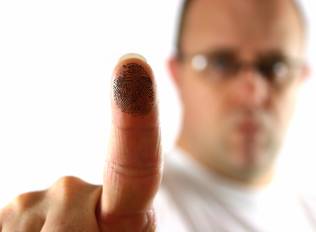
  • Fingerprint Test Can Identify Drug Use With Striking Accuracy

    Fingerprint Test Can Identify Drug Use With Striking Accuracy

    The testing device is already being used in some morgues and at treatment centers in the UK to detect drug use.

    Drug testing is important, whether to determine how someone died or to show that someone was under the influence of drugs while behind the wheel.

    However, current drug-testing methods that use samples of blood, saliva or hair are slow, invasive and expensive. Now, a fingerprint drug-testing system has been proven to detect the presence of drugs in sweat with up to 99% accuracy. 

    A study, published in the Journal of Analytical Toxicology, found that the Reader 1000, manufactured by U.K. firm Intelligent Fingerprinting, can detect cannabis, amphetamines, opiates, and cocaine, the substance that make up the majority of illicit drug use.

    The device works by analyzing sweat from the fingerprints of people who are alive or dead. The sweat contains metabolites that show that the body was clearing certain illicit substances. Using the device speeds up the process of drug testing. 

    “This new research highlights how our [device] can screen rapidly for drug use in individuals using a fingerprint sample with a sample collection time of only five seconds, and a total analysis time of ten minutes,” David Russell, an Emeritus Professor at the University of East Anglia, who is co-author of the research and founder of the manufacturer, told The Daily Mail.

    For the study, researchers used the Reader 1000 on 75 dead bodies, as well as testing those individuals with traditional blood and urine drug screenings.

    Comparing the readings, researchers found that the Reader 1000 was up to 99% effective at detecting cannabis, 95% for cocaine, 96% for opiates and 93% for amphetamines.

    “We matched the coroners’ drug test results obtained using our fingerprint drug screen with a second sample tested in laboratory conditions, achieving excellent correlation in terms of accuracy,” Russell explained.

    The research proved the concept of analyzing sweat collected through fingerprints, Intelligent Fingerprinting argued.

    “This important research demonstrates how there is sufficient sweat present in a subject’s fingerprint, regardless of whether the person is alive or dead, to enable our fingertip-based drug screening system to detect the presence of four major drugs of abuse at the same time,” Intelligent Fingerprinting’s Dr Paul Yates said in a news release.

    The device is already being used in some morgues and at treatment centers in the UK to detect drug use. Testing is underway to make it available at prisons and in other law enforcement settings. Although the device was able to detect the presence of opioids and other drugs, its ability to measure the amount of the substances was not studied.

    View the original article at thefix.com

  • Recovery Program Uses "People Power" To Help Those With Addiction

    Recovery Program Uses "People Power" To Help Those With Addiction

    “My biggest motivator is to pass that gift of hope and possibility on to others,” says one Minnesota Recovery Corps volunteer.

    Minnesota is piloting a new program that’s harnessing the “people power” of AmeriCorps to support local addiction-recovery efforts.

    Minnesota Recovery Corps (MRC), an offshoot of AmeriCorps, was launched in 2018. MRC volunteers (or “recovery navigators”) are deployed throughout the Twin Cities to help people who are new to addiction-recovery.

    Some of the MRC volunteers are in recovery themselves. “My biggest motivator is to pass that gift of hope and possibility on to others,” Valerie Gustafson, who is nine years sober, told MinnPost. “I wanted to be more open in my recovery and I want to help others in their recovery.”

    “I’m an AA guy, but I don’t force that on anyone,” said Peter Solberg, another volunteer. “I try to find what works for them and help them to be successful with that pathway.”

    The program started with 15 “navigators” and is still growing, says Audrey Suker, CEO of ServeMinnesota, the organization tasked with administering and funding AmeriCorps programs in Minnesota.

    A survey of AmeriCorps members revealed the meaningful impact that the service work had on volunteers in recovery themselves. “We heard powerful stories from individual AmeriCorps volunteers,” said Suker. “They told us that their work with our organization gave them a sense of purpose and helps them get back on a career trajectory.”

    The pilot program’s potential for growth is limitless. “The deeper we get into it the more I can see the potential that exists of aligning the program with people who want to give a year of their life to serving others in need,” Suker told MinnPost.

    One example of harnessing AmeriCorps’s “people power in action” is recruiting the 1,000-plus volunteers already working in schools to teach a curriculum of addiction-awareness to K-12 students in Minnesota.

    Volunteer Peter Solberg started volunteering with MRC two-and-a-half years into his recovery. He has since been assigned to the Minnesota Department of Corrections, working with men who are “ready to re-enter society but still have chemical dependency issues.”

    This is one example of a population in need of MRC’s services. As Solberg explains, “About 94% of the people who are re-entering have chemical dependency issues. The guys I work with are all high-risk recidivists.”

    It’s all about helping the men find hope within themselves. “What these guys are missing in their lives and the reason they keep coming back to the system is that they don’t have hope, period,” said Solberg. “I go back to their childhood and we talk about their dreams and the things that got them excited. Suddenly you have an individual who has cracked open the door and can see the light on the other side.”

    View the original article at thefix.com

  • Angels of Addiction Exhibit Tells Story Of Lives Lost To Opioid Crisis

    Angels of Addiction Exhibit Tells Story Of Lives Lost To Opioid Crisis

    “When you see these faces you will cry because we’ve lost all of these people,” says artist Anne Marie Zanfagna.

    Last week, about 130 faces of lives lost to drugs graced the rotunda of of the Russell Senate Office Building in Washington, D.C. The brightly-colored paintings are part of a series called Angels of Addiction by Anne Marie Zanfagna, a New Hampshire mother who lost her daughter Jacqueline to heroin in 2014.

    After finding comfort in painting Jacqueline, Zanfagna has since made it her calling to create portraits for others grieving like her. Her paintings are free of charge, funded through her nonprofit Angels of Addiction that collects donations for art supplies.

    “It is a work of love. I know how people feel when they receive these, and that warms my heart,” said Zanfagna, according to the Concord Monitor. “If I can do something to help someone else, I’ll do it. It’s my way of giving back.”

    In 2017, there were 483 confirmed drug overdose deaths in New Hampshire, according to the state Medical Examiner’s Office. Fentanyl was involved in more than 350 of these deaths.

    “You hear the numbers and you know it is a lot, but when you try to translate that into lives, it’s different,” said Zanfagna. “When you see these faces you will cry because we’ve lost all of these people.”

    Zanfagna first showed her paintings in the New Hampshire State Library in August 2017. “When I saw all 90 together it was very powerful,” she said at the time. “It struck me that every one of those beautiful people are dead.”

    Since then, she’s painted more than 150 portraits, and her exhibit has graced the walls of town halls, libraries and recovery centers.

    Last week, her paintings went up in the Russell Senate Office Building in Washington, D.C., after the artist was invited to show her work there by Sen. Jeanne Shaheen of New Hampshire.

    “To see them, it reminds you that the opioid epidemic that we’re facing isn’t about numbers and statistics. It’s about real people. This is something that can happen to anybody,” said Shaheen.

    “Each of these portraits tells a story, and the Angels of Addictions exhibit reminds us who we are fighting for as Congress takes steps to address this crisis.”

    Ultimately the series is about putting faces to lives lost, and capturing the joy that each individual brought to their loved ones. “I think the people in my exhibit need this recognition because they were all good people,” said Zanfagna.

    View the original article at thefix.com

  • Rod Stewart's Daughter Says Singer Helped Her With Addiction

    Rod Stewart's Daughter Says Singer Helped Her With Addiction

    The music icon’s eldest daughter has been sober for two years. 

    Sarah Streeter, the eldest daughter of British rock legend Rod Stewart, told the UK press that the singer has helped her to overcome the toll taken by addiction to drugs and alcohol.

    Streeter, who was born to Stewart when the singer was 17 years old and given up for adoption, remained estranged from the singer until 2007. Stewart, whose son Sean has also struggled with substance use disorder, offered both emotional and financial support to Streeter and introduced her to his family.

    The 55-year-old Streeter said that she has not only been sober for two years, but also enjoys a closer relationship with her father, noting, “Now he’s just dad to me.”

    Streeter was born in 1963 to Stewart, who was at the time struggling to make a name in music, and art student Susannah Boffey. “I was too young to know what being a father was all about when Sarah came along,” said Stewart in a 2010 interview with the Mirror. “Adoption seemed like the best option.”

    After spending five years in foster care, Streeter was adopted by Gerald and Evelyn Thubron, and remained unaware of her father’s identity until she turned 18.

    They met—reluctantly, according to Streeter. Streeter was hesitant to forge a relationship with Stewart. She was also battling addictions to crack, cocaine and alcohol, with frequent bouts of sobriety and relapse.

    “Why I’m still here, I don’t know,” she said. “I carry a huge amount of guilt about what I put people through. The way it affected my family and loved ones was terrible. But I’ve chosen to talk about it because I think it’s important to be honest and to show that even if you hit rock bottom, you can get over it.”

    When Streeter’s adoptive mother passed away in 2007, she reached out again to Stewart, and found that he was receptive and understanding of her situation.

    “It’s not all new to him, of course,” said Streeter, referring to her half-brother Sean’s drug issues. “There’s no judgment from him at all. I don’t talk about it a lot now, but he always asks me if I’m all right.”

    Streeter revealed that she receives a monetary sum from Stewart each year—an amount that she insists was not requested. “It just happened,” she said. “It helps and it came at just the right time. It got us out of debt, which I’d run up because of the drugs.”

    More significantly, she now enjoys a genuine familial relationship with Stewart, who has introduced her to her eight half-siblings. Streeter said that she understands why he maintained distance from her as a child: “I can see he was in a difficult position while both my parents were still here. I think he didn’t want to upset them by encroaching on their territory after all these years.”

    The closeness they experience now had to be built over time. “He’s not just my dad, is he? He’s a big star, so of course, that makes it difficult,” said Streeter.

    But time has brought them together, and Streeter said that she now feels like a true part of Stewart’s family. For the singer, their relationship, though complex in its past, is simple in explanation: “She calls me dad and I call her my daughter,” he said. “We’re doing our best.”

    View the original article at thefix.com

  • Kanye West Says He Was Misdiagnosed With Bipolar Disorder

    Kanye West Says He Was Misdiagnosed With Bipolar Disorder

    The rapper discussed the misdiagnosis during his highly publicized sit-down with President Donald Trump.

    In a recent conversation with President Trump, rapper Kanye West expressed that he believes his diagnosis of bipolar disorder was a mistake and he was actually suffering from sleep deprivation.

    According to The News-Herald, West met with President Trump on Thursday, October 11 and discussed the importance of communication when it comes to mental health. 

    “What I think is we don’t need sentences, we need pardons,” he told the president, according to The News-Herald. “We need to talk to people. I was diagnosed with bipolar disorder, I was connected with a neuropsychologist that works with the athletes in the NBA and NFL. He looked at my brain. I wasn’t actually bipolar, I had sleep deprivation which can cause dementia 10 to 20 years from now when I wouldn’t even remember my son’s name.”

    In a previous interview, West discussed his diagnosis and said he was happy to know he had bipolar disorder. 

    “I think it’s important for us to have open conversations about mental health – especially with me being black,” West said. “Because we never had therapists in the black community. We never approached taking a medication. I think it’s good that when I had my first complete blackout at age five, my mom didn’t fully medicate me. Because I might have never been ‘Ye. And there’s times where at least I’m happy that I know [I’m bipolar.] Like, even like for this interview, I knew I wanted to stay in a calm state.”

    West has also worked his mental health diagnosis into his songs. In a song called “Yikes” on his album Ye, West sings, “ain’t no disability, I’m a superhero.” 

    According to Time, West also told radio personality Big Boy that he is grateful to have the resources he does.

    “I’m so blessed and so privileged because think about people that have issues that are not Kanye West, that can’t go and make that [music] and make you feel like it’s all good,” he stated. “I’d never been diagnosed and I was like 39 years old… That’s why I said on the album, ‘It’s not a disability, it’s a super power.’”

    In addition to his bipolar disorder, the rapper has also struggled with substance use disorder. On an episode of TMZ Live, West discussed his battle with pain pills after having liposuction. 

    “I was drugged the f— out,” he stated. “I was drugged out. I was on opioids. Two days after I got off opioids, I’m in the hospital. Two days before going to the hospital, I was on opioids. I was addicted to opioids. I had plastic surgery because I was trying to look good for y’all.”

    In another interview, this one with radio personality Charlamagne tha God, West explained that he uses anyone he speaks to as his therapist. 

    “I use the world as my therapist. Anyone I talk to is my therapist,” he said. “I will pull them into the conversation of what I’m feeling at that point and get their perspective… I like just talking to acquaintances, friends, family, and I keep them on the phone for 45 minutes at a time, talking through things. It’s kind of narcissistic.”

    View the original article at thefix.com

  • Using Love as a Drug

    Using Love as a Drug

    I used drugs and alcohol to control my feelings and gave up on relationships early on since people are harder to control than substances. As I felt the other person pull away, my urge to control increased.

    Recently I was sitting in a meeting with a little over two years sober, feeling completely insane. For a few months, my moods vacillated between elation and utter sadness, complete faith and deadbeat nihilism, raging excitement and total fear. I was leaning into the program of AA more than ever. I was attending meetings every day, sticking to my spiritual practice, sponsoring two women, and regularly checking in with my sponsor. Even so, I wasn’t able to find any middle ground. The emotional chaos raging inside me was very reminiscent of active addiction. I felt so twisted I asked myself: Am I even sober?

    I googled the word “sober” and found a source that defined it as “being unaffected by alcoholism.” Fuck! I’M NEVER GOING TO BE SOBER, I thought. Over two years without any mind-altering substance in my body and serenity felt that far out of reach.

    You hear about people feeling messed up and hitting bottoms all the time in sobriety. But there’s a flip side to that: you can feel just as good in sobriety as you did in active addiction when the drugs and alcohol were actually working. At its best, it’s what the Big Book calls “being rocketed into a fourth dimension.” In my experience, the highs in sobriety get higher and so do the bottoms. Even so, feelings can come as quite a shock in early sobriety since they’re no longer being regulated or masked with drugs or alcohol.

    They say that for real alcoholics, the problems really begin once the drink is removed. My obsession to drink and do drugs was removed through working the 12 steps in AA (a few times) and the idea of picking up a drink or drug rarely, if ever, crossed my mind. This in itself is the ultimate miracle.

    But alcoholism is a beast that will show up in many forms. Once the obsession is lifted, the addict/alcoholic mind will quickly move on to other things: coffee, cigarettes, shopping, gambling, sex, eating disorders, social media, take your pick. In my case, it shifted towards arguably the greatest drug of all time: love.

    “Love” can mean different things to different people and our understanding of love has been shaped by what we saw growing up and our past experiences. As a point of reference, I use renowned spiritual teacher and physician David R. Hawkins’ Map of the Scale of Consciousness, which categorizes every level of consciousness a person can experience into levels of falsehood and levels of truth. Shame is the lowest energy field in falsehood where one feels hateful towards themselves and views a Higher Power as despising, and Enlightenment is the highest in truth where one feels completely attuned and at one with a Higher Power.

    Based on this structure, I propose that love is an energy field in an array of consciousness that we can fall in and out of at any moment. In Hawkins’ scale, Love is sandwiched right above Reason and below Joy. So here, we see that love is literally beyond reason. According to Hawkins, it is here that a person experiences feelings of reverence and revelation before transcending into Joy where one views themselves as complete. Perhaps this helps explain why our culture is so fixated and obsessed with the idea that another person can “complete” us.

    The process of revelation may come to an addict easily since, for many of us, any human connection at all in early sobriety is unprecedented and revolutionary. For years I used drugs and alcohol to connect with people around me. As I continued to develop a sense of belonging with others in sobriety, and saw it was possible that I could feel emotions of such a loving nature, I felt as if I had been “rocketed” into that fourth dimension the Big Book referred to.

    In his excellent book Unsubscribe: Opt Out of Delusion, Tune in to Truth, recovered addict and Dharma teacher Josh Korda explains that feelings of attraction and infatuation create a neural surge of dopamine, the neurotransmitter that is related to our rewards state and motivation. The same neurotransmitter that floods your brain after two drinks, that thing that makes you go “Ahhhh.”

    As an addict, I was bound to chase that high. I was driven by an obsession of the mind and a phenomenon of craving. All I wanted was to feel that rush. Even a text message would send the dopamine levels up. It wasn’t long before this relationship dictated my every move, just like drugs and alcohol did. It was no different than when I chased one high to the next in active addiction, doing everything in my power to find relief and a sense of control. (For the sake of disclosure and to spare the theory of sex addiction, there was no sex involved.)

    Without realizing it, I’d become hooked. And with every high, there comes a crash.

    During the crashes, I found myself resorting to some lower-level behaviors I had not seen in a while. My behavior was extremely erratic, I couldn’t stay focused, and I was irritable unless my craving was satisfied. My addiction found its way into other areas of my life and unmanageability and insanity crept in once again.

    Once someone becomes addicted, they lose their free will and will do anything in their control to satisfy the craving. Referring back to Hawkins’ Map of Consciousness, the addict falls into another state entirely: Desire. Often confused with Love, Desire is actually one of the states of falsehood, along with Guilt, Shame, Fear, and Hatred. Desire itself can never truly be satisfied, because it’s based in an illusion. One wants what they can’t have. It is here that nothing is good enough, everything fails to hit the mark, and any other place and time is better than the present moment. This conjures the state of restlessness, irritability, and discontentedness. This internalized state eventually turns so wretched that drugs and alcohol appear to be the solution again. My alcoholic mind took all its evil twists and turns so that once I exhausted all other alternatives, I “all of a sudden” had the thought, A line of coke and a shot would make all of this go away.

    That is the insanity of drug addiction and alcoholism.

    Naturally, there is an impermanence to all things and all states; a simple fact of life I could never easily accept and consistently fought against. Feelings ebb and flow, usually without any sense or rationale behind them. Relationships are not guaranteed. As an addict who is obsessed with control and wants to feel good all the time, these truths are not easy pills to swallow. I used drugs and alcohol to control my feelings and gave up on relationships early on since people are harder to control than substances. As I felt the other person pull away, my urge to control increased.

    I tried to take control of my feelings back. I had no desire to pick up a drink or drug at the time, but my addiction manifested in my anorexia, chain smoking, excessive running, drinking too much caffeine. Meanwhile, I still attempted to control the course of the relationship. Even my participation in AA was extremely alcoholic in that I was using the tools to fix the way I felt, rather than simply living with it. (Yes, it is possible to do the 12 steps like a drug.)

    It was suggested to me that I was perhaps a love addict, to which I countered: Am I love addict or am I simply an addict who now participates in relationships? I did attempt to dive back into the 12 steps yet again, but this time in the area of relationships, so I could just figure it out and then just not be that way anymore. It didn’t work.

    One thing I’ve learned in recovery is that this is all super normal, human stuff. People meet other people, develop feelings and feel the adrenaline and dopamine rush of a crush and the heady feelings in the beginning of a relationship. Everyone experiences rejection and break-ups. However, my experience as an addict is that I did not thoroughly develop in these areas because I was never truly there for them. My emotional growth was stunted when I began to use drugs and alcohol, and sobriety is a big catching up game in terms of emotional intelligence. It’s how I cope with these normal life experiences that matters and what I found was that I was still living alcoholically, even without drugs or alcohol in my system.

    Is all of this to say that addicts should shy away from connecting with others, initiating new relationships, and striving for new, unadulterated levels of intimacy? Am I doomed in every relationship because I’m an addict and alcoholic? Absolutely not.

    One of the greatest things about recovery is its wide invitation to exist on this plane with other people, to feel things the way humans should. These developments can take years to even out. In recovery, we get to challenge our false belief systems and stumble around with everyone else learning how to care about each other effectively. Relationships are where we see our character defects in action, where we experience life, where we ultimately grow in the process. The longer I stay sober, the greater my capacity to connect with others and to be honest becomes. And it all boils down to this: There is no way to grow spiritually in isolation.

    All I needed to remember was one of the simplest things I heard when I first got sober: The unmanageability would cease as soon as I relinquished control. Just as it did with drinking and doing drugs.

    I was back at step one and had to get honest. With truth and reality can come a lot of pain and suffering, but it’s not the truth that causes it. It’s the extent to which and for how long someone lives in a false reality that perpetuates suffering. Not only was I driven by the same obsession of the mind and phenomenon of craving that drove me in active addiction, I was also driven by the false belief that people, places, and things are on this planet for me to prove my worthiness and to validate my experience.

    The old ideas and beliefs that drive us in our relationships were constructed by years and years of living in falsehood. Now, in active recovery, we chip away at those old ideas and free ourselves from those false beliefs.

    View the original article at thefix.com
  • Can Social Media Reduce Depression In Older Adults With Chronic Pain?

    Can Social Media Reduce Depression In Older Adults With Chronic Pain?

    A recent study examined how social media use affected the mental health of elderly adults living with pain.

    There’s been lots of information put forward about the toll that social media can take on our mental health, with excessive use of social media linked to depression and addictive behaviors.

    However, a new study indicates that there may be a silver lining: social media use might be associated with lower depression levels in older adults with pain. 

    The study, published in Journals of Gerontology, Series B and reported by Reuters Health, followed 3,401 people ages 67 or older. The people in the study all lived in the community, rather than in an assisted living or nursing facility, and 54% of them said they’d been bothered by pain in the past month. 

    Researchers found that among people with pain, 15% of those who did not use social media showed signs of depression. That dropped to just 6% among people who did engage with social media.

    “Using online social media to maintain contact with family members and friends is a good way to compensate for seniors who restrict their social activities due to pain. It is not going to replace seeing people in person, but it will help supplement their reduced activities,” said Shannon Ang, a doctoral candidate in sociology at the University of Michigan in Ann Arbor and co-author of the study. “For us, this study is about preserving mental health.”

    Despite the connection with better mental health, only 17% of participants were using social media, Ang found. He said that programs that teach the elderly how to use computers and engage online could be beneficial.

    In the future, Ang wants to research the connection between social media and mental health further, looking at what social media platforms and patterns of use are most closely connected with mental health benefits. 

    Healthcare providers say it isn’t necessarily surprising that social media could reduce depression symptoms, since it can alleviate feelings of isolation.

    “It’s very well known that social support is helpful for depression and physical symptoms. It’s a growing area of interest in research and clinical care,” said Dr. William Pirl of the Dana-Farber Cancer Institute in Boston, who wasn’t involved in the study. 

    However, people should proceed with caution, Pirl said.

    “People respond differently to it. Some people can become more anxious hearing other peoples’ stories or about other treatments for what they’re experiencing. There’s a lot of variability of whether social media is right for you.”

    View the original article at thefix.com

  • Gang Accidentally Filmed Themselves Prepping Drone Drug Drop

    Gang Accidentally Filmed Themselves Prepping Drone Drug Drop

    During an attempt to smuggle drugs into prison, Scottish gang members managed to give police ample evidence to lock them up.

    The Scottish gang members who accidentally filmed themselves loading up drugs on a prison-bound drone are now bound for prison themselves. 

    Paul Reilly and Michael Martin were hit with nearly four years in the hoosegow following their ill-fated flight, according to The Scotsman.

    The duo was aiming to send the drugs over the walls and into Perth Prison, where Martin’s brother was expecting to reel in the pills and pot, according to the New York Post.

    But, while packing the narcotics onto the remote flyer, Martin accidentally turned on the drone’s camera and recorded more than 18 minutes of footage of him and his gang prepping the drug load.

    “If there was an award for the movie with the most inept director,” prosecutor Michael Sweeney said, “then it would have been won by the accused.”

    The footage showed both men—along with a third still-unidentified suspect—neatly packing Kinder Eggs full of drugs to send into the prison. Though the video even managed to show the gang’s house number, the criminal crew turned out to be better at filming than they were at flying, as the drone was eventually found crashed outside the prison yard.  

    When they recovered the wrecked flyer, authorities found a micro SD card full of the incriminating evidence. 

    “I don’t think they were aware the drone was actually filming at that time. I’m assuming he was looking at the drone to check if it was on, if it was functioning,” PC Nicholas Schembri said in court. “He was maybe making sure it was properly set-up. From the footage I viewed you could see clearly a tattoo on his neck.”

    The crew tried to exercise some element of caution, covering their hands with gloves to shield their fingerprints and DNA from the drone—but that turned out to be a futile precaution.

    That arrest came just months after authorities in the UK collared another set of gang members accused of making dozens of drone flights into prisons. In that case, it was an outdoor wildlife camera that tipped off police to the illicit flying operation and landed eight people behind bars. 

    View the original article at thefix.com

  • Narco Submarines Give Coast Guard A Run For Their Money

    Narco Submarines Give Coast Guard A Run For Their Money

    The DEA estimates that 30 to 40% of narcotics coming into the country are hauled on the homemade submarines.

    Narco subs seem to be on the rise as a stealthy method of smuggling drugs, a shift that comes amid booming cocaine production in the South American country most known for it.

    In the first nine months of 2018, the Colombian navy caught 14 drug-hauling vessels, three times as many as they intercepted the year before according to Business Insider.

    In 2017, the U.S. Coast Guard offered similar observations, reporting a “resurgence” in low-profile vessels like subs.

    But those captures likely represent only a small fraction of the drug-laden subs headed stateside, according to the online news outlet. The DEA estimated that 30 to 40% of narcotics coming into the country are hauled on the homemade submarines – and authorities are probably only catching 5% of them, Insider reported.

    The shift comes amid a boom in the coke-making industry in Colombia, where there is now more land dedicated to coca-growing than ever before in the nation’s history, according to the New York Times

    “It’s a curve that’s permanently going up and hasn’t reached its inflection point,” the Colombian defense minister, Guillermo Botero, told reporters this year. 

    The first time U.S. authorities snagged a drug-running sub wasn’t until 2006, when law enforcement intercepted a homemade vessel hauling 3 tons of blow near Costa Rica’s Pacific Coast. 

    Five years later, American authorities encountered their first stealth sub on the other side of the isthmus, in the Caribbean. Though the traffickers tried scuttling the vessel to ditch the load, authorities ultimately recovered 14,000 pounds of coke from the craft. 

    Since then, Colombian crime rings have pumped out an estimated 100 drug subs per year, launching them in the country’s rivers where there is relatively little policing to stop them. And, as the blow industry continues booming, traffickers have more and more money to pour into making sure their underwater vessels are ever more sophisticated and able to escape detection. 

    But the recent uptick in intercepted subs may not mean that there’s more of them. Coast Guard officials told Business Insider that’s actually a sign of anti-trafficking success. Yet, Mike Vigil, former chief of international operations for the DEA, chalked it up to the sheer volume of drug trafficking on the high seas. 

    “They may be capturing more,” he said, “but again, that’s because there’s a hell of a lot more being using to smuggle drugs.”

    View the original article at thefix.com

  • E-Cig Maker Called Out For Putting Erectile Dysfunction Meds In Vape Juice

    E-Cig Maker Called Out For Putting Erectile Dysfunction Meds In Vape Juice

    The FDA issued a warning to one e-cig maker that reportedly violated the Food, Drug, and Cosmetic Act.

    The FDA is casting a closer eye on HelloCig Electronic Technology, an e-cigarette manufacturer, after FDA researchers discovered that not only were the fruit-flavored products found to impair lung function in trials on mice, but the liquids contained prescription erectile dysfunction drugs as well.

    While e-cigarettes, vapes, and their ilk have been touted as a healthier alternatives to smoking for years, the truth is that the products were simply too new to allow any deep understanding about the possible adverse risks they carry as well as what product regulations should be put in place to protect consumers.

    This lack of regulation may have contributed to HelloCig’s inclusion of tadafil and sildenafil, usually used as the active ingredient to treat erectile dysfunction, in their e-cigarette liquids.

    “There are no e-liquids that contain prescription drugs that have been proven safe or effective through this route of administration,” said Scott Gottleib, FDA Commissioner.

    The FDA also undertook a surprise inspection of popular San Francisco e-cig manufacturer Juul, snatching up their marketing documents to ensure the company is not marketing to minors. Juul has been a runaway success, seeing a massive increase in sales from 2.2 million devices in 2016 to 16.2 million devices in 2017.

    Considering that 2 million high schoolers reported using e-cigarettes in a National Youth Tobacco Survey study, a significant portion of these sales made their way to the hands of minors.

    That’s why last September, the FDA warned and fined any e-cig manufacturers found to have sold products to minors and gave them 60 days to prove they had mechanisms in place to prevent minors from purchasing their products.

    The fruity flavors that are most attractive to teens have been linked to impaired lung function in mice. While this does not necessarily mean that the same effects will be seen in humans, it’s an important first step to determining the risks the products present.

    “Our findings suggest that exposure to e-cig vapor can trigger inflammatory responses and adversely affect respiratory system mechanics,” wrote the study’s authors. “We conclude that both e-cig vaping and conventional cigarette smoking negatively impact lung biology.”

    Groups of mice were exposed to cigarette smoke as well as different formulations of e-cigarette vapor. After three days, all the mice were found to have problems with inflammation, mucous production, and lung function.

    View the original article at thefix.com