Category: Addiction News

  • Lady Gaga Reflects On Drugs, "Loneliness" Behind Stardom

    Lady Gaga Reflects On Drugs, "Loneliness" Behind Stardom

    “There was a buffet of options. When I first started to perform around the country doing nightclubs, there was stuff everywhere.”

    Six-time Grammy-winning singer Lady Gaga makes her feature film debut as an aspiring performer who falls for a rocker (Bradley Cooper) with dependency problems in the upcoming A Star is Born.

    The confluence of substance abuse and fame is an issue with which Gaga (born Stefani Germanotta is familiar, having battled cocaine dependency early in her career. And in an interview about the film with the Los Angeles Times, Germanotta recalled how she traveled a path similar to that of her screen character, where drugs were frequently offered as a panacea to the emotional turmoil of striving to achieve your dreams.

    In the film—which is the third remake of the 1937 film, with previous iterations starring Judy Garland and Barbra Streisand in Germanotta’s role— Cooper is musician Jackson Maine, whose career is in crisis due to his drug and alcohol dependency. He finds what appears to be creative and emotional salvation in Germanotta’s Ally, a gifted singer. But as her star ascends, his substance issues threaten to upend their happiness. 

    In her interview with the Times, Germanotta said she fully understood the emotional turbulence that was part and parcel of the pursuit of a career in front of an audience. “It’s very lonely being a performer,” she said. “There’s a certain loneliness that I feel, anyway—that I’m the only one that does what I do. So it feels like no one understands.”

    Feelings of isolation and insecurity can spur some aspiring performers to seek comfort in the substances that can proliferate behind the scenes. “There was a buffet of options,” recalled Germanotta. “When I first started to perform around the country doing nightclubs, there was stuff everywhere, but I had already partied when I was younger so I didn’t dabble. I was able to avoid it because I did it when I was a kid.”

    As Us Weekly noted, Germanotta has spoken often about her struggles with cocaine in the past. The publication quoted her 2011 interview on The Howard Stern Show, where she said, “I think that I was lonely and there was something about the drugs that made me feel like I had a friend. 

    “I did it all alone in my apartment while I wrote music. And you know what? I regret every line I ever did.”

    View the original article at thefix.com

  • Enabling, Self-Seeking, and Recovery

    Enabling, Self-Seeking, and Recovery

    Every moment there’s the possibility of falling back into self-seeking after having recovered much of our spiritual, financial, and physical health.

    Recently, I was accused on a community website of being an enabler. The article and discussions that followed were regarding a proposed affordable housing project in our community and how some members of the local city council were concerned that if fed and housed, the persons in poverty would become dependent. After I participated in a recent homelessness count that provided the government and other organizations with information on the population of homeless people, I felt I was informed enough about the topic to comment on my recent experiences. I wondered about the label someone attached to me and how valid it was. The question I ask myself is, “how do I know if I’m an enabler?”

    As an addict, I am going through a set of steps with a sponsor, which is a big part of the success of the 12-step program. Currently I’m on step 6, which states: “We were entirely ready to have God remove all these defects of character.” It seemed an appropriate time to look at this behavior—and to find out if in fact it is a “defect of character.” What is an enabler?

    en·a·bler (From Wikipedia)

    noun

    1. a person or thing that makes something possible.

    “the people who run these workshops are crime enablers”

    1. a person who encourages or enables negative or self-destructive behavior in another.

    “he criticized her role as an enabler in her husband’s pathological womanizing”

    I liked “A person that makes something possible,” but then the definition erodes into some negative rhetoric. Could I be attaching my own definitions to justify my behaviors? I also wondered about alternatives to enabling.

    What is the opposite of enabler? From Word Hippo:

    Noun antonyms include: deterrent, hindrance, impediment, inhibitor, preventer, and prohibitor.

    I don’t particularly like those words either. It almost seems like a lose/lose scenario. I can attempt to clarify both sides of an argument and chose to either “make something possible” or be a “preventer” of a possible catastrophe. These implied absolutes can place people on opposite sides of the fence of their own making and create polarity and strife. 

    Before I started down the path of recovery, choices were a lot easier. I was just concerned with myself—because at its core, addiction is about being self-obsessed. If something benefited me, made me feel better or allowed me to avoid uncomfortable feelings or just looked fun, I could justify the choices and my actions.

    Today, through the recovery process, I choose a new way of living:

    I invite a higher power into my life and my decisions. It is a manner of living that involves more than my own self-seeking ways. I know some people do not agree with terms like “God” or “Higher Power” or even the concept of a spiritual existence. I struggled with the concept too when I first started in recovery. At some point, those who live a life based on the principles learned in 12-step recovery must decide what concept is working for them today. The idea is that a higher power, whether it is “God” or my support group, it is a greater power than myself. As the saying goes, “it was my best thinking that got me here.”

    I try not to complicate things too much these days, but difficult choices are inevitable. The fact that I have difficult choices to make is a choice…but that train of thought gives me a headache and might be overthinking things – another seemingly common trait among addicts. I often wonder if life would be easier if I was less concerned about those around me and more concerned about myself- as that is also a common trait among those in active addiction. After all, addicts without recovery really only think about themselves and how to satisfy their compulsion to use.

    It makes sense that the early successes of living free from active addiction re-opens the door to self-seeking behaviors. Every moment there’s the possibility of falling back into self-seeking after having recovered much of our spiritual, financial, and physical health. In fact, all those healthy options are affected by the choices we make and are part of what molds us into who we are and what the fellowship of recovering addicts around us looks like. The literature in Narcotics Anonymous even warns about the dangers of self-seeking, but some people fall back into that habit:

    “…However, many will become the role models for the newcomers. The self‐seekers soon find that they are on the outside, causing dissension and eventually disaster for themselves. Many of them change; they learn that we can only be governed by a loving God as expressed in our group conscience.” 

    In Alcoholics Anonymous, they have The Promises: “Self-seeking will slip away.” 

    If you are no longer self-seeking, then the choice of what, if anything, to seek becomes apparent. I remember very clearly in early recovery when my wife suffered a life-threatening incident. After an invasive surgery to correct a serious defect in her foot and ankle bone structures, she developed a blood clot. A piece broke off and went through her heart and damaged her left lung. She was in the hospital for quite some time as they dissolved the clot with drugs and dealt with the damage to her body.

    I tried to balance work, looking after our two small daughters, recovery meetings, and support for my wife. I thought often of praying to this new “God” I was developing a relationship with. I questioned what I should pray for. Save my wife’s life? There are many people who deserve to live but their lives end. A prayer came to mind: “Please don’t leave me a single father who is barely capable of looking after himself.” This seemed to be a desire for my own selfish needs. In the end I prayed for knowledge that I should be at the right places, doing the right things, and to find the strength for myself and others, including for my wife, regardless of what happens. Also, “Please don’t leave me alone” – and I wasn’t. Friends stepped up and many offered support. 

    In time, my wife recovered. The point to this story and how it relates to enabling is that at no time did anyone criticize the choices I made. People did what they could to support me and let me live with the consequences of my choices. 

    Mother Theresa dedicated her life to easing the suffering of the poor and destitute in India. Did she spend her entire life simply enabling people, with little or nothing to show for her work? Possibly she could have become a motivational speaker and had a far greater effect by inspiring those same people to change their lives. Not that my actions are comparable to Mother Theresa, but the choice I make today is that rather than accomplishing 100 tasks to benefit myself, I would rather accomplish 100 tasks to benefit others, even if a few lives are changed as a result. Even if only a single life is affected, or no lives at all, I would still rather spend the time for the benefit of others. In early recovery it was explained to me that I needed to separate my “needies from my greedies.” What I do after my needs are met is the basis of my recovery. Recovery from addiction and the 12 steps are based on a single premise- which is explained in the 12th step:

    “Having had a spiritual awakening as the result of these steps, we tried to carry this message to addicts, and to practice these principles in all our affairs.”

    I don’t always have answers to life’s questions. I might not be doing the right things at the right moment. I always try to be grateful for the life I lead. Gratitude isn’t a feeling, it’s a virtue. Gratitude is a manner of living that expresses our love for what we have by sharing and not hoarding. Sharing is best when it’s unconditional, as is love, and if that looks like enabling, well, I guess I’m okay with that.

    In the end what I share is freely given and my needs are met. I’m not looking for platitudes, but an appreciative “thank you” is always welcome since that can be your gratitude. What you receive and what effect that has is all on you. You choose how to apply the help someone gives you. I can be free of the burden of expectation or false hope. In the end did I enable you? That’s not for me to judge, is it?

    View the original article at thefix.com

  • Marijuana-Involved Traffic Death Report Shows Mixed Results For Colorado

    Marijuana-Involved Traffic Death Report Shows Mixed Results For Colorado

    The number of fatal crashes in which the driver tested positive for cannabinoids rose from 75 in 2014 to 139 in 2017.

    A new report on traffic deaths involving marijuana in Colorado has presented what seems like contradictory information: the number of fatal vehicular accidents involving Centennial State drivers who tested positive for marijuana rose in 2017, but the number of such fatalities in which the driver could be considered legally impaired by marijuana experienced an even greater decline.

    The dichotomy between the results underscored, as Reason noted as one of the primary challenges of ascribing marijuana use with traffic fatalities: that THC, the psychoactive compound found in cannabis, can be detectable in the system for up to 30 days, depending on a number of factors, so drivers who test positive at the time of a crash may not be legally impaired.

    The CDOT study essentially summed up the conundrum by noting, “The presence of a cannabinoid does not necessarily indicate recent use of marijuana or impairment.”

    According to the CDOT report, the number of fatal crashes in which the driver tested positive for cannabinoids rose from 75 in 2014—when legal recreational sales began in Colorado—to 139 in 2017.

    However, the number of fatalities in which the active THC level in the driver’s blood concentration could be considered legally impaired—which by state law is five nanograms per milliliter or more—dropped sharply during the same time frame, from 19 “cannabis-involved fatalities” in 2014 and 2015, which rose to 52 in 2016 before dropping again to 35 in 2017.

    CDOT spokesperson Sam Cole said that the department regards the number of traffic deaths in which the driver was legally impaired to be the most accurate means of measuring how the drug is impacting road safety in Colorado. As the Colorado Springs Gazette noted, that would indicate that marijuana-related deaths as a whole were on the decline.

    And while Cole reiterated the study’s assertion that the presence of THC does not necessarily indicate impairment, he told the Denver Westword, “Marijuana and driving is still a huge problem in Colorado. About 10% of our fatalities involve a driver who was at or above the legal limit for active THC, and we need to get that number way down. Any fatality above zero is one fatality too many.”

    Henny Lasley, co-founder of Smart Colorado, a non-profit that formed after the passage of Colorado’s recreational marijuana law, essentially echoed statements by the National Highway Traffic Safety Administration and the AAA Foundation for Traffic Safety, which noted, “The science of impairment is lacking.”

    What concerned Lasley in the report was an increase in the number of traffic fatalities involving drivers with more than one substance in their systems; drivers that tested positive for cannabis, alcohol and any other drug tripled from eight in 2016 to 25 in 2017.

    “The combination is very concerning,” she said.

    View the original article at thefix.com

  • Meth Remains Greater Issue Than Opioids In Rural Minnesota

    Meth Remains Greater Issue Than Opioids In Rural Minnesota

    “In 2009 meth use shot upward and it’s been steadily climbing,” said one city official.

    While many areas of the United States are battling the opioid epidemic, parts of rural Minnesota are facing a different battle: meth

    According to the Mankato Free Press, a new study by the Center for Rural Policy and Development has found that treatment admissions for meth are increasing, as are fatalities from the drug.

    The study determined that in 2016, 7,664 people in Greater Minnesota entered treatment for meth, which was a 25% increase from 2015 and about double the amount of people seeking treatment for meth in the Twin Cities.

    “We’ve been bombarded with the news of all the deaths from opioids. Our job is to find out what may be the same or different in Greater Minnesota than in the Twin Cities,” Marnie Werner, interim executive director of the Center for Rural Policy and Development, told the Mankato Free Press. “As soon as we started talking to a few county administrators, we found that opioids are a problem, but meth is a bigger problem.”

    According to Werner, the state as a whole appears to have a large issue with opioids due to the size of the Twin Cities. “The Twin Cities is so large it skews the statewide data,” she said. 

    For Blue Earth County Attorney Pat McDermott, the report’s findings were not new information.

    “Meth continues to be the drug of choice and probably the primary controlled substance we deal with and the drug task force deals with,” he told the Mankato Free Press. “Meth crimes are what’s driving our numbers and the drug task force’s numbers. There are five times as many meth cases than cocaine… (and) four times more meth cases than prescription cases.”

    While Werner says that meth use dropped in the early 2000s—when it became required that pseudoephedrine cold medicines, often used to make meth, be sold behind pharmacy counters and be limited in quantity. However, she says, meth manufacturing then picked up in Mexico and entered the U.S.

    “In 2009 meth use shot upward and it’s been steadily climbing,” Werner told the Free Press. “The way it’s being mass produced, prices have dropped and it’s very affordable to people. So these people who have underlying addiction or mental health problems who maybe couldn’t afford drugs before can now.” 

    Blue Earth County has some initiatives in place to help combat drug issues, such as the Yellow Line Project, which allows first-time offenders to seek treatment rather than go to jail. 

    “If you get them connected to services sooner rather than later, you’re better off. If you put someone in prison for three years, they’re going to come out with the same mindset they had,” McDermott told the Free Press.

    View the original article at thefix.com

  • Mom Accused Of Accidentally Killing Child With Drug-Tainted Breast Milk

    Mom Accused Of Accidentally Killing Child With Drug-Tainted Breast Milk

    Prosecutors argue that the child died because the mother had used methamphetamine and amphetamine.

    The homicide case against a Pennsylvania mother accused of accidentally killing her baby with drug-tainted breast milk will move forward, a judge ruled last week during an initial court appearance. 

    Samantha Jones was arrested in July after an autopsy found methadone, amphetamine and methamphetamine in the dead 11-week-old’s system. The Bucks County mother was charged with homicide from the start, but on Wednesday, Magisterial District Judge Lisa Gaier upheld the charge after hearing more from defense and prosecutors. 

    “They don’t know what happened here,” defense lawyer Louis Busico said, pointing out that investigators never tested his client’s breast milk. “I’m asking the court not to criminalize the death of this little child.”

    But prosecutors argued that the drugs “had no business being inside that baby,” according to a news release

    “We are not alleging that this was an intentional killing of this baby,” prosecutor Kristin McElroy said. “But it certainly was reckless to know these drugs were in your body and continue to breast feed.”

    The New Britain Township woman previously told investigators she was prescribed the methadone and that she’d stopped breastfeeding her boy three days before his death, when she switched to formula.

    But the morning of April 2, the baby started crying and Jones decided to breastfeed because it was late and she was tired, she told police

    When her husband woke up for work, the baby was crying, so he made a bottle of formula and Jones fed him. Afterward, she fell asleep—and when she woke up an hour later the baby was white, with blood around his nose. 

    Jones and her mother tried CPR and called 911, but first responders were unable to save the baby, who died that day in the emergency room. 

    In court last week, Jones’ lawyer tried getting the homicide charge dismissed, saying the woman would never have hurt her boy and that the breast milk hadn’t actually tested for drugs.

    “She was a wonderful mother to this little boy. I can tell you she was a loving mother to this little boy, and she was doing everything possible to improve herself and provide both her children and herself with a nice life,” Busico told ABC News. “She has another child who she loves dearly. She has an amazingly close and wonderful relationship with her own mom. But every day is a little piece of hell on earth, make no mistake about it.”

    View the original article at thefix.com

  • Couple Accused Of Running Mobile Home Drug Drive-Through

    Couple Accused Of Running Mobile Home Drug Drive-Through

    A string of overdose cases led authorities back to a mobile home with a makeshift drug-dealing drive through.

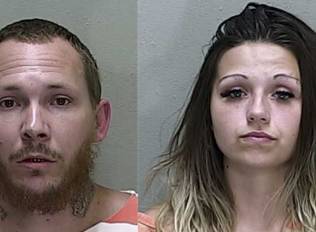
    Authorities busted a drug-dealing couple in Florida who were found running a drive-through service for illicit drugs out of the kitchen window of their mobile home. The drive-through experience was complete with signs directing traffic flow and open/closed signs.

    William Parrish Jr., 32, and McKenzee Dobbs, 20, reportedly put together the whole system, according to Ocala Police, to prevent their business from drawing unwanted attention from customers constantly entering and exiting their abode. But several overdoses in the area, presumably by their products, were what finally brought the long arm of the law to their door.

    “We were seeing some overdose incidents that were happening in this particular area, specifically at this particular location,” said Capt. Steven Cuppy of the Ocala Police. “There [were] some heroin sales that were going on there. Subsequently, through the investigation, we were able to determine that product was laced with fentanyl.”

    Parrish has been charged with driving under the influence, keeping a dwelling used to sell drugs, possession of drugs with intent to sell and resisting arrest without violence. Dobbs was slapped with keeping a dwelling used to sell drugs, possession of drugs with intent to sell, possession of fentanyl and possession of fentanyl with intent to sell.

    Parrish’s father, William Parrish Sr., claimed his son was trying to get his life back on track and was visiting a methadone clinic. “He’s been trying to get himself straightened out,” Parrish Sr. said.

    Parrish Sr. maintains that the reports of the overdoses are “a lie.”

    This isn’t the first time dealers have tried to use the convenience of a drive-through to do business. Last year, a pair of Burger King employees were caught using the fast food chain’s drive-through to deal cannabis.

    Customers in the know would speak to the drive-through in code, asking if “nasty boy” was working and, if so, if they could have their “fries extra crispy.”

    This was the cue for Garrett Norris, 20, and Meagan Dearborn, 19, to slip a little bit of marijuana in with the order and collect the payment at the second window. The pair were caught in a police sting, though Dearborn later claimed that she simply handed over the food and never knew what was stashed inside.

    View the original article at thefix.com

  • John Goodman Dishes on Sobriety, Roseanne Barr & Showbiz

    John Goodman Dishes on Sobriety, Roseanne Barr & Showbiz

    The 66-year old-character actor gave up alcohol in 2007 and still attends Alcoholics Anonymous meetings almost every day.

    John Goodman, 66-year-old character actor and Roseanne star, shared details about his life, including his struggles with alcohol, in an interview with The Sunday Times.

    Goodman now lives in New Orleans with his wife, Annabeth. Despite an earlier prediction that his career would have dried up by now, he has roles on HBO’s The Righteous Gemstones and BBC2’s Black Earth Rising.

    However, his life may not be as idyllic if he had not gotten his alcoholism under control, he revealed.

    “I was an alcoholic parent. If I saw a bottle of vodka I had to have it, it was a compulsion,” he told The Times. “My wife had given up on me, I sometimes wondered if she was just waiting for me to die. She’d had enough.”

    Goodman gave up alcohol in 2007 and has been sober since then. He says he still goes to Alcoholics Anonymous almost every day. “You never beat it, it’s a daily thing,” he said.

    When the interviewer suggested that beating alcoholism must have taken a lot of willpower, Goodman declined to take credit.

    “It didn’t have anything to do with will. It just grew old,” he admitted. “I was unhealthy and I was hurting people and I tired of it.”

    Giving up alcohol also gave way to healthier living for Goodman. He began to eat less and exercise more, and despite two knee replacements is feeling the best he’s felt in years.

    “I do about 40 minutes on an elliptical machine every day. And I don’t eat as much as I used to. I was eating alcoholically—with both hands,” he said, adding that he does not follow any special diet plans. “I just eat smaller portions.”

    His career, and happiness, recently took a hit with the cancellation of the Roseanne revival due to a racist tweet by the show’s titular star, Roseanne Barr.

    “I was broken-hearted, but I thought, ‘OK, it’s just show business, I’m going to let it go.’ But I went through a period, about a month, where I was very depressed,” he revealed. “I’m a depressive anyway, so any excuse that I can get to lower myself, I will. But that had a great deal to do with it, more than I wanted to admit.”

    He did not expect the network, ABC, to react the way it did.

    “I was surprised. I’ll put it this way, I was surprised at the response. And that’s probably all I should say about it,” he said, pausing. “I know, I know, for a fact that she’s not a racist.”

    View the original article at thefix.com

  • Should You Breastfeed Your Baby If You're on Methadone?

    Should You Breastfeed Your Baby If You're on Methadone?

    My daughter was born with neonatal abstinence syndrome but I was not allowed to nurse or have her in the room with me; the hospital staff said the methadone in my breast milk could be dangerous. They were wrong.

    Earlier this summer several news outlets reported on the death of an 11-week-old infant in Philadelphia by what appeared to be a drug overdose. The mother, who has been charged with criminal homicide, blamed the drug exposure on her breast milk. Although an autopsy revealed that the infant’s drug exposure also included amphetamine and methamphetamine, many news outlets chose to focus on the fact that the mother was a methadone patient. The death of an infant by drug exposure is unquestionably terrible; unfortunately, misleading articles make what is already a tragedy even worse by insinuating or directly stating that the methadone content in the breast milk was involved in the infant’s death.

    Stigma around methadone use in the United States has a long shadow. Prescribed primarily to treat opioid use disorder (but also sometimes for pain management), methadone is a long acting opioid that builds in the patient’s bloodstream to create a stable, non-euphoric equilibrium when used correctly. It is a highly effective form of both addiction treatment and harm reduction, shown to reduce overdose deaths by 50% or more. Unlike short acting opioids like heroin or morphine, methadone prevents patients from experiencing the physical chaos of sedation and withdrawal, and can help re-balance neurochemical changes that take place during active addiction. For decades, methadone has been considered the gold standard of treatment for opioid use disorder, including during and after pregnancy.

    But in spite of the demonstrated benefits of methadone and its pharmacological differences from commonly misused opioids, it has, for many years, acquired a popular status as “legal heroin.” Social media is flooded with memes mocking methadone patients or complaining that they don’t deserve “free methadone” when other drugs cost money (in fact, methadone has a price tag like any other medication). Even other people in recovery or the throes of active addiction disparage methadone, sometimes referring to it as “liquid handcuffs” because of the stringent regulations requiring daily trips to a clinic during the first several months of treatment.

    This stigma leaks into every aspect of patient care. For me, it prevented me from seeking treatment for years. I was terrified to get on methadone. Who would volunteer to be “handcuffed” by a treatment system? But when I learned I was pregnant, my doctors urged me to get on methadone. They said that attempting to withdraw from heroin would be dangerous for my developing baby, and continuing to use would be even riskier.

    I was reluctant, but I enrolled in a methadone maintenance program as my doctors advised. Because of that, I had a healthy, full-term pregnancy. But at the Florida-based hospital where my daughter was taken after a speedy, unplanned home birth, I was not allowed to breastfeed. My daughter suffered neonatal abstinence syndrome (NAS), a condition caused by opioid withdrawal that occurs in some babies whose mothers used methadone or other opioids while pregnant; she was dosed with morphine to wean her down from the methadone she received in utero, and the hospital staff told me that adding my methadone dose via breast milk could be dangerous. Because of that, my milk production dwindled, and my daughter—who stayed in the hospital over a month—never learned to properly latch. After she came home, she suffered colic, constipation, and sleep disturbances as we worked through various formulas trying to find one that was gentle on her stomach.

    But these negative ideas about methadone distribution in breast milk are flat out wrong. We know that methadone is a highly potent, long-acting opioid that is extremely dangerous if given to infants and children directly. No amount of methadone syrup should be administered to an infant or child by a parent or caregiver without physician approval. But studies have demonstrated that the amount of methadone that gets passed into breast milk is negligible, and will not harm an infant, even a newborn. A 2007 study of methadone-maintained mothers in addiction recovery found that methadone concentrations in breast milk remained minimal in the first four days postpartum, regardless of maternal dose, time of day after dosing, and type of breast milk being expressed. The daily amount of methadone ingestible by the infants did not rise above .09 mg per day. To help prevent even that slight fluctuation, John McCarthy, a practicing and teaching psychiatrist who has treated opioid-dependent pregnant and postpartum women for over 40 years, suggests splitting nursing mothers’ methadone doses in two—a measure that should have begun during pregnancy to help minimize the risk of NAS. “It’s not dangerous to nurse on a once a day dose, but it’s not the best way to give the medication. The baby should be given a smooth level of methadone.”

    Some people believe that breastfeeding an infant with NAS while on methadone will help decrease withdrawal symptoms by providing a minute amount of the same drug from which the infant is withdrawing. According to experts like Jana Burson, a doctor specializing in the treatment of opioid addiction, this belief is also false: “some mothers erroneously think their babies won’t withdraw if they breastfeed—that’s wrong. There’s not enough methadone in the breast milk to treat NAS.” Of course, breastfeeding a child who experiences NAS is beneficial, both because of the health benefits of breast milk, and because maternal contact is important for babies in distress. “Breastfeeding will help in the general sense that babies like to breastfeed and it’s calming, but not because babies are getting methadone in the breast milk.”

    Sandi C., a methadone-maintained mother based out of Massachusetts, breastfed her son for two and a half years, and plans on breastfeeding the baby she is currently expecting. Like me, Sandi was addicted to heroin when she learned she was pregnant. She began on buprenorphine, a partial-opioid agonist used similarly to methadone, and switched to methadone partway through her pregnancy. But her postnatal experience was different than mine.

    “I’m really fortunate that my area is really encouraging of breastfeeding,” says Sandi. “Actually, I wasn’t sure if I could breastfeed and [my doctor] said ‘definitely breastfeed, we encourage it.’” Like my daughter, Sandi’s son was diagnosed with NAS. But instead of being sent to the Neonatal Intensive Care Unit (NICU), her son was allowed to be in the hospital room with her, where Sandi could hold and breastfeed him as much as he needed. Her son was released after just two weeks, less than half the time my daughter spent in the NICU at our hospital in Florida. She continued to breastfeed at home until he was over two years old.

    “He never got sedated,” she recalls. “Everything was fine.”

    Just because methadone is safe for breastfeeding moms doesn’t mean the same is true for other drugs. If the Philadelphia baby’s death was in fact caused by what many outlets have called “drug-laced breast milk,” it would have been due to the amphetamines, not the methadone. Methamphetamine breast milk exposure has not been studied as extensively as methadone, but current recommendations are that lactating women should wait 48 hours after their last use of methamphetamine before resuming breastfeeding. Experts like Burson and McCarthy agree that mothers on methadone maintenance who are not using other substances can safely breastfeed. “All of the major medical groups recommend it,” Burson said, adding, “even on higher doses they all recommend that mothers on methadone breastfeed.”

    View the original article at thefix.com

  • What Sets Suboxone Apart From Other Medication-Assisted Treatments?

    What Sets Suboxone Apart From Other Medication-Assisted Treatments?

    When taken as prescribed by an opiate addict, Suboxone doesn’t allow me to avoid or escape reality. This is one way it differs form other MATs.

    I’ve used the same pharmacy for over a decade. The tech filling my prescription this morning was the same one that had filled my Vicodin prescription for four years, on the first of the month every 30 days, like clockwork. 

    Today, I smiled at her as she stuffed a different prescription into a small white bag: 28 individually wrapped, “lime” flavored, orange-tinted filmstrips.

    “You’re still on Suboxone?” she questioned.

    “Yep.” I answered. “I don’t see weaning off anytime soon. My recovery is strong and life is good.”

    She raised a skeptical eyebrow.

    “Aren’t you just trading one for another? Wouldn’t it be better to never get on it? Nobody gets off of this stuff… It just seems like a waste…no different than any other drug addict.”

    My body deflated with a sigh, but I tried to give her the benefit of the doubt. I wasn’t expecting these questions from a woman whose career relies on understanding complicated medical pharmacokinetics, but I get it. She doesn’t grasp the complexities of addiction.

    I simply explained to her the differences in lifestyle, motivation and integrity between using illegal substances to get high, and using a medication as prescribed as one of many tools in a recovery program. 

    She’s not alone in her misunderstanding. Suboxone and other forms of medication-assisted treatment (MAT) are confusing and controversial, for addicts and “normies” alike. MAT isn’t the only thing that’s hotly debated. We argue whether addiction is a disease or a choice, what labels we should use, and how anonymous we should be. We quarrel about jargon, literature, sponsors and steps. 

    One thing most addicts and alcoholics can agree on is this: We don’t like to be uncomfortable. The inability to tolerate emotional or physical pain is often what sets us hurling down the spiral of addiction.

    An injury, illness, stress, loss, or combination of all of them (in my case migraines, divorce, job burnout) led us to drink or use to dull the pain. Whether its numbing out, sleeping it off, or chemically re-energizing, we’re professionals at self-medicating.

    Going to extreme measures to either chase pleasure or run from pain, we drink, use, pop, dose, snort, shoot and eat our way to an alternate reality.

    Could the pharmacy tech be right? Am I just trading one negative habit for another in an attempt to evade my problems? Like other opiates, Suboxone causes physical dependence and withdrawal if you stop taking it. How is taking it daily any better than taking Vicodin, Percocet, or heroin? I’ve often heard: “You might as well get in a managed cannabis program and smoke weed every day – isn’t that better than taking an opiate? “

    My answer?

    “No.”  

    But that answer hasn’t always come easily. Even as a grateful patient of this medication, I’ve grappled with the decision. Sobriety means getting honest with myself, taking into consideration anything that might be used as a “crutch” or negate recovery.

    I have to ask myself: Why am I OK with taking Suboxone? Why don’t I feel like a shady addict, living in the shadows and sneaking drugs, even though I am officially still taking an opiate? 

    The answer came to me during a particularly stressful day when all I wanted to do was get high, get wasted and go to sleep. That’s impossible to do in sobriety. I’ve had to learn to cope with emotions, to accept reality, and to tolerate discomfort. 

    A light bulb came on: Suboxone is different because it doesn’t change me or my circumstances. It doesn’t get me high.

    Suboxone doesn’t do what other opiates did for me; I can’t numb physical or emotional pain. On Vicodin and alcohol, I was irritable, suffered memory loss, was incapable of personal growth and spirituality. I spent my time and energy chasing drugs, chasing a high, running from withdrawal. I cannot avoid or escape reality by taking Suboxone. At all.

    When taken as prescribed by an opiate addict, it differs from other harm reduction and medication-assisted treatment such as methadone or marijuana by that fact.

    The form of Suboxone I currently use can’t do anything to enhance my mood even if I take it other than prescribed. I can’t dissolve it in liquid and shoot it, because the Narcan in it (the ingredient that prevents overdose) will put me into immediate withdrawal.

    I can attempt to get high by taking more than prescribed, but once my brain’s receptors are filled, Suboxone ceases to give any more effect. That undeniably sets it apart from other drugs — over-the-counter and otherwise.

    Methadone, on the other hand, can easily be abused. I’ve done it myself. Taking three times the amount of methadone I should have, I went to a meeting to “work on recovery.” I couldn’t tell you what happened at that meeting, or how I got home.

    If I take three times my Suboxone dose, I’ll likely not notice much enhanced effect, and I’ll screw myself over, since I’ll be short three doses and will somehow have to explain to my doctor why I ran out early. I’ll potentially be kicked out of the program as well, without ever even getting high! For an addict like myself, it’s not worth it. 

    Marijuana as harm reduction has become popular, and is considered safe because there’s no lethal dose. However, for daily users and first-time experimenters alike, marijuana impairs judgment, driving, and learning. Smoking weed and then showing up to meditate or work on the 12 steps is counterproductive.

    Treatment centers that prescribe cannabis generally give participants their dose at night, to make sure that they’re not high during meetings and counseling sessions in the daytime. This isn’t necessary with Suboxone – there’s no roller coaster effect of “high” vs “sober.” I feel no different after taking my daily dose than I do when I wake up in the morning prior to taking it.

    I experience every range of emotion, the same as I would without medication. If life is hard and painful and sad, I can’t go to my Suboxone box and take a big dose to make it all go away. But methadone, marijuana, Vicodin, heroin?…..Escaping life and avoiding pain is exactly what they’re good for.

    Suboxone isn’t a perfect fix by any stretch. Prescriptions can be diverted and sold on the street. Active heroin addicts will sometimes buy it to avoid withdrawal, if they can’t get their drug of choice. That’s an unfortunate fact. But is it the worst- case scenario? Every time a person injects heroin, they’re risking death by overdose or a systemic infection. There’s no guarantee that the substance is what the dealer says it is.

    When an addict buys street Suboxone, they’re taking a safer opiate. They’re protected against agonizing, incapacitating withdrawal, which leaves them helpless for their family or employer. They could even have a few days feeling like their “normal” self; maybe even well enough to join a meeting and consider recovery. I don’t condone or encourage the sale of Suboxone on the street.

    There are increasing safeguards set up by prescribing clinics and pharmacies that make it really difficult for someone to get their hands on another person’s medications. I’m just suggesting that Suboxone on the street isn’t the most dangerous or dreadful thing that can happen. 

    Suboxone does have side effects, and it’s important to mention that not all Suboxone is created equally. Addicts are the ultimate manipulators. Certain pill forms can be crushed and used inappropriately (the safest from is widely considered the film strip which is part buprenorphine/part narcan).

    If an opiate-naïve person (one who has not been abusing either heroin or prescription meds) takes Suboxone, s/he will very likely experience an initial sense of euphoria or sleepiness.  But the same can be said for Benadryl, Nyquil, or prescription nerve pain meds such as Gabapentin. The list of drugs that have potential for abuse is extensive. Recreational use is a separate situation altogether; misusing any medication is completely out of line with recovery.

    Abuse is dependent on motives and intention, not the side effects themselves. Nicotine and caffeine are two highly addictive substances that can be mood altering and cause withdrawal if stopped cold turkey. They’re not only acceptable in recovery, they’re plentiful; Coffee is supplied at meetings in unlimited doses. The use of these doesn’t negate one’s sobriety. 

    Self-improvement, spirituality, and community connection are now my daily foundation. Suboxone doesn’t impede this. It doesn’t change my perception of reality or my ability to be mindfully present. I no longer look for any means to avoid discomfort (ok sometimes I eat brownies or surf social media– we’re all a work in progress!!)

    Using tools I’ve gained from mindfulness and my recovery community, and maintained on a low dose of Suboxone to help keep cravings at bay, I work though challenges with balance and compassion. If I were still getting high, this wouldn’t be possible. 

    Suboxone’s not a magical cure. But it is a safe alternative to other opiates. It’s a solid tool that helps many of us maintain sobriety and the presence of mind to progress in recovery and personal growth. 

    Tiffany Swedeen, RN, BSN, CPC/CPRC is a certified life and recovery coach, She Recovers Designated Coach, and a registered nurse in recovery herself from opioids and alcohol. Tiffany lives “sober out loud,” proudly sharing her story through advocacy and blogging and is passionate about helping others do the same. Her goal is to eradicate shame and empower all to live a life of radical self-love. You can contact Tiffany through her website Recover and Rise, read her blog www.scrubbedcleanrn.com and follow her @scrubbedcleanrn. 

    View the original article at thefix.com

  • Rosebud Baker: A Stand-Up Career Started by Sobriety

    Rosebud Baker: A Stand-Up Career Started by Sobriety

    “As much as it sucks to be fully sentient through every failure, I think it’s helped me in the long run.”

    You may not have heard of Rosebud Baker, yet, but you will. As a stand-up comic, actress, and writer, she’s been rising through the ranks of the NY comedy scene faster than anyone I’ve ever seen. What is her secret, I wondered. Well, one of them is a decade in sobriety. Recently I was at a big comedy show full of successful comedians, the exact kind of environment where if I hang too long, the thought of drinking or using increases exponentially by the hour and sometimes wins. Marijuana perfumed the streets as I hit my Juul and attempted to shoot the shit with others outside the venue. I looked to my left and saw Bobby (Kelly), and thought phewsober. To my right Rich (Vos) phewsober. And talking to both of them? Rosebud Baker. Not only does she regularly work at every prestigious club in the city—including a hosting gig this August 21st at inarguably the greatest club on earth: the Comedy Cellar—she was chosen as one of 2018’s New Faces in the most coveted and career-changing comedy festival, Montreal’s Just For Laughs.

    On a more personal level, the last time I relapsed on the road I came to in a strange Chicago suburb on a day I had multiple Laugh Factory shows in the evening. I called a friend in a panic, who, being new to sobriety, was not equipped to handle the situation. But she knew someone who could. She gave me Rosebud’s number. Despite her busy schedule, she stopped and took the time to listen to the insane fear ranting of a post-coke and -booze binge stranger. I am forever grateful for that talk, for the compassion I was shown, for how someone can treat you better than you know how to treat yourself. I calmed down enough to nap before my shows, to perform well that night, and to go to a meeting the next morning. It’s what got me to fight another day. I’ve said it before and I’ll say it again: the only thing that matters is getting up one more time than you fall. But that’s my story. Here’s Rosebud’s:

    The Fix: What is the hardest thing about being sober in comedy?

    Rosebud Baker: There’s nothing I can think of. You’re in bars a lot but as long as your focus is on your comedy, on what you came there to do, it’s simple. When it’s a really important audition set and the nerves are killing me sometimes I feel like drinking, but I just don’t – or I haven’t yet. I had six years of sobriety under my belt before I started in comedy and I had been through a lot of shit, so it’s like, I’m not gonna drink over a showcase.

    What’s the best thing about being sober in comedy?
    The clarity you have. There’s an advantage to being honest with yourself in life, and especially in comedy. I remember someone asking me once after they got offstage, “Did I bomb?” …and I was like, “you were THERE, weren’t you?! Don’t make me say it.”

    After a few drinks, it can be hard to decipher the truth of what’s happening. That false confidence can really slow your progress as a comic. People just stay at this embarrassing level of skill for YEARS because in their mind, things are going a lot better than they are. So as much as it sucks to be fully sentient through every failure, I think it’s helped me in the long run.

    How did you deal with the early days?

    With being sober? I put my own well-being first. I still do.

    What do you think it is about comedy that attracts so many addicts?

    The lifestyle of a comic creates the perfect disguise for an alcoholic/addict. They get to go out every night, get hammered, maybe fuck a stranger, and tell themselves “I’m just at work!”

    What advice would you give someone who struggles with chronic relapse and is a comic?

    All I can say is what I did when I got sober: Take a year off. Get a day job you think you’re too good for. Humble yourself in a real way, and focus on getting sober. Put all your energy into spiritual growth. Be willing to accept that everything you think you know about yourself is probably false. Stay away from big announcements and proclamations about the changes you’re making in your life and just make them. Get off social media and buy a diary.

    ***
    It’s inspiring to interview sober comics at the pinnacles of their career, and it’s differently inspiring to interview a sober comic rising at breakneck speed. The humility cultivated in the first year has served Rosebud well, as has her fearless self-examination and tireless work ethic built on a foundation of spiritual well-being. The idea of putting sobriety first has long evaded me because I thought that to do so one must forsake everything else. Stories like Rosebud’s help drive home the truth: on drugs and alcohol, your world quickly shrinks until all you are left with are your chemicals and delusions. On the other side of that? The whole rest of life. What is using anyway but a (usually false) shortcut to the feelings that we seek from spiritual well-being and external accomplishments? May there come a time when every performer puts down the drink ticket and picks up the whole rest of life.

    Check out Rosebud Baker’s new podcast Two Less Lonely Girls, and writing on Elite Daily as well as comedy all over NYC.

    View the original article at thefix.com

    Related Content