Category: Addiction News

  • Dan Bigg, The Godfather Of Harm Reduction, Has Passed Away

    Dan Bigg, The Godfather Of Harm Reduction, Has Passed Away

    Bigg, who co-founded the largest community-based naloxone distribution network in the country, was 59 years old. 

    On Tuesday, the harm reduction community lost a godfather. Dan Bigg, co-founder and Executive Director of the Chicago Recovery Alliance, died suddenly at home at 59 years old.

    Bigg started his journey to harm reduction in the mid-1980s working at the Illinois Health Association’s Drug Addiction AIDS Project. He was frustrated at the growing rate of HIV infection among people who injected drugs and how stigma often forced people with HIV out of their 12-step recovery programs, alienating them from support systems.

    Along with a few other people, he put together an HIV information and support group composed of active and former drug users. In time, the support group didn’t seem like enough. Bigg wanted to do more. So in 1992 he co-founded the Chicago Recovery Alliance (CRA), a place where former and active drug users and people with HIV could find community and health resources.

    One of Chicago Recovery Alliance’s first programs was a syringe exchange, which was against Illinois law at the time. But laws never stopped Bigg. By teaming up with public health researchers, CRA was able to start distributing sterile syringes to help prevent the spread of HIV. But that exchange was just the beginning.

    In 1996, Bigg’s dear friend and co-founder of CRA, John Szyler, died of a heroin overdose. In his grief, Bigg launched a new initiative, one that would eventually be replicated across the country and save tens of thousands of lives—the first community-based naloxone distribution program.

    At the time, naloxone, a medication used to reverse opioid overdose, was only available in ambulances and emergency room departments. Bigg put forth the novel and controversial idea to put naloxone into the hands of people who need it most—active drug users. He began working with medical doctors to figure out a distribution model that would be as hassle-free as possible for people who use drugs and their loved ones.

    The program was met with criticism from those who said that active drug users were not capable of utilizing naloxone properly, or that giving them access to a life-saving drug would encourage risky behavior. To these people, Bigg gave the middle finger. Any positive change as a person defines it for him or herself, was his philosophy. A life saved was certainly positive change.

    The CRA would become the largest community-based naloxone distribution network in the country and soon be replicated in dozens of other states.

    Bigg was honored with the Norman E. Zinberg Award for Achievement in the Field of Medicine at the International Drug Policy Reform Conference in 2015 and won numerous other awards. But he was not a man for frills or recognition. He continued the work tirelessly up until the day he died because he believed it was the right thing to do.

    The harm reduction community honors him. The people saved with community-based naloxone owe him their lives. The world has lost a legend.

    View the original article at thefix.com

  • Trump To Jeff Sessions: Sue Drug Companies For Opioid Crisis Role

    Trump To Jeff Sessions: Sue Drug Companies For Opioid Crisis Role

    The Attorney General said he would take action on Trump’s requests. 

    President Donald Trump has instructed Attorney General Jeff Sessions to file a federal lawsuit against pharmaceutical companies in Mexico and China, claiming that they have played a role in the US opioid epidemic.

    Last week, according to the New York Post, the president threw blame at China and Mexico for their roles in the opioid epidemic, claiming the countries had manufactured some of the illegal opioids coming into the United States.

    “In China, you have some pretty big companies sending that garbage and killing our people. It’s almost like a form of warfare. I’d like you to do what you can legally,” Trump said to Sessions.

    Fox News reports that Trump’s remarks came during a Cabinet meeting on Thursday, Aug. 16. Fox notes it was somewhat unusual that Trump asked for a new “major” lawsuit to be filed, rather than asking Sessions to join existing lawsuits filed by various US states. 

    “I’d also like to ask you to bring a major lawsuit against the drug companies on opioids,” Trump stated at the meeting, according to Fox. “Some states have done it, but I’d like a lawsuit to be brought against these companies that are really sending opioids at a level that — it really shouldn’t be happening. … People go into a hospital with a broken arm, they come out, they’re a drug addict.”

    Sessions said he would take action on Trump’s requests. 

    “We absolutely will,” Sessions said at the meeting. “We are returning indictments now against distributors from China; we’ve identified certain companies that are moving drugs from China, fentanyl in particular. We have confronted China about it … Most of it is going to Mexico and then crossing the border, unlawfully, from Mexico.”

    As of now, more than 25 US states have filed more than 1,000 lawsuits against opioid distributors and manufacturers.

    Last week, New York filed a lawsuit against Purdue Pharma, stating the manufacturer of the painkiller OxyContin has mislead medical professionals and patients about the dangers of the medication. Massachusetts also filed a lawsuit against the company in June, accusing the company of a “web of illegal deceit.” 

    According to recent estimates, overall overdose deaths in the US in 2017 were about 72,000 — an increase of 6,000 from 2016’s estimates.

    However, preliminary 2018 data implies that the “numbers may be trending downward in the wake of the Trump administration’s efforts to curb the epidemic.”

    View the original article at thefix.com

  • Kirstie Alley Talks Cocaine Addiction on "Celebrity Big Brother"

    Kirstie Alley Talks Cocaine Addiction on "Celebrity Big Brother"

    “I went through the ’60s and most of the ’70s – I never did drugs. And then I did coke and it was all over for, like four years.”

    Actress Kirstie Alley spoke frankly about her cocaine addiction while appearing on the UK edition of the popular reality series Celebrity Big Brother.

    In a candid conversation with three of her “housemates,” Alley discussed the divorce from her first husband, Bob Alley, which she said led to her dependency on the drug, as well as an incident involving cocaine use while babysitting a niece and nephew which she claimed was her motivation for ending that dependency.

    Alley, who has often spoken about her past drug use, told the Big Brother that cocaine use “just kills your soul, somehow.”

    Alley, who is appearing on the 22nd edition of Celebrity Big Brother, told her cast mates that she began using cocaine prior to her film and television stardom, when she was living in Wichita, Kansas and divorced from her first husband, Bob Alley in the late 1970s.

    “I did drugs for about four years,” she said. “I went through the ’60s and most of the ’70s – I never did drugs. And then I did coke and it was all over for, like four years.”

    Alley added that after using cocaine, she told herself that she would “do this every day for the rest of my life,” which prompted Ben Jardine – a UK TV personality known for his appearance on Married At First Sight – to ask if that was how the drug affected those who use it.

    Alley noted that while everyone’s reaction to cocaine was different, the overall response to the drug was “horrible.” She added that after a period of two-and-a-half years of constant use, “it just snagged my soul. It just kills your soul, somehow.”

    When asked by housemate and television personality Sally Morgan if there was an incident that she would consider her lowest point during her dependency, Alley said that she found herself using cocaine while babysitting her young niece and nephew. 

    “I thought, ‘My God, I’m [upstairs] snorting coke and then coming down and taking care of these babies. This is horrible,” said Alley. She called her sister to retrieve her children before facing an unpleasant fact: “I just went, ‘You’ve lost your soul, totally. “I’d stepped over the line. Now the cray [sic] was running me, instead of me running wild.”

    When asked by Morgan if she’d ever used cocaine again, Alley declared, “No, and I’ve never wanted to, which is good.”

    In previous interviews, Alley has said that the end of her first marriage was the launching pad for her cocaine dependency. She told Howard Stern in 2013 that after her divorce from Bob Alley, she began spending time with a friend whom she claimed had a “lot of druggie friends,” which led to her first experience with cocaine

    “I had heard that cocaine made you peppy and happy, and I was sort of depressed because I had gotten a divorce,” she told Stern. “So I thought, ‘I’m gonna try this.’”

    Casual use soon led to dependency and instability; as she told Entertainment Tonight, “I thought I was going to overdose almost every time… I would do so much at a time that I would snort the coke and I would sit there, I would take my pulse, thinking, ‘I’m dying, I’m dying, I’m dying.’”

    View the original article at thefix.com

  • A Month of Heart Attacks: Withdrawing from Antidepressants

    A Month of Heart Attacks: Withdrawing from Antidepressants

    My doctor tells me not to worry. The medication is safe. I worry he doesn’t know what he’s talking about. I worry this was a big mistake I made at 18 and am paying for the rest of my life.

    My obsessions start as small thoughts. Random sparks catching kindling in my mind, eventually blazing into a wildfire. I’ve always been this way. I couldn’t run for fun, I had to run marathons. I couldn’t go to school for one degree, I had to get my PhD. I couldn’t write a few articles related to my work in digital design, I had to write a book. I couldn’t drink a little bit of alcohol, I had to drink until I passed out. This same thinking led to my decision to stop taking my anti-depression and anti-anxiety medication.

    I began taking medication to treat depression when I was 18. Melancholy was my constant companion the last two years of high school. It stuck around after my graduation as well. Depression had me incapacitated and numb to self-improvement. My first adult visit to a general practitioner took me 30 seconds to describe how I’d been feeling for years. I left with a prescription for Zoloft. 

    I didn’t start taking the medication immediately. I was smoking and drinking to self-medicate. Taking a pill seemed weak. I grew up as part of a generation over-exposed to and under-educated on anti-depressants. Particularly Prozac, which seemed to enter the lexicon of my peers overnight in the early 1990’s.

    “Quit being a spaz! Take a Prozac.” we’d tease each other. Even worse, “Her parents put her on Prozac.” we’d whisper in the hallway. We didn’t know what that meant. Only that being on Prozac meant you weren’t normal. Commercials and TV shows told us it was used for depression. You had a mental illness if you were depressed. Mentally ill people are crazy.

    I knew crazy was bad. My father had a mental illness. He took lithium for a good part of my childhood. He hallucinated aliens were sent to kidnap him. He was crazy. I constantly worried this secret would be exposed. I was the son of a mentally ill man.

    I struggled with what the decision to take medication would mean for my future. What would my future partner think? What would my future children think? Maybe I’d only need to take if for a few months, I thought. I wanted to feel better. I wanted to live up to the potential I’d always been told I had. I decided to take the medication.

    ———

    Medicated

    Zoloft worked. I could get out of bed easier. I could deal with the ups and downs of everyday life. I functioned. My thoughts dwelled less on negative aspects of life. But the stigma of taking medication for a mental illness was always present in my mind. The elephant in the room when I was getting to know new people. What if they wanted to get closer? Would I have to disclose I took medication? Was it worth it to cultivate relationships if I were going to lose them? Or, should I stop taking the damn medication?

    Over the next 15 years I ran through the alphabet of anti-depressant/anti-anxiety medications. Zoloft stopped working at low doses. Larger doses left me unable to sleep. It was on to Paxil, Wellbutrin, and finally Effexor. I constantly questioned my decision to take medication. During this time, I moved from Maryland to rural Ohio, I got married, had kids, got divorced, worked multiple jobs while attending school, and eventually enrolled in a PhD program. I promised myself I’d stop taking medication when life settled down.

    My quest to live medicine free started in May of the last year I was getting my PhD. I always feel positive in springtime. Sunshine removes my spirits from winter’s chest of darkness. You should stop taking medication, an inner voice whispered. At first a dew-covered bud, the thought bloomed alongside my uplifted mood. I have to admit these thoughts were assisted by the confidence of nightly drinking. Soon it was all I could think about. I’m a man earning a PhD. I’d been through marriage, divorce, and poverty over the years and not cracked.

    My life wasn’t perfect. It never would be. I had two kids with my ex-wife. She had custody. Worrying about them was my most ingrained behavior. But I should be able to handle things. I’m a good dad. I didn’t need medication to stay that way. The pills were a crutch. I’m strong. Medicine is for the weak. These thoughts cycled in my head for weeks.

    ——–

    Unmedicated

    I didn’t contact my doctor when my Effexor prescription ran out. I went cold turkey. I immediately found, to my surprise, my depression wasn’t as severe as it had been when I started taking medication. I also found out the medication had been masking crippling anxiety I’d developed.

    I wasn’t a stranger to the nausea and dizziness that accompany the first 72 hours not taking Effexor. I’d missed doses more than a few times. Forgetting to take medication for a day or two was not unusual. I’d realize I’d missed a dose when my gums would start feeling numb near the end of the day. Not taking a dose for another few hours would lead to what I called the snaps in my head. Bright pops that brought me in and out of reality. Micro explosions of light going off behind my eyes. I imagined it was my synapses going nuts. I have a powerful imagination.

    I figured I’d get over the brief withdrawal period and move on to whatever normal was. I powered through work keeping to my daily routine with manageable discomfort. Kind of. I laid my head on my desk quite a few times as the snaps passed over in waves.

    A few nights into my new life as an unmedicated, unstigmatized member of society I woke from an unsettled sleep. My first thought: my finances are in ruins! I had gone to bed thinking about bills I had coming due. I would need to dig into my savings. This fact disturbed me. But by no means would I have no money.

    My worry about finances had festered and grown while I slept. I felt it crushing me. Sitting on my chest. I inhaled and exhaled through my nose counting 10 second intervals. My brain wouldn’t stop. My body was exhausted. I looked at the clock. 2:15. More inhaling and exhaling. I fell back asleep.

    I woke again at 3:15. I felt pricks of stinging pain throughout my brain and body. As if fire ants had been biting me in my sleep. I’d stood in a fire ant nest once as a teenager. My legs burned for days. The pain I currently felt wasn’t enough to distract from the panicked thoughts – I’m going to be poor. How will I survive? How will I pay child support? I’m going to go to jail. I inhaled and exhaled slowly.

    I woke up hourly for the remainder of the night. My eyes popping open as intense fire-tingles raged throughout my body. Repeatedly falling back asleep while trying to assure myself dipping into my savings wouldn’t lead to my financial demise.

    The next few nights unfolded in much the same way. I broke the cycle with a binge drinking session that left me passed out and then hung over the next day. The alcohol washed away my anxiety. My anxiety resurfaced as vomit in the light of day.

    Still, I refused seeking more medicine. I was going to be normal. Not weak. This pain was temporary. Being strong and off medication would last forever. I knew I’d feel better once I had a few weeks under my belt.

    ——–

    A Week Off Medication

    I’m having a heart attack. This is it. I’m going to die. I was staring at a murder mystery show on Investigation Discovery. I’d stopped taking medication a week ago. Constant noise comforted me. Living alone, I craved hearing voices. I kept talk radio on, or the TV set to this channel constantly playing murder mysteries. My favorite. The show did not comfort me as I thought I was dying.

    I’m having a heart attack. The thought grabbed my throat, choking me. I’d never felt powerless over my survival. I’d been feeling tight in my chest all day. Sure, I’d been lifting weights and doing pushups throughout the week. This tightness was coming from deeper than my muscles. Tightness that started to burn. This is what dying feels like. Battery acid surged up my esophagus.

    Should I go to the hospital? I thought. No. Hospitals are the only thing I hate more than dying. I felt a surge of adrenaline as I imagined dying alone on my living room floor. It was still a better option than dying in a hospital room. Surrounded by the nauseating smell of sterilization and cleaners. Hospitals crystalized the concept of mortality. I stayed away at all costs.

    The pain in my chest continued through the afternoon. I’d been invited to meet up with a group of friends for a sushi dinner to celebrate a birthday later that night. I wanted to live long enough for that. I’d go to the hospital if I still felt chest pain after dinner. 

    I looked around the table at dinner. Everyone else seemed so happy. I’d been able to choke down a few edamame. I felt terrible. Maybe I should mention the fact that I was having chest pain. My jaw felt tight. My arm tingled. Classic heart attack symptoms. I knew this from WebMD and numerous medical-topic message boards I’d checked out to see what my symptoms meant. Unfortunately, I could make my symptoms match both a drop-dead heart attack, or a panic attack, depending on which outcome I thought it should be.

    I didn’t bring up my troubles over dinner. Verbalizing a fear was often the final step off a cliff into a panic attack. I’d learned that from my previous experiences with milder anxiety. Expressing my fears made them real. Bottling them up kept my mind racing, too busy for full blown panic. I kept my mouth shut and avoided eye contact with my friends.

    My chest still hurt after dinner. I didn’t go to the hospital. It must be something else. Surely a heart attack can’t last hours. I fell asleep convinced I’d never wake up. But I did, again and again. My chest still hurt a week later. I started referring to it as my week-long heart attack with my inner-voice. A week later it became my two-week heart attack.

    I was unable to sleep for more than an hour straight during this time. I’d stopped worrying as much about my finances. I was dying of a heart attack! I worried I’d never wake up. I also found other things to worry about. This wasn’t hard for a divorcee with two kids. I stayed up worrying about their future if I were to die. About our future relationships if I were to live.

    ——–

    Five Weeks Off Medication

    It was 11 pm. I was dying. I stood in front of my bathroom mirror. I stared at my bare chest. I watched my chest muscles pulsing in rhythm with my heart. Was this normal? I’d never noticed before. Never had a reason to. I imagined my heart fluttering to a stop.

    The joke was on me. You really can have a heart attack lasting an indefinite period of time. Four weeks to be specific. I knew this was the grand finale. Time to go to the hospital.

    I called up the girl I’d been dating for a couple years while I walked to my front-door. I’d made her aware of my panic and that I’d stopped taking medication during the first week I’d stopped. She was concerned I wasn’t doing well. She said I should take medication. I should look at it as part of who I am. I take antidepressants, like a diabetic might take insulin. She didn’t like who I was when I didn’t take medication

    “I’m having a heart attack.”

    I slid down to the floor with the phone at my ear.

    “What? Are you OK?” she asked.

    “I don’t know. I’m so confused.”

    I laid down with my head on the ceramic-squares making up my front doorway. They felt cool. So refreshing. My mind stopped racing. I caught a whiff of lemon scented floor cleaner. A familiar scent. Not one I usually found pleasant. Tonight was different. The scent smothered me in comfort while the floor’s coolness eased my tension.

    “I need to hear your voice.” I mumbled. “I’m so tired.”

    I rolled my head to the side to distribute the coolness across my forehead. “Will you keep me company for a bit over the phone?”

    I woke up at 3 am. The phone had fallen from my hand. The screen was lit. I was still on a call with my girlfriend. The timer stated 4 hours and 24 minutes had elapsed.

    “Hello?” I asked into the phone.

    Nothing. I hung up. I couldn’t believe she had been kind enough to keep the line open. I noticed my chest felt better as I slunk up the stairs to bed.

    ——–

    My Last Day Off Medication

    I made an appointment to see my doctor as soon as the office opened. I couldn’t handle what my life had become. I was falling apart in ways I didn’t know were possible. A constant feeling of having a heart attack. Fixating on small problems until I can’t see a way past them. I was used to overcoming adversity daily in my medicated life. I couldn’t face an uneventful day without a panic attack while unmedicated.

    “It’s going to take a couple of weeks to really feel the effects.” my doctor said. He scrawled Effexor XR 150 across his prescription pad.

    “I think I can handle it.” My body flooded with a sense of relief. I knew I’d feel better the next day. The placebo effect is strong with me.

    I stayed at the pharmacy while they filled the prescription. I took the pill while downing a bottle of acai berry juice. Promotes heart health boasted the bottle’s label.

    Just in case, I thought.

    ——–

    Six Years Later

    I’ve continued taking Effexor. I frequently think about stopping. I’ve expressed my concerns to my doctor each time I’ve had my prescription renewed. My doctor tells me not to worry. The medication is safe. I worry he doesn’t know what he’s talking about. I worry this was a big mistake I made at 18 and am paying for the rest of my life.

    I’ve spent over 20 years on some type of anti-depressant/anti-anxiety medication with only the one month break. I’ve spent more years alive taking medicine than not. I wonder what the medication is doing to my mind. Will I have memory loss at an early age? I wonder what the medication is doing to my body. Am I poisoning my liver?

    It’s been six years since my month-long heart attack. It’s been six years since I stopped taking medication for slightly over a month. I haven’t had any more everlasting heart attacks or phone calls lasting till 3 am. I haven’t fixated on a small problem like my finances until I become incapacitated. I haven’t had my body feel like fire ants had spent the night gnawing on me. I am functional. I love my job. I am remarried with another child. I am generally happy.

    Anyone taking an antidepressant has been told it takes more than medication to properly treat a mental disorder. Counseling, behavior modification, meditation, and other self-help activities need incorporation into your life. However, I use medicine as my main line of defense against depression and panic attacks.

    I understand the importance of going beyond medication to treat depression and anxiety. I know and occasionally practice many anti-anxiety techniques. Nothing I’ve committed to doing on a regular basis. Perhaps I’d try harder at these activities if medication wasn’t such an easy and accessible option for me. I feel good most days. I love many more aspects of my life than I don’t. The medication seems a fair price to pay.

    View the original article at thefix.com

  • Can Nerve Stimulation Help Depression?

    Can Nerve Stimulation Help Depression?

    Researchers discovered that using vagus nerve stimulators to treat depression changed patients’ quality of life.

    A new study has shown that nerve stimulation can improve quality of life for depression patients, even if their symptoms aren’t totally alleviated. 

    “When evaluating patients with treatment-resistant depression, we need to focus more on their overall well-being,” lead author Charles R. Conway, MD, a Washington University professor of psychiatry, told Science Daily. “A lot of patients are on as many as three, four or five antidepressant medications, and they are just barely getting by. But when you add a vagus nerve stimulator, it really can make a big difference in people’s everyday lives.”

    For the study, published in the Journal of Clinical Psychiatry, researchers followed about 600 patients who were being treated for depression. Some continued “treatment as usual,” which could include medication, electro-convulsive therapy, talk therapy or a combination of these.

    The researchers compared these individuals with 328 people who continued with their usual treatment, but were also given vagus nerve stimulators, which are implanted in the neck or chest and deliver regular, mild pulses of electricity to the brain. 

    Comparing 14 measurements including relationships, physical health and ability to work, researchers found that people with the stimulators had a better quality of life. 

    “On about 10 of the 14 measures, those with vagus nerve stimulators did better,” Conway said. “For a person to be considered to have responded to a depression therapy, he or she needs to experience a 50% percent decline in his or her standard depression score. But we noticed, anecdotally, that some patients with stimulators reported they were feeling much better even though their scores were only dropping 34 to 40%.”

    This suggests that the nerve stimulation can improve life for people with depression, even if it doesn’t put the depression into remission. Study participant Charles Donovan was hospitalized for depression multiple times and found treatments ineffective until he got a vagus nerve stimulator. 

    “Before the stimulator, I never wanted to leave my home,” he said. “It was stressful to go to the grocery store. I couldn’t concentrate to sit and watch a movie with friends. But after I got the stimulator, my concentration gradually returned. I could do things like read a book, read the newspaper, watch a show on television. Those things improved my quality of life.”

    Conway said that stimulating the vagus nerve might enable people to concentrate better, which makes their day-to-day lives better.

    “It improves alertness, and that can reduce anxiety,” he said. “And when a person feels more alert and more energetic and has a better capacity to carry out a daily routine, anxiety and depression levels decline.”

    View the original article at thefix.com

  • St. Louis Pushes To Expand Medication-Assisted Treatment For The Uninsured

    St. Louis Pushes To Expand Medication-Assisted Treatment For The Uninsured

    The city’s current healthcare program for the poor and uninsured does not cover mental health or addiction services.

    St. Louis officials are asking a federal agency to expand access to medication-assisted treatment under a program that provides healthcare services to uninsured individuals in the city.

    The Gateway to Better Health program, which is federally funded, serves uninsured St. Louis County residents who are living below the poverty line by providing basic health services at community health centers.

    Currently the program does not cover mental health or addiction services, but officials are asking the Centers for Medicare and Medicaid Services to allow the program to cover medication-assisted treatment with Suboxone and naltrexone.

    “We’re the first to admit there are major gaps, and one of our major gaps is mental health and substance abuse services,” Robert Freund, CEO of the St. Louis Regional Health Commission, which operates and monitors the program, told KBIA, Missouri’s NPR affiliate. “It’s only gotten worse as the opioid crisis has really escalated here in our region.”

    The Missouri Department of Health and Senior Services has asked the Centers for Medicare and Medicaid Services to reroute about $2 million currently allotted to the Gateway to Better Health program in order to allow community health centers to distribute Suboxone or naltrexone to people with opioid use disorder. The program would also require $750,000 in local matching funds, which has not been secured yet. 

    The program is also seeking approval to offer counseling, psychological testing and medication-assisted treatment for alcohol use disorder. 

    Freund said that if the community health centers are better able to serve people with substance use disorders, it would cut down on demand at clinics that only treat addiction, many of which are overwhelmed. 

    “We can increase access and decrease the burden on our substance abuse providers,” he said.

    Integrating care for substance use into a larger community center also allows people to seek help without judgement, said Kendra Holmes, the vice president of Affinia Healthcare, which operates community health centers in St. Louis.

    “I think it really helps with the stigma,” Holmes said. “Because you really don’t know what the patient is coming here for. If it were a separate entity, if we called it ‘Affinia Substance Abuse Center,’ there would be a stigma.”

    Affinia Healthcare currently has two providers trained to provide substance abuse treatment, who are paid for with grant money. Holmes said if the federal government approves the changes, Affinia would be able to offer addiction treatment services at more clinics. 

    Freund acknowledged that the requested changes “would be very limited in nature but still very helpful.”

    “We’re under no illusions this would solve our access issue for substance abuse in the eastern region,” he said. “However, it’s a start and it would help.”

    View the original article at thefix.com

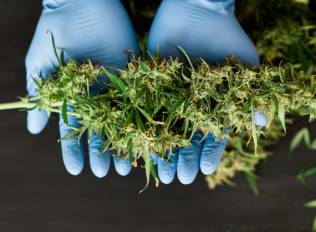
  • DEA Wants More Medical Marijuana, Fewer Opioids To Be Produced In 2019

    DEA Wants More Medical Marijuana, Fewer Opioids To Be Produced In 2019

    The new quotas are in line with the federal government’s goal of cutting opioid prescriptions by one-third in three years.

    When setting quotas for marijuana and opioid production for 2019, the Drug Enforcement Administration (DEA) did the unexpected.

    The DEA is raising the quota of cannabis that can be grown in the United States from 1,000 pounds (in 2018) to 5,400 pounds for 2019, Forbes reported.

    And in an attempt to push back on the opioid crisis, the agency lowered the production quota of opioids including oxycodone, hydrocodone, oxymorphone, hydromorphone, morphine and fentanyl.

    The quotas represent “the total amount of controlled substances necessary to meet the country’s medical, scientific, research, industrial, and export needs for the year and for the establishment and maintenance of reserve stocks,” the DEA said in a press release.

    The opioid quota reductions are in line with the federal government’s goal of cutting opioid prescriptions by one-third in three years.

    According to U.S. Attorney General Jeff Sessions, there’s already been “significant progress” in doing so in the last year.

    “Cutting opioid production quotas by an average of 10% next year will help us continue that progress and make it harder to divert these drugs for abuse,” said Sessions, according to High Times.

    The DEA’s decision to raise the quota for research cannabis grown in the U.S. is a welcome change for researchers and advocates alike.

    Strict regulations surrounding the cultivation and dispensation of research cannabis has made it difficult for the body of research to catch up to the increasing number of states that are “legalizing it” in some form.

    The current White House is blamed for stalling progress on this issue. As of July 2018, STAT News reported that the DEA still had not granted additional licenses to cannabis growers, despite a 2016 announcement by the agency that it would be open up the application process to new growers.

    It was reported that the directive to stop accepting and processing new applications came from the Department of Justice via Attorney General Sessions.

    Sessions had hinted in April that, “fairly soon I believe… we will add additional suppliers of marijuana under controlled circumstances.” But despite this cryptic promise, and calls for change from bipartisan lawmakers in Congress, there’s been little movement on the issue.

    Perhaps the updated quotas may fill in the demand for research cannabis, though pain patients will no doubt worry about how lower opioid production will affect them.

    View the original article at thefix.com

  • Mike “The Situation” Sorrentino Celebrates Another Sober Milestone

    Mike “The Situation” Sorrentino Celebrates Another Sober Milestone

    Sorrentino announced his new sober milestone on Instagram and was showered with praise by his “Jersey Shore” castmates. 

    Mike “The Situation” Sorrentino has come a long way from his booze-fueled days on MTV’s Jersey Shore. The 36-year-old TV personality celebrated 33 months of sobriety on Saturday, announcing the milestone with a post on his Instagram account. “33 Months Clean & Sober #cleanchallenge,” he wrote. “Went from running into a wall to down on one knee. We do recover.”

    Sorrentino also tagged the Discovery Institute in his post, which he’s previously credited for helping him beat his addiction to alcohol and prescription painkillers.

    And despite having gone through a full year of treatment at Discovery (including both inpatient and outpatient counseling), he wasn’t initially sold on the idea.

    “I’ll be honest, I hated everything about [addiction treatment],” Sorrentino said. “But … I wanted better for myself and I was going to do whatever it takes to get there.” He noted that Discovery made him “humble” and that treatment forced him to understand that he didn’t have all the answers. “It costs zero dollars to be a kind person,” he added.

    Sorrentino’s Instagram post was applauded by several of his fellow Jersey Shore castmates, too. Former co-star Angelina Pivarnick commented “resilience,” while Snooki said “I am legit crying I’m so proud of you.” Sorrentino recently told E! News that he hopes to be a “good example” for the “recovery world” and demonstrate to others that it’s “possible to have fun and dance in the club without drinking.”

    That said, he admitted to People that shooting Jersey Shore Family Vacation in Miami Beach wasn’t without its problems. 

    “I had a very strong foundation for my recovery with over two years when I entered the house,” he said of the new show. “But I did have to challenge myself to go out and film a whole season of Jersey Shore and have fun without alcohol—to show the youth out there that it is possible.”

    He claimed that “it took a lot of hard work just to get there” as well as having to “challenge myself to do my job and be funny and be myself.”

    Following Jersey Shore’s cancellation in 2012, Sorrentino took to drugs and alcohol, eventually spending 60 days in rehab. “I had a year to settle down and find out who I was, and I wasn’t in the best shape,” Sorrentino told People. “I had to rebuild myself inside and out.”

    Unfortunately, after two years of sobriety, Sorrentino was indicted (along with his brother) with tax fraud on nearly $9 million of income. He was also prescribed painkillers (Sorrentino’s personal “drug of choice”) after cracking his ribs at the gym, which caused him to relapse.

    Now, with nearly three years of sobriety under his belt, Sorrentino appears to finally have his life in order: “I live my life today at peace. I try not to have any arguments,” he told E! News. “I mean, everything in my life has changed. I don’t speed. I don’t get into fights. I don’t get into arguments. I really feel awesome today.”

    View the original article at thefix.com
  • Stone Sour Guitarist: Maintaining Sobriety While Touring Is “Difficult”

    Stone Sour Guitarist: Maintaining Sobriety While Touring Is “Difficult”

    In a new interview, Josh Rand discussed the ups and downs of being in early recovery while out on tour with the band.

    Stone Sour guitarist Josh Rand revealed that staying sober on tour has been “more difficult” than he ever expected. Earlier this year, Rand sat out the Canadian leg of Stone Sour’s Hydrograd tour in order to receive treatment for alcohol and Xanax abuse.

    During a recent interview with Des Moines, Iowa radio station Lazer 103.3, Rand admitted that adjusting to life on the road hasn’t been easy.

    “Europe, for me, was really trying,” he said. “When I was touring in the U.S., it was easy for me to have structure, and that’s one thing that I learned on both of these tours—the U.S. one and then the European summer tour—I’m a guy that needs structure.”

    He added that while he faced “temptation” a number of times while in Europe, he made it through.

    “I have a great support group within the band and the people that work for us, and then my fiancée came out midway through, so that was the extra support,” he noted. “But it was a little bit more difficult than what I thought going into it.”

    Rand said that “nobody had any idea” that he’d been on the prescription anxiety medication, Xanax, since 2010. (He’d been prescribed the drug for anxiety related to flying.)

    “And then, over the course of the last couple of years, I started drinking, and when we started touring, I was basically day-drinking,” he told 103.3. “But [I was] not drinking to get messed up, but just to maintain, I guess. Or to be able to cope, to have this buzz.”

    Eventually, Rand found himself feeling “horrible and miserable” and left his bandmates shortly after the ShipRocked cruise in mid-January to get treatment.

    In a June interview with Loudwire, Rand observed that while maintaining sobriety on the road remains difficult, the decision to get sober was something of a no-brainer: “In January, I just hit a wall with things, felt just terrible and decided that it was in my best interest and the band’s best interest to step aside and get stuff sorted,” he said. 

    The guitarist further detailed his decision, claiming that it didn’t take an intervention to get him into treatment. Instead, he made the decision himself.

    “To be quite honest, everybody had went through check-in at the airport and they were already through when I made the decision that I wasn’t going to fly to Canada and I was flying back to Des Moines,” he told Loudwire. “I had just spun into a funk, depression thing. I just wasn’t happy and so that’s why I made the decision. I just felt like every day was a burden. I was just like, ‘This is crazy. I know I don’t have to feel like this.’”

    Following treatment, however, Rand has found solace in his exercise routines (“Sometimes I’ll go to the gym twice”) as the band continues to find success.

    “We have a very open communication with the five of us and truly a brotherhood,” he said.

    View the original article at thefix.com

  • Fentanyl Found In Startling Number Of Heroin Samples In Canada

    Fentanyl Found In Startling Number Of Heroin Samples In Canada

    “Something like 60% of the drugs that we check are not what people think they are,” said the author of a new drug-testing study.

    Drugs in Vancouver, Canada may be even more dangerous than normal, according to a new pilot project. 

    The project from the B.C. Centre on Substance Use (BCCSU) found that more than 80% of drugs sold as heroin in Vancouver do not actually contain heroin, but rather a dangerous synthetic opioid called fentanyl. 

    For the project, the BCCSU gave local users the opportunity to test their drugs for fentanyl as well as other substances. The study took place from November 2017 to April 2018 at two supervised-consumption sites in the Downtown Eastside part of Vancouver.

    In total, 1,714 samples were tested with fentanyl test strips and an infrared spectrometer. 

    The results, which the Globe and Mail reports will be published in September in the Drug and Alcohol Dependence journal, demonstrated that fentanyl was present in a great deal of local drugs, especially heroin. The project also found that types of drugs such as stimulants and hallucinogens are more likely to contain the substance they are sold as.

    The findings, according to co-author Mark Lysyshyn, give insight into how problematic the contamination of various drugs is locally. 

    “Something like 60% of the drugs that we check are not what people think they are,” Lysyshyn said on Tuesday, according to the Globe and Mail. “We’ve always had the idea that drugs could be something different, but right now [the contamination rate] is really high.”

    During the study, the Globe and Mail states, authors found that the majority of drug samples (58.7%) were expected to be opioids. They received 907 samples of what was thought to be heroin, but only 160 (17.6%) contained heroin. Of the total 907, 822 contained fentanyl. 

    Lysyshyn says the results aren’t necessarily indicative of the illegal drug market as a whole since the study was concentrated in downtown Vancouver. 

    He also added that the intention of the study was not to prove whether an illegal drug is safe, but instead to encourage those who use the drugs to seek out more information about what they are putting into their bodies. 

    “I don’t think the purpose of drug checking is to say, ‘These are safe; take them recklessly.’ That’s not what we’re trying to do,” he said, according to the Mail and Globe. “We’re saying, here’s a bit more information about these substances; they still could be risky. Because even if you find out there’s no fentanyl in your heroin, heroin causes overdoses, too. We don’t want people to forget all about the other harm-reduction advice that we’re giving; this is just additional information that we think could be helpful.”

    View the original article at thefix.com