Category: Addiction News

  • Teen Drug Use Today:  What 2019’s Final Stats Show Us

    Teen Drug Use Today:  What 2019’s Final Stats Show Us

    As Americans, we know our country is in trouble when it comes to drug abuse and addictions.  If we’ve learned anything in the past decade about winning this war on drugs, we’ve learned that we aren’t winning after all.  But, we haven’t stopped trying, and millions of dedicated organizations and individuals go into battle daily to do what they can to save lives.  Much of their focus is on teen drug use today and finding ways to prevent overdose statistics among our youth.  With that in mind, we need to take a look at which drugs are most commonly abused by teens.

    Most Commonly Abused Drugs by Teens in 2019

    When we think of teen drug use today, alcohol and marijuana usually come to mind first. While those substances were among the most commonly abused by teens in 2019, surveys show that THC vaping is the second-largest increase ever in the 45-year survey history.  The National Institute on Drug Abuse surveyed teen vaping for the first time in 2019.   These are some of the results of that survey:

    • Daily THC Vaping:

      1. 0.8% of 8th graders
      2. 3.0% of 10th graders
      3. 3.5% of 12th graders
    • THC Vaping in the past month:

      • 3.9% of  8th graders
      • 12.5% of 10th graders
      • 14% of 12th graders

    When these teens were surveyed, their reasons for vaping were varied.  For instance:

    • 60% wanted to experiment or see what it’s like
    • 40% said it tastes good
    • 38% said the wanted to have a good time
    • 37% used it to relax or relieve stress
    • 30% just wanted to get high
    • 29% were bored
    • 6% said they were using them to try to quit cigarettes

    Other drugs of abuse among teens in 2019 were as follows:

    Teens are more susceptible to the effects of these drugs and many of them suffer lasting damage.  Because their brain is still developing, the chemicals in these substances can cause memory loss and a decline in cognitive abilities.  The damages alter a person’s life by keeping them from reaching their full potential.  

    Teens and Drug Use Today:  What Parents Can Do

    No parent wants to watch their teen self-destruct by using dangerous, addictive substances.  But, in today’s society, it’s not going to be easy to keep them out of harm’s way. What are some effective measures a parent can use to help their teen stay on the right track?  Here are a few examples:

    1. Be aware of what kids are experimenting with today.  Know the street names and what it is.
    2. Make sure your teen knows the terrible but true consequences of drug abuse.
    3. Be active with your teen in faith-based activities where they gain positive peer pressure.
    4. Don’t threaten your child about what you’ll do if they use drugs.  Many teens will use just because they’ve been told they can’t.
    5. Don’t shrug off marijuana or alcohol use as “kids just being kids.”
    6. Know who your teen spends time with and where they go.
    7. Set an example by not using illicit drugs yourself.  If they see you do it, they think it’s safe.
    8. Educate your teen about drugs, the effects, and how to resist temptation.  
    9. Create an atmosphere of trust and respect in the home.  Your teen needs to know he or she can come to you with their problems.

    If you have teens at home and would like more information about teens and drug use today, contact us at Best Drug Rehabilitation.  One of our knowledgeable representatives will be happy to talk to you.   Also, if you know someone who is struggling with substance abuse, we can help them by recommending a treatment program that is right for their needs.  Give us a call now and let’s get them started on the drug-free lifestyle that they want and deserve. 

    Resources:

    drugabuse.gov – Monitoring the Future 2019 Survey Results:  Overall Findings

    View the original article at bestdrugrehabilitation.com

  • The Brain, the Criminal and the Courts

    “if there is a disjunct between what the neuroscience shows and what the behavior shows, you’ve got to believe the behavior.”

    8.30.2019

    On March 30, 1981, 25-year-old John W. Hinckley Jr. shot President Ronald Reagan and three other people. The following year, he went on trial for his crimes.

    Defense attorneys argued that Hinckley was insane, and they pointed to a trove of evidence to back their claim. Their client had a history of behavioral problems. He was obsessed with the actress Jodie Foster, and devised a plan to assassinate a president to impress her. He hounded Jimmy Carter. Then he targeted Reagan.

    In a controversial courtroom twist, Hinckley’s defense team also introduced scientific evidence: a computerized axial tomography (CAT) scan that suggested their client had a “shrunken,” or atrophied, brain. Initially, the judge didn’t want to allow it. The scan didn’t prove that Hinckley had schizophrenia, experts said — but this sort of brain atrophy was more common among schizophrenics than among the general population.

    It helped convince the jury to find Hinckley not responsible by reason of insanity.

    Nearly 40 years later, the neuroscience that influenced Hinckley’s trial has advanced by leaps and bounds — particularly because of improvements in magnetic resonance imaging (MRI) and the invention of functional magnetic resonance imaging (fMRI), which lets scientists look at blood flows and oxygenation in the brain without hurting it. Today neuroscientists can see what happens in the brain when a subject recognizes a loved one, experiences failure, or feels pain.

    Despite this explosion in neuroscience knowledge, and notwithstanding Hinckley’s successful defense, “neurolaw” hasn’t had a tremendous impact on the courts — yet. But it is coming. Attorneys working civil cases introduce brain imaging ever more routinely to argue that a client has or has not been injured. Criminal attorneys, too, sometimes argue that a brain condition mitigates a client’s responsibility. Lawyers and judges are participating in continuing education programs to learn about brain anatomy and what MRIs and EEGs and all those other brain tests actually show.

    Most of these lawyers and judges want to know such things as whether brain imaging could establish a defendant’s mental age, supply more dependable lie-detection tests or reveal conclusively when someone is experiencing pain and when they are malingering (which would help resolve personal injury cases). Neuroscience researchers aren’t there yet, but they are working hard to unearth correlations that might help — looking to see which parts of the brain engage in a host of situations.

    Progress has been incremental but steady. Though neuroscience in the courts remains rare, “we’re seeing way more of it in the courts than we used to,” says Judge Morris B. Hoffman, of Colorado’s 2nd Judicial District Court. “And I think that’s going to continue.”

    A Mounting Count of Cases

    Criminal law has looked to the human mind and mental states since the seventeenth century, says legal scholar Deborah Denno of Fordham University School of Law. In earlier centuries, courts blamed aberrant behavior on “the devil” — and only later, starting in the early twentieth century, did they begin recognizing cognitive deficits and psychological diagnoses made through Freudian analysis and other approaches.

    Neuroscience represents a tantalizing next step: evidence directly concerned with the physical state of the brain and its quantifiable functions.

    There is no systematic count of all the cases, civil and criminal, in which neuroscientific evidence such as brain scans has been introduced. It’s almost certainly most common in civil cases, says Kent Kiehl, a neuroscientist at the University of New Mexico and a principal investigator at the nonprofit Mind Research Network, which focuses on applying neuroimaging to the study of mental illness. In civil proceedings, says Kiehl, who frequently consults with attorneys to help them understand neuroimaging science, MRIs are common if there’s a question of brain injury, and a significant judgment at stake.

    In criminal courts, MRIs are most often used to assess brain injury or trauma in capital cases (eligible for the death penalty) “to ensure that there’s not something obviously neurologically wrong, which could alter the trajectory of the case,” Kiehl says. If a murder defendant’s brain scan reveals a tumor in the frontal lobe, for instance, or evidence of frontotemporal dementia, that could inject just enough doubt to make it hard for a court to arrive at a guilty verdict (as brain atrophy did during Hinckley’s trial). But these tests are expensive.

    Some scholars have tried to quantify how often neuroscience has been used in criminal cases. A 2015 analysis by Denno identified 800 neuroscience-involved criminal cases over a 20-year period. It also found increases in the use of brain evidence year over year, as did a 2016 study by Nita Farahany, a legal scholar and ethicist at Duke University.

    Farahany’s latest count, detailed in an article about neurolaw she coauthored in the Annual Review of Criminology, found more than 2,800 recorded legal opinions between 2005 and 2015 where criminal defendants in the US had used neuroscience — everything from medical records to neuropsychological testing to brain scans — as part of their defense. About 20 percent of defendants who presented neuroscientific evidence got some favorable outcome, be it a more generous deadline to file paperwork, a new hearing or a reversal.

    But even the best studies like these include only reported cases, which represent “a tiny, tiny fraction” of trials, says Owen Jones, a scholar of law and biological sciences at Vanderbilt University. (Jones also directs the MacArthur Foundation Research Network on Law and Neuroscience, which partners neuroscientists and legal scholars to do neurolaw research and help the legal system navigate the science.) Most cases, he says, result in plea agreements or settlements and never make it to trial, and there’s no feasible way to track how neuroscience is used in those instances.

    The Science of States of Mind

    Even as some lawyers are already introducing neuroscience into legal proceedings, researchers are trying to help the legal system separate the wheat from the chaff, through brain-scanning experiments and legal analysis. These help to identify where and how neuroscience can and can’t be helpful. The work is incremental, but is steadily marching ahead.

    One MacArthur network team at Stanford, led by neuroscientist Anthony Wagner, has looked at ways to use machine learning (a form of artificial intelligence) to analyze fMRI scans to identify when someone is looking at photos they recognize as being from their own lives. Test subjects were placed in a scanner and shown a series of pictures, some collected from cameras they had been wearing around their own necks, others collected from cameras worn by others.

    Tracking changes in oxygenation to follow patterns in blood flow — a proxy for where neurons are firing more frequently — the team’s machine-learning algorithms correctly identified whether subjects were viewing images from their own lives, or someone else’s, more than 90 percent of the time.

    “It’s a proof of concept, at this stage, but in theory it’s a biomarker of recognition,” Jones says. “You could imagine that could have a lot of different legal implications” — such as one day helping to assess the accuracy and reliability of eyewitness memory.

    Other researchers are using fMRI to try to identify differences in the brain between a knowing state of mind and a reckless state of mind, important legal concepts that can have powerful effects on the severity of criminal sentences.

    To explore the question, Gideon Yaffe of the Yale Law School, neuroscientist Read Montague of Virginia Tech and colleagues used fMRI to brain-scan study participants as they considered whether to carry a suitcase through a checkpoint. All were told — with varying degrees of certainty — that the case might contain contraband. Those informed that there was 100 percent certainty that they were carrying contraband were deemed to be in a knowing state of mind; those given a lower level of certainty were classified as being in the law’s definition of a reckless state of mind. Using machine-learning algorithms to read fMRI scans, the scientists could reliably distinguish between the two states.

    Neuroscientists also hope to better understand the biological correlates of recidivism — Kiehl, for instance, has analyzed thousands of fMRI and structural MRI scans of inmates in high-security prisons in the US in order to tell whether the brains of people who committed or were arrested for new crimes look different than the brains of people who weren’t. Getting a sense of an offender’s likelihood of committing a new crime in the future is crucial to successful rehabilitation of prisoners, he says.

    Others are studying the concept of mental age. A team led by Yale and Weill Cornell Medical College neuroscientist B.J. Casey used fMRI to look at whether, in differing circumstances, young adults’ brains function more like minors’ brains or more like those of older adults — and discovered that it often depended on emotional state. Greater insight into the brain’s maturation process could have relevance for juvenile justice reform, neurolaw scholars say, and for how we treat young adults, who are in a transitional period.

    The Jury Is Still Out

    It remains to be seen if all this research will yield actionable results. In 2018, Hoffman, who has been a leader in neurolaw research, wrote a paper discussing potential breakthroughs and dividing them into three categories: near term, long term and “never happening.” He predicted that neuroscientists are likely to improve existing tools for chronic pain detection in the near future, and in the next 10 to 50 years he believes they’ll reliably be able to detect memories and lies, and to determine brain maturity.

    But brain science will never gain a full understanding of addiction, he suggested, or lead courts to abandon notions of responsibility or free will (a prospect that gives many philosophers and legal scholars pause).

    Many realize that no matter how good neuroscientists get at teasing out the links between brain biology and human behavior, applying neuroscientific evidence to the law will always be tricky. One concern is that brain studies ordered after the fact may not shed light on a defendant’s motivations and behavior at the time a crime was committed — which is what matters in court. Another concern is that studies of how an average brain works do not always provide reliable information on how a specific individual’s brain works.

    “The most important question is whether the evidence is legally relevant. That is, does it help answer a precise legal question?” says Stephen J. Morse, a scholar of law and psychiatry at the University of Pennsylvania. He is in the camp who believe that neuroscience will never revolutionize the law, because “actions speak louder than images,” and that in a legal setting, “if there is a disjunct between what the neuroscience shows and what the behavior shows, you’ve got to believe the behavior.” He worries about the prospect of “neurohype,” and attorneys who overstate the scientific evidence.

    Some say that neuroscience won’t change the fundamental problems the law concerns itself with — “the giant questions that we’ve been asking each other for 2,000 years,” as Hoffman puts it — questions about the nature of human responsibility, or the purpose of punishment.

    But in day-to-day courtroom life, such big-picture, philosophical worries might not matter, Kiehl says.

    “If there are two or three papers that support that the evidence has a sound scientific basis, published in good journals, by reputable academics, then lawyers are going to want to use it.”

    This article originally appeared in Knowable Magazine, an independent journalistic endeavor from Annual Reviews. Sign up for the newsletter.

    Knowable Magazine | Annual Reviews

    View the original article at thefix.com

  • Will 2020 Be The Year of Disconnection?

    Will 2020 Be The Year of Disconnection?

    Since we started Time To Log Off in 2014 the global interest in digital detoxes has increased dramatically. We used to think that technology only brought positives, allowing us to work flexibly, connect with family across the world and widen our horizons. But there’s slowly been a change. We’re beginning to recognise the impact digital culture can have on our health, on our work/life balance and our relationships. So, one of our key predictions for the new decade is that 2020 will be the year of disconnection from our virtual lives and a reconnection to our ‘real lives’.

    Information Overload

    When our founder Tanya Goodin started her first digital business in the 90s there were only 50 websites in the UK – you could read it in a day. Today no one would be able to come close to reading the whole internet in many lifetimes. But all the information we receive and read is not uniformly good quality, it’s like a giant upturned bin! The constant stream of information and the pressure to be constantly connected is causing us stress and anxiety. Social media companies are deliberately addicting us to scrolling, and it’s not doing us any good. It’s time to reconsider our relationship.

    Hyper connectivity

    Did you know the average time it takes a work email to be opened is now six seconds? We simply cannot shut off the constant grind. We check our phone last thing at night and first thing in the morning, the impact it has on our sleep alone is huge. Our hyper connectivity is also impacting our brains as we’re losing the important moments of silence and thought which stimulate our human creativity. If you never have a moment on a train, as you get ready in the morning, or even whilst you shower, of silence: no music, podcasts or frequent email checks – how are you going to learn how to be mindful? Everyone knows it, even Big Tech CEOs have caught on to the need for moderation, creating apps and systems to help us keep on top of our screen use, but they won’t help long term.

    year of disconnection

    Loneliness

    Even with all our hyper connectivity, we have never felt more alone. We all know how the comparison culture of social media has caused everyone to feel a little worse about their lives and more resentful of others, but the impacts stretch far beyond that. We have started texting instead of calling, using comments as a primary form of communication and putting less and less effort into meeting up in person – and when we do then phubbing our friends.

    Our Prediction: A Year of Disconnection

    New screen tools, and even a weekend digital detox won’t work, just like fad diets don’t. We need to see the real issue – the fake feeling of being ‘connected’ that the digital world promises us. We predict that the 2020s will be the decade that we recognise that digital connection can never make up for a lack of human interaction and we will all start to take this on board. We have already seen the beginnings. There is a stronger stance of no work connectivity at weekends being enforced, and people everywhere talking about deleting social media, or at least heavily curtailing their time on it. We can’t wait to see how this continues into our new decade!

    View the original article at itstimetologoff.com

  • Gratitude in the New Year

    Years ago, I seemed to have it all from the outside looking in: a great career, a handsome boyfriend, a large circle of friends.  But, nothing I had was ever good enough for me and I constantly wanted more, making myself miserable through comparisons with friends as to what they had that I didn’t.   It’s no surprise, then, that one night – when I was feeling sorry for myself – I drank too much and got behind the wheel, injuring two people on my way home.

    With that one decision, my world turned upside down, and everything I had – including my freedom – disappeared.  But hitting rock bottom forced me to start seeing the world in a different lens.  Life wasn’t about having more than everybody else, I realized, but about being thankful for all I did have.  This “attitude of gratitude” served me well throughout my prison sentence and stayed with me during all the years after my release, a habit that has led me to be happier and more at peace than I ever was as the person who supposedly “had it all” all those years ago.

    Having an Attitude of Gratitude

    Gratitude is a feeling of happiness that comes from appreciating what you have in your life, and it is a crucial component to being successful in recovery.  When people are grateful to be sober, they will have motivation to do what is needed in order to protect their sobriety, and be less likely to develop negative “stinking thinking” and slip towards a relapse.  They will also be able to face the challenges that confront them with hope and determination and see setbacks more as a chance to grow rather than as another instance where life handed them the short end of the stick.  Finally, practicing gratitude in your recovery will enable you to focus on all the opportunities a clean and sober life has opened up for you, rather than dwelling on all the things your addiction has taken away.

    So what can you do to increase the gratitude in your life?

    Being mindful of, and taking the time to appreciate, the little things that we experience each day is a great way to start.  Whether it be as simple as savoring the smell of coffee in the morning, or basking in the sunshine when you go outside, appreciating life’s small blessings will put you in the proper mindset to overcome life’s obstacles and ultimately help you maintain long-term sobriety.  And with it being the beginning of 2020, there’s no better time than now to start!

    View the original article at recovery.org

  • Victims of the Opioid Crisis

    As you probably know by now, we are in the midst of an opioid crisis.  Experts have estimated 10.3 million Americans aged 12 and older misused opioids last year, including 9.9 million prescription pain reliever abusers and 808,000 heroin users.  Additionally, the U.S. Department of Health & Human Services has reported that more than 130 people died every day from opioid-related drug overdoses in 2016 and 2017.

    Unfortunately, my friend’s younger brother falls into these sobering statistics.  A star football player in college, he went on to be a successful engineer in his twenties and early thirties.   But as the years went on, his old football injuries kept nagging him, resulting in chronic pain he dealt with on a daily basis.  He turned to pain pills for relief, but soon began abusing them.  It wasn’t long until his addiction got so out of control that he couldn’t hold a job and would disappear for days at a time.   The last time his family lost contact with him they found him a week later, having overdosed on heroin.   No one – and I mean no one – ever thought something like this could happen to someone like him.

    But my friend’s brother is not an exception.  Opioid addiction can happen to anyone, and many who wind up using are not your stereotypical addict often portrayed in the media.  They can be doctors, stay-at-home moms or even senior citizens.  What makes opioids so addictive is that they bind to receptors in the brain and spinal cord, disrupting pain signals.  They also activate reward areas of the brain by releasing the hormone dopamine, creating that addictive feeling of euphoria or a “high.”

    Thankfully, however, our country has opened its eyes to this real epidemic affecting society and started taking action.  In 2016, the 21st Century Cures Act was passed, allocating $1 billion in opioid crisis grants to states in order to provide funding for expanded treatment and prevention programs.  The following year, the Opioid Fraud and Abuse Detection Unit within the Department of Justice was launched, which has aimed to prosecute individuals who commit opioid-related health care fraud.  Then, in 2018, President Trump signed opioid legislation into law, called the SUPPORT for Patients and Communities Act, which aimed at promoting research to find new, non-addictive pain management drugs.  The legislation also expanded access to treatment for substance use disorders for Medicaid patients.  Finally, national opiate litigation has been underway, with drug makers, such as Purdue Pharma, Teva Pharmaceuticals and McKesson Corporation, being held accountable for their role in the opioid crisis.

    View the original article at recovery.org

  • Opioid Crisis in U.S. Military Driven by Combat Exposure in the War on Terror, Research Finds

    Traumatic events that military personnel experience, even among those who don’t serve directly on the front lines, can increase opioid misuse, according to the paper.

    United States military service members who experience combat are more likely to misuse prescription painkillers than those who don’t engage in combat, according to a new working paper from the National Bureau of Economic Research.

    Prescription painkiller misuse is 7 percentage points higher among service members whose units were deployed to combat zones and engaged with enemy fighters, compared with those deployed to combat zones whose units didn’t engage the enemy, the authors find.

    “This study is the first to estimate the causal impact of combat deployments in the Global War on Terrorism on opioid abuse,” the authors write.

    They also find that younger, enlisted personnel are at greater risk for misusing prescription painkillers after combat exposure. Service members in the authors’ sample come from similar socioeconomic backgrounds. This suggests the association is driven by what happens on the battlefield, not other factors like race, ethnicity and income levels that have been broadly linked to opioid misuse.

    “Among military populations, combat is a very major reason for the opioid epidemic,” says Resul Cesur, an associate professor of healthcare economics at the University of Connecticut and one of the paper’s authors. “It’s not because of who these people are. It’s because of what they are being exposed to.”

    The authors conservatively estimate that government health care costs top $1 billion per year to treat active-duty service members and veterans who misuse prescription painkillers.

    While not all prescription painkillers are opioids, oxycodone, hydrocodone and other opioids are among those prescription painkillers generally most likely to be misused — compared with painkillers like nonsteroidal anti-inflammatory drugs, which typically aren’t thought to be addictive.

    “For this reason, I think these [prescription painkiller data] are very good proxies for what we want to capture,” Cesur says.

    Combat exposure is also associated with higher rates of heroin use, according to this paper. Looking at a different dataset, the authors find deployed service members who saw combat used heroin at a 1.4 percentage point higher rate than deployed service members who didn’t engage with enemy fighters. The authors identified the largest effects among service members in the Army, Marines and Navy, relative to service members in the Air Force. The government cost of treating active-duty service members and veterans who misuse heroin is nearly $500 million per year, the authors conservatively estimate.

    Enlisted Personnel Bear the Brunt

    The U.S. military has two distinct career tracks: enlisted personnel and commissioned officers. One of those tracks bears the brunt of the opioid crisis in the military, this research finds.

    Enlisted personnel perform tasks. They usually receive specialized training, and their specialties can vary widely. Enlisted personnel may scout a battlefield, or service biomedical equipment, or care for government-owned animals or perform any number of other specialties. A four-year degree is not required to enlist.

    Commissioned officers serve primarily as management. They handle operations and strategy and give orders to lower-ranked officers and enlisted personnel. Each branch of the military has slightly different paths toward becoming an officer, but most include having or obtaining a four-year college degree.

    In addition to having more formal education, officers also typically earn more money than enlisted personnel.

    Enlisted personnel account for nearly all of the association between combat exposure and painkiller misuse, the authors find. Of the nearly 2.8 million service members who have served overseas since 9/11, 86% were enlisted, according to a 2018 analysis by the RAND Corporation.

    “We find the effects among officers are almost zero,” Cesur says. Younger enlisted service members, age 18 to 24, who saw combat are also more likely to have misused painkillers, the authors find.

    Data Sources

    The authors draw their findings from two surveys of military service members.

    The first is the National Longitudinal Study of Adolescent and Adult Health, also called Add Health. This nationally representative survey originally interviewed about 20,000 adolescents in grades 7-12 during the 1994-1995 school year. Researchers asked about kids’ social and economic backgrounds, their performance in school and their psychological and physical well-being. They followed up with the original respondents during 2007-2008.

    From Add Health, the authors analyzed a sample of 482 men aged 28 to 34 who reported actively serving in the military during the Iraq and Afghanistan wars in the early- and mid-2000s. Detailed socioeconomic information allowed the authors to study respondents who had similar upbringings. This sample led to the finding that prescription painkiller misuse was 7 percentage points higher among service members whose units were deployed to combat zones and engaged with enemy fighters.

    The other, much larger sample was the 2008 Department of Defense Health and Related Behaviors Survey. This survey included nearly 30,000 active-duty service members aged 18 to 50. The authors’ sample included responses from 11,542 soldiers deployed overseas who provided information on recent prescription painkiller misuse. Respondents were also asked about other illicit drug use.

    This sample led to the finding that heroin use is higher among service members who experience combat, and to the broader finding that enlisted personnel account for almost all of the link between combat exposure and painkiller misuse.

    Men made up more than three-fourths of enlisted personnel who saw combat and responded to the DOD survey. Before 2013, women were not allowed to take up many frontline positions.

    Injury, Easy Supply and Peers

    The authors reason that soldiers might start using opioids for their original medical purpose: when warzone service members are injured, opioids can help manage their pain.

    Post-traumatic stress disorder also explains a big chunk of the relationship between combat exposure and painkiller abuse, Resul says. Traumatic events that military personnel experience, even among those who don’t serve directly on the front lines, can increase opioid misuse, according to the paper. In the authors’ DOD survey sample, 10% of active-duty deployed service members had PTSD.

    Another reason for opioid misuse among military personnel who saw combat could be that cheap, high-quality opioids were available in the very places service members were deployed in the 2000s. Opium poppy cultivation in Afghanistan grew steadily in the years after 9/11, according to data from the United Nations Office on Drugs and Crime.

    “Opium production in Iraq was much rarer than in Afghanistan, but production in Iraq began to grow in the aftermath of Operation Iraqi Freedom,” the authors write. “Production appears to have accelerated during the period just before and during the so-called ‘surge’ of U.S. Armed Forces to Iraq in 2007-2008.”

    There may also be peer effects at play.

    “People go to combat zones and then see their colleague is using opioids because he is stressed,” Cesur says. “So that may be another pattern. Humans are social creatures and we copy from each other.”

    Veterans at Risk

    Programs aimed at reducing painkiller prescriptions to soldiers and veterans appear, so far, to be working.

    Opioid prescriptions from Department of Veterans Affairs doctors fell more than 40% from 2012 to 2017, according to the authors. This coincides with the VA’s Opioid Safety Initiative, which began in 2013 and aims to educate healthcare providers on the benefits and risks of prescribing opioids.

    The authors note that, “the reduction in opioid prescriptions to curb abuse may have the unintended consequence of reduced pain abatement for opioid users who do not suffer from addiction,” and that “sudden negative shocks to prescription painkillers could induce veterans to more dangerous, and perhaps deadly, forms of opioid use such as heroin or fentanyl if these drugs are substitutes.”

    Despite fewer painkiller prescriptions, the opioid overdose death epidemic among veterans is still very real — and appears to be getting worse. After troop surges in Afghanistan and Iraq in the late 2000s, opioid use disorders among veterans rose 55%, according to data the authors cite from the VA.

    Veterans broadly are twice as likely to die from accidental drug overdoses, according to one widelyandrecently cited study analyzing data from 2005 and published in 2011 in the journal Medical Care.

    More recent research in the American Journal of Preventive Medicine bolsters the premise that veterans remain particularly vulnerable to addiction. The rate of opioid overdose deaths among veterans in 2016 increased 65% from 2010, according to that paper — even as the percentage of veterans who received prescriptions for opioids in the three months before their deaths fell from 54% in 2010 to 26% in 2016.

    The authors of the new NBER paper cite evidence suggesting that medical marijuana could be an effective substitute for opioids in treating chronic pain. Medical marijuana may not play a straightforward role in easing the broader opioid epidemic, however. Research in the Proceedings of the National Academy of Sciences from just a few months ago found — contrary to prior research — that opioid overdose death rates increased by nearly a quarter in states with legal medical marijuana.

    Can medical marijuana really play a role in easing the nation’s opioid epidemic? Here’s what the most recent research saysPlus, see the parts of the country where opioids are prescribed the most. And, America’s other drug epidemic. Last but not least, don’t miss these 10 rules for reporting on war trauma survivors, created in collaboration with our friends at The War Horse.

    This article first appeared on Journalist’s Resource and is republished here under a Creative Commons license.

  • 7 Realistic Digital Detox Resolutions for 2020

    7 Realistic Digital Detox Resolutions for 2020

    7 Realistic Digital Detox Resolutions for 2020

    Happy New Year! We hope you enjoyed the festive season and are looking forward to 2020 as much as we are. It’s not just a new year but a new decade! So, it’s a perfect time for rethinking any aspects of our lives that we’d really like to change. Why not include some digital detox resolutions this year too? We’re suggesting seven which are deceptively simple and will make a big difference to your physical and mental health as we enter the 2020s. Handily, digital detoxing will also help you with your other goals as you’ll have more time to go to the gym, more focus for that new language learning and be all-round more energised.

    Let’s make the most of the new decade and use it to change our tech habits for the better!

    7 Digital Detox Resolutions for a Healthier, Happier New Decade

    #1 Finally get an alarm clock

    Ever since the dawn of Time to Log Off we’ve been advocating the importance of alarm clocks. Our sleep is one of the most impacted areas of our life by screens. This is because we check them last thing at night and use them as alarms first thing in the morning. No wonder 47% of adults miss sleep due to internet usage! So if you haven’t got one by now, this year really is the time to make the leap. Take away the excuse of needing to wake-up to your phone and buy an alarm clock so you can leave your device outside your door and get your first good night’s sleep in years.

    #2 Declutter notifications

    We don’t need to tell you how easy it is to get swept up in text conversations or overwhelmed by a pressure to keep up with a group chat when you’re supposed to be doing something else. It’s detrimental to focus and stops us from being able to do our jobs properly. So, do a digital declutter and look through your apps – deciding which ones you really need notifications from. Do you need to know every time a distant ex-colleague posts on LinkedIn? Or when a family member posts on Facebook about their laundry? Start the decade by Marie-Kondo’ing your apps and only keep notifications from those that bring you joy – or those that help you keep your job!

    #3 Leave the house without your phone

    We’re not suggesting you never take your phone out ever again, but do you really need it to walk the dog, pop to the shops or take out the bins? We take our phones everywhere! This year we challenge you to try going out without your phone once a week and feel the relief you experience when you’re not available to anyone and can relax. It will help you exercise your navigation skills too.

    #4 Introduce the ‘digital pause’ a mini digital detox every day

    Getting a better balance with tech doesn’t mean that you ban yourself from looking at your phone for days. A helpful digital pause could be choosing not to check it while commuting, or until after breakfast, or once you have brushed your teeth at night. All of these micro moments off-screen will give you more time to focus on your other resolutions and to think without distraction – and you’ll feel better for it.

    #5 Set boundaries for availability

    After you’ve decluttered notifications and planned your digital pause, you might also want to set boundaries with people in your life about when you will be available. We’ve found ourselves in a 24/7 culture where it’s somehow totally OK to receive and respond to work emails past work hours, for friends to text at all time of night, and for  everyone to be seriously annoyed if you don’t answer immediately. For our own mental health sometimes we need to be inaccessible, at least for a little while. The easiest excuse to give for avoiding any kind of digital detox is to say you worry someone can’t get hold of you. So, set clear boundaries such as ‘I won’t respond to work emails on Sunday’ or ‘I don’t check WhatsApp until lunch’. People who need to contact you will find another way, and you’ll be able to take time off screens without stressing.

    #6 Stop phubbing your friends

    ‘Phubbing’ is the term coined for looking at your phone when you are with other people, snubbing them for your screen. Frankly, it’s rude and we all find it annoying, especially after this holiday season, so try and lead by example this year and don’t take out your phone when you are with your friends! Perhaps it will lead to a conversation about screen use with other people in your life.

    #7 Listen to our podcast!

    Each episode of our digital detox podcast ‘It’s Complicated’ is filled with fascinating advice from people of all walks of life on how they manage their screen use. If you’re encountering a particular problem – such as that your career is online, or you’re dealing with online dating – turn to our podcast, our guests will have the answers!

    We hope our seven suggestions for realistic digital detox resolutions will help you to achieve a better tech life balance balance this year – and a healthier and happier life all round. Good luck!

    Summary
    Article Name
    5 Achievable Digital Detox Resolutions for 2018
    Description
    Looking for New Year’s Resolutions you’ll actually stick to? Try our achievable digital detox resolutions for a healthier balance with technology in 2018.
    Author
    Editorial Team
    Publisher Name
    Time To Log Off
    Publisher Logo

    View the original article at itstimetologoff.com

  • Our Top 10 digital detox blogs of 2019

    Our Top 10 digital detox blogs of 2019

    Our Top 10 digital detox blogs of 2019

    In 2019 the world continued to debate the hot topics: climate change, democratic freedoms and, of course, digital addiction. With the evidence to back it up everyone from celebrities to businesses began to support the idea of digital detoxes and to give them a go. Record numbers of you came to our website to help manage your tech:life balance and we have given you the tools and advice to do so.

    This year we launched a podcast interviewing scientists, experts, YouTubers and more about their relationship with their phone. Each and every one of us has a complicated relationship with screens and we hope to help you untangle that through our podcast, retreats and of course our articles. Here’s a little reminder of our 10 most popular posts from 2019:


    10. Digital Detox Treat or Treat? Is Phone Addiction Just a Scary Story?

    In this article, we debunked the idea that there isn’t enough science to back up a need for a digital detox. Some have compared them to juice cleanses, but through scientific consensus, we are starting to agree that excessive screen use can be problematic. We discovered that those at the top of Big Tech restrict their children’s screen use at home. In this article, we explain why we should take note.

    9. E SAFETY: What to Look Out for to Stay Safe Online

    As we move forward in this digital era people are becoming more and more aware of the dangers of the online world, as shown in the popularity of this post. From ‘phishing’ to the MOMO challenge we explain the dangers the online world can pose, including those we create through our digital footprint!

     8. Did #FACEBOOKDOWN Prove We’re All Addicted to Social Media?

    In 2019 Facebook and all its other services were shut down for 14 hours, unprecedented in the company’s history. This caused a major outcry which only proved the dependence we all have on social media and prompted us to ask how we can lessen this.

    7. Digital Detox For a Better Life, on World Mental Health Day

    This World Mental Health Day, we encouraged you to take steps to not only improve your own mental health but that of others. We suggested that you could delete some social media apps, and put your phone down when talking to people 1-2-1 amongst other things.

    6. Tips for Dealing With Digital Distractions as a Student

    This year many younger people began to search for ways to limit their screen use. In this post, we examined the causes of digital distraction for students and highlighted some potential ways to avoid it such as handwriting notes in lectures and turning off notifications. We also discussed the positives – such as the ability to get to know those on your course before you arrive!

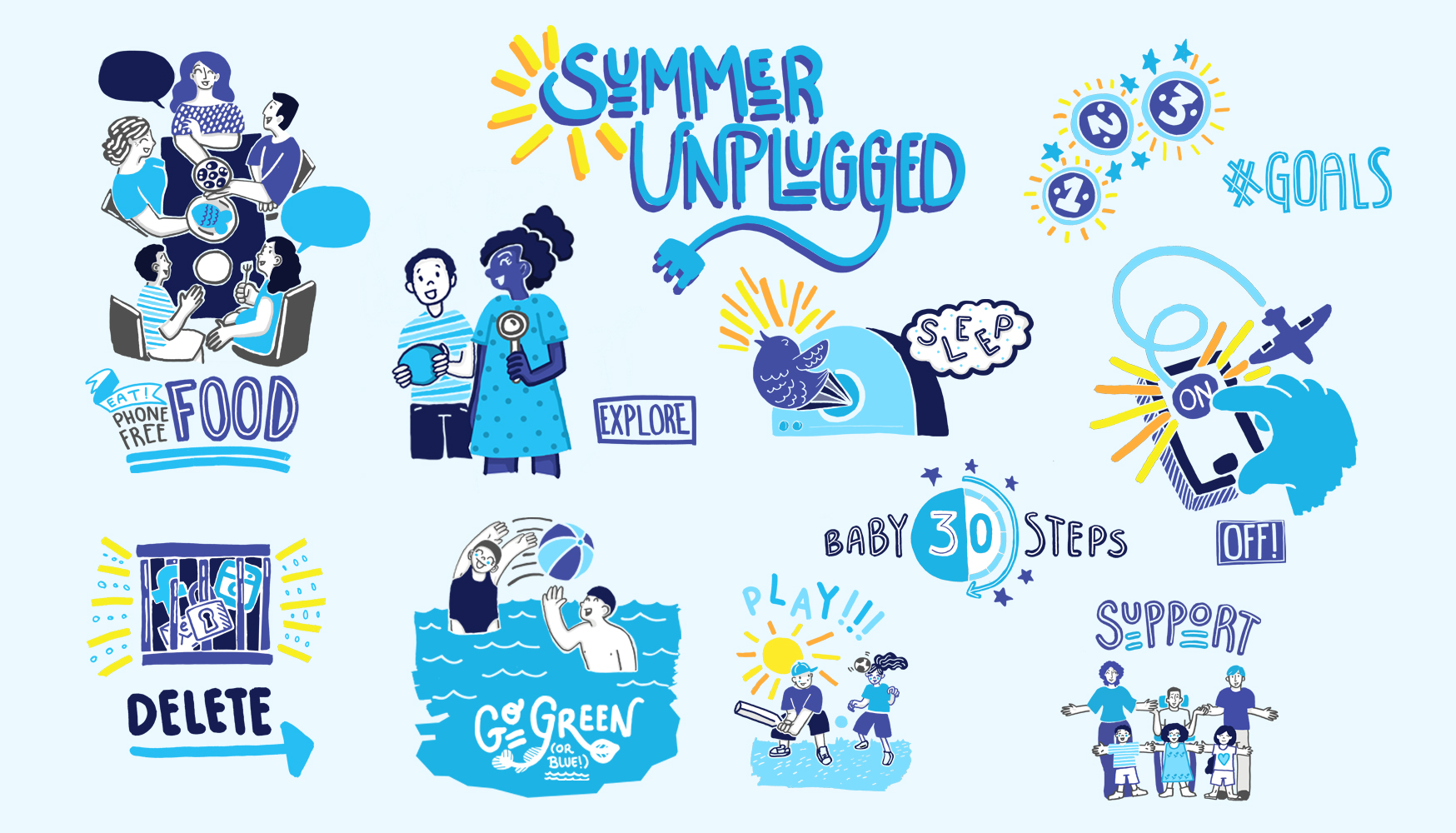
    Summer Unplugged Digital Detox Campaign

    5. #SUMMERUNPLUGGED Digital Detox Challenge 2019

    This summer for the fourth year in a row, we challenged you to set some boundaries around screen use within your family. Whether you chose to buy an alarm clock and keep your phone outside your bedroom or just go outside to experience nature more, in this post we asked you to put down your phone for the summer and unplug with us.

    4. The Youtubers Logging Off Social Media

    In this post we asked why those who make their living off of social media, Youtubers, have chosen to take digital detoxes in droves this year. Inspired by a desire to have some time to themselves and to develop healthy routines these Youtubers made the conscious decision to limit their screen time and spoke highly of the benefits.

    3. 18 Ideas from our Christmas Digital Detox Gift Guide

    We shared 18 simple gift ideas this Christmas. In the spirit of giving, we suggested ideas such as a donation to a green charity, some relaxing bath oils, and walking tours which can entertain a family together and keep everyone off of their phones. We hope our ideas helped!

    2. A Digital Detox Podcast To Help Tackle Your Phone Addiction

    We’re delighted that the popularity of this post shows how well received our podcast launch was this last year. We have interviewed a wide range of people including Cal Newport, Johann Hari, Ben and Marina Fogle, and even the founder of the dating app ‘Hinge’.

    1. Teens, Are You Addicted to or Embracing Technology?

    Our most popular article this year shows the growing interest the younger generation have in their screen use. It’s not just parents who are concerned! We looked at the positives and negatives of screen use, from sleep to real human connection and ask whether teens need to set boundaries in order to improve these things or whether they are already doing pretty well.


    We really enjoyed writing these articles for you in 2019 and are thrilled that you have engaged with them so enthusiastically. Look out for more episodes of our podcast, and even a retreat coming up in 2020 as well as more articles packed with research and tips on how to get a healthy balance with screens.

    View the original article at itstimetologoff.com

  • Give Your Presence, Not Presents, This Year

    Give Your Presence, Not Presents, This Year

    Give Your Presence, Not Presents, This Year

    Christmas is coming! Across social media we can see the lights being turned on, the first mince pie being eaten, and friends attending carol-concert after carol-concert. We are all expected to have, and display, the perfect holiday season. Our gifts must be meaningful, and, in a world where everyone will see them, they must also be Insta-worthy.  How much does this all add to our festive experience, or does it just remind us about all the ways in which we’re losing out..?

    Whilst the Internet can make Christmas special and help us to connect with those we cannot physically be with, we must remember not to let the pressure to share online take away from the special time we could be spending with each other.

    So this year, we urge you to put down your phone and to give your time and attention, your presence, as your present this year. Our annual #PresenceNotPresents digital detox challenge returns to help you remember what matters this festive season. Switch off your devices, and pay attention to your loved ones this holiday.

    Let’s Make This Christmas About Presence Not Presents

    digital detox: presence not presents

    Tip 1: Buy experiences

    One of the biggest pressures of Christmas is getting everyone a present they will love. So, instead of trying to guess their size or if they have already read that book, why don’t you buy them an experience you can do together? By buying tickets to a show, or even a homemade voucher for dinner you can show how much you care about spending time with them!

    Tip 2: Put the phone down

    We have often evangelised the importance of taking some time away from your screen. Why not put all your phones in a drawer this Christmas so that you can focus on conversations with your family? You can tell others that you will be unavailable if you are worried about being unreachable – perhaps it will inspire them to do likewise!

    Tip 3: Organise Analogue Activities

    Christmas can often be overtaken by a posting frenzy with every moment overtaken by a need to capture it for social media. So, why don’t we take the time to go on a Christmas walk- phone free? You could have a board game tournament or decorate Christmas biscuits, all without the distraction of screens. Every time we take time out of the online bubble so spend time on analogue activities we create new memories that make each year special.

    Tip 4: Volunteer

    Christmas is a time to be grateful for what we have and to pass that good fortune along. Volunteering with your family could be a wonderful way to engage with your local community and a way to go beyond the mirage of social media and embrace the real people around us this Christmas.

    Be a part of the digital detox movement as we enter 2020 by reminding your loved ones of how much they mean to you by actions, not just words, and by putting down your phone to invest time into them. Remember, it is your presence not presents that should matter this Christmas!

    View the original article at itstimetologoff.com

  • Marijuana Vaping Busts Skyrocket

    Marijuana Vaping Busts Skyrocket

    Over the past two years more than 510,000 marijuana vaping cartridges have been seized by authorities across the nation.

    The recent wave of vaping illnesses and deaths has pushed authorities to crack down on illegal vaping cartridges, cranking the number of seizures of illegal marijuana vaping products through the roof in 2019.  

    According to the Associated Press, over the past two years more than 510,000 marijuana vaping cartridges have been seized by authorities across the nation. More than 120 people have been arrested in connection with the products. 

    Big Busts In 2019

    In November a 30-year-old Minnesota man was caught speeding in Nebraska and police wound up searching his vehicle after “detecting the presence of a controlled substance.” Inside the vehicle, they found 386 containers of THC wax, 144 packages of THC shatter, 62 THC vape cartridges, 39 containers of THC edibles and liquid products, and four pounds of marijuana

    Nealry 1,000 pounds of marijuana and 2,000 vaping cartridges were seized during a routine traffic stop in North Texas in late November. The drugs were on their way to North Carolina. 

    In October, a tip from a concerned anonymous source, led Wisconsin authorities seize more than 10,000 vaping cartridges, 18 pounds of marijuana and $950k. 

    North Phoenix authorities had their own massive bust in September when they were able to seize $380,000 worth of drugs including THC vaping cartridges while serving a warrant. 

    Daniel Ray Hawkins and Benjamin Blake Lumpkin were arrested in North Carolina. They stand accused of running a DMT lab (DMT AKA dimethyltryptamin is a powerful hallucinogenic drug) and putting DMT into marijuana vape pens. The DMT found inside the house was worth an estimated $4 million

    “The solution to decreasing the risk associated with THC vapor products lies in continuing towards a legalized and regulated market, not increased criminalization and arrests,” said NORML Executive Director Erik Altieri.

    Vaping Illnesses

    While busts appear to be ramping up as vaping illnesses and deaths continue to rise on a daily basis. As of November 21, the CDC’s Latest Outbreak Information for e-cigarette, or vaping, product use associated lung injuries (EVALI) reports that there are now 2,290 cases of EVALI and 47 deaths linked to the illness. Alaska, which was the only state unaffected by vaping illnesses, reported their first case on Tuesday. 

    View the original article at thefix.com