Category: Addiction News

  • Men… I’ve Always Been Obsessed With Them

    Men… I’ve Always Been Obsessed With Them

    It’s not him, it’s the version of him I’d chosen to focus on, ignoring all the bad behavior which followed, as I have way too many times.

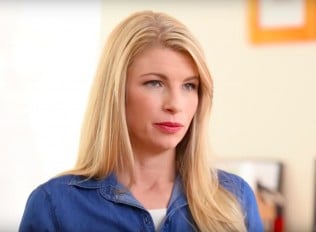
    “Addicted to Love” is a great song––it’s also a not-so-great running theme in my life. Last week, at 62 ½, it dawned on me that there’s never been a time––nary a day of my life––when I haven’t had, first a boy, then a man, front and center in my brain. Attempting to add up the hours––the real estate––and what I might’ve done with both had I been more focused on me––rather than them––is depressing as hell. 

    I can remember being a little girl of not quite 8, chasing 10-year-old Andy Helfman––all day, all summer long––for at least three years running. I eventually caught him and got the chaste kiss I sought, and the satisfaction of discovering he liked me, too. Returning to the city from the Catskills, there was Roy. I picked him on the first day of school; in June he asked me out. I fell for Paul when I was barely 12. I harbored that love for years until he returned it, in his fashion––breaking my heart and hymen. There was Lenny––unrequited; with Randy, I came to wish it was unrequited; Vinny #1, and then Vinny # 2––both mine for the having, and both exceedingly inappropriate.

    I sound insanely fickle. And yet, I was fairly easy on the fickle, heavy on the insane. These were not short impetuous crushes. I harbored all of them well past their expiration dates, either until I got them or until the next one took hold, oft with some heart-breaking overlap.

    Looking back––how much of my quest was about the conquest? The chase. Winning. Ownership. Not to amass bounty, but to capture––love. To fill a hole, to prove my worth––which I could never seem to do with the people I deemed most important, including my rarely-considered self. I never thought of it in those terms––yet now––it’s impossible for me not to see the pattern.

    How many times have I given my time, attention, and power to a guy who either didn’t ask for it, didn’t appreciate it, or used it more as a means to control rather than love.

    I followed one boyfriend to the college of his choice, and another, post-degree, to the city of his––in both cases putting aside my own desires. I married the second one, knowing he was a volatile alcoholic. But, he was my volatile alcoholic. I waitressed, putting my career on hold, so he could… sleep. So what if there were holes in the walls behind every picture? You couldn’t see them, so I could pretend they weren’t there. I spent the majority of our years together obsessing… about how to get away from him.

    It took falling in love with someone else to manage it.

    My second marriage grew from a years-long professional friendship. The romance was built on mutual respect, affection, and ultimately, love. In my mid-thirties, almost immediately, I shifted my focus from my career to managing his and to starting a family. It was my choice, my great privilege and pleasure. For a decade, as his star ascended, our kids blossomed and thrived. When his up came crashing down, it took our love with it. We spent the next 10 years struggling over what once was, trying like hell to get it back––unsuccessfully. Graciously, the kids continued to bloom––magnificently.

    As a middle-aged single mom, without a career or a man, I obsessively struggled to find both. My long-starved creative passions swiftly found their voice and vision, and have met with some success. The money and the manhunt have been an exhausting, heartbreaking, ego-crushing exercise in futility. In spite of all the years, and lessons learned, I’m struggling to find my way with both. I’m still giving men who don’t deserve it––and sometimes don’t even know it––my time, energy, and my power. And, there’s always a man––and a way to stalk him.

    Back in the day, I did it with the phone: I’d call the object of my desire, hear his voice, or,sometimes hell-forbid, his parent’s voice, and hang up. I graduated to the walk-by––finding any excuse to pass his house, or where he hung out, in hopes of catching a glimpse––a smile––or a moment of his time. What a waste of mine.

    Facebook, Twitter and, Instagram took my occasional insanity and turned it into an ongoing opportunity to “check-in” on the latest object of my obsession affection.

    Dating apps are an even bigger nightmare, with distance offered at any given moment. Twenty-three miles? Hey! Where the hell are you?

    Finally, two weeks ago, I freed myself from the now daily insanity. Julian, my latest (mind) fuck, doesn’t utilize social media (talk about insanity). I had no way to monitor him other than to glimpse What’s App to see when he’d last been on. Why exactly? What did I gain by such behavior? Heartache. I knew when he was communicating, I also knew it wasn’t with me.

    I tried weaning myself from looking, but just as it was with pot 17 years ago, I had to quit cold turkey. I’ve stuck to it for 14 days, and it’s working. As each day passes with zero connection, he fades from my mind, and perhaps more importantly, from my heart. With distance, the rose lenses are clearing their hue––less obstructing my view. I’ve come to appreciate that I’d been romanticizing him, focusing on the alchemy of the connection, whilst ignoring the harsh cruelty of the abrupt disconnection. It’s not him, it’s the version of him I’d chosen to focus on, ignoring all the bad behavior which followed, as I have way too many times.

    For the first time in memory, there’s no man in my head. I’ve stepped away from the swipe. That leaves a lot of time and space to think about worthy people, ambitions, and causes––and maybe, at last, to include myself as one of them.
    View the original article at thefix.com

  • Lawmaker Fights For Addiction Treatment That Her Mom Desperately Needed

    Lawmaker Fights For Addiction Treatment That Her Mom Desperately Needed

    “When my mother asked for help and there was no place to go, it was one of the most hopeless feelings I ever had. That was the moment that inspired me to do this work.”

    After winning a seat in the Colorado state legislature in 2012, Brittany Pettersen tried her best to focus on her blossoming career. For her own health, that involved limiting her contact with her mother, Stacy, who had been living with active addiction for decades. 

    “As a family we have been preparing for my mom’s death our entire lives,” Pettersen told The LA Times. Stacy’s addiction was so severe that at one point she overdosed 20 times in 16 months. 

    Still, Pettersen’s colleagues in the legislature knew nothing of her mother’s situation, and Pettersen couldn’t bring herself to work on addiction and recovery issues professionally. 

    “I honestly never wanted to touch the issue of opioids because it was too personal,” she said. “I felt like if I can’t help my mom how can I help anyone else?”

    Last August, Stacy overdosed yet again. She was resuscitated in the emergency room of a hospital near Denver and then moved to the intensive care unit. There, Stacy finally asked for help. Yet all her Medicaid would cover was three days of detox. Pettersen was heartbroken and furious. 

    “When my mother asked for help and there was no place to go, it was one of the most hopeless feelings I ever had,” Pettersen said. “That was the moment that inspired me to do this work. My mom’s been using drugs for more than 30 years, she needs more than three days of detox. That’s a joke.”

    Luckily, Pettersen was able to get a court-order that put Stacy in a treatment program for two months involuntarily. Now, Stacy has been sober for seven months, and Pettersen has decided to share her family’s story in order to advocate for better addiction treatment services in Colorado. 

    Pettersen is now working on legislation that would require Medicaid in Colorado to cover impatient and residential drug abuse treatment programs, rather than just covering three days of detox. Although the change would cost Colorado an estimated $34 million, it would bring in about $100 million in federal dollars, Pettersen said, in addition to cutting costs of emergency services. 

    “It takes upfront costs to get out of a crisis,” she said.

    In April, Stacy testified in front of the Colorado state legislature in support of the bill. 

    “Hello, my name is Stacy Pettersen. Some of you know me as Brittany’s mom,” she said. “My last 30 years have been tragic for my family and me, but I am here to tell the unexpected ending—that I am alive and have been sober for over seven months because I finally got the help I needed.”

    Later, she talked about her hopes for recovery, including making amends with her children after decades of neglect. 

    “I’d like to try and repair the damage I’ve done to my children,” Stacy said. “I want to make the most of the time I have left and be the best mom I can be.”

    View the original article at thefix.com

  • Buprenorphine Exposure Affects Kids At Alarming Rates

    Buprenorphine Exposure Affects Kids At Alarming Rates

    The number of children exposed to the addiction drug rose 215% over three years. 

    As the opioid crisis continues to grow, some children are being put at risk as they are exposed to buprenorphine, an opioid medication used to treat opioid use disorder. 

    A new study published in the journal Pediatrics found that from 2007 to 2016, more than 11,200 calls were made to poison control centers in the U.S. with concerns about children being exposed to buprenorphine. Of those, 86% were about children under age 6 and 89% were unintentional exposures. 

    “This is never prescribed for children under 6. It is a significant risk to them,” Henry Spiller, director of the Central Ohio Poison Center and an author of the study, told CNN. “We’re not quite sure why it stands out so much. Perhaps the parents who have this may not think it’s as risky as their other opiates because it doesn’t have the big effect that the other opiates do for them.”

    Of the 11,275 children exposed to the medication, the overall exposure rate per 1 million grew by more than 215% from 2007 to 2010. It then decreased 42.6% from 2010 to 2013, before increasing again in 2016 by 8.6%.

    Dr. Jason Kane, an associate professor of pediatrics and critical care at University of Chicago Medicine Comer Children’s Hospital, tells CNN that the increase in exposure has to do with the increase in adults using buprenorphine as a treatment option.

    “This is not the first study to show these data, but it is the latest study to show a medication whose design it is to help adults with narcotic or opioid addiction is ending up poisoning, mostly unintentionally, children and in particular those who are most vulnerable,” Kane said. 

    Buprenorphine is an opioid receptor stimulant as well as a blocker. It is considered an opioid but does not have the same effect as other opioids for adults, thought it can still be habit-forming. For children, however, it can have a stronger effect on the respiratory system.

    “In adults, the respiratory depression, the part that slows the breathing and you stop breathing, is limited, and so there’s a lot less respiratory depression in adults,” Spiller told CNN. “That’s why it was felt to be safer. Unfortunately, in very young children under 5, preschoolers, toddlers, infants… that protection isn’t there, and they do get this respiratory depression. It does affect their breathing.”

    Of adolescent exposures, 77% were intentional and more than one-quarter used the medication with another substance. 

    “It was surprising that adolescents were actually using it for abuse. It’s very specific,” Spiller told CNN. “You have to be in a program to get this. It’s carefully managed. It’s not widely available… It is available on the street, but essentially, the majority of this is from these management programs and someone’s in therapy, someone in the house, them or a family member.”

    According to CNN, study authors expect the number of exposures to continue to increase.

    To limit exposure, Kane recommends disposing unused medications, using child-proof caps and making sure medications are labeled correctly.

    “Seven children under the age of 6 died as a result of an accidental poisoning from this drug, which was present in someone’s home, prescribed with the goal of making someone else better,” Kane said to CNN, adding, “that’s a striking thing for me.”

    View the original article at thefix.com

  • How A Ballot Measure Decreased Racial Disparity In California Drug Arrests

    How A Ballot Measure Decreased Racial Disparity In California Drug Arrests

    Prop. 47 led to a 75% reduction in felony drug arrests in California.

    Four years after California voters approved Proposition 47 in 2014—which reclassified “non-serious and non-violent property and drug crimes” from a felony to a misdemeanor—a new analysis was able to quantify the impact that the measure has had on the state of California.

    Not only did Prop. 47 lead to a 75% reduction in felony drug arrests in California, it was also associated with a reduction in the racial imbalance of drug arrests. One month after the measure was enacted, the difference between the number of Black and white felony drug arrests decreased from 81 to 44 per 100,000 population, and “continued to decline over the course of the year,” according to a statement by the UC San Francisco (UCSF).

    The findings are encouraging to those who advocate for rolling back the harmful impact of the drug war, which includes a much-researched disparity in the number of Black and Latino Americans who are arrested and incarcerated for drug-related crimes compared with the number of white Americans.

    “Our findings suggest that efforts like Prop. 47 are an effective way to decrease the disparity in drug arrests between Blacks and Whites,” said Alyssa Mooney, MPH, a UCSF doctoral student and study author.

    “The collateral consequences of felony drug convictions are severe—affecting everything from whether someone can get a job to their ability to get housing and student aid,” Mooney said. “So, alleviating these disparities could help narrow the significant disparities we see between groups in important health and social outcomes.”

    Efforts to level the playing field for communities that have been disproportionately impacted by the long-waged “War on Drugs” are being applied all across California. Nearly all of its major cities—including Los Angeles, Oakland, Sacramento and San Francisco—have implemented some sort of “equity program” to give a boost to certain individuals who wish to enter the booming marijuana industry.

    And in San Francisco, officials have decided to retroactively apply Proposition 64, the measure that legalized the adult use of marijuana in California, to expunge thousands of marijuana convictions dating back to 1975.

    “A criminal conviction can be a barrier to employment, housing and other benefits, so instead of waiting for the community to take action, we’re taking action for the community,” said San Francisco District Attorney George Gascón.

    View the original article at thefix.com

  • Chester Bennington's Widow Talks Mental Health, Suicide Prevention

    Chester Bennington's Widow Talks Mental Health, Suicide Prevention

    “If we can find good coping mechanisms, if we have people we trust that we can talk to, that helps us make better choices for ourselves. My husband didn’t have that in a lot of situations.”

    In the wake of the suicides of Anthony Bourdain and Kate Spade, Chester Bennington’s widow Talinda Bennington has continued speaking out about mental health and suicide prevention.

    It has been nearly a year since Bennington died by suicide on July 20, 2017 at the age of 41. In a recent CNN town hall with Anderson Cooper, Talinda described realizing that there were warning signs before her husband died. “I am now more educated about those signs, but they were definitely there: the hopelessness, the change of behavior, isolation.”

    Talinda was used to her husband being depressed, adding, “That was all part of our daily life. Sometimes, some signs were there more than others. Sometimes, they weren’t there at all.”

    The rocker was in good spirits in the days leading up to his death. Talinda shared, “He was [at] his best. We were on a family vacation, and he decided to go back home to do a television commercial. This was not a time where we or any of our family suspected this to happen, which is terrifying… We thought everything was OK.”

    Unlike her husband, Talinda did not suffer from depression. “Watching my husband go through it, I had no idea. I could not relate.”

    Bennington was very open in interviews about his struggles with depression, addiction, and dealing with the trauma of being sexually abused when he was young.

    In an interview that was released shortly after his death, he said, “My whole life, I’ve just felt a little off. I find myself getting into these patterns of behavior or thought—especially when I’m stuck up here [in my head]; I like to say that ‘this is like a bad neighborhood, and I should not go walking alone.”

    “If we can find good coping mechanisms, if we have people we trust that we can talk to, that helps us make better choices for ourselves,” Talinda said. “And my husband didn’t have that in a lot of situations.”

    His Linkin Park bandmate Mike Shinoda is also speaking out about mental health. Shinoda, who recently released a solo album titled Post Traumatic, told Billboard, “It was so weird being given a membership to this club that I never wanted to be a part of. One thing I’ve learned, in terms of mental health, we talk about it being like physical health. Mental health should be the same. Mental health is just health. The way we get to that point is to check in with ourselves.”

    If you or someone you know is thinking about suicide, call 1-800-273-TALK (8255) in the United States. To find a suicide helpline outside the U.S., visit IASP or Suicide.org.

    View the original article at thefix.com

  • Janet Jackson Opens Up About Depression Struggles

    Janet Jackson Opens Up About Depression Struggles

    The pop icon penned a personal essay about mental health and her quest to find happiness for Essence magazine.

    Janet Jackson is the latest celebrity to disclose her personal battles with depression, which she traced back to her childhood.

    A letter written by the iconic performer and youngest of the famous Jackson family is featured in the July/August issue of Essence magazine, in which she describes to readers her experience with depression and her quest to find happiness.

    “I struggled with depression. The struggle was intense… Low self-esteem might be rooted in childhood feelings of inferiority. It could relate to failing to meet impossibly high standards,” Jackson wrote. “And of course there are always the societal issues of racism and sexism. Put it all together and depression is a tenacious and scary condition. Thankfully, I found my way through it.”

    Her negative body image fed into her feelings of inferiority early in life. Jackson began performing at a young age, appearing in the variety show The Jacksons at age 10.

    “I wasn’t happy with the way I looked. For most of my life, that lack of happiness followed me. I wish someone had said, ‘You look fine. You look healthy. Being a little chubby is the least important thing in the world. Enjoy your childhood. Enjoy running and laughing and playing. Stop looking in the mirror and comparing yourself to others,’” she wrote.

    This feeling persisted through adulthood, and happiness was “elusive,” Jackson said. “In my forties: Like millions of women in the world, I still heard voices inside my head berating me, voices questioning my value,” she wrote. “A reunion with old friends might make me happy. A call from a colleague might make me happy. But because sometimes I saw my failed relationships as my fault, I easily fell into despair.”

    The “All for You” singer says she’s “no expert” when it comes to happiness. “I have only my life experience as a guide. I’ve known great happiness and great sadness. But I guess the key question is, what do I really know about happiness?”

    But the singer says she’s found peace in caring for her one-year-old son, Eissa.

    “The height of happiness is holding my baby son in my arms and hearing him coo, or when I look into his smiling eyes and watch him respond to my tenderness,” he wrote. “When I kiss him. When I sing him softly to sleep. During those sacred times, happiness is everywhere. Happiness in gratitude to God. Happiness is saying, ‘Thank you, God, for my life, my energy and my capacity to grow in love.”

    View the original article at thefix.com

  • When Teens Hurt Themselves…Online

    When Teens Hurt Themselves…Online

    “You should just kill yourself.” I thought that if people thought the messages I was saying to myself were coming from other people, they would be more willing to help me out.

    Trigger warning: The following story discusses self-harm.

    What happens when social media becomes the weapon of choice for self-harm; when the cyberbully is also the victim?

    Alicia Raimundo says she created ghost social media accounts to cyberbully herself as a teen in the hopes of validating her story. It was a coping skill, says the Toronto resident, now 28, and the only way she could think of to place her pain on full display in the hopes of friends and mental health experts coming to her aid. She didn’t know it then, but has learned since, that this form of anonymously posting critical, derogatory or otherwise hurtful comments about oneself is what mental health experts are now referring to as digital self-harm.

    “I thought that if people thought the messages I was saying to myself were coming from other people, they would be more willing to help me out,” Raimundo says, adding that she often posted mean comments others had said to her in person but for which she had no documentation or evidence. “I would say things to myself like: ‘You should just kill yourself,’ ‘You are a fake,’ ‘you are not worthy of love or support.’” 

    Raimundo, who has worked in the mental health field for eight years, says she also sent herself messages that read ‘You are hideous,’ and ‘You are just pretending and everyone will find out soon enough.’ She would rationalize the negative and violent messages she would send to herself, she says, by telling herself that the negative somehow served as a balance for the good in her life. 

    Raimundo’s story, although new to those unfamiliar with digital self-harm, is not unique. A survey published in late 2016 in the Journal of Adolescent Health asked 5,593 middle and high school students from across the US to share their experiences with cyberbullying and digital self-harm. Of those surveyed, about six percent reported anonymously posting something mean about themselves online. Males were more likely to engage in digital self-harm at 7.1 percent reported, with female respondents reporting at 5.3 percent. According to the survey, risk factors for vulnerable teens include sexual orientation, experience with school bullying and cyberbullying, depressive symptoms, and drug use.

    Teens who engage in physical self-harm also often struggle with depression, post-traumatic stress disorder, and/or difficulties with emotional regulation, says the American Psychological Association. It is important to note, however, that not all teens who cyberbully themselves have a mental illness.

    “Teens typically are experiencing many intense feelings and events for the first time, and during an already intense period of self discovery and understanding,” says Texas-Based Licensed Marriage and Family Therapist Associate Stephanie Bloodworth. “There are different reasons they may engage in digital self-harm, but the underlying force so often seems to be that they are seeking some kind of solution to their feelings of self doubt or low self worth.”

    These teens need help, says Bloodworth, but mental health caregivers and adult support figures should take care not to minimize the experience and mental pain of those they are trying to help. 

    “From a solutions focus, teens don’t need a different perspective, [such as saying] ‘This isn’t the end of the world, you know,’” Bloodworth says. “They need tools to help them handle what does feel like the end of the world they knew. They need tools and help to get the attention and support they need in healthy and appropriate ways.”

    Raimundo, the mental health professional who used to cyberbully herself as a teen, agrees.

    “I broke out of the cycle of digital self-harm by finally finding supports that listened to me and validated my story. People who I could speak openly and honestly to about engaging in digital self-harm, why I was doing it, and who would hold the space for me without judging me,” she says. “People saw me as someone trying to ask for help but not knowing all the right words to do so. They saw those messages as something that was actually happening in my head and addressed it as such.”

    Raimundo now works as an online Peer Supporter for Stella’s Place

    “I really wanted to create safe spaces online for people to reach out for help, because I found getting help from people who understood the internet as a community was really hard,” she says. “I wanted to provide positive spaces and places for people to access behind their phones and break out of the negative cycles they find themselves in.”

    Raimundo believes her experience with digital self-harm helps people open up if they are engaging in digital self-harm because it’s such a stigmatized form of self-harm that isn’t well understood. 

    “When they chat with me, it’s my hope that they are chatting with someone who gets it and can walk alongside them in their journey to recovery.”

    Raimundo also offers this advice to those who may find themselves in a position to help teens digitally self-harming themselves. Approach the situation with empathy and a listener’s ear, she says.

    “Don’t jump to the idea that we are doing it for the LOLs or because we are emotional vampires. Listen to why we are doing it, and try and connect us with the help with we need,” says Raimundo. “Yes, people engaging in these behaviors are crying for help, and we should give it to them.”

    If you or someone you know may be at risk for suicide, immediately seek help. You are not alone. Options include:

    View the original article at thefix.com

  • Healthcare Pros Talk Unintended Consequences Of Addressing Opioid Crisis

    Healthcare Pros Talk Unintended Consequences Of Addressing Opioid Crisis

    “Doctors just say, ‘That’s it, I’m done. I’m not going to lose my license over you and good luck,’ and that’s unconscionable,” said one health expert.

    The opioid epidemic has drawn more political and media attention than any other public health crisis in recent memory, but healthcare professionals say that the focus on preventing opioid-related deaths is having unintended consequences for patients dealing with other conditions including cancer, chronic pain and other forms of substance use disorder. 

    One of the biggest concerns is that patients are being taken off their opioids too quickly, which can increase physical symptoms of withdrawal and leave patients feeling overwhelmed by the idea of quitting. 

    “Some people will be tapered too quickly or in a way that is intolerable to them,” Elinore McCance-Katz, the Health and Human Services assistant secretary for mental health and substance use, told Politico

    Sally Satel, a psychiatrist and Yale University School of Medicine lecturer, said that some doctors are less understanding of slowly tapering patients because they’re concerned about their own liability. 

    “I’ve seen patients where doctors just say ‘That’s it, I’m done. I’m not going to lose my license over you and good luck,’ and that’s unconscionable,” she said.

    Although policies have shifted to focus on non-opioid pain relief, these options are still less likely to be covered by insurance, leaving patients with chronic pain with few options.

    The Department of Veterans Affairs and the Defense Department have begun paying for alternative care, but “beyond that it’s pretty much just been lip service and it’s a little challenging how to craft legislation that affects what private payers are able to offer in this arena,” said Bob Twillman, executive director of the Academy of Integrative Pain Management. 

    “It’s one thing for an insurer to cover [an opioid alternative]. It’s another thing to cover it at a co-pay that the patient can afford,” said Cindy Reilly, who recently left the Pew Charitable Trust, where she focused on issues around opioid use and access to effective pain management. “We need to stop making opioids the easy decision—in terms of writing prescriptions and patient access. Higher co-pays will stand in the way.”

    Sean Morrison, chairman of the geriatrics and palliative medicine department at the Icahn School of Medicine at Mount Sinai, said that he is increasingly seeing hospice patients unable to get the opioid drugs needed to make their end of life more bearable. 

    “Almost every patient I have prescribed for recently has either a) run into pharmacies that no longer carry common opioids; b) cannot receive a full supply; and c) worst of all had their mail order pharmacy refuse to fill or have had arbitrary and non-science based dose or pill limits imposed,” he said. 

    Joe Rotella, the chief medical officer for the American Academy of Hospice and Palliative Medicine, agreed. 

    “Even with exemptions for hospice care, prescription limits are still having an impact,” he said. “Patients have a tougher time getting these medications and it’s a lot more hassle for providers.”

    Cancer patients are also being affected as hospitals experience a shortage of IV fentanyl and morphine. 

    Finally, the focus on funding interventions for people abusing opioids has deflected money from other drug-intervention programs. This is especially problematic in areas like the Southwest, where overdose deaths from methamphetamine are rising sharply. 

    “We treat drug epidemics like ‘whack a mole,’” said West Virginia Public Health Commissioner Rahul Gupta. “We get one under control, another pops up.”

    View the original article at thefix.com

  • Link Between Trump Support And Opioid Use Revealed In New Study

    Link Between Trump Support And Opioid Use Revealed In New Study

    “When we look at the two maps, there was a clear overlap between counties that had high opioid use … and the vote for Donald Trump,” said the study’s author.

    There may be a geographic connection between those who supported Trump in the 2016 election and prescriptions for opioids, according to a new study published in the medical journal JAMA Network Open

    James S. Goodwin, chair of geriatrics at the University of Texas Medical Branch and the study’s lead author, along with other researchers, examined data from numerous sources which included the Census Bureau and the 2016 election, as well as data from Medicare Part D, a program for prescription drugs that helps those with disabilities and the elderly.

    “When we look at the two maps, there was a clear overlap between counties that had high opioid use… and the vote for Donald Trump,” Goodwin told NPR. “There were blogs from various people saying there was this overlap. But we had national data.”

    In order to estimate the amount of opioid use by county, Goodwin and his team utilized the number of Medicare Part D enrollees who had three months or more worth of opioid prescriptions. According to Goodwin, it was harder to estimate the amount of illegal opioid use, though prescription opioid use is strongly correlated with it.

    “There are very inexact ways of measuring illegal opioid use,” Goodwin told NPR. “All we can really measure with precision is legal opioid use.”

    In the research process, the team looked at a number of factors to determine how a county’s rate of chronic opioid prescriptions was influenced. They found that in the 2016 election, Trump support was closely tied to opioid prescriptions. In counties with higher-than-average numbers of chronic opioid prescriptions, 60% of those who voted did so for Trump whereas in counties with lower-than-average prescriptions, only 39% voted for him. 

    NPR also states that some of the correlation could have to do with social and economic factors, as many rural counties with struggling economies voted for Trump, and those are the areas where opioid use is common. 

    “As a result, opioid use and support for Trump might not be directly related, but rather two symptoms of the same problem—a lack of economic opportunity,” NPR noted. 

    Goodwin and his team also analyzed factors such as unemployment rate, median income, how rural areas were, education level and religious service attendance. They found that these factors account for about 66% of the connection between Trump voters and opioid use, but not the remaining percentage.

    “It very well may be that if you’re in a county that is dissolving because of opioids, you’re looking around and you’re seeing ruin. That can lead to a sense of despair,” Goodwin told NPR. “You want something different. You want radical change.”

    For some areas hit hard by the opioid crisis, NPR states, the Trump presidency may have seemed like a solution. 

    While the study shows a likely link, it isn’t definitive and has shortcomings, Goodwin states. 

    “We were not implying causality, that the Trump vote caused opioids or that opioids caused the Trump vote,” he cautions. “We’re talking about associations.”

    View the original article at thefix.com

  • Smoking Rates Hit An All-Time Low

    Smoking Rates Hit An All-Time Low

    The rising popularity of e-cigarettes has helped drive down traditional smoking rates.

    Americans are lighting up less than ever, according to newly released data from the federal government.

    After yet another downtick, only about 14% of U.S. adults were still smokers last year, an all-time low that has fallen from some 42% in the 1960s when smoking was ubiquitous. 

    “Everything is pointed in the right direction,” K. Michael Cummings with the tobacco research program at Medical University of South Carolina told the Associated Press.

    Part of the change stems from a decades-long shift in smoking bans and attitudes toward lighting up. In the 1950s and 1960s, indoor smoking was the norm in offices, planes, diners and hospitals. But as the medical community gained a better understanding of the associated health risks, anti-smoking campaigns and rising cigarette taxes pushed down cigarette use. 

    In recent years, the popularity of e-cigarettes—especially among young people—has also worked to drive down smoking rates. More kids are into vaping than smoking now, and teen smoking hit a new low last year. 

    While 9% of high school students reported smoking tobacco, roughly 13% said that they use e-cigs or other vaping devices, the AP reported. The practice is more prevalent among young people, as the most recent figures from 2016 estimate that only around 3% of adults choose to vape. 

    Despite its rising popularity, the health impacts of vaping aren’t well known. Although the Centers for Disease Control and Prevention (CDC) admitted that e-cigs “generally contain fewer harmful chemicals” than regular smokes, they still contain potentially carcinogenic substances and flavoring chemicals that are linked to lung damage, according to TIME

    But despite the growth in e-cig use, there are still around 30 million Americans who smoke traditional cigarettes. More men than women, and adults between the ages of 45 and 64 are the most likely to light up regularly, according to an annual survey by the National Center for Health Statistics

    The latest adult smoking figures are down 2 percentage points from the year before, when 16% of the population smoked. In 2006, that figure stood around 20%. 

    The new numbers come from the CDC’s annual survey, which interviewed roughly 27,000 adults last year for the latest findings.

    View the original article at thefix.com