Schumer and Jeffries announced the bill in a video where they discussed its provisions and intended impact.
A pair of Democratic lawmakers have partnered on a new bill that seeks to decriminalize marijuana at the federal level.
Senate Minority Leader Chuck Schumer and Representative Hakeem Jeffries joined forces for the Marijuana Freedom and Opportunity Act, which would remove marijuana from the federal Controlled Substances Act, while also offering support to small business owners involved in cannabis-related industries and funding toward the Department of Justice (DOJ) to support expungement programs for marijuana convictions at the state and local level.
The bill is the second such effort in two years for Schumer, who, in describing the bill, said, “What we’re saying is very simple. Let each state do what it wants.”
Schumer and Jeffries announced the bill in a video where the two discussed the bill’s provisions and intended impact. Decriminalization, as Schumer noted, will allow the states to create their own legislation regarding marijuana and remove concerns for sellers, distributors and users about federal prosecution.
The bill also includes the aforementioned expungement program funds for the DOJ, which Jeffries said would “[create] opportunity and economic space [that] will be tremendous.”
He also noted that removing criminal marijuana charges would change the course of “lives and communities that have been ruined in large measure by the overcriminalization.”
Small cannabis business owners, especially women or people of color, will also benefit through support from the Small Business Administration, which is included in the bill. “Let’s not have some big fancy corporation, some big tobacco company make all the money,” said Schumer in the video. Additionally, the Huffington Post reported that the bill will provide millions of dollars for research into the effects of marijuana on brain function and driving impairment.
“The Marijuana Freedom and Opportunity Act is a phenomenal step forward in terms of social, racial and economic justice in the context of what many people view as the failed War on Drugs that has been with us for decades,” said Jeffries.
As High Times noted, the bill will most likely face opposition from Senate Republicans, but it’s not clear how Donald Trump will respond. The president previously voiced support for a legalization bill introduced by Senator Cory Gardner (R-Colorado) in 2018.
“I was kind of very unhappy, so I drank and I drugged and I got myself in tabloid newspapers,” Clayton said.
Adam Clayton spoke frankly about the remarkable success he’s enjoyed as the bassist for U2, as well as how that time in the spotlight was complicated by his struggles with alcohol.
Clayton’s comments came as part of his appearance on TheTommy Tiernan Show, a popular talk program on Ireland’s RTÉ One channel, and touched on how the band’s rise to fame impacted his own mental health and dependency issues.
“You lose your sense of yourself,” said the 59-year-old musician. “I was kind of very unhappy, so I drank and I drugged and I got myself in tabloid newspapers.”
Clayton added that while sobriety was hard fought, he’s glad to have made the choice to pursue it. “The alternative would have been a lot worse,” he noted.
Tiernan, a popular actor, comedian and radio host in Ireland, has drawn praise from viewers and critics alike for his candid conversations with his guests, many of whom have discussed difficult personal issues during their appearances. Clayton’s conversation with Tiernan touched on a wide range of issues related to fame and dependency. In regard to the roots of addiction, Clayton said that he believed it to be a mix of family problems and childhood trauma.
“Once you have that in your DNA, you don’t feel comfortable,” he said. “You feel restless, you feel questioning, you feel irritable and you don’t know what to believe. Once you have that programming, it’s really hard to undo it, and I think that’s what I went out into the world with.”
After founding U2 as a teenager with Paul Hewson (Bono), David Evans (The Edge) and Larry Mullins, Jr., Clayton said that their rise to international acclaim within just a few short years left him unmoored. “Success went to my head,” he told Tiernan. “I think that if you get everything your heart desires by the time we were 20 – anyone I’ve ever met who’s experienced success and fame in that way in those years, it takes them a long time to recover from it. And that sounds like a complain, but that’s just what happens.”
Clayton said that he dealt with the attention through alcohol and drugs, which earned headlines in Ireland and abroad. “I embarrassed kind of everyone I knew, and myself,” he said.
But an experience in Australia during the Zoo TV tour in 1993 brought the impact of his actions into sharp focus for Clayton. After consuming two glasses of wine, Clayton said that he lost a period of three days, during which he missed a crucial day of recording with the band at a stadium appearance. “I had let the guys down, the three guys who had stood by me since the age of 16 and 17,” he recalled. “It was not a great place to be, and if ever there was a moment of realization, where you wake up and go, ‘I have a problem and it’s bigger than me, and I need some help,’ that was it.”
Clayton said that gaining sobriety was a challenge – “It was a struggle, but I’m really glad I had the struggle” – and staying sober has its own set of difficulties. “I still have to really work quite hard at keeping my sanity on and off the road,” he said. “Drinking can take me to bad places. My thinking is not always reliable. And it’s great having three other guys who can check you sometimes, and we check each other.”
The former New Jersey doctor stands accused of a number of charges including prescribing oxycodone over a text message.
Former North Jersey family medicine doctor Robert Delagente is being charged with distribution of controlled substances and obstruction of justice after years of allegedly calling himself the “Candy Man” and the “El Chapo of Opioids.”
Federal prosecutors are charging Delagente with improperly prescribing drugs such as oxycodone, Percocet, and Tylenol with codeine, failing to monitor his patients for addiction, and agreeing to prescribe oxycodone, the generic form of OxyContin, to one patient over a text message.
“I’m literally sticking my neck out and can lose my medical license or [be] arrested for what I just did,” Delagente allegedly texted.
Furthermore, he’s been accused of altering patient medical records after law enforcement began seeking to gain access to them following other allegations of misconduct. According to federal court documents obtained by NorthJersey.com, he also once referred to an opioid prescription for one of his patients as “oral heroin.”
These allegations come as part of a widespread crackdown on doctors who failed to follow the law when prescribing controlled substances such as opioids. In addition to going after the manufacturers of drugs like OxyContin, prosecutors are shutting down “pill mills” where doctors allegedly excessively prescribe addictive drugs to patients while enjoying perks provided to them by manufacturers like Purdue Pharma.
Last month, 60 people were charged in a crackdown, including 31 doctors. These individuals are accused of prescribing millions of pills in the space of only a couple of years. Some allegedly wrote unnecessary prescriptions for Facebook friends, left blank prescription pads for staff to fill out, and even exchanged sex for prescriptions of oxycodone and fentanyl. One doctor operating in Dayton, Ohio stands accused of giving out 1.75 million pills in the space of just two years.
These charges were part of a single operation by the Appalachian Regional Prescription Opioid Strike Force, which was launched by the Trump administration in 2018.
Opioid addiction and overdose deaths have disproportionately affected the Appalachian Region of the U.S., leading the federal government to take targeted action in the area.
“The opioid crisis is the deadliest drug crisis in American history, and Appalachia has suffered the consequences more than perhaps any other region,” said Attorney General William Barr of the charges.
Back in New Jersey, Dr. Delagente faces up to 20 years in prison and a fine of $1 million for the distribution of controlled dangerous substances and another 20 years and $250,000 for obstruction of justice. His attorney has not responded to requests for comment.
A new study has found that tramadol, a less powerful opioid painkiller, carries the same risks of addiction as other opioids.
As doctors have become more vigilant about the addiction risks of opioids like oxycodone and morphine, they have turned to tramadol, perceived as less powerful and thus safer. However, a new study has found that tramadol carries the same risk of addiction as other opioids, CBC reports.
“What we know now is there really is no safe opioid, and tramadol is not a safe alternative,” lead study author Cornelius Thiels told CBC. “Tramadol essentially has a similar risk of long-term dependence or long-term opioid use compared to other opioids.”
Thiels led a team of researchers from the Mayo Clinic who examined whether people who were prescribed tramadol were still filling opioids prescriptions more than 90 days after surgery. Long-term use of opioids is associated with a vastly increased risk of addiction.
The study, published in the British Medical Journal, concluded, “People receiving tramadol alone after surgery had similar to somewhat higher risks of prolonged opioid use compared with those receiving other short acting opioids. Federal governing bodies should consider reclassifying tramadol, and providers should use as much caution when prescribing tramadol in the setting of acute pain as for other short acting opioids.”
“We found that people who got tramadol were just as likely as people who got hydrocodone or oxycodone to continue using opioids past the point where their surgery pain would have been expected to be resolved,” Molly Jeffery, one of the researchers, said.
“We found that tramadol, a drug that is scheduled at a lower risk level than other common short acting opioids (Schedule IV versus Schedule II for hydrocodone and oxycodone), has a similar or somewhat greater risk of prolonged opioid use after surgery,” they wrote. “Although all factors related to the safety of a drug must be considered, from the standpoint of opioid dependence, the Drug Enforcement Administration and FDA should consider rescheduling tramadol to a level that better reflects its risks of prolonged use.”
The study is important since use of tramadol has increased in recent years.
“Tramadol has seen a surge in use in the past few years, likely due to its perceived benefits, including what physicians may consider a favorable side effects profile and the widespread assumption that it is safer and less addictive than other short acting opioids,” study authors wrote. “As a result, tramadol is now among the most commonly prescribed opioids in the US, and it is frequently used by surgeons for the treatment of postoperative acute pain.”
Dunham also took to Instagram to urge her followers to donate toward an LA-based recovery home for women.
Lena Dunham — who opened up this year about her struggles with addiction — hosted a birthday party fundraiser for The Friendly House, a recovery home for women struggling with substance use disorder.
“Today, rather than presents, I’d love for you to donate to Friendly House, which is dedicated to helping women navigate the journey through addiction to recovery. It’s a journey I know first hand can only be attempted with love and support, which is why I have started a scholarship fund for women who are determined to recover but don’t have the financial means to begin,” Dunham wrote on Instagram.
She continued, “It brings me such joy to think of how together we can directly affect so many women who have forgotten that they matter.”
Dunham said that in the past she has shied away from celebrating her birthday, but after achieving one year of sobriety in April she was ready to be in the spotlight.
“I may own a birthday bitch hat, but IRL I’m no big birthday bitch. For someone who loves both attention and presents, I’ve sure cancelled a lotta bday parties at the last minute,” she wrote. “I used to think there was something a bit unseemly about an adult leaning into their birthday, until I realized I was actually just jealous of the confidence and self-love it takes to say ‘it’s my day, people!’ I often felt I was making up for some original sin and that the nicest thing I could do for others on my birthday was make myself as unobtrusive as possible (it never worked and I usually either barfed or cried.)”
She went on, “But this year is different. This year I’m… wait for it… happy. And so grateful for where I am, who I am, and everyone who has helped me on my journey to health & sobriety. 32 was good to me, and for 33 I wanted to say a big old thank you.”
Dunham spoke about her addiction to anxiety medications on Dax Shepard’s podcast Armchair Expert in November.
“It stopped being, ‘I take one when I fly,’ and it started being like, ‘I take one when I’m awake,’” she said. She realized that her medications were no longer helping her, and that she had become dependent on them.
“I still feel like my brain is recalibrating itself to experience anxiety,” she said at the time. “I just feel, literally, on my knees grateful every day.”
The new system can alert employees to possible overdose cases and allow them to take action before it’s too late.
A Boston-based contractor is currently developing and implementing a system to detect overdose in bathrooms so that employees at common locations for drug use can be alerted to an overdose and intervene, according to Filter.
The technology, which detects if a person in a single-occupancy bathroom has fallen to the floor and laid unmoving for an extended period of time, could save lives—if companies agree to adopt it.
As the opioid epidemic rages on in the U.S., people without a safe place to use drugs have come to use public bathrooms in fast food restaurants, coffee shops, convenience stores, homeless shelters and health clinics for this purpose.
Particularly as fentanyl contamination becomes more common, overdose cases are spiking. Busy employees are unable to keep track of how long every customer has been in the bathroom and some find themselves dealing with overdose deaths on a regular basis.
This new system, created by John King, can alert employees to a possible overdose and allow them to take action before it’s too late. The technology has already been tested at the Boston Health Care for the Homeless Program and has been incredibly successful, according to Chief Medical Officer Jessie Gaeta.
“We have about five overdoses a week in our facility, and since we installed John’s system none have been fatal,” said Gaeta.
A similar system created by the Brave Cooperative in Vancouver, BC, goes a step further by using radar to calculate the breathing rates of individuals using the bathroom. This could be even more effective than King’s system due to the fact that opioid overdose can cause seizures or spasms during unconsciousness, which might render an anti-movement detector useless.
While health clinics and other non-profit organizations have been eager to adopt systems like King’s, selling them to for-profit businesses may be more difficult due to fears of litigation if the system fails.
“We live in a litigious society,” says King. “If someone goes into a bathroom with an expectation of being revived if they overdose and they die… well, businesses are afraid of being sued.”
However, the threat of being sued may be preferable to the costs of regularly finding bodies in customer bathrooms.
Massachusetts General Hospital Substance Use Disorders Initiative Director Sarah Wakeman believes that the ability to effectively intervene and save lives could reduce that trauma.
“There’s definitely secondary trauma to witnessing overdoses and seeing people near death,” she said to The Atlantic. “I think it’s much more traumatizing to find someone dead in the bathroom and not be able to help them.”
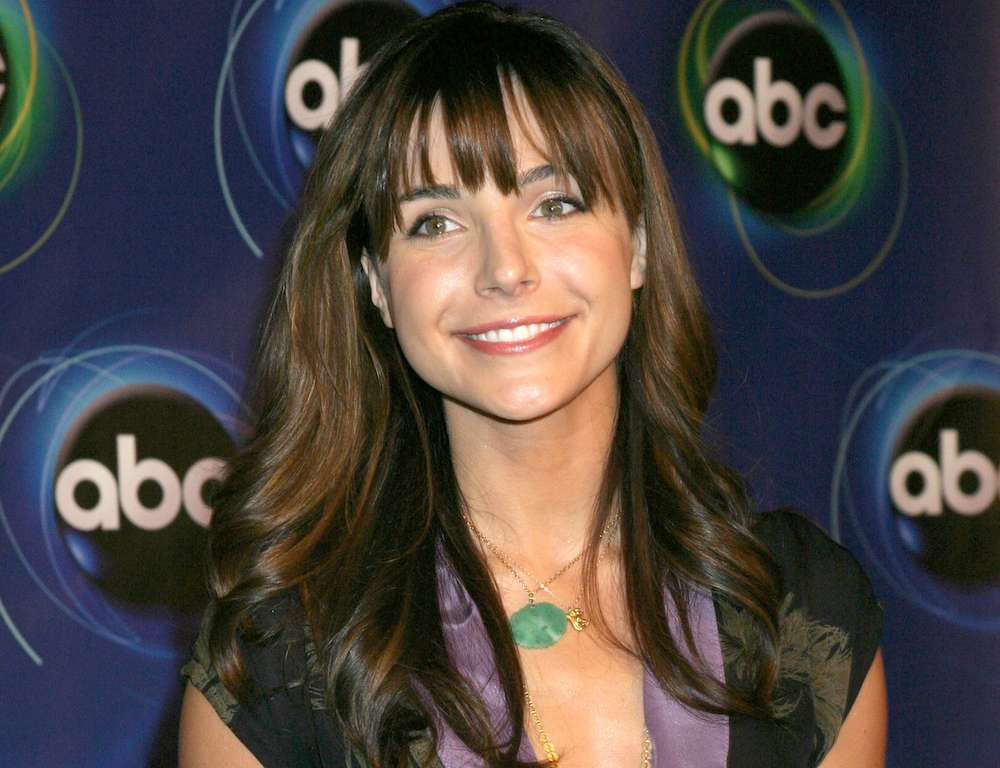
Halt and Catch Fire actress Lisa Sheridan died on February 25, 2019, and the autopsy report has revealed that her cause of death was chronic alcoholism.
Radar Online recently published the 44-year-old actress’s autopsy report. Although the manner of her death was said to be “natural” in the report, it also stated that the actress had a “reported history of benzodiazepine abuse.”
Benzodiazepines are typically used to treat anxiety and are known to be extremely addictive.
Although no date was given, the report noted that Sheridan had a “remote brain injury” due to a fall. Her lungs were labeled “hyperinflated” and she had a cyst on her right ovary.
The mixture of benzos and alcohol is a particularly dangerous combination that can cause an overdose. Benzodiazepines sedate the pill taker through an increase in the brain neurotransmitter GABA. If taken with alcohol, this can slowly and ultimately stop breathing.
A report from the Centers for Disease Control and Prevention showed that the amount of women overdosing on benzodiazepines has increased by a staggering 830% since 1999.
Sheridan’s manager, Mitch Clem, released a statement soon after the actress was found in her residence. “We all loved Lisa very much and are devastated by the loss we all feel. She passed away Monday morning, at home, in her apartment in New Orleans. We are waiting for a coroners [sic] report on cause of death.”
Baywatch actress Donna D’Errico, who worked with Sheridan on the 2015 film Only God, posted a Facebook tribute to the actress.
“I just received news that my dear friend, actress Lisa Sheridan, has passed away. She was found Monday morning. I am sitting here stunned. Lisa and I filmed a movie together 5 years ago and became very close on set and remained close friends after filming ended. It’s so rare to find kind, gentle souls like hers in this industry, this city…even this world. Truly one of the most genuinely sweet and gentle people I’ve ever come across in my life…Everyone who knew her loved and adored her. Goodbye and goodnight sweet angel…I will miss you terribly.”
Critics of the Cocaine Mitch swag didn’t appreciate the playful reference to the drug in the midst of the addiction epidemic.
Ahead of his run for re-election in 2020, Senate Majority Leader Mitch McConnell (R-KY) is capitalizing on a defamatory nickname given to him by a political opponent—“Cocaine Mitch”—to raise money for his campaign.
His campaign website is selling stickers and t-shirts depicting a faceless McConnell dusted with cocaine residue. The back of the t-shirt is labeled “CARTEL MEMBER.”
McConnell has raised more than $30,000 from the t-shirt sales, according to the Louisville Courier Journal. Apparently the senator’s humor was not lost on some.
“Senator McConnell proves every election cycle that having a sense of humor is the most valuable and least abundant commodity in politics,” said Josh Holmes of the Team Mitch campaign. “He managed to turn a slanderous attack on his family into an online movement of his supporters.”
The nickname originated in a political campaign promoting Don Blankenship’s run for U.S. Senate in 2018. “One of my goals as a U.S. senator will be to ditch Cocaine Mitch,” he said in a campaign ad. “When you’re voting for me, you’re voting for the sake of the kids.”
Blankenship, a Republican and former coal CEO from West Virginia, was referring to a cocaine bust from 2014 aboard a shipping vessel operated by the father of McConnell’s wife, U.S. Transportation Secretary Elaine Chao. The Nation reported at the time that the Colombian Coast Guard seized approximately 90 pounds of cocaine from the ship.
“His father-in-law who founded and owns a large Chinese shipping company has given Mitch and his wife millions of dollars over the years,” Blankenship’s campaign explained in a statement. “The company was implicated recently in smuggling cocaine from Colombia to Europe, hidden aboard a company ship carrying foreign coal was $7 million of cocaine and that is why we’ve deemed him Cocaine Mitch.”
While McConnell has reaped a significant profit from the bizarre nickname, Trump adviser Lynne Patton is not amused. “I think depending on what day it is, whether or not Mitch McConnell is a friend of the president, but as somebody who has personally struggled with cocaine addiction, I don’t think that that is funny or appropriate,” said Patton, a senior official at the Department of Housing and Urban Development. “And I wouldn’t endorse that on any side of the aisle.”
Patton and other critics of peddling Cocaine Mitch swag did not appreciate the playful reference to the drug in the midst of our addiction and overdose epidemic.
“It’s almost like making drugs cool, and they’re not,” said Patton, speaking with Bold TV. “Not to sound like Nancy Reagan, but drugs are not cool, just so you know.”
She suggested that Trump would not find the humor in it either. “The president himself, he lost his brother to alcohol addiction and he’s never had a drink in his life.”
We speak to four accomplished writers about their writing process and how it relates to their recovery.
Writing has been the greatest gift of my recovery. Seven years ago I sat at my desk — as instructed by a sponsor who’d asked me to start journaling — with my pen poised, but with a numbness between my mind and the paper. I just didn’t know where to start — what to write, or how to say it. I was numb. My mind felt blank and my hand wouldn’t move. My sponsor told me to start small: write a plan for the day, or express how I feel. Record what you’ve done right each day, she said.
Once I started, I couldn’t stop. Words flowed out of me like a dam had been removed from an overflowing river. Seven years later, I’ve filled many journals, become a full-time writer and journalist, published hundreds of articles online, and have begun writing my memoir. Writing is my number one means of expression — I often choose it over an in-person conversation. Some kind of magic happens when I place my fingers on the keyboard. Writing helps me to connect my mind and body, to ground myself. It gives me the breathing space to process my thoughts. Writing shows me how far I’ve come, but also what’s left to heal. I can’t imagine a life without writing.
AWP 2019, Portland, OR
As I’ve started to take myself more seriously as a writer, I decided to venture out into the world of my peers. I recently attended an Association of Writers and Writing Programs (AWP) conference in Portland. It is the largest literary conference in North America readings, panel discussions, and lectures. What struck me the most about the conference was the sheer volume of people—there were 12,000 attendees. If you’re new to the writing world, AWP can leave you feeling a little out of your depth — looking out the lens of comparison as opposed to shining in your own light. For this introvert and empath, it was way too much. I hate crowds, and I struggle to make meaningless chit-chat.
While I found I’m not alone in my feelings of overwhelm and my desire to lock myself in a dark room surrounded only with books and a flashlight for the next month, I did take the opportunity to indulge my curiosity about the emerging cohort of writers who have spoken openly about their recovery. I wanted to know if it was possible to co-exist in a world that is usually associated with copious amounts of wine, and whether these writers’ pain from addiction could be used as a catalyst for healing in the world.
Writers in Recovery
I spoke to writers Kerry Neville, Randall Horton, Kelly Thompson, and Penny Guisinger to understand their writing process and how it relates to their recovery.
Kerry Neville
Kerry Neville is the author of the books Necessary Lies and Remember to Forget Me. She is the recipient of numerous prizes in fiction, a former Fulbright Scholar, and the coordinator of the graduate and undergraduate creative writing program at Georgia College & State University, where she is also an assistant professor of creative writing.
How has recovery influenced your writing, and in what ways?
When I write out of my own experience, out of my own complicated relationship with bipolar disorder and about my recovering from an eating disorder and alcohol use disorder, for instance, I often navigate between the implicit bias I have that comes out of my own factual experience and the imperative to try to translate that into a more universal felt understanding. I am interested in how such struggles with these types of disorders might reveal something more about what it means for us to be in connection or disconnection with each other. When I am “inside” my own experience of this illness, it’s isolating — insularity prevents insight. So in my writing, I try to understand how grief, loneliness, and depression, the tightrope many of us walk regardless of a mental health diagnosis, might link us together and how we can help each other to continue on.
Conversely, in what ways has writing helped your recovery?
In my movement toward recovery and stability and back into my writing self, I understood that while it might be desperately lonely out there, we have an obligation to reach out for each other, to pay attention, to live in truth and integrity. This understanding, once I emerged from that bleak, dark well, fueled the writing, helped me find my way back through words that built sentences that created paragraphs that imagined stories — and writing is an act of hope.
How do you deal with the ups and downs of being a writer (rejections, etc.) in a healthy way?
In terms of dealing with rejection? One day at a time, one submission at a time. And remembering I write not for acceptance but for connection — to myself, to others.
Randall Horton
Randall Horton is the author of several books: The Definition of Place, Lingua Franca of Ninth Street, Hook, A Memoirand Pitch Dark Anarchy: Poems. He is the recipient of various poetry awards and prizes, including the Gwendolyn Brooks Poetry Award. Randall is a member of the Affrilachian Poets and an associate professor of English at the University of New Haven.
How has recovery influenced your writing, and in what ways?
To be honest with you, I don’t know that it has. However, when I was in JAS (Jail Addiction Services) in Montgomery County, I was introduced to the idea of writing through a group session we used to have with a social worker. This person took an interest in my writing during this time and encouraged me to continue the path that I now currently follow.
Conversely, in what ways has writing helped your recovery?
I will say this: Writing helps me to not want to sell drugs, pick up a package and hustle, or the myriad things I thought were necessary for me to live. For me, writing shows me how to be human; even when I resist, the writing is my equilibrium.
How do you deal with the ups and downs of being a writer (rejections, etc.) in a healthy way?
Well, the first word I learned as a little child was “no.” So rejection doesn’t bother me one bit. I have been to prison. I have lived on the streets and had a whole alternate existence as a human being in this society. With that said, writing and the writing life is easy because I’m playing with house money, so I never lose. Feel me?
Kelly Thompson
Kelly Thompson’s work has been published in Guernica, Entropy, The Rumpus, and various other publications and literary journals. Her essay “Hand Me Down Stories” was nominated for a Pushcart. Kelly curates Voices on Addiction at The Rumpus, where she also serves as a contributor.
How has recovery influenced your writing, and in what ways?
Recovery is a way of life. My recovery determines my writing, relationships, daily life, and choices. I prioritize my sobriety over everything else. It comes first. My recovery is based on certain principles. As Shakespeare said, “To thine own self be true and it must follow, as the night the day, thou canst not then be false to any man.” So that, as well as other principles like honesty, openness to new ideas, and nonresistance constitute a daily practice in my life. That flows into my writing practice as well. So I really can’t separate the two. For me, it is all one thing. Recovery helped me uncover my truth, which led me to write.
Conversely, in what ways has writing helped your recovery?
To write is my heart’s desire. My passion. By writing, I am doing what I was born to do. Once I peeled away the layers of conditioning that kept me from writing —and there were many — once I committed to writing as a lifelong practice, doors began opening, and any obstacles in the way of my writing began to dissolve. I have learned that purpose is integral to recovery, so by fulfilling it, by following my passion, so to speak, my recovery is strengthened. They inform each other. My recovery and writing go hand in hand.
How do you deal with the ups and downs of being a writer (rejections, etc.) in a healthy way?
I think it was Barry Lopez who said, “Despair is the great temptation.” I can’t afford to go there. It’s a numbers game, so in the beginning, I started by submitting my writing frequently to publications I admired. I set a goal of getting as many rejections as possible and considering that a win. The rule I set for myself was that upon receiving a rejection, I would immediately send the piece to the next tier of submissions. By doing that, I was able to transition into not taking rejection personally. I also learned from the process. I learned that I was often sending things out prematurely. I learned to sit on my writing for a bit and then return to it. Now, as a curator for The Rumpus and “Voices on Addiction,” I’m on the other side of it, as well. That experience has taught me firsthand that rejections often have nothing to do with the quality of the writing. It’s usually more a matter of timing, fit, and the column’s needs. At the same time, the best submissions are truly final drafts and need little to no edits. That continues to teach me a lot about my writing and submission process. If you can become a reader for a publication, go for it, because you’ll learn from it.
Penny Guisinger
Penny Guisinger is the author of the book Postcards from Here. Her work has appeared in various publications, such as River Teeth, Guernica, the Brevity blog, and Solstice Literary Magazine. She has been nominated for a Pushcart, has won the Maine Literary Award, and was twice named a notable in Best American Essays. She is the assistant editor at Brevity Magazine, the director of Iota: Conference of Short Prose, and the founder of the popular and hilarious blog, My Cranky Recovery.
How has recovery influenced your writing, and in what ways?
I’m a CNF [creative nonfiction] writer, and so am constantly mining real life for writeable moments. Recovery demands that we dig deep into ourselves and develop a clear understanding of our own minds and how they work. As I go through life as a person in recovery, I have learned how to experience the experience of every experience, which is a ridiculous thing to say but it’s true. I am always taking several steps back to maintain awareness of what’s happening and how it might be impacting my sobriety. As such, it’s honed my self-observation skills which I also use as a writer. And I’d be lying if I didn’t say that recovery makes rich material for writing. (Is that cynical?)
Conversely, in what ways has writing helped your recovery?
Writing has not helped my recovery at all, but publishing about recovery has helped a lot. There is a lot about 12-step programs that I don’t find useful, but one very useful thing that happens at meetings is this thing where we admit our addictions out loud by saying (in my case), “I’m an alcoholic.” Saying those words helped make it real for me. Publishing this particular truth is like saying that to the whole world. It’s terrifying and, ultimately, very freeing.
How do you deal with the ups and downs of being a writer (rejections, etc.) in a healthy way?
I take the little downs in stride: rejection is part of the job, and usually it doesn’t bother me. (There are some significant exceptions: a few that I’ve taken pretty hard!) I get more weighed down by the big ones: imposter syndrome, comparing myself to other writers, feeling let down after this-or-that publication didn’t manage to transform my life. I manage that exactly the way I manage my recovery: through community. I would be as dead in the water without my writing community as I would be without my recovery community, and what a gift it is when those two communities overlap.
Do you have some additions? Tell us in the comments.
The “ritual bundle” contained ayahuasca ingredients and traces of cocaine.
An ancient ritual bundle recovered in Bolivia shows that people having been using psychoactive drugs for millennia.
The bundle contained harmine and dimethyltryptamine (DMT), the two primary ingredients of ayahuasca, according to research published in the Proceedings of the National Academy of Sciences. Ayahuasca, which causes people to hallucinate and vomit, has become a popular drug with spiritual adventurers who extol its supposed health benefits.
“Our findings support the idea that people have been using these powerful plants for at least 1,000 years, combining them to go on a psychedelic journey, and that ayahuasca use may have roots in antiquity,” said archaeologist Melanie Miller, of the University of California, Berkeley, who led the team of researchers who analyzed the bundle.
“This is the first evidence of ancient South Americans potentially combining different medicinal plants to produce a powerful substance like ayahuasca,” Miller said.
In addition to the ingredients in ayahuasca, the bundle also contained traces of cocaine. The bundle, which was made from three fox snouts sewn together, contained spatulas and spoons for snorting drugs. Miller said that it was likely used by a shaman or someone who worked with medicinal plants. The team believes the pouch is from the Tiwanaku, a pre-Inca civilization that “dominated the southern Andean highlands from about 550 to 950 A.D.”
Miller said the pouch was “the most amazing artifact I’ve had the privilege to work with.”
She said, “A lot of these plants, if consumed in the wrong dosage, could be very poisonous, so, whoever owned this bundle would need to have had great knowledge and skills about how to use these plants, and how and where to procure them.”
Miller said that the properties that make ayahuasca popular today likely made it important to the ancients.
“The tryptamine DMT produces strong, vivid hallucinations that can last from minutes to an hour, but combined with harmine, you can have prolonged out-of-body altered states of consciousness with altered perceptions of time and of the self,” she said.
The bundle was initially found in a cave site by archeologists from Bolivia and Pennsylvania State University. Those archeologists contacted Miller to help identify the contents of the bundle and to assist with the final excavation. Because of the altitude where the bundle was found it was in good condition.
“We were amazed to see the incredible preservation of these compounds in this ritual bundle,” said Miller. “I feel very lucky to have been a part of this research.”