Category: Addiction News

  • Grandparents Raising Kids Affected By Opioid Crisis Get Support From New Bill

    Grandparents Raising Kids Affected By Opioid Crisis Get Support From New Bill

    Louisiana and New Mexico have already passed similar bills to help grandfamilies affected by opioid crisis.

    One of the most devastating effects of the opioid crisis has been the enormous amount of children with addicted parents who are abused, neglected, or left without parents due to the parent’s death or inability to caretake.

    A new bipartisan bill in Washington, D.C., Help Grandfamilies Prevent Child Abuse Act, is seeking to support those children and their grandparents.

    The act, introduced by Senator Maggie Hassan (D-NH), a member of the Health, Education, Labor, and Pension Committee, and Senator Susan Collins (R-ME), would grant access to services under the Child Abuse Prevention and Treatment Act (CAPTA).

    Families raising these children (typically grandparents) would have access to support for the children who have experienced various traumas, including specialized training to help families access, understand and take advantage of the myriad supports they could be eligible to receive.

    Grandparents and caregivers often have numerous resources as foster parents that disappear once they are given permanent custody. Generations United reported that 21% of grandparents caring for grandchildren are living below the poverty line.

    States like Louisiana and New Mexico passed similar bills as the Help Grandfamilies Prevent Child Abuse Act, while many states, including Massachusetts, Illinois and Georgia, have bills that still have not been voted on.

    “We must be there for the children whose parents have died or are absent because of their substance use disorder,” Senator Hassan said. “Largely due to the opioid epidemic, 2.6 million children are currently being raised by their grandparent—or other relatives or close family friends—without their parents in the home. This bipartisan bill will help ensure that these children get the care and support that they need to thrive.”

    Last year, Senator Collins and Senator Hassan worked together to introduce and get passed into law the bipartisan Supporting Grandparents Raising Grandchildren Act. Senator Hassan met this year with grandparents and children in New Hampshire who have been impacted by the opioid epidemic to brainstorm strengthening child abuse prevention laws in order to better support these unique families.

    On Senator Hassan’s press release, Senator Collins said, “As the opioid epidemic continues to devastate families across Maine, grandparents increasingly are being called on to become the primary caregivers of their grandchildren. Although this caretaker role can be a source of tremendous comfort and stability for families, it also presents several challenges. The Help Grandfamilies Prevent Child Abuse Act would provide grandparents access to important resources they need to help their grandchildren succeed.”

    Click here for more information on the bill and read the bill text here.

    View the original article at thefix.com

  • Mitch McConnell Pushes To Raise Minimum Smoking Age To 21

    Mitch McConnell Pushes To Raise Minimum Smoking Age To 21

    The Kentucky senator seeks to reduce smoking among America’s youth by barring all tobacco products, including vapes, until age 21.

    U.S. Senate Majority Leader Mitch McConnell is proposing a bill that would raise the smoking age from 18 to 21. His proposal, to be introduced in May, will affect all tobacco products, including the now immensely popular vapes.

    McConnell’s home state of Kentucky is home to both a thriving tobacco industry as well as some of the highest rates of cancer in the United States. By the count of the American Cancer Society, lung cancer was responsible for about 66% of cancer deaths in Kentucky between 2012 and 2016.

    McConnell’s plan would hold retailers responsible for ensuring that all tobacco-purchasing customers are of age.

    The senator believes vaping is “the most serious threat” and hopes that raising the buying age will prevent more of these devices from being passed down to middle- and high-schoolers from their slightly older counterparts.

    Preventing teens from getting hooked early is important as almost 9 out of 10 cigarette smokers tried it before they become 18 years old, according to the CDC. Vapes seem to have exacerbated the problem, considering over 3 million high-schoolers used e-cigarettes in 2018—a 78% increase from 2017.

    “I hope my legislation will earn strong, bipartisan support in the Senate,” said McConnell. “I’m confident many of my colleagues will agree that protecting our young people from starting tobacco use at an early age can have remarkable, long-term health benefits for Kentucky and the country.”

    The bill will exclude those who serve in uniform.

    Altria, the producers of Marlboro, say they “strongly supports raising the legal age of purchase for all tobacco products.”

    McConnell’s idea isn’t novel. Twelve states have already moved to raise the smoking age to 21. According to the Campaign for Tobacco-Free Kids, Maryland and New York are also set to enact similar laws.

    But according to one Hawaiian lawmaker, raising the age to 21 just isn’t good enough. State Representative Richard Creagan wants to eventually make it illegal for anyone under the age of 100 to get tobacco products.

    “We don’t allow people free access to opioids, for instance, or any prescription drugs. This is more lethal, more dangerous than any prescription drug, and it is more addicting, said Creagan, “We, as legislators, have a duty to do things to save people’s lives. If we don’t ban cigarettes, we are killing people.”

    View the original article at thefix.com

  • Feds Undertake Four-State Study to Address Opioid Crisis

    Feds Undertake Four-State Study to Address Opioid Crisis

    The $350 million research project aims to find a way to reduce opioid deaths by 40% within 3 years.

    The National Institutes of Health (NIH) is gearing up to dole out $350 million to Kentucky, Massachusetts, New York and Ohio to figure out how to stop opioid deaths by 40% in those states over the next three years.

    By disbursing the money to the University of Kentucky, Boston Medical Center, Columbia University and Ohio State University, the NIH hopes to curb fatalities from drugs like fentanyl and heroin, which took the lives of about 47,600 people in the U.S. in 2017.

    Researchers will get deeply involved with 15 communities that have been hit hard by the opioid crisis to figure out how best to effectively prevent and treat addiction there. They’ll also take a hard look at how factors like unemployment and the justice system contribute to the continued crisis, and experiment with distributing anti-overdose medications to first responders, police, and even schools.

    “The most important work to combat our country’s opioid crisis is happening in local communities,” said Alex Azar, U.S. Health and Human Services Secretary. “We believe this effort will show that truly dramatic and material reductions in overdose deaths are possible, and provide lessons and models for other communities to adopt and emulate.”

    The program will proceed no matter what kind of budget cuts the NIH faces, according to Azar. This is welcome news as some experts believe there is no time to waste.

    “We are in such a period of crisis that we need to know in real time what is working and what is not working,” said Dr. Alysse Wurcel of the Tufts Medical Center in Boston.

    The opioid crisis is a major issue that requires a multi-faceted approach to solve. On his show, Last Week Tonight, John Oliver called for holding members of the Sackler family, the minds behind OxyContin, accountable for their alleged aggressive and irresponsible marketing of their powerful opioid painkiller. Oliver had several celebrities dramatize testimony given by Richard Sackler.

    “The launch of OxyContin tablets will be followed by a blizzard of prescriptions that will bury the competition,” performed Michael K. Williams, repeating Sackler’s infamous proclamation. “The prescription blizzard will be so deep, dense and white.”

    Some solutions to the opioid crisis may seem unorthodox and unintuitive, such as a Canadian public health expert’s suggestion to install opioid vending machines in Vancouver, home to “one of North America’s densest populations of injection drug users.” Only proven chronic drug users could scan themselves to get clean drugs for safer consumption.

    “We’re acknowledging people will go to any extreme to use this drug. To tell them not to use because it’s unsafe is ridiculous,” said program mastermind Dr. Mark Tyndall.

    View the original article at thefix.com

  • Are the 12 Steps Safe for Trauma Survivors?

    Are the 12 Steps Safe for Trauma Survivors?

    When the 4th and 5th steps are done without support for the symptoms of PTSD, they have the potential to retraumatize.

    Trauma is a current buzzword in the mental health world, and for good reason. Untreated trauma has measurable lasting physiological and psychological effects, which makes it a public health emergency of pandemic proportions. Trauma is an event or continuous circumstance that subjectively threatens a person’s life, bodily integrity, or sanity, and overwhelms a person’s ability to cope.

    PTSD and Substance Use Disorder

    Post-traumatic stress disorder (PTSD) is a condition caused by experiencing or witnessing a traumatic event. Symptoms include nightmares, flashbacks, anxiety, intrusive thoughts about the trauma, hypervigilance, and avoidance of triggers which remind you of the event. Substance use disorders (SUD) are frequently co-morbid (co-occurring) with PTSD. Many people with PTSD self-medicate with mind-altering substances to alleviate symptoms but getting high or drunk only works for so long. Substance use disorders often evolve from using substances as a maladaptive coping tool.

    There are many physiological correlations between psychological trauma and SUD. For example, there are similarities in gray matter reduction for both the person with PTSD and the person with an alcohol use disorder. Although the neural mechanisms of addiction in PTSD patients are not fully understood, research has found that in the prefrontal cortex, dopamine receptors may be involved in both conditions. Memories related to fear and reward are both processed with the help of these specific receptors. It could be that the processing of traumatic memories affects the dopamine receptors, making them more sensitive to reward-triggering substances.

    Sometimes, people with a dual diagnosis of addiction and PTSD find their way to 12-step programs like Alcoholics Anonymous. These programs are widespread, free, and require no commitment, which makes them more accessible than other types of treatment. AA’s worldwide membership and lasting existence has caused the program to be of interest to researchers for decades. Previous research has found positive correlations between AA participation and abstinence. There is less research on how 12-step programs interact with trauma recovery.

    Studies on relapse factors have found that common predecessors to relapse in adults include anger, depression, and stress, among others. Recalling traumatic experiences, for someone with PTSD, can cause intense physiological and psychological reactions characterized by these same feelings: anxiety (stress), depression, anger, and frustration. It’s a combination that puts people with both trauma and addiction at a higher risk of relapsing.

    Guilt, Shame, and AA

    There are two sets of steps in 12-step programs that involve memory recall and direct involvement with others: Steps 4 and 5 and Steps 8 and 9.

    Step 4 says: “Made a searching and fearless moral inventory of ourselves.” That step is followed up by sharing that inventory in Step 5: “Admitted to God, to ourselves and to another human being the exact nature of our wrongs.”

    Later, Step 8 says: “Made a list of persons we had harmed, and became willing to make amends to them all.” To deal with that list, Step 9 directs people: “Made direct amends to such people wherever possible, except when to do so would injure them or others.”

    The gist with these steps is that they look at both the resentment/anger the person feels towards others (which always involves taking responsibility for part or all of the event that caused the resentment and anger), and also the “harms” the person caused others. But there is no direct guidance on how to ensure a realistic and safe assessment of past events is made. The AA book presents this step as if someone with a substance use disorder has the tendency to blame others. People with PTSD are wracked with self-blame, and it is self-blame and shame which fuels many people’s addictions, but shame is not explicitly addressed in the steps.

    Guilt is very commonly experienced by people with PTSD. Survivor guilt can be a bit of a misnomer; PTSD develops from situations that are subjectively experienced as traumatic, but these circumstances don’t have to involve death (although they certainly can and do for many people). Simply surviving can feel like something the person is not worthy of. They may feel guilt when they don’t stay in the pain and anxiety.

    Shame is also common in trauma survivors, especially in people who have been sexually assaulted. Trauma survivors must restore a positive sense of self to find healing. Judith Herman, the author of Trauma and Recovery: The Aftermath of Violence—from Domestic Abuse to Political Terror, explains that “the survivor needs the assistance of others in her struggle to overcome her shame and to arrive at a fair assessment of her conduct.” It becomes important, as the trauma reveals itself, to see it clearly for what it was so the person can integrate those experiences into their individual life stories.

    AA literature is very focused on decreasing ego and on disrupting the selfishness of the person with the addiction. This is not necessarily a helpful baseline for traumatized folks; it can be harshly critical. The feeling of being judged can deepen the rift between the survivor and others. Herman writes, “Realistic judgements diminish the feelings of humiliation and guilt. By contrast, either harsh criticism or ignorant, blind acceptance greatly compounds the survivor’s self-blame and isolation.”

    The primary text of Alcoholics Anonymous (the “Big Book”) suggests alcoholics review their past sexual life when creating a life inventory in Step 4. For the overall inventory, the book suggests that the reader completely disregard “the wrongs others had done” and to look only at “our own mistakes.” Even in situations where a person caused harm to the reader, the reader should “disregard the other person involved entirely” and find “where were we to blame?” These suggestions can be dangerous for survivors of intimate partner violence or child abuse who have been told that they were to blame for the abuse they suffered.

    The book further details what to ask yourself when making an inventory of your sexual conduct:

    “Where had we been selfish, dishonest, or inconsiderate? Whom had we hurt? Did we unjustifiably arouse jealousy, suspicion or bitterness? Where were we at fault, what should we have done instead?” It is worrisome that a sex inventory is taken to find out how “we acted selfishly” when one-third of women and one-sixth of men have been sexually assaulted or raped. An estimated half of women who experience a sexual assault will develop PTSD. One study found that 80 percent of women with SUD who seek inpatient treatment have been physically or sexually assaulted and nearly 70 percent of men have experienced either physical or sexual abuse.

    How the 12 Steps Can Harm People with PTSD

    Because remembering past traumas makes the brain’s reward center more receptive to the effects of drugs, Steps 4 and 5 need to approached with extreme caution for people who have experienced trauma. Ideally, these steps jumpstart healing; but when they are done without support for the symptoms of PTSD, they have the potential to retraumatize. As the person shares their trauma with someone else, hopefully the listener is compassionate and willing to point out where things were not the addict’s fault—at all. A child survivor of molestation had no agency in the assault, and it is unconscionable to tell that child, now grown, that they need to determine where they were at fault. It is not possible to “disregard the other person involved entirely” when an event only occurred because of the other person. Sometimes we need to recognize this fact and say to ourselves (or hear from someone else): “You had no part in this, you were a victim at that time.”

    In Steps 8 and 9 we are to list and resolve harms done to others. If step 4 and 5 didn’t properly address where our fault doesn’t lie, we may be inclined to list abuses and harm done to us as wrongs we did. It says not to make amends if it will cause harm to others, but we need an additional specification not to make amends if it will cause harm to ourselves. If you owe an abusive ex-partner money, are you supposed to pay them back if you’ve cut off all contact? These are issues that require careful consideration. Sharing both lists with a compassionate person has the potential to help survivors recover. Sharing both lists with someone who is too harsh in their suggestions and assessments has the potential to push those in recovery back into active addiction.

    The care of a loving, compassionate, and knowledgeable supporter, like a sponsor, can help sort out these dangerous triggers. Since such a large percentage of people in 12-step programs have experienced trauma, sponsors should be able to provide trauma-informed care; otherwise, going through the steps may end up retraumatizing their sponsees and leaving them vulnerable to relapse. Yet, there are no qualifications for sponsorship, and no way for someone new to the program to be aware of these potential pitfalls. There are so many variabilities to the 12 steps and how they are implemented. The way in which someone interprets the language of the steps can change how people understand themselves and their history. Trauma-focused recovery can be lost in the mix and deserves more explicit attention.

    View the original article at thefix.com

  • Which Rx Meds are Sending More People to the ER?

    Which Rx Meds are Sending More People to the ER?

    Are prescription drugs the problem, or is human nature the cause of the recent dramatic increases in ER visits? In truth, it is a combination of both. Far too many people are overdosing on their medications after combining meds or using them with alcohol or other substances. The most commonly misused prescription drugs that led to ER visits are Xanax and Ativan, followed by prescription opioids. Prescription drug misuse is a nationwide health crisis that continues to destroy hundreds of lives daily.

    According to CDC researcher, Dr. Andrew Geller:

    Most of the time there may have been only one pharmaceutical involved, but there were other non-pharmaceutical substances or psychoactive drugs or alcohol involved as well. When people get into trouble with misusing medicines, they’re usually taking more than one substance.”

    What is Prescription Drug Misuse?

    Misuse of prescription medications is common today.  Misuse typically means someone is taking a medication that was not prescribed for them.  Or, someone doesn’t follow the dosing directions properly. However, misuse is not always intentional. Many chronic pain sufferers will often take larger doses because they aren’t getting the desired results.

    The CDC reports that about 40 percent of misuse cases they reviewed involved intentional abuse:

    • About 44 percent of the cases showed to clear indication of whether it was drug abuse or attempted suicide, or simple misuse.
    • The remaining 16 percent of cases involved individuals taking medications for the purpose of getting high.
    • Overall, more than 360,000 ER visits were attributed to misused pharmaceuticals.

    The above study also shows that the primary prescription drug involved in 47 percent of cases was Benzodiazepines, and about 36 percent of cases involved OxyContin.  Other drugs involved in 85 percent of the benzo cases involved alcohol, heroin, cocaine, and other illicit or prescription drugs.

    Why is Rx Drug Misuse so Dangerous?

    Prescription drug misuse, especially polydrug misuse, can lead to unconsciousness, heart failure, or respiratory depression. What causes these dangerous interactions? For one thing, many of the drugs are sedative/depressants meaning they slow the body down.  Combining two or more of these types of drugs can cause enhanced effects that can be life-threatening.

    Here are some of the most widely abused or misused prescription drugs and how they can interact to put a person’s life in danger:

    Sedatives/Depressants:

    CNS (central nervous system) depressants include tranquilizers, sedatives, and hypnotics.  These drugs are used to treat sleep disorders and anxiety.

    Side effects of sedative/depressant misused include: confusion, memory problems, impaired judgment, mood swings, drowsiness, dizziness, slowed breathing and heart rate, addiction, overdose, death.

    Painkillers:

    These drugs are usually opioids and are used to treat acute or chronic pain. They were intended for short-them use, but may patients end up taking them for years.

    Side effects of opioid misuse can include nausea and vomiting, sedation, dizziness, liver damage, brain damage, respiratory depression, unconsciousness, addiction, overdose, coma, death.

    Stimulants:

    Prescription stimulants are used to treat depression and ADHD.  The most commonly prescribed stimulants are Ritalin and Adderall.

    Illicit stimulants include cocaine, crack cocaine, methamphetamine, amphetamine.

    Side effects of stimulants can include, excitement, increased energy, loss of appetite, sleeplessness, aggression, panic attacks, paranoia, and suicidal ideations.

    Alcohol:

    Alcohol is both a stimulant and a depressant.  A person drinks a few drinks for the stimulant effect or to “loosen up”, but overdoing it on the amount consumed can cause a depressant effect (blackout, passing out).  Combining alcohol with either of the above drugs can intensify the effects.

    Most commonly abused with alcohol:  opioids, benzodiazepines, stimulants, antidepressants, and antipsychotics.

    Some of the less severe, but still dangerous, side effects of alcohol misuse include heart attack, stroke, internal bleeding, liver damage, brain damage, and mental health problems.

    The side effects of combining alcohol with any of the above drugs include unconsciousness, coma, or death.

    Accidental Prescription Drug Misuse

    People accidentally misuse prescription drugs for a variety of reasons.  As mentioned earlier, some people are not aware of the dangers involved in increasing the dosage without consulting their doctor. Others have been prescribed a combination of drugs that should not have been prescribed.  For instance, some older adults are often prescribed opioids and benzodiazepines at the same time. Physicians are encouraged to avoid this procedure if possible. Older patients have lower resistance to the effects of the drug.  Combining these substances can result in oversedation, which can lead to coma or death.

    People who share their prescription drugs with someone may think they are helping that person, but everyone reacts differently to the chemicals in the drug.  One person can take a drug with few side effects, while another person can have severe reactions. It’s highly advised to never share prescription drugs with anyone.

    If you would like more information about prescription drug misuse, please contact us today at our toll-free number.

    Resources:

    drugabuse.govPrescription Drugs Overview

    ncbi.nlm.nih.govOpioid Complications and Side Effects

    View the original article at bestdrugrehabilitation.com

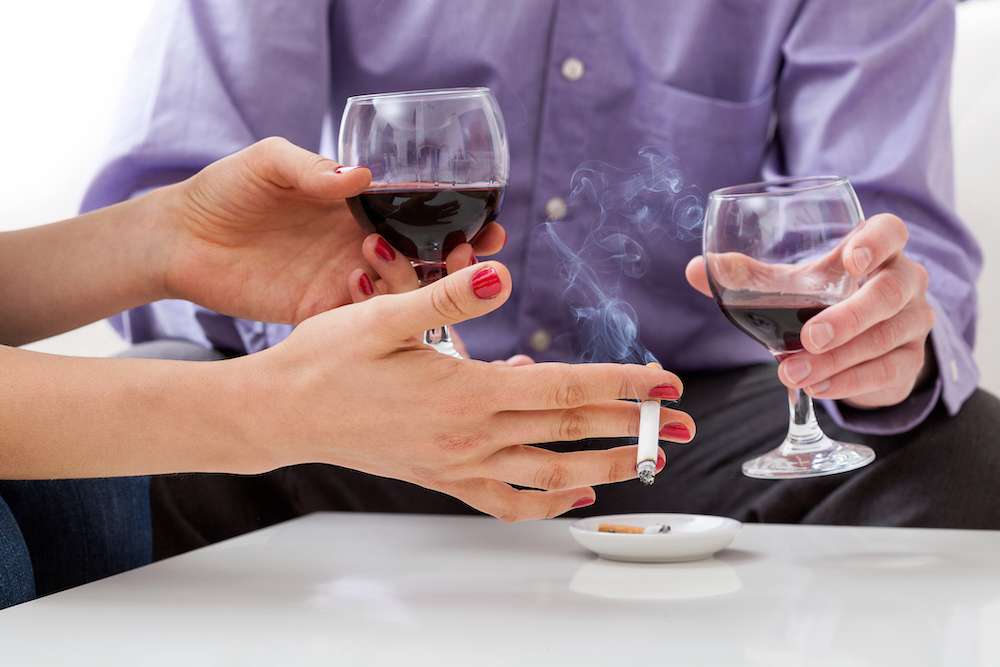
  • Study: Drinking A Bottle Of Wine A Week As Bad As Smoking 5 to 10 Cigarettes

    Study: Drinking A Bottle Of Wine A Week As Bad As Smoking 5 to 10 Cigarettes

    A new study is the first to investigate the “cigarette equivalent” of alcohol’s cancer risk.

    A new study from the United Kingdom compares drinking a bottle of wine in seven days to smoking five to ten cigarettes.

    BMC Public Health published the study, the first to attempt to find the “cigarette equivalent” of alcohol’s risk of causing cancer. Women and men in the study had different results—for women, a bottle of wine a week equals the cancer risk of five cigarettes, and for men, it is ten cigarettes.

    “Everybody knows that cigarettes cause cancer,” Dr. Richard Saitz, an addiction medicine specialist and chair of the Department of Community Health Sciences at Boston University School of Public Health, told Live Science. “Hearing that some amount of alcohol is the equivalent of some amount of cigarettes” in cancer risk is a good way to spread awareness, Saitz said.

    Saitz noted that the cancer risk of alcohol has been “under the radar,” and the researchers in the study agree. Multiple studies connecting moderate drinking to health risks have been published in the last few years.

    It had been widely believed that moderate drinking reduced a gambit of health risks, but new research has tied moderate drinking to higher blood pressure, stroke risk, and now possibly increased lifetime cancer risk.

    According to Live Science, lead study author Dr. Theresa Hydes, of the Department of Gastroenterology and Hepatology at the University Hospital Southampton NHS Foundation Trust, said, “Our estimation of a cigarette equivalent for alcohol provides a useful measure for communicating possible cancer risks that exploits successful historical messaging on smoking. We hope that by using cigarettes as the comparator we could communicate this message more effectively to help individuals make more informed lifestyle choices.”

    One bottle of wine (the alcohol used in the study) contains near 80 grams (2.8 ounces) of pure alcohol. Using national data from the UK, the study looked at lifetime risk of cancer in the general population, including published research on the relationship between smoking, alcohol, and cancer.

    Non-smoking men who drank one bottle of wine a week were estimated to have a 1.0% increase in lifetime cancer risk. Non-smoking women who drank the same were estimated to have a 1.4% increase in lifetime cancer risk.

    The research presumes that women are at higher risk due to the connection between alcohol consumption and increased breast cancer rates.         

    View the original article at thefix.com

  • Nurses Condemn Criminal Charges Against Mothers With Addiction

    Nurses Condemn Criminal Charges Against Mothers With Addiction

    The threat of arrest and sentencing has created what the AAN dubbed a “culture of fear and barriers” for pregnant and nursing mothers.

    The Washington, D.C.-based American Academy of Nursing (AAN) called for an end to criminal and civil charges against pregnant women and mothers based on drug use.

    The 2,700-member organization outlined its position in a press release, which stated that legal action against pregnant women with substance use disorder (SUD) has resulted in arrests and jail time that have deterred them from seeking essential health services.

    The AAN’s policy outlined recommendations to help reverse that trend, including increasing funding for mental health agencies and training for nurses in regard to substance use disorder.

    In the press release, the AAN noted that the opioid epidemic has placed substance use disorder in the national spotlight, but in the absence of a “public health response,” expecting and parenting women with SUD have been subjected to criminal and civil actions, including arrests and incarceration.

    Currently, a number of states, including Tennessee, Alabama, Wisconsin, Ohio and Kentucky have laws in place that consider drug use during pregnancy as grounds for child abuse protection.

    The threat of arrest and sentencing has created what the AAN dubbed a “culture of fear and barriers” for pregnant and nursing mothers, who may avoid “essential health services” over concerns of prosecution.

    As the press release noted, “Early entry into maternity care plays a vital role in long-term health and social outcomes,” a notion supported by scientific research that shows that preschool-aged children (3-5 years old) with supportive mothers show significant increases in areas of the brain related to learning, memory and emotional regulation.

    To facilitate that crucial level of interaction, the AAN recommended a shift in public health policy away from punitive measures toward mothers and in the direction of recovery and treatment.

    The academy offered policy suggestions for federal and state agencies, as well as for individual providers. These included increased funding for the Substance Abuse and Mental Health Services Administration (SAMHSA) and expanded access to its Clinical Guidance for Treating Pregnant and Parenting Women with Opioid Use Disorder and Their Infants, as well as increased funding for community-based treatment programs for women with SUD and their children.

    Additionally, the AAN called on nurses to make sure that clinical assessments of women with SUD are “accurate and comprehensive,” and to keep providers in concert with a “therapeutic health justice approach.”

    “The Academy is helping to shape the conversation around providing care to pregnant and parenting women and reducing the stigma of SUDs in the age of the opioid epidemic,” the press release’s authors concluded.

    View the original article at thefix.com

  • More High School Athletes Are At Risk For Depression

    More High School Athletes Are At Risk For Depression

    Intense workouts and demanding schedules have a huge impact on the lives of teens who play sports in high school.

    Participating in team sports and exercising regularly have been shown to boost mental health—but for serious high school athletes, long practices, high expectations and harsh demands from coaches and parents are contributing to an increased risk of depression. 

    “The professional consensus is that the incidence of anxiety and depression among scholastic athletes has increased over the past 10 to 15 years,” sports psychologist Marshall Mintz told The Atlantic.  

    Studies have confirmed this observation, with data from 2015 finding that student athletes had more negative emotional states than students who were non-athletes. This is particularly concerning because depression is already common among teens: almost half of American adolescents will experience a mental illness before they turn 18. 

    As the world of high school sports has become more intense, athletes are asked to balance rigorous and time-consuming training schedules with homework, socialization and sometimes work. All of this can add huge amounts of stress to their lives, said sports psychologist Lonnie Sarnell. 

    “Do they need two-and-a-half to three hours of practice?” Sarnell said. “That extra hour of practice adds so much stress when you have four hours of homework to deal with.”

    The extra hours of practice often lead to kids staying up too late and getting too few hours of sleep, something that can deteriorate mental health. 

    “The biggest problem is sleep loss—all these kids are sleep-deprived, and this becomes a major contributor to anxiety and depression,” Mintz said. 

    In addition, toxic coaches can contribute. High school runner Riley, who The Atlantic identified only by her middle name, said that she switched schools after her running coach berated athletes and gave them the cold shoulder as punishment after poor performances. She said that the coach’s treatment and demand for “mental toughness” left her feeling suicidal.  

    “We accepted the intense anxiety before races and practice as a necessary side effect,” she said. 

    Athletes can also be at risk for mental illness when an injury prevents them from playing. That’s what happened to Isabella, a high school lacrosse star who tore her ACL in her junior year. 

    “It was my worst year ever,” she said of her recovery. “I’d grown up playing lacrosse, and I had no other hobbies. So when you don’t have it, you’re like, What am I going to do?”

    Luckily, some people say that with more attention on the mental toll of playing sports, high schools will begin prioritizing the mental health of athletes, just like colleges have done in recent years

    “What happens at the college level will trickle down to high school,” said sports psychologist Shane Murphy. “Over the next decade, we’ll see much more priority given to the mental health of high-school student athletes.”

    View the original article at thefix.com

  • Country Star Brantley Gilbert Is Enjoying Sobriety And Family Life

    Country Star Brantley Gilbert Is Enjoying Sobriety And Family Life

    In a recent interview, Gilbert joked that he is “allergic” because it causes him to “break out into handcuffs.”

    Country music star Brantley Gilbert talked sobriety and spending time with people who drink in a recent interview with PopCulture.com. Gilbert, like many musicians, found himself pulled into substance abuse and addiction as he gained fame and fought hard to reclaim control of his life after years of alcoholism and prescription drug abuse.

    Today, he’s seven years sober and is not only able to spend time around people while they drink, he says he enjoys it.

    “It’s just one of those things where I’ve decided it wasn’t for me,” he said. “It’s just a thing that’s just not a part of my life any more. It’s around everything I do, and my career is around it. I enjoy being in the environment, I enjoy being around people that drink.”

    This includes his wife “when she’s not pregnant,” Gilbert says. He also joked that he’s “allergic” to alcohol, saying it causes him to “break out into handcuffs.”

    The singer has joked being arrested multiple times in the past. In an interview with Taste of Country, he responded to a question about Spring Break by saying that his police record in Panama City says he’s been there, “but I don’t recall it.”

    “My arrest report says I’ve been to Panama City a few times,” he said, laughing.

    All jokes aside, Gilbert’s addiction disorder likely would have killed him if he hadn’t gotten the support and treatment he needed.

    In an interview with PEOPLE last year, he revealed that in 2011 his doctors told him that if he didn’t stop drinking, he would be dead within a year. Even then, he didn’t take recovery very seriously.

    “I still put it off and was trying to slow down on my own, like, ‘All right I’m only gonna let myself take two pills today. I’m only gonna drink this much of my bottle and make a mark on the bottle.’ And it would work a couple days —  and then somebody throws a party.”

    Thankfully, fellow country music singer Keith Urban gave Gilbert an unexpected boost of inspiration when he needed it, explaining that creativity could still thrive without alcohol. Now Gilbert is enjoying a growing family with his wife, one-year-old son, and their yet-unborn baby girl. He’s only worried about one day having to explain his addiction disorder to his children.

    “It’s one thing now for me and my career,” he said. “It’s another thing when these little ones get old enough to hear stories. They’re gonna know I’m not a super-hero like most kids do. We’ll cross those bridges when we get to them.”

    View the original article at thefix.com

  • Opioid Vending Machines Proposed By Health Expert

    Opioid Vending Machines Proposed By Health Expert

    The safe supply program has already secured a $1.4 million federal grant. 

    Can a free supply of “safer drugs” help push back rising rates of drug overdose and death? What if they were dispensed by high-tech vending machines?

    A leading Vancouver-based public health expert is pushing this proposal, faced with the challenge of reducing drug-related harms among the drug-using population in Vancouver, Canada’s Downtown Eastside—described as “one of North America’s densest populations of injection drug users”—and beyond.

    Today’s illicit drugs pose a new challenge for public health officials like Dr. Mark Tyndall. According to the BC coroner, in 2018 fentanyl was detected in 4 out of 5 illicit drug deaths in British Columbia. “The plight of people using drugs didn’t change four years ago. The drugs they’re using changed,” Tyndall said in a new interview with Wired.

    Pre-approved participants who have proven that they are chronic drug users and have obtained a doctor’s prescription can access the opioid vending machines with a biometric scan of the veins in their hands to confirm their identity. They must undergo regular urine tests to prove that they are taking the drugs.

    While Tyndall, a long-time public health advocate and former executive medical director of the British Columbia Centre for Disease Control (BCCDC), has already secured a $1.4 million federal grant for the BCCDC from Health Canada to test his safe supply program—giving a regular supply of hydromorphone pills—the national health agency is still reviewing his vending machine proposal.

    Safe supply programs already exist throughout Europe, and some Vancouver clinics are testing this idea as well. Some require daily visits to the clinic to get the daily dose. But under Tyndall’s proposal, participation in the free-opioid program would not need to happen under medical supervision. The key to Tyndall’s plan is that participants may access the drugs and use them without going to a designated clinic.

    While creating designated spaces for supervised drug consumption (also known as supervised injection facilities) have helped prevent drug overdose deaths and given people easy access to treatment options, Tyndall says there is still a segment of the drug-using population that will not step foot in such a place. 

    “We’re acknowledging people will go to any extreme to use this drug. To tell them not to use because it’s unsafe is ridiculous,” said Tyndall.

    Insite, North America’s first official supervised injection facility, is just one of several such sites throughout Canada.

    Tyndall says no matter what his detractors say, it’s all about keeping people alive. “To me, its only ethical,” he said.

    View the original article at thefix.com