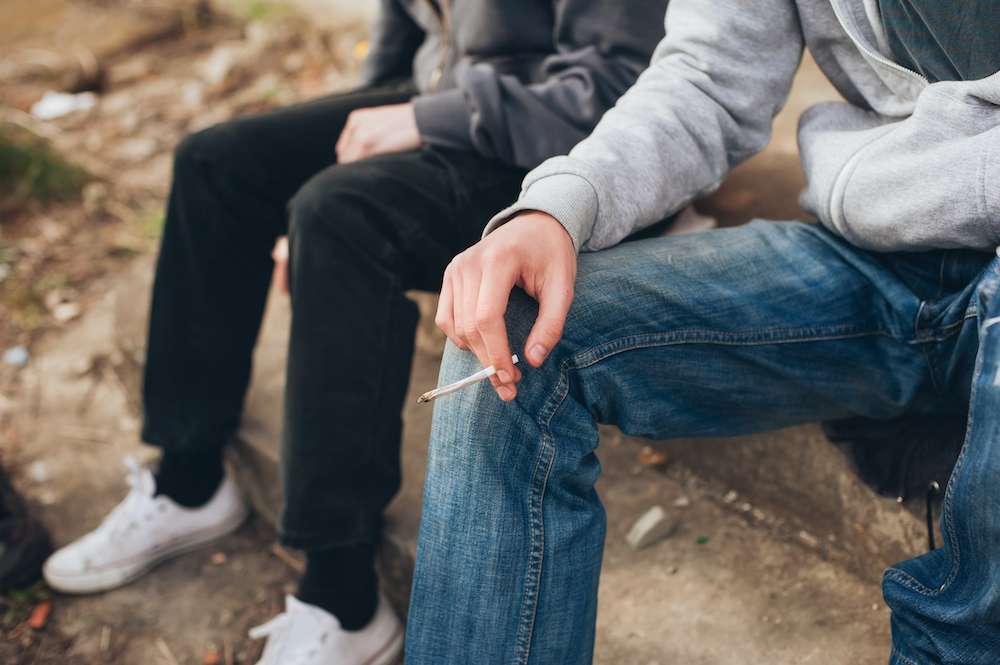
Category: Addiction News

  • Anne Hathaway Talks Giving Up Drinking

    Anne Hathaway Talks Giving Up Drinking

    Hathaway said that she was surprised about the media attention her announcement to give up drinking has garnered.

    Anne Hathaway says that she is giving up drinking for the next 15 or so years, until her three-year-old son Jonathan is out of the house, because the hangovers she gets can affect her parenting.  

    “I didn’t put [a drink] down because my drinking was a problem; I put it down because the way I drink leads me to have hangovers and those were the problem,” Hathaway told Boston Common magazine. “My last hangover lasted for five days. When I’m at a stage in my life where there is enough space for me to have a hangover, I’ll start drinking again, but that won’t be until my kid is out of the house.”

    In January, Hathaway mentioned her sobriety, and said that she was surprised about the media attention to something that she feels is a personal decision, not a principle stance. 

    “I just want to make this clear: Most people don’t have to do such an extreme thing. I don’t think drinking is bad,” she said. “It’s just the way I do it—which I personally think is really fun and awesome—is just not the kind of fun and awesome that goes with having a child for me. But this isn’t a moralistic stance.”

    Hathaway first mentioned her sobriety on The Ellen DeGeneres Show, according to USA Today

    She said, ”I don’t totally love the way I (drink) and (my son is) getting to an age where he really does need me all the time in the mornings. I did one school run one day where I dropped him off at school, I wasn’t driving, but I was hungover and that was enough for me. I didn’t love that one.”

    Hathaway told Boston Common that while she doesn’t want to tell other people what to do, she does want to be public about things that are helping her live a healthier life.  

    “I’ve recently been on a streak where things are just starting to work, so I can share that with people, and they can take from it what resonates and ignore what doesn’t,” she said. “I am not some relentless self-improver, but I am trying to learn to live in the world with as little pain as possible.”

    She also mentioned the changes that are coming to Hollywood because of the #metoo movement. 

    “There are moments of seismic change, and I can’t imagine going back. The people that get it really get it,” she said. “The biggest obstacles at this point are people who claim to get it but haven’t done the work. I think it’s going to take everyone examining how much privilege they have and how it is being used and taking responsibility for creating equality. It’s going to take everyone.”

    View the original article at thefix.com

  • Georgia Expands Medical Marijuana Program

    Georgia Expands Medical Marijuana Program

    The new law allows cannabis to be grown at four facilities in the state, and oils to be sold at 28 dispensaries.

    On Wednesday, Georgia governor Brian Kemp signed a bill into law that will allow medical marijuana patients to legally purchase some cannabis products in the state. 

    The state has allowed patients to use cannabis oil since 2015, but they have not been legally able to purchase oils in Georgia, according to The Atlanta Journal-Constitution. It is also illegal to grow cannabis or bring it in from another state. 

    Dr. Larry Tune, a geriatric neuropsychiatrist at Emory University Hospital, said that he would write prescriptions for medical marijuana, knowing how difficult it would be for patients to obtain

    “We can do that paperwork but it’s pointless,” he said. 

    The new law allows cannabis to be grown at four facilities in the state, and oils to be sold at 28 dispensaries, the AJC reported. Gov. Brian Kemp signed the measure on Wednesday, a little under a week after it passed the Senate. 

    Kemp said earlier this month that he understood why lawmakers in Georgia were hesitant to change the state’s marijuana laws, but he also recognized that the measure was important.  

    “It’s a very, very tough issue. But there’s a lot of legislative support for it. I respect the legislative process, and I understand why people are doing it, and I understand why people have grave concerns about this,” he said. “I have all of those feelings. It’s a really tough spot.”

    Sen. Matt Brass, a Republican, said that the expansion will make life easier for people who are critically ill, including children. 

    “Some may argue that this is not medicine,” he said. “But we had testimony of children having 80 to 100 seizures a day, but after taking the oil are having just one a week.”

    Although no lawmakers spoke out against the new law, Lt. Gov. Geoff Duncan said that the law is not the first step to radially changing marijuana policy in Georgia. 

    “There is no part of me that wants any steps toward recreational marijuana,” he said. 

    Shannon Cloud, whose daughter uses medical marijuana, said the law will improve the lives of patients who need the treatment. 

    “I had a career, and I had to quit in part because of this. I wanted to spend more time with my kids, but it takes a lot of time to coordinate all of this,” she said of obtaining her daughters’ medication. “I am not getting paid. I am just trying to get people the medicine.”

    View the original article at thefix.com

  • Georgia To Expand Medical Marijuana Program

    Georgia To Expand Medical Marijuana Program

    The new bill will allow cannabis to be grown at four facilities in the state, and oils to be sold at 28 dispensaries.

    Georgia is set to expand its medical marijuana program this week when the governor signs a bill that will allow medical marijuana patients to legally purchase some cannabis products in the state. 

    The state has allowed patients to use cannabis oil since 2015, but they have not been legally able to purchase oils in Georgia, according to The Atlanta Journal-Constitution. It is also illegal to grow cannabis or bring it in from another state. 

    Dr. Larry Tune, a geriatric neuropsychiatrist at Emory University Hospital, said that he would write prescriptions for medical marijuana, knowing how difficult it would be for patients to obtain

    “We can do that paperwork but it’s pointless,” he said. 

    The new bill will allow cannabis to be grown at four facilities in the state, and oils to be sold at 28 dispensaries, the AJC reported. Gov. Brian Kemp is expected to sign the measure on Wednesday, after it passed the Senate on Friday (April 12). 

    Kemp said earlier this month that he understood why lawmakers in Georgia were hesitant to change the state’s marijuana laws, but he also recognized that the measure was important.  

    “It’s a very, very tough issue. But there’s a lot of legislative support for it. I respect the legislative process, and I understand why people are doing it, and I understand why people have grave concerns about this,” he said. “I have all of those feelings. It’s a really tough spot.”

    Sen. Matt Brass, a Republican, said that the expansion will make life easier for people who are critically ill, including children. 

    “Some may argue that this is not medicine,” he said. “But we had testimony of children having 80 to 100 seizures a day, but after taking the oil are having just one a week.”

    Although no lawmakers spoke out against the bill, Lt. Gov. Geoff Duncan said that the new measure is not the first step to radially changing marijuana policy in Georgia. 

    “There is no part of me that wants any steps toward recreational marijuana,” he said. 

    Shannon Cloud, whose daughter uses medical marijuana, said that the measure will improve the lives of patients who need the treatment. 

    “I had a career, and I had to quit in part because of this. I wanted to spend more time with my kids, but it takes a lot of time to coordinate all of this,” she said of obtaining her daughters’ medication. “I am not getting paid. I am just trying to get people the medicine.”

    View the original article at thefix.com

  • Denver Votes To Allow Social Marijuana Use

    Denver Votes To Allow Social Marijuana Use

    Proponents of the measure say that it will cut down on public marijuana use and exposure to kids.

    The city of Denver, which was a leader in the recreational marijuana legalization movement, is moving forward with plans to make it easier for people to open businesses that allow social consumption of marijuana

    Councilmember Kendra Black introduced a measure that would relax the rules dictating how far businesses that allow marijuana consumption must be from recreational centers, childcare facilities and other protected establishments. The city council passed the measure by a 9-2 vote on Monday (April 15). The measure will open an additional 2.2 square miles of space for cannabis businesses, the city said. 

    “There are many people who we have heard from who want to open a business but cannot find a location,” Black told The Denver Post. Although the city passed a law in 2016 allowing social marijuana businesses, like cannabis cafes, there are only two in town, largely because of the strict regulations. 

    The law currently requires businesses to be 1,000 feet from schools, a stipulation that will remain. However, the city council measure will allow social-use businesses to operate closer to other community and child-focused facilities as long as they are more than 500 feet away. 

    Proponents of the measure said that it will cut down on public marijuana use, which is illegal, and reduce the frequency of cannabis being used in front of kids. 

    Stacy Lynn, who advocates for access to medical cannabis for kids, said that the measure is important for protecting young people. “If they have nowhere to consume, they will do it in front of our children,” she said. “How do you get it off the street? You put it in a closed, secure building.”

    However, opponents said that the city shouldn’t be strengthening the cannabis industry. 

    Luke Niforatos, who leads a group opposed to the commercialization of cannabis, said, “I don’t think it’s the job of any member of an elected government to make it easier for a drug industry to make more money, to make it easier for people to use drugs.” 

    Others, including Councilwoman Robin Kniech, said that the city has spent far too much time tinkering with cannabis regulations. 

    She said, “There is no evidence whatsoever that kids are at risk from an activity happening in a building they cannot see at 1,000 feet, 500 feet or next door. We have so many huge challenges facing out city, and the time we have spent on this… frankly offends me.”

    View the original article at thefix.com

  • Scott Stapp Credits Family For His Hard-Fought Sobriety

    Scott Stapp Credits Family For His Hard-Fought Sobriety

    “It was either get sober or lose my wife and kids, man, and that’s about the lowest rock bottom that I could possibly have gotten to,” Stapp said.

    Scott Stapp, lead singer of the post-grunge band Creed, gave a lot of credit to his family for lifting him out of a period of substance abuse in a recent interview with Detroit radio station WRIF.

    Stapp recently hit his five-year sobriety anniversary after years of struggling with alcohol and prescription drug addiction.

    “My wife and my kids were critical in helping me get sober,” he told DJ Meltdown. “It got to the point where it was either get sober or lose my wife and kids, man, and that’s about the lowest rock bottom that I could possibly have gotten to. So they were critical.”

    In addition to his family, the singer recently gave a shoutout to MusiCares, a non-profit established by the National Academy of Recording Arts and Sciences that provides support to musicians who have fallen on hard times.

    According to Stapp, MusiCares helped educated him and his wife on the nature of addiction, helping them understand that it’s a disease that requires ongoing treatment.

    “I still have a lot of music ahead me and without MusiCares, that wouldn’t have been possible,” said Stapp. “They provided support and helped educate my wife and I on what we were going through, that it was a disease, and if I did my part, it could be treated and recovered from. Thanks to MusiCares and my family, I’m going on five years sober.”

    Stapp also suffers from bipolar disorder, which went undiagnosed for years and may have fueled his addiction disorders. He has spoken out about multiple suicide attempts and near-attempts, including an incident in 2006 in which he jumped off of a balcony in Miami and fell 40 feet.

    He survived after being discovered by rapper T.I. with a fractured skull and a broken nose and hip. Later that year, he admitted to Rolling Stone that he had been fighting addiction to Percocet, Xanax, and prednisone.

    It wasn’t until 2015 that Stapp told People he had been diagnosed with bipolar disorder after suffering what he called a “psychotic break.”

    “I had a psychotic break that was brought on by alcohol and drug abuse,” he says. “I was hallucinating. I drove around the United States for a month, following an angel that I saw on the hood of my car.”

    During the WRIF interview, Stapp explained how his naiveté going into the world of music set him up for “going down that wrong path.”

    “I just had so much in front of me, and being so naïve, walking into it, I just didn’t know how to handle it, and it got a hold of me,” he said. “And around the same time, I had my first onset of depression. And you combine that with self-medicating, with alcohol and whatever else you can find, and it’s a bad scenario, man.”

    View the original article at thefix.com

  • DEA Kept Database Of People Who Bought Money Counters To Get Drug Convictions

    DEA Kept Database Of People Who Bought Money Counters To Get Drug Convictions

    Over a six-year period, the agency collected “tens of thousands of records, including the names, addresses, and phone numbers” from sellers of money counters.

    For years, the Drug Enforcement Administration collected data on purchases of money counters hoping to net drug convictions. But the controversial program not only pushed the limits of government surveillance, it wasn’t very successful either.

    “Program B,” as it is referred to in a report by the U.S. Department of Justice Office of Inspector General (OIG), which audited the DEA, collected bulk purchaser data on “tens of thousands of records, including the names, addresses, and phone numbers of buyers” from 2008 to 2014, Forbes reports.

    The DEA would issue “administrative” subpoenas to sellers of money counters, and send the data to field offices to cross-reference against law enforcement databases, including records from more than 15 different federal agencies including the ATF, FBI and ICE.

    Even more troubling is that the DEA sought data on people buying money counters with no specific target in mind. The subpoenas were “unrelated to a specific drug trafficking investigation or target,” the report said. The practice of issuing blanket subpoenas “wasn’t predicated on individual cases or individual suspicions,” but was “just a general fishing expedition,” as one FBI agent who questioned the integrity of the DEA’s activities explained.

    “You can’t just take any innocent activity that Americans engage in and go grab all their records knowing that a small percentage of it is potentially connected to illegal activity,” the FBI agent added. “And that sounded exactly like what the DEA was looking to do.”

    The program did little to “win” the war on drugs. Of all the people it collected data on, the program netted only 131 arrests. The DEA declined to say how many of these resulted in convictions.

    While the American public had little to show for Program B, the agency certainly benefited from it. From 2008 to 2014, the surveillance program helped the DEA seize $48 million in cash, $4 million in real estate, 88 vehicles, 179 firearms, nearly 1,500 pounds of cocaine and over 21,300 pounds of marijuana.

    Overall, it was “troubling” to the Inspector General that the DEA failed to consider the legal limits of its surveillance program. Scandals are not new to the agency, and the Inspector General seemed to imply that this likely won’t be the last.

    As Forbes reported, “Although both the Justice Department and the DEA say they have ‘no plans to reinstate any of the discontinued bulk collection programs,’ the Inspector General noted that ‘there is nothing preventing the DEA or the Department from seeking to start such a program at any time in the future.’”

    According to a 2015 report by the Drug Policy Alliance, the agency has been investigated by the OIG for numerous scandals including the massacre of Honduran civilians, the use of NSA data to spy on Americans and fabricate evidence, controversial uses of confidential informants, and airline passenger searches.

    View the original article at thefix.com

  • Marijuana as Harm Reduction: Chip Z'Nuff on the Medical Promise of Cannabis

    Marijuana as Harm Reduction: Chip Z'Nuff on the Medical Promise of Cannabis

    The movement was a pro-pot culture crusade—a coming out for stoners in the entertainment industry that had everything to do with harm reduction principles.

    The first time I grasped harm reduction for drug addicts (the idea that abstinence isn’t feasible for everyone so we’d better find a way to reduce mortality and damage), I was 35 and sharing a joint with two other writers—a decades-clean speed freak and a 12-stepping alcoholic. As for me? Everything, but heroin and pharmaceutical amphetamines have caught me the hardest (knock on wood that they’re never dethroned). Mid-joint, one of them asked me if I thought other people smoked as much as us.

    Not unless they’re avoiding something else, I said. Puff puff pass.

    The first time I experienced harm reduction, though, I was 19 and playing fly-on-the-wall in a rock star’s dining room. It was 1994 on the Irish south side of Chicago. I’d moved into a teenage crash pad where rumor was Enuff Z’nuff—a late eighties Chicago scene staple gone national; a band whose glam exterior lumped them in with acts like Poison and Skid Row while their vibe and melodies telegraphed Cheap Trick and Beatles—lived on the corner. After several weeks of reconnaissance to ferret out exactly where they lived, I was sent to ask them—the rock star strangers—for beer.

    They turned out to be Chip Z’nuff, singer, bassist, and original founding member of the band. He answered through an open screen door in his signature rasp: Well I don’t really like alcohol. It’s not good for you, but do you want to get stoned?

    Today, when I remind him of the exchange, he laughs a little.

    “Good,” he says, “I must have been in a good place then.”

    It’s been 25 years since I saw Chip Z’nuff and I’m a card-carrying medical cannabis patient now, a chronically sad trauma survivor with years of hard drug abuse and sobriety behind me. Spurts of hyper-sexual behavior and paranoia keep my psychiatrist and I discussing a secondary bipolar diagnosis, but we’re also not convinced I’m not just an analytical exhibitionist. All I had before was the trauma.

    I’ve come to talk with Chip about weed and advocacy, his stance on medicinal usage of marijuana.

    Illinois’ medical cannabis pilot program is in a growth phase. On his way out, Governor Bruce Rauner opened up access to include those Illinois residents who have been prescribed opioid medications, and new Governor J.B. Pritzker campaigned in no small way on the promise of bringing recreational marijuana to the Land of Lincoln.

    It’s a sunny Friday afternoon in Blue Island, still on Chicago’s south side but with a Hispanic flavor. Hilly in places, it sits on a channel of the Calumet River. Appropriately, a calumet is a North American peace pipe.

    I’m a Cannabis Cup judge for High Times Magazine,” Chip says. We’re talking at his kitchen table about his longstanding, loud but peaceful weed advocacy. “They would always pick celebrities—musicians, rockstars, whatever you want to call it—and we’d fly over to Amsterdam and judge the marijuana in the different coffee shops. Whoever had the best shops and best pot would win. So I would go out there, and I did it with a bunch of different guys—Anthrax, Sebastian Bach, Patti Smith, a lot of cool artists—wanting to be a part of the movement because it was so powerful.”

    The movement was a pro-pot culture crusade—a coming out for stoners in the entertainment industry that had everything to do with harm reduction principles.

    “I got signed when I was about 25. My manager at the time was a guy named Herbie Herbert. He used to manage Journey, Roxette, Mr. Big, Steve Miller—bands that were all successful and sold millions of records. He used to tell me about growing up around the marijuana industry. He came from San Francisco and said that a lot of the artists were switching from alcohol and cocaine to pot, because it was easier on you. [The artists] seemed to feel better, were giving better shows and it wasn’t taking a toll on their bodies. Then I started reading up on pot and [Herbie] started teaching me about the medicinal stuff, the difference between CBD and THC. The guy was a genius. A six-trick pony. So I started studying up on it. [Medical cannabis] was a wave of the future that my manager knew about 20 years before it happened.”

    The current zeitgeist and loosening laws have everything to do with those years. The nineties, in turn, had been a response to the previous decade. Reagan’s drug war propaganda failed to differentiate between cocaine and cannabis—it was all the same enemy in the ads—but the crack epidemic made it clear that some drugs take a heavier toll on users than others. The public rejected the false equivalence. While celebrities rated weed in Amsterdam, Dazed and Confused announced Hollywood’s new stance on pot, hip hop culture flowed into the mainstream, and the leader of the free world quipped that he “didn’t inhale” live on television.

    In 1994, I was an undiagnosed ball of anxiety. I was a Lollapalooza Kid—a subset of Generation X that raved, rocked, and Rainbow Gathered in tandem while digging on Wu-Tang Clan and dancing to Front 242. I lived in a two-bedroom apartment where four, sometimes five of us slept on Tetris-ed floor mattresses in one room. Occasionally a ska band slept over. I was sexually assaulted in that place twice—once by a visitor, once by a roommate—and my only suicide attempt happened there as well.

    This is why I remember so many details of my quick stint (just a few months) as Chip’s neighbor. Because the kind of damage that writes books and overdoses was going down. But sitting at his table at age 43, interviewing my old friend for an article on reducing harm, these aren’t the things I remember.

    I’m recalling peace signs everywhere—it’s a part of their logo—and a Jane’s Addiction poster on one of the walls. Soft light. Warm skunk smoke hanging above everyone’s heads and a white cat with a full tail I used to pet while I watched the stream of strippers, strummers, and random hangers-on getting high. There were no hard drugs there. Just weed. And music.

    Chip’s voice is still raspy, and he’s talking about the medicine in marijuana.

    “Is it for everybody? I’m not so sure it is. I know from personal use and watching people around me, though, that alcoholics who start using it have gotten off of alcohol. That’s a great thing right there. Some people just can’t be on anything because it triggers other stuff. But anybody who’s sick, who has a debilitating illness, I think deserves to have the right to take cannabis.

    “I’ve got a friend of mine and she had MS,” he says. “She’d go through these tremors. She had problems speaking too. One minute she would be talking, then you couldn’t understand anything she was saying, but if she took a couple hits of pot she could speak so eloquently and perfect—it really helped her in a lot of ways. You can get on the internet and take a look at these success stories of people who have gone through terrible, terrible moments medicinally and have found a different way than what the doctors were prescribing to them. They turn their lives around and they owe it to marijuana in some capacity. I see that and go, ‘There’s a reason that God provides this plant for us on the earth. It wasn’t just to look at a beautiful plant.’ Is it for everybody? No. But for most? I say, could be.”


    What’s your stance on medical (or recreational) marijuana? Let us know in the comments!

    View the original article at thefix.com

  • “Crack Pie” Is No More

    “Crack Pie” Is No More

    The restaurant industry is moving away from describing food as “crack.”

    Crack Pie is no more. Milk Bar’s buttery, gooey signature dessert Bar is taking on a new name: Milk Bar Pie.

    The change is part of a larger shift in the restaurant industry toward abandoning the use of the word “crack” to describe delicious food.

    Milk Bar founder and James Beard award-winning chef Christina Tosi explained the decision to her team in a statement. “Our mission, after all, is to spread joy and inspire celebration. The name Crack Pie falls short of this mission.”

    Gastropub chain HopCat made a similar decision last December, when it decided to drop the name “crack fries”—referring to beer-battered french fries in cracked pepper seasoning. The menu item’s new name was announced in January—Cosmik Fries.

    “When we came up with it 11 years ago, it was tongue-in-cheek, and we didn’t put a lot of reflection into it,” said HopCat spokesman Chris Knape. “Times change, we’ve changed and we decided to make a change.”

    As far as we know, this issue was first raised by The Fix contributor Dean Dauphinais in his 2015 blog post “Why Do People Think Crack Cocaine Is Funny?

    “Why crack has been singled out as the go-to drug when trying to be witty is completely lost on me,” Dauphinais wrote.

    A recent Washington Post article also questions the idea of “so good it’s like crack.”

    “The callousness with which people throw around the word ‘crack’ isn’t the same with other drugs,” writes Maura Judkis. “We don’t call any desserts ‘opioid pie,’ even though those drugs… are highly addictive, too.”

    San Francisco Chronicle food critic Soleil Ho listed “crack” and “addictive” among her “Words you’ll never see me use in restaurant reviews”—an article published in February.

    “No matter how delicious something might be, its effect on me is nothing close to what crack does to people and their families,” wrote Ho. She doesn’t fail to mention Milk Bar’s “Crack Pie” and how Tosi has been playfully referred to as a “crack dealer.”

    “Addictive” is another word thrown around when describing food so good that you can’t put it down. “I’ve used this before in a few contexts, and I realized after talking to friends and colleagues who struggle with real-world addiction that it’s a word that I need to ease out of my food writing,” Ho says.

    While stuff like this may not appeal to old-school folks who aren’t down with the PC police, HopCat spokesman Knape says it’s less about being politically correct and more about recognizing a serious issue that should be treated as such.

    “It’s not a reflection of us wanting to be politically correct as much as wanting to present an image to the world that’s inclusive and recognizes that what may have been funny 11 years ago never really was,” he said.

    View the original article at thefix.com

  • Wendy Williams Set To Leave Sober Home, Files For Divorce

    Wendy Williams Set To Leave Sober Home, Files For Divorce

    Williams says her sober home stay was one of the best things that has ever happened to her.

    Talk show host Wendy Williams is moving on, in her personal life and in her recovery, announcing this week that she filed for divorce and is making plans to leave the sober home that she has been staying at. 

    “I’m moving out of the sober house in just a few days,” she said on her show on Monday (April 15), according to USA Today. “It’ll be Wendy on her own.

    She said that staying in the sober home gave her a chance to reflect on her life, without distraction. 

    “I have to tell you, I’ve been dealing with issues with addiction, alcoholism, and I have a whole new life that I planned for myself and my son. Believe me you, when you lay in a room with no TV and four gray walls all day and no telephone… and you lay there and you think about your life – this is my life in the sober house – it’s one of the best things, honestly, that could have ever happened to me.”

    Williams seemed hopeful for the future. 

    She said, “Addressing my sobriety, my addiction, head-on has really helped me sort out every single compartment of my life. I have a commitment to me and my son to come out of here better, stronger and faster than ever.”

    Last week, Williams filed for divorce from her husband of 22 years, Kevin Hunter. The couple has a 19-year-old son, Kevin Jr., and Hunter reportedly recently had a baby with his mistress. Despite initially insisting that they were staying together, it is clear that Williams and Hunter now intend to divorce. 

    On Tuesday (April 16), Hunter issued the following statement to PEOPLE

    “I am going through a time of self-reflection and am trying to right some wrongs. No matter what the outcome is or what the future holds, we are still The Hunter Family and I will continue to work with and fully support my wife in this business and through any and all obstacles she may face living her new life of sobriety, while I also work on mine.”

    A source told PEOPLE that Williams could not move past Hunter’s long-term infidelity. 

    The source said, “Wendy is telling people she had no idea he had been having an affair, but when she found out the details, it turned out he had been seeing the woman he had a baby with for 15-16 years. That made her realize it was time to move forward with her life. Seek treatment and move on. She’s not taking him back.”

    View the original article at thefix.com

  • The YouTubers logging off social media

    The YouTubers logging off social media

    The YouTubers logging off social media

    The new breed of social media influencers spend hours online each day to maintain their income via their social media channels. The digital world has brought them fame and fortune so surely they’re not complaining about the same negative side effects as the rest of us?  Yet, just in the last few weeks, several high-profile YouTubers such as Yes Theory and Emma Chamberlain have made videos of their digital detox efforts, all showing their followers the positive impacts that stepping away from your screen can have.

    Yes Theory

    Yes Theory is a group of young men, currently with 3.5 million subscribers,  who have created a brand revolving around the phrase ‘seek discomfort’. One of the founding members, Thomas Bragg, recently took a break from social media for 30 days, inspired by Professor Cal Newport, who we recently had on our podcast. In the video, Bragg deletes all of his social media and creates a morning routine to take the place of the hours of time he previously spent online.

    At the end of the experience, he talks about his decreased anxiety levels and improved productivity. He commits in future to only downloading his social media apps to his phone for 20 minutes every three days in order to remain connected, while maintaining the positives of a digital detox.

    Digital detox with Emma Chamberlain

    Emma Chamberlain is a younger YouTuber, who at 17 currently has 7.4 million subscribers. Her video was inspired by a joking comment from her parents but she took it to heart and experimented with a day without her phone. Although the tone of the video is comic it does raise the issue she finds of having to be alone with one’s thoughts and struggling to find things to do. She also discusses the problems of doing without some of the useful functions of her phone such as maps!

    Chamberlain is a digital-native, unable to recall a time without computers and social media and it’s interesting that despite this she acknowledges the many positives of a digital detox and suggests at the end of the video that she’s going to start to put her phone in a box once a week.

    Bestdressed

    Bestdressed is a clothing channel run by Ashley a student in LA, with 1.4 million subscribers. She made 5 rules for her social media use over the week of her digital detox, including that she would pre-schedule social media posts in order to maintain her career and presence.

    Ashley spoke about the positives of switching off such as being more aware of her thoughts and emotions instead of distracting herself. She recommends taking a break from your phone and is implementing restrictions such as turning off notifications and being more liberal with the ‘airplane mode’ switch!

    Hannah Witton

    Hannah Witton is another YouTuber who has tried a digital detox in the past, in her case for a week. Witton, who has 530K subscribers, turned off her phone in order to enjoy a holiday without it.

    Like the others, she said that it was very relaxing but found there are many benefits to her phone, such as Google Maps! Witton also highlights the difficulty of staying ‘switched-off’ when her career is entirely based on social media, an issue she also discussed with us on our podcast.

    Sky Life

    Finally, the last YouTuber who has been emphasising the importance of a digital detox is Sky, a YouTuber specialising in health and wellness. Over the last two years, she has posted three videos about digital detox and its importance, including how to do one. The most recent being a vlog of her experience living in a phone-free community for a weekend:

    Sky attended a weekend by ‘Brick’ an organisation that runs getaways and evenings-out for those who do not want their lives to be controlled by their phone, in California. Many people, like those who come on our retreats, found they weren’t that enthusiastic about having their phones back at the end of the retreat and instead wanted to be without them for longer.

    All of these young creators work and earn a living on social media and yet each in their own way in the last fortnight has had a digital detox to escape from the digital world. Each YouTuber came up with a way to limit their screen-time and each video posted received thousands if not millions of views, Chamberlain’s currently sits at 6.2 million views. Is this evidence of the interest that even digital natives have in the importance of a digital detox and an indication of how pressing the need to disconnect has become?

    View the original article at itstimetologoff.com