Category: Addiction News

  • Celebs Petition Trump To Commute Sentence For Rapper Loon

    Celebs Petition Trump To Commute Sentence For Rapper Loon

    Grammy-winning singer Faith Evans, rapper Baby Bash and NBA All-Star Kevin Garnett are among the signees of the petition. 

    A contingent of entertainment industry figures is rallying around an effort to have President Donald Trump free a former hip-hop artist serving a 14-year prison sentence for heroin trafficking.

    Former Bad Boy recording artist, Loon, is the subject of a letter to Trump and petition filed by former music producer turned criminal justice advocate Weldon Angelos who served 13 of a 55-year sentence for firearm possession and charges related to marijuana trafficking, and who hopes that a presidential commutation of sentence could act as a “bridge building” effort between the White House and the entertainment industry.

    Among the letter’s signees are Grammy-winning singer Faith Evans, rapper Baby Bash, and Alice Johnson, whom Trump released from prison in 2018.

    Loon, who was born Chauncey Hawkins, earned a Top 10 album with his eponymous debut release for Bad Boy in 2003, and collaborated with label chief Sean “P. Diddy” Combs, Usher and Toni Braxton before parting ways with the music industry in 2008 and converting to Islam.

    As Amir Junaid Muhadith, he worked as a motivational speaker but was arrested in 2011 for his involvement with individuals operating a drug-trafficking ring in North Carolina. Having been convicted of two prior felonies, Loon declined to go to trial and accepted the 14-year sentence to avoid, in his words, “mandatory life in prison [with] no hopes of parole.”

    In the petition, Angelos cited Trump’s own statements about prison reform, including comments issued after the commutation of Alice Johnson’s sentence, in which the president said, “Those who have paid their debt to society and worked hard to better themselves while in prison deserve a second chance.”

    Johnson had served 21 years of a life sentence for conspiracy to possess cocaine and attempted possession of cocaine before Kim Kardashian West pled her case to the White House.

    Angelos also sees the commutation as an opportunity for Trump to forge a connection to the entertainment industry, which has, in many cases, kept him at arms’ length. “His case is like a bridge builder,” said Angelos. “Now we can bring entertainers to the White House who would disagree with Trump otherwise.”

    Angelos said that he plans to deliver the letter to the White House within the next three weeks. In addition to Evans, Baby Bash and Johnson, the public figures that have added their names to the letter include producers Stevie J., Kevin McCall and Michael Goldstein, rappers Freeway and Benzino; film producers Marc Levin and Scott Budnick; Roc-A-Fella Records co-founder Damon “Dame” Dash; former Minnesota Timberwolves/Boston Celtics great Kevin Garnett; and CAN-DO founder Amy Povah.
    View the original article at thefix.com

  • Netflix Doc "Legend of Cocaine Island" Proves Truth Is Stranger Than Fiction

    Netflix Doc "Legend of Cocaine Island" Proves Truth Is Stranger Than Fiction

    The documentary explores one man’s search for 70 pounds of cocaine allegedly buried off the coast of Puerto Rico.

    *This article may contain spoilers*

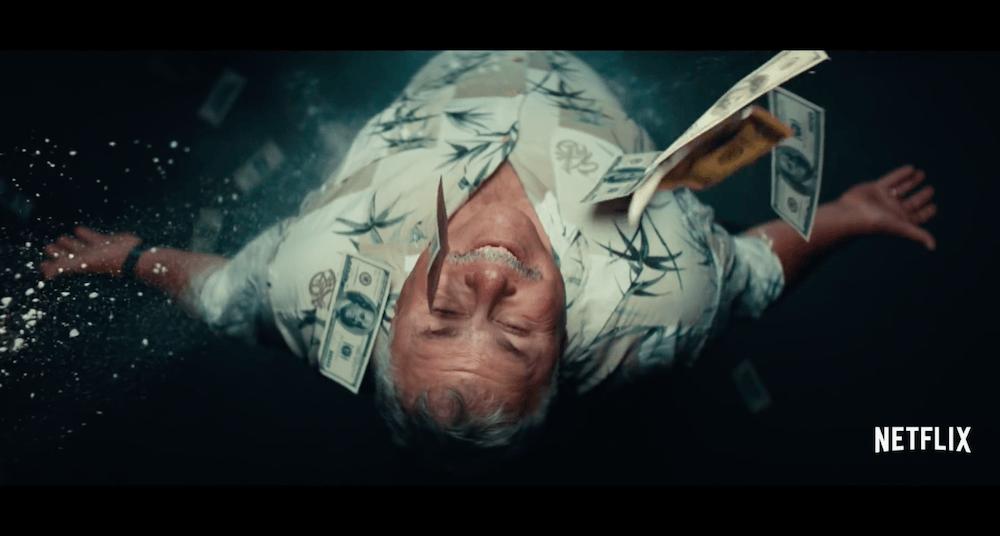
    A tall tale about a lost fortune in illicit drugs serves as the backbone for director Theo Love’s documentary The Legend of Cocaine Island.

    The feature-length effort—a mix of interviews and off-kilter recreations—debuted on Netflix on March 29 and details the search for 70 pounds of cocaine allegedly buried off the coast of Puerto Rico by Florida native Rodney Hyden, who saw the stash as his ticket out of financial dire straits incurred by the 2008 recession. What happened to the drugs, and to Hyden, plays as “a campfire story gone wrong,” according to Love.

    The short version of the story, which has been detailed with varying degrees of incredulity in numerous publications, is that Hyden learned about the alleged lost bales of cocaine from a local eccentric named Julian, who claimed that he had come across 70 pounds of cocaine while on the island of Culebra.

    Unsure of what to do with the fortune in drugs—roughly valued at more than $2 million—Julian allegedly buried the stash on the island and retreated to Archer, Florida, where he repeated the story to anyone who’d listen, preferably over beers around a campfire.

    Hyden, who had relocated to Archer after the collapse of his construction company, saw dollar signs in Julian’s story, and with the help of Andy, a young man with a history of drug dependency, decided to investigate Julian’s claims and hopefully set on the path to financial security.

    What actually happened—and again, here’s where the spoilers can be found—is that Hyden located the cocaine but was unable to retrieve it, and reached out to who he believed were traffickers to help him not only dig up the cocaine—approximately 13 kilo-sized packages—but sell it. The traffickers turned out to be federal agents, who arrested Hyden on charges of intent to distribute. 

    Like so many others who had heard the story of Hyden’s scheme, director Love was both astonished and captivated.

    “There was something about Rodney’s story that just seemed so absurd,” he said. And while a documentary project would encapsulate the nuts and bolts of the story, Love wanted to also focus on the reasons why Hyden pursued such an outlandish scheme.

    To that end, he asked Hyden if he would play himself in recreations of certain events. According to Love, Hyden said he’d been waiting for someone from Hollywood to contact him about a movie, and agreed to appear in the film.

    Love also corralled Andy, as well as Hyden’s daughter and the drug dealer entrusted with making connections with the Florida underworld, to appear in Legendwhich has received positive reviews since its debut on Netflix.

    However, Love was unable to reel in one of the story’s key players—the mysterious Julian, whom they happened to encounter by the side of a road. When asked to retell his story for the cameras, Julian replied, in typically cryptic fashion, “It’s not my story.”

    View the original article at thefix.com

  • Are Law Enforcement Efforts Making Cocaine Trafficking Worse?

    Are Law Enforcement Efforts Making Cocaine Trafficking Worse?

    Researchers examined the effects of law enforcement’s counter-drug strategies on drug trafficking. 

    New research led by the University of Alabama is showing that cocaine traffickers through Central America are continuously adapting to law enforcement efforts in ways that may be making the problem worse rather than better.

    Dr. Nicholas Magliocca, lead author of the paper showing these findings, developed a model of the “cat-and-mouse game” of cocaine smuggling vs. government efforts to seize and prevent the movement of the drug.

    “This work demonstrates that supply-side counterdrug strategies alone are, at best, ineffective and, at worst, intensifying the trafficking problem,” said Magliocca according to PHYS.org. “These networks have demonstrated their ability to adapt to interdiction efforts, identifying and exploiting new trafficking routes in response.”

    The findings, published Monday in Proceedings of the National Academy of Sciences, show that drug traffickers routinely find ways around routes and means of transportation that are blocked by law enforcement efforts and as a result have expanded their area of use.

    In 1996, cocaine trafficking networks spread across 2 million square miles of land. By 2017, that had expanded to 7 million square miles.

    The results may suggest that new methods are needed to effectively counter drug trafficking. In 2014, the Global Commission on Drug Policy recommended decriminalizing all drugs and diverting resources from punitive measures into harm reduction strategies.

    “Policy shifts towards harm reduction, ending criminalization of people who use drugs, proportionality of sentences and alternatives to incarceration have been successfully defended over the past decades by a growing number of countries on the basis of the legal latitude allowed under the U.N. treaties,” wrote former President of Brazil and Global Commission on Drug Policy chairman Fernando Henrique Cardoso. “Further exploration of flexible interpretations of the drug treaties is an important objective, but ultimately the global drug control regime must be reformed to permit responsible legal regulation.”

    Dr. Magliocca and team’s model used the admittedly limited information on drug trafficking routes, volume, and timing to simulate and predict the decision-making process of cocaine smugglers and how their networks adapt to government anti-drug strategies. The results show that current strategies are only causing these networks to spread out, making the same law enforcement efforts more difficult and costly over time.

    “The adaptive responses of narco-traffickers within the transit zone, particularly spatial adjustments, must be understood if we are to move beyond reactive counterdrug interdiction strategies,” Magliocca concluded. His team and others will now be able to move on to exploring alternative methods to counter this growing problem.


    View the original article at thefix.com

  • Britney Spears Checks Into Mental Health Facility

    Britney Spears Checks Into Mental Health Facility

    “Her dad being sick has taken a toll on her,” a source close to the pop star revealed.

    Pop icon Britney Spears is checking herself into what she’s calling a facility for “all-encompassing wellness treatment” after a health scare that nearly took her father from her.

    Early this January, Spears composed an emotional tweet announcing that she would not be able to perform her new show, Britney: Domination, because her dad, Jamie Spears, “was hospitalized and nearly died.” Jamie suffered a colon rupture and has undergone multiple surgeries to repair the damage.

    Domination was going to be Spears’ second Las Vegas residency show, during which she would have made $507,000 for each performance, according to Variety — it would have made her the highest paid act in town. The residency is now on indefinite hold after the star dropped everything to spend this time with her family and help take care of her ill father.

    After three months, Spears has decided to take some time to take care of herself. According to a source who spoke to People, her dad is still not doing well and because the two are so close, the stress has taken a lot out of her. However, fans don’t need to worry.

    “Her dad being sick has taken a toll on her,” the source said. “He nearly died and actually had another surgery a few weeks ago. He’s not doing well. They’re so close and it has been a lot. There is nothing dramatic going on with her — she just realized she needs to make sure to take time to care for herself.”

    Spears has been an advocate of self-care for some time, and has shown herself to be dedicated to her family above all else multiple times. Last year, her eight-year-old niece had a frightening accident on her ATV that left the girl unconscious for two days. Spears herself saw her niece, Maddie, crash the vehicle into a pond and sink underwater almost instantly. The entire family present attempted to rescue Maddie without success, but thankfully emergency services were on the scene in two minutes and were able to get her out.

    Thankfully, Maddie was able to make a full recovery without any evident neurological damage.

    Britney Spears is also a mother herself and has recently earned praise for being a dedicated mom who appears to truly care about her kids above all else. In 2016, she published a love letter to her two boys, Jayden and Preston, in TIME

    “You are my masterpieces,” she wrote. “From the day I saw the most precious eyes, I believed in miracles to the core. Such a gift God has given me, exploring in your beautiful worlds every day. I pray as a mother I teach you strength and passion to carry through the struggles in the world. Most battles will always be won on your knees. I pray you find your dreams.”

    View the original article at thefix.com

  • Michigan Man In Recovery To Walk 280 Miles For A Good Cause

    Michigan Man In Recovery To Walk 280 Miles For A Good Cause

    Mike Hamp wants to show people that they don’t need to rely on substances in order to live a full life. 

    A Michigan man plans to walk 280 miles this August as a way of bringing attention to mental health and substance use disorder. 

    Fox 17 reports that Mike Hamp, the founder of nonprofit Values Not Feelings Organization, is dubbing the journey “A Walk For Thought” and plans to walk roughly 25 miles daily. He will begin in his hometown, Hastings, Michigan, and finish in St. Ignace, Michigan. 

    Hamp has personal experience with substance use disorder, as he struggled with it in high school after numerous surgeries on his shoulder. 

    “Addiction for me started back in high school, I was 16 years old when I had four shoulder surgeries and got hooked on opioids,” Hamp said, according to Wood TV 8. “It wasn’t easy you know, overdoses, almost losing my life and losing marriages and my kids. I realized what I was doing was probably going to take my life.” 

    Hamp says that over the next 16 years, dialing in on nutrition and exercise helped him overcome his struggles. And when an injury kept him from being able to go to the gym, he turned to walking. 

    “The funk, the darkness, the depression, it hit like tenfold and got so intense that I really didn’t know what to really do,” he said, according to Fox 17. “I just started walking; I had to get outside of the house.”

    “I feel more clear here, I feel like I can think, like it’s not chaos as much when I’m out here doing this,” he added.

    Hamp started his nonprofit in hopes of using his own experiences to show others that it is possible to overcome obstacles. 

    “Treating our bodies with respect mentally and physically plays a crucial role in the overall function of our being,” Hamp writes on his website. “Exercise, proper nutrition, proper life and thinking habits, positive thoughts and positive self talk… This is when we begin to find ‘Our Path.’”

    As he prepares for the walk in August, Hamp says his intention is to show people that they don’t need to rely on substances in order to live a full life. 

    “I’m going to show the people that are really battling that you can really do this without turning to that stuff without literally killing yourself as you’re trying to live,” Hamp said.

    More information on A Walk For Thought, as well as sponsorship opportunities, can be found at www.valuesnotfeelings.org

    View the original article at thefix.com

  • NIDA Director Nora Volkow Talks Marijuana Research, Kratom

    NIDA Director Nora Volkow Talks Marijuana Research, Kratom

    Volkow testified before Congress about the difficulties of researching Schedule I drugs like marijuana.  

    Nora Volkow, director of the National Institute on Drug Abuse (NIDA), said during congressional testimony this week that designating a drug with Schedule I status can inhibit much-needed research. 

    “Indeed, the moment that a drug gets a Schedule I, which is done in order to protect the public so that they don’t get exposed to it, it makes research much harder,” Nora Volkow said, according to Marijuana Moment. “This is because [researchers] actually have to through a registration process that is actually lengthy and cumbersome.”

    Schedule I status is reserved for drugs that have no accepted medical use and are highly addictive. It includes heroin, but also marijuana. Other dangerous drugs, like cocaine and methamphetamine, are placed in the less restrictive Schedule 2 status.

    Many people would like to see marijuana reclassified, or unclassified all together. 

    Although marijuana is accepted for medical use in the majority of the country, it is “very difficult” for researchers to study the drug, because of its Schedule I status. Even in states where cannabis is legal for medical or recreational purposes, researchers and institutions can risk losing their federal funding if they study it without going through the federal process.

    This leaves many questions about the safety of products from marijuana to CBD, Volkow said. 

    The federal research process for marijuana includes lengthy delays because the Drug Enforcement Administration (DEA) limits the number of permits allowed for studying marijuana, and the amount of cannabis that can be grown for research purposes. Despite promising to issue more permits, the DEA has not yet significantly increased the ability of researchers to study marijuana

    Volkow also spoke about whether the herb kratom should receive Schedule I status. She said that doing so would “make it very difficult for our researchers to get ahold of the pharmacological compound itself.”

    Rep. Mark Pocan (D-WI) suggested that the benefits of scheduling kratom (like restricting public use) might be outweighed by the negative consequence of limiting research.

    “There seems to be—all the problems we’re trying to untangle right now around cannabis, marijuana specifically, because of Schedule I, I’d hate to see us put another drug there and then have to try to work backwards,” he said. “If we’re not there already, it allows you to continue to do the research.”

    NIDA, the DEA and the FDA are all working on a process to streamline drug research, looking for a “path that will allow researchers to work with Schedule I drugs in a safe way, but without actually expediting that process,” according to Volkow.

    View the original article at thefix.com

  • New Photo Exhibit Shows "99 Faces" Of People With Mental Illness

    New Photo Exhibit Shows "99 Faces" Of People With Mental Illness

    “We have champions in all walks of life. I was like, where are the champions of schizophrenia and bipolar?” said the exhibit’s creator.

    An art exhibit in New Hampshire is aiming to break down the stigma around mental illness by displaying 99 life-sized portraits of people who have been touched by mental illness—33 with bipolar disorder, 33 with schizophrenia, and 33 family members.

    The photographs, part of an exhibit called “99 Faces,” were taken by Boston-based artist Lynda Michaud Cutrell, according to The Valley News. They are on display at Dartmouth-Hitchcock Medical Center in Lebanon, New Hampshire’s largest hospital, from April to September.

    Cutrell wanted to give people with mental illness a chance to advocate for themselves and their loved ones. 

    “We have champions in all walks of life,” she said. “I was like, where are the champions of schizophrenia and bipolar?”

    Cutrell said that people who see the person behind a diagnosis are more likely to support that person, and less likely to ostracize or “other” them. When attitudes toward mental illness change, “it’s usually because you meet a person,” she said. 

    Dartmouth-Hitchcock Medical Center provides psychiatric services and hosts support groups for people with mental illness and their family members. Marianne Barthel, arts program director at the hospital, said that the exhibit can give hope to patients and to the people who come to the hospital for support groups related to mental illness. 

    “It was really in an effort to de-stigmatize mental health and help give inspiration to those living with mental illness that there are others out there like them who are living successful lives with jobs and families,” Barthel told NHPR. “It really breaks down barriers when you can have a discussion about a serious or personal issue by looking at art.” 

    Dartmouth’s Director of Psychiatry, Alan Green, had similar thoughts. “We hope this exhibit will help people understand (that). As a society, we need to realize that this is part of our responsibility,” he said. 

    Cutrell was inspired by a family member who is grappling with mental illness. She connected with many of the portraits’ subjects through the National Alliance on Mental Illness. 

    “Once I found one family member, I realized there were other family members,” she said. 

    Most people she spoke to were excited to be involved with the project. 

    She said, “I think how open people became when I gave them this space to be part of something important. It was kind of like a new social value.”

    In addition to highlighting her subjects with mental illness, the exhibit makes a nod to the genetic components of the diseases by displaying an artistic representation of a DNA strand from a person with schizophrenia. 

    “Whoever it would be, there are some genes that contribute,” Cutrell said. 

    View the original article at thefix.com

  • April is Alcohol Awareness Month

    April is Alcohol Awareness Month

    This year’s theme “Help for Today, Hope for Tomorrow” focuses on educating young people about the dangers of alcohol abuse.

    April is Alcohol Awareness Month. In 2019, the focus is on underage drinking.

    Alcohol abuse/addiction have taken a backseat to the epidemic of opioid abuse that has swept the country. However, alcohol abuse continues to increase in America.

    Alcohol Awareness Month, established in 1987, was created in part to reduce the stigma of alcoholism and to support local communities in addressing alcohol-related issues.

    A 2015 NSDUH study of young people between the ages of 12 to 17 estimated that 623,000 adolescents ages had alcohol use disorder, or AUD. (This study looked at 298,000 male and 325,000 female subjects.)

    According to the National Institute on Alcohol Abuse and Alcoholism (NIAAA), alcohol use disorder is defined as “a chronic relapsing brain disease characterized by compulsive alcohol use, loss of control over alcohol intake, and a negative emotional state when not using.”

    Signs of teen problematic drinking are similar to the signs of drug addiction, according to Project Know—including shirking of regular responsibilities (such as ditching school or suddenly getting bad grades), lack of interest in relationships, irresponsible behavior or a change in appearance such as exhaustion, weight loss or gain, or sudden lack of concern for appearance.

    Teens who have a family or personal history of addiction or mental health issues are more at risk of alcohol abuse, as are teens who are under greater stress due to socioeconomic or personal circumstance.

    The theme of Alcohol Awareness Month with its focus on youth drinking is “Changing Attitudes—It’s not a rite of passage.” This slogan seeks to change the cultural idea that heavy drinking is an important or expected part of teenage social life.

    The first weekend of April, the National Council on Alcohol and Drug Dependence (NCADD) is encouraging the public participate in Alcohol-Free Weekend. NCADD offers this weekend as a gesture of solidarity in our communities in support of alcohol-free youths, in remaining completely alcohol-free for three days.

    The Office of Disease Prevention offered these ideas as April’s action tool kit for communities:

    1. Share about April’s Alcohol Awareness month and focus on underage drinking on social media.

    2. Host a community event where families can learn about the issues around underage alcohol use and abuse.

    View the original article at thefix.com

  • Improvised Nasal Naloxone Devices Less Effective Than Narcan, Study Finds

    Improvised Nasal Naloxone Devices Less Effective Than Narcan, Study Finds

    The FDA-approved Narcan nasal spray delivers more of the antidote into the blood than the improvised naloxone device

    A recent study conducted by the National Institute on Drug Abuse (NIDA) found that improvised nasal naloxone devices (INNDs) are significantly less effective at administering high enough doses of the overdose-reversing medication than the FDA-approved Narcan.

    Naloxone is the drug that can reverse opioid overdoses that kill tens of thousands of people in the U.S. every year. Efforts to make it available, particularly in the form of Narcan, are a part of the national fight against the deadly opioid epidemic.

    INNDs, according to Psych Congress, “consisting of a prefilled naloxone syringe attached to a mucosal atomization device” and have been used by first responders and others to successfully reverse overdoses for 25 years.

    However, the study, first reported on by NIDA on March 15, found that Narcan does a better job of delivering high enough doses of naloxone to be maximally effective. 

    “Scientists found that the approved naloxone devices deliver higher blood levels of naloxone than the improvised nasal devices,” the report reads. “In fact, levels in the plasma concentration of naloxone are considerably lower when improvised devices are used. The FDA-approved 4-mg dose nasal spray produced the highest blood level of naloxone of all the products tested.”

    Speed and plasma concentration of naloxone are especially important as overdoses of the highly potent synthetic opioid fentanyl have skyrocketed in the past few years. Data from the Centers for Disease Control and Prevention (CDC) found that fentanyl-related overdose deaths doubled each year from 2013 to 2016.

    The fastest way to administer naloxone to counter an opioid overdose is with an IV, but first responders might not have access to the equipment they need to give a naloxone IV when time is of the essence.

    Narcan is a simple nasal spray that does not require assembly and can be administered in one nostril while the patient is lying on their back. Members of the public, including people with opioid use disorders, can be easily trained to administer Narcan, and it is available to anyone without a prescription. Health insurance may even cover some or all of the cost.

    “Using the FDA-approved nasal Narcan spray is a great choice for average consumers, who will likely keep only one or two devices on hand,” said NIDA’s Dr. Philip A. Krieter. “It is smaller, easier to use, and doesn’t require much if any training to use properly. The Narcan spray is a ready-to-use device; the improvised device needs assembly, and lay persons may not able to use it correctly in a panic situation.”

    However, according to TIME, a Narcan kit with two doses costs around $135 without insurance, which may be prohibitively expensive for some.

    Another option is the auto-injection device Ezvio, which has also been approved by the FDA. According to Dr. Krieter, a generic version of Ezvio will become available “later this year for some purchasers.”

    View the original article at thefix.com

  • Taraji P. Henson Reveals Depression, Anxiety Battle

    Taraji P. Henson Reveals Depression, Anxiety Battle

    “When they yell ‘Cut’ and ‘That’s a wrap,’ I go home to very serious problems. I’m still a real human,” Henson said.

    Academy Award-winning actress Taraji P. Henson has opened up to Variety about her battle with depression and anxiety.

    ”I suffer from depression,” the Empire actress revealed. “My anxiety is kicking up even more every day, and I’ve never really dealt with anxiety like that. It’s something new.”

    Henson has had a prolific and successful career in Hollywood, but she admits that while the lives of the rich and famous may appear to be filled with non-stop glamour, they also deal with real-world problems. 

    “I think there’s a misconception with people in the limelight that we have it all together, and because we have money now and are living out our dreams, everything is fine. That’s not the case,” Henson explains. “When they yell ‘Cut’ and ‘That’s a wrap,’ I go home to very serious problems. I’m still a real human.”

    Last year, she launched a new foundation to help raise awareness for mental health in the African American community.

    ”We’re walking around broken, wounded and hurt, and we don’t think it’s OK to talk about it,” she says. “We don’t talk about it at home. It’s shunned. It’s something that makes you look weak. We’re told to pray it away. Everyone was always asking me, ‘Do you have a charity?’ Well, dammit, this is going to be my calling, because I’m sick of this. People are killing themselves. People are numbing out on drugs. Not everything is fixed with a pill.”

    As Inside Philanthropy reports, the organization is called the Boris Lawrence Henson Foundation, and Taraji named it after her late father. In a statement, the organization explained, “Silence for Black people must end. We want to provide a safe environment for African-Americans to discuss their concerns in a space where they will not be persecuted or misunderstood.”

    Henson was inspired to launch this foundation because of her father’s struggles with mental illness. Boris Henson was a veteran of the Vietnam War, and he suffered from alcoholism and PTSD.

    As Henson explains, “My dad fought in the Vietnam War for our country, returned broken, and received little to know physical or emotional support. I stand in his absence, committed to offering support to African Americans who face trauma daily, simply because they’re black.”

    One of the goals of the Boris Lawrence Henson Foundation is to provide more mental health support for African-American youths, as well as provide backing for re-entry programs for people coming out of prison. The Foundation also wants to increase the presence of African-Americans in the mental healthcare field in the hope that it will encourage more African-Americans to get the mental health help they need.

    The Foundation’s website reports, “One in five Americans suffer from mental illness. African-Americans are the least likely population to seek treatment. We were taught to hold our problems close to the vest out of fear of being labeled and further demonized as inept, weak, and / or inadequate. African-Americans also have a history of being misdiagnosed, so there is mistrust associated with therapy.”

    As the Foundation statement continues, “People trust who they know and what they know. Having an African-American or culturally competent therapist gives way to the idea of opening up.”

    Henson explains, “My white friends have standing appointments with their therapists. I was like, ‘Why aren’t we doing that?’ In our culture, it’s taboo.”

    Henson also had personal traumas of her own that inspired the launch of her foundation, including the murder of her son’s father. Henson and her son both went into therapy, and she hopes her presence will encourage more people to get help themselves.

    As she explained to the Chicago Sun Times, “I think people feel safe when they see someone they look up to, and can go, ‘Oh wow. She’s just like me!’ We’re all humans. And we’re all in this thing called life, together. I’m trying to use my platform to do some good. If you know someone or if you are someone suffering from mental illness, just know you are not alone.”

    View the original article at thefix.com