Category: Addiction News

  • Anxious about going out into the world? You’re not alone, but there’s help

    Anxious about going out into the world? You’re not alone, but there’s help

    Even though people are ready to venture out and socialize, many are fearful. And some also remember those who lost their lives and want to be careful in their memory.
    RealPeopleGroup/Getty Images

    It’s the moment we thought we were all waiting for…or is it?
    We were cautiously optimistic about the end of the pandemic in view of increasing vaccine availability and decreasing case numbers after the peak in January.

    Then, whether due to variants, pandemic fatigue or both, cases and case positivity began to increase again – throwing into question whether the end was as near as we thought. This is merely one of the most recent of the many reversals.

    I am a physician and associate professor of medicine at Michigan State University’s College of Human Medicine. In my role as the director of wellness, resiliency and vulnerable populations, I speak with staff and faculty members who may need a sympathetic ear or may be struggling.

    Amid the happiness and relief that people are feeling, I also see confusion and some fear. Some people are wary of going out again, and others are eager to throw a party. Some learned that they like being alone and do not want to stop nesting. I think this is all normal from a year of what I call the zigzag pandemic.

    Change after change

    Awareness of the novel coronavirus for most of us rose between January – when the first cases in China were reported – and March 11, 2020, when the World Health Organization officially declared a pandemic. Since the declaration, daily uncertainty and contradictory information has been the norm.

    First, no masks were needed. Then you had to wear a mask. Hydroxychloroquine looked promising and got emergency use authorization, but that was revoked fairly quickly and officials said not only was there no benefit but there was some potential harm.

    We were transiently afraid of groceries, packages and surfaces. Then data emerged that surfaces were not as dangerous as previously thought.

    In the absence of a coordinated national policy, states began to fend for themselves, creating their own policies regarding shutdowns and masks.
    Even now, there is state-by-state variability in which businesses may be open and at what capacity and whether masks are required, suggested or neither.

    Both inevitable and avoidable factors played into the back-and-forth. Part of the whiplash is due to the “novel” part of the novel coronavirus, or SARS-CoV-2. This virus is new and many of its characteristics unknown, leading to policy revisions becoming necessary as more becomes known.

    Part of the zigzag is due to the nature of clinical trials and the nature of the way scientific knowledge emerges. Learning about a new pathogen requires time and the willingness to challenge initial assumptions. Part is due to the lack of a reliable source of information trusted to act in our collective best interests and a lack of preparedness.

    Given the reversals behind us and uncertainty ahead, we need to examine both individual and societal responses moving forward.

    Different experiences

    There is no question that all of our lives have changed. However, the ways in which they have changed has varied widely. The variation depends on our jobs – think of the differences for grocery store, tech and health care workers – our living situations, our underlying physical and mental health, our financial status and our personalities, just to begin with.

    For example, some introverts have been fortunate enough to work remotely in comfortable clothes with broadband internet and no children to educate, while their extroverted colleagues have longed for more social connection. Their colleagues with young children and jobs that could not be done remotely have been scrambling. Many have hit the wall and find themselves adrift and unmotivated, while others have seemingly thrived doing long-postponed projects.

    Nearly everyone has been affected in some way. A recent systematic review
    concluded that the pandemic is associated with highly significant levels of psychological distress, particularly in certain higher-risk groups.

    As individuals, what can help us get through this?

    Anxious about going out into the world? You’re not alone, but there’s help
    Seeing people for the first time after isolation can be scary – or fun.
    dtephoto/Getty Images

    What we can do for ourselves

    First, we can begin by making a fearless assessment of our current reality – the state of now. Sometimes making an actual list of our needs and assets can help us to prioritize next steps. Steps may be visiting a community health center, a virtual therapist, a job fair or even something as simple as carrying a printable wallet card with stress reduction tips.

    What might work for you might not work for your spouse, partner or best friend. We need to be doing whatever is known to foster resilience in ourselves and our family members.

    This includes making human connections, moving our bodies and learning to regulate our emotions. Looking back at how we handled past difficulties may help us. Mental health concerns have become more common, and evidence on overall impact of the pandemic on mental health is still being collected.

    There has been increased public awareness about these issues, and telehealth has eased access for some seeking help. Our society – individuals as well as institutions – needs to continue to work to make it acceptable for people to get mental health care without worrying about stigma.

    Deciding which of your normal activities you wish to resume and which to let go of helps you to prepare for the future. So does noting which new activities you’d like to hold on to. These lists potentially include attending family or sporting events, traveling, going to the gym or live worship. You may choose to continue to cook at home or work from home if you have the choice. Of course, all of these choices should be made in accordance with CDC guidelines.

    And then there are things we may not want to do. That can include behaviors we learned about during the pandemic that don’t make us feel good or serve us well. That may include watching too much news, drinking too much alcohol and not getting enough sleep. And yes, maybe there are some relationships that need changing or reworking.

    Then, we need to to think about what we can do on a level larger than the individual.

    Societal and governmental changes

    For many people, it feels futile to address individual resilience without addressing what feels like a rigged system.

    The pandemic hit at a particularly politically polarized time and a particularly unprepared time. This was unfortunate, because fighting a common adversary – such as polio or a world war – can unite a population.

    In contrast, the coronavirus was subject to multiple conflicting interpretations and even doubt about its severity. Rather than rallying together against the virus, our adherence to mandates became a surrogate for our political beliefs.

    [Get the best of The Conversation, every weekend. Sign up for our weekly newsletter.]

    Now that longstanding inequities have been highlighted by differential infection, hospitalization and mortality rates by race, political and public health officials can begin a careful analysis of the gaps in health care coverage by race.

    While examining how to effectively address longstanding disparities is crucial, so is being prepared for the next pandemic. A coordinated nonpartisan, science-based health infrastructure prepared to rapidly roll out emergency responses as well as consistent clear messaging would be vital. However, without a population willing to consider collective good ahead of individual freedom, we run the risk of repeating history.

    View the original article at recovery.org

  • The End

    The End

    With each sip I take, my brain and body scream “you freaking alcoholic,” and I know at that moment I can no longer do this.

    The last drink I have is a flute of champagne.

    It’s New Year’s Eve.

    My husband reserves a special room for us at a nearby hotel. He buys an imperial bottle of Moet, a misplaced purchase for this particular occasion. We’re making a last ditch effort at saving our marriage. A gala’s going on in the ballroom below, where we journey to join the revelers.

    Lights twinkle, streamers hang, and chandeliers glisten.

    I hardly notice.

    The band plays songs that were once my favorites.

    I hardly hear. 

    Hoards of gleeful couples celebrate around us.

    We dance with them, pretending to have a good time.

    But I know the end is creeping near.

    My husband’s been having an affair with a woman half his age. He hasn’t come clean yet, but my gut knows something’s going on. So I bleach my hair a sassier shade of blond, starve myself in hopes of losing the weight I know he hates, turn myself inside out to get him to notice me again.

    But mostly I drink.

    Because of my Catholic upbringing, I have a list of rules I follow.

    My commandments of drinking. I only have three. Ten is too many.

    1) No drinking before 5:00. I watch the clock tick away the minutes. It drives me crazy.

    2) No drinking on Tuesdays or Thursdays. I break this all the time. It’s impossible not to.

    3) No hard liquor. Only wine and beer. I feel safe drinking those.

    Anything else means, well, I’ve become my parents.

    Or even worse, his. I can’t bear to go there.

    One night, when he takes off for a weekend conference, or so he says, I get so stinking drunk after tucking my daughter in for the night, I puke all over our pinewood floor. All over those rich amber boards I spent hours resurfacing with him, splattering my guts out next to our once sexually active and gleaming brass bed.

    Tarnished now from months of disuse.

    The following morning, my five-year-old daughter, with sleep encircling her concerned eyes, stands there staring at me, her bare feet immersed in clumps of yellow. The scrambled eggs I managed to whip up the night before are scattered across our bedroom floor, reeking so bad, I’m certain I’ll start retching again. I look down at the mess I made with little recollection of how it got there, then peer at my daughter, her eyes oozing the compassion of an old soul as she says, “Oh Mommy. Are you sick?” Shame grips every part of my trembling body. Its menacing hands, a vice around my pounding head. I can’t bear to look in her eyes. The fear of not remembering how I’ve gotten here is palpable. Every morsel of its terror is strewn across my barf-laden tongue and I’m certain my daughter knows the secret I’ve kept from myself and others for years.

    You’re an alcoholic. You can’t hide it anymore.

    Every last thread of that warm cloak of denial gets ripped away, and here I am, gazing into the eyes of my five-year old daughter who’s come to yank me out of my misery.

    It takes me two more months to quit.

    Two months of dragging my body, heavy with remorse, out of that tarnished brass bed to send my daughter off to school. Then crawling back into it and staying there, succumbing to the disjointed sleep of depression. Until the bus drops her off hours later, as her little finger, filled with endless kindergarten stories, pokes me awake.

    Each poke like being smacked in the face with my failures as a mother.

    The EndAnd then New Year’s Eve shows up and I dress in a slinky black outfit, a color fitting my descending mood, a dress I buy to win him back. The husband who twelve years before drives hundreds of miles to pursue this wayward woman, wooing me over a dinner I painstakingly prepare, as I allow myself to wonder if he in fact, may be the one. We dine on the roof of the 3rd floor apartment I rent on 23rd and Walnut, in the heart of Philadelphia where I work as a chef, and where I tell him over a bottle of crisp chardonnay that I might be an alcoholic. He laughs, and convinces me I’m not. He knows what alcoholics look like. Growing up with two of them, he assures me I am nothing at all like his parents.

    His mother, a sensuous woman with flaming hair and lips to match, passes out in the car on late afternoons after spending hours carousing with her best friend, a woman he’s grown to despise. Coming home from school, day after day, he finds her slumped on the bench seat of their black Buick sedan, dragging her into the house to make dinner for him and his little brother and sister, watching as she staggers around their kitchen. His father, a noted attorney in his early years, drinks until he can’t see and rarely comes home for supper. He loses his prestigious position in the law firm he fought to get into, and gets half his jaw removed from the mouth cancer he contracts from his unrestrained drinking. He dies at 52, a lonely and miserable man.

    “I know what alcoholics look like,” he says. “You’re not one of them.”

    I grab onto his reassurance and hold it tight.

    And with that we polish off the second bottle of chardonnay, crawl back through the kitchen window and slither onto the black and white checkered tile floor, in a haze of lust and booze, before we creep our way into my tousled and beckoning bed. It takes me another twelve years to hit bottom, to peek into the eyes of the only child I bring into this world, reflecting the shame I’ve carted around most of my life.

    So on New Year’s Eve, we make our way up in the hotel elevator. After crooning Auld Lang Syne with the crowd of other booze-laden partiers still hanging on to the evening’s festivities, as the bitter taste of letting go of something so dear, so close to my heart, seeps into my psyche. A woman who totters next to me still sings the song, with red stilettos dangling from her fingers. Her drunken haze reflects in my eyes as she nearly slides down the elevator wall.

    At that moment, I see myself.

    The realization reluctantly stumbles down the hall with me, knowing that gleaming bottle of Moet waits with open arms in the silver bucket we crammed with ice before leaving the room. Ripping off the foil encasing the lip of the bottle, my husband quickly unfastens the wire cage and pops the cork that hits the ceiling of our fancy room. Surely an omen for what follows. He carefully pours the sparkling wine, usually a favorite of mine, into two leaded flutes huddling atop our nightstand, making sure to divide this liquid gold evenly into the tall, slim goblets that leave rings at night’s end. We lift our glasses and make a toast, to the New Year and to us, though our eyes quickly break the connection, telling a different story.

    As soon as the bubbles hit my lips, from the wine that always evokes such tangible joy and plasters my tongue with memories, I know the gig’s up. It tastes like poison. I force myself to drink more, a distinctly foreign concept, coercing a smile that squirms across my face. I nearly gag as I continue to shove the bubbly liquid down my throat, not wanting to hurt my husband’s feelings, who spent half a week’s pay on this desperate celebration. But with each sip I take, my brain and body scream you freaking alcoholic, and I know at that moment I can no longer do this. When I put down that glass, on this fateful New Year’s Eve, I know I’ll never bring another ounce of liquor to my lips.

    I’m done.

    There’s no turning back.

    And as we tuck ourselves into bed, I keep it to myself. 

    Each kiss that night is loaded with self-loathing and disgust. 

    Those twelve years of knowing squeezes tightly into a fist of shame.

    Little does my husband know, if he climbs on top of me,

    he’ll be making love to death itself. 

    Instead, I turn the other way and cry myself silently to sleep.

    Your days of drinking have finally come to an end.

    And you can’t help but wonder…

    will your marriage follow?


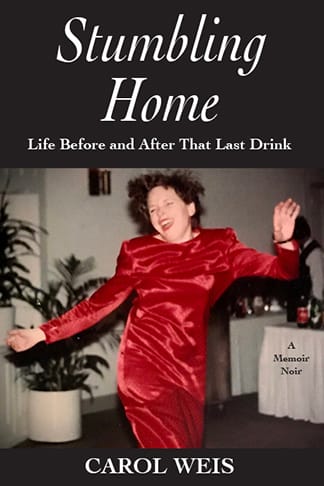
    Excerpted from STUMBLING HOME: Life Before and After That Last Drink by Carol Weis, now available on Amazon.

    View the original article at thefix.com

  •  


  • Punk Rock Powers My Recovery Every Day

    Punk Rock Powers My Recovery Every Day

    A music addiction is cheaper than alcohol and drugs. And not only that, it’s healthy, invigorating, fun, and liberating.

    I was a disheveled and bedraggled disaster of a person back in the winter of 2012. I lived for alcohol. If beer was the entrée, crack-cocaine was my digestif. But after an intervention and rehab, I’ve been sober nine years now. I never could’ve done it without music.

    Even though I had spent most of my career working in the music industry as a producer for MTV News, music wasn’t really a significant part of my life during the worst of my drinking days. But when I was a teen and again now, music has been of utmost importance. Now as an adult I realize music is better than sex. 

    It’s better than drugs. And it’s better than alcohol. It’s a natural high. If given a choice between music and drugs, I choose music. Starting with punk.

    A Youth in Revolt

    “Where do you go now when you’re only 15?”
    Rancid, “Roots Radical,” off the 1994 album And Out Come the Wolves

    I’ve always felt like a bit of an outcast. As someone who struggles with the dual diagnosis of addiction and bipolar disorder, in a way, I am. But I’m proud to be an outcast, and my punk rock upbringing only reaffirmed that being different is cool.

    In the spring of 1995, March 9th to be exact — 26 years ago — I experienced my very first punk show. It was Rancid with the Lunachicks at the Metro in Chicago. I still have the ticket stub. I was 15. And in that crowd of about 1,000, I felt like I belonged. I had found my tribe. It was a moment that would transport me on a decades-long excursion, one that finds my punk rock heart still beating now and forever.

    I often think in retrospect that maybe there were signs and signals of my bipolar status as I grew up. I was in fact different from the others. And I was experiencing bouts of depression inside the halls and walls of high school. Freshman and sophomore years in particular I did not fit in. I was the quiet kid who had barely any friends. I didn’t belong to a social clique like everyone else. I was a rebel in disguise. Until I found punk rock. Then I let it all hang out.

    Punk Rock Powers My Recovery Every Day
    “Once a punk, always a punk.”

    Rock ‘n’ Roll High School

    I am a Catholic school refugee. Punk was my escape from the horrific bullying I experienced in high school. Back then, the kids from the suburbs threw keggers. We city kids — I had three or four punk rock friends — were pretty much sober, save for smoking the occasional bowl of weed if we had any. We were definitely overwhelmingly the minority at school as there were probably only five or so of us in a school of 1,400. For the most part, though, we found our own fun at music venues like the Fireside Bowl and the Metro. We went to shows every weekend at the now-defunct Fireside – the CBGB or punk mecca of Chicago that used to host $5 punk and ska shows almost every night.

    The Fireside was dilapidated but charming. It was a rundown bowling alley in a rough neighborhood with a small stage in the corner. You couldn’t actually bowl there and the ceiling felt like it was going to cave in. It was a smoke-filled room with a beer-soaked carpet. Punks sported colorful mohawks, and silver-studded motorcycle jackets. Every show was $5.

    My few friends and I practically lived at the Fireside. We also drove to punk shows all over the city and suburbs of Chicago – from VFW Halls to church basements to punk houses.

    The Fireside has since been fixed up and has become a working bowling alley with no live music. A casualty of my youth. But it was a cathedral of music for me when it was still a working club. After every show, we would cruise Lake Shore Drive blasting The Clash or The Ramones. I felt so comfortable in my own skin during those halcyon days.

    Punk Rock Powers My Recovery Every Day
    Fat Mike of NOFX at Riot Fest in Chicago, 2012

    Punk Up the Volume

    Punk isn’t just a style of music, it’s a dynamic idea. It’s about grassroots activism and power to the people. It’s about sticking up for the little guy, empowering the youth, lifting up the poor, and welcoming the ostracized.

    Punk is inherently anti-establishment. Punk values celebrate that which is abnormal. It is also about pointing out hypocrisy in politics and standing up against politicians who wield too much power and influence, and are racist, homophobic, transphobic, and xenophobic.

    Everyone is welcome under the umbrella of punk rock. And if you are a musician, they say all you need to play punk is three chords and a bad attitude. Fast and loud is punk at its core.

    They say “once a punk, always a punk” and it’s true.

    Punk was and still is sacred and liturgical to me. The music mollified my depression and made me feel a sense of belonging. I went wherever punk rock took me. My ethos — developed through the lens of the punk aesthetic — still pulses through my punk rock veins. It is entrenched in every fiber of my being.

    Punk Rock Powers My Recovery Every Day
    Godfather of Punk Iggy Pop at Riot Fest in Chicago, 2015

    A New Day

    Now, whether it’s on Spotify on the subway or on vinyl at home, I listen to music intently two to three hours a day. Music is my TV. It’s not just on in the background; I give it my full, undivided attention.

    I started collecting vinyl about eight years ago right around the time I got sober and I have since amassed more than 100 record albums. There’s a reason why people in audiophile circles refer to vinyl as “black crack.” It’s addictive.

    I’m glad I’m addicted to something abstract, something that is not a substance. A music addiction is cheaper than alcohol and drugs. And not only that, it’s healthy, invigorating, fun, and liberating.

    And while my music taste continues to evolve, I’m still a punk rocker through and through. My love affair with punk may have started 26 years ago, but it soldiers on today, even though I mostly listen to indie rock and jazz these days. I recently started bleaching my hair again, platinum blonde as I had when I was a punker back in high school. It’s fun and it also hides the greys.

    Looking back on my musical self, I knew there was a reason why I can feel the music. Why tiny little flourishes of notes or guitar riffs or drumbeats can make my entire body tingle instantly. Why lyrics speak to me like the Bible and the sound of a needle dropping and popping on a record fills me with anticipation

    Punk is a movement that lives inside me. It surrounds me. It grounds me. Fifteen or 41 years-old, I’m a punk rocker for life. I’d rather be a punk rocker than an active alcoholic. I’m a proud music addict. I get my fix every day. 

    Please enjoy and subscribe to this Spotify playlist I made of old-school punk anthems and new classics. It’s by no means comprehensive, but it’s pretty close.

    View the original article at thefix.com

  •  


  •  


  • New Intergenerational Trauma Workbook Offers Process Strategies for Healing

    New Intergenerational Trauma Workbook Offers Process Strategies for Healing

    By following the clearly outlined steps to healing in the workbook, one can start healing the emotional wounds brought on by unaddressed intergenerational trauma.

    In the Intergenerational Trauma Workbook, Dr. Lynne Friedman-Gell, PhD, and Dr. Joanne Barron, PsyD, apply years of practical clinical experience to foster a healing journey. Available on Amazon, this valuable addition to both the self-help and mental health categories is perfect for a post-pandemic world. With so many people uncovering intergenerational trauma while isolated during the extended quarantines, the co-authors offer a direct approach. The book shows how to confront and ultimately integrate past demons from within the shadowy depths of the human psyche.

    Addressing such a difficult challenge, the Intergenerational Trauma Workbook: Strategies to Support Your Journey of Discovery, Growth, and Healing provides a straightforward and empathetic roadmap that leads to actual healing. Dr. Gell and Dr. Barron explain how unintegrated memories affect a person negatively without the individual being aware of what is happening. Rather than being remembered or recollected, the unintegrated memories become painful symptomology.

    By following the clearly outlined steps to healing in the workbook, finding freedom from what feels like chronic pain of the mind and the body is possible. Yes, the emotional wounds of childhood often fail to integrate into the adult psyche. Never processed or even addressed, they morph into demons. In response, the workbook is all about processing.

    Clearly-Defined Chapters about Processing Intergenerational Trauma

    The workbook is divided into clearly defined chapters that provide a roadmap to recovery from trauma. In the first chapter, the authors focus on “Understanding Intergenerational Trauma,” providing the reader with an orientation to the subject matter while defining key terminology for future lessons. From a multitude of perspectives, they mine the depths of intergenerational trauma. Expressing with a clarity of voice balanced with compassion, they write, “Intergenerational trauma enables a traumatic event to affect not only the person who experiences it but also others to whom the impact is passed down through generations.”

    New Intergenerational Trauma Workbook Offers Process Strategies for HealingThe chapters carefully outline how the workbook is to be used and the psychological underpinnings behind the exercises. Moreover, they use individual stories to demonstrate the ideas being expressed. Thus, moments of identification are fostered where someone using the workbook can see themselves in the examples being presented. Overall, the organization of the workbook is well-designed to help someone face the difficult challenge of dealing with their legacy of intergenerational trauma

    In terms of the chapter organization, the authors make the smart choice to start with the microcosm of the individual and their personal challenges. By beginning with the person’s beliefs and emotions using the workbook, these chapters keep the beginning stages of healing contained. Afterward, a chapter on healing the body leads to expanding the process to others and the healing of external relationships. As a tool to promote actual recovery, the Intergenerational Trauma Workbook is successful because it does not rush the process. It allows for a natural flow of healing at whatever pace fits the needs and personal experiences of the person using the workbook.

    A Strong Addition to Self-Help Shelves in a Time of Trauma Awareness

    In a 2017 interview that I did for The Fix with Dr. Gabor Maté, one of the preeminent addictionologists of our time, he spoke about how the United States suffered from traumaphobia. The rise of the 21st-century divide in our country came about because our social institutions and popular culture avoid discussing trauma. Beyond avoiding, they do everything they can to distract us from the reality of trauma. However, after the pandemic, I don’t believe that these old mechanisms will work anymore.

    Losing their functionality, people will need tools to deal with the intergenerational trauma that has been repressed on both microcosmic and macrocosmic levels for such a long time. The pain from below is rising, and it can no longer be ignored. In need of practical and accessible tools, many people will be relieved first to discover and then use the Intergenerational Trauma Workbook by Dr. Lynne Friedman-Gell and Dr. Joanne Barron. In this resonant work, they will be able to find a way to begin the healing process.

    View the original article at thefix.com

  •  


  • 10 Reasons to do a Digital Detox

    10 Reasons to do a Digital Detox

    Have you thought about taking a digital detox? To digitally detox is to set, and enjoy, time away from screens and technology. Digital detoxes are beneficial for our health and mindset, and after spending so much time on screens last year, it is time to give our bodies and minds a chance to rest and recuperate. There are many digital detox benefits, and you may pleasantly surprise yourself with the positive differences you feel by detoxing digitally.

    1. To take back time for yourself

    It can be overwhelming to be constantly online. Whether you are a serial scroller or constantly stress-checking your work emails, the constant stream of news and media can be stressful and difficult to process. Therefore, log off, and allow yourself time away from this virtual world. You will find that both your time and headspace free up.

    2. To discover new hobbies, and rediscover old ones

    Use the time you have taken back for yourself to do something you enjoy. In disconnecting, you give yourself a chance to immerse yourself in offline activities. You might even find that you develop new hobbies and interests, now that not so much of your free time is spent on technology.

    3. For your sleep cycle

    Technology wreaks havoc with our sleep cycle. Cutting it out squashes the temptation to use technology in the hours before we go to bed, or – even worse – lie in bed on our phones at night. Not interacting with technology in the hours leading up to our bedtime allows us to switch off and fall asleep easier. We will find ourselves better rested as a result.

    4. For your eyes

    Excess blue light is harmful to our eyes. It is therefore crucial that you give your eyes a rest from screens regularly. If you can make this a long break, even better! You will allow your eyes to properly rest, and likely find that you will experience less headaches and eye strain now that you are not spending so much time fixated on a screen.

    5. For your posture

    Our technology use makes it difficult to maintain good posture, and this can cause stress on our body. Giving yourself a break from sitting at a computer or being hunched over your phone protects your back, and may give you a better chance against suffering from back pain.

    10 Reasons to do a Digital Detox

    6. To relieve yourself from stress

    Being constantly connected can be stressful. Turning of technology will allow you to properly switch off.

    7. To enjoy the world around you

    Not having a screen to focus on allows us to drink in the natural beauty of our surroundings. Use the time not on technology to get outside and appreciate the world we live in.

    8. To break behavioural cycles

    You might find yourself in a perpetual cycle of bad habits. For example, checking your phone first thing in the morning, or using technology whilst you eat. Removing technology from your daily routine will break these bad habits, and make you less inclined to readopt them.

    9. For the people close to you

    Plus, they will observe the positive changes in you thanks to your digital detox. We all worry about our loved ones, and want each other to be happy, so seeing you less stressed, less lethargic and in a brighter mood will bring joy to those close to you.

    10. To develop better habits for the future

    Prove to yourself that you can live without your tech. Learn to set time aside, away from screens, and then incorporate this into your daily life once you have completed your digital detox. This will help you develop a healthier relationship with technology, sustaining the digital detox benefits you will have experienced.

    View the original article at itstimetologoff.com

  • 10 Smart Tricks to Help You Stick to Your Digital Detox

    10 Smart Tricks to Help You Stick to Your Digital Detox

    After a year on screens, this year many of us challenged ourselves to take a break from the online world, to log off and look up at the world reopening around us. However, as January turned to February and then nearly half the year flew by, those resolutions may have lost momentum. Maybe you committed to limit your time on social media using our digital detox tips but haven’t gotten around to it yet? Or perhaps you committed to leave your phone outside your bedroom but haven’t been able to consistently manage that either because you still use it as an alarm?

    Whatever the excuse, all is not lost! We know how difficult it can be to stick to those plans so we have come up with 10 smart and simple digital detox tips to help you stay committee despite the distractions.

    #1 Go Cold Turkey

    We have always said: the best way to start a digital detox journey, or to restart it, is to go cold turkey. You don’t have to switch off for a month and go stay in an ashram, you can carry on your life much the same as normal, but turn off your devices. This will enable you to find a new baseline, of how much time you actually have in the day and what you want to do with it. We would recommend a week but if a weekend is all you can manage that’s fine – turn off devices at 5pm on Friday and on again at 9am on Monday- you will be amazed at the change two and a bit days can make.

    digital detox tips
    #2 Work Out What You Want

    This is another really important tip for when you are first starting (or restarting) this digital detox journey: you need to work out what you want. For each of us that will be a different thing, perhaps you want to spend more time with your kids, improve your sleep quality or find the time to get reading again. No matter what it is, work it out, write it down, and put it up above your desk or in your bedroom. This way you’ll know what you are doing your digital detox for.

    #3 Remember, Imitation is the best form of flattery

    When you are getting into the swing of things it can be hard to go from cold turkey to completely reinventing your life. So, we recommend you cheat, just a little bit! Find someone with a similar work/ life to yours whose relationship with screens you admire. It could be your boss, desk mate, sister-in-law or spouse. Once you have picked your person ask them questions about their screen-life balance (particularly as it relates to your goals), and copy what they do – it really can be that simple!

    10 Smart Tricks to Help You Stick to Your Digital Detox
    Expert level: once you have got into the habits of your chosen role model and stuck with them for a while you can start to adapt them to your lifestyle.
    #4 Set mini milestones

    As you know, if you are one of the people getting back on the bandwagon after a few months of not following your resolutions, it can be hard to stick to your goals and achieve them. So, we recommend setting little milestones and rewarding yourself. For example, if your goal is to spend more time with your family one milestone could be a week of dinner eaten without screens and the reward could be a trip to a theme park together (or if that is a little extreme, maybe just the local park with ice cream!). This will enable you to break up the goal and manage it more effectively.

    #5 Grab an accountability buddy

    Another of our digital detox tips is to find an accountability buddy. They could be someone else on the journey to digital health, a housemate who can keep an eye on you or even be your role model from #3! Whoever they are, tell them your goals and milestones and let them keep you accountable through checking up on you every so often. Telling someone can even make you more successful in the long run!

    10 Smart Tricks to Help You Stick to Your Digital Detox
    #6 Get outside

    As we have said many times before, getting outside really is one of the best things you can do for your mental, physical and digital health. Last week In the UK Mental Health Awareness week and we spoke a lot about the value of time in nature, in order to improve general wellbeing. Another great thing about nature is that screens were not designed for the outside (as you well know if you have tried to use your phone on a sunny day) so the very act of being outside can keep you accountable.

    #7 Fill your time

    Linked to the idea of going outside, our next digital detox tip is to keep yourself busy. Whether this is through analogue alternatives, such as the ones we have proposed in our series last year, or other hobbies is up to you- just make sure that the time you used to spend on screen is now filled with joy and movement instead of sedentary boredom otherwise you won’t make it!

    #8 Set boundaries
    10 Smart Tricks to Help You Stick to Your Digital Detox

    Again, this is one of our most often cited digital detox tips, repeated only because of its universal truth: you cannot begin to rebuild your digitally balanced life without setting some boundaries. These may be around time, e.g. not going on your phone until you start work, or physical places, e.g. no phones in the bathroom. However you choose to set those boundaries, consistency is key. Once they are a part of your everyday life you will wonder at the difference they have made.

    #9 Turn off notifications

    Another smart tip is to turn off notifications. Notifications are designed to hook you in, the smartest minds in Silicon Valley have perfectly crafted them so that they interrupt your focus and draw you to the app, never to leave again. Internal emails are now, on average, opened within 6 seconds of them being sent– notifications are too addictive. So, turn them off! Similarly to going cold turkey, have them off for a while and then you can decide if the pros outweigh cons for some apps, such as calendar.

    #10 Enjoy!

    Though you are working towards a goal, spending more time offline should actually be fun, so try to enjoy it. Make sure that you substitute screen time for fun and get the most out of the experience, that is the best way to guarantee success.

    10 Smart Tricks to Help You Stick to Your Digital Detox

    For more tips on sticking to your digital detox take a look at our new book ‘My Brain Has Too Many Tabs Open‘, publishing in the US and Uk on 7th September 2021.

    View the original article at itstimetologoff.com