Category: Addiction News

  • "Tsunami" Of Meth Discovered In Record-Breaking Drug Bust

    "Tsunami" Of Meth Discovered In Record-Breaking Drug Bust

    The historic 1.9 ton meth haul was worth over a billion dollars.

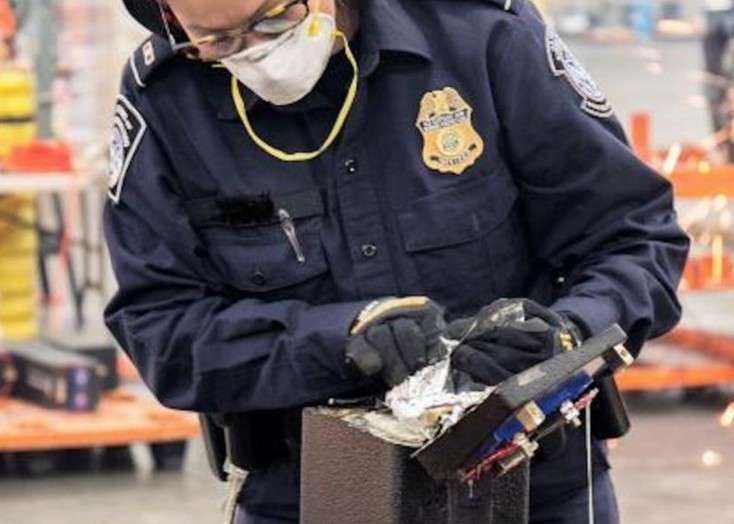
    US border officials in California seized a record-breaking shipment of meth, about 1.9 tons (3,800 pounds) worth around $1.3 billion, hidden in speakers and headed down under.

    Authorities say that the haul of meth broke two records, winning the dubious honor of being the largest amount of meth to be seized on US soil as well as the largest amount ever to be shipped to Australia. Some cocaine and heroin were also found hidden inside the speakers.

    The seizure was a joint effort between US Homeland Security, the DEA and the Australian Federal Police (AFP). On January 11, they managed to discover the drugs hidden inside the housing of a huge shipment of speakers which were packed away in dozens of metal boxes.

    Authorities have arrested two US citizens and four Australian citizens in connection with the shipment, believing them to be part of a larger US-based drug syndicate shipping drugs worldwide.

    The Australian authorities involved say that the bust prevented “a tsunami of ice” from reaching their country, which would have manifested as an estimated 17 million hits of meth. This would have been an especially large problem for the Australian state of Victoria, where the meth was headed, as sewage drug monitoring has found that the 6.3 million people living there use about 2 tons of meth a year.

    AFP Assistant Commissioner Bruce Hill claims that these drugs originate from Mexican cartels that have been pushing hard to get their products into Australia.

    “They have been sending smaller amounts over the years. This is now flagging intent Australia is now being targeted,” Hill told reporters. “The cartel is among one of the most powerful and violent drug trafficking syndicates in the world.”

    The previous largest seized meth shipment ever headed to Australia was a 1.3 ton shipment caught in December of 2017.

    View the original article at thefix.com
  • For My Mother, Putting Down the Alcohol Wasn't Enough

    For My Mother, Putting Down the Alcohol Wasn't Enough

    As an adult, I struggled to reconcile how my mother could be bone sober but still function like the manipulative, bewildering, and self-absorbed alcoholic I sat next to in all those corner bars as a kid.

    A fruit fly was floating in a glob of liquor stuck to the bar. Next to it was a plastic, black ashtray holding a mound of white ash and lipstick-ringed cigarette butts. The butts belonged to my mother, who I was sitting next to and whose free hand was wrapped around a bottle of Budweiser. The bartender, a pasty man with a few thin strands of black hair matted to his head, slammed a Shirley Temple down in front of me. The base of the glass landed in the puddle of liquor smashing the already dead fly.

    My mother didn’t notice my barstool nearly tipping over as I swung my legs forward and back to inch my seat closer to the bar. If she were paying attention, she would’ve noticed my arms weren’t long enough to reach my Shirley Temple. Instead, she was focused on a random guy at the opposite end of the bar. They were yelling over each other, which made it impossible to understand their argument. Their words clashed in midair and became one tangled cluster of sound. But by the tense curl of my mother’s upper lip, and from the way she wildly poked and whipped her lit cigarette in the air, I knew she was miles from sober.

    For me, at six years old, this was how I understood my mother. I didn’t know who she was or how her mind worked without alcohol. But I believed if she put the bottle down, she would become the stable and sane woman I wanted her to be.

    Unfortunately, it took my mother roughly 30 years to become sober. And during that time, we were estranged. Over those decades, with little to no contact, I had no idea how paralyzing my mother’s habit had become. I didn’t know she’d swapped out beer for hard liquor and was downing a bottle or two a day. I didn’t realize she’d reached a point in her addiction where she was so consistently drunk, she had to crap in an adult diaper. Her live-in artist boyfriend kept her shelves stocked with liquor and changed her as needed.

    At some point in her early 50s, my mother walked into her first AA meeting. In those rooms, she discovered sobriety. Eventually, she found a sponsor, broke up with her caretaker boyfriend and replaced her stockpile of booze with tins of Maxwell House coffee. My mother went on disability, found a primary doctor, and saved money to fix up her home.

    On the outside, she appeared to have reached sobriety nirvana. And when, in my early 30s, I was told by a relative that my mother, then in her 60s, had been clean for a decade, I couldn’t fathom it. My mind couldn’t hold an image of her without a mouthful of beer and a cigarette twisted between her fingers. I struggled to believe it: if she was certifiably sober I needed to experience it for myself. It took me a few days, but after some digging I found her phone number and called.

    “Hi Mom, it’s me… Dawn,” I told her.

    “What? My daughter?” she said. “You can’t be. My daughter’s dead.”

    “No… Mom. What?” I didn’t know whether to laugh or hang up. “I swear it’s me,” I repeated. “I’m not dead.”

    “No, no, no,” she said. “My daughter’s dead. You stole her identity.”

    Given how bizarre our exchange was, perhaps I should’ve proceeded with more caution, but when I discovered the rumors of her sobriety were true, I decided to reach out again. After all, if my six-year-old self was right, all my mother needed to do was put down the bottle.

    Over the next year, through measured contact, I discovered the holes in my mother’s recovery revealed an intricate system of emotional IEDs. Each one, when detonated, caused a familiar flinching in my gut and appeared to be constructed from the same materials she so deftly used when I was a kid. As an adult, I struggled to reconcile how my mother could be bone sober but still function like the manipulative, bewildering, and self-absorbed alcoholic I sat next to in all those shitty corner bars as a kid. Luckily, I had enough therapy to know I was under no obligation to fix my mother or to stay in contact with her.

    During our last phone call, I let my mother know I’d reached my limit with our relationship. And in response, at every point where there was the slightest pause in the conversation, she repeated, “I get it, I get it,” which pushed the exchange far beyond confusing. Days before, my mother had erupted when I missed her phone call, but when I told her I was walking away from whatever our relationship was, she appeared oddly understanding and supportive.

    Before we hung up, my mother said she loved me, that she was proud of the woman I’d become, and that she was sorry for being an alcoholic instead of the mother I needed her to be. Unlike in previous exchanges, there wasn’t a trace of sarcasm in her voice, which made me wonder if I’d misunderstood my mother’s behavior. Were my instincts leading me in the wrong direction? Was the guilt I felt actually punishment for potentially hurting my mother? Was I too defensive? At that time, no matter how hard I obsessed over the questions, I couldn’t lock down the answers.

    But eventually, my mother showed me everything I needed to know.

    Several years passed, and during that time my mother and I remained estranged. While I enjoyed the overall emotional freedom the distance created, I occasionally got snagged by lingering doubt and guilt. To cope, I began writing about my experience, and soon I landed a gig with a popular, national magazine. They commissioned me to write about estrangement and the challenges I faced growing up with an alcoholic mother. Not only was this my chance to validate my experience, but I also hoped the finished product would provide comfort to other women emotionally scarred by their mother’s addiction.

    For months I worked on the draft, and during that time I relived many of the disturbing events that destroyed my relationship with my mother: the nights my pajamas reeked of cigarette smoke from the bar, the incident when she flipped into a drunken rage and attempted to throw me out of a third-story window, and the times, when I was a kid, that she chased me around the house, swinging a serrated steak knife at my back, threatening to kill me.

    Days before the piece was set to go live, my editor informed me that for legal reasons the magazine needed to acquire my mother’s consent to publish. Given that I hadn’t spoken to her in years, I was torn over how to proceed. I didn’t want to hurt or shame my mother, but at the same time, I felt compelled to tell my story. Ultimately, I embraced the unknown and passed on her number. Nearly a week passed before I heard from my editor.

    “I spoke with your mom today, and the conversation was very positive,” my editor excitedly shared over the phone.

    “Are you serious?” I responded in disbelief.

    “She’s given her consent, admitted to being a long-time alcoholic, and she’s totally supportive of you telling your story,” she told me.

    “So… she didn’t give you a hard time or anything?”

    “No, not at all.”

    Although I had no idea what to expect from my mother, her positive reaction left me dizzy. And while I felt an unparalleled sense of accomplishment knowing my piece and my story would be floating, unencumbered, across the internet, my gut churned with guilt. Admittedly, my mother’s response would’ve been easier to process if she had reacted with the rage I expected her to. But because she gave her consent without a tinge of condemnation, I felt I betrayed her. I felt as if I hadn’t given her sobriety a chance. Perhaps I failed to give her the credit she deserved.

    Again I was obsessed with a nagging question I couldn’t answer: Was my mother finally the sane and sober woman I’d always wanted her to be? But then, a few days later, I received another call.

    “I’ve got bad news,” my editor told me. “Your mom called me today and has changed her mind, saying she disputes everything and denies ever being an alcoholic.”

    “You’ve got to be kidding me,” I sighed.

    “Your mom sounded completely different on the phone… aggressive and unhinged,” my editor explained. “I can’t be sure, but I think she may have been drinking.”

    With one phone call, not only was my piece killed, but I also realized that the confusion and doubt I wrestled with over the depth of my mother’s sobriety were instinctive warnings. On all accounts, my mother was sober: she hadn’t picked up a drink in 10 years. But she wasn’t in recovery. She hadn’t yet faced the issues that convinced her a life of perpetual hangovers and adult diapers was better than living with whatever reality had to offer. My mother no longer slurred her words, but she was as unstable and unreliable as ever.

    Today, I’m convinced my instincts instantly picked up on the disparity between my mother’s sobriety—or abstinence—and her lack of real recovery. Looking back, I realize there were numerous times that I was in contact with her as an adult when I felt like a confused six-year-old kid again, sitting next to her at some shitty corner bar, watching her get loaded. Thankfully, my confusion finally made sense.

    While I can’t speak for every person with alcoholism or addiction, and I prefer not to generalize when it comes to an individual’s sobriety, I know at least for my mother, putting down the bottle—as difficult as that may have been—was only the first step. And now it’s up to her to keep on walking.

    View the original article at thefix.com

  • Woman Claims Food In IHOP Break Room Contained Meth

    Woman Claims Food In IHOP Break Room Contained Meth

    An IHOP spokesperson says the allegations are “completely unfounded.”

    A Texas woman says that she felt intoxicated and ill after eating food in an IHOP employee break room. She now alleges the food was contaminated with methamphetamine. 

    According to the Dallas Morning News, the woman ate food that was free for employees during her break. She started feeling sick and went to her doctor and then the emergency room for treatment. That’s when she tested positive for methamphetamine and told police that the drugs must have entered her system from the food at IHOP because she is not a recreational drug user. 

    A report from the Abilene Police Department noted that the woman “does not use drugs and believes someone put that in the food she ate,” according to Big Country. The police are investigating whether the food was tampered with, but a police officer said that the investigation hadn’t been able to confirm the woman’s story. 

    An IHOP spokesperson noted that the chain usually passes health inspections with flying colors, but said that the restaurant is working with police in this case. 

    “The safety and well-being of team members and guests is a top priority. These allegations are completely unfounded. The franchisee of this location is continuing to investigate this individual’s claim, including working with local authorities,” the spokesperson said. 

    The story may seem far-fetched, but similar stories indicate that it could possibly be true.

    Last year, a North Carolina woman was charged after she reportedly laced a coworker’s drink with methamphetamine following a workplace dispute. In that case the coworker drank the beverage and started feeling sick. When he tested positive for methamphetamine at the hospital he told police that he had been poisoned. 

    The man was lucky to get out of the situation relatively unscathed, said Hudson Police Chief Richard Blevins, who was involved with the case. 

    “With an unknown amount of a controlled substance like methamphetamine, you never know what dangers it may pose,” he said. “You never know what underlying health conditions that may have a negative effect on so it’s definitely a very dangerous situation.”

    Also last year, authorities in Germany began investigating a man who they believe killed 21 coworkers over 20 years by poisoning their lunches. According to The Takeout, the man was caught on camera sprinkling his coworkers’ food with “lead acetate, a poison that could have caused severe organ damage,” according to a criminal lab report. 

    The man had worked at the company where he poisoned people for 38 years, and was described as “conspicuously inconspicuous.” He had not commented on the charges. 

    View the original article at thefix.com

  • Feds Sue To Stop Safe Injection Site In Philadelphia

    Feds Sue To Stop Safe Injection Site In Philadelphia

    Federal authorities are invoking a “crack house statute” from the ’80s in their attempt to stop the opening of the site.

    Federal authorities in Philadelphia are suing to stop the opening of a safe injection site in the city. 

    “These folks have good intentions and they’re trying their best to combat the opioid epidemic,” William McSwain, the U.S. attorney for the Eastern District of Pennsylvania, told NPR. “But this step of opening an injection site crosses the line.”

    McSwain is suing to stop Safehouse, a nonprofit, from opening a supervised injection site. The organization has said that it has support of city officials and plans to open the site this year. However, McSwain said that the site—where people would bring drugs to inject under medical supervision—is illegal.  

    “If Safehouse or others want to open this type of site, they need to steer their efforts to get the law changed,” he said. 

    The federal authorities cite a portion of the Controlled Substances Act that was written during the 1980s when people were concerned about the crack epidemic. The so-called crack house statute makes it illegal to operate a place to make, store, distribute or use illegal drugs. The law was originally written to prosecute people operating crack houses, but authorities have used it in other circumstances, said Alex Kreit, a law professor at Thomas Jefferson School of Law in San Diego and a drug policy specialist. 

    However, Kreit noted that this is the first time authorities will try to use the law against a safe injection site. 

    “It is completely untested in terms of how federal law will apply to safe injection sites,” he said. “People will be watching this very closely—particularly in other cities that have expressed their intention of starting a safe injection site.”

    Although Philadelphia has been at the forefront of the supervised injection site debate, other cities from around the country are considering similar measures. There are no safe injection sites in the U.S., but data from Canada and other countries indicate that such facilities can help stop the spread of disease and reduce overdose deaths because medical professionals are on hand.

    Proponents also argue that the sites will be able to connect drug users with resources including treatment. 

    Despite this, McSwain said in a letter to Safehouse that the law “makes no exception for entities, such as Safehouse, who claim a benevolent purpose.”

    Safehouse’s vice president and attorney Ronda Goldfein said that she’s confident that a federal judge will recognize that the site is not the intended target of the statute. 

    “We have a disagreement on the analysis and intention of the law. We don’t think it was intended to prevent activities such as this, and perhaps it will take a court’s ruling to move the issue forward.”

    View the original article at thefix.com

  • Comedian Rob Delaney Celebrates 17 Years Of Sobriety

    Comedian Rob Delaney Celebrates 17 Years Of Sobriety

    The Catastrophe actor took to Instagram to pen a somber note about his sober milestone and his late son.

    Rob Delaney, creator and star of the celebrated Amazon Prime show, Catastrophe, announced his 17th year of sobriety on February 4th. This milestone is all the more meaningful for the comedian, who nearly a year ago lost his toddler son, Henry, to cancer.

    On Monday, Delaney wrote about his sober anniversary and his son Henry in a reflective post. Henry died in January 2018 after struggling with brain cancer. Rob and wife Leah Delaney had three boys, and not long after Henry’s death, another son was born.

    Delaney wrote on Instagram:

    “As of today I’ve been sober 17 years. 17 years ago I was in jail in a wheelchair. Today I’m not. I am profoundly grateful to the alcoholics who shined a light on the path for me and helped equip me with the skills to live life well.”

    In his memoir Rob Delaney: Mother. Wife. Sister. Human. Warrior. Falcon. Yardstick. Turban. Cabbage. wrote about his drunk-driving accident that landed him in jail and rehab.

    “Twelve years ago I was in jail, in a wheelchair. The hospital gown I was in was covered in blood from my bleeding face. My top front right tooth was missing a piece. My right arm and my left wrist were broken. They were broken so badly they both required surgery. My knees had slammed into the dashboard of the car I was driving the night before and split open to the bone. They weren’t broken, but they’d been operated on and sewed shut in the emergency room of Cedars-Sinai hospital, just before I went to jail.”

    “This has been a brutal year for my family and me,” Delaney continued on Instagram. “Our first year without our son and brother Henry. Had I not been sober it would have been far worse. As it was, I squeaked by,” he confessed.

    “Sobriety allowed me to be a reasonably good dad, husband and worker though it all. (If you average it out. I think.) Sobriety allows me to grieve fully, and grief is an expression of love. Thank you to everyone who has helped me. I can’t do it alone.”

    Delaney announced on Facebook in February 2018 that his son Henry had died of cancer. Henry was diagnosed with a brain tumor in 2016, and after treatment the cancer reoccured in fall 2017.

    “Henry was a joy. He was smart, funny, and mischievous and we had so many wonderful adventures together,” Delaney wrote at the time. “Thank you, beautiful Henry, for spending as much time with us as you did. We miss you so much.”

    View the original article at thefix.com

  • Man Who Shared Drugs That Caused Fatal Overdose Appeals Conviction

    Man Who Shared Drugs That Caused Fatal Overdose Appeals Conviction

    Two friends pooled money to buy heroin. Should the one who made the run be held responsible for the other’s fatal overdose?

    In October 2013, Jesse Carillo, a college student at the University of Massachusetts, headed south to New York, where he purchased heroin before returning to campus. Back at home he shared the drugs with his friend Eric Sinacori.

    Two days later, Carillo made the same run, and again brought drugs back for Sinacori. The next day, Sinacori died at age 20 from a heroin overdose. 

    Carillo was charged in connection with the overdose, and sentenced to a year in jail for involuntary manslaughter and drug distribution. However, he appealed his conviction and on Monday (Feb. 4) the Supreme Judicial Court in Massachusetts heard the case over whether people should face charges when the drugs they share lead to a fatal overdose. 

    “When Jesse and another addict pooled their funds to purchase this heroin, it should not constitute manslaughter when the other addict overdosed,” Jay Carney, Carrillo’s lawyer, told The Boston Globe before the hearing. “We are asking the SJC to reassess the approaches taken in heroin cases given the opiate crisis in Massachusetts… These addicts should not be treated the same as drug dealers selling heroin for profit.”

    Before the SJC, Carney emphasized that Carrillo, who now works at a recovery center, was not criminally responsible for his friend’s overdose.

    “Jesse Carrillo was not a drug dealer. He didn’t profit from getting Eric the heroin, he didn’t benefit in any way. He just pooled the money, went to the dealer, purchased it, and gave Eric exactly what he had paid for,” the lawyer said, according to WBUR

    In Massachusetts, officials including the governor and attorney general have called for stricter penalties for people who provide the drugs that lead to an overdose. However, Carney insisted that these calls should focus on dealers, not people like Carillo who merely purchased the drugs for friends. 

    “I realize that I raised the hackles of the attorney general, who filed an amicus brief saying heroin is wicked bad. It’s wicked bad. We know that,” Carillo said. “What we have to determine is, is a person acting as a possessor of heroin when he buys heroin in a joint venture with another person?”

    Justice Scott Kafker seemed to take the point, especially since Carillo and Sinacori had purchased drugs together before from the same dealer that they used in October 2013. 

    “He’s bought this heroin multiple times, used it himself, he’s not died on any of these occasions. Isn’t that about as safe a drug delivery as we’re going to hear about when you’re dealing with heroin?” Kafker said. 

    However, Northwestern Assistant District Attorney Cynthia Von Flatern, who was prosecuting the case, said that Carillo was acting recklessly by supplying drugs to someone with a severe addiction. The case hinges on whether Carillo was acting in a “wanton and reckless” manner by giving Sinacori the drugs. 

    Around the country, drug users often face charges when the people they are using with overdose. In Massachusetts, the case is expected to have policy implications when the SJC issues a ruling, which is expected within 130 days.

    View the original article at thefix.com

  • Depression Might Make You Angry

    Depression Might Make You Angry

    Some medical experts would like to see anger added to the list of symptoms for depression.

    Depression is associated with fatigue and melancholy, but there’s another often-overlooked symptom of depression, professionals say: anger. 

    Some medical providers, including psychiatrist Maurizio Fava, who practices at Massachusetts General Hospital and teaches at Harvard Medical School, would like to see anger included as a symptom of depression in the Diagnostic and Statistical Manual of Mental Disorders (DSM).

    “[Anger is] not included at all in the adult classification of depression,” Fava told NPR, despite the fact that it is a listed symptoms of depression for children and teens. “Why would someone who happens to be irritable and angry when depressed as an adolescent suddenly stop being angry at age 18?”

    Because anger isn’t listed as a symptom of depression, people present with anger as a primary symptom can be misdiagnosed. 

    “We see in our clinics patients who are labeled as having other diagnoses because people think, ‘Well, you shouldn’t be so angry if you are depressed,’” Fava said. 

    Still, he said about 1 in 3 patients have told him about angry outbursts associated with depression, something Fava calls “anger attacks.”

    “They would lose their temper, they would get angry, they would throw things or yell and scream or slam the door,” he said. 

    Fava would like the medical community to study anger more closely in order to fully understand depression. 

    “I don’t think that we have really examined all the variables and all the levels of anger dysregulation that people experience,” he said.

    Mark Zimmerman, who teaches psychiatry at Brown University, conducted a poll in which two-thirds of people seeking first-time psychiatric treatment reported feelings of anger. The fact that anger associated with mental illness, specifically depression, hasn’t been studied means that it is hard to know what treatment might work to alleviate this symptom. 

    “The most frequently used scales to evaluate whether or not medications work for treating depression don’t have any anger-specific items,” Zimmerman said.

    Kevin Einbinder, who handles communications for the Depression and Bipolar Support Alliance, said that looking back over his life he can see that anger played a big role in many of his relationships, although he didn’t realize it until a journalist posed the question. 

    “I thought of all the people in my life who have interacted with me — my family, the counselors, psychiatrists, even employers, significant others, and I realized that anger was an underlying factor in all those relationships,” Einbinder said. 

    If he had realized this at the time, or if his providers had known to ask about this symptom, he could have learned to cope with it earlier on, he said. 

    “I think that would have provided a tremendous amount of context for what’s adding to my depression and in helping me, early on in my life, with more effective coping mechanisms.”

    View the original article at thefix.com

  • Great White's Mark Kendall On Sobriety: I Won't Drink Today No Matter What Happens

    Great White's Mark Kendall On Sobriety: I Won't Drink Today No Matter What Happens

    “I don’t care if I have guns pointed at me — I’m not drinking. That’s how serious I am,” the Great White guitarist said at a recent recovery event. 

    Mark Kendall, founding guitarist for the legendary rock band Great White, doesn’t say that he’ll never drink again, despite his decade of sobriety. Instead, he focuses on staying sober just for today. 

    “Nobody’s ever gonna hear me say, ‘I’ll never drink again,’ or, ‘I’m done.’ I just don’t go there. I don’t put these impossible tasks [in front of me]. ‘Cause I don’t know if I’ll never drink again; I can’t tell you if that’ll happen. But what I can tell you is that I’m not gonna drink today no matter what happens,” Kendall said as part of the No More Heroin Survivor Stories. 

    “I don’t care if I have guns pointed at me — I’m not drinking. That’s how serious I am. And I know it sounds stupid simple to some of our audience out there, but when I do it this way and just leave the task to be today…I’m just not gonna drink today. Yesterday, whatever happened, I don’t know; I don’t wanna think about it. I probably didn’t drink though.”

    As for tomorrow, Kendall says he’s not concerned with it.  

    “I’m not concerned about something that takes care of itself. Time takes care of itself. Years are gonna go by all by themselves. The only thing that I can control with confidence is being sober today only — that’s my task. If I make it to midnight, I’ve made it through another day. That’s the way I’ve done it, and 10 years rolled by. It’s not like I sat there one day and [went], ‘You know what? I think I’m gonna be sober for 10 years. I’m just gonna go for it.’ I never did that.”

    Kendall struggled with alcoholism and started toying with sobriety in 1991, according to Blabbermouth. However, he didn’t give sobriety his all until 2008, which is when it clicked for him, he said. 

    “I’d try it and then I’d quit again. So I’d literally keep starting and stopping and keep trying it again — try to drink like the normal guy that just watches the football game on the weekends with his buddies and has, like, four beers. I wanna be that guy and not wake up the next day and have to drink again. So I’d force it and not drink, so I could tell myself that I’m normal now. But then again, here it comes again — I’d end up in pain,” Kendall said. “So I kept trying and trying and trying — going two years, a year and a half, a year, another two years. And keep trying and trying.”

    View the original article at thefix.com

  • Can Hypnosis Help Me Stop Drinking? How Does it Work?

    Can Hypnosis Help Me Stop Drinking? How Does it Work?

    By Georgia Foster

    ARTICLE SUMMARY: The goal of hypnosis is to break the unhealthy emotional conditioning to alcohol and to replace it with more logical and helpful responses. Is it for you? This article takes a look at the practice of hypnosis and how it can help people who are drinking too much.

    ESTIMATED READING TIME: 6 minutes

    TABLE OF CONTENTS

    Do I Need To Drink Less Alcohol?

    Many drinkers secretly worry that they drink too much. They think they may need to quit drinking altogether because they’ve never been able to drink in moderation.

    Although quitting alcohol altogether can be the way forward for a lot of people, it is not the only way.

    There is a very large group of people who, even though they worry about their consumption levels, can keep alcohol in their life by drinking less.

    The truth is that a lot of people choose not to discuss their concerns with their doctor or even their family because they know that their response will be, “Just cut back a little.” I know many clients have to said to me, “If it was that easy, I would have done it by now!”

    Professional guidance can be helpful to some, but the problem lies in the fact that many drinkers feel isolated, alone, and shamed by the medical response which doesn’t give them any tools to help them drink less. They often walk away from a meeting asking themselves if they have a “real” drinking problem, or not.

    I firmly believe that most over-drinkers can reduce their drinking dramatically with the right resource. The good news is: no willpower required!

    Hypnosis has been used for decades to help people stop smoking, lose weight, overcome phobias as well as reduce alcohol consumption. Let’s take a look at how hypnosis can help people who may not be diagnosed as “alcoholic”…but who can benefit from cutting back on drinking.

    What is Hypnosis?

    Everybody is able to be hypnotized. It is a natural state that we all enter when we go to sleep at night and before we wake in the morning. The hypnotic space is when we are half asleep and half awake. How and why does it work?

    The unconscious mind is the part of the mind that stores all memories and emotional habits. The unconscious mind also manages all of the bodily functions. When the conscious mind decides that a person needs to reduce their drinking, unless the unconscious mind understands this request and can confirm it is an appropriate behaviour, it will reject all requests to change.

    In other words, if the unconscious mind believes that alcohol helps calm you down or helps you to sleep, this part of the mind will continue to habitually demand alcohol when you are feeling anxious or restless.

    Hypnosis is really good at communicating directly with the unconscious mind. During hypnosis, new messages accepted by the unconscious mind can help guide emotional responses so that you begin to function without alcohol in the bloodstream. The more someone is exposed to repeated suggestions of positive actions and responses, the more the mind accepts them.

    During hypnosis, we are open to emotional suggestions and change in behaviours more than when we are in the conscious state. During hypnosis, a heightened state of learning can take place without judgement. The unconscious mind doesn’t know the difference between imagination and reality, hence hypnosis is a powerful space to introduce new habits.

    A Case Study

    Here is Jack’s story.

    At the age of 18, he discovered his girlfriend was cheating on him. He was inconsolable. After a few weeks, his friend suggested they get drunk and party so he can get some closure on the situation. Jack tried vodka for the first time and within 10 minutes, he felt relaxed and more at ease. Suddenly, he didn’t care so much about his ex-girlfriend.

    Many years later, Jack was still reliant on that vodka whenever he felt like life was getting a little out of hand emotionally. He wasn’t a regular drinker but when he hit the bottle he would hit it hard and this worried his wife a lot. Jack was secretly worried too. However, he just couldn’t seem to “just have one or two vodkas!” –– It was always half a bottle or more.

    The trauma that Jack experienced when he was 18 triggered an emotional habit of feeling driven to drink too much whenever he felt unsafe. Even though many years have passed since the initial trauma, Jack felt he couldn’t get out of this binge drinking cycle. He and his wife both thought that he was going down the slippery slope of alcoholism.

    The truth was, Jack’s unconscious mind had developed a habit. Whenever he felt vulnerable, it scanned his history to find a quick fix to resolve his current emotional pain. In a nanosecond, it found vodka! Unbeknownst to Jack, his unconscious mind was demanding vodka in order to soothe him.

    It wasn’t that Jack wanted to drink in unhealthy quantities, it was that his mind had learned that alcohol was a good quick fix.

    Can Hypnosis Help You Drink Less Alcohol?

    Yes, the practice of hypnosis can help the mind choose options that are healthier than alcohol.

    Many worried drinkers, like Jack, have at some time in their life discovered that alcohol is an easy and fast solution to find some reprieve from the everyday fears of life. The mind doesn’t like feeling vulnerable. So, whenever someone feels like life is too challenging, it will find ways to give that person an emotional pick-me-up.

    For Jack, his mind thought vodka was the solution. For others, it could be chocolate or cigarettes. It just so happens that Jack’s mind learned early on in life that vodka was his answer. However, it is not the only answer, and hypnosis can help the mind choose a healthier option.

    Hypnosis is a life-changing therapy that can aid many worried drinkers who know they don’t belong in addiction recovery. The goal of hypnosis is to break the unhealthy emotional conditioning to alcohol and to replace it with more logical and helpful responses. It is also important to train the brain to be more emotionally resilient and to be open to challenges that can be dealt with without a glass of alcohol in hand.

    Once a drinker has developed healthier coping strategies through this method, they will not be drawn to alcohol as the instant answer. It does take practice but the hypnosis method is simple, effective, and life-affirming for many heavy drinkers. We all have the right to decide how we want to improve our lives and hypnosis is a brilliant way to achieve this.

    Once a drinker does not use alcohol to soothe negative emotions, their whole outlook will bebrighter, they will feel more in control of their life, and they can thendrink alcohol without it being an emotional crutch for them.

    Your Questions

    Still have questions for Georgia about hypnosis?

    Please leave your questions in the comments section below. We do our best to respond to all questions personally and promptly. And we love to hear from our readers!
    ——

    About the Author: GEORGIA FOSTER is a clinical hypnotherapist & voice dialogue trainer. She qualified with distinction at The London College of Clinical Hypnosis in 1996. She then went on to become one of the college’s senior lecturers before venturing out on her own to build her online products while running her busy London Clinic. Georgia now resides in Melbourne, Australia. She specializes in alcohol reduction, emotional overeating, self-esteem, anxiety, and fertility issues. Her unique and highly successful approach has helped tens of thousands of people learn how to feel better emotionally and physically. Her new book, “Drink Less in 7 Days,” is on shelves now. To learn more visit www.georgiafoster.com.

    View the original article at addictionblog.org

  • 6 Things Everyone Should Know About Children in Families with Mental Illness

    6 Things Everyone Should Know About Children in Families with Mental Illness

    We don’t talk enough about the children who live with, and rely on, a family member with a mental illness. What sort of support do they need and how can we provide it?

    I grew up with a mentally ill father. More than once, I woke up on the “morning after” my father was institutionalized during a mental breakdown. My father would hallucinate that someone or something was out to get him: aliens, God, the FBI, his coworkers, famous people. It was usually the culmination of months of paranoia—a hard stop on reality during which my father would scream accusations at people in public, moan and sob at the top of his lungs, and act like a trapped animal trying to elude capture if someone came near him.

    My mother always found a way to trick my dad into checking into a hospital for treatment. Waking up midweek at either of my grandparents’ houses was a sure sign that something had gone wrong with my dad.

    My father’s illness progressed gradually over time. He was briefly institutionalized when I was five, again when I was six, and then, lastly, when I was 12. All three times, my family welcomed back a functional, but not healed, father. Although doctors deemed him treated and sent him home, his behaviors remained bizarre and upsetting to me.

    When I was younger, my father was distant, yet never disturbing. We did some of the typical father-son activities: went to football and basketball games at the local university, talked about sports, and visited his parents to have snacks and throw darts with my grandfather. But then, when I was 12, he publicly accused my family of being aliens sent to harvest his testicles.

    After that, he changed forever: talking to himself in public, watching Catholic mass on TV three times daily, and amassing a basement full of unopened books, records, CDs, and videos. My father’s illness had a huge impact on who I was and how I developed as a teenager, and also on how I’ve developed as an adult.

    We frequently turn our attention to mental illness in the aftermath of horrific acts. We wonder what makes people do crazy things, and how we can we prevent these tragedies. Politicians debate the issue, yet we see little movement towards a resolution. Our community members ask why there isn’t more support for identifying and treating mental health problems. Children in families with mental illness ask this same question every day.

    But we don’t talk enough about the children who live with, and rely on, a family member with a mental illness. What sort of support do they need and how can we provide it?

    Here are six things I think everyone should know about children in families where one or more members have a mental health condition.

    1) They need to know that their loved one is not “nuts,” “crazy,” and “psycho.”

    I hated having a crazy family. I knew it was bad and I knew it made me a bad person, without even thinking about it. The media handed me much of the stigma I attached to mental illness. I saw reports on the news of a “psycho” killer on the loose. The TV roared with recorded laugh tracks when someone did something “nuts” and acted like a “loony”—words that sound silly unless you internalize them because they reflect someone responsible for your creation.

    The media portrays crazy as synonymous with criminal, violent, and murderous.

    I remember lying in bed the night before my father was due to come home from the hospital. I vowed to keep an eye on him. I knew he would come home and want to kill his family. The TV told me this is what crazy people do. I’d protect my mother and sister, damn it. Instead, he moped around acting confused, talking to himself, and spending all his money on useless records, CDs, and videos that sat piled and unopened in the basement. My father ignored me completely. He managed to hold down his job, but his family fell apart around him.

    I turned into the one who wanted to become violent. Watching my functional yet useless-to-me-as-a-parent father enraged and embarrassed me. The homeless men on the streets of D.C. were the only other people I saw talking to themselves in public as adamantly as my father talked to himself in public and at home. I walked the halls of my school fearing I had “Son of a crazy man” written on my chest. I stood as far from my father as possible when we were in public. He didn’t seem to notice. He was busy crossing himself and muttering in a half-shout about God and the devil.

    The media freely hands out stigmas, particularly for mental illness. This is unacceptable. Many successful people are managing mental illness, and most never harm a soul. Numerous friends and family members are better people because they know and love someone who has a mental health diagnosis. We should discuss mental illness as a serious topic, worthy of respect to both the people with the mental health condition and their families.

    2) They feel they are alone.

    Growing up, I usually felt alone. I was the only person I knew with a family like mine, except for my younger sister. I looked at my friends’ families and they seemed normal.

    My father hallucinating Martians with a mission to harvest his testicles had replaced his family. He talked to himself and gestured wildly in public. I didn’t see any of my friends’ parents doing that.

    My father’s life, a non-stop cycle of work, watching mass on TV, and then shopping for media, seemed different and bad compared to the lives I thought everyone else was living. I didn’t want people to know this about me.

    I felt disconnected and unable to communicate with friends. I was afraid of discussing my home life, particularly my father. I always preferred to play or stay at a friend’s house. I lived in fear of being exposed as the child with a crazy father. I never brought my father up in conversation. If any of my friends ever met him, I told them my mother was planning to divorce him—something I prayed for daily. I knew it would never happen. She told me she was sticking to her wedding vows. She firmly believed we were better off as a whole family than as a single mom raising two kids on her income alone.

    I didn’t realize at the time how prevalent mental illness is. Many of my friends likely had parents with mental illness, parents with addictions, or abusive parents. If I had realized anyone had a family life like mine, I would have reached out to try to connect with someone else my age. I was alone and aloof in the solitude I created. In a high school with over a thousand students, I did my best to go unnoticed. I refused to bare my soul, express my emotions, or have anything related to a deep conversation with friends. I knew if I spoke up I might reveal my embarrassing secret—a mentally ill father. All I had to do to feel my stomach squeeze with anxiety was to imagine my peers knowing about my family. I carried the stigma of mental illness internally. No one else had to tell me I was inferior.

    Keep this in mind if you know a child with a family member with a mental health problem. These children need to know their situation isn’t unique; many others have experienced mental illness or live with someone who has. They know they’ve been dealt an unfair hand. You can’t change that, but you can provide comfort and understanding. My mother used to say that my sister and I were dealing with something that wasn’t fair for kids. That was true. I felt like she understood me when she made statements like that. Empathy goes a long way for helping children in families with mental illness.

    3) They need free access to behavioral health services.

    I saw a counselor for a number of years. My mother demanded I attend the meetings at first. As an adult, I am appreciative that she did. I know it cost money she didn’t have. At the time, I was angry and confused at everything. It wasn’t until afterward that I realized the value in seeing the counselor. He was truly my only outlet for emotions. We teach children to go to their parents or a teacher if something is bothering them. If you are in a family with mental illness, you learn to keep your thoughts to yourself. You don’t want to risk having your feelings invalidated by a maniacal laugh or an accusation that you are an alien.

    In middle school, I called a helpline. The guy answering the call thought I was a liar when I described my father’s actions. He told me nothing I said made sense. I hung up feeling empty, because if the person staffing a helpline couldn’t acknowledge my situation, it proved my family life was shameful and wrong.

    As an adult, I found out these helplines are often staffed by volunteers, most likely taking social work courses in college. Helpline volunteers need training to handle calls from children such as myself. Never tell a child from a family with mental health problems that what they have seen or heard doesn’t make sense. Of course it doesn’t. We must help children deal with how to process the odd acts and the pain their family situation causes. Validating their situation is the first step toward accomplishing this.

    Children witnessing mental illness up close and personal do not feel like they can share their life with others. Often things aren’t all right, but you won’t find out just by asking. Mental health care services by trained professionals should be the norm for children with mental illness in the family, ideally free of charge. Without mental health interventions, we increase the likelihood that the children will struggle with a mental health challenge themselves. Heredity already increases this risk. Social and economic costs increase exponentially when we fail to treat an illness at the onset—mental healthcare for a child should be proactive, and can be preventative.

    4) Simple things mean the world to them.

    Children with a family member who has a mood disorder or other mental health condition fantasize about being “normal.” For me, this meant having a dad who came home and threw a baseball with me. Or better yet, a dad who took me to baseball games, called me “slugger,” and told me how proud he was of me, but didn’t cross himself and utter to God while we sat in the bleachers. I was fully invested in the most prominent cliché about American fatherhood, and I certainly wasn’t seeing examples of my father portrayed in cartoons or sitcoms.

    Families with mentally ill members need a sense of normalcy. Community support systems need to include an understanding of the trauma these children are going through. Our focus should shift from what we consider normal to how a family with mental illness might define normal. Children going home to unstable or destructive parents need outside support so they can focus their energy on constructive tasks and find their talents. They want understanding and love.

    5) They don’t trust stabilitythey crave the excitement of drama.

    You quickly get used to a series of peaks and valleys when you live with mentally ill family members: the adrenaline rush of watching your father screaming that the FBI is after him as he refuses to come inside the house; the thrill of a car ride when your father tells you he might get reassigned to an office in outer space, as he swerves through rush hour traffic; waking up every day unsure what to expect. These adrenaline rushes become addictive.

    I realized in my mid-30s that I was living a cycle of adrenaline-fueled drama. I could never sit still and accept the current situation. If things were okay, I’d have to get drunk and destroy something. I’m less than two years out of an abusive relationship with alcohol—one that stunted my professional and personal growth almost as much as growing up with a father with mental illness. I pressed the reset button on progress every time I chose to get drunk. I found comfort in the whirlwind of negative activity that followed a binge drinking session that might end with me sleeping in the backseat of my car.

    If things were bad, I’d have to stay up all night worrying about what was next. My mind was stuck on finding the drama in every situation. I reflect on my childhood and I can see where this started: fretting over the next breakdown, experiencing the adrenaline rush of watching my father start speaking in tongues in the middle of the mall, and knowing that any calm moment was just the prelude to the next screaming match between my parents.

    Youth in these families develop a craving for drama. We don’t have the right to judge these children. We have the responsibility to understand that a child might continually act out in school, commit crimes to end up in juvenile detention, set fires, or create lists of people they would like to see harmed. These children spend a lot of time contemplating their fate. Will they suffer from the same illness as their parent? This question swirled in my head and rung in my ears as I grew up. I made a number of poor decisions with the mindset that insanity might be my destiny, so why worry about the future.

    6) They need exposure to adults who behave like adults.

    One of the most confusing things for me was leaving the family and not realizing what a responsible adult male is supposed to do. I graduated high school into a great abyss of confusion. My male role model taught me everything I didn’t want to be, but I had no clue how to go about finding what I wanted to be. Yes, I had years of counseling that was comforting during the time I was in it. But I did not have a roadmap or even a trail of breadcrumbs to follow a path to becoming a responsible adult. I had fear and uncertainty.

    Children without suitable adult role models at home need to see how adults take on their duties and responsibilities. We need to connect children, especially once they are teenagers, with role models through school and after-school programs. We should be proactive in offering our advice and experience to children in mentally ill families.

    We are all part of raising the future, whether our children are from families with mental illness or not. We need to have a generation that stops passing along the stigma of mental illness. We need to remove the belief that being mentally ill means you aren’t a part of the “normal” piece of society. We can do this by publicly saying that someone can successfully manage mental illness and have a great life, and by not blaming what goes wrong on “crazy” people.

    View the original article at thefix.com