Tag: accidental overdose

  • Son Of Late NFL Star Terry Glenn Dies Of Apparent Overdose

    Son Of Late NFL Star Terry Glenn Dies Of Apparent Overdose

    Terry Glenn Jr tweeted about grieving his late father shortly before his death.

    Terry Glenn Jr, son of the late NFL wide receiver Terry Glenn, recently died from an apparent accidental overdose on Thanksgiving. He was 22.

    Grieving His Father

    Shortly before his death, Glenn Jr tweeted about grieving his late father who suffered an untimely death three days before Thanksgiving a couple years ago.

    “Thanksgiving was my dads favorite game to play in as a cowboy. And you best believe your boy was right there in the stands,” Glenn Jr. tweeted on the day of his death.

    “I miss him so much,” he revealed in a follow-up tweet. “This time of year is the hardest by far man…this was his holiday and the last one got cut short right before we were allll gonna be together….really just wonder why.”

    On November 20, 2017, the elder Glenn passed away at the age of 43. He was involved in a fatal car accident where he was ejected from the car.  

    Prior to his death, Glenn Jr. worked as a sales associate at a Champs Sports store in Ohio. Justin Hoosier, the store’s assistant manager, said this about Glenn Jr. 

    “He definitely was hardworking and passionate,” said Hoosier. “He was always talking about the influence of his dad. He wanted to keep that legacy but also make a name for himself.”

    The Family Speaks Out

    A statement from the family was published on 10TV:

    Kimberly Combs-Matthew’s son – Terry Glenn, Jr. – died tragically on Thanksgiving Day in Columbus, Ohio of an apparent accidental overdose.Terry Jr. was a burgeoning entrepreneur, aspiring vlogger, and avid sports enthusiast following in his famous father’s footsteps. Those that knew him, commented on his infectious personality- “he never met a stranger.”

    Still grieving from the untimely death of his record-setting father – just two years ago in a November 2017 car accident – Terry Jr. reminisced on Thanksgiving Day in a Twitter post saying “I miss him so much. This time of the year is the hardest by far man… this was his holiday…really just wonder why.”

    Typically sharing the day with football and family, Terry Jr. stated “Thanksgiving was my Dad’s favorite game to play in as a Cowboy and you best believe ya boy was always right there in the stands.” Terry Jr. spent many of his formative years watching his father play America’s pastime as a star wide receiver.

    Terry Glenn, Sr. was as a key contributor to winning seasons and championships contests for National Football League teams including the New England Patriots, Green Bay Packers, and the Dallas Cowboys.

    Prior to joining the NFL, Glenn Sr. played as an Ohio State University Buckeye, shattering school records along the way. Coping during the holidays can be difficult – especially when wrestling with depression and drug or alcohol addiction.

    Many people try to overlook their feelings and participate in holiday festivities alongside their friends and relatives, yet studies show that nearly 1 in 5 Americans will feel down during the holidays. If you, or a family member needs help with a mental or substance use disorder at any time, there are resources that can offer support.

    Call the Substance Abuse and Mental Health Administration National (SAMHSA) Helpline at 1-800-662-HELP (4357) or the National Suicide Prevention Lifeline at 1-800-273-8255.

    Both services are confidential, free, and provide 24-hour-a-day, 365-day-a-year information help, in English and Spanish, for individuals and family members facing mental health and/or substance use conditions. They provide referrals to local treatment facilities, support groups, and community-based organizations.

    Arrangements for Terry Glenn, Jr. are pending and his family requests to allow them to mourn during this profoundly difficult time.

    We make this appeal for privacy on behalf of those close to us, who wish to remember Terry Jr. and celebrate his life quietly and in peace. We thank you for your love, understanding, and prayers of support. Terry Jr. lived a wonderful life, and he will be fondly remembered and terribly missed by his family and friends.

    View the original article at thefix.com

  • Father Pens Powerful Obituary For Daughter Who Died Of Overdose

    Father Pens Powerful Obituary For Daughter Who Died Of Overdose

    The mother of four passed away during a rehab stay in New Hampshire at the age of 31.

    A Vermont father shed light on the issue of separating families impacted by substance abuse by sharing his late daughter’s experience as a mother of four.

    Megan Webbley died on September 29 at a treatment facility in New Hampshire. She was 31 years old. Her obituary, written by her father Edwin Webbley, was published recently in Vermont’s local Seven Days alt-weekly.

    Mr. Webbley did not hide the fact that Megan struggled with substance use disorder. “Specifically, she died of an overdose, finally losing her battle with addiction,” he wrote. “She was in Manchester, NH, seeking treatment for her addiction. We have no clear picture of what went wrong.”

    He described his daughter’s empathy, love for music and dancing, and her “big smile and an infectious laugh”—though “shadowed by opiate addiction.”

    Megan was a mother to four children, who were “collectively the light of her dark life.” Her father remembered a happy moment in 2018 she spent playing in the pool with her children. “It was at that point when she was the happiest we had seen her in years.”

    Her Addiction Journey

    Megan’s battle with substance use disorder began with a severe accident in 2005, where she fell off of a cliff—“I was told that she had been pushed off the cliffs and hit the rocks below.” She was stitched up and her jaw was wired shut.

    “They suspected a (traumatic brain injury), but when they prescribed her liberal doses of opiates, she lost control of her life. She would be in and out of rehab—and jail—for the next 14 years,” Mr. Webbley wrote.

    A Plea To Stop Separating Parents With Addiction From Children

    He concluded by shedding light on the harrowing experience of losing custody of one’s children because of a substance use disorder.

    “To editorialize, I am hoping that the Department for Children and Families (DCF) rethinks its mission to be the punisher of addicted mothers, the separator of families and the arbiter of children’s futures, and instead embrace a mission of enhanced rehabilitation,” he wrote.

    “We, as a state, are overwhelmed by addiction. We have almost nowhere to turn. I encourage enhanced funding for treatment in general and using DCF as a gateway for mothers with addiction to get help. Because, as one would guess, once the mother is separated from her children, desperation sets in, even with the brightest and most determined of mothers—and Megan Angelina Webbley was that bright and determined mother…with a fatal disease and a dearth of treatment options.”

    View the original article at thefix.com

  • British Rugby Players Who Died In Sri Lanka Didn’t Mean to Buy Heroin, Inquest Says

    British Rugby Players Who Died In Sri Lanka Didn’t Mean to Buy Heroin, Inquest Says

    Authorities say the players had no knowledge that the drug they purchased was heroin.

    Two British rugby players who died of heroin overdoses while in Sri Lanka, apparently did not understand what they were getting when they purchased drugs from a local, an inquest has found. 

    The men, Thomas Howard and Thomas Baty, were coming home from a night of partying following a rugby match when they apparently purchased drugs from a local at the suggestion of their tuk-tuk driver, according to The Guardian.

    They bought the drugs in the early morning of May 13, 2018, while they were on their way home from a nightclub. Teammates later reported that they seemed drunk and were stumbling. The next morning, the two men were found unresponsive in their hotel room. 

    Cause Of Death

    An investigation found that it was “highly likely” that the men died of “opiate toxicity.”

    Initially, Sri Lankan authorities said that the men asked the tuk-tuk driver for heroin. However, the British coroner said that there were inconsistencies in the investigation conducted by the local authorities. The coroner, Crispin Oliver, said that the local investigation “did not sit right.” 

    After working with British police on a separate investigation, Oliver concluded that Howard and Baty wouldn’t have known that they were purchasing heroin

    “They had no prior knowledge of this substance. They would not have known that it was heroin,” he said. “I am satisfied that these were not drug users, I think this was a one-off occasion, it was certainly a mistake and it was certainly an accident.”

    That sentiment was echoed by Durham police officer Phil McElhone, who said Howard and Baty were “not two lads who were habitual drug users. They were not in that circle at all.”

    Warning To People Who Travel

    Howard and Baty apparently took “brown sugar,” a local version of heroin that is cheaper. Oliver said that their deaths should serve as a warning to people who are considering taking drugs when they are overseas. 

    “I hope this serves as a warning to people when they travel to far parts of the world that they have to be very careful about what they are encouraged to purchase and take,” he said. 

    Oliver added that the deaths were a “genuine tragedy,” according to the BBC. 

    McElhone said that the man who sold Howard and Baty the drugs was named in court, but that he had not faced any charges in connection with their deaths. The dealer “seems to be forgotten about,” he said. 

    View the original article at thefix.com

  • Tyler Skaggs Died Of Accidental Overdose, Autopsy Reveals

    Tyler Skaggs Died Of Accidental Overdose, Autopsy Reveals

    Fentanyl, oxycodone and alcohol were found in Skaggs’ system. 

    Fentanyl and oxycodone, as well as alcohol, were found in Los Angeles Angels pitcher Tyler Skaggs’ system, according to information released by a Texas medical examiner’s office nearly two months after the 27-year-old’s death.  

    Skaggs, according to ESPN, was found unresponsive in a Southlake, Texas hotel room on July 1st. His death has now been ruled accidental, with the medical examiner declaring the cause of death “mixed ethanol, fentanyl and oxycodone intoxication with terminal aspiration of gastric contents.”

    In simpler terms, this means Skaggs choked on his own vomit while intoxicated. 

    Internal Investigation

    Despite the medical examiner’s conclusion, Skaggs’ family has expressed doubts as to the nature of his death. In a recent statement, they noted that an employee of the Angels was part of an investigation being conducted into the death. 

    “We are grateful for the work of the detectives in the Southlake Police Department and their ongoing investigation into the circumstances surrounding Tyler’s death,” the statement read. “We were shocked to learn that it may involve an employee of the Los Angeles Angels. We will not rest until we learn the truth about how Tyler came into possession of these narcotics, including who supplied them.”

    According to MLB spokesman Pat Courtney, the MLB was not aware of such an investigation and will also be looking into it. “We were unaware of the allegation and will investigate,” Courtney said

    The Angels took on the Boston Red Sox the evening the autopsy was released. The team’s general manager Billy Eppler refused to speak of any allegations, but expressed the team’s overall sadness and cooperation. 

    “I can just say that we were saddened by that report and completely heartbroken,” he said. “Everyone’s searching for facts, and everyone within the organization wants facts, which is why we are actively cooperating with an investigation.”

    The Team Speaks Out

    According to ESPN, the autopsy found 38 nanograms per milliliter of the pain medication oxycodone and 3.8 nanograms per milliliter of the even stronger pain medication fentanyl. It also found that Skagg’s blood alcohol level was .122%.

    Despite their surprise at the findings, Skaggs team members and managers say it doesn’t change their grief. 

    “But frankly, for me and for the guys in the clubhouse, it doesn’t really change anything,” Angels manager Brad Ausmus said, according to ESPN. “We still lost a teammate, lost a friend, and we miss him.”

    “We miss Tyler every day,” Eppler added. “That clubhouse misses him every day. We miss him in our lives, and we pray for him, and we pray for his family, every day. We pray for our own healing every day, as well. Nothing that we learned today changes those feelings. Not one bit. But this is like a shot to our core, and it brings back a lot of pain from that tragic day.”

    View the original article at thefix.com

  • Calls About Pets Ingesting Cannabis Up 700%

    Calls About Pets Ingesting Cannabis Up 700%

    As edibles become more popular, dogs in particular are likely to sniff them out as a tasty treat. 

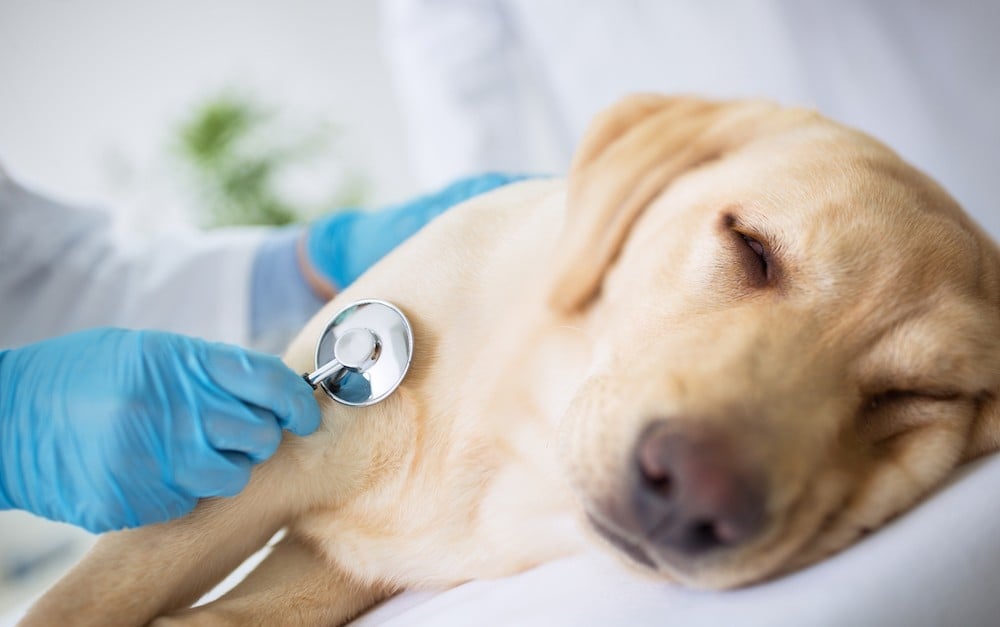
    More pets than ever are accidentally overdosing on marijuana, with cannabis-related calls to the ASPCA’s Animal Poison Control Center increasing 765% over the past 10 years. 

    That’s no surprise to Tom Shell, a California-based filmmaker who came home one day to find his 13-year-old Australian Shepard, Stella, acting strange and “looking kind of hazy-eyed,” according to Mashable

    Shell realized that Stella had sniffed out a pot brownie in his backpack and devoured the whole thing—complete with chocolate and cannabis, neither of which are good for dogs. Shell rushed Stella to the vet feeling like “the worst father in the world.” The vet was able to induce vomiting to get the chocolate out of Stella’s system, but the effects of THC lasted all day. 

    Shell said, “I brought Stella back home, and she was stoned as can be for the rest of the afternoon.”

    The incident made Shell realize that he needs to store his marijuana products—including edibles—more carefully. He was glad that Stella didn’t get into a stash of more potent cannabis gummy bears that he had in the house. 

    “If the dog got into those and ate the whole thing it would have been disastrous,” Shell said. “I’ve taken measures to make sure I’ve got triple protection [around weed] but it’s just one of those things where she’s got really good sniffers and I just wasn’t thinking about it.” 

    The ASPCA Animal Poison Control Center’s Medical Director, Dr. Tina Wismer, said this is a common mistake pet owners make. As edibles become more popular, dogs in particular are likely to sniff them out as a tasty treat. 

    “Dogs, oh my gosh, especially [with] the chocolate-based edibles, the number of those calls has skyrocketed,” Wismer said.

    Last year, the center had 1,800 marijuana-related calls, compared to just 208 in 2008. Whereas dogs tend to ingest edibles, cats are equally interested in marijuana, Wismer said. 

    As cannabis becomes more widely accepted, people are less likely to carefully hide their stash, she said. This means that pets may have easier access to cannabis. In addition, some of the increase in the number of calls is likely because pot use is less stigmatized, so people are more willing to call the center to ask about marijuana-related issues. 

    While cannabis isn’t toxic to dogs, canines are more sensitive to pot than people are. The drug can cause strange side effects, like those Stella experienced. In rare cases, ingesting marijuana can cause a fatal drop in heart rate and blood pressure in a pet. 

    Wismer says that people also call the hotline after giving their pets edibles intended for animals, which can be dangerous because these items are unregulated, she said. 

    “No one’s regulating these products—is there actually some amount of THC in them? Or is it that dogs make different metabolites than people do? Is it just dose related? Unfortunately, no one really knows what the answer is.”

    View the original article at thefix.com

  • Opioid Overdose Deaths Surpass Vehicle Crash Deaths For First Time

    Opioid Overdose Deaths Surpass Vehicle Crash Deaths For First Time

    According to a new report from the National Safety Council, Americans are more likely to die from an opioid overdoses than a car crash.

    An opioid overdose is now a more likely cause of death than even vehicle crashes, according to a recent report

    The report on preventable deaths from the National Safety Council found that Americans have a 1 in 96 chance of death due to an opioid overdose, based on 2017 accidental death data. 

    “Drug poisoning is now the No. 1 cause of unintentional death in the United States,” the report reads. “Every day, more than 100 people die from opioid drugs –  37,814 people every year – and many of these overdoses are from prescription opioid medicine.”

    In comparison, NPR states, the chance of death in a motor vehicle crash is 1 in 103. 

    “We’ve made significant strides in overall longevity in the United States, but we are dying from things typically called accidents at rates we haven’t seen in half a century,” Ken Kolosh, manager of statistics at the National Safety Council, said, according to PR Newswire. “We cannot be complacent about 466 lives lost every day. This new analysis reinforces that we must consistently prioritize safety at work, at home and on the road to prevent these dire outcomes.”

    According to the Centers for Disease Control and Prevention, the drug at the forefront of overdose deaths is now fentanyl, which the council addressed in a statement. 

    “The nation’s opioid crisis is fueling the Council’s grim probabilities, and that crisis is worsening with an influx of illicit fentanyl,” the statement read

    Causes of death such as motor vehicle crashes and overdoses are different from heart disease and cancer deaths in that they are considered “a preventable, unintentional injury” — a statistic that has increased in the last 15 years, according to NPR. Falls also top the list of preventable causes of death, at 1 in 114, compared to 1 in 119 a year ago. 

    “It is impacting our workforce, it is impacting our fathers and mothers who are still raising their children,” Kolosh said. 

    He added that such deaths often impact people in the “core of their life.”

    “As human beings, we’re terrible at assessing our own risk,” Kolosh said. “We typically focus on the unusual or scary events … and assume that those are the riskiest.”

    Though everyone will die at some point, Kolosh says, action can still be taken to prevent unnecessary deaths. 

    “Your odds of dying are 1 in 1,” Kolosh added. “But that doesn’t mean we can’t do something. If, as a society, we put the appropriate rules and regulations in place we can prevent all accidental deaths in the future.”

    View the original article at thefix.com

  • Are Police At Risk Of Overdose From Accidental Fentanyl Exposure?

    Are Police At Risk Of Overdose From Accidental Fentanyl Exposure?

    Medical professionals discuss the likelihood of first responders overdosing from accidental fentanyl exposure.

    Since fentanyl use has become widespread, there have been many reports of first responders overdosing accidentally through exposure at emergency calls. The Drug Enforcement Administration even issued an officer safety alert urging first responders to be careful to avoid exposure.

    However, medical professionals say the risk of accidental overdose to first responders is vastly overstated. 

    Toronto-based doctor David Juurlink, a researcher at Sunnybrook Health Sciences Centre, said that police officers and other first responders overdosing is highly unlikely.

    “I would say it’s extraordinarily improbable that a first responder would be poisoned by an ultra-potent opioid,” he told The New York Times. “I don’t say it can’t happen. But for it to happen would require extraordinary circumstances, and those extraordinary circumstances would be very hard to achieve.”

    Still, officers and other first responders are regularly warned about the dangers of being exposed to even trace amounts of synthetic opioids. Some people are concerned that being overly cautious will cause first responders to hold back on potentially life-saving treatments for people who call 911, in much the same way some doctors were afraid to treat HIV patients during the AIDS epidemic. 

    At Brigham and Women’s Faulkner Hospital in Boston, emergency room doctor Jeremy S. Faust, has a message for first responders.

    “I want to tell first responders, Look, you’re safe,” Faust said. “You can touch these people. You can interact with them. You can go on and do the heroic lifesaving work that you do for anyone else.”

    Despite the fact that an overdose from accidental exposure is very unlikely, police officers sometimes report feeling symptoms of overdose when they respond to opioid-related calls. Scottie Wightman, a Kentucky emergency medical technician, went unresponsive after one call. He was treated with naloxone, but a drug test later showed there were no drugs in his system. These symptoms are essentially a placebo effect, experts say. 

    Still, many people have been charged with crimes after calling 911 for fentanyl-related emergencies. Eric Weil, of New Hampshire, called police when a person staying in his house overdosed. Weil found fentanyl in his house, and after handling it, blew the drug off his hands.

    Police later said that Weil blew “a large cloud” toward them. He was charged with reckless conduct, the same charge he could get for brandishing a gun. He was convicted, but the verdict was eventually overturned. Still, Weil said he will not be calling 911 again. 

    “If ever I go into a situation where somebody’s O.D.-ing, I’m going to stand over them and watch them die,” he said. “If they say, why didn’t I call? Are you out of your mind? The last time I called somebody, I got a Class B felony.”

    Still, the police chief in the town where Weil was charged said that he needs to be proactive about protecting officers from synthetic opioids. 

    “I never want to be in a position where I have to go see a family member, a wife, kids, and explain to them why their father or husband is not coming home that evening, or ever, for that matter,” he said. “Everybody knows it’s a dangerous substance.”

    View the original article at thefix.com

  • Demi Lovato’s Life After Rehab

    Demi Lovato’s Life After Rehab

    From sober homes to 12-step meetings, the pop star reportedly has a strong post-rehab support system.

    After spending 90 days in an in-patient facility, singer Demi Lovato is adjusting to life after her overdose, utilizing a sober living facility and relying heavily on her ex-boyfriend Wilmer Valderrama for support. 

    TMZ reported that Valderrama regularly visited Lovato throughout her stay in rehab and has been talking with her and visiting since she returned to Los Angeles last week. The pair dated for six years before splitting up in 2016. 

    In 2015 when Lovato was celebrating three years of sobriety, she said that Valderrama had been instrumental to her recovery. 

    “I really wouldn’t be alive today without him,” she said, according to the Los Angeles Times

    “He’s loved me the way I never thought I deserved to be loved and with this day marking my 3rd year sober… After sharing my ups, putting up with my downs and supporting my recovery… he still never takes credit and I want the world to know how incredible his soul is,” Lovato wrote at the time. 

    The pair hasn’t been spotted in public, but sources told TMZ that they’ve been talking regularly since Lovato has been home. However, it’s not clear whether their interactions are romantic, especially since Lovato was spotted last week with clothing designer Henry Levy, laughing and holding hands.  

    TMZ also reports that Lovato is splitting her time between a private house and a sober home, where she has access to on-going sobriety support including counselors. She spends three days a week at that house, and spends the remainder of the week at home, easing in to everyday activities like going to the gym. Sources also reported that Lovato is regularly attending 12-step meetings. 

    In addition to the support that Lovato gets at the sober home and from attending meetings, she has a sober coach who is constantly by her side to help her get through the days, TMZ reported. 

    Lovato, who overdosed on pills laced with fentanyl in July, posted on social media after the incident. 

    “I have always been transparent about my journey with addiction,” she wrote. “What I’ve learned is that this illness is not something that disappears or fades with time. It is something I must continue to overcome and have not done yet.”  

    She had been silent on social media since then. However, on Tuesday she posted a picture of herself at the ballot box, saying “I am so grateful to be home in time to vote! One vote can make a difference, so make sure your voice is heard! Now go out and vote.”

    View the original article at thefix.com

  • French Montana Says He Could Have Saved Mac Miller From Addiction

    French Montana Says He Could Have Saved Mac Miller From Addiction

    “If I was around him a couple more nights, I would have made him stop … but he didn’t have nobody that was doing that.”

    Hip hop artist French Montana said that he could have stopped rapper Mac Miller’s overdose death by talking to his friend about the way that his drug use was getting out of control. 

    Speaking on BET’s Raq Rants, Montana said that Miller “was doing the same thing every other artist was doing out there.”

    He suggested that if Miller had someone to give him a reality check — or some tough love — the outcome might have been different. 

    “If you’ve seen the video that me and him did, I’m like, ‘Yo, bro, you’re overdoing it.’ But that was him way before,” he said. “Sometimes if people don’t have people that keep them grounded, it can go left. I just feel like they let him get away with whatever he chooses to do.”

    Montana went so far as to say that he could have stopped Miller from abusing drugs and alcohol. 

    “I feel like I have people that, if I do something like that, how I was to him like a big brother, like, ‘Bro, you’re bugging out.’ … He ain’t have that around him,” Montana said. “Because if I did it that night, if I was around him a couple more nights, I would have made him stop … but he didn’t have nobody that was doing that.”

    While Montana might want to believe that he could have helped his friend, anyone with up close experience with addiction knows that facilitating recovery isn’t as easy as just telling someone to snap out of it. 

    “Substances are incredibly powerful and rewarding,” Kevin Gilliland, a clinical psychologist and executive director of Innovation360 Dallas, told Yahoo Lifestyle. “It’s not as simple as someone saying, ‘You need to stop.’”

    Gilliland said that Montana is hinting at some important ways to help people who are dealing with addiction — including keeping them grounded. 

    “That is often a hugely important piece of helping someone fight addiction, it doesn’t always work,” Gilliland said. “One of the most powerful things I’ve seen for someone getting help for an addiction is having meaningful, significant relationships.” 

    Talking to someone about their substance abuse and letting them know that you are concerned is a good idea, he added. However, friends and family members have to realize that this doesn’t always work, and that it could make their loved one angry. 

    “They will get angry and defensive, but you have to talk to them,” Gilliland said. 

    View the original article at thefix.com

  • Demi Lovato Is Reportedly Out Of Rehab

    Demi Lovato Is Reportedly Out Of Rehab

    A source claims the pop star is spending time at a sober living facility in Los Angeles.

    Singer Demi Lovato is reportedly out of rehab, having achieved 90 days of sobriety following her near-fatal overdose in July. 

    “She just got back to LA a couple days ago,” a source told PEOPLE. “She seems to be doing well so far.”

    The singer was spotted over the weekend out and about in Los Angeles. On Saturday she was seen at Matsuhisa restaurant in Bev Hills with clothing designer Henry Levy.

    TMZ reports that the pair were smiling and happy, holding hands within the restaurant. 

    According to E! News, a source says that Lovato is “also spending time at a sober living facility, where she has a great support system.”

    The source adds that the singer is “taking it slowly and getting back to life one day at a time. She’s not rushing to figure out where she’s going to live permanently.”

    On July 24, Lovato was found unresponsive in her home, reportedly following a night with her dealer taking “aftermarket” pills. She spend two weeks in the hospital before heading to inpatient treatment at an undisclosed facility.

    Last week, the 26-year-old singer’s mother, Dianna De La Garza, said that Lovato had reached a recovery milestone.

    “She has 90 days,” De La Garza said. “I couldn’t be more thankful or more proud of her because addiction being a disease, it’s work. It’s very hard. It’s not easy, and there are no shortcuts.”

    During the same interview, De La Garza revealed that she knew her daughter’s sobriety was slipping even before she learned about the overdose. 

    “I knew that she wasn’t sober. I didn’t know what she was doing because she doesn’t live with me and she’s 26,” she said. On the day that Lovato was hospitalized, De La Garzo said she received an alarming text that said “I just saw on TMZ and I’m sorry.”

    “Before I could get to TMZ, I got the phone call from her assistant and she said, ‘We’re at the hospital.’ So then I knew, OK, she’s not gone. She’s here,” De La Garzo recalled. “And I said, ‘What’s going on?’ And the words that I heard are just a nightmare for any parent: ‘Demi overdosed.’” 

    Lovato has been open about her struggles with mental illness and substance abuse in the past. However, her social media accounts have been quiet since she posted in August, about her relapse. 

    “I have always been transparent about my journey with addiction,” she wrote. “What I’ve learned is that this illness is not something that disappears or fades with time. It is something I must continue to overcome and have not done yet.”  

    She continued, “I now need time to heal and focus on my sobriety and road to recovery. The love you have all shown me will never be forgotten and I look forward to the day where I can say I came out on the other side. I will keep fighting.”

    View the original article at thefix.com