Tag: addiction help

  • Drug Courts in California

    Drug Courts in California

    ARTICLE OVERVIEW: A complete guide to California drug courts. We review eligibility requirements, how to get started, and what happens when you complete the program. A detailed explanation of the legal process here.

    TABLE OF CONTENTS:

    What is a Drug Court?

    California drug courts are problem-solving courts specially designed as an alternative to traditional criminal justice prosecution. These courts are mainly set up for non-violent, substance-related offenses. In short, drug courts put treatment and rehabilitation ahead of punishment.

    The main idea behind drug courts is that crime and addiction can be treated. The traditional approach of punishment has proven ineffective, otherwise, the system would have stopped it a long time ago. Compared to incarceration, addiction treatment improves the long-term outcomes because it addresses the root cause of drug-related crime. Treatment improves a person chances of reintegrating into the community and becoming a productive member of society. [1]

    In fact, there are numerous benefits of drug courts. Some of them include:

    • Promoting long-term recovery
    • Reducing crime
    • Reducing drug and alcohol use
    • Reunifying families
    • Saving tax money

    On average, treatment costs for California drug courts range from $900 to $1,600. Compared to an average cost of $5,000 per person for a minimal period of incarceration, perhaps you’ll agree that this seems to make economic and judicial sense. [2]

    If you or a loved one has recently been arrested or charged with a drug-related crime in California, we are here to let you know that treatment works! In fact, can help you if you are ready to start treatment. American Addiction Centers provides care to adults struggling with addiction and co-occurring mental health disorders. We can help you get better. Please call our hotline number today to speak with an admissions navigator. Hope is here.

    California’s Drug Court History

    The concept of drug courts spread across the country in the early 90’s. Getting treatment is a cost-effective and beneficial option for people who get into legal trouble. These courts offer more targeted help that gets at the root cause of the issue. But when did the state first begin offering drug courts?

    California’s first adult drug court began in Alameda County in 1991. In 1995, California’s first juvenile offender drug court began hearing cases in Tulare County. In 1998, The Department of Alcohol and Drug Programs started supporting the development of drug courts in California.

    California drug courts are much less formal than traditional courts. They are much more loosely structured, giving each court some flexibility as to how it will run. There is an ongoing dialogue between the judge, prosecutor, defense attorney, and defendant. The focus is on people rather than punishment. [3]

    California is committed to the concept that alcohol and drug treatment are preferable to the incarceration of nonviolent drug offenders. Indeed, the effectiveness of the drug courts has been proven by numerous scientific studies. It’s been shown to reduce re-arrest rates, lower costs and provide better treatment outcomes. It is not just clients who benefit from drug courts… but American society as a whole. [4] [5]

    Drug Court Requirements and Eligibility in California

    Each drug court in California has its own eligibility and exclusion requirements, so, when defining drug court eligibility, it’s better to first define who is not eligible to participate in a drug court. In general, you are not eligible if you have:

    • A prior conviction for a violent crime.
    • Been charged with a DUI and resulting serious injury.
    • Been charged with a crime involving possession of a firearm.
    • Been charged with a violent offense.
    • been charged with arson or sex crimes.
    • Been charged with drug possession with intent to sell.
    • Been charged with drug manufacturing or trafficking.
    • Refused treatment.
    • Unlawful presence within the United States.

    Additionally, you must be diagnosed with addiction in order to go through drug court. This makes sense. Plus, you must be eligible for probation in order to participate. Since the program takes place out of custody, you must be on probation in order to attend activities. Finally, you must not be under active deportation process.

    What laws support these guidelines?

    Drug court programs are legally authorized by California Penal Code 1000.5 PC. [6] According to this code, defendants are referred to drug court by written agreement of a judge, the prosecutor, and the public defender.  Graduation requirements vary, but usually involve the completion of educational and job training requirements with addiction treatment. Successful completion of a drug court program can result in a dismissal of the drug charges.

    In terms of eligibility, the most important criteria are that California drug courts are designed to treat non-violent drug-using offenders whose criminal history is related to drug abuse and addiction.

    The State of California has authored innovative legislature to back up the idea. Proposition 36, also known as the Substance Abuse and Crime Prevention Act, is a mandatory diversion program for those who qualify. Its main goal was to allow first and second-time, nonviolent offenders get treatment rather than go to jail. [7]

    Getting Started

    Currently, California has over 200 drug courts within its 58 counties. [3] The different types of Collaborative Justice Courts in California include:

    • Adult Drug Court
    • Back on TRAC
    • DUI/DWI Courts
    • Family Dependency Drug Court
    • Federal District Drug Court
    • Homeless Courts
    • Juvenile Drug Courts
    • Mental Health Courts
    • Re-Entry Courts
    • Tribal Healing to Wellness Courts
    • Veterans’ Treatment Court

    Drug Courts in California work according to certain models. There are four ways to enroll in a drug court program. Since each drug court in California has different criteria and each case is unique, it’s best to consult an attorney to learn more about how you can enroll into a drug court program as an alternative sentence. The main ways you can request participation in a CA drug court include:

    1. The pre-plea model allows drug possession offenders a stay of prosecution if they participate in a treatment supervised by the court.
    2. Post-plea models state that a defendant has to enter a guilty plea before entering treatment. The treatment lasts from nine months to three years.
    3. The post-adjudication model gives opportunity drug offenders to re-enter treatment after their conviction. But first, the convicted person has to serve the sentence. If the case is referred to drug court following a conviction at a jury trial, the trial judge has the option of retaining jurisdiction of the case or referring it to a calendar court.
    4. The civil model allows individuals to enter treatment as a condition of retaining or regaining custody of a child or children. Failure to complete the program can result in permanent loss of custody.

    So, what’s the process like?

    STEP 1: If you are eligible for a drug court, a judge will order a screening. This will be conducted by the Program Manager or Therapist involved in the program. Screening takes place in the form of an interview and it will usually last for an hour.

    STEP 2: After the screening, a multidisciplinary team will assess your record and personal history. This usually happens the same week or the week following the assessment. Screening and assessment ensure that each participant receives appropriate substance abuse disorder treatment services and community-based support.

    STEP 3: If it is decided that you will be accepted into the program, it is very likely that you will be placed in residential treatment or sober living program. You will be expected to complete the course of recommended treatment.

    STEP 4: Ongoing activities may be set up by drug court judges for you during and after rehab. You may need to attending ongoing counseling session, for example. Or, you may need to attend support group meetings. Compliance ensures success. Follow the drug court plan … and you’re on your way to a new life!

    STEP 5: Successful completion of a program entitles you to a dismissal of the related charges.

    The Process

    Drug Court is a four-phase program that usually lasts from 6 to 24 months. n California, drug courts usually implement a multi-phased treatment process. You will move from one phase to the next when you complete the requirements of the phase and make progress in your recovery. Poor performance during any phase may result in going back to a previous phase with more intensive monitoring and restrictions.

    In general, drug court programs in CA are divided into four phases. If you are a drug court participant in California you must complete all these phases in order to qualify for dismissal of charges and a clean legal record.

    1. Stabilization Phase. This first stage of treatment focuses on your  stabilization. The stabilization phase may include a period of detox, psychosocial and physical assessment and development of treatment plan. During this phase, you will have to attend court once a week.

    2. Intensive Treatment Phase. Abstinence from drugs and alcohol as a primary focus. This phase typically involves intensive individual and group counseling, attend weekly AA and NA meetings. Usually, participants attend court twice a week.

    3. Aftercare Review Interview Phase: You will continue with group therapy and individual counseling, and you will still have to attend support group meetings. Typically, during this phase, you will be interviewed by the Drug Court team. The interview will determine if you are ready to move to the last phase which is the aftercare. You are required to make monthly court appearances.

    4. Transition Phase. This phase focuses on the planning necessary to transition you out of the drug court, and relapse prevention strategies. The transition phase may emphasize social reintegration, employment and education, housing services, and other aftercare activities. You will have to attend court once a month.

    Treatment

    When the court orders someone to attend rehab, the next step is to gather a treatment team. The treatment team consists of a judge, attorneys, case managers, health care providers, and therapists. These professionals all work with the offender to ensure an effective treatment plan, and also to make sure the offender is complying with the court orders. Team members provide regular communication, encouragement, and support for the offender. But drug court also extends support to their friends and family members throughout the hearings, therapy, and discharge.

    Drug court participants in CA should be able access to a continuum of treatment and rehab services. [8] Treatment services should include:

    • Aftercare services
    • Attendance at support group meetings
    • Detox
    • Individual and group counseling
    • Inpatient or outpatient rehab
    • Mandatory drug tests
    • Medications
    • Regular appearances before the court

    You will be required to pay for the treatment, and you can choose where you want to be treated. Insurance may pay for all or part of a treatment program, and some facilities offer reduced or subsidized payments for qualifying individuals.

    The severity of your addiction and your dedication will determine your recovery time. However, it is expected that most participants should be able to successfully complete the treatment program after 10 to 24 months. If you cooperate with the court you can turn this situation at your advantage, your probation terminated or charges dismissed.

    Violations

    After enrollment in a drug court program, your progress will be closely monitored by the court. You are expected to be on time, to show up to and complete drug tests. You are also required to attend all group sessions and court dates. You will be asked to be honest.

    In other words, when you go through a drug court in CA, you are held accountable for your progress. You are expected to comply with the court’s orders and respect the court.

    In order to encourage compliance, behavioral changes and adherence with treatment, the court will use sanctions and incentives. Rewards for compliant behavior can include:

    • Certificate of graduation
    • Extended curfew
    • Gift certificates
    • Praise by the court or judge
    • Promotion to the next phase
    • Sobriety tokens
    • Termination of probation

    Conversely, sanctions for non-compliance may include: writing a letter to the court or to your case manager, coming to court more often, community service, time in jail, termination from drug court. Although there is no set number of violations that result in termination, persistent noncompliance are not tolerated. If you are terminated from the program, you will be sent back to court for sentencing.

    Still, most people successfully complete of all phases of treatment.  In some cases, probation may be terminated at the end of the program. In other cases, you must successfully complete the full three years of probation after participation.

    California Drug Court Statistics

    Drug courts are generally thought to be more effective than routine criminal justice case-processing at reducing rates of recidivism and drug use among offenders. There have been many successes in California Drug Court programs. Participants have remained off of drugs, stayed out of the criminal justice system, obtained their driver’s licenses, become employed, gone back to school, received vocational training and started their own businesses, and gained or regained custody of their children.

    SO, what are the number say about the effectiveness of drug courts? The data taken from the Collaborative Courts 2016 Annual Report by the County of Orange shows that:

    The adult and juvenile programs have saved more than $120.6 million through the avoidance of more than 852,848 custody bed days.

    The re-arrest rate for Drug Court graduates, three years after graduation, is 28.15% for any crime, compared with a re-arrest rate for comparable non-participants of 74%.

    The Drug Court program avoided 28,637 jail and prison bed days prior to the application of custody credits, which were stayed pending graduation in 2016— which translates to a cost savings of $4,196,179.

    Two drug-free babies were born to women while they were participating in Drug Court in 2016, bringing the cumulative total to 153 drug-free babies born since the inception of the program.

    Participants performed 1,275 hours of community service in 2016.

    During the year, 63 participants graduated from the Drug Court program, free of addiction and employed or pursuing educational goals. [9]

    Nationwide, the numbers show that drug Courts reduce crime by an average of 8% to 26%, with most estimates from 9% to 14%. Well-functioning drug courts reduce crime rates by 35% and the effects last at least 3 years. Additionally, the average recidivism rate for those who complete Drug Court is between 4% and 29%, compared to 48% for those who do not participate in a Drug Court program. Finally, for every $1,000 invested in adult drug courts, communities reaped approximately $2 to $4 in benefits, totaling roughly $3,000 to $12,000 per participant. [10]

    These numbers show the effectiveness and importance of drug courts.

    Drug courts can save lives.

    Drug courts help individuals.

    Drug courts heal our society.

    Completing California Drug Court

    You graduate from drug court when you complete all four phases of the program. You must be at least 90 consecutive days clean and sober. Except in unusual circumstances as determined by the judge, a participant who graduates after less than nine months in the program will remain on probation until the expiration of the nine-month period.

    But before you leave supervision, the court want you to have a strong recovery support system. This includes employment and stable housing. Then, graduation is a time to celebrate your accomplishments! You may invite your family and friends to join you at your drug court graduation. It’s often a life changing moment.

    What happens next?

    If you successfully complete a Drug Court program in California:

    • Your probation may be terminated early.
    • Your charges may be reduced.
    • Your case may be dismissed.

    Also, if you are involved in a child custody case, you may get your child back.

    Successful completion will give you the tools to become contributing members of society and your community.

    Your Questions

    If you still have questions about California’s drug court system, we encourage you to leave a question in the comments section below. We’ll try to respond to you promptly and personally.

    Reference Sources: [1] James E. Lessenger / Glade F. Roper (eds.) Drug Courts: A New Approach to Treatment and Rehabilitation
    [2] California Department of Alcohol and Drug Programs – Drug Courts Overview.
    [3] California Courts: Drug Courts
    [4] HHS: Drug Court Effectiveness: A Review of California Evaluation Reports, 1995–1999
    [5] National Institute of Justice: Do Drug Courts Work? Findings from Drug Court Research
    [6] California Legislative Information: California Penal Code 1000.5 PC
    [7] Proposition 36 Drug Treatment Diversion Program. Initiative Statute
    [8] California Courts: 2019 California Rules of Court
    [9] Superior Court of California County of Orange: 2016 Annual Report
    [10] Drug Courts: National Perspective
    Superior Court of California: County of San Diego: Drug Court Process
    Superior Court of California: Drug Court Participant Handbook

    View the original article at addictionblog.org

  • How To Party Without Mixing Alcohol And Drugs

    How To Party Without Mixing Alcohol And Drugs

    ARTICLE SUMMARY: Are you a young person in early recovery? Take note! You need to know when to avoid a party. But when you’re ready to hit the scene, practice these refusal lines. More here.

    TABLE OF CONTENTS


    Night Life in Addiction Recovery

    Leaving old habits behind might be challenging and tricky. If you used to mix alcohol with drugs, it can be really uncomfortable to go out again. Can night life ever really be the same? If you’re in recovery, you actually might want to pass it up for a while.

    Why?

    Being near the scene can be dangerous. Just exposing yourself to triggers can lead you to relapse. If you are in treatment, it’s highly advisable you stay away from direct triggers. Sounds. Smells. Images. These are the things that can jeopardize the effort and progress on your road to reaching and maintaining sobriety.

    So how do you party when in recovery? Is it possible to have a good time without the influence of drugs and/or alcohol?

    Of course you can.  Keep reading further to find out how to protect yourself when the environment and people around you act as a temptation. Plus, read about alternative fun activities that do not include the use of alcohol and drugs. All your questions and/or personal experiences about partying without mixing alcohol and drugs are welcomed at the end.

    Can I Party In Drug And Alcohol Addiction Recovery?

    Absolutely!

    Recovery programs exist to teach addicts that sobriety is not boring! On the contrary, recovery opens up a lot of new opportunities. You just need to learn and practice some alternatives to bring you fun and joy without exposing yourself to danger.

    Q: Who should refrain from partying?
    A: If going out endangers your recovery, maybe you should stay home.

    At least for now.

    Why?

    Common Triggers

    When you make a decision to quit mind-altering drugs, some situations are just not healthy. Seeing a set of friends who look like they are having fun. Or, hearing the sound a lighter hit glass. Or, listening to that song that brings back nostalgia and a desire to get high.

    These are all triggers that might set off a desire for you to reach out for drugs and alcohol again.

    Theoretically, there are two types of triggers:

    1. Internal triggers, which usually manifest themselves as negative feelings.
    2. External triggers, that include people, places, things, and situations that provoke you to get back to your old substance abusive behaviors after a period of abstinence.

    When you are in early addiction recovery, you’ve just started developing a sober lifestyle. You aren’t quite used to feeling subtler emotions. We who are in recovery have all been through it.  You’re used to getting high…and dealing with the lows. But, we just don’t have healthy habits ingrained into our brain pattern yet.

    So, it’s best to avoid:

    1. Parties at clubs where you used to drink alcohol or use drugs.
    2. Acquaintances that still drink and take drugs.
    3. Visiting places while you are in an emotional period where drugs and alcohol are expected to be present.

    In fact, a night out can be super confusing. While it can be a learning experience, you need to be in a really stable place in early recovery. This is because hitting the night life can make you feel vulnerable. It might even lower your enthusiasm for change, or impact your self-esteem…both of which eventually may increase the possibility of relapse.

    The Cycle of Craving

    So, here’s a little deeper explanation into why you might want to wait. I’m not suggesting that you not have fun. I’m just saying that changing the way you have fun can be worth it.

    Addiction triggers involve high-risk situations. They are viewed as stressors that spark a thought, feeling, or action which makes you desire drugs/alcohol over and over again. When a trigger strikes in you get a sudden and unexpected urge to use again, it’s called a “craving”. In short, addiction triggers usually lead you to cravings and cravings stimulate your urges to use.

    This is why one of the main focuses of rehab is to teach you to become more aware of your specific triggers. Once you identify the trigger, you can learn how to control the sequence of events. Perhaps you can avoid the trigger totally. Or, you can learn how to change your related thought pattern. Or, maybe you intervene on the behavior-level.

    This is possible only through education. If you learn successful craving or coping management skills, you’ll necessarily learn techniques for fighting craving in recovery.

    Refusing an Offer

    Learning to say NO takes a little practice. Relapse prevention tips and refusal lines are taught during every addiction treatment program. But we’ve noticed that you need to actually practice these lines BEFORE you’re in a tight spot. Here are some suggestions about what you can say/do in different situations.

    1. First, go to events where there are no drugs and alcohol.

    2. Second, connect with friends who support your decision not to use drugs. Ask for support from these friends when others become pushy in their offerings.

    3. When in a problematic situation, make an excuse to leave. Just get out of there.

    When you are offered with drugs or alcohol, use definitive refusal lines such as:

    • I’m good.
    • No, thank you.
    • I can’t.
    • I have some medical issues right now.
    • I pass.

    I made the mistake in early recovery of trying to “explain it all”. No one who’s using wants to hear why you’re not using. They just want you to join them so that they can feel less alone.

    So, the bottom line is that you don’t feel like you need to explain yourself. No one needs to “get it.” They probably don’t want to.

    Alt Partying

    The sober community has many members. Most of us know what it’s like to wake up the next morning, blacked out. But just because we’re not using doesn’t mean that we’ve lost the will to have fun. Recovery is about building a new life, one that drugging and drinking parties are not a part of any more.

    If you want an alternative way to party, think about hosting your friends at your house. You can be the host of a sober party. You don’t need to socialize with just people in recovery. But make sure people know that substances are off limits.

    Some people like board games. Other people just party around food and music. Still others meet and then go to an event together. Whatever. Just get some people together and find something you all like to do. Talk to people at the party and connect. That’s more than a party; that’s creating a community.

    Or, find hobbies that don’t involve alcohol/drugs but are still entertaining such as: table sports, darts, card games, going to the zoo, or to the movies. Dancing is one of most recommended ways lifting your mood.

    Finally, be prepared. If you’re going to an event where psychoactive substance will be present…resolve to:

    • Choose mocktails instead of cocktails.
    • Use your refusal lines.
    • Plan an escape if temptations gets too great.

    Your Questions

    At some point, mixing alcohol and drugs gets old. It leads you down that same dead end.

    But maybe you have questions about what you’ve just read. Maybe you have an experience to share? Feel free to leave your comments below. Me and my team will make sure to get back to you with a personal and prompt response.

    Reference sources: Dr. Chad Coren: TRIGGERS OF ADDICTION
    Girl’s Health: Ways to say “no” to drugs
    NIH: Building your drink refusal skills

    View the original article at addictionblog.org

  • Halfway & 3/4 recovery houses – 5 things any sober living facility MUST have

    Halfway & 3/4 recovery houses – 5 things any sober living facility MUST have

    What is a halfway recovery house?

    Halfway houses are like “assisted living” facilities for addicts and alcoholics in recovery. Halfway houses facilities vary, but are most often a group of housing units (such as a group of apartments, condos, or multiple bedrooms within the same house) managed by an individual or company that recovering addicts and alcoholics rent. The management SHOULD provide tenants with support and help in recovery. Some do. Some don’t. But most people would agree that the purpose of a halfway house is to provide a safe and supportive environment for people in early sobriety who are not quite ready to live completely on their own.

    Why stay in a halfway or 3/4 house?

    Sometimes a person in early recovery needs extra help to get back on their feet, or it is not good to return “home” where friends or family are still using. Other people spend the first months of sobriety in a halfway house because they have been recommeded transitional housing by a treatment center or drug court. Either way, THE MAIN IDEA is that by sticking with other newly clean and sober people and by following management suggestions, recovery is easier than on your own. So what should every sober living facility have?

    5 things every sober living facility should have

    1. Structure – Halfway houses need guidelines and rules so that everyone living in the community agrees to certain expectations as a condition for continued rental. If rules are not in place, move on and find another housing alternative. Some things that help addicts and alcoholics in early recovery include:

    • bans on alcohol or drugs
    • bans on overnight guests
    • cleaning standards
    • evening curfews
    • shared responsibilities
    • wake up times

    2. Safety – Any half way or 3/4 way house needs to be safe. Housing capacity should not exceed local jurisdiction law. Neighborhood safety should not worry you. Fire alarms and electrical outlets should be up to standards. And physical threats from other residents should not be an issue. Be sure that the halfway house that you are considering feels and seems safe before entering into a contractual agreement.

    3. Drug testing – Halfway houses need to identify drug users from people in recovery and should actively use drug testing to protect its sober community. If the halfway house that you have chosen does not implement regular drug tests, or random drug tests, or drug tests when residents leave the facility overnight…keep looking.

    4. Support staff – Sometimes, half way houses are operated by people who mean well, but who don’t quite know what they’re doing. Opt for a halfway house that hires full time manager(s) to handle day-to-day business, and to keep the community accountable. If youfind a halfway house that is run by an owner who lives out of town…look for another or ask a local treatment center for a referral to halfway houses with a good reputation. You want an active and helpful staff that can implement the structure and safety that you need.

    5. Personal accountability – The best halfway houses look to support you in your recovery by requiring certain actions. These actions are not only healthy for you, but they are required in real life. Look for a halfway house that requires the following actions and keeps the community accountable to them:

    • attendance at daily 12 step meetings
    • attendance at halfway house meetings
    • part time work (at least)
    • volunteer work (if you’re retired)
    • working with a 12 step sponsor

    If you have something to add to this list, please do so at the bottom! Or if you are thinking about going to a halfway or 3/4 way house, and wonder what it will be like, or just want to ask a question…comment here. We answer all comments and feedback personally!

    View the original article at addictionblog.org

  • New Website Helps People Find Addiction Treatment Services

    New Website Helps People Find Addiction Treatment Services

    The live, online resource helps connect individuals and family members seeking addiction treatment options and related services throughout Pennsylvania.

    A series of simple questions may be a crucial link for Pennsylvania residents struggling with drug dependency.

    The Drug and Alcohol Referral Tool (DART) is a live, online resource that can connect individuals and family members seeking addiction treatment options and related services in their area. Visitors answer 9 yes-or-no questions on age, county, history of dependency on drugs or alcohol, military service and other criteria. Their answers then generate contacts for county-specific treatment or support, which has been an ongoing goal of Governor Tom Wolf’s administration.

    As The Daily Item noted, DART is an extension of Pennsylvania’s Get Help Now Hotline (800-662-HELP), which connects individuals in need with trained professionals. Though the hotline received 35,000 calls over the last two years, Department of Drug and Alcohol Programs Secretary Jen Smith said, “What we’ve heard was the hotline wasn’t really enough.”

    To accommodate the need for resources, the department, working in conjunction with the Pennsylvania Department of Human Services, launched DART on December 6, 2018. The online questionnaire, which is anonymous and can be translated into more than 100 languages, asks visitors if they are inquiring for themselves or a loved one.

    From there, they are asked to click yes or no to answer nine questions, two of which – age and county – are mandatory. The rest, which cover the individual’s military service, history of drug, alcohol or gambling abuse, and need for legal and/or transportation services, are optional.

    Upon completing the questions, respondents are then provided with a list of resources in their area, based on their answers. These include substance dependency and mental health office phone numbers, links to health and human services programs through the state’s COMPASS network based on income and a map of Drug Take Back boxes, among other options. Eligibility for programs is not assessed by DART, but users can be directed to additional information on qualifications.

    Income, transportation and living situation are included on the questionnaire because the problems are often hand-in-hand. “Substance use disorders often occur when a person experiences other medical and behavioral health concerns, and they may need additional resources to live stable, healthy life in recovery,” said Human Services Secretary Teresa Miller. “Connecting people seeking treatment to comprehensive services that can help meet all of their needs from the start is critical as they work towards recovery.”

    Inclusive tools like DART are a crucial part of Wolf’s plan to aid his state, which as of 2017 had the highest rate of drug overdose mortalities in the United States. DART is just one of several initiatives being rolled out to promote Stop Overdoses in PA: Get Help Now Week, which takes place December 10 through 14, 2018.

    “A common concern that we have heard throughout the commonwealth is that individuals aren’t aware of the services and supports available to them,” said Smith. “[DART] will allow individuals to have critical information on where to go and how to access the services they need.”

    View the original article at thefix.com

  • 3 Substances You Should Never Detox from Alone

    3 Substances You Should Never Detox from Alone

    By Amy Sedgwick, LADC, AADC, CCDP, SCPG
    Director of Clinical Operations

    ARTICLE OVERVIEW: You should never try to detox from alcohol, benzos, or opioids on your own. This article reviews the dangerous side effects of withdrawal from these substances. Then, we invite your questions at the end.

    ESTIMATED READING TIME: 7 minutes.

    TABLE OF CONTENTS:

    The Definition of Detox

    Detoxification is the process of removing any hazardous chemicals from the body. It is an essential first step if you are looking to rid yourself of addiction and begin a healthy, substance-free life. During this stage, you may feel extremely sick and uneasy as toxins leave your body. Often, medical detox can help address symptoms to help minimize discomfort. But in other cases, detox may be necessary.

    If you are trying to overcome alcohol, opioid, or benzodiazepine addiction, detox can dangerous – sometimes even fatal – without medical assistance.

    In particular, if you are dependent on alcohol, opioids, or benzodiazepines, you should aim to address your addiction in the safest way possible. When you detox from these substances, withdrawal symptoms can be severe and difficult to manage at home. Likewise, detoxing alone is risky because it increases the likelihood of an overdose.

    Plus, detoxing alone is not a suitable replacement for valuable forms of treatment such as medication assisted treatment (MAT), which can reduce your risk of relapse. In sum, clinical detox is the safest option for addressing addiction, and for many, it is a step that serves as the foundation for a lasting recovery.

    Let’s look at each type of detox, its risks, and common side effects here.

    Alcohol Detox

    With its legal status and wide availability, alcohol is the most frequently used addictive substance in the United States. Because quitting alcohol when dependent can induce severe side effects like seizures and heart failure, you should not attempt to overcome alcohol dependence alone, especially during the detox phase.

    Why?

    Individuals who become addicted to alcohol and drugs encounter neurological changes, making their brains trick them into thinking that they need their substance of choice to survive. If you have a history of alcoholism and decide to drastically cut back or stop altogether, your body will react accordingly to the change. While detoxing from alcohol, you are likely to experience particularly uncomfortable physical withdrawal symptoms such as:

    • Fever
    • High blood pressure
    • Nausea
    • Seizures
    • Heart failure

    In addition to physical symptoms, you may undergo noticeable behavioral changes because of alcohol withdrawal. These psychological symptoms can include:

    • Anxiety
    • Depression
    • Mood swings
    • Fatigue
    • Hallucinations

    These many potential side effects can make the detox process excruciating for some. Alcohol withdrawal symptoms can begin eight hours after you stop drinking. Discomfort is especially prominent within the first few days of detoxing from alcohol, and mental health symptoms can take weeks to subside.

    If you drink heavily and suddenly stop, you may contend with a more intense form of withdrawal known as acute alcohol withdrawal syndrome (AWS). High blood pressure, tremors, and seizures are some of the major indicators of AWS.

    This condition is often accompanied by a complication known as delirium tremens (DT), which significantly alters your mind and nervous system. Both AWS and DT can cause more severe health problems, such as difficulty breathing, heart attack, and coma. These risks can be minimized with the help of a medical professional, who can alleviate painful withdrawal symptoms and examine your vital signs to ensure your well-being. A professional may also administer addiction medications designed to lessen alcohol withdrawal symptoms, such as Vivitrol.

    Detox from Opioids

    Opioids are a class of extremely addictive legal and illegal drugs that provide pain relief. Well-known opioids include:

    Though prescription opioids can help manage moderate to severe physical discomfort, they can be dangerous when taken for longer periods or in higher doses than medically recommended. Fentanyl — which is up to one hundred times more potent than morphine — often factors into deadly overdoses, as users frequently do not realize that the opioids they have been taking, such as heroin, have been laced with fentanyl. In 2016, opioid misuse caused over 42,000 fatal overdoses across the country.

    Because you can easily build a tolerance to opioids, you will likely experience severe cravings during the detox process that can tempt you to use again. When you detox alone, you have access to drugs, making it even easier for you to relapse. Relapsing after attempting to detox from opioids at home can be life-threatening because your body’s tolerance for the drug may not be the same, potentially leading to a fatal overdose.

    Detoxing in a medical setting, however, offers you the safety of a drug-free environment, removed from temptations. It gives you the opportunity to focus entirely on your recovery because you will encounter fewer triggers that could jeopardize sobriety. You will also have a support system to monitor your well-being, putting your mind more at ease. Undergoing medically monitored detox can relieve physical withdrawal symptoms you may incur during opioid withdrawal, such as:

    • Nausea
    • Abdominal cramps
    • Fever
    • High blood pressure
    • Intense cravings

    While detoxing from opioids, you may also experience psychological symptoms such as:

    • Irritation
    • Anxiety
    • Depression
    • Mood swings
    • Insomnia

    Though not all of these symptoms are deadly, they can cause immense discomfort and may last for weeks. Opioid withdrawal symptoms also impact the mind and the body quickly, depending on the type of opioid used. Heroin withdrawal symptoms, for example, may appear within only 12 hours of your last use.

    Detoxing at a treatment center can make all the difference in your recovery from opioid addiction. In addition to counseling and support, a professional can also address painful withdrawal symptoms through the use of addiction medications, if appropriate. Options for addressing opioid addiction through medication-assisted treatment in a rehab facility can include prescription medications such as Suboxone, Sublocade, and Vivitrol.

    Benzos

    Benzodiazepines, or benzos, are a class of depressants that are typically prescribed to treat anxiety and are only intended for short-term use. They include drugs such as:
    • Ativan
    • Klonopin
    • Valium
    • Xanax

    Because they are prescription drugs, benzos are often considered harmless. Lulled into this false sense of security, some users abuse benzos and develop a tolerance after using them for more than two to four weeks. In an attempt to experience the same sedative effects, many end up overdosing on benzos, which contribute to about 30 percent of fatal opioid overdoses. When combined with alcohol or opioids, benzo use can be life-threatening because each of these substances can limit breathing and inhibit brain function.

    If you suffer from benzodiazepine addiction, detoxing within a clinical setting is highly recommended to avoid health complications. Just like with alcohol and opioid addiction, those looking to detox from benzos may face a range of physical and psychological symptoms, including:

    • Anxiety
    • Panic attacks
    • Restlessness
    • Distorted perception
    • Itching
    • Difficulty walking

    Detoxing from benzos without medical supervision presents many dangers, including an increased risk of seizures. The detox process for benzodiazepine addiction can be complex to navigate because some of the withdrawal symptoms that may appear, like panic attacks and anxiety, may have been the reason users started self-medicating in the first place. As a result, if you are accustomed to taking benzodiazepines for medical reasons, you may find discontinuing use particularly daunting.

    Withdrawal symptoms typically start within a day of discontinuing use and may persist for months. Even in a medical setting, detoxing from benzodiazepines can take 10 days, whereas detoxing from alcohol or opioid addiction under similar conditions may take 5 days. If you suffer from benzodiazepine addiction, attempting to detox alone could have devastating consequences.

    When to Seek Medically Monitored Detox

    As the first step on your road to recovery, detox is a crucial stage that lets the body heal from toxic substances. Medically monitored detox offers the best chance for your body to recover from any harm caused by substance abuse, but it can help you in other ways as well.

    1. It provides you with an environment that is more conducive to a sustainable recovery.

    Medical detox introduces you to a team of addiction treatment and mental health experts who can not only address your physical and psychological withdrawal symptoms but also help you determine the next steps in treatment. Attending clinical detox removes you from any triggers connected to your current environment, and distancing yourself from toxic elements in your life can eliminate stress that may have been driving your addiction. Detoxing in a medical setting, therefore, helps you to focus on your health and makes you less likely to relapse.

    2. It gives you the opportunity to test for other medical conditions.

    Through medical detox, individuals also have the option to undergo testing for HIV and hepatitis C, conditions that may have been spurred by their substance use. A medical team can help you uncover any underlying medical conditions that you may not have realized otherwise, giving you the option to seek treatment and live a longer, healthier life.

    3. It encourages healthy lifestyle choices.

    Because proper nourishment is essential for helping the body recover from addiction, nutrition is a central component of some clinical detox programs. During active addiction, many individuals experience changes in appetite or weight. Learning the basics about nutrition and how to practice mindful eating in early recovery can help restore physical well-being and build a strong foundation for your sobriety. Some clinical detox programs also offer sleep education classes that teach you healthy resting habits, which can help your body and mind feel even more rejuvenated in the long term.

    Your Questions

    We hope that have encouraged you to get medical help anytime you’re considering getting off these 3 types of drugs. You don’t need go through the process of recovery alone. There are people who can help you with the struggles you’re facing. Get in touch with one today.

    If you or a loved one suffers, contact us today. Or, if you have a question…reach out. You can feel free to leave a comment below. We try to respond to all comments personally and promptly.

    —–
    About the Author: Amy Sedgwick is the Director of Clinical Operations for Mountainside Treatment Center. She is a Licensed Alcohol and Drug Counselor as well as a Nationally and Internationally Certified Advanced Alcohol and Drug Counselor. At Mountainside, she oversees Residential, Outpatient Services and Family Wellness programs, ensuring each team provides best in class service and care to every client. Amy is also on the Board of Directors for the Connecticut Certification Board (CCB) which provides nationwide training and addiction counseling certification.

    View the original article at

  • Addiction, Autism, and Sensory Integration

    Addiction, Autism, and Sensory Integration

    Neurodiversity and A Changing World

    Previously, I wrote about the intricacies I learned about neurodiversity from my granddaughter, Alexandra. When she was very young, we noticed how certain fabrics bothered her. She had difficulty smiling, responding to her name when called and was otherwise distracted. She appeared distant, lost in a far- away land.

    After learning of her diagnosis as autistic spectrum disorder (ASD), early intervention, extensive therapy and working with professionals has given Alexandra the communication and social skills to run, laugh, talk and play like any other 5-year-old. Though this journey has its challenges, it spurred me to dig deeper, learn more, and further develop my skills and understanding of neurodiversity in all its forms.

    Researchers and scientists have come a long way in uncovering the different forms of learning that autistic individuals use to experience the world.

    Still, there is much to learn about neurodiversity. Specifically, we need to focus on autism in an increasingly technologically advanced world and a growing population. In fact, the Centers for Disease Control and Prevention (CDC), in a new report published April 26, 2018, found new data on the prevalence of autism in the United States. This surveillance study identified 1 in 59 children (1 in 37 boys and 1 in 151 girls) as experiencing autism spectrum disorder (ASD).

    Autism Linked to Addiction

    In addition to new-found statistics, I also discovered research that linked autism to addiction – a finding that is commonly dismissed amongst behavioral health professionals as irrelevant or untrue, as cited in The Atlantic’s article about autism and addiction. Despite this common misconception, my research uncovered information on the topic that I believe is imperative to talk about and spur conversation that will lead to new therapies and modalities in working with and understanding neurodiversity.

    If you don’t believe that people who experience autism may also be at risk for a substance abuse disorder, just ask Shane Stoner, a 44-year-old man who discovered his autism after a bout with heroin addiction.

    “I felt like heroin gave me confidence,” explains Stoner, in The Hidden Link Between Autism & Addiction (Atlantic Magazine , March 2017). “I could get out of bed in the morning and do the day. No matter what happened, it made me feel like it was going to be alright.”

    After a run-in with the law, Stoner entered a detox program to kick his addiction to heroin, but it wasn’t till years later that he received his autism diagnosis. The diagnosis opened his eyes – it helped him understand his strange behaviors, his heightened experience of severe anxiety, and the way he relates to the world around him.

    “It explained Stoner’s sensitivity to things such as tags on his t-shirts, and his succession of obsessive interests. It clarified why he had such a difficult time fitting in as a child, his problems with roommates in college—and why he continued to struggle with social connections as an adult.”

    Likelihood for Substance Use Disorders

    Stories like Shane Stoner’s are becoming more prevalent. In fact, a new study in Sweden – the first to explore the link between people with autism and addiction – found that individuals with autism who have average or above average intelligence quotients (IQs) are twice as likely to become addicted to alcohol or other drugs than their peers.

    This study looked at 26,896 Swedes diagnosed with autism born between 1973 and 2009. Researchers found, in addition to the general population of autistic people having double the risk of addiction, there is an elevated risk amongst those with autism with an IQ of 100 or above.

    Furthermore, researchers looked at co-occurring disorders and found that those with autism and a dual-diagnosis of attention deficit hyper-active disorder (ADHD) “increases the risk of addiction fourfold; among those with an IQ in the typical range or above, ADHD increases the risk eightfold.”

    These findings help us understand how someone with autism may develop a substance abuse disorder.

    A Clearer Picture Emerges

    Decades ago, when patients exhibited severe signs of autism, their need for caretakers (and not living independently) made it difficult to obtain alcohol or illegal drugs. The assumption also prevailed that an autistic person’s penchant for obsessive compulsive behaviors such as strictly following rules made it unlikely to experiment with drugs or alcohol. It has been noted that children with autistism display little fear and enjoy twirling, spinning, roller coaster rides, climbing walls, and other high risk behaviors

    However, now that researchers and clinicians have learned more about autism spectrum disorder, the Swedish study and stories like Shane Stoner’s help us see a clearer picture of autism and addiction.

    Stoner did not understand the source of his anxiety, nor his strange behaviors, but when heroin was introduced to him as a way to cope and give him confidence, we can understand how the door was opened to an addiction.

    Though his addiction led him to eventually uncover his autism diagnosis, stories like these help us see that more research must be done to uncover more about neurodiversity.

    Sensory Integration as Treatment

    Now that we see the bigger picture of autism and addiction, an emerging modality to help with addiction may be in sensory integration. What is sensory reintegration?

    According to the Novak Djokovic Foundation (NDF), a global organization committed to giving children equal access to quality preschool education, sensory integration has been defined as,

    “the ability to take in information through senses, to put it together with prior information, memories, and knowledge stored in the brain, and to make a meaningful response.”

    I had the privilege of speaking at the Post Traumatic Growth Symposium in Utah this year, where I toured two facilities, Recovery Ways and The Heritage School that employ sensory integration rooms used as a form of therapy. What is a sensory integration room? Again, according to the NDF, this is:

    “a special room designed and equipped to stimulate the senses of hearing, sight, touch and smell. It is a place where people with sensory integration disorder can explore and develop their sensory skills, and also where they can relax, relieve stress and anxiety.”

    Stormy Hill, an occupational therapist at Recovery Ways, the Utah-based treatment center where I visited a sensory reintegration room put it this way, saying its goal is:

    “to teach the patient to stay grounded, to stay organized, to stay calm within an emotional range, no matter what life is throwing at them.”

    In the rooms I visited, there were climbing walls and swings, and everything was soft to the touch. There were even fiber optic sets, interactive fiber optic light cables that you could pull, bend, stretch and coil.

    Sensory Integration Rooms as Clinical Tools

    During my time in the room, I learned that sensory integration, an emerging type of therapy for dual-diagnosis clients, can be used for a wide range of clients and patients. In fact, sensory integration is suitable for children or adults with autism, concentration disorder, sensory impairments, mental development or insufficient development problems, speech difficulties, learning disabilities and behavioral problems.

    I dug deeper and was fascinated to discover these rooms could be beneficial in de-escalating an upset client. They might serve as a place to hit pause, to rethink what is upsetting them and pushing them to want to leave treatment AMA. I watched how my usual hypervigilant self -calmed down by playing with the manipulatives and realized how easy it would be to open up about past traumas hiding behind fiber optic cables while swinging in a hammock.

    I was further jarred into my senses when the OT offered me a hot chew. WOW! Whatever I was focused on, ruminating about was suddenly jarred out of my sensibility or existence. The sweet bitter taste startled me and altered my senses and my thought processes. I was immediately pulled into refocusing my thoughts, my sensibilities. I marveled over this experience thinking how wonderful it was to stop my obsessions by simply giving me a candy and putting me inside this magical room.

    I thought this might be a perfect way to facilitate a clinical intervention with a patient. In this room, the combination of manipulatives juxtaposed with a hot chew will allow one to settle down and process the pros and cons of rash decision making.

    In that moment, I wondered, “Why don’t all treatment centers have sensory rooms?”

    As we peel back more layers of understanding behavioral health, addiction, neurodiversity and autism, I’m encouraged to see researchers and behavioral healthcare professionals employ these types of strategies with their patients. Likewise, it’s imperative that we keep our eyes open to the way addiction affects neuro-diverse learners and develop protocols and strategies that meet the needs of this ever emerging population.

    View the original article at

  • Alcohol and the Liver

    Alcohol and the Liver

    ARTICLE OVERVIEW: Heavy drinking can result in serious alcoholic liver diseases including cirrhosis, hepatitis, fatty liver, and even cancer. But, liver damage can be reversed. How? We review here.  If you have additional questions, feel free to post them in the comments section at the end.

    TABLE OF CONTENTS:

    What is Liver Damage?

    The meaty, reddish-brown organ known as the liver has a huge role in filtering the blood, and is active in digesttion, absorbtion, and the processing of food. Moreover, it detoxifies chemicals or toxins that make their way into our bodies, and metabolizes drugs. How does alcohol cause liver damage?

    Alcohol stays in the bloodstream until it is metabolized by the liver, during which it can do much harm to this organ.

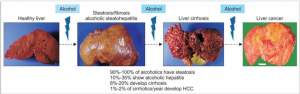
    Let’s explain the process a little more clearly. The liver can metabolize a certain amount of alcohol at any given time, But if you drink excessively, chronically, or too quickly, your liver cells struggle to process it. This can result in developing serious alcoholic liver diseases such as:

    • Alcoholic hepatitis
    • Cirrhosis
    • Fatty liver

    Alcohol liver disease is the development of liver damage as a result of heavy drinking.

    Risk Factors

    According to the Centers for Disease Control and Prevention there are 4.9 million adults diagnosed with liver disease, while just over 21K people died from alcoholic liver disease. So, who is at risk of developing liver disease?

    Typically, most heavy drinkers develop serious alcoholic liver disease. This is why alcohol consumption accounts for approximately 3.8% of all global deaths and 4.6% of global disability-adjusted life-years. Further, people who drink excessively are at a higher risk of developing an alcoholic liver disease. Those who do not follow the guidelines on standard drinking are directly exposed to liver diseases, which may have a fatal outcome.

    MedlinePlus reports that liver trouble is common in people between 40 and 50 years old, and men are more likely than women to develop liver disease. Keep in mind that women are not immune to alcoholic liver disease. In fact, they can develop this condition after less exposure to alcohol than men.

    Metabolism

    The liver is a filter of the human body: it breaks down and gets rid of harmful substances in the body. The liver further transforms vitamins, nutrients, and medicines into substances needed by the body. So, just how is alcohol metabolized in the liver?

    90% of alcohol is metabolized in the liver by oxidation via action of the enzyme called “alcohol dehydrogenase (ADH)”, while less than 10% is eliminated in breath, sweat, and urine. Alcohol is absorbed into the system more rapidly than it is metabolized, and this is the reason why alcohol levels build up in the body. In fact, one unit of alcohol stays in the body up to 2 hours after being consumed. This time frame increases with each drink. The higher the blood alcohol concentration, the longer it takes to process alcohol.

    How Alcohol Affects the Liver

    But the liver can only process a certain amount of alcohol at a time. So, when someone drinks too much, the alcohol that is unprocessed circulates through the bloodstream.

    Q: How much alcohol does it take to damage the liver?
    A: The amount of damage that alcohol causes depends on the drinker and individual factors.

    Experts know that heavy drinking (as well as chronic drinking) destroys liver cells, causing serious damages such as cirrhosis, alcoholic hepatitis, and the cellular mutation that leads to liver cancer. So, the American College of Gastroenterology has set out guidelines that state: “Prolonged abstinence is the most effective strategy to prevent disease progression.”


    Alcohol and Cancer

    Can alcohol cause liver cancer?

    YES!

    Drinking too much alcohol regularly can damage the liver, leading to scarring and inflammation, which also raises the risk of developing liver cancer. According to this NIAAA’s synopsis on alcohol liver diseases, people with alcohol-related cirrhosis are at much higher risk for development of liver cancer.

    Hepatocellular carcinoma (liver cancer) is the eighth most frequent cancer worldwide, accounting for approximately 500,000 deaths annually.

    How does alcohol cause liver cancer?

    Alcohol is converted in our bodies into the toxic chemical, acetaldehyde. This toxin can cause cancer by damaging DNA and stopping cells from repairing liver damage. Also, it makes liver cells grow faster than usual, and these cells are more likely to pick up changes in their genes. This is why the International Agency for Research for Cancer has classified acetaldehyde together with alcohol use as carcinogenic for people.


    However, scientists are still limited in their understanding. Even though there is much plausible evidence, the mechanisms about how alcohol causes carcinogenic effect have not been defined in depth.

    Alcohol and Cirrhosis

    One of the most serious alcohol liver diseases is cirrhosis. This disease replaces normal liver tissue with scar tissue, disrupting blood flow, and preventing the liver from working properly.

    Signs of cirrhosis include:

    • Abnormal accumulation of fat in normal liver cells.
    • Liver enlargement or inflammation.
    • Redness of the palms caused by capillary dilation.
    • Shortening of muscles in the fingers caused by toxic effects or fibrous changes.
    • Thickening and widening of the fingers and nails.
    • White nails.

    Why does alcohol cause liver cirrhosis?

    Currently, there are no empirical studies that adequately explain why and how alcohol consumption causes cirrhosis. Regardless, the correlation between drinking and this disease is strong. Our federal institute of health reports that between 40% to 90% of the 26,000 annual deaths from cirrhosis are alcohol-related.

    Even further, the National Institute on Alcohol Abuse and Alcoholism (NIAAA) reports that about 10% to 15% of people diagnosed with alcohol use disorder develop cirrhosis, and many are unaware that they have it. In fact, about 30%-40% of the cases with cirrhosis are diagnosed at autopsy. Moreover, the NIAAA states that 5-year survival rate of people with cirrhosis is about 90% for those who stopped drinking, while it is 70% of those who didn’t stop drinking.

    Symptoms of Liver Disease

    Some common early symptoms of liver disease include:

    • Abdominal pain.
    • Appetite loss, and weight loss
    • Energy loss.
    • Small, red spider-like blood vessels on the skin.

    As the function of the liver worsens, more serious symptoms take place:

    • Abdomen swelling.
    • Dark urine.
    • Discolored stool.
    • Confusion and problem thinking.
    • Itchy skin.
    • Fatigue.
    • Leg swelling.
    • Nausea and/or vomiting.
    • Readiness on the palms.
    • Unusual bruising.
    • Yellowish skin and eyes.

    Diagnosis of alcoholic liver disease is made with biopsies, but laboratory tests can help too. If you notice any of these symptoms, consult with a physician ASAP.

    Can the Damage Be Reversed?

    The only organ in the body that has the ability to regenerate its damaged tissue with new cells is the liver.  So, most people want to know, “Can alcoholic liver damage be reversed?”

    Yes, liver damage can be reversible… if you stop drinking.

    One study on alcohol-related cirrhosis found that alcohol abstinence is a key factor in the survival rate, even in the most severe cases. Its findings show that abstinence from alcohol at one month after diagnosis of cirrhosis was one of the most important factors determining survival: 7-year survival of 72% of people who stopped drinking in comparison with 44% of people who continue to drink.

    However, the liver may get overwhelmed, and it can lose the function to repair itself completely. This usually happens if it is still “under attack” from drug use, continued drinking, or a virus. In these cases, a scar tissue develops, which becomes difficult to reverse.

    Lifestyle changes can support the liver more than you think. You can start taking care of yourself (and your liver) with these simple life changes:

    • Stop drinking.
    • Eat a healthy diet low in salt.
    • Consult regularly with a healthcare provider.

    While there is no safe amount of alcohol beverage to consume, many reputable sources report that if you drink in moderation (one drink per day for women, and two for men) you will do less harm to the liver. But, liver disease due to alcohol consummation is avoidable. Why drink, and put yourself at risk, when you can do more for your health?

    The best way to take care of your liver is to stop drinking.

    Treatment for Alcoholism

    If you are struggling with liver disease, alcohol addiction can be trated. In these cases, it is important to find evidence-based treatment for alcoholism. There are two main types of alcohol rehab programs: inpatient and outpatient.

    Inpatient treatment provides constant medial care and supervision because patients live at the facility. This type of treatment is designed to help people with moderate to severe addictions. Some of the services include:

    • Detox services.
    • Educational classes.
    • Group therapy.
    • Individual therapy.
    • Medication and medical support.

    Outpatient treatment provides similar services, but patients do not live at the facility. They visit the rehab center for few hours at day, several days weekly. This treatment is designed for people who are willing to change, have mild cases of addiction, and have emotional support from loved ones at home.

    If you have drinking problems, don’t wait. Seek help as soon as possible. We can help, you only need to reach out. Feel free to leave us a question at the end…or give us a call.

    Reference sources: NCBI: Pathophysiology and Management of Alcoholic Liver Disease
    NIAAA: The Epidemiology of Alcoholic Liver Disease
    NIH: Exploring Alcohol’s Effects on Liver Function 
    NCBI: The Burden of Cancer Attributable to Alcohol Consumption
    NCBI: Alcohol Metabolism 
    NCBI: Reversal of liver cirrhosis: current evidence and expectations

    View the original article at