Tag: addiction recovery

  • "Times" Readers Share Stories Of Addiction & Recovery

    "Times" Readers Share Stories Of Addiction & Recovery

    New York Times readers shared their personal experiences with opioid addiction and recovery.

    The opioid epidemic can be covered with statistics and numbers: the 72,000 Americans who died of drug overdoses in 2017 or the five-fold increase in babies born dependent on drugs.

    However, that only captures some of the picture. To really grasp the effects of the opioid epidemic, The New York Times asked readers at the end of last year to share their experiences with addiction and recovery

    Charlotte, North Carolina resident Cindy Chandler, 64, reminded readers that the issue of drug addiction has been affecting families since long before it started getting press coverage. Her brother overdosed on heroin in 1997 at age 40. 

    “He took the entire family on psychological roller coaster rides throughout his life. We never knew when the phone rang from then on if it was the end for him,” Chandler wrote. “Turns out it took 28 more years of family torture.”

    Some readers, including Michele Sevik, a 58-year-old from Vermont, described the initial euphoria that kept them coming back to opioids.

    “It was like offering an emotional and social paraplegic a drug that would suddenly allow them to hop out of their wheelchairs and walk and run,” Sevik wrote. “Even knowing about addiction, even knowing about HIV, it was irresistible.”

    Stephen DePasque, a 35-year-old from Pennsylvania, was more productive than he had ever been when he started using opioids, but the new energy was short lived. 

    “Before long, the upkeep of my back-pocket superpower took the top spot on my priority list,” he wrote. 

    St. Louis resident Heather Hudson, 27, found that even facing the heartbreak of addiction head on wasn’t enough to make her stop using. 

    “At age 26, my little brother and I found our big brother dead on the floor from an accidental fentanyl overdose. I actually took the rest of his dope and did it in a McDonald’s bathroom while the coroner was loading him into a van,” she wrote. “As sick and twisted as that is. But that’s addiction. Sick and twisted. It’s like being in an endless tunnel. You can see the light at the end, but you never feel like you’ll reach it.”

    Despite the heavy answers, some readers wrote in to share hope for recovery. 

    “Recovery is not an exact science, or a recipe that can be applied to different people in different ways. But many of us do recover,” wrote Katharine, a 29-year-old from Philadelphia. “I wish I knew the answer to this current crisis. All I can do is keep my hand open and available to the next person who may need help.”

    View the original article at thefix.com

  • How To Avoid Relapse During the Holidays

    How To Avoid Relapse During the Holidays

    ARTICLE OVERVIEW: You can stay sober this season with the help of these tips and tricks. Here are some great ways to stay sober and enjoy the holidays.

    ESTIMATED READING TIME: 5 MINUTES

    TABLE OF CONTENTS:

    There is great news for recovering addicts: A holly jolly holiday is still possible, even while you’re recovering from an addiction. Although you may experience some triggers such as being alone during the holidays, dealing with tenuous relationships, and fending off constant offers of alcoholic drinks, you can stay sober this season with the help of these tips and tricks.

    Here are some great ways to stay sober and enjoy the holidays.

    1. Make A Plan Before Starting The Day.

    As sure as wreaths and lights will be hung this season, a recovering addict needs to wake up each day with a plan to remain sober. Before even stepping foot out of bed, you should evaluate the situations you are likely to encounter and then rank them in order of risk. Of course, the goal this season should be to avoid high risk scenarios as much as possible. But some situations are simply unavoidable.

    For example, maybe you need to attend a holiday work party to impress your boss and eventually receive a promotion. While at the party, you may be tempted to consume an alcoholic beverage with your co-workers. If you must attend a high-risk event, make sure that you drive yourself so that you can leave whenever you want. There’s nothing worse than being forced to stay in a situation where people are partaking in drugs and alcohol for an extended period of time.

    Eat a healthy snack or meal at least once every three hours.

    2. Maintain A Healthy Diet

    All of the delicious holiday food may be tempting, but now is not the time to push your healthy habits to the side. When you eat an unimaginable amount of unhealthy foods, your body will not be feeling the greatest. To feel better, you may want to drink or use. Even though those sugar cookies and specialty pies may be hard to resist, the best way to avoid this pitfall is by maintaining a balanced diet…as much as possible.

    While you shouldn’t eat too much this holiday season, you should also make sure that you are eating enough. If you don’t get enough food in your system, you are prone to low blood sugar levels. A low blood sugar can make you feel irritable and anxious, and you might want to turn to alcohol or drugs to reduce these unpleasant symptoms.

    The best way to ensure that your blood sugar never gets too low is to eat a healthy snack or meal at least every three hours. Make sure that you take extra precautions if you are a recovering addict and a diabetic.

    Meditation takes just a few minutes per day.

    3. Practice Stress-Relieving Activities

    There is no doubt that the holiday season is one of the most stressful times of the year, but you don’t have to let the stress get to you. Instead of coping with alcohol or illegal substances, engage in some self-soothing strategies like meditation and breathing exercises to clear your mind.

    The great thing about meditation is that anyone can practice this activity. Even if you meditate and breathe deeply for a few minutes each day, you will be able to restore calm and peace in your life. As you practice meditation and deep breathing, make sure that you keep reminding yourself that you cannot stop at just one drink so that you can stay on the path to sobriety.

    Another way to reduce stress is to engage in a regular exercise routine. Due to the well-known fact that exercise stimulates the production of feel good neurotransmitters called endorphins, you’ll start feeling better in no time. Not only can a regular work-out routine reduce stress, the activity can also improve sleep, combat depression, reduce anxiety, and boost self-confidence. As you experience all of these great effects of exercise, you’ll be well on you way to having a great and sober holiday season.

    Practice your refusal lines.

    4. Bring Support To Holiday Parties

    The holidays wouldn’t be as much fun without parties and get-togethers. If you plan to attend a holiday event, just make sure that you don’t show up alone. A friend who does not drink alcohol or use substances can definitely help you stay on track at social functions. While everyone is enjoying drinks at the bar, your loyal friend can make you feel comfortable by keeping you engaged in conversation and drinking sparkling fruit juice with you. When both of you guys are drinking non-alcoholic beverages, you are less likely to feel tempted to consume something a little stronger.

    If someone does offer you a drink at a gathering, you need to know exactly what to say to avoid being persuaded to join the fun. Instead of fumbling over your words when offered a drink, know the type of non-alcoholic beverage you would like before you attend the social function. That way you can quickly and politely decline alcoholic drinks without being forced to expand upon your decision.

    Along with bringing support to the party, you can also take your own beverages to fend off those offers of alcoholic drinks. Many New Year’s parties only serve alcoholic drinks, so you’ll want to consider this option if you plan to attend one. Whether it’s sparkling water, hot chocolate, or red bull, consider bringing a beverage for the host and one for yourself.

    5. Stay Connected To Positive People

    Speaking of support from friends, you should also seek accountability from your buddies in your support group. Throughout the holiday season, consider attending some extra meetings to stay connected to positive people. In order to remain sober this time of the year, the goal should be to stay close to supportive friends and family.

    Staying Sober Starts With A Decision

    As you embrace the holiday season, make sure that you remember the reasons why you are on a recovery journey. If you keep these good thoughts in mind during this time of year, staying sober is much easier even when temptation seems to be everywhere. Although there are a lot of people seemingly having fun with drugs and alcohol this holiday season, you don’t have to be a part of the statistic.

    And now we’d like to hear from you.

    Please leave your comments or questions in the section at the end. We try to respond to all real life questions with a personal reply.

    View the original article at addictionblog.org

  • Former Police Lieutenant Details How Past Addiction Changed Everything

    Former Police Lieutenant Details How Past Addiction Changed Everything

    The former police lieutenant hopes that by sharing his story he can help other cops have courage to get treatment before addiction derails their lives. 

    Dan Gosnell was a star with the Aberdeen, Maryland police department. At 35, Gosnell became a lieutenant in charge of the criminal investigation division, one of the youngest officers in a leadership position with the department. By that time, however, his opioid addiction had already started to take hold. 

    “It started initially as taking the pills as prescribed, one to two pills every two to four hours as needed for pain. Being a large person as I am and building up a tolerance rather quickly, that progressed to three pills at a time rather than two, and then eventually four pills at a time,” Gosnell said in a video for The Baltimore Sun. “And then, rather than every two to four hours, it was every hour, or every two hours at the most. I would take three to four pills and that just progressed until eventually I was taking five, six, eight at a time, depending.”

    Eventually, Gosnell was taking up to 24 pills a day, according to a story in The Baltimore Sun

    At first he began using leftover pills in his own home or leftover pills from family and friends.

    “Eventually it got to the point where that was no longer feasible,” he said. “I couldn’t go getting drugs off of friends and family that I knew happened to have them sitting around.”

    That’s when Gosnell turned to the prescription drug drop box that the station maintained. 

    “I made the unfortunate decision to actually seek the drugs out of that location and supplement my addiction that way,” he said. 

    However, soon even the pills from the drop box were not enough to stave off withdrawals. 

    “It escalated just like many other addicts; their addiction from opiates escalates. Pills become harder and harder to find . . . That was what brought me to the evidence room, and then I started taking actual drug evidence from the Aberdeen Police Department,” Gosnell said. 

    By the time his deputy chief confronted him, Gosnell tested positive for cocaine, marijuana and opioids. However, he said after years of concealing his addiction, getting caught was a relief. 

    “Of course you have that panic moment of, ‘Oh my God, my career and my life is completely over because they’ve got me; they’ve caught me,’ but that wasn’t the overpowering sensation that I felt. What was more overpowering was the sense of absolute and utter relief,” he said. 

    Gosnell received a 10-year suspended sentence and had to go through drug treatment. Today his law enforcement career is over and he works in the treatment industry. However, he hopes that by sharing his story he can help other cops have courage to get treatment before addiction derails their lives. 

    “The message would be to not sacrifice your integrity in order to save your career or your life,” he said. “It is not worth flushing your integrity and life down and going the road that I went. . . . I walked that road for you so you don’t have to.” 

    Gosnell said that if he had gotten help sooner, he may have been able to continue his police career. 

    “There is a life after law enforcement and police work,” he said. “But if you get this caught early enough and you actually ask for the help that I was afraid to, that you might not get to the point where you’re doing the things that I was doing.”

    View the original article at thefix.com

  • "Six Gifts" Film Follows Athletes In Different Stages Of Recovery

    "Six Gifts" Film Follows Athletes In Different Stages Of Recovery

    “The movie is meant to inspire people currently suffering from addiction and those who are unable to find that missing piece to the puzzle to help finally get them sober.” 

    A new film celebrates six stories of recovery, sparking a movement to inspire and motivate the addiction/recovery community.

    6 Gifts, directed by Nick Tribuno, follows six athletes from all walks of life and shares their failures and triumphs in battling addiction—Ben Gravy (surfing), Scott French (snowboarding), Rebecca Selig (skiing), Chris Vargo (endurance athlete), Monica Lebansky (yoga) and Melody Schofield (crossfit).

    According to the official website of Sober and Stoked, the movement which funded and produced 6 Gifts, the film is now available to rent or to purchase on Blu Ray. Sober and Stoked co-founders Scott French and Eugene Stiltner raised $6,000 to produce the film with the help of a crowdfunding campaign.

    “The movie is meant to inspire people currently suffering from addiction and those who are unable to find that missing piece to the puzzle to help finally get them sober,” according to the official website. “It is also meant for people who are already sober and feel like they need something else to get them motivated and out enjoying life, so they don’t fall back into previous traps and pitfalls.”

    Both Stiltner and French, who are both originally from the Fairfax, Virginia area, have about 11 years of sobriety.

    “Over a decade of doing drugs and drinking every day had taken a toll on me,” said French on the Sober and Stoked website. “I had acquired 4 DUIs over 10 years, had many drunk-in-public offenses, and many violation of probations.”

    A series of failed relationships compounded his drug use. “Cocaine slowly turned into meth and crack, and then OxyContin and heroin.”

    Ultimately, French surrendered himself at the courthouse and pleaded guilty to his charges. Going to jail was his chance at redemption. “I remember smiling, this was my chance. I was given an opportunity to forcibly be away from drugs and alcohol. I could transform my life, incarceration is the only way I’ll get sober.”

    After enduring a “vicious” detox and attending AA meetings in jail, French put his energy into fitness, marathons and snowboarding.

    His friend and co-founder Eugene Stiltner stopped drinking after a “culmination of almost 8 years of reckless, out-of-control drinking, depression, trouble with the law, and a desire to no longer go on,” he said.

    Stiltner was pulled over by police and arrested while driving home after a night of drinking until last call. “When I got out the next morning, my parents and a family friend who had been sober for many years sat me down for an intervention,” he said.

    Now that the film is complete, Sober and Stoked is focusing on launching a pilot program throughout Maryland and Delaware in 2019.

    The pilot program will host “gear drives” to support the athletic or artistic pursuits of people in recovery.

    “The concept of a gear drive is similar to a clothing drive,” Stiltner told The Fix via email. “People can clean out their basements and garages and bring in lightly used/new outdoor gear and art/music supplies, so the halfway houses we partner with can have healthy activities for people in the houses to do.”

    6 Gifts is available to rent or to purchase on Blu Ray.

    To schedule a screening of 6 Gifts in your community, contact wearesoberandstoked@gmail.com, or purchase a community screening kit available on their website.

    You can also reach out to Sober and Stoked via social media.

    Watch the trailer here.

    View the original article at thefix.com

  • Get Rid of Drug Cravings Once and for All

    Get Rid of Drug Cravings Once and for All

    ARTICLE SUMMARY: There is no way to completely eliminate drug cravings. However, you can learn to live with them…and get through them. This article reviews why cravings occur and offers three practical ideas on how to cope.

    ESTIMATED READING TIME: 5-10 minutes.

    TABLE OF CONTENTS:

    Drugs and Pleasure

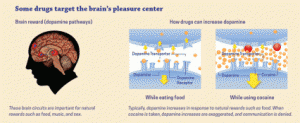
    To start to understand a craving, we need to look first at how drugs work in the brain. According to the National Institute on Drug Abuse (NIDA), experts used to think that a specific chemical neurotransmitter (dopamine) produced by drugs creates an extreme feeling of well-being. However, the reality is that the way drugs work in the brain is a little more complicated than that.

    Today, scientists now think dopamine has more to do with getting us to repeat pleasurable activities (reinforcement) than with producing pleasure directly. Large surges of dopamine “teach” the brain to seek drugs … while other, healthier activities such as exercise, creative pursuits, relationships, or even sex, get sidelined.

    The Definition of  a Craving

    So, what is a craving, exactly?

    Well, take away the drug-of-choice…and the need to feel pleasure still exists.  Our natural ability to feel pleasure can take some time to return as the brain returns to normal function. This is why people often feel the following in the first few months of addiction recovery:

    • depressed
    • flat
    • lacking motivation
    • lifeless

    The technical term for this is “anhedonia”. For some drugs – like meth, cocaine, heroin, or painkillers – it can take months or years for the brain’s chemistry to return to normal. And the amount of time it takes for the brain to return to homeostasis after a period of addiction will vary by individual.

    What’s important to know is that most of us are physically unable to enjoy things that were previously pleasurable. And naturally, we consciously and subconsciously seek out pleasure…to make life fun! This is why drug craving is natural outcome of drug use: it is a physical or psychological urge for your drug-of-choice.

    A craving is a deep yearning for the effect of your drug-of-choice.

    Triggers

    A craving can come out of the blue. It can also be”triggered”. Indeed, most cravings are usually prompted by a trigger. Triggers include external stimuli such as:

    • Certain people
    • Places
    • Situations
    • Smells
    • Other external stimuli

    Triggering situations affect the area of the brain called “amygdala”. When a triggering situation occurs, the amygdala sends signals to the other parts of the brain reminding you of your drug-of-choice. The amygdala regulates functions such as memory and learning, so you are in the company of a person, or in a certain situation that somehow reminds you of your previous addictive behavior… reaching for drugs again is a program running in your brain. The trigger sets of a pattern of decision making that can spiral you into an unconscious decision to use.

    During this process, you may even experience sensations such as shaking, cramps, anxiety attacks, nervousness… etc. A craving sensation can literally nearly take control over a person. However, you can stay in control by knowing the brain science behind them.

    Cravings occur as the result of powerful memories linked to substance abuse. When a trigger occurs, the amygdala lights up and in a moment, you can nearly feel the pleasure of your drug-of-choice. But cravings come and go. They do not last.

    They key to coping with cravings is to anticipate triggers and learn to avoid them. A craving may never go away compltely…the learned “reflex” can last a long time, even in people who haven’t used drugs in many years. Like riding a bike, the brain remembers. Cues that are linked with drug use can trigger uncontrollable cravings whenever you experience the cue, even if the drug itself is not available. However, you can stay in control of a craving and learn to ride it like a wave.

    Are Cravings Normal in Recovery?

    Yes.

    Almost every addict in recovery experiences craving. In fact, cravings are a very common and normal part of addiction recovery. The urge to take your drug-of-choice is rooted in brain chemistry.

    Again, they key is to be aware that they happen. When cravings appear out of nowhere they tend to take us by suprise. And if they come out of the blue, a craving can be sudden and very unpleasant. Indeed, the sudden and impulsive nature of cravings are one of the key factors for relapse.

    Therefore, it’s highly recommended that you ask for help when they strike. This because you’re working with long term memory association in the brain. A trigger can not be “deleted” as easily as people think. So, because cravings act as “automatic” and unconcious desire,s it’s best that you seek help from mental health professionals in order to manage them.

    A counselor, psychotherapist, social worker, or addiction doctor can help you to plan for cravings and teach you tools and strategies for managing them.

    Experiencing cravings and looking for ways to get rid of them? The next section offers you ideas aabout how to manage a craving and what to do when they appear.

    • Are your thoughts preoccupied with your drug-of-choice?
    • Can you literally taste your drug-of-choice on your tongue?
    • Do you experience a strong desire to see old friends?

    Do not worry, these are all normal.

    What you do next is key!

    What Do The Experts Say?

    Ph.D. Adi Jaffe defines cravings as programmed responses to environmental signals that have been connected to drug use through experience. His advice is that when you have a craving, recognize it for what it is. If the experience is overwhelming, make sure there’s someone you can talk to about it (a therapist, partner, parent, or 12 step sponsor). As time passes your cravings will become less and less frequent, though without specific treatment, their intensity will likely not go away. Like he says, cravings are a part of the reality of addiction – knowing what to do with them is a key to success.

    Randy Lindel, Facilitator at SMART Recovery says:

    “Everyone who’s engaged in addictive behavior will experience uncomfortable cravings (“I want it badly”) and urges (“I have to do it now”).”

    Again, this experts notes tha they are normal. And fortunately, h reminds us, they always pass with time. At the outset of recovery, they can be pretty intense, but each one will subside if you can wait it out and have a plan for relapse prevention. Cravings and urges will decrease in strength and frequency over time. You can make this happen by adopting some coping strategies that work best for you.

    3 Ways to Cope: How To Work with Cravings

    1. Learn your personal triggers.

    Being aware about the things that are associated with your addiction past is the first step towards learning how to take control of them. Most people are not aware about which things signal a craving. This is one of the main tricks of cravings. If they are not consciously recognized and registered they tend to act as automatic occurrences forcing your attention on using.

    Cravings may present themselves in any form, but the key thing is learning to recognize your personal triggers. When you are able to detect your personal triggers, you can avoid them. In fact, many professional recommend that you list alternatives to avoid certain people, places, smells or situations which can bring up old, unhealthy habits.

    2. Find a new brain circuit to reinforce pleasure. Or, occupy your mind.

    It’s vital as you identify triggers, you also look for other activities to replace drug use. The brain is re-programmable. So, here are some ideas for what you can do when cravings strike:

    • Ask for guidance and help from a trained treatment professional.
    • Change your routine.
    • Distract yourself: Read a book, see a movie, or talk to a friend.
    • Do something spontaneously from your bucket list.
    • Go out for a walk or exercise for 20 minutes.
    • Practice mindfulness meditation.

    3. Actively create a safe, healthy and drug-free environment.

    We are creatures that hunt for reward. The need to satisfy your cravings and/or desires is based on availability. When a drug-of-choice is completely unavailable, we are forced to shift our attention elsewhere. Know this about your own human nature and bring health into your environment.

    In sum, eliminate all the possible triggers from the place you live and the places you go and the people you hang out will at least make you feel safe. Take responsibility for what you surround yourself in. Then, adjust your lifestyle accordingly.

    Professional Help

    There are many professionals and treatment methods developed to help people deal with cravings and prevent relapse . You can seek professional help from the following:

    • Addiction counselors or psychotherapists (APA find a counselor)
    • Addiction specialist doctors, or MD (ABAM find a doctor)
    • Licensed clinical social workers
    • Hotlines such as SAMHSA’s National Helpline – 1-800-662-HELP.

    Mental health providers can engage you in the following treatment modalities:

    • 12-Step meeting facilitation
    • Cognitive Behavioral Therapy (CBT)
    • Individual Therapy or Group Counseling
    • Mindfulness techniques

    Your Questions

    We hope this article offers practical guidance and some useful ideas about how to get through cravings in addiction recovery. In case you still have a question or want to share a personal experience… please feel free to use the comments section below. We try to answer all real-life comments personally and promptly, or refer you to an expert in case we do not know the answer.

    Reference Sources: Alternatives In Treatment: What Are Drug Cravings and How Do They Impact an Addict’s Life?
    Psychology Today: Craving: When the brain remembers drug use
    Addiction Blog: How does a heroin craving feel?
    Recovery: Cravings Symptoms, Treatments and Relapse Prevention
    A Road To Recovery Rehab: Understanding Cravings and How it Helps Recovery
    Addiction Blog: Coping with urges and cravings
    Addiction Blog: Coping with drug and alcohol cravings: A skills list

    View the original article at

  • 7 Tips for Building Your Addiction Recovery Support Network

    7 Tips for Building Your Addiction Recovery Support Network

    Support and Addiction Recovery

    Recovery brings about a lot of changes in your life, including who you surround yourself with. It is critical that you reevaluate your current relationships and cut ties with anyone who is not supportive of your new sober lifestyle. While this might diminish your social circle, do not get discouraged. Forming new, positive connections is a rewarding part of recovery.

    While reaching out to new people can be intimidating at first, surrounding yourself with positive people will not only keep you motivated in your recovery but will improve your overall happiness. Below, you’ll find some tips on how to build a strong sober support network that can help you overcome any challenges ahead and will be there to celebrate all your victories.

    TIP #1: Be Honest.

    To form a strong support network that can effectively help you navigate through all the changes in your new life, you first need to ask yourself what you are looking for. Explore your true needs. Ask yourself:

    • Do I need someone who will go to meetings with me?
    • Do I need someone who will encourage you to I healthier and work out more?
    • Do I need someone who will tell me what I need to hear, even if it is not what I want to hear?

    Knowing what you need will make it easier to recognize who should be a part of your support network.

    While it is important that you are honest about your needs, you also need to be able to relay them to those around you. Your friends and family want to help but they may not know how. So, be open and honest. Do not be afraid to educate them about what you are going through, how you are feeling, and what they can do to help. If you need them to be more patient and understanding with you because you are having a tough day, let them know. If you are feeling lazy or uninspired and need someone to push you to go to a meeting or practice some self-care, ask for help. Remember, you cannot get what you want unless you ask for it.

    TIP #2: Choose Wisely.

    Who you include as part of your support network is very important. When making new friends, ask yourself:

    Do they abuse drugs or alcohol? If they do, they should not be a part of your network as they could be a source of temptations and triggers that could derail your progress. Note that not everyone in your network has to be in recovery. You will likely have friends or family who drink during social occasions. Just be sure to establish boundaries, such as asking them to not drink in front of you or not ask you to go to bars with them.

    How do they make me feel? Is their positivity contagious? Do they encourage you to go out of your comfort zone or inspire you to be better? Or does their negativity cause you stress or make you feel down? Being around negative people can be stressful, so avoid this trait when forming new friendships.

    Are they living healthy lives? Surrounding yourself with people who take care of themselves and value their well-being will encourage you to do the same.

    TIP #3: Embrace Diversity.

    While surrounding yourself with others like you provides a sense of comfort, having a diverse group of friends gives you access to fresh new perspectives. When building your support network, consider attending 12 Step meetings and introducing yourself to everyone and seeing who you click with. By including individuals of different ages, cultures, backgrounds, and years of sobriety in your life, you will be exposed to a wealth of knowledge.

    Another great way to make new friends is by attending sober events. Many treatment centers hold educational workshops and fun sober activities for their alumni to socialize with one another. If you went to treatment, reach out to the staff there and see if they have an alumni group. Sober events can range from open mic nights to mountain climbing and are a great way for you to not only meet new people but relearn to have fun sober.

    TIP #4: Go Beyond.

    Don’t limit yourself to only making friends in recovery. Go beyond your comfort zone and interact with others, even those who may have no experience with addiction. Know that while you are sober, sobriety is not your full identity. There are many other things that make you who you are. So, think about what you are passionate about and get involved ⎼ take a cooking class, go to the gym, start volunteering, take a computer course ⎼ and make an effort to meet others there, too.

    Befriending individuals outside of the recovery community can be intimidating for some. A common worry is explaining that you are sober. While this is an understandable concern, know that no one worth having as a friend will think of you any differently just because you are choosing to live a healthier life.

    TIP #5: Try Online.

    Spending too much time on your phone, particularly on social media, can distract you. It can also slow your progress in recovery. But going online does provide you access to many sober social networks where you can connect with others who may be going through similar things. Mobile apps like Sober Grid can help you connect to other sober people no matter the time of day, which can be particularly helpful when you are going through a crisis or experiencing cravings. Sites like MeetUp – and even using the hashtag #livingsober on Instagram – can also introduce you to others living healthy, fulfilling lives.

    TIP #6: Remain Open.

    A big part of recovery is rediscovering yourself, your passions, and how to enjoy life sober. To do this, you need to remain open-minded about trying new things and meeting new people. Try doing things you have never experienced before, such as going kayaking, singing karaoke, or painting. Even if you decide this is not the activity for you, you may end up making genuine connections with people there. It is not so much about what you do but who you spend that time with.

    In sum, fight back against any resistance you may feel towards trying new things and get out of your comfort zone. The more you put yourself out there, the more you and your support network will grow.

    TIP #7: Don’t Rush.

    Seeing all the positive changes in your life is exciting but be sure to take everything one step at a time. Do not rush into friendships because you feel the pressure to have a support network set up. Allow friendships to form naturally rather than forcing them. Similarly, once you have made new friends, practice tolerance. Recovery might be new to them and you cannot expect them to fully understand everything you have gone through. Understand that you are forming new connections and you need to build them up over time.

    Your Support Network Is Your Lifeline

    While addiction might have been isolating and lonely, your recovery should not be. Positive relationships are a key component of a healthy, fulfilling life. So, reinforce your current relationships and allow yourself to form new ones. Having a group of individuals you can both reach out to during tough times and celebrate your accomplishments with can make all the difference in your recovery.

    And if you need help, reach out. You can use this article as a place to begin. Please leave your questions or comments in the section below. We’ll do our best to respond to you personally and promptly!

    About the Author: John Hamilton is Chief Clinical Outreach Officer for Mountainside Treatment Center. He is a Licensed Marriage and Family Therapist as well as a Licensed Alcohol and Drug Counselor. At Mountainside, he communicates the depth and intricacies of the company’s portfolio of programs and offerings, which have redefined addiction treatment for thousands of individuals across the country. John has been a consultant for the National Institute for Drug Abuse (NIDA) and the Substance Abuse and Mental Health Service Administration (SAMHSA).

    View the original article at

  • Trauma and Addiction Recovery Workbook [BOOK REVIEW]

    Trauma and Addiction Recovery Workbook [BOOK REVIEW]

    Trauma Is Personal

    Trauma isn’t just a buzzword in addiction treatment. It’s a reality that many men, women, young adults, and children face … every day. Trauma can take the form of a life-changing event. Psychology Today explains trauma as the result of ”any distressing or life-threatening event”. Trauma is usually caused by an external force that we cannot control:

    • A natural disaster
    • A person who forces us to do or witness something horrible
    • War
    • Terrorism or school shootings

    According to the Substance Abuse and Mental Health Services Administration (SAMHSA), research has shown that traumatic experiences are associated with both behavioral health and chronic physical health conditions, especially those traumatic events that occur during childhood. Still, trauma and addiction co-occur often and in all kinds of populations.

    How someone responds to a traumatic experience is personal. But there are some commonalities in the ways we cope as humans, and the ways that we can help. So, if you’ve been through trauma…you ARE NOT DOOMED to live with lasting negative effects. While difficulties and stress reactions are normal,you can address these challenges and explore healing.

    A Path to Healing

    Traumatic experiences can contribute to chronic physical and mental health conditions. But you can move through the pain and come out the other side. One way to do that is by reading a new book called, “Recovery from Trauma, Addiction, or Both” by Dr. Lisa M. Najavits.

    Herself the victim of a violent assault while in graduate school, the author’s personal empathy for trauma combined with trends in “Co-Occuring Disorders”, or the treatment of addiction and mental health disorders. Her latest book presents science-based self-help strategies that you can use no matter where you are in your recovery. Every chapter features testimonials from people who have “been there” before you. Plus, the text is designed to be worked through over time.

    Overall, I give this book a hearty “thumbs up.”

    Why I Recommend This Book

    As a workbook, “Recovery from Trauma, Addiction, or Both works to your advantage. First of all, it’s based on clinical practice. Dr. Najavits has been using evidence-based clinical skills for decades. The text include background reading for context. Then, Dr. Najavits has included reflection questions, surveys, exercises, and action points in every chapter.

    Second, you can advance at your own rate, or use the workbook as an adjunct to talk therapy. It is truly a tool that can move you towards becoming your best self. However, be fairly warned. There is a lot of work to do. And most of the time, you may not want to approach that work on your own.

    Still, if you are ready to work through trauma, this book will teach you how to:

    • Keep yourself safe and find support.
    • Set your own goals and make a plan to achieve them at your own pace.
    • Learn coping skills so that the future is better than the past.

    However, I personally think it best that you also commit to talk therapy. In my experience, scheduling regular, weekly appointments with a psychotherapist, addiction counselor, or a spiritual/religious guide is critical to moving forward. When we are hurt the most, we need a guide.

    When you’re ready to seek out professional support for treatment of addiction, trauma, or both, here are a list of possibilities.

    1. Rehabs. Search the SAMHSA website. For rehab that specialize in trauma AND addiction treatment. Or, call our number listed on this page for confidential information on where to get treatment.

    2. Professionals. Clinical psychiatrists or psychologists who have specialized in addiction treatment can offer suitable advice on resolving trauma and substance abuse issues. You can search the APA directory to find a psychotherapist and the APA directory to find a psychiatrist. Or, check with your State’s Department of Social Services to be connected to a licensed clinical social worker.

    3. Support Groups. These are non-formal meetings between people who share their experiences in order to gain positive result in recovery. The U.S. Veteran’s Association suggests the following support groups for trauma

    • Anxiety and Depression Association of America offers a list of support groups across the country for a number of different mental health conditions, including PTSD.
    • Sidran Institute Help Desk Help Desk locates support groups for people who have experienced trauma. Sidran does not offer clinical care or counseling services, but can help you locate care or support.
    • National Alliance on Mental Illness (NAMI) Information HelpLine provides support, referral and information on mental illness care. You may also find family support groups in a NAMI state or local affiliate online or by calling 1(800)950-NAMI (6264).

    What I Learned From This Book

    Because this book is easy-to-read, you can essentially open any chapter and take away some key learning moments for yourself. It’s workbook, so the process is highly personal. The three mostinteresting things that I learned from this book are:

    1. It’s best to treat trauma and addiction at the same time. It does not help to treat addiction first and then address trauma. You might actually be delaying healing or cause yourself unnecessary misery when you do this. Instead, a good treatment provider will address them both together.

    2. You can shop around for counselors. The therapeutic relationship is something you need to feel comfortable with. And not everyone will resonate with your own personal need. So, don’t feel like you need to do trauma work with the first person you come across. Instead, take your time and vet the person first. Ask for referrals. And do your homework.

    3. Re-living past trauma is not necessary to resolving it. Repeat that. This insight was MAJOR for me. Maybe I’ve seen to many movies with hypnotists…but I had a LARGE misconception about trauma work. So, just know that you do not need to smell, see, touch, or taste the past in order to live more comfortably in the moment. What a relief!

    Conclusion

    Clearly, the effects of traumatic events place a heavy burden on individuals, families, and communities. However, research and practice are combining to offer us new pathways forward.

    This book – Recovery from Trauma, Addiction, or Both … is worth buying. In fact, it might just be the best book you ever buy. Why?

    Because you are worth it! This book offers just the right kind of gentle guidance toward positive action that it takes to change your life. But only YOU CAN DO THE WORK. Why not spend the $12 and get started today?

    View the original article at

  • Change is Strange: Coping with Change in Addiction Recovery

    Change is Strange: Coping with Change in Addiction Recovery

    What Are “Changes”?

    For the past several months I have been experiencing a lot of change. But what does that mean? I’ve been asking some questions:

    • What do we mean by change?
    • How do we view change?
    • What does change do to us?

    Simply defined, change is, “the act of making or becoming different.”

    Those are small words for such an often series of tumultuous acts. Change can be sudden and unexpected, or it can be thought out and planned. But no matter how much we plan for change, it can throw us in a loop. We can feel lost. Anxiety and fear can take over. In sum, change is strange.

    Change is Strange: A First Hand Account

    Take for instance how I have spent my life’s work working in the behavioral health care field, most notably in the addiction and mental health arena. I’ve spent decades either teaching on the university level or helping others to change. I have worked with thousands of students as well as hundreds of families whose loved ones experience the maladies of abuse. This has included:

    • Chronic pain
    • Disordered eating
    • Disordered shopping
    • Compulsive gambling

    … other process disorders coupled with anxiety and depression. All the while, the name of the game is to motivate, facilitate, inspire them to change their behaviors. The goal is to fool those neuro tags and change the way one responds to life.

    Well, let me tell you first hand, “Change is strange”. I travel for work. Over the last few months, I have worked in London, New York, Fargo, Clovis, Mountainside, Long Beach and Malibu. I have changed some of the work I do from consulting at one place to consulting at a few others. Consulting means you go into a center with essentially clean eyes and knowledge about the subject matter you are asked to look at. As such, one becomes a partial part of something.

    As a consultant, one’s job is well defined. In my case, most of the time it centers around developing curriculum, training and working with others. As such, you must learn all about the entities and perspectives in the workplace. In other words, you must put yourself in their shoes. You must identity with and try to understand all the nuances of a treatment environment, even though you are not present all the time.

    Looking at Attachment

    This is a tightrope walk. I honor the professionals, the work they are doing, and their processes for accomplishing their goals. Nonetheless, in doing so, I find that I become attached to the people, places, and things I encounter.

    When a consulting job ends, there is a little hole inside of me that misses that place, that staff, those people.

    And so, faces and places change. I found this experience to be bittersweet, having learned tons about a new subject matter. Hence, whether it’s abrupt or planned, saying goodbye is difficult. Change is strange!

    Moving to a New Home Shakes Things Up

    Recently, my husband, dogs, and all our things were picked up and moved. The process has shaken up the molecules of knowing where everything is in its rightful place. It’s difficult to know where things are: from where silverware sits to where the best grocery store is to wondering, “Where did I put this or that?”.. to not knowing exactly where to go, what to do, or who to meet.

    My sense of direction, belonging, and trajectory have all been thrown into a clothes dryer and the dial turned up to maximum spin. I don’t know where I’m going to fall when the tumble dry finishes. Indeed, change is strange.

    Many of you know we have relocated to the desert. Mr. Wadas – my husband – as I affectionately call him, is happy as a clam after spending months making a new home. He can walk out onto our back patio and look up at the stars every night, see the harvest moon, and can play golf for a cheap ticket at the best clubs.

    As a former athletic director, moves are a way of life for him. He changed university colors many a time. As an athlete, he learned that there is always another game to play. If you lose one you get up the next day, dust yourself off, learn from the plays, train harder, and go back out. His mantra is:

    “Preparation plus opportunity equals success.”

    He rolls with the punches, another way of dealing with the emotional highs and lows of transition.

    How Being an ACOA Informs My Response to Change

    For me, the adult child of an alcoholic and the daughter of a Loretta Young-type mother who vacationed and moved constantly, change doesn’t settle well in my bones. In addition to this, I’m a woman who experienced many sudden deaths of close family.

    I don’t move.

    In WeHo, my previous residence, I only moved two doors down from our condo to a home. I fell in love with the city, learned, laughed, walked everywhere in the neighborhood feel of WeHo, met so many new people, volunteered at the Sheriff’s station, tripped in disbelief over a growing homeless population, protested the marijuana stores, made friends with the doormen at Sunset Marquis, experienced the vastness of the treatment and recovery industry, hiked up to Soul Cycle every morning, riding alongside artists, designers, celebrities, etc., and felt a strong sense of community. I felt energized, activated and secure with the sounds of La Cienega roaring in the background.

    And then life took some turns and we chose to move.

    I have been coming to the desert for more than 35 years. I know the streets, have a few professional friends here, and can find my way around. Still, I don’t know all the places. There is a flood of new faces. Yet, there is a familiarity in unfamiliarity.

    I Turn to the Tools of Recovery

    What I do have that I embrace are the tools of recovery for any environment in the world. As such, this means that:

    • I try six meetings and try six more.
    • I try six spinning studios and try six more instructors.
    • I use the telephone (I don’t know my landline number even that was switched).
    • I reach out to new and old friends, suiting up and showing up.
    • I trade Melrose Place for Lowes (really!)

    More than anything, it means feeling my feelings.

    I grieve the changes and welcome new beginnings. I shed some tears, write an article about FOMO (the fear of missing out), as I am missing all the L.A. events and its robust treatment community. It means facetiming with grandchildren instead of hugging in person.

    And in the process, I am finding my groove.

    This morning, as I see the desert sky come up… I am grateful. Grateful that I got to learn so much about chronic pain and how to work with families in that arena. I’m grateful for the synergy of the city, for learning about life in the fast lane, for traveling near and far in the pursuit of wellness, for learning from such great folks along the way from Sean Firtel to Brad Lamm, Jonathan Rauch, Jeffrey Merrick, James Flowers to Cole Rucker, Heather Hayes and Eve Ruff, Judith Landau, Denise Klein, Charlene Short Majors, Monica Phillips Priya Chaudri, Ed and Mary Ann Spatola, Dawn Hedgepath.

    There are so many more!

    How to Get Through Periods of Change

    So, now I am here in the desert, being gentle with myself. I realize that I am in the process of becoming. “Be gentle with your soul,” I say to others. Now I am saying that to myself.

    In this new chapter, the tools of recovery are important. Here they are:

    • Empathy
    • Establishing new rituals
    • Exercise
    • Feeling one’s feelings
    • Meetings
    • Nutrition
    • Peer Support
    • Professional consultation
    • Telephone calls

    So, if you are in the midst of doing something different – taking something out of your daily routine or adding something in – please remember it takes 60-90 days to change just one behavior. When you are trying to adjust, adapt, or learn about so many new things… let those neurons fire off and remember you are attaching to new ways of being.

    You will be OK.

    Change is strange! As John West, Co- Owner of The Guest House . hared on Facebook:

    “A shark in a fish tank will grow eight inches but in the ocean it will grow eight feet or more. The shark will never grow out of its environment. The same is true with you. Many times we are around small thinking so we don’t grow. Change your environment and watch yourself grow.”

    How are you growing today?

    How are you addressing change?

    Let me know and I will compile your wisdom and share with everyone.

    View the original article at

  • MyPillow CEO's Past Addiction Battle Inspires Him to Help Employees

    MyPillow CEO's Past Addiction Battle Inspires Him to Help Employees

    “Addicts are hard workers. Addiction’s a lot of work… I’m all about second chances. When people come to me, that’s their past.”

    Mike Lindell, CEO of the popular MyPillow line of bedding, understands how substance use disorder can derail a person’s ability to pursue their dreams or even maintain basic quality of life.

    He struggled with years of addiction to cocaine and crack cocaine while attempting to launch MyPillow before gaining sobriety in 2009, two years before his company became an as-seen-on-TV sensation and a multimillion-dollar business.

    Lindell now uses his success to provide employees and prospective workers who may be struggling with similar dependencies with the support they need to gain recovery, including direct connection with him for guidance and assistance.

    Lindell estimated that 10 to 20% of his employees have “had struggles,” as he told the Daily Caller, and said that he makes a point to hire people who have made recovery a priority. “Addicts are hard workers,” he explained. “Addiction’s a lot of work… I’m all about second chances. When people come to me, that’s their past.”

    Of his 1,600 employees, Lindell estimates that 500 have his direct phone number, which with he said “they can tell me what’s going on. We get them help. We’re all about helping people.”

    The Daily Caller cited an example of Lindell’s efforts in Patrick, a MyPillow employee whom the site chose to identify by first name only. The thirty-something had been drinking what he described as a bottle a night, which eventually impacted his work performance. Eventually, Patrick found himself on the phone with Lindell.

    “I called him up and basically put myself where I was at 28 or 29 so I could connect with him,” said the CEO. “I said, ‘Here’s your best help.’”

    Though reluctant to enter rehab, Lindell’s promise that a job at MyPillow would be waiting for him when he completed treatment convinced him to seek help.

    “I’ve worked multiple other jobs with the same problem, and I’ve never had this,” said Patrick. 

    Lindell subscribes to the notion that addiction is less of a disease than learned behavior as a coping mechanism. “It’s a mask for pain that usually comes from childhood and fatherlessness,” he opined, noting that he believed that the root of his addiction came from his parents’ divorce when he was 7 years of age.

    But he also understands that recovery requires support and understanding, which is what he hopes to give to employees, both current and prospective.

    “I’m giving people hope because I just put it all out there,” he said.

    View the original article at thefix.com

  • Macklemore Headlines First-Ever Recovery Fest 2018

    Macklemore Headlines First-Ever Recovery Fest 2018

    The festival also featured free naloxone training, guest speakers in between sets, yoga, meditation and meetings before the event.

    Seattle rapper in recovery, Macklemore, could relate to the crowd at the first-ever Recovery Fest last Saturday (Sept. 29). The Grammy-winning artist was in the lineup at the alcohol and drug-free music festival at McCoy Stadium in Pawtucket, Rhode Island.

    The event was hosted by the Above The Noise Foundation, a non-profit dedicated to hosting similar events that provide a music festival experience without drugs or alcohol. Proceeds will benefit local addiction and recovery organizations.

    This year’s Recovery Fest, in addition to its artist lineup including Macklemore and Fitz & The Tantrums, featured free naloxone training, guest speakers in between sets, yoga, meditation, and meetings before the event. Even Rhode Island Governor Gina Raimondo made an appearance.

    As reported by the Newburyport Current, jazz musician Grace Kelly performed a rendition of “Amazing Grace” with guitarist George McCann—while a list of people lost to addiction scrolled on the screen behind them.

    When Macklemore (born Benjamin Haggerty) hit the stage, he asked the crowd how many people were in recovery, and “easily more than half the crowd raised their hands,” according to the Newburyport Current.

    “You know you’re at a recovery fest, when you look out and see hella clouds of vape smoke,” the rapper joked.

    Among Macklemore & Ryan Lewis’ upbeat hit songs like “Thrift Shop” and “Can’t Hold Us,” the rapper performed the song “Kevin,” about losing a friend to drug overdose in 2008. “He was gonna quit tomorrow, we’re all gonna quit tomorrow,” the song goes. “Just get us through the weekend, and then Monday follows…”

    The Seattle rapper himself has been in recovery from opioid use disorder for about a decade, and is vocal about his experience. In 2014, he suffered a public relapse as his fame grew.

    “I held it together for a while. But, eventually, I stopped going to my 12-step meetings,” he told Complex in 2015. “I was burnt out. I was super stressed. We weren’t sleeping—doing a show every day, zigzagging all over the country.”

    His family inspired him to get it together. “Addiction—I think that’s the thing that always reminds me I could lose all of this at any minute. If I stop prioritizing the daily recovery program that I do to maintain sobriety… I will lose it all,” he said this year.

    View the original article at thefix.com