Tag: addiction treatment

  • Link Between Heroin Addiction And Narcolepsy Examined

    Link Between Heroin Addiction And Narcolepsy Examined

    Could opiates be the key to treating the chronic sleep disorder?

    Heroin could be the next big breakthrough in treating narcolepsy. 

    That’s one possibility raised in a paper published recently in the journal Science Translational Medicine, detailing new work probing the connection between addiction and the chronic sleep disorder.a

    When narcoleptics nod off or lose muscle control, it’s caused by a lack of hypocretin in the brain. But to probe the connection further between the wakefulness-controlling chemical and the sleep disorder linked to it, researchers started studying the brains of dead narcoleptics. In the process, they stumbled across one brain that stood out. 

    It had a lot more hypocretin-producing cells than the other brains – and then the researchers learned that person had been addicted to heroin. So the scientists decided to start looking at the brains of people who had struggled with opioid use disorder before their deaths.

    In the first four samples they studied, researchers found the opioid-addicted brains had an average of 54% more hypocretin-producing cells than regular brains. 

    “So it was natural to ask if opiates would reverse narcolepsy,” study co-author Jerry Siegel, a neuroscientist at the University of California Los Angeles, told Gizmodo.

    The next step, Siegel explained, was trying a study with mice. 

    Over a two-week period, researchers drugged up narcoleptic mice with regular doses of morphine. The experiment upped their hypocretin-making cells, and the effect lasted for a few weeks after scientists cut off the dosage. 

    Basically, the researchers said, the opiates wake up dormant cells that make the necessary chemical. 

    “Understanding why opiates ‘awaken’ these cells is a task for the future,” Siegel said. 

    But other scientists voiced reservations about the work. Even if opioids turn out to be an effective treatment in humans, there are practical limitations. 

    “No mother of a 15-year-old with narcolepsy would sign onto us giving them several doses of morphine a day,” sleep expert Thomas Scammell of Harvard Medical School told Gizmodo.

    Yet, the findings could herald new hope for addiction treatment. If opiates users have more neurons that make hypocretin, the researchers suggested, then maybe they need less. 

    “If chronic use of opioids is increasing hypocretin production—and the authors show that nicely—then that could amplify the rewarding aspects of these drugs, making addiction all that much worse,” Scammell said. “I think that’s actually the most interesting part of their research.”
    View the original article at thefix.com

  • Lawmaker Fights For Addiction Treatment That Her Mom Desperately Needed

    Lawmaker Fights For Addiction Treatment That Her Mom Desperately Needed

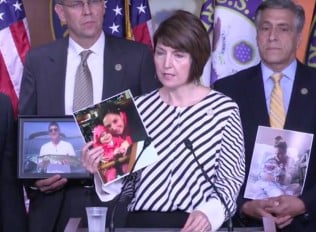
    “When my mother asked for help and there was no place to go, it was one of the most hopeless feelings I ever had. That was the moment that inspired me to do this work.”

    After winning a seat in the Colorado state legislature in 2012, Brittany Pettersen tried her best to focus on her blossoming career. For her own health, that involved limiting her contact with her mother, Stacy, who had been living with active addiction for decades. 

    “As a family we have been preparing for my mom’s death our entire lives,” Pettersen told The LA Times. Stacy’s addiction was so severe that at one point she overdosed 20 times in 16 months. 

    Still, Pettersen’s colleagues in the legislature knew nothing of her mother’s situation, and Pettersen couldn’t bring herself to work on addiction and recovery issues professionally. 

    “I honestly never wanted to touch the issue of opioids because it was too personal,” she said. “I felt like if I can’t help my mom how can I help anyone else?”

    Last August, Stacy overdosed yet again. She was resuscitated in the emergency room of a hospital near Denver and then moved to the intensive care unit. There, Stacy finally asked for help. Yet all her Medicaid would cover was three days of detox. Pettersen was heartbroken and furious. 

    “When my mother asked for help and there was no place to go, it was one of the most hopeless feelings I ever had,” Pettersen said. “That was the moment that inspired me to do this work. My mom’s been using drugs for more than 30 years, she needs more than three days of detox. That’s a joke.”

    Luckily, Pettersen was able to get a court-order that put Stacy in a treatment program for two months involuntarily. Now, Stacy has been sober for seven months, and Pettersen has decided to share her family’s story in order to advocate for better addiction treatment services in Colorado. 

    Pettersen is now working on legislation that would require Medicaid in Colorado to cover impatient and residential drug abuse treatment programs, rather than just covering three days of detox. Although the change would cost Colorado an estimated $34 million, it would bring in about $100 million in federal dollars, Pettersen said, in addition to cutting costs of emergency services. 

    “It takes upfront costs to get out of a crisis,” she said.

    In April, Stacy testified in front of the Colorado state legislature in support of the bill. 

    “Hello, my name is Stacy Pettersen. Some of you know me as Brittany’s mom,” she said. “My last 30 years have been tragic for my family and me, but I am here to tell the unexpected ending—that I am alive and have been sober for over seven months because I finally got the help I needed.”

    Later, she talked about her hopes for recovery, including making amends with her children after decades of neglect. 

    “I’d like to try and repair the damage I’ve done to my children,” Stacy said. “I want to make the most of the time I have left and be the best mom I can be.”

    View the original article at thefix.com

  • Medication-Assisted Treatment Saves Lives But Is Severely Underutilized

    Medication-Assisted Treatment Saves Lives But Is Severely Underutilized

    A new study found that in the year after an overdose less than one-third of patients were prescribed methadone, buprenorphine or naltrexone.

    A new study found that drugs used to reduce opioid use in people with addiction are seriously underutilized.

    The medical journal Annals of Internal Medicine published the study, which followed close to 18,000 adults in Massachusetts. The participants in the study had gone to an emergency room between 2012 and 2014 for a non-fatal drug overdose.

    Although using drug therapy to treat opioid addiction is considered a “gold standard” of treatment, the study found that just 30% received any of the Food and Drug Administration-approved medication-assisted treatments.

    The FDA advises treatment for opioid addiction as a combination of behavioral therapy and the parallel use of one of three drugs. Methadone, buprenorphine, and naltrexone are all drugs approved for assistance in reducing drug cravings in those addicted to opioids.

    Science Daily reported that the study showed a 59% reduction in fatal opioid overdose for those receiving methadone, and a 38% reduction for those receiving buprenorphine over a 12-month period. The drug naltrexone was unable to be evaluated due to a small sample size.

    In the past, naltrexone has been shown to be as effective as methadone and buprenorphine, but there are high dropout rates and a refusal to try the drug in the first place.

    Science Daily reports this could be due to the fact that patients utilizing naltrexone cannot use any opioids for seven to 10 days. Methadone and buprenorphine can be started much sooner.

    As the opioid addiction crisis worsens, health officials are eager to find ways to assist people with addiction in withdrawal and abstinence from the drug. The Fix reported on an FDA-approved device that helps reduce opioid cravings, called “Drug Relief.”

    The study also found that in the year after an overdose, not quite one-third of patients were prescribed one of the three FDA approved drugs—with methadone at 11%, buprenorphine at 17%, and naltrexone at 6%. Five percent received more than one medication.

    According to Science Daily, Dr. Nora Volkow, director of the National Institute on Drug Abuse (NIDA), said, “A great part of the tragedy of this opioid crisis is that, unlike in previous such crises America has seen, we now possess effective treatment strategies that could address it and save many lives, yet tens of thousands of people die each year because they have not received these treatments. Ending the crisis will require changing policies to make these medications more accessible and educating primary care and emergency providers, among others, that opioid addiction is a medical illness that must be treated aggressively with the effective tools that are available.”

    View the original article at thefix.com

  • Brandon Lee Exchanges Barbs With Dad Tommy About Rehab, Sobriety

    Brandon Lee Exchanges Barbs With Dad Tommy About Rehab, Sobriety

    “I thank my dad for paying for my treatment… My clear mind has allowed me to do a lot with this time. So much so that I would like to offer to pay for his treatment.”

    Former Mötley Crüe rocker Tommy Lee and his son Brandon continue to wage a very public and very ugly social media feud with each another, according to Entertainment Tonight.

    But their contentious Instagram exchanges may be over with. On Tuesday, Brandon, 22, revealed that he is celebrating nearly two years of sobriety and said that he is grateful to his father.

    “I thank my Dad for paying for my treatment,” Brandon wrote in an Instagram post. “It’s the best thing he has ever done for me. Today I am almost two years sober. Every day that goes by I feel ever more grateful. My clear mind has allowed me to do a lot with this time. So much so that I would like to offer to pay for his treatment.”

    Brandon’s words come on the heels of the 55-year-old’s lengthy Instagram post on Father’s Day, in which he claimed his kids didn’t appreciate anything.

    “Sometimes I feel like I failed as a father, because my kids don’t know the value of things,” Tommy wrote. “Sometimes it’s really tough to watch your kids grow up without these morals.”

    Brandon shot back with claims that Tommy was an absent father, uploading a since-deleted video of an unconscious Tommy Lee lying on the floor in a t-shirt and underwear.

    It’s not the first time Brandon has aired out his father’s alleged alcoholism, either. Back in March, following an altercation between the two, Brandon wrote on Twitter that he was “devastated” by the effects of his father’s alcoholism.

    “I’ve worked tirelessly organizing an intervention and it’s incredibly upsetting that it never came to fruition. I wanted my dad’s hopeful sobriety and recovery to be a private family matter but, as a result of his accusations on social media, I feel forced to speak out,” he said at the time. “I love my father and just want to see him sober, happy and healthy.”

    Tommy dismissed the claims, saying he was happy and enjoying retirement.

    The Mötley Crüe drummer denied having alcoholism, listing on Instagram everything that he felt his son had taken for granted, ranging from rehab to a costly birthday party: “Rehab for son: $130,000, Party for son’s 21st birthday last year: $40,000,” he wrote. “Medical Bills after son knocks his father unconscious and uses ‘alcoholism’ as scapegoat: $10,000, Son acting like a victim on social media on father’s day: Priceless.”

    According to ET, however, Brandon has grown weary of the public fighting. In fact, on Monday, he posted an extended Instagram post urging his father to “move on” and to keep their matters private.

    “It’s so sad that Tommy feels the need to keep attacking his son despite Brandon’s pleas to quit their very public feud,” a source told ET. “Brandon wants to rise above all of this but keeps getting pulled into it and defending himself. Brandon realizes enough is enough and that’s exactly why he removed the video of his father, but Tommy doesn’t seem to want it to end. He seems to want to keep fighting.”

    View the original article at thefix.com

  • Surgeon General Wary Of Marijuana As An Opioid Alternative

    Surgeon General Wary Of Marijuana As An Opioid Alternative

    Adams said that marijuana’s “potential negative consequences, including promoting cancer,” played a factor in his stance

    Jerome Adams, MD, the 20th Surgeon General of the United States, recently gave a far-ranging interview on opioids and his stance on marijuana as an alternative to their use.

    Adams, speaking at a forum on opioids hosted by the Washington Examiner, stated that concerns over the impact of marijuana on the developing brains of young people and its possible cancer-causing properties, were the impetus for him to reserve a recommendation for its use in pain management. “We know that exposing the developing brain to marijuana can prime the brain to addiction and have potential negative consequences including promoting cancer,” he said.

    But Adams added that he considered additional studies on the subject “important,” and voiced support for the use of the opioid reversal drug naloxone.

    Adams, an anesthesiologist and vice admiral in the U.S. Public Health Service Commissioned Corps, said that his opposition to marijuana for medical purposes was hinged largely on studies that suggested use among young people “can prime the brain for addiction.”

    Adams did not cite specific studies that asserted this notion, but added that marijuana’s “potential negative consequences, including promoting cancer,” was also a factor in his stance. 

    “It would be incredibly disingenuous of me to say that you shouldn’t smoke a cigarette, but it is fine to go out and smoke a joint,” said Adams, who also noted that as Surgeon General, his name is featured in the boxed warning about the health hazards of smoking featured on all cigarette packaging.

    However, Adams did state that he considered it important to examine studies pertaining to marijuana as an alternative to opioids for pain treatment, but again, added, “it is important that we not jump on something that may have more potential consequences down the road.”

    When the interview touched on the subject of opioid abuse and dependency, Adams expressed opinions on a wide array of issues regarding treatment and intervention. He voiced solid support for naloxone, dismissing opponents of the drug as “folks out there who will suggest that naloxone and these interventions are enabling drug use. I say they are enabling recovery,” he stated.

    But he was steadfast in his opposition to legalize safe injection facilities (SIFs), which have gained traction with some city and state governments as a harm reduction-based attempt to reduce chances of overdose among drug users.

    “I think it’s important for everyone to know that I took an oath to uphold the law,” said Adams. “And currently, injection facilities are illegal across the U.S. So, I can not and do not endorse safe facilities.”

    Adams also suggested that a primary line of defense against the opioid crisis could be found in most Americans’ homes.

    “I want everyone to know there’s a killer in our medicine cabinets,” he said. “Leaving pills around or unattended is the same thing as leaving a loaded gun.”

    View the original article at thefix.com

  • Potential Treatment To Prevent Relapse Shows Promise

    Potential Treatment To Prevent Relapse Shows Promise

    Researchers only tested the treatment mechanism out on morphine though they are interested in seeing if it works on other drugs.

    The journal Addiction Biology published research from scientists at the University of Bath which offers a new mechanism for preventing drug-addiction relapses.

    According to Medical Xpress, the Bath scientists collaborated with colleagues from RenaSci and University of Surrey to use an animal model in order to study specific behaviors of rats and mice that sought out morphine after being exposed to environmental cues associated with the drug.

    The scientists then withheld morphine from the rats and mice and then reintroduced the environmental cues. The rodents then lapsed into drug-seeking behaviors. The premise set, the scientists then tested the effect of a brain neurotransmitter blocker called acetylcholine.

    Acetylcholine is crucial to the memory process. Using the blocker on a specific acetylcholine receptor on the rats and mice, the researchers observed that the blocker drug, called methyllycaconitine, or MLA, did not block the rodents from searching for morphine, but did prevent them from ingesting it.

    Moving forward with that information, the researchers honed in on a part of the brain vital for memory, the ventral hippocampus. The venal hippocampus is linked with emotional memory, crucial in the functions of addiction and relapse.

    Relapse is a pervasive reality for those with an addiction to drugs or alcohol. While studies present differing statistics on relapse rates, Science Daily reports that “the majority of addicts return to drug-taking within 12 months of quitting.”

    Triggers for relapse are numerous and range from physical cues such as drug paraphernalia to emotional cues such as a painful setback. The study shows that MLA—at least in animal models—works to prevent relapsing even when exposed to those environmental cues.

    Medical Xpress quotes Professor Sue Wonnacott, from the University of Bath’s Department of Biology & Biochemistry, as saying, “More work needs to be done to uncover the brain mechanisms involved, but it raises the prospect of erasing long-term drug-associated memories that underpin addiction and the propensity to relapse.”

    Dr. Chris Bailey from the University of Bath’s Department of Pharmacy & Pharmacology looked forward to more research which could reveal if MLA blocks relapse for other drug addictions besides morphine.

    He said, “We already have evidence, in the same animal model, that it is effective against the more potent opioid, heroin. If MLA has similar effects against other drugs of abuse such as cocaine it would be even more encouraging.”

    Research is being done on relapse prevention using other methods for other drugs, as well.

    This year, a promising study published in Neuropsychopharmapsychology (also done on animals), found that they were able to reduce relapse rates with a drug used to treat diabetes and obesity, called extendin-4. No adverse reactions were found, and research continues to move forward.

    View the original article at thefix.com

  • House Passes 25 Bills To Aid Fight Against Opioid Crisis

    House Passes 25 Bills To Aid Fight Against Opioid Crisis

    The bills cover a variety of issues ranging from improving sober living homes to disposal of unused medication.

    In an effort to lend legislative support to the fight against the national opioid epidemic, the House of Representatives passed 25 bills that would provide crucial support to both government and public organizations to combat the crisis on a number of fronts.

    The bills, authored by both Democratic and Republican representatives, include measures to expand access to the overdose reversal drug naloxone, develop new forms of pain medication that are non-dependency-forming, and allow medical professionals to view a patient’s medical history for previous substance abuse.

    Greg Walden (R-OR), the Energy and Commerce Committee Chairman, and Michael C. Burger (R-TX), Health Subcommittee Chairman, said in a joint statement that the bills are “real solutions that will change how we respond to this crisis.”

    Among the bills passed are:

    • H.R. 449, the Synthetic Drug Awareness Act of 2018, which will require U.S. Surgeon General Jerome Adams to submit a “comprehensive report to Congress on the public health effects of the rise of synthetic drug use among youth aged 12 to 18,” authored by Reps. Hakeem Jeffries (D-NY) and Chris Collins (D-NY)
    • H.R. 4684, the Ensuring Access to Quality Sober Living Act of 2018, which will authorize the Substance Abuse and Mental Health Services Administration (SAMHSA) to “develop, publish, and disseminate best practices for operating recovery housing that promotes a safe environment for sustained recovery,” authored by Reps. Judy Chu (D-CA), Mimi Walters (R-CA), Gus Bilirakis (R-FL) and Raul Ruiz (D-CA)
    • H.R. 5009, Jessie’s Law, which will require the Department of Health and Human Services to develop the best way to present information about substance use disorder in a consenting patient’s history for medical professionals to make informed decisions about treatment, authored by Reps. Tim Walberg (R-MI) and Debbie Dingell (D-MD)
    • H.R. 5012, the Safe Disposal of Unused Medication Act, which will allow hospice employees to remove and dispose of unused controlled substances after the death of a patient, authored by Reps. Walberg and Dingell
    • H.R. 5327, the Comprehensive Opioid Recovery Centers Act of 2018, which will establish such centers to “dramatically improve the opportunities for individuals to establish and maintain long-term recovery through the use of FDA-approved medications and evidence-based treatment, authored by Health Subcommittee Vice Chairman Brett Guthrie (R-KY) and Ranking Member Gene Green (R-TX)
    • And H.R. 4275, the Empowering Pharmacists in the Fight Against Opioid Abuse Act, which will give pharmacists more information and ability to decline prescriptions for controlled substances which they suspect to be fraudulent or for abuse, authored by Reps. Mark DeSaulnier (D-CA) and Buddy Carter (R-GA).

    Reps. Walden and Burgess noted in their statement that the bills will “make our states and local communities better equipped in the nationwide efforts to stem this tide” of opioid dependency and overdose.

    The House will continue to review related bills on January 14, including H.R. 6069, which will require the Comptroller General to conduct a study on how virtual currencies are used to facilitate goods or services linked to drug or sex trafficking.

    View the original article at thefix.com

  • Girl Admitted To Rehab For Fortnite Addiction

    Girl Admitted To Rehab For Fortnite Addiction

    “This is a serious issue and it is destroying our little girl’s life, and someone needs to step in to ban it before it becomes an epidemic,” said the girl’s mother.

    The Daily Mirror is reporting that a nine-year-old girl in England has allegedly been admitted to rehabilitation for a dependency on the hugely popular survival game Fortnite.

    The story quoted the girl’s mother, who claimed that her daughter would regularly play the game until dawn, which negatively impacted her grades and health. Her dependency eventually grew so severe that she would not interrupt her gameplay to use the bathroom, prompting her parents to take her to a counselor for “intensive” therapy.

    The girl’s story comes on the heels of Culture Minister Matt Hancock declaring video games as “potentially damaging,” a stance that appeared to be supported by the World Health Organization (WHO), which included gaming in a draft of its 2018 list of “disorders due to addictive behavior.”

    According to the Mirror, the girl’s parents noted that her personality began to change two months after she downloaded Fortnite on her Xbox. She reportedly began to lose interest in sports, and her teachers contacted the parents about missing homework and other issues.

    When the couple confronted the girl, she reportedly became “unusually argumentative”—which they chalked up to “hormones.”

    The girl’s mother stated that they discovered small but consistent charges on a credit card—Fortnite is free to download but offers in-app purchases—which caused the girl to lash out and allegedly strike her father when he confronted her.

    For the parents, the final straw came when the father found the girl sitting on a urine-soaked cushion while playing the game. “She was so hooked to the game, she wouldn’t even go to the toilet,” claimed the mother.

    The girl later confessed that she played the game every night, sometimes until dawn. Her parents contacted Steve Pope, an addiction counselor, who began treating her for the reported dependency. Pope told the Sunday People that hers was not an isolated case.

    “Over the last two months, I’ve been contacted by dozens of parents  with children as young as eight showing signs of addiction to Fortnite. I’ve been working in this field for three decades and never seen anything like it—how widespread and potentially damaging this is.”

    The girl’s mother called for government action to intervene in the growing problem. “This is a serious issue and it is destroying our little girl’s life, and someone needs to step in to ban it before it becomes an epidemic,” she told the Mirror.

    A ban against loot boxes—a game feature that allows players to acquire rewards through gameplay or for money—has already taken effect in Belgium, which declared the feature in violation of the country’s gambling legislation.

    In comments to the Daily Telegraph, Culture Minister Hancock expressed concern that “too much screen time could have a damaging impact on our children’s lives,” and specifically cited Fortnite as “aggressive” and potentially “addictive.”

    Hancock—who had previously voiced support for more active gaming business in the UK—also stated that the British government is working with game publishers and developers to promote safety and allay parental concerns.

    Though the WHO has submitted gaming addiction for consideration on its list of addictive disorders (the organization must still approve it for final inclusion), medical professionals are divided on the subject.

    Research from 2017 noted that gaming increases dopamine levels twofold, whereas drugs like heroin or cocaine increase the chemical response by ten times that amount.

    A 2016 study found that addiction to gaming occurred more frequently in individuals who already showed signs of depression or stress, and video games had become their chosen form of avoiding those feelings.

    View the original article at thefix.com

  • Montana Tribes To Feds: Help Our Community Fight Meth Addiction

    Montana Tribes To Feds: Help Our Community Fight Meth Addiction

    Addiction has undermined the infrastructure of the reservation, says one tribal board executive.

    Native American tribes in Montana are asking the federal government to help them confront methamphetamine addiction in their communities, which they say is causing health consequences and putting many children in foster care. 

    Members of the tribal executive board for the Fort Peck Assiniboine and Sioux Tribes met with U.S. Interior Secretary Ryan Zinke on May 20 in Poplar, Montana to ask for assistance in confronting addiction on the Hi-Line reservation, according to The Billings Gazette.

    “We have a massive drug problem in that we have a shortage of law enforcement, not only in our department, but in the county’s department. It’s pretty much overtaken us,” said Fort Peck Tribal Chairman Floyd Azure. “We have 107 kids in foster care right now, and the majority of that is because of drug problems and meth mainly. We had, last count, nine infants born addicted to meth. It’s tough to swallow when you see babies in that situation and they didn’t ask to be in that situation and they’re suffering.”

    Azure pointed out that addiction has undermined the infrastructure of the reservation, since many jobs are left empty for years because no applicants can pass a drug test. 

    Zinke, who oversees the Bureau of Indian Affairs as Interior Secretary, said that one way to break that cycle is to focus on treatment for mothers and grandmothers, who can then focus on raising the next generation so that they are not as heavily impacted by drugs. 

    “The fabric of the tribe is moms and grandmas. And when moms and grandmas are addicted, then the whole fabric of the tribe begins to rip,” Zinke said. “Then kids get transferred over to uncles and different relatives, and that’s a new set of challenges. We think that focusing on moms and grandmas on rehabilitation in a community is a priority, and it won’t solve the problem, but I think it’s the best solution up front.”

    Azure suggested opening a drug treatment center, while another member thought that providing housing for children whose families were impacted by addiction would help address the issue. 

    “To me, I think we need to help our children,” said Marva Chapman-Firemoon, a tribal board member. “That would be my first priority, maybe for us to get a dormitory. And I always say that the federal government took our kids off the reservation, took them to boarding schools and all that, but now we want a boarding school, or a dormitory, either one. I think that would be helpful because it would keep our children safe while we worked on the other ones.”

    View the original article at thefix.com