Tag: alcoholism

  • The End

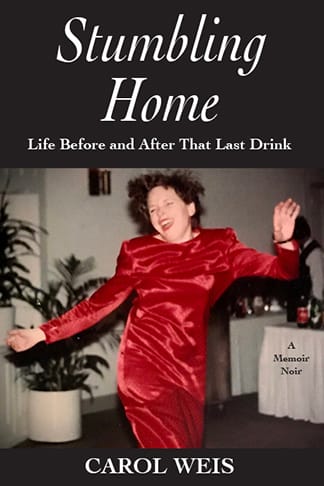
    The End

    With each sip I take, my brain and body scream “you freaking alcoholic,” and I know at that moment I can no longer do this.

    The last drink I have is a flute of champagne.

    It’s New Year’s Eve.

    My husband reserves a special room for us at a nearby hotel. He buys an imperial bottle of Moet, a misplaced purchase for this particular occasion. We’re making a last ditch effort at saving our marriage. A gala’s going on in the ballroom below, where we journey to join the revelers.

    Lights twinkle, streamers hang, and chandeliers glisten.

    I hardly notice.

    The band plays songs that were once my favorites.

    I hardly hear. 

    Hoards of gleeful couples celebrate around us.

    We dance with them, pretending to have a good time.

    But I know the end is creeping near.

    My husband’s been having an affair with a woman half his age. He hasn’t come clean yet, but my gut knows something’s going on. So I bleach my hair a sassier shade of blond, starve myself in hopes of losing the weight I know he hates, turn myself inside out to get him to notice me again.

    But mostly I drink.

    Because of my Catholic upbringing, I have a list of rules I follow.

    My commandments of drinking. I only have three. Ten is too many.

    1) No drinking before 5:00. I watch the clock tick away the minutes. It drives me crazy.

    2) No drinking on Tuesdays or Thursdays. I break this all the time. It’s impossible not to.

    3) No hard liquor. Only wine and beer. I feel safe drinking those.

    Anything else means, well, I’ve become my parents.

    Or even worse, his. I can’t bear to go there.

    One night, when he takes off for a weekend conference, or so he says, I get so stinking drunk after tucking my daughter in for the night, I puke all over our pinewood floor. All over those rich amber boards I spent hours resurfacing with him, splattering my guts out next to our once sexually active and gleaming brass bed.

    Tarnished now from months of disuse.

    The following morning, my five-year-old daughter, with sleep encircling her concerned eyes, stands there staring at me, her bare feet immersed in clumps of yellow. The scrambled eggs I managed to whip up the night before are scattered across our bedroom floor, reeking so bad, I’m certain I’ll start retching again. I look down at the mess I made with little recollection of how it got there, then peer at my daughter, her eyes oozing the compassion of an old soul as she says, “Oh Mommy. Are you sick?” Shame grips every part of my trembling body. Its menacing hands, a vice around my pounding head. I can’t bear to look in her eyes. The fear of not remembering how I’ve gotten here is palpable. Every morsel of its terror is strewn across my barf-laden tongue and I’m certain my daughter knows the secret I’ve kept from myself and others for years.

    You’re an alcoholic. You can’t hide it anymore.

    Every last thread of that warm cloak of denial gets ripped away, and here I am, gazing into the eyes of my five-year old daughter who’s come to yank me out of my misery.

    It takes me two more months to quit.

    Two months of dragging my body, heavy with remorse, out of that tarnished brass bed to send my daughter off to school. Then crawling back into it and staying there, succumbing to the disjointed sleep of depression. Until the bus drops her off hours later, as her little finger, filled with endless kindergarten stories, pokes me awake.

    Each poke like being smacked in the face with my failures as a mother.

    The EndAnd then New Year’s Eve shows up and I dress in a slinky black outfit, a color fitting my descending mood, a dress I buy to win him back. The husband who twelve years before drives hundreds of miles to pursue this wayward woman, wooing me over a dinner I painstakingly prepare, as I allow myself to wonder if he in fact, may be the one. We dine on the roof of the 3rd floor apartment I rent on 23rd and Walnut, in the heart of Philadelphia where I work as a chef, and where I tell him over a bottle of crisp chardonnay that I might be an alcoholic. He laughs, and convinces me I’m not. He knows what alcoholics look like. Growing up with two of them, he assures me I am nothing at all like his parents.

    His mother, a sensuous woman with flaming hair and lips to match, passes out in the car on late afternoons after spending hours carousing with her best friend, a woman he’s grown to despise. Coming home from school, day after day, he finds her slumped on the bench seat of their black Buick sedan, dragging her into the house to make dinner for him and his little brother and sister, watching as she staggers around their kitchen. His father, a noted attorney in his early years, drinks until he can’t see and rarely comes home for supper. He loses his prestigious position in the law firm he fought to get into, and gets half his jaw removed from the mouth cancer he contracts from his unrestrained drinking. He dies at 52, a lonely and miserable man.

    “I know what alcoholics look like,” he says. “You’re not one of them.”

    I grab onto his reassurance and hold it tight.

    And with that we polish off the second bottle of chardonnay, crawl back through the kitchen window and slither onto the black and white checkered tile floor, in a haze of lust and booze, before we creep our way into my tousled and beckoning bed. It takes me another twelve years to hit bottom, to peek into the eyes of the only child I bring into this world, reflecting the shame I’ve carted around most of my life.

    So on New Year’s Eve, we make our way up in the hotel elevator. After crooning Auld Lang Syne with the crowd of other booze-laden partiers still hanging on to the evening’s festivities, as the bitter taste of letting go of something so dear, so close to my heart, seeps into my psyche. A woman who totters next to me still sings the song, with red stilettos dangling from her fingers. Her drunken haze reflects in my eyes as she nearly slides down the elevator wall.

    At that moment, I see myself.

    The realization reluctantly stumbles down the hall with me, knowing that gleaming bottle of Moet waits with open arms in the silver bucket we crammed with ice before leaving the room. Ripping off the foil encasing the lip of the bottle, my husband quickly unfastens the wire cage and pops the cork that hits the ceiling of our fancy room. Surely an omen for what follows. He carefully pours the sparkling wine, usually a favorite of mine, into two leaded flutes huddling atop our nightstand, making sure to divide this liquid gold evenly into the tall, slim goblets that leave rings at night’s end. We lift our glasses and make a toast, to the New Year and to us, though our eyes quickly break the connection, telling a different story.

    As soon as the bubbles hit my lips, from the wine that always evokes such tangible joy and plasters my tongue with memories, I know the gig’s up. It tastes like poison. I force myself to drink more, a distinctly foreign concept, coercing a smile that squirms across my face. I nearly gag as I continue to shove the bubbly liquid down my throat, not wanting to hurt my husband’s feelings, who spent half a week’s pay on this desperate celebration. But with each sip I take, my brain and body scream you freaking alcoholic, and I know at that moment I can no longer do this. When I put down that glass, on this fateful New Year’s Eve, I know I’ll never bring another ounce of liquor to my lips.

    I’m done.

    There’s no turning back.

    And as we tuck ourselves into bed, I keep it to myself. 

    Each kiss that night is loaded with self-loathing and disgust. 

    Those twelve years of knowing squeezes tightly into a fist of shame.

    Little does my husband know, if he climbs on top of me,

    he’ll be making love to death itself. 

    Instead, I turn the other way and cry myself silently to sleep.

    Your days of drinking have finally come to an end.

    And you can’t help but wonder…

    will your marriage follow?


    Excerpted from STUMBLING HOME: Life Before and After That Last Drink by Carol Weis, now available on Amazon.

    View the original article at thefix.com

  • Double or Nothing: The Two Diseases That Want Me Dead

    My depression didn’t entirely cause my alcoholism, but it certainly played a key role.

    I have two diseases that want me dead.

    One is addiction, a progressive, incurable and potentially fatal disease that presents as a physical compulsion and mental obsession. I am addicted to alcohol and, as an alcoholic, can never successfully drink again.

    There is no cure, only ways of arresting the vicious cycle of binge, remorse and repeat that leads to ever-deeper bottoms. My alcoholism took me not only to unemployment but unemployability; not only selfishness but self-destruction; not only deteriorating health and heartache but abject desperation and insanity.

    My other deadly illness is depression. By this, I mean clinical depression – a necessary distinction considering the widespread, ill-informed use of the phrase “I’m depressed” to describe mere sadness. The difference is that sadness is rational while depression decidedly is not. Depression is not an emotion; it is a chemical imbalance that leads to hopelessness and self-loathing and, for that reason, is the leading cause of suicide.

    Mourning a loved one is understandable and altogether appropriate; that is sadness. Climbing to the roof of a six-story building and nearly jumping because I considered myself toxic and worthless, as I did in my mid-20s, is not normal and certainly not healthy; that is depression.

    I will be an alcoholic and depressive for as long as I am alive. But while neither is curable, both are certainly treatable. And increasingly, I’m finding that my progress in recovering from one disease is paying substantial dividends in combatting the other.

    Weller Than Well

    I took my final drink on October 10, 2011, the last in a long line of cheap beer cans littering my car. Wherever I was going, I never got there; instead, I crashed into a taxi and kept driving. Police frown upon that. I spent the night in jail and the next six months sans license. I was in trouble physically, spiritually, and now legally, and I had finally experienced enough pain to seek salvation.

    I got sober through Alcoholics Anonymous. There are several programs effective in arresting addiction; AA just happens to be the most prolific, and embodied the sort of group-centric empathy I needed during the precarious early stages of recovery. There are few things more alienating than being unable to stop doing something that you damn well know is destroying your life. Meeting consistently with others who’ve experienced this tragic uniqueness made me realize I wasn’t alone, and provided a glimmer of something that had long been extinguished: hope.

    Unlike traditional ailments, addiction is largely a “takes one to help one” disease. I needed to know that others had drank like me and gone on to recover by following certain suggestions. AA provided both the road to recovery and, through those that had walked the path before me, the trail guides. 

    It isn’t rocket science. AA and other forms of group-centric recovery thrive on a few basic tenets. I admitted I had a problem, and saw that others had solved that problem by adhering to certain instructions. I accepted that my addiction had been driven by certain personality flaws, and that active addiction had only exacerbated these shortcomings. I made concerted efforts to begin not only amending my actions through face-to-face apologies, but also diminishing the underlying character defects that had fueled my alcoholism.

    In the process, I did not recover so much as reinvent myself. Nine years into my recovery, I am not the same person I was before becoming an alcoholic. I am better than that catastrophically damaged person.

    Like no other illnesses, recovery from addiction can make sufferers weller than well. I am not 2005 Chris – pre-problem drinker Chris. I am Chris 2.0. Stronger, smarter, wiser.

    And that brings me to my other incurable illness.

    So Low I Might Get High

    My battle with depression predates my alcoholism. In fact, the aforementioned rooftop suicidal gesture came before I was a heavy drinker. Like many people with concurrent diseases that impact mental health, one malady helped lead to another. My depression didn’t entirely cause my alcoholism, but it certainly played a key role.

    For me, bouts of depression descend like a dense, befuddling fog. At its worst, I have been struck suddenly dumb, unable to complete coherent sentences or comprehend dialogue. My wife once likened my slow, confused aura to talking with an astronaut on the moon; there was a five-second delay in transmission, and my response was garbled even when it finally arrived.

    My depression is clinical, meaning it is officially diagnosed. I am medicated for it and see a psychiatrist regularly. Upon getting sober, the first cross-disease benefit was that the anti-depressants I took daily were no longer being drowned in a sea of booze. The result of this newfound “as directed” prescription regimen was the depression tamping down from chronic to episodic. For the first time in nearly a decade, there were significant stretches where I was depression-free.

    Still, come the depression did, in random waves that enveloped me out of nowhere, zapping the hopeful vibes and purposeful momentum of early recovery. The sudden shift in mood and motivation was stark, striking and scary. Above all else, I was frightened that an episode of depression would trigger a relapse of alcoholism.

    In recovery from addiction we are taught, for good reason, that sobriety is the most important thing in our lives, because we are patently unable to do anything truly worthwhile without it. If we drink or drug, the blessings of recovery will disappear, and fast.

    Ironically, and perhaps tragicomically, by far the most formidable threat to my sobriety was my depression. One of the diseases trying to kill me was persistently attempting to get its partner in crime back. Inject some hopelessness and self-loathing into a recently sober addict’s tenuous optimism and self-esteem, and there’s a good chance he’ll piss away the best shot he’s ever had at a happy, content existence.

    For months and even years into recovery, my only defense against depression episodes was intentional inactivity. Upon recognizing the syrupy sludge of depression draining my energy – a quicksand that made everything more strenuous and, mentally, seem not worth the extra effort – I would do my best to detach from as much as possible. My routine would dwindle to a questionably effective workday and, if any energy was left, what little exercise I could muster, an attempt to dislodge some depression with some natural dopamine – a stopgap measure that rarely bought more than half an hour of relief.

    Most alarmingly, during bouts of depression I would disconnect from my recovery from alcoholism, often going weeks without attending meetings or reaching out to sober companions. In depressive episodes, the hopeful messages of group-centric recovery rang hollow, and at times even felt offensive. How dare these people be joyous, grateful and free while I was miserable, bitter and stuck.

    Over an extended timeline, though, life had improved dramatically. As a direct result of sobriety and its teachings, my status as a husband and an executive improved drastically. In rapid succession I bought a house, rescued a dog and became a father. My depressive episodes grew fewer and further between.

    But when they came, I was playing a dangerous game. I now had a lot more to lose than my physical sobriety and, despite being rarer, my depressive episodes were almost more intimidating for what they represented: irrational hopelessness amid a life that, when compared to many others, was fortunate and blessed. So when depression descended, I did the only thing that seemed logical: I whittled life down to its barest minimum, and waited the disease out. I put life on pause while the blackness slowly receded to varying shades of gray and, finally, clearheaded lucidity returned.

    Essentially, I became depression’s willing hostage. I didn’t want it to derail me, and didn’t have a healthier means of dealing with it.

    And then suddenly, I did.

    Beating Back a Bully

    For the second time in my life, I have hope against an incurable disease where before there was hopelessness. And though I can’t place into precise words exactly how it happened, I’m hoping my experience can benefit others. For the countless battling mental illness while recovering from addiction, my hope is to give you hope.

    Last fall, just as I was celebrating eight years sober, I hit a wall of depression the likes of which I hadn’t encountered in a while. Like most depressive episodes, its origin was indistinct. It had indeed been a tough year – I had lost a close relative and had an unrelated health scare, among other challenges – but trying to pinpoint depression triggers is generally guesswork.

    Anyway, there it was. A big, fat funk, deeper and darker than I’d experienced in years. But for whatever reason, this time my reaction was different. Always, my routine was to place mental roadblocks in front of my depression. I justified this by telling myself, understandably, that depression’s feelings were irrational and, therefore, not worth confronting.

    This time, for whatever reason, I took a different tack. For the first time, I leaned in rather than leaning out. I stood there and felt the harsh feelings brought on by depression rather than running from them. Whether it was sober muscle memory or simple fed-upedness, I had had enough of cowering in a corner while depression pressed pause on my life.

    The result? It hurt. A lot. But if battling depression is a prize fight, I won by majority decision. And having stood up to my most menacing bully, I fear the inevitable rematch far less.

    This would not have been possible – and is not recommended – earlier in recovery. In hindsight, I’m realizing that at least part of the reason I finally confronted my depression was that, after eight years of recovery work and a vastly improved life, I had placed enough positives around me that depression’s irrational pessimism couldn’t fully penetrate them. I had built up just enough self-esteem through just enough estimable acts that the self-loathing pull of depression couldn’t drag me down as far. I stumbled and wobbled, but I did not fall.

    Depression also prompted a highly unexpected reaction: gratitude. Its wistful sadness made me pause, sigh, even tear up. It made me look around longingly and grasp the blessings that, during my typically time-impoverished existence, I often take for granted. It made me feel guilty for not fully appreciating the positives in my life… but this guilt was laced with vows to cherish life more once depression invariably lifted, as it always did. There’s a difference between hopeless shame and hopeful guilt; the former yields self-hatred, the latter self-improvement.

    In this way, the tools acquired in recovery from addiction were wielded effectively against depression. There is a retail recovery element at play here: Though not as simple as a “buy one get one free” scenario, I’ve learned that fully buying into continued recovery from alcoholism can lead to significant savings on the pain depression can cause me. I have a craziness-combating coupon, and it’s not expiring anytime soon.

    To be clear: This is by no means a “totally solved” happy ending. Confronting my depression meant facing some demons that have been stalking me for decades. You don’t slay dragons that large in one sitting. I have, however, made a promising start. I have discovered that progress against complicated chronic afflictions is indeed possible, and can sometimes flow unexpectedly from sources one wouldn’t expect.

    View the original article at thefix.com

  • No Map or Compass

    The feeling of that first sip changed me into everything I was not: confident, brave, careless, fearless and most importantly, accepted by all the people I looked up to.

    There is nothing unique about my beginnings with alcoholism. The first time I got drunk it was exactly what every other alcoholic says, something inside of me changed. At the ripe age of 13 I took my first sip of alcohol outside the parameters of my own home.

    My parents always had empties lying around when I was a kid, mostly my dad in those years, and I found it to be both dangerous and exhilarating to take the few last bottom drips for myself. This started when I was four. Even then, the rush of being defiant felt warm and cozy — a feeling that later in life would fuel my every move.

    That same feeling hit me harder than ever before when I was sitting on a garage roof with an older boy from the neighborhood. He handed me a 26 of vodka and a one-liter carton of orange juice. Vodka, orange, vodka was how I was trained to drink. Made sense to me. The feeling of that first sip changed me into everything I was not: confident, brave, careless, fearless and most importantly, accepted by all the people I looked up to.

    Everyone drank where I came from and there were never really any parents around. Even if they were around, they didn’t seem to mind that we were stealing liquor and hiding in the basement to drink it or that they were the ones supplying it for us.

    My parents were not this way. My dad was an alcoholic drug addict and my mom was the same except she was a sober dry-drunk who eventually became an addiction counselor. So, I made sure to stay away from there as much as possible. This is how I ended up on that garage roof, eager to fit in and be like everyone else.

    I was not like everyone else. These nights became more frequent and the invites got more regular. The older boys loved getting me and my best friend as drunk as possible and seeing what they could make us do. There wasn’t much we wouldn’t do and there wasn’t much we wouldn’t drink. I had a knack for it. I could drink whatever was given to me and drink twice as much as I was expected to hold. The drunker I got, the better I felt — a dangerous cycle that my grandma, a recovered alcoholic, always warned me about. As a matter of fact, all my family warned me about the addiction gene we had but I always thought I was better than that. I would never end up a drunk.

    I kept this attitude for the next 13 years of my life. I had sobered up a few times, or tried to at least, but I always ended up coming back to the warm bath of alcohol and sinking right in.

    I started playing in bands in basements and garages when I was 16. We would play shows at community centers around Saskatoon and we would spend hours jamming, smoking weed and sipping Jägermeister. This is what all the greats did, so why would we do it any different? As I became bar age (or old enough to pass for bar age), I wanted to start playing shows to an older, more sophisticated crowd. The bar owners loved a guy that would play for free; as long as people were there drinking they didn’t mind.

    I remember the first time I got offered an “exposure” show to open for a touring band on a Thursday night on Broadway in Saskatoon. The offer was one set, 20 minutes, 50% off food and drink tickets. Drink Tickets! They were really going to pay me with booze! I had never heard of such an amazingly lavish thing. My band and I, 18 years old, playing on Broadway and being fed alcohol by the establishment. I truly felt like I was making it right then and there.

    But as all good things do, the band came to an end when my partner and I decided to pack up and move to my hometown of Calgary, Alberta. She got accepted to a school there and I could pursue my music dreams in a much bigger market.

    When I returned home all of my old drinking buddies were there right where I left them and our first night in Calgary was spent in a blackout at a karaoke bar in the same neighborhood I grew up in. It felt so good to be home. Things were not easy out in Calgary, though. I had more on my plate at 22 than anyone else I knew. I spent my days giving all of my time to others and by the time evening hit I just needed a beer. A beer would usually turn into a few more, followed by a few shots, some weed, more beers until the bar was closed and I ended up at someone’s house drinking until the booze ran out or I passed out, whichever came first.

    For a few years this was an everyday occurrence: a perpetual cycle of hangovers and morning bongs rips to get me through until it was time for a drink. The worst part is I was happy with this. Sure, I would get a little too rowdy sometimes and get into a fight with a stranger. And I mean, sure, on occasion I would end up needing to be removed by the police from the place I was at. And, okay, I once in a while got a little too drunk and liked to beat up my friends. Isn’t that what everyone did?

    2015 was the worst year of my life. My grandmother, after many years of battling heart and liver problems, passed away on April 30th. She was my rock, the only safe place I knew. Before she passed, she told me that I needed to stop drinking. She told me that the way I drank worried her and she wanted me to have a good life. She sobered up for me so I figured I could do the same for her.

    I could not. My drunks became sad, tear-filled nights that I barely remember. I don’t remember much from that year at all. November 14, 2015 is when my drinking took a hard turn for the worse. I was playing a show the night before at a bar in Calgary. Before I went on I called my dad which was a ritual we had established since I left the family acreage back in Saskatoon and he and mom split. He didn’t answer which I didn’t find to be that unusual and I figured he would call me back when he saw the missed call.

    My dad in a drunken state of desperation and sadness ended his life that night alone in our family home. I could not handle the pain of losing the two of them in the same year. It was like I was walking through the woods with no map or compass. I quit working to stay home and drink and my drunks were angry and violent. I would lash out one moment and the next be pouring shots for me and all my friends.

    The next few years are really all a big blur that I can’t seem to figure out. I was suppressing every emotion that would come up and hiding behind an image I had created with my music. No one knew what was going on inside of me unless I was in a manic, drunken state. I seemed to find a new rock bottom every few months but never seemed to hit my head hard enough.

    I am happy to say that as I write this down I have successfully stayed sober for two years’ worth of one day at a times, I have two beautiful daughters that I am actually able to be there for, and my partner and I have a stronger relationship than ever before. Life has not gotten easier since I put down the bottle, but it has gotten a whole lot better.


    Forrest Eaglespeaker’s band, The North Sound, has just released their second full-length roots-rock album, As The Stars Explode. The album is an autobiography written from places of pain, realization, and healing. It weaves together themes of addiction and sobriety, mental health, and intergenerational trauma. Some of the songs were written while Eaglespeaker was in the chaos of active alcohol addiction (such as “My Happiness”), some in the more grounded and “new” life of sobriety. “Better Days” was the first song Forrest wrote in sobriety and was released as a single during the beginning of the COVID-19 pandemic.

    Listen on Spotify. Watch the video for Heavy Heart.

    View the original article at thefix.com

  • A Temporary Suicide

    How do you square that madness of loving what alcohol does to you for a few hours while suspecting that it’s killing you?

    “Men intoxicated are sometimes stunned into sobriety.”
    – Lord Mansfield (1769)


    Today marks five years since I had my last drink. Or maybe yesterday marks that anniversary; I’m not sure. It was that kind of last drink. The kind of last drink that ends with the memory of concrete coming up to meet your head like a pillow, of red and blue lights reflected off the early morning pavement on the bridge near your house, the only sound cricket buzz in the dewy August hours before dawn. The kind of last drink that isn’t necessarily so different from the drink before it, but made only truly exemplary by the fact that there was never a drink after it (at least so far, God willing). My sobriety – as a choice, an identity, a life-raft – is something that those closest to me are aware of, and certainly any reader of my essays will note references to having quit drinking, especially if they’re similarly afflicted and are able to discern the liquor-soaked bread-crumbs that I sprinkle throughout my prose. But I’ve consciously avoided personalizing sobriety too much, out of fear of being a recovery writer, or of having to speak on behalf of a shockingly misunderstood group of people (there is cowardice in that position). Mostly, however, my relative silence is because we tribe of reformed dipsomaniacs are a superstitious lot, and if anything, that’s what keeps me from emphatically declaring my sobriety as such.

    There are, for sure, certain concerns about propriety that have a tendency to gag these kinds of confessions – I’ve pissed in enough alleyways in three continents that you’d think the having done it would embarrass me more than the declaring of it, but here we are. There’s also, and this took some time to evolve, issues of humility. When I put together strings of sober time in the past, and over a decade and a half I tried to quit drinking thirteen times, with the longest tenure a mere five months, I was loudly and performatively on the wagon. In my experience that’s the sort of sobriety that serves the role of being antechamber to relapse, a pantomime of recovery posited around the sexy question of “Will he or won’t he drink again?” I remember sitting in bars during this time period – I still sat the bar drinking Diet Coke during that stretch – and having the bartender scatter half-empty scotch tumblers filled with iced tea around the bar so that when friends arrive, they’d think I’d started drinking again. Get it?! So, this time around I wanted to avoid the practical jokes, since in the back of my mind I’d already decided that the next visit to the bar wouldn’t necessarily have ice tea in those glasses. Which is only tangentially related to my code of relative silence for the last half-decade – I was scared that the declaration would negate itself, and I’d find myself passed out on my back on that sidewalk again. So, at the risk of challenging those forces that control that wheel of fate, let me introduce myself – my name is Ed and I’m an alcoholic.

    Here’s the thing though: for many addiction specialists, five years marks long-term recovery. Very few who try get here, and not everyone who does stays here, but by some strange combination of luck, contemplation, and white knuckles I’ve strung together one day after another and if not exactly proud (well, a little) I’m more than anything amazed. Because had you asked me even a weekend before my last drink, when I purchased an old-fashioned cocktail shaker for myself as a gift marking the start of a new semester, if I could have conceived of a month without drinking, much less five years, it would have been unimaginable. During a previous attempt to dry out I contemplated the idea of having a designated wet weekend each month when I’d lock myself away without computer or cell phone and get shit-faced black out drunk because the idea of a life without alcohol seemed so impossible, and now I’m the sort of person who wakes up every day at dawn (and not on the sidewalk this time). I can count the days before my sober anniversary each year like part of the liturgical calendar, often made possible by social media’s annoying tic of reminding you of every bad decision you’ve ever committed, so that I can chart the last time I drank with this or that drinking buddy, the last time I went to the bar after work, the last time I drank on the patio of my apartment complex. What always strikes me is how that morning of the last drink, when I got up, I was looking forward, as I always did, to go to the bar. My quitting, thank God, was never planned. Had it been I doubt it would have taken.

    If you detect a hint of nostalgia like the tannins in a glass of chianti, you’re not amiss. They call it euphoric recall, the way a brain the consistency of Swiss cheese can edit out all of the bad things, the embarrassments, the traumas, the pain, but only remember the conviviality, the solidarity, the ecstasy. The way in which you recall the electric hum in the skull when sitting like a god with your broken shoes on the brass rail, staring at a neon sign and feeling infinite; but not the pile of vomit on your chest, surprised that you haven’t choked to death. The memory of all of the friends you made at dives around the world, but not that nothing either of you said was worth remembering. The feeling of instant, almost supernatural, relief the moment a lager, a shiraz, a scotch hits your tongue, but not the shaking hand that brought the glass to your lips. The sense that accompanies drunkenness which holds that within the next fifteen minutes the most amazing things were going to happen, that limitless potential always was about to occur, but not that it never did. Sobriety becomes possible when you begin to remember the bad that outweighed the good – when you continually force yourself to understand that.

    Now some people may wonder why you don’t just avoid all of that stuff, why you can’t just moderate. As the dark joke goes, if I could moderate my drinking, I’d get drunk every day. I used to make a big deal about how angry I was that I couldn’t just have a drink or two, that there was such privilege in being able to wax poetic about the vagaries of hopiness levels in India Pale Ales without publicly shitting yourself, of being able to savor the peatiness in a single malt Laphroaig without stumbling back home unremembered to yourself and the world, but I never really wanted those things. Anger was performative for the counterfeit stints in sobriety, when the real thing happens and you know it’s dryness or death, then different emotions emerge. And the truth is that because I have no interest in drinking that way, in moderation, I begrudge nobody who wants to do it, who can do it. I suspect that moderate drinkers have never concocted baroque rules of order around drinking based in how much of which thing you can drink in what location for what amount of time (which you still break anyhow). I suspect that moderate drinkers never fear that the moment alcohol hits their lips that they’re ceding part of their sovereignty, not the part of their soul which keeps them from stumbling out into traffic so much as the part of their soul that cares. I suspect that moderate drinkers always know for sure that, barring the regular kind of calamity, they’re certain to come home safely at the end of the evening (probably before the nightly news).

    I’m not angry – at all – over the existence of the moderate drinker. What I am is confused. I don’t understand that aspect of them, I can’t grasp their reality. Once you started drinking how could you not want to keep doing it? How could you not pursue oblivion or extinction unto joy, or at least the pretending of it? For me, the thought of half a pint is anathema, the idea of not sucking the ice cubes clean of whisky is confusing. This is not to say that I was completely incapable of putting the glass down, of leaving the bar at four in the afternoon and being able to twitchily abstain until dinner drinks. This is not to say that responsibility, or duty, or love couldn’t compel me to stave off a binge, nor is it to say that all drinks (or, honestly, even most) would result in a mad spree of boozing. You don’t necessarily pour the bottle down your throat every time. What it says is that once the cork comes out, there’s always a sense of being not-quite-right unless you’re chasing your chaser with a chaser, playing the drinking game of taking a shot for every time you take a shot. You can force yourself to not take that next drink (except of course for those times when you can’t), but you’re forever itchy, at least until the djinn is out of your system.

    There has always been a sense, as I think Carl Jung (or somebody similarly evocative) put it, that alcoholism is a physical solution to a spiritual problem. While I’m loathe to romance the affliction that much, for it simply exonerates too many assholes, I doubt that anyone who is an addict doesn’t at least share in some sense of incompleteness, that liquor plugs a hole in the spirit which of course comes rushing out all over the floor. For most people, I’ve heard, alcohol is something that accompanies food, or celebration, or unwinding, that occasionally there’s a bit of giddiness at having imbibed a bit too much – that some of these folks even have stories about that time, or even a dozen, when they had a bit too much in college, or at a birthday party, or a wedding. Alcoholics have a different relationship to liquor, an understanding of why spirits are called such. “I had found the elixir of life,” Alcoholics Anonymous founder Bill W. wrote in recounting the first time he got high from some Bronx Cocktails served at a party in 1916. Later, in the “Big Book,” which constitutes the scripture of AA, he writes that “Gradually things got worse.” Same as it ever was.

    Every drunk is in an abusive relationship with this thing they think they love, and which they dangerously hope loves them back. A lot of fantasizing, mythologizing, and philosophizing can surround justifications of drunkenness (or then again, not); a lot of denial, and the assumption that you have any agency in this thing tend to be even more universal to the disease. But the result is all the same. I’ve heard a lot of people in recovery say that they hated drinking, but that was never exactly my experience. I hated what it resulted in, the ruined friendships, the uncertainty, the physical ailments, the strange fear at 25 that 30 might not come, the knowledge at 30 that 35 definitely won’t. But here’s what I loved – the fraternity of talking, talking, talking (even if it’s nonsense), the courage to belt out the lyrics to “Thunder Road” at inopportune moments, feeling the almost mystical materiality of the bar’s surface (every warp and swirl imbued with infinity), the sense of adventure and limitlessness, even while doing nothing. Here’s what I hated – shaking, shaking, shaking (never nonsense), being surprised that you’ve woken up again, laying hungover in bed and pretending to be a corpse, the delirium tremens for when you try and dry up a bit and you see those flickers of blackness in the corner of your eye, checking your shoes for evidence of what route took you home, checking your email outbox to make sure you didn’t send the wrong message to the wrong person (or the wrong message to the right one), the shame at having gone out for one or two and having imbibed twenty. The dangerous situations, the emergency rooms, the police. How do you square that madness of loving what it does to you for a few hours while suspecting that it’s killing you? I’ll have another round. The best description I know comes from my fellow Pittsburgher Brian Broome in an essay from The Root: “I miss getting drunk, but I don’t miss being a drunk.”

    I’ve put that into my arsenal of magic incantations which I carry around in my skull and as of yet have prevented me from picking up a drink in 1,827 days: “Play the tape forward,” “I’m sick and tired of being sick and tired,” “If drinking caused you problems then you have a drinking problem,” “A pickle can never become a cucumber,” “One drink is too many because all of them is never enough,” “Lord grant me the serenity…” If recovery is built out of anything, then it’s built with the bricks of cliché and the mortar of triteness. That’s not a bug, it’s the feature, and it’s why it works. I’m obviously not the first person to notice this; David Foster Wallace says as much in Infinite Jest when he observes that the “vapider the AA cliché, the sharper the canniness of the real truth it covers.” Recovery slogans are like axioms from some ancient wisdom gospel, they’re a jingle-jangly hard-boiled poetry written in a noir vernacular, and as dumb as some of them are the knowledge that “Nobody wakes up wishing that they’d drunk more” has miraculously kept me from picking up that first bottle.

    When I drank, and had that resentment of recovery language that only an alcoholic with a bit too much self-knowledge can have; those sayings seemed like the bars of a cage to me. Now I know that they’re the ribs in the belly of a life-boat. That’s not to say that I’m endorsing any program of recovery, or admitting to being in any myself, other than acknowledging that I’ve read wide and long on the subject, and I try to approach it with some humility, take what works for me and leave the rest. What I’ve found is that intentionality is crucial, for it’s the cavalier, the laid-back, the lackadaisical that caused me such grief. Again, I tried to “quit” thirteen times before it seemed to stick a little; I tried to moderate almost every time I drank (except when I didn’t try). There is a tendency towards amnesia, a valorization of the good times, and the bracketing out of the awfulness was a wet brain’s survival strategy. Everything was an exception, an extenuating circumstance, an anomaly. The obviousness that drinking was at the core of virtually every awful, dangerous, or depressing thing in my life since I started drinking at the age of 17 was easily overlooked in favor of the idea of a beer (beers) at a ballgame or a shot (shots) after last call.

    Because the idea of choice is so complicated in alcoholism, I’ve long interrogated at what point the desire to drink became a compulsion. In every evening there is the drink that saturates you, the hinge point when you’re already strategizing which bar you’ll grab another six pack from on your perambulation home from the first bar (the third one, maybe), but I wonder if there is one cosmic drink in life that shifts you from the weekend warrior into the sort of person that people wouldn’t be surprised to hear had choked to death on their own puke. Was it the first Bloody Mary that I had after that time an ex-girlfriend passed out face down on a Pittsburgh sidewalk, a crowd of our best friends whom we’d met for the first time just that night standing around a half-remembered house somewhere in Shadyside, an ambulance spiriting us both through the summer night? Perhaps it was the Yuengling I had a few days after I nearly broke my ankle on a slick of Pennsylvania ice, forced to walk on crutches for two weeks because I chose to protect the six pack that I was walking home with rather than bracing my own fall. Or maybe it was that Guinness that I drank in about a minute in a Greenwich Village pub, after nearly five months of sobriety, convinced that I was all better, even though that summer a liver sonogram had indicated that there were fatty deposits surrounding that beleaguered organ like a ring of gristle around a raw steak. You’d think that the indignity of sitting in that waiting room, in the presence of joyful expectant mothers and framed pictures of new born infants on the office wall, to learn that my dangerously high liver enzyme levels were a sign of exactly what my doctor was worried about, would have staved the need to drink. And it did, for a bit, for around twenty weeks, until a New York bar convinced me otherwise. I drank for three more years after that.

     Poet Denise Duhamel writes about the sort of spirit that animates that madness in her appropriately named lyric “The Bottom.” She recounts a drunken late-night stumble to a liquor store for (another) handle of Smirnoff, when two men in a truck try and abduct her off the street. The narrator is able to dodge the men, running up the hill (and away from El Prado Spirits), suffering at worst some trash thrown at her and screamed obscenities. When she makes it to the store, the clerk at the counter asks if she is alright, and the narrator lies, since the possibility of having to file a police report will only stall the entrance of ethanol into her blood stream. “I stopped drinking,” Duhamel writes, “when I realized I was fighting/for the vodka at the bottom of the hill/more than I was fighting against the terrible/things that could have happened to me.”

    That’s the most succinct and truthful encapsulation of the disease which I’ve ever read. There is finally that very unsweet spot of fearing that you can’t live without alcohol while also knowing that it will eventually kill you. Sobriety is the strange inverse of drunkenness, and as every person in recovery is haunted by the ever-present threat of relapse, so I remember that while an active drunk I always wondered what was going to be the drink that finally brought it all to a close (in any sense of that phrasing). My last summer of active drinking certainly felt more extreme to me – I’d seen my father die of cancer only a few months before I quit, I was mired into the sort of depression that doesn’t even allow its own philosophizing (or indeed recognizes its own face in the mirror, mistaking falling for flying) and even the general mood of the country seemed to shift towards something darker (that same something that we’re all still in). In that apocalyptic summer of receipts found in my pockets from bars that I didn’t remember having gone to, and of scraps and scabs from falls barely considered, there was a sense of rushing towards something – and so I was. As Duhamel writes, “I stopped drinking even before I had that last sip, /as I ran back up the hill squeezing a bottle by its neck.”

    Rock bottoms are a personal thing, but the stories, in an archetypal way, are strangely similar. That’s one of the things you learn to appreciate in recovery; a respect for narrative’s elemental basicness. In various Midtown church basements I’ve heard stories of last drinks that were precipitated by things as dramatic as manslaughter and DUIs, to one Upper East Side socialite who admitted that she had to quit after she forgot to feed her beloved Yorkshire Terrier (I understand this, innately). The nadir of your drinking is, as they say, when you quit digging, and there’s a final freedom in that defeat. What distinguished that final drink, the one that I can’t remember (it was either a G&T or a beer, based on that summer)? Certainly, it was the consequences, the being shepherded to the hospital. But worse things had happened to me. When I called a friend to pick me up at the ER an hour or so before dawn, I can still remember keying into my building and thinking about what a great bar story this would make for all of my drinking buddies next time we went out.

    The morning was like a thousand other ones; my mouth dry and my head pounding, I would lay in bed and cinematically pretend to be dead, mildly surprised to still be alive. I was in the early stages of dating a woman who would become my wife, and I knew that continuing in this way would kill the relationship; I had been languishing for the better part of a decade in a doctoral program, and I knew that continuing in this way would kill my career; I had been harboring moleskin fantasies of being a writer, and I knew that continuing in this way would keep those dreams forever embryonic. Because the drinking itself was worse than normal, I called a friend of mine from back home who was never one for knocking them back, and I recounted the usual litany. How my intestines were embroiled and my hands shaky; my memory incomplete, and my guilt unthinkable. Of how I was greeted every hungover morning by “The Fear,” that omnipresent specter of shame, fear, and uncertainty. This friend (he knows who he is) was used to these phone calls, having fielded dozens of them over the decades, and he was always uniformly supportive and sweet, listening with concern and seemingly devoid of judgment. On this day he said something that if he’d mentioned it before, had never stuck – “You know, you never actually have to feel this way again.”

    I’m not big on Road to Damascus moments, but that simple observation clarified, explained, and encompassed everything. I haven’t had a drink since. When you’re an active alcoholic, you always expect that something great is going to happen in the next 15 minutes, but that that moment is forever deferred. It’s also true that sobriety delivers what drunkenness promises. There are things bigger than me, more important than me. My relationship with my wife (who has made this possible); now my relationship to my son. Sobriety isn’t always easy, but it’s always simple. My life is such that I could have scarcely imagined it that shaky day in 2015. My life isn’t just different because of sobriety – it’s possible because of it. There are certain conventions to this form, what people in recovery sometimes lovingly (or not so lovingly) call the drunkalogue. It’s a venerable genre, the redemption narrative, the recounting of how it was, what happened, and how you changed. Your experience, strength, and hope, etc. The didacticism is precisely the point, but the broad interchangeability of the form is also crucial. Because in all the ways that I’m different, I share something with all of these other people, with the people who got clean, but crucially also with the ones who didn’t. It’s that ultimately this beast inside you is so thirsty, that soon it’ll devour you as well. For those of you reading – the drunks, the junkies, the addicts, the alcoholics, the dipsos, the losers, the hopeless cases; to the ones who can’t quite remember coming home or who need an eye opener, to the ones who’ve alienated everyone they know and most of the people that they don’t, to the ones the ones who scarcely know a sober night, to the ones who need a drink to turn the volume down and are scared of putting the glass on the counter forever – I understand you. What you need to know is that you never need to feel that way again. Be well.

    View the original article at thefix.com

  • 8 Legendary Celebrities Who Died from Alcoholism

    8 Legendary Celebrities Who Died from Alcoholism

    For these and so many icons whose careers were cut short, fame, talent, beauty, and wealth were not effective armor against the onslaught of alcohol use disorder.

    The disease of alcoholism does not discriminate. If you were born with a certain genetic makeup, if there is a history of alcoholism in your family, if you experience worsening consequences of your drinking and still can’t stop…you might be one of us. And alcohol use disorder is a progressive disease that only gets worse over time if left untreated.

    Since alcoholism is also a self-diagnosed and self-treated disease, you have to be willing to do the work necessary to recover. Regardless of external circumstances — wealth, status, prestige, talent, access to the best resources — if you are not willing to help yourself, nobody can. As evidence of this reality, here are eight legendary celebrities who tragically died from alcohol use disorder or alcohol-related causes.

    1) Richard Burton (1925-1984)

    8 Legendary Celebrities Who Died from Alcoholism

    The recipient of Golden Globes and Tony Awards for Best Actor, Richard Burton was one of the biggest celebrities of the second half of the 20th century. He was also known for his love affair with Elizabeth Taylor. Together, they starred as Mark Anthony and Cleopatra in the mega-bomb Cleopatra. At the time it was the most expensive film ever made, and its failure almost bankrupted 20th Century Fox. After playing Hamlet in a remarkable Broadway production in 1964, critics raved that Richard Burton was “the natural successor to Olivier.” Afterward, the expectations were overwhelming. Is that what drove him to embrace the bottle?

    According to biographer Robert Sellers, “At the height of his boozing in the mid-70s, he was knocking back three to four bottles of hard liquor a day.” Even when drinking, Burton had an impressive career. From Look Back In Anger and Becket to Equus and Who’s Afraid Of Virginia Woolf?, he gave stirring performances time and time again. Still, his fans and critics felt there could have been so much more if not for the drinking.

    In his forties, Burton suffered from cirrhosis of the liver. His alcohol intake bloated his kidneys to abnormal proportions. During an operation to relieve back pain in the early 1980s, doctors discovered that his spine was covered with crystallized alcohol. Ignoring the pleas of his friends and family, Burton’s health issues continued to throttle him until his premature death at the age of 58 from a brain hemorrhage. Although alcoholism was not listed as a cause of death, the sharp downward trajectory of his health at such a young age is considered by doctors to be a direct result of his excessive drinking.

    2) Truman Capote (1924-1984)

    8 Legendary Celebrities Who Died from Alcoholism

    As the writer of the novella Breakfast at Tiffany’s and the true-crime novel In Cold Blood, Truman Capote proved that a writer could become an internationally-known celebrity. Published in 1966 by Random House, In Cold Blood broke new ground in non-fiction, and served as a beacon for the burgeoning and popular true crime genre. Speaking in 1974 at the San Francisco International Film Festival, Truman Capote described his extensive research for the book: “I spent four years on and off in that part of Western Kansas there during the research for that book and then the film. What was it like? It was very lonely. And difficult.” To console himself, Truman Capote drank and drank often, alone in Midwestern hotel bars.

    Returning to New York after publication, Capote became a celebrity, partying day in and day out with the richest wives of New York City’s power elite. He bragged about the brilliance of his forthcoming novel, Answered Prayers. But Capote never published another significant work in his lifetime. Instead, he drank and popped prescription pills. When an individual chapter from the now legendary unfinished book was published in Esquire magazine in 1975, it proved to be social suicide. Truman Capote was ostracized from high society for revealing the dirty laundry of the rich.

    Afterward, according to Vanity Fair, “Truman appeared in an inebriated state on … a local morning talk show in New York. Taking note of Truman’s incoherence during the interview … the host asked, ‘What’s going to happen unless you lick this problem of drugs and alcohol?’ Truman, through the fog of his own misery, replied, ‘The obvious answer is that eventually, I’ll kill myself.’” Fulfilling this prophecy, he spent his final years mostly alone in his New York high-rise apartment, drinking himself into sad oblivion. On August 25, 1984, Truman Capote died in Bel Air, Los Angeles, while visiting one of his last loyal friends. According to the Coroner’s Report, the cause of death was “liver disease complicated by phlebitis and multiple drug intoxication.”

    3) F. Scott Fitzgerald (1896-1940)

    8 Legendary Celebrities Who Died from Alcoholism

    Like Ernest Hemingway, F.Scott Fitzgerald was a respected author and member of the “Lost Generation” of the 1920s. From The Great Gatsby to Tender Is The Night, Fitzgerald’s novels revealed the luxurious decadence of the Jazz Age. At the same time, he was one of the biggest drinkers during a notorious period of massive consumption. Later, during Prohibition, Fitzgerald’s extraordinarily heavy alcohol intake became the stuff of dark lore.

    Fitzgerald and his wife Zelda pushed the limits, leading to extreme health problems that he denied were caused by alcohol. According to Nancy Milford, Zelda’s biographer, Fitzgerald’s claim of contracting tuberculosis was a beard to cover health problems caused by excessive drinking. After Zelda was institutionalized for schizophrenia, his drinking worsened. Fitzgerald’s deterioration was finally publicly revealed in “The Other Side of Paradise, Scott Fitzgerald, 40, Engulfed in Despair,” an article published by the New York Post in 1936 that exposed his excesses and their devastating toll.

    Between 1933 and 1937, Scott was hospitalized for alcoholism on eight separate occasions. During this period, he also had two heart attacks. However, he would not stop drinking and even boasted of reducing his gin consumption by consuming 37 beers a day. At 44 years old, F. Scott Fitzgerald dropped dead of another massive heart attack brought on by chronic alcoholism. It’s not surprising that he’s known for saying, “First you take a drink, then the drink takes a drink, then the drink takes you.”

    4) Errol Flynn (1909-1959)

    8 Legendary Celebrities Who Died from Alcoholism

    The greatest action hero of his time with starring roles in Captain Blood (1935) and The Adventure of Robin Hood (1938), Errol Flynn was an Australian actor who achieved worldwide fame for his ability to play the dashingly handsome, romantic swashbuckler. In Hollywood, he had a reputation for womanizing, hard-drinking, and chain-smoking. A regular attendee of lavish parties at Hearst Castle, Errol Flynn once became so drunk that the newspaper baron had him escorted off the property. Flynn later shared a bachelor pad with actor David Niven in Malibu. The party pad became so notorious for extreme alcohol consumption that it was nicknamed “Cirrhosis-by-the-Sea.”

    Flynn would take weekend trips on his private yacht, hosting parties fueled by cocaine, alcohol, and sexual misadventures. In Errol Flynn: The Life and Career (McFarland, 2004), biographer Thomas McNulty describes Errol Flynn and Fidel Castro meeting in late 1958 and drinking hard together. The encounter inspired Boyd Anderson’s novel Errol, Fidel, and the Cuban Rebel Girls (University of Queensland Press 2010). In The Last of Robin Hood (Samuel Goldwyn Films, 2013), an independent movie about Flynn’s final days, the aging actor’s sexual misadventures with a 17-year-old girl and the resulting scandal are highlighted. His alcoholism led to a spectacular failure in judgment that nearly sent him to prison.

    In his thirties, Errol Flynn collapsed in an elevator and nearly died. A steady diet of alcohol had ravaged his heart, lungs, liver, and kidneys. Still, he continued drinking, injecting vodka into oranges when he was forbidden to drink on set. When he died of a heart attack at the age of 50, the medics who treated him told reporters they thought they were trying to save an eighty-year-old man.

    5) Billie Holiday (1915-1959)

    8 Legendary Celebrities Who Died from Alcoholism

    Born in Philadelphia to a teenage mother, Billie Holiday chose her eponymous stage name as a tribute to movie star Billie Dove and her father, jazz guitarist Clarence Holiday. Holiday suffered significant trauma as a child and later turned to prostitution, which led to an arrest for solicitation. After being released from prison, she landed her first paid performing gig, and her career took off. Unfortunately, she couldn’t stop drinking and drugging.

    She and Lester Young, the saxophone legend who bestowed upon her the nickname Lady Day, toured Europe with Count Basie’s Orchestra to great acclaim. Coming back to the United States, she recorded the most haunting song in her repertoire. Based on a poem written by Abel Meeropol, a Jewish high school teacher in the Bronx sickened by a recent lynching of two black men, “Strange Fruit” is one of the most moving yet disturbing songs in American history. According to Frank Sinatra, “With few exceptions, every major pop singer in the US during her generation has been touched in some way by her genius. It is Billie Holiday who was, and still remains, the greatest single musical influence on me.”

    Already a heavy drinker, Billie Holiday was introduced to heroin by her first husband, trombonist Jimmy Monroe. She was arrested for drug possession in 1947 and ended up serving ten months in federal prison. Afterward, the constant drinking made her voice rougher and more vulnerable. Her exhaustion with life was palpable. By 1959, Lady Day has been diagnosed with cirrhosis. In failing health, she was admitted to a New York hospital. Days later, Billie Holiday died at 44 of chronic alcoholism.

    6) Jack Kerouac (1922 – 1969)

    8 Legendary Celebrities Who Died from Alcoholism

    With Allen Ginsberg and William S. Burroughs, Jack Kerouac is known for being the progenitor of “The Beat Generation” in the 1950s, an American literary movement that continues to exert a strong influence on each new generation. From On the Road (1957), his most iconic novel, and The Dharma Bums (1958) to Big Sur (1962) and Desolation Angels (1965), Jack Kerouac’s work is autobiographical with the names of the characters changed and the events intensified. All of these novels read like they were soaked in alcohol. Jack Kerouac drank as he typed, furiously writing first drafts that were rarely revised.

    When he moved with his mother in 1958 to Northport, a Long Island harbor town in New York, Jack Kerouac’s life revolved around alcohol. “The locals remember him mainly as a broke barfly who padded about barefoot or in bedroom slippers,” Corey Kilgannon wrote in The New York Times. “Emotionally fragile and beset by alcoholism, not to mention a complicated relationship with his mother, Kerouac was declining physically, disillusioned by his celebrity and growing apart from his radical friends and artistic colleagues.” In his last years, Jack Kerouac became a recluse, and his closest friend was a cheap half-pint of Schenley’s whiskey.

    On the morning of October 20, 1969, in St. Petersburg, Florida, Jack Kerouac put down the breakfast of champions, stumbled into the bathroom, and began vomiting blood an esophageal hemorrhage. After several transfusions in an attempt to make up for the loss of blood, doctors subsequently attempted surgery. However, a damaged liver prevented his blood from clotting. His cause of death was an internal hemorrhage caused by cirrhosis.

    7) Mickey Mantle (1931 – 1995)

    8 Legendary Celebrities Who Died from Alcoholism

    A Hall of Fame professional baseball player for the New York Yankees, Mickey Mantle is considered to be the greatest switch-hitter in the history of the game. He is also remembered as one of the heaviest drinkers in the game. Despite winning three Most Valuable Player (MVP) awards and leading his team to seven World Series victories, the Mick was beset by alcoholism. Shortly after he began his Major League career, his beloved father, Mutt Mantle, died of Hodgkin’s disease at age 39. Devastated by the loss, Mickey Mantle started to drink hard to escape the memories. As he later wrote, “After one drink, I was off and running… I’d often keep on drinking until I couldn’t drink anymore.”

    Mickey Mantle was loved by his teammates. Hall of Fame Yankee pitcher Whitey Ford describes him as “a superstar who never acted like one. He was a humble man who was kind and friendly to all his teammates, even the rawest rookie.” Sadly, Mickey Mantle played with injuries throughout his career that would sideline a modern player, including a torn ACL. In high school, he had suffered chronic damage to the bones and cartilage in his legs. Wracked by injuries, Mickey Mantle also drank to find relief. By the end of his career, he couldn’t even swing a bat without collapsing in pain.

    When Mickey Mantle drank, he blacked out, often waking up in strange places with no idea of what had happened the night before. At the end of his career, he admitted he had a problem. After hitting rock bottom, diagnosed with hepatitis, cirrhosis of the liver, and liver cancer, the Mick checked into the Betty Ford Clinic in 1994. In a Sports Illustrated cover story later that year, he recounted the devastation that alcohol had caused in his life. After telling the same old stories about being drunk for years, Mickey Mantle realized they were not part of a comedy, but a tragedy. When he received a liver transplant, the doctors found the liver cancer had spread. A few months after receiving a new liver, Mickey Mantle, the golden boy of Major League Baseball, died on August 13, 1995, of this alcohol-related disease.

    8) Hank Williams (1923 – 1953)

    8 Legendary Celebrities Who Died from Alcoholism

    Considered one of the most influential singer-songwriters of the 20th century, Hank Williams is the archetype of the drunk country musician. A true hit-maker, Hank Williams recorded 35 singles (five charting after his death) that reached the Top 10 of the Billboard Country & Western Best Sellers chart. Impressively, 11 of those singles reached number one (three ranked after his death). He joined the Grand Old Opry in 1949 but his stay with the renowned Nashville country music broadcast was brief. In 1952, Williams was dismissed due to his unreliability and his alcohol abuse.

    The holy grail in country music is authenticity, and Hank Williams helped define the word. He inspired generations of artists with hits such as “I’m So Lonesome I Could Cry,” “I Saw the Light,” and the classic drinking song “There’s a Tear in My Beer.” As singer Bobby Bare recounts, “Everybody I know wanted to be like Hank Williams. And everyone I know bought into the drinking. You figure if Hank did it, it must be OK.” Beyond his music, the lasting influence of Hank Williams is what the late Waylon Jennings described as the “Hank Williams syndrome.” To be authentic like Hank, you had to drink like Hank.

    While being driven across the country, Williams combined chloral hydrate, a sedative, with excessive drinking, and fell into a stupor. After being injected by a local doctor with a vitamin and morphine combination, the trip continued, but Hank’s conditioned did not improve. Realizing the singer was unresponsive, his driver pulled over and discovered the worst. On New Year’s Day, 1953, at the young age of 29, Hank Williams died of alcoholism and drug intoxication while traveling to a concert in Canton, Ohio.

    ***

    If only fame, talent, beauty, and wealth were effective armor against the onslaught of alcohol use disorder, imagine how many legendary celebrities would have had longer and more productive careers. Can you picture in your mind’s eye the Academy-Award acceptance speech of Richard Burton? Or F. Scott Fitzgerald accepting the Nobel Prize for his later work? How about Mickey Mantle breaking the record for the most home runs in a season? Unfortunately, none of those accomplishments ever materialized because alcoholism knocked each of these legendary celebrities down for the count.

    View the original article at thefix.com
    HotDog.com are showing baseball fans how they can watch MLB online without cable. Their new guide includes:

    • No contract and live-streaming options
    • On-demand and DVR options
    • Price comparisons and device compatibility

    You can learn more here:

    How to Watch MLB Baseball Online Without Cable

  • Ex-Kiss Guitarist Ace Frehley Details Phone Call That Made Him Get Sober

    Ex-Kiss Guitarist Ace Frehley Details Phone Call That Made Him Get Sober

    “She goes, ‘Dad, it’s time to stop.’ She goes, ‘You better call your sponsor and tell them to take you to a meeting tonight.’”

    In an interview with Eddie Trunk, ex-Kiss guitarist Ace Frehley opened up about getting sober and the unlikely phone call that helped him realize it was time to get help.

    Frehley, who has been sober for 13, revealed on SiriusXm’s Eddie Trunk Live!, that he first used alcohol at the age of 13 and didn’t stop until he got a life-changing phone call in 2006.

    The Call That Changed His Life

    “I ended up with five girls in my room in Vegas. I think I kept it going for another month. And then I got a phone call from my daughter, Monique, and she was living in Florida at the time,” he detailed, according to Ultimate Classic Rock

    “A lot of alcoholics talk about how they had that moment of clarity… Monique called me up and she goes, ‘Dad, I heard you been drinking again.’ I go, ‘Yeah, but I haven’t done anything else bad, you know? I haven’t done any coke yet, I haven’t done any pills.’ She goes, ‘Dad, it’s time to stop.’ She goes, ‘You better call your sponsor and tell them to take you to a meeting tonight.’”

    Frehley took her words to heart and after a few beats he relented.

    “I looked in the mirror and I looked like shit. I just said to her, ‘Alright, honey, I’ll give Jimmy a call.’ … he came and picked me up right after dinner, he took me to my first meeting, and that was 13 years ago,” Frehley said. “He’s like my guardian angel on earth; I got a lot of them floating around me – after 10 car accidents, someone’s got to be helping me!”

    His fans have expressed their gratitude to Frehley for being so forthcoming about his sobriety.

    “[E]very time I perform a concert I usually have meet-and-greets after the show… at least one person comes up to me and says, ‘Ace, I’ve been sober two years,’ ‘Ace, I’ve been sober five years,’” Frehley shared. “I’m helping people live longer lives, more fruitful lives, because I’m a power of example. Go figure!”

    Other Kiss Members

    Back in 2017, Frehley’s former Kiss bandmate Gene Simmons, who’s no stranger to controversy, said in an interview with the Chicago Tribune that he attributres his success to the fact that he does not imbibe.

    “I’ve never done drugs or alcohol, never smoked cigarettes, so my soul is intact,” Simmons told reporter Allison Steward. Drummer Peter Criss battled cocaine addiction during the band’s peak and beyond but hasn’t taken drugs since 1984


    View the original article at thefix.com

  • Thousands Of Cases Under Review After Judge Accused Of "Severe Alcoholism"

    Thousands Of Cases Under Review After Judge Accused Of "Severe Alcoholism"

    More than 2,700 cases may be affected by this turn of events.

    A guardianship petition filed by a retired judge’s daughter and mother alleges that said judge was addicted to alcohol and worked while under the influence on multiple occasions, throwing as many as 2,700 court cases into question.

    According to the American Bar Association Journal, Ohio’s public defender is planning to review many of the cases overseen by former Judge William Marshall of Scioto County, particularly those that resulted in prison time or court supervision.

    Marshall was on the bench in Ohio for 15 years and was first hospitalized for his addiction disorder in 2013. He retired in 2018 just before he was given a six-month suspension by the Ohio Supreme Court’s Board of Professional Conduct after they found he had improperly inserted himself into a speeding ticket case involving his own daughter.

    Earlier this year, both Marshall’s daughter and mother filed for guardianship over the former judge, claiming that advanced alcoholism had left him unable to care for himself. Ohio Public Defender Tim Young will be among those reviewing his cases to determine if any decisions should be reversed due to Marshall possibly being under the influence during the trial.

    “If you’re a severe alcoholic, you’re going to work under the influence… and that means you are ruling on people’s cases,” said Young according to The Cincinnati Enquirer. “It also makes you open to manipulation to those who know and perhaps your cases aren’t being handled fairly because of the fear of being outed. A fair justice system relies on so many things, but nothing more important than a fair arbitrator—the judge.”

    Marshall was the subject of another investigation by The Enquirer which lasted for over a year, the results of which were posted in early 2019. In the report, Marshall was linked to an alleged Ohio sex-trafficking ring that is currently being investigated by the Ohio Bureau of Criminal Investigation. Marshall denied all allegations, but three women named him as the judge who was associated with the lawyer responsible for the operation.

    Reviewing so many cases is going to be a huge undertaking for the public defender’s office, which will be doing so with the help of a Case Western University professor and his students. However, Scioto County Prosecutor Shane Tieman believes that few of Marshall’s cases will be found to be problematic.

    “But they are going to be sorely disappointed with this expense of resources,” Tieman said. “I don’t think there are going to be that many if any cases that have problems. Everything is written down, recorded on video and on audio.”

    View the original article at thefix.com

  • The Lumineers Explore Alcoholism In Jarring Music Video

    The Lumineers Explore Alcoholism In Jarring Music Video

    The storyline for the video was inspired in part by frontman Wesley Schultz’s own experience with a loved one living with alcoholism. 

    The newest music video from The Lumineers shows the heartbreak and destruction brought about by alcoholism, as it follows the path of fictional Gloria Sparks, a woman whose alcoholism destroys her family

    “Gloria” is the first song released from The Lumineers’ upcoming album III, which follows three generations of the fictional Sparks family. In the music video, Gloria is seen drinking around her infant, fighting with her spouse, and ultimately leaving the scene of a car accident that she caused.

    The storyline that plays out in the “Gloria” video was inspired in part by frontman Wesley Schultz’s own experience with a loved one living with alcoholism. 

    “Gloria is an addict,” Schultz told Variety. “No amount of love or resources could save her. She’s now been homeless for over a year. Loving an addict is like standing among the crashing waves, trying to bend the will of the sea.”

    Schultz didn’t specify what his relationships was with the addict in his family, but he did mention that he had intimate experience with addiction.

    “So many people are touched by addiction, way more than is talked about,” he said. “It’s a lot like cancer in that it is this way too common thing in our culture.”

    Through dealing with his family member, he realized how powerful addiction is, he said. 

    “Trying to love an addict out of drinking, or put them in rehab, or using any resource you have to get them through it, everything we tried failed miserably,” he said. “We tried to put her in rehab almost a half dozen times overall, and nothing worked. We tried all of these spots for her to succeed in and ‘beat this addiction,’ but it’s become a really humbling experience. That whole willpower thing was thrown out the window really quickly.”

    When Schultz opened up about his experience loving someone with alcoholism, he connected with other people with similar stories, which helped him create the storyline for “Gloria.” 

    “I get a lot of common ground with people that I never knew were dealing with anything like that, so that part has been eye opening,” he said. “It does feel like there’s this force beyond you and beyond the person you care about that is at work and at play, and no matter what you do, it seems like the disease is going to do what it wants to do and takes over this person you really care about. You’re with them through the ups and downs.”

    View the original article at thefix.com

  • Kit Harington of "Game of Thrones" Enters Rehab

    Kit Harington of "Game of Thrones" Enters Rehab

    Harington is reportedly being treated for “stress, exhaustion and also alcohol.”

    Kit Harington, who played Jon Snow in Game of Thrones, has been in a Connecticut rehabilitation center for nearly a month.

    Page Six reported that Harington checked into rehab for exhaustion, stress, and alcohol abuse treatment. Harington had the backing of his wife, Rose Leslie, who played his love interest, Ygritte, on the HBO mega hit.

    An unnamed source claiming to be a friend of Harington told Page Six of the actor, “The end of GoT really hit Kit hard… He realized, this is it, this is the end. It was something they had all worked so hard on for so many years. He had a moment of, what next? He’s in the clinic predominantly for stress and exhaustion and also alcohol. His wife Rose is being extremely supportive. Everyone close to him really wanted him to get some rest. Right now, he just needs peace and quiet.”

    *This portion of the article contains Game of Thrones spoilers*

    Harington had recently been in the media spotlight for his emotional response at a table reading for the final episode of Game of Thrones, where he (and the rest of the cast) found out that it was his character, Jon Snow, who kills his on-air love, the dragon queen Daenerys.

    In the documentary footage of The Last Watch, Harington reads out loud the fate of the two characters, and sits back with tears in his eyes while holding his head with one hand.

    Harington has been public about how difficult ending the beloved show was for him. In a recent Esquire interview he described crying on the last day of filming, and feeling sad as the character’s costume was taken off of him.

    Harington described the tremendous emotional weight he felt when his character, Jon Snow, became the focal point of Game of Thrones. “It wasn’t a very good time in my life,” he told Variety. “I felt I had to feel that I was the most fortunate person in the world when actually, I felt very vulnerable. My darkest period was when the show seemed to become so much about Jon when he died and came back,” he explained. “I really didn’t like the focus of the whole show coming onto Jon.

    “When you become the cliffhanger of a TV show, and a TV show probably at the height of its power, the focus on you is f—ing terrifying. That was a time when I started therapy and started talking to people. I had felt very unsafe, and I wasn’t talking to anyone.”

    View the original article at thefix.com

  • Can Psychedelics Help You Kick Alcohol?

    Can Psychedelics Help You Kick Alcohol?

    Results of a new survey have convinced some researchers that psychedelics had “the potential for dramatic change.”

    Using psychedelics can help some people kick their problematic drinking habits, according to new research. 

    “Although results cannot demonstrate causality, they suggest that naturalistic psychedelic use may lead to cessation or reduction in problematic alcohol use, supporting further investigation of psychedelic-assisted treatment for [Alcohol Use Disorder],” wrote the authors of the study, published in the May issue of the Journal of Psychopharmacology

    The study relied on an online survey of people who had a history of problematic drinking that met the criteria for alcohol use disorder, according to Psychology Today. The participants had to have “used psychedelics outside of a university or medical setting, followed by reduction or cessation of subsequent alcohol use.”

    Overall, 343 people met the criteria and participated in the study. Only 10% had used psychedelics—most commonly LSD or mushrooms—to try to reduce their drinking. Yet more than 25% agreed that using the drugs let to a “change in values or life priorities, which… helped change their alcohol use.” On average, participants reported that they went from consuming 26 drinks per week to just 4, and 83% no longer met the diagnostic criteria for alcohol use disorder. 

    “Findings indicate that, in some cases, naturalistic psychedelic use outside of treatment settings is followed by pronounced and enduring reductions in alcohol misuse,” the study authors wrote.

    They noted that the survey indicated that psychedelics had “the potential for dramatic change.”

    One participant explained that using psychedelics “allowed me to feel whole again and forced me to reconnect with emotional trauma. It gave me insight into the nature of addiction and how it enslaves us—physically, mentally, and spiritually. Addiction numbs us to any kind of growth as a human being.”

    Others said that after using the drugs they were able to see that the long-term benefits of sobriety were more important than the short-term desire to drink.

    Study authors speculated that using psychedelics could help people connect with their spirituality, which in turn helped them stay sober. 

    “Spirituality has long been thought to play an important role in recovery from alcohol dependence, and has been posited as a protective factor against alcohol misuse,” they wrote. “Spirituality and spiritual practice have also been found to correlate with abstinence in alcohol dependence recovery. Though a major focus of research on spirituality and alcohol misuse has been on Alcoholics Anonymous (AA) and 12-step programs, psychedelics may represent an alternative path to spiritual or otherwise highly meaningful experiences that can help reframe life priorities and values, enhance self-efficacy, and increase motivation to change.”

    View the original article at thefix.com