Tag: alcoholism

  • Simon Pegg On Past Drinking Struggles: "I Was Profoundly Unhappy"

    Simon Pegg On Past Drinking Struggles: "I Was Profoundly Unhappy"

    The actor recently revealed that a past battle with depression led him to self-medicate with alcohol.

    English actor and comedian Simon Pegg has had a busy year, appearing in Steven Spielberg’s sci-fi adventure Ready Player One, among others, and gearing up for the release of Mission: Impossible—Fallout.

    The prolific actor, screenwriter and producer is generally private about his personal life, but shared in a recent interview that he, like many others, struggled with depression and a drinking problem.

    “I was depressed. I had always been susceptible to it. But at the same time as I started to ascend into what would conventionally be regarded as a success, I was going down,” he told Empire magazine.

    The success of his TV and film career did not translate to happiness. “The more material success presented itself to me, the less I could understand why it wasn’t fulfilling me in any way. It wasn’t that it wasn’t [fulfilling] me, it was because I was depressed. It’s not a mood. It’s a condition,” he said.

    Drinking became a crutch, but that didn’t last. “I just drank more heavily… Eventually I crashed out. At Comic-Con in 2010—I’ve never told anyone this—we were promoting (the 2011 sci-fi film) Paul and I sort of went missing for about four days. I got back to the UK and just checked myself in somewhere.”

    That eventually led to the decision to put the bottle down. “I got well in 2010. I stopped drinking,” said the Shaun of the Dead actor. “I got a little bit of help. If you look at (the 2010 comedy) Burke and Hare, I’m bloated and fucking dead-eyed… I look at it now and think, ‘Fuck me, I was in a dark place then.’ I was drunk a lot of the time and I was profoundly unhappy.”

    Pegg credits the crew working on the Mission Impossible series, in which he has played the recurring role of Benji Dunn since 2006, with helping pull him out of his depression. “They took care of me and it helped me to get out of this dark place and realize that life was enjoyable,” he said. “By the time I finished Ghost Protocol (the 2011 Mission: Impossible film), I was better.”

    The next Mission: Impossible—Fallout is due for release on July 28.

    Pegg discussed the meaning of happiness in 2014 with the Los Angeles Times, while promoting his latest film at the time Hector and the Search for Happiness.

    “It’s taken a while for me to get there; it’s taken me a while to understand what it is, how to be it. My own route to it has been an interesting one, and I think the one thing the movie says very clearly is that you can’t be happy unless you’ve experienced every facet of emotion that there is,” he said. “To know what happiness is you have to be able to pick it out from the forest of emotions. So you have to be scared and upset and miserable. You have to get all that stuff in order to truly be happy. And at 44, I think I’m there.”
    View the original article at thefix.com

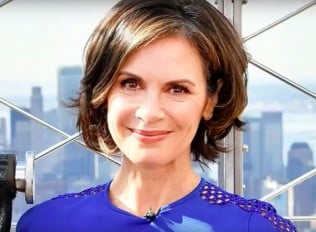
  • Elizabeth Vargas On Going Public With Alcoholism And Anxiety

    Elizabeth Vargas On Going Public With Alcoholism And Anxiety

    “If I’ve helped one person, I feel really great, but I hear from people daily. That makes me feel like it was worth it to be as brutally honest as I was.”

    In 2014, former 20/20 anchor Elizabeth Vargas went public in a series of interviews, sharing her struggles with alcoholism and anxiety. Now she is opening up about the life-changing events that followed her decision to be transparent with her battle.

    After the release of her memoir on addiction and anxiety in 2016, Between Breaths: A Memoir of Panic and Addiction, Vargas interviewed with The Fix.

    “Every person battling addiction is going through hell,” she said. “There’s still a lot of judgment. People say, ‘You chose to do that.’ But why would anybody choose to destroy themselves and the lives of everybody precious to them?”

    Telling People magazine that putting her story out in the world was “one of the hardest and most rewarding things I’ve done,” Vargas—now the host of a new A&E series Cults and Extreme Belief—reflected on the changes in her life since the publication of her memoir.

    “If I’ve helped one person, I feel really great, but I hear from people daily,” she told People. “That makes me feel like it was worth it to be as brutally honest as I was.”

    Vargas was so inspired by the positive public response to her story that she now travels the country, speaking out about alcoholism and anxiety. Her hope is to minimize the stigma surrounding those issues, in direct contrast with her feelings during the worst years.

    “I felt very alone when I was in the grip of the disease,” she said to People.

    Elizabeth Vargas suffered with anxiety from the time she was very small, which worsened as she entered her early forties and after the birth of her son.

    In her interview with The Fix, Vargas noted that in research with Diane Sawyer for a 20/20 special, they learned that 63% of women with alcoholism also battle anxiety, and women who struggle with anxiety are at two times the risk of relapse.

    Vargas told AARP that her anxiety got so bad that she had experienced an anxiety attack on live television. Unable to pinpoint exactly what the turning point was from alcoholism to sobriety, Vargas now credits meditation, gratitude and her experiences in rehab and therapy, along with the active involvement of her parents and sibling, for her enduring sobriety.

    Vargas told CKTV 5 News, “I feel grateful that I could take what was a painful part of my life and make something good out of it.”

    View the original article at thefix.com

  • David Cassidy Revealed He Was Still Drinking, Didn't Have Dementia Prior To Death

    David Cassidy Revealed He Was Still Drinking, Didn't Have Dementia Prior To Death

    Cassidy made the confession to a producer in a recorded conversation, which will air as part of an upcoming documentary about his life.

    Last year, Partridge Family star David Cassidy announced that he was suffering from dementia. But just two months before he died last November, Cassidy admitted that he never had dementia, but was struggling with alcoholism throughout the end of his life. 

    “There is no sign of me having dementia at this stage of my life. It was complete alcohol poisoning,” Cassidy explained to A&E producer Saralena Weinfield in a recorded conversation that is now part of a documentary called David Cassidy: The Last Session, which will air on June 11. 

    According to People, Cassidy went on: “The fact is that I lied about my drinking,” he said. “I did this to myself to cover up the sadness and the emptiness.”

    It was no secret that Cassidy battled alcoholism. He was arrested for driving under the influence three times in five years. However, after he went to inpatient rehab in 2014 he told friends and family that he was sober. 

    “If I take another drink, I’m going to die, physically, mentally, emotionally, spiritually. I’m dead,” Cassidy told Piers Morgan during an interview following that rehab stay. “You know, they say it’s a slippery slope… It’s not a slippery slope. It’s from 12:00 to 6:00 on the clock and the whole face is ice. One sip, one drink, because there is no such thing, not to an alcoholic. You have one and you’re done. I’d be done.”

    In 2017, footage of Cassidy during a live performance appeared to show that he was drunk. It was after that performance that he said he was suffering from a major medical issue—dementia. 

    However, just before his death Cassidy revealed that this was never the case. 

    “I have a liver disease,” he told Weinfield after he was rushed to the hospital after falling. Two months later Cassidy died of organ failure at the age of 67. Not even his two children knew that he was still problematically drinking alcohol, according to People. However, not everyone was shocked. 

    “Part of alcoholism is lying,” Partridge Family costar Danny Bonaduce said. “When you’re an addict, you know you can’t be honest with people. You say what you want them to hear. I can’t be mad at David for that, but it’s still a tragedy.”

    Ultimately, documentary producers said that they decided to use the confession because they felt that Cassidy wanted it made public. 

    “He wanted to share this very private part of his life, and to be honest once and for all. And I think he succeeded in doing that,” said producer John Marks. 

    View the original article at thefix.com

  • Can The Mere Expectation Of Alcohol Boost Dopamine?

    Can The Mere Expectation Of Alcohol Boost Dopamine?

    A new study examined the dopamine release levels of people with a family history of alcoholism. 

    Those with a history of alcohol-related issues in their families may produce more dopamine at the idea of a drink, a new study has found. 

    The study indicates that people who have a history of alcohol use disorders in their family actually release more dopamine when presented with the prospect of a drink containing alcohol. Dopamine is a neurotransmitter associated with the brain’s reward and pleasure centers. 

    For such individuals, the study found, the dopamine release is greater than for those who do not have a history of alcohol use disorder in the family or for those who have been diagnosed with it already. 

    The study, published in Biological Psychiatry: Cognitive Neuroscience and Neuroimaging, was fairly small. Researchers looked at 65 individuals, 34 of which had no alcohol use disorder in their families or themselves, 16 with a history of it in their family but without their own diagnosis, and 15 who had been diagnosed with alcohol use disorder. 

    Each participant was given two drinks—one containing alcohol and one without. Participants were not told which drink they would be given first. But, as Bustle reports, “Those who received the placebo first could intuit that the alcoholic drink would be second. In other words, they were cued to expect alcohol.”

    During this, researchers used a PET scan (an imaging technique) to monitor the levels of dopamine released as a response to the drinks. Because dopamine is connected to the reward center in the brain, its release is associated with things people enjoy. Bustle states that while all three groups in the study had similar dopamine-releasing reactions to the drink containing alcohol, results varied when it came to the non-alcoholic placebo. 

    “We found that the FHP (family history positive) participants had a much more pronounced response to the placebo drink than the other groups, indicating that expectation of alcohol caused the FHP group to release more reward center dopamine,” study author Lawrence Kegeles of Columbia University said, according to Bustle

    This outcome implies that dopamine release could “reinforce alcohol consumption,” Bustle notes. This is especially true for those susceptible to alcohol use disorder.  

    “This research finding exemplifies how advances in imaging brain chemistry using PET scanning can provide new insights into how differences in brain function in people with a family history of alcoholism can explain their own potential for addiction,” said Biological Psychiatry: Cognitive Neuroscience and Neuroimaging editor Dr. Cameron Carter, according to Bustle

    Study participants were not followed up with, Bustle notes, so it is unknown if the results of this study did predict alcohol use disorder in their futures.  

    View the original article at thefix.com

  • Drag Race Star: Sobriety Taught Me A Different Way To Look At My Life

    Drag Race Star: Sobriety Taught Me A Different Way To Look At My Life

    “I have a long journey to continue of loving myself, but I can start by doing a few things today to get to where I want to be in life.”

    In a recent interview, Blair St. Clair, a former contestant on RuPaul’s Drag Race, addressed his DUI arrest, life as a sober drag performer, and unpacking the trauma of his sexual assault.

    The 22-year-old Indianapolis native, born Andrew Bryson, was eliminated from Drag Race back in April, but the impact he made by speaking up about his sexual assault still resonates.

    He revealed on the show that his first sexual experience was being raped at a college party. Bryson shared with Mic in a recent interview that he had “not talked to another human being in my entire life about that… It’s something that I didn’t want to believe.”

    It didn’t dawn on him until later that he was in denial for a long time over how he had been hurt.

    “I didn’t understand myself because I had so many emotions that I hadn’t yet felt,” he said. “Those things inevitably were still working without me knowing that they were working in my brain.”

    After his DUI arrest in March 2017, the budding star watched as his mugshot went viral and became tabloid fodder. It was a difficult time, he said, but necessary for him to make a change. “Thank you TMZ. Because TMZ is the reason and the wake-up call I needed to see a mugshot of mine spread like wildfire across the media.”

    This prompted him to become sober. “It really comes down to acceptance… Are you being honest with yourself that you have a problem? Or are you telling yourself you have a problem because that’s what you want people to hear? … Do you also desire to seek change?”

    When interviewer Evan Ross Katz asked what sobriety has taught him, Bryson responded, “What has sobriety not taught me? Sobriety has taught me a different way to look at my life. I’m not perfect, I make mistakes, and I’m still growing… It allows me to take a pause and step back and reflect and look at my life and look at my choices. And recognize that I am in control of my life today.

    “I finally decided to look at my life as a means for loving myself. Because I didn’t recognize and I didn’t know and I didn’t understand for such a long time that I was not in a place of loving myself… I have a long journey to continue going of loving myself, but I can start by doing a few things today to get to where I want to be in life.”

    Despite heavy drinking being a large part of gay culture, which Bryson also discussed, being able to distinguish drinking and partying from performing as Blair St. Clair helped keep him focused on his sobriety.

    “We celebrate by drinking when we’re happy, we’re mad, we’re sad, any emotion we feel. I had to remember… these changes were made for me, they were made to protect me, but they were also made to protect my career at the end of the day.”

    View the original article at thefix.com

  • Guns N’ Roses Drummer: I’ve Never Been Happier Than I Am Sober

    “After, like, the ninth month of not drinking, my whole life did a 180. Everything changed. I became happy again. I love life again.”

    Steven Adler, the former drummer for Guns N’ Roses, who left the rock band because his drug use was becoming too much, says that he has never been more happy than he is living life in recovery. 

    “My health is fabulous. Actually, tomorrow I will have four years and four months of no drinking. And I haven’t done drugs since 2008. So I’ve never been happier,” Adler recently told a journalist, according to Blabbermouth

    While the initial period of recovery was difficult, Adler said that he began to notice positive changes in his life the longer he stayed away from drugs and alcohol. 

    “After, like, the ninth month of not drinking, my whole life did a 180,” he said. “Everything changed. I became happy again. I love life again. I enjoy the sunsets. I enjoy the sunrise. It’s beautiful.”

    Guns N’ Roses paused recording during the late ‘80s and early ’90s to give Adler a chance to get his heroin addiction under control. However, Adler wasn’t able to stay sober, so he was kicked out of the band in 1990. 

    Since he has been sober, Adler has joined the band on some tour dates, and has also started his own Guns N’ Roses tribute band. In order to keep touring with that band, Adler maintains a strict routine that helps him stay sober, he said. 

    “I wake up,” he said. “The first thing I do is I read The Four Agreements. It’s a book from Don Miguel Ruiz. [The book’s mantra is] be impeccable with your word; don’t take things personal; don’t make assumptions; and always do your best—no more no less,” Adler said. 

    “I read a little of that, I have my decaf tea, I go on the treadmill and I do a little jogging to stay in shape, and then I practice. It’s all mind, body and soul. So I read the book for my mind, I do the treadmill for my body, and I play the drums for my soul. And then the rest of the time, I sit round and watch Family Guy with my dogs.”

    Adler’s mother, Deanna Adler, recently spoke about watching her son struggle for so many years. 

    “[It] was very hard to see my son hurt like that and have a disease like that, because I’ve never drank or smoked or done drugs—I’m just a normal person,” she said. “But to see your son in such pain like that and knowing that you can’t do anything—I thought I could do something to help him, but in reality you can’t.”

    View the original article at thefix.com