Tag: alcoholism

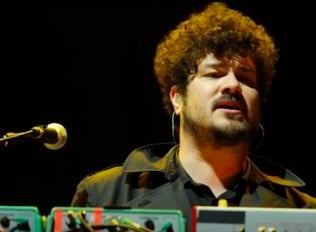
  • Black Keys Collaborator Richard Swift's Cause Of Death Revealed

    Black Keys Collaborator Richard Swift's Cause Of Death Revealed

    The prolific musician battled alcohol addiction prior to his death. 

    The family of singer-songwriter and music producer Richard Swift confirmed that his death on July 3, 2018 was due to alcohol addiction. A post on Swift’s Facebook page confirmed that the 41-year-old died in a hospice facility in Tacoma, Washington one month after being hospitalized for hepatitis and liver and kidney distress.

    In addition to releasing several acclaimed solo albums, Swift performed and toured with the Black Keys, Wilco and the Shins, produced recordings by Damien Jurado and The Mynabirds, among others, and owned a recording studio, National Freedom, where artists like Sharon Van Etten and Guster recorded material.

    Swift was hospitalized in June for an undisclosed “life-threatening condition,” for which a GoFundMe page was established to offset hospital costs.

    After his death on July 3, Swift’s family, his label and Next Wave Management issued a joint statement on his official Facebook page to address questions about his passing. 

    The post’s authors confirmed that Swift suffered from alcohol addiction, which “ultimately took his life,” they wrote. With help from friends and family and the assistance of MusiCares, a foundation which provides medical and personal assistance to music industry figures, he had undergone “multiple stays” in rehabilitation facilities during the past two years, and was diagnosed with hepatitis and liver and kidney ailments in June 2018.

    According to the post, “multiple hospitals worked to help stabilize him over the course of that month, but his body was unable to heal, and per his wishes and with his family’s consent, he was moved to hospice care.”

    Swift died in the early morning of July 3, leaving behind his wife, Shealynn, and three children.

    A prolific and widely admired musician and producer, Swift began his recording career with two self-released albums that were reissued by the independent label Secretly Canadian as The Richard Swift Collection, Volume 1 in 2005.

    He issued a slew of solo work between 2007 and 2014, which featured contributions by Mark Ronson and Ryan Adams, among others, while also serving as a member of the Shins from 2011 to 2016 and as touring bassist for the Black Keys in 2014 and drummer for the Arcs. 

    Black Keys co-founder Dan Auerbach paid tribute to his friend with an Instagram post on July 3 that read, “Today the world lost one of the most talented musicians I know. I will miss you my friend.”

    View the original article at thefix.com

  • Simon Pegg Details Alcoholism, Depression Battle: It Was Terrible, It Owned Me

    Simon Pegg Details Alcoholism, Depression Battle: It Was Terrible, It Owned Me

    “It’s like you have grown a second head and all it wants to do is destroy itself, and it puts that ahead of everything else—your marriage, children, your job.”

    Now feeling secure in his recovery, British actor Simon Pegg is discussing the years he spent hiding his drinking problem and depression from his family and friends.

    “One thing [addiction] does is make you clever at not giving anything away. People think junkies and alcoholics are slovenly, unmotivated people. They’re not—they are incredibly organized. They can nip out for a quick shot of whisky and you wouldn’t know they have gone. It’s as if… you are micro-managed by it,” he told the Guardian, while promoting his new film Mission: Impossible: Fallout.

    But one can only hide it for so long, he cautioned. “Eventually the signs are too obvious. You have taken the dog for one too many walks,” he said.

    Pegg’s secret battle with alcoholism and depression—“It was awful, terrible. It owned me.”—was even hidden from his best friend and collaborator Nick Frost. The two have starred in many films together, including Hot Fuzz and Shaun of the Dead.

    The actor, now 48, says he’s felt depressed since he was 18. He drank to self-medicate. “It’s like you have grown a second head and all it wants to do is destroy itself, and it puts that ahead of everything else—your marriage, children, your job,” he said.

    The worst of it—the “crisis years”—began during filming of Mission: Impossible III (2006).

    Even the birth of his daughter Matilda was not the turning point he’d hoped it would be. “It was the most cosmic experience of my life. I thought it would fix things and it just didn’t. Because it can’t,” he said. “Nothing can, other than a dedicated approach, whether that’s therapy or medication, or whatever.”

    That dedicated approach came a year later, when his drinking came to a head during a 2011 Comic-Con convention in San Diego. “I sort of went missing for about four days. I got back to the UK and just checked myself in somewhere,” he said in a June interview.

    At rehab, Pegg seized the opportunity to get well. “I got into it. I got into the reasons I was feeling that way. I went into AA for a while, too. I don’t think I would be here now if I hadn’t had help,” he told the Guardian.

    Now that he’s come out on the other side, he’s more comfortable discussing the times that he struggled.

    “I’m not ashamed of what happened. And I think if anyone finds any relationship to it, then it might motivate them to get well,” he said. “But I am not proud of it either—I don’t think it’s cool, like I was Mr. Rock ’n’ Roll, blackout and all that shit. It wasn’t, it was just terrible.”

    View the original article at thefix.com

  • "Sharp Objects" To End Episodes With Mental Health, Substance Abuse PSA

    "Sharp Objects" To End Episodes With Mental Health, Substance Abuse PSA

    The HBO limited series follows a reporter who struggles with self-harm and alcoholism while investigating a murder case.

    The HBO limited series Sharp Objects will feature a card at the conclusion of each episode that will provide information on help for those who may be experiencing issues of self-harm and/or substance abuse.

    The critically praised series, created by Marti Noxon (Dietland) and based on the novel by Gillian Flynn (Gone Girl), stars Amy Adams as a reporter who struggles with both conditions while investigating a murder case.

    As Deadline‘s coverage noted, the addition echoes the use of a similar title card on Netflix’s 13 Reasons Why.

    The card reads as follows:

    “If you or someone you know struggles with self-harm or substance abuse, please seek help by contacting the Substance Abuse and Mental Health Services Administration (SAMHSA) 1-800-662-HELP (4357).”

    In addition to the card, HBO has also set up a website with links to resources including SAMHSA and the National Alliance on Mental Illness.

    The series’ title alludes to Adams’ reporter, Camille Preaker, whose troubled childhood has manifested itself in adulthood through alcoholism and self-harm.

    The first episode opens shortly after her discharge from a psychiatric hospital, and over the course of the next seven episodes, Preaker will return to the hometown where her issues first took root, and which bloom anew as she becomes deeply involved in the murder of two girls there.

    As Deadline noted, the Netflix drama 13 Reasons Why, which focused on a teenager’s suicide, drew critical fire from members of the mental health community for what was regarded as graphic depictions of rape and suicide.

    The network added a disclaimer and PSA to the second season of the show that advised viewers about the subject matter and, as Vulture noted, even suggested that certain individuals should consider watching the program with a “trusted adult.” 13 Reasons Why is slated to return for its third season in 2019.

    In an interview with the Hollywood Reporter, author Gillian Flynn, who also serves as an executive producer for Sharp Objects, discussed the very personal reasons for tackling the subject of self-harm in the book and series.

    “I felt that misery of, like, ‘Why can’t anyone see how much pain I’m in?’ I wished I could bear witness somehow,” she said. I had these fantasies of being mangled—of showing how much pain I was in.”

    View the original article at thefix.com

  • Florence Welch On Sobriety: "Performing Without Booze Was A Revelation"

    Florence Welch On Sobriety: "Performing Without Booze Was A Revelation"

    “Before, I thought I ran on a chaos engine, but the more peaceful I am, the more I can give to the work. I can address things I wasn’t capable of doing before.”

    Florence Welch, the voice of Florence and the Machine, is at a different pace in life. She’s more at peace, less afraid, and sober as well.

    The singer admitted that she was “drunk a lot of the time” in the band’s last phase. “That’s when the drinking and the partying exploded as a way to hide from it… The partying was about me not wanting to deal with the fact that my life had changed, not wanting to come down,” Welch said in a recent interview with the Guardian.

    The English singer and songwriter decided as she approached the 10th year of her illustrious career that she would sober up.

    “When I realized I could perform without the booze it was a revelation,” she said. “There’s discomfort and rage, and the moment when they meet is when you break open. You’re free.”

    Welch admits that every now and again, she’ll be tempted to go back to her old ways. But it never lasts. “It’s still there. This, ‘What if I could take a day off, a break from this magical energy?’ But, it passes,” she said.

    Sobriety went hand-in-hand with inner peace. “Before, I thought I ran on a chaos engine, but the more peaceful I am, the more I can give to the work,” she said. “I can address things I wasn’t capable of doing before.”

    Through self-reflection, Welch also came to terms with her eating disorder, addressing it for the first time in the single “Hunger” from the band’s upcoming album High as Hope. “At 17, I started to starve myself,” she sings.

    She said the terror of admitting this to anyone, let alone the whole world, inspired her to sing about it. This terror, she says, has been with her for most of her life, fueling some of the “self-destructive” behavior that she’s now working on undoing.

    “I learned ways to manage that terror—drink, drugs, controlling food,” she told the Guardian. “It was like a renaissance of childhood, a toddler’s self-destruction let loose in a person with grown-up impulses.”

    Welch admits she’s “still figuring it out,” but is learning more than ever how music can be invaluable to her self-discovery journey, by helping her realize that she is not alone.

    “I’ve realized that that nugget of insecurity and loneliness is a human experience. The big issues are there however you address them,” she said. “The weird thing is, that as personal as it feels, as soon as you say it, other people say: ‘I feel like that, too.’”

    View the original article at thefix.com

  • Country Music's Complicated Relationship With Alcohol

    Country Music's Complicated Relationship With Alcohol

    From songs about drowning heartache with whiskey to ones about partying with rum, country music’s link to alcohol is almost as old as the genre itself.

    Country music has been associated with drinking practically since its incarnation, but in the age of recovery some think the relationship between the popular music genre and alcohol has become more complicated.

    The Washington Post recently chronicled the long-running relationship between alcohol and country music.

    Country musicians have a long tradition of writing songs about drinking and drowning your sorrows in alcohol, to the point where Nashville has even been jokingly called “a drinking town with a music problem.”

    It’s also been a big part of the music’s culture since the days of Hank Williams, a hard-partying country star who was a bad influence on a lot of his peers. After a long battle with alcoholism and pill addiction, Williams died from a heart attack at the age of 29.  

    Songwriter Bobby Bare, who recently wrote a song called “I Drink,” told the Post, “Everybody I know wanted to be like Hank Williams. And everyone I know bought into the drinking. You figure if Hank did it, it must be OK.”

    Late country icon Waylon Jennings called it “Hank Williams syndrome,” according to the Post.

    In a 1988 interview, rising country star Keith Whitley said, “I thought everybody had to drink to be in this business. Lefty Frizzell drank, Hank drank, George Jones was still drinking, and I had to. That’s just the way it was. You couldn’t put that soul in your singing if you weren’t about three sheets in the wind.”

    Whitley died at 33 years old from alcohol poisoning in 1989.

    But the modern country music scene has refocused its relationship with alcohol. Now, there are more songs about drinking and having a good time, á la Jimmy Buffett, and a lot of modern country musicians often have to keep up their party image, even when they’re sober.

    It’s an image that’s being projected to a much younger audience. The Country Music Association reports that the 18-to-24 age group of country fans has increased by 54% in the last decade.

    As the president of Sony/ATV Music Publishing in Nashville told the Post, “For the younger country consumer, alcohol in a celebratory manner is very relatable.”

    Brad Paisley, who is sober, had a big hit with the song “Alcohol,” and he brings out a bar onstage when he performs the tune, even though the drinks on tap are usually non–alcoholic.

    Dierks Bentley told the Post that at his gigs, “People are coming out to blow off steam and have a great time. I’m kind of like the lead bartender: Jumping up on the bar table, drinking shots with you and singing ballads with you like at an old Irish pub somewhere.”

    In today’s country music climate, some artists have been afraid to be openly sober. Ray Scott is one country artist in recovery who was concerned that fans would turn against him because he stopped partying.

    He told Variety, “Some fans can kind of build you up to be this thing that they think you are, and a couple of these songs sort of painted a picture of who I was. I’ve been pleased that people take it for what it is. It’s just fun music; I don’t have to live the part.”

    Today’s country scene is also strongly connected with alcohol companies who make a lot of money when artists namecheck their brands. Kenny Chesney launched a successful rum company that sponsors his tours, and the company’s sales have nearly tripled in the last three years.

    The country group Smithfield has even pointed out the paradox of singing a sad drinking ballad, “Hey Whiskey,” while they have an endorsement with Rebecca Creek Distillery.

    As Smithfield singer Jennifer Fiedler confessed, “It’s kind of weird, because if you listen to the song, we always wonder, ‘Why do we have a whiskey endorsement?’ Because it’s like, the whole song is about how whiskey ruins [a] girl’s relationship—but hey, we’re handing out whiskey.” 

    View the original article at thefix.com

  • Why Some People May Be More Prone To Alcoholism Than Others

    Why Some People May Be More Prone To Alcoholism Than Others

    A landmark study may have pinpointed a gene that is linked to alcoholism.

    New research may provide further clues into how genetics play a role in the development of dependency on drugs and alcohol.

    A new study used rats that had been fed a steady diet of alcohol as test subjects; when offered more alcohol or a saccharine solution, a small but significant number continued to choose alcohol over the more preferable sweet offering, even when the choice meant that they would receive an electric shock.

    Upon examining the rats’ brains, the researchers found that the rats that chose alcohol had lower levels of a certain gene that controlled the release of a chemical linked to alcohol dependence.

    The study’s findings suggest that the gene may be the first step toward a greater understanding of, and even treatment for, alcohol dependency.

    The study published in the June 22, 2018 edition of Science, was conducted by a multinational group of researchers from the University of Illinois, Chicago, University of Texas, Austin and Sahlgrenska Academy at the University of Gothenburg, Sweden.

    A test group of 32 rats was trained to consume a 20% alcohol solution for 10 weeks until it became a habit for the animals; they were then presented a daily choice of more alcohol or a solution of the artificial sweetener saccharine. 

    What they found was that the majority of the rats preferred the sugar option over alcohol—a common trait among mammals, as Scientific American noted, because sugar can be easily converted into calories and provide energy for survival. But four rats (12.5% of the study group) chose the alcohol every time, even under the threat of receiving an electric shock if they made that choice.

    Additional testing confirmed the scientists’ suspicions. “600 animals later, we found that a very stable population chose alcohol,” said senior study author Markus Heilig, director of the Center for Social and Affective Neuroscience at Linkoping in Sweden.

    From there, the scientists examined the brains of the rodent subjects, and found that a gene called GAT-3 was expressed to a much lesser degree in the brains of the rats that chose alcohol.

    As Scientific American noted, GAT-3 is linked to a protein that controls the levels of GABA, a major inhibitory neurotransmitter in the brain and one linked with dependency on alcohol. 

    Further research found that brain samples from deceased humans who had exhibited alcohol dependency also showed lower levels of GAT-3 in the amygdala, which is widely considered to be the brain’s center for emotions and in particular, fear.

    Heilig told Scientific American that it makes sense that the lowered levels would be found there and not in the brain’s reward center.

    “The rewarding effect of drugs happens in everybody,” he said. “It’s a completely different story in the minority of people who continue to take drugs [and use alcohol] despite adverse consequences.”

    Heilig and his team have begun work on a treatment for addiction based on their research; according to Scientific American, the drug suppresses the release of GABA, which could reduce the compulsion to consume alcohol in the face of dangerous circumstances. They are currently working with a pharmaceutical company in hopes of launching tests of their compound on humans.

    View the original article at thefix.com

  • Demi Lovato Reveals She Relapsed In New Song "Sober"

    Demi Lovato Reveals She Relapsed In New Song "Sober"

    “To the ones who never left me we’ve been down this road before, I’m so sorry, I’m not sober anymore,” the pop star sings in her new song.

    Pop star Demi Lovato is forthright about not only about the positive side of her recovery, but also her struggles along the way. The singer-songwriter’s new single “Sober” is a candid confession about a recent relapse after six years of sobriety.

    “I don’t know why I do it every time/ It’s only when I’m lonely/ Sometimes I just wanna cave/ And I don’t wanna fight,” she sings. “Mama I’m so sorry I’m not sober anymore/ And daddy please forgive me for the drinks spilled on the floor/ To the ones who never left me we’ve been down this road before/ I’m so sorry, I’m not sober anymore.”

    Lovato goes on to apologize to fans, as well as herself: “I’m sorry that I’m here again/ I promise I’ll get help/ It wasn’t my intention/ I’m sorry to myself.”


    Lovato is a champion of mental health and recovery support. She herself celebrated six years of sobriety back in March, marking the occasion on social media—“Just officially turned 6 years sober. So grateful for another year of joy, health and happiness. It IS possible”—as she does every March.

    She even brings “therapy sessions” to fans before her concerts. “We have speakers from all over and we’re also helping out with different charities from around the country, so it’ll be incredible and a very moving and inspiring experience,” she said.

    The goal of the mobile therapy sessions is to shed the stigma of struggling with mental health or asking for help.

    “Shame’s just such a lousy feeling,” she said. “There’s nothing positive that comes out of shame.”

    Last October, while accepting the Spirit of Sobriety award at a fundraising event hosted by the Brent Shapiro Foundation, the pop star described the consistent work that goes into her recovery.

    “Every day is a battle. You just have to take it one day at a time, some days are easier than others and some days you forget about drinking and using, but for me, I work on my physical health, which is important, but my mental health as well,” she said.

    Her recovery relies on a multi-faceted approach, like anyone else’s. “I see a therapist twice a week. I make sure I stay on my medications. I go to AA meetings. I do what I can physically in the gym. I make it a priority,” she said.

    Rapper Iggy Azalea—who once credited Demi with inspiring her to be more open about receiving therapy at a time when she was “mentally exhausted”—tweeted her support for the “Sorry Not Sorry” singer.

    “All of us who love you only want to see you happy and healthy,” she wrote. “I’m proud of you for having the guts to reveal your truth to the world again… I pray you’ll choose recovery again.”

    View the original article at thefix.com

  • Brandon Lee Exchanges Barbs With Dad Tommy About Rehab, Sobriety

    Brandon Lee Exchanges Barbs With Dad Tommy About Rehab, Sobriety

    “I thank my dad for paying for my treatment… My clear mind has allowed me to do a lot with this time. So much so that I would like to offer to pay for his treatment.”

    Former Mötley Crüe rocker Tommy Lee and his son Brandon continue to wage a very public and very ugly social media feud with each another, according to Entertainment Tonight.

    But their contentious Instagram exchanges may be over with. On Tuesday, Brandon, 22, revealed that he is celebrating nearly two years of sobriety and said that he is grateful to his father.

    “I thank my Dad for paying for my treatment,” Brandon wrote in an Instagram post. “It’s the best thing he has ever done for me. Today I am almost two years sober. Every day that goes by I feel ever more grateful. My clear mind has allowed me to do a lot with this time. So much so that I would like to offer to pay for his treatment.”

    Brandon’s words come on the heels of the 55-year-old’s lengthy Instagram post on Father’s Day, in which he claimed his kids didn’t appreciate anything.

    “Sometimes I feel like I failed as a father, because my kids don’t know the value of things,” Tommy wrote. “Sometimes it’s really tough to watch your kids grow up without these morals.”

    Brandon shot back with claims that Tommy was an absent father, uploading a since-deleted video of an unconscious Tommy Lee lying on the floor in a t-shirt and underwear.

    It’s not the first time Brandon has aired out his father’s alleged alcoholism, either. Back in March, following an altercation between the two, Brandon wrote on Twitter that he was “devastated” by the effects of his father’s alcoholism.

    “I’ve worked tirelessly organizing an intervention and it’s incredibly upsetting that it never came to fruition. I wanted my dad’s hopeful sobriety and recovery to be a private family matter but, as a result of his accusations on social media, I feel forced to speak out,” he said at the time. “I love my father and just want to see him sober, happy and healthy.”

    Tommy dismissed the claims, saying he was happy and enjoying retirement.

    The Mötley Crüe drummer denied having alcoholism, listing on Instagram everything that he felt his son had taken for granted, ranging from rehab to a costly birthday party: “Rehab for son: $130,000, Party for son’s 21st birthday last year: $40,000,” he wrote. “Medical Bills after son knocks his father unconscious and uses ‘alcoholism’ as scapegoat: $10,000, Son acting like a victim on social media on father’s day: Priceless.”

    According to ET, however, Brandon has grown weary of the public fighting. In fact, on Monday, he posted an extended Instagram post urging his father to “move on” and to keep their matters private.

    “It’s so sad that Tommy feels the need to keep attacking his son despite Brandon’s pleas to quit their very public feud,” a source told ET. “Brandon wants to rise above all of this but keeps getting pulled into it and defending himself. Brandon realizes enough is enough and that’s exactly why he removed the video of his father, but Tommy doesn’t seem to want it to end. He seems to want to keep fighting.”

    View the original article at thefix.com

  • Lily Allen Discusses Addiction, Self-Medicating

    Lily Allen Discusses Addiction, Self-Medicating

    “I’ve used drugs and alcohol as medicine, almost, when things have been really bad. If I’m in a bad place, psychologically, I shouldn’t be anywhere near drugs and alcohol.”

    British singer Lilly Allen first broke through in 2006 with her album Alright, Still, and now she’s back with her first new album in four years, No Shame.

    As her new release hits, Allen is opening up about her battles with addiction, and why she may not be completely sober (though she’s not partying anymore).

    Allen told People, “I definitely don’t rely on substances and alcohol in the way that I used to. It’s a bit about having made a conscious decision to leave that stuff behind. I would wake up in a haze in the middle of the Sheezus [album] tour and be like, ‘I’m 3,000 miles away from my kids.’ Why? What is all of this about?”

    When asked if she got sober for her children, Allen said, “I think it was age. Waking up in a tour bus, really hungover with makeup running—it’s not a good look when you’re 30. It’s okay when you’re 19!”

    Allen said that her drinking “got to a really bad stage, and I was definitely using alcohol as a crutch. I’m just very glad I’m not there anymore.”

    Asked if she considers herself sober, Allen replied, “No, I wouldn’t actually. I would just say I don’t party anymore… I don’t take drugs anymore. I wouldn’t say I gave up drinking, because I might like, once in a blue moon, have a glass of wine at dinner.”

    Allen said she was being stalked, which kept her close to home and away from outside temptations. “I think my sobriety was sort of forced by that. I wasn’t gonna sit at home and drink on my own, so I stopped; I stopped going out publicly and to places where people would maybe think that I would be.”

    Once she had her “unintentional detox and respite from it,” Allen noticed that she was “thinking a lot more clearly… In the middle of the Sheezus [tour], I did do AA—I did my 90 meetings and 90 days, so I did do that, I went through that process, and I found it really helpful.”

    Allen added, “To be honest with you, I don’t think I’ve ever been an addict, so to speak. I think that I’ve used drugs and alcohol as medicine, almost, when things have been really bad. If I’m in a bad place, psychologically, I shouldn’t be anywhere near drugs and alcohol. But if I’m okay… I just don’t, I’m just not really in a space where I want to drink.” 

    View the original article at thefix.com

  • Shame, Alcoholism, Stigma, and Suicide

    Shame, Alcoholism, Stigma, and Suicide

    In addiction treatment circles, conventional wisdom suggests we have to let people hit rock bottom before we can help them. But what happens if rock bottom is dying from suicide?

    Historical records as far back as ancient Athens have the underpinnings of the stigmatization of suicide. In 360 BCE, Plato wrote that those who died by suicide “shall be buried alone, and none shall be laid by their side; they shall be buried ingloriously in the borders of the twelve portions the land, in such places as are uncultivated and nameless, and no column or inscription shall mark the place of their interment.” Fast-forward a couple millennia and suicide is still criminalized in many places around the world. In the Western Judeo-Christian tradition, suicide has long been considered the ultimate sin, to such an extent that even the body of a person who died by suicide was legally brutalized and dehumanized. This long history of shaming and penalizing suicide has created deeply seated (mis)beliefs that are engrained in cultural norms. Suicidal ideation is stigmatized, and those who experience such thoughts often suffer in silence.

    Alcoholism (both alcohol use disorder and alcohol dependence) is also highly stigmatized. Past research has found that public attitudes are very poor towards people with substance use disorders (SUD). Across the globe, around 70% of the public believe alcoholics were likely to be violent to others. As recently as 2014, research has found 30% of people think recovery from SUDs is impossible and almost 80% of people would not want to work alongside someone who had or has a substance use disorder.

    Alcohol dependence and alcohol use disorder (AUD) are high on the list of risk factors for suicide. Mood disorders, such as depression, anxiety, and bipolar disorder, are even higher risk factors. What is particularly concerning is that mood disorders frequently go hand in hand with AUDs. Alcohol causes depression, and it can be hard to distinguish whether the alcohol or the depression came first because they feed each other. In his book Alcohol Explained, author William Porter explains, “hangovers cause depression whether you are mentally ill or not…the real cause of it is the chemical imbalance in the brain and body. ”

    People who have alcohol dependence are 60 to 120 times more likely to attempt suicide than people who are not intoxicated and individuals who die as a result of a suicide often have high BAC levels. Alcoholism is positively correlated with an increased risk of suicide and “is a factor in about 30% of all completed suicides.” A 2015 meta-analysis on AUD and suicide found that, across the board, “AUD significantly increases the risk [of] suicidal ideation, suicide attempt, and completed suicide.”

    Suicide attempts with self-inflicted gunshots have an 85% fatality rate. If someone does survive a suicide attempt, over 90 percent of the time they will not die from suicide. That margin of survival gets smaller with alcohol dependence. Being intoxicated increases the likelihood that someone will attempt suicide and use more lethal methods, such as a firearm.

    When a suicide attempt survivor encounters medical professionals, half of the time they will be interacting with someone who has “unfavorable attitudes towards patients presenting with self-harm.” (These statistics have cultural and regional variations.) When a patient with AUD encounters medical professionals, they are also likely to be met with negative perceptions. Myths about AUD and alcohol dependency are pervasive and not even nurses are immune to such prejudice.

    So what improves professional perceptions and treatment outcomes? Education. Training works to dispel myths and reinforce the fact that SUDs are diagnosable conditions that require as much care and attention as any other potentially fatal ailment. Perhaps increased understanding of these conditions and experiences could fuel progress for treating addictions and preventing suicide. Doctors are sometimes at a loss for what to do with alcoholic patients; interestingly, the physicians who had more confidence in their abilities in this area were associated with worse outcomes. Meanwhile, there has been little progress in treatment availability outside of basic peer support groups such as Alcoholics Anonymous.

    Peer support groups do help a lot of people get and stay sober and to live happier and healthier lives: 12-step proponents credit the steps and meetings for saving their lives; many say they were suicidal and that after getting sober they no longer had those thoughts. But while suicidal ideation may go away for some people who receive treatment, it doesn’t work like that for everyone.

    People who are abstinent from drugs and alcohol still die from suicide. In the case of post-traumatic stress disorder, quitting drinking can exacerbate feelings of hopelessness and despair. Continuing to drink may reduce the severity of the symptoms in the very short term, but ultimately “a diagnosis of co-occurring PTSD and alcohol use disorder [is] more detrimental than a diagnosis of PTSD or alcohol use disorder alone.”

    Suicide is a leading cause of death across the world and ranks as the 10th most common cause of death in the United States. For every completed suicide, there are an estimated 25 attempts.

    It’s clear that we must do something to reduce the number of lives lost by suicide. Raising awareness of the relationship between alcohol-dependence and suicide attempts is an important part of the equation. Medical professionals, social workers, law enforcement, employers, and others who are frequently the first point of contact need better training to improve attitudes and fine tune skill sets for taking appropriate action. The public also needs to be armed with information that they can use to help their family and friends who may be at risk for suicide, and in particular what to do if that person has a co-occurring SUD.

    Despite evidence to the contrary (particularly in the case of comorbidity with another mental illness) conventional wisdom in addiction treatment suggests that we have to let people fall to rock bottom before we can help them. But what happens if rock bottom is dying from suicide? It’s true that we can’t force health onto another person, but we also can’t help them if they’re no longer alive. For many people, prior trauma and mental health issues come before addiction. More evidence-based intervention and prevention programs are needed if we hope to make any headway in fighting this epidemic.

    Until that happens, opportunities do exist to help prevent suicide. After Logic released his Grammy winning song titled “1-800-273-8255” (the phone number for the National Suicide Prevention Lifeline), calls to the Lifeline increased exponentially. There is nothing quite like hearing another human voice offering support and comfort. There is also a growing number of online crisis support services which provide help through live chat and email. These, unlike many crisis phone numbers, are not limited by location. Texting a crisis hotline such as the US Crisis Text Line at 741741 is also an option and can be done with just basic SMS, no data needed.

    If you or someone you know is in immediate danger, call your local emergency number. Find your country’s equivalent to 911 on this wiki page or through The Lifeline Foundation. Find a list of additional suicide prevention resources worldwide on this page.

    View the original article at thefix.com