Tag: Answer Addiction

This is a custom tag page for Life.

  • Are You a Phone Addict? How Would You Know?

    Are You a Phone Addict? How Would You Know?

    One of the the things that most worries users of our site is whether they are a real phone addict. If you’re using your phone for hours every day, is that in itself a symptom of addiction? Or are there other tell-tale signs that might tell you if things are getting out of control?

    Four common signs and symptoms of an addiction are:

    • Losing interest in activities, hobbies or events that were once important to you.
    • Continuing to engage in certain behaviours, despite negative consequences.
    • Withdrawing from responsibility and socialising.
    • Trying, but failing, to reduce or stop.

    So, let’s take them one by one to see if you’re really a phone addict, or if you just might want to think about cutting down.

    #1 Losing interest in other activities

    This is a classic hallmark of addiction and might tell you if you are really a phone addict or if you just need to rebalance your relationship with your device a bit more.

    Think about all the off-screen activities that bring you joy and make you feel healthier and happier; spending time with friends and family, time for exercise and sport, being outside in nature, any form of creative activity that stimulates you. Now, think about whether time spent in those different activities has increased or decreased over the past few months in favour of time wasted on your phone.

    Look at the tools on your phone to see if you’ve got a good grip on how much time you’re actually spending on it and then think about whether other activities are being curtailed as a result?

    #2 Continuing, despite negative consequences

    Now, think about whether the time you’re spending on your phone is having any negative consequences in your life. Are you missing out on work? Or not completing it properly? Are you spending less and less time eating healthily? Is your sleep suffering because of hours spent on your phone late at night?

    Be honest with yourself about what the downside might be of your existing phone habits. It might be that others have complained that they have less and less of your time and attention because you’re glued to your phone. Does that sound familar?

    #3 Withdrawing

    More serious than just neglecting other hobbies and interests is when you find yourself withdrawing from responsibilities or socialising with other people, because your phone habits have simply taken over your life. Are you spending hours scrolling on your phone caught up with social media but not seeing friends in real life? Do you hardly come out of your bedroom at the weekend because you’re glued to your phone?

    #4 Trying but failing to stop

    This last one is the killer sign. Have you worried about being a phone addict in the past and set yourself boundaries and limits to curb your screen time but then failed to stick to them? Do you really want to spend a lot less time on your phone but simply can’t put it down? When your behaviour is at odds with the goals you set for your life, that’s something that should worry you.

    If you’re starting to become concerned then you should see a professional such as a psychiatrist or psychologist. If you think that you probably aren’t a real phone addict, but are still keen to cut down, then read up on the tricks adopted by the persuasive technology industry which keep you hooked to your phone. Understanding how the tech works to keep you there longer than you intended could well help you set boundaries and stick to them better.

    And check out all the resources on our website for how to do a digital detox and step away from tech from time-to-time.
    View the original article at itstimetologoff.com

  • Is ‘Slowcial Media’ The Answer?

    Is ‘Slowcial Media’ The Answer?

    Social media addiction is on the rise with more and more people struggling to stop endlessly scrolling through their feeds. Could ‘slowcial media’ be the answer to using social media intentionally and avoiding some of the harmful side-effects?

    What is slowcial media?

    Slowcial media is all about slowing down the rush to connect with tech and making it intentional, meaningful and mindful. It can be applied to the ways in which we use social media – or it can be applied to a whole new type of tech which focuses on mindfulness and meaningful connection.

    Slowcial Media: Platforms that foster unhurried and meaningful connection between humans”.

    Urban Dictionary

    In that sense, slowcial media can be compared to other ‘slow’ cultural movements to slow down life’s pace, such as the slow food movement or slow fashion, both of which ask for considered consumption, thinking about the sources of products, and emphasising sustainability.

    The slow movement is thought to have begun in 1986 when Carlo Petrini protested against the opening of a McDonald’s restaurant near the world-famous Spanish Steps in Rome. His protest sparked the creation of the slow food movement which over time developed into the full-blown slow subculture.

    “It is a cultural revolution against the notion that faster is always better. The Slow philosophy is not about doing everything at a snail’s pace. It’s about seeking to do everything at the right speed. Savouring the hours and minutes rather than just counting them. Doing everything as well as possible, instead of as fast as possible. It’s about quality over quantity in everything from work to food to parenting.”

     Carl Honoré  In Praise of Slow

    Can using social media itself ever be ‘slow’?

    The attention economy and persuasive tech encourages us to use social media at break-neck speed, scrolling from one feed and account to another, FOMO making us worry that we might be missing out. But, we can learn to use social media intentionally and mindfully if we follow a few simple rules:

    • Set limits for time spent online.
    • Set an intention before you connect with social media – what’s your purpose in using it?
    • Keep checking in with how social media makes you feel.
    • Use social media to be inspired and informed – follow accounts that celebrate achievement, not appearance.
    • Reply thoughtfully to online interactions, pause before responding.
    • Put hurdles and obstacles in place to make you slow down before you use apps.

    Your hurdles and obstacles can be very personal and specific to you. Some ideas; putting your phone in another room, uninstalling social media apps at certain times, leaving messages for yourself on the home screen of your phone. Think creatively about how you can design behavioural nudges like these to ensure you’re being mindful about your use.

    Other uses which help you to go slow

    Of course, it’s not just about using social media apps in a way that’s more intentional. There are a range of other apps which exist purely for the purpose of developing mindfulness and meaningful connection. Some ideas might be;

    • Headspace – an app for everyday mindfulness and meditation.
    • Freedom – an app and website blocker, to enable you to focus and be productive.
    • Reflection – a journalling-focused app that guides a meaningful reflection practice.
    • Forest – another app to help focus, but this one plants a tree in the real-world if you meet your goals.

    The slowcial media action plan

    Here’s our simple plan to help you reap the benefits of a more slowcial approach

    1. Use existing social media and other apps mindfully.
    2. Prune notifications and alerts that distract you.
    3. Set an intention every time you use an app that might be encouraging you to be mindless.
    4. Look for alternatives that encourage meaningful connection.

    If you want to try out a full disconnection from tech to slow down, check out all the resources on our website for how to do a digital detox.

    View the original article at itstimetologoff.com

  • Let’s Ditch Disaster Porn

    Let’s Ditch Disaster Porn

    Disaster porn is defined by the Australia Macquarie dictionary as media coverage of disasters which seeks to

    “satisfy the pleasure that viewers take in seeing other people’s misfortunes, as by constantly repeating vision of an event, often without commentary or context”.

    Macquarie

    The term has roots in fictional depictions of disasters, such as war films. However, it has become a fitting description for much news coverage of catastrophes.

    The term entered this dictionary in 2011: the same year as the Queensland floods which claimed 33 human lives and damaged 28 000 homes. It likely gained popularity as a descriptor of the continuous scenes of tragedy displayed by the almost constant continuous media coverage.

    The coverage prompted an outpouring of sympathy and aid from the general public. Therefore, at the time it was widely agreed that the effects of larger public awareness and sympathy towards catastrophic events negated the moral ambiguity of disaster porn. Despite the the gratuitous and often exploitative nature of disaster porn, it was acknowledged that ‘it does much more good than harm’.

    Was this ever true? If it was, it certainly is not now. The birth of 24 hour news coverage was damaging enough, but with the rise of smartphones and thus increased accessibility to news throughout the day (exacerbated by social media), our consumption of bad news has rocketed. As a result of our over-exposure to shocking and upsetting scenes, we have become simultaneously addicted and desensitised by disaster porn. And not only does this have a damaging effect on our wellbeing, it undoes any positive effect this type of coverage could have had in the first place.

    Why do we find bad news so enticing?

    Psychologists argue that humans are predisposed to be more attracted to bad news, as it enables us to identify danger and react accordingly. However, if you survey a group of people, they tend to say that they prefer reading and watching good news. Furthermore, many of the public even feel that news coverage broadcasts too much bad news. Throughout the pandemic, many households became increasingly bored and frustrated with the constant coronavirus coverage and the lack of any other stories on the evening news.

    So why do we continue to feed this negativity bias, against our proclaimed preferences?

    Our over-consumption of distressing news stories is not entirely our fault. Media sites know that – due to this ‘negative bias’ – bad news garners more clicks than good news. Therefore, there is simply more bad news pushed at us than good. In the aftermath of the 2004 Indian Ocean earthquake and tsunami, news broadcasters sites saw their ratings ‘soar’ as they displayed images of what journalist Susan Llewelyn Leach deemed as nothing other than ‘gratuitous gore’.

    Furthermore, this is fed back into the algorithms responsible for curating our news feed. Our feed is designed to suggest the articles which we are most likely to interact with, based on our past reactions. Therefore, the more bad news we consume, the more that is pushed at us.

    What makes disaster porn harmful?

    Desensitisation

    The more graphic content we consume, the less shocking it becomes. This continuous desensitisation dampens the compassion we may feel towards victims of the catastrophes broadcasted into our living rooms.

    This can also harm the victims of the catastrophe in question. Media coverage will have to voyeuristically rely on increasingly graphic, exploitative, scenes in order to still attract public interest. This causes journalists to hunt for more and more disturbing and personal content, often disregarding the privacy and dignity of catastrophe victims.

    Hopelessness, Helplessness and Immobilisation

    Too often, catastrophe journalism instils in us such a bleak outlook on a situation that we lose all hope of it being resolved. In a study looking at how teachers could motivate children to try to make a difference about climate change, it was found that when fear-based messaging caused an individual to feel a particularly low level of agency or control, it was likely to backfire and immobilise that individual.

    Therefore, ironically, the graphic reporting that will supposedly call us to arms dries up what hope we may have had. Having retreated into this state of hopelessness, we don’t see any way to proactively help.

    How can we achieve balance?

    Of course, it is often inevitable and important that we interact with bad news. It is a consequence of evolution that we find bad news enticing. And there certainly is an argument that it is important for us to have a social awareness of the suffering, and need for aid, of people across the globe.

    Doomscrolling

    However, if we do not reevaluate our consumption of media, we can find ourselves addicted to disaster porn, which harms both its subjects and ourselves. Doomscrolling is what has tipped our genuine concern into an alarming thirst for distressing scenes. The lengthy amount of time we spend consuming bad news online encourages our personal algorithm and our news providers to push more negative information at us. We need to limit our time, be more careful about what content we choose to interact with, both for our own state of mind, and also to start teaching media sites that lazy ‘catastrophe journalism’ is not the way forward.

    If you find you have a habit of doomscrolling, check out here how you can rebalance your news consumption. Take a look at where you get your news from, whether in print, digitally or on social media. Analyse the type of reporting. A good way of gauging if something has been written out of sensationalism of genuine concern is by checking throughout the piece to see if it signposts any ways you can actually help.

    We usually fall into the habit of doomscrolling because we are not consciously interacting with the news. We are reading the material pushed at us, but we are not thinking about it actively. This is key to our consumption of news media. Some of the graphic images shown to us could inspire compassion and action if we were to pause and digest the stories, rather than just move on, chasing the next shock.

    View the original article at itstimetologoff.com

  • It’s OK to Ignore a Text (Sometimes)

    It’s OK to Ignore a Text (Sometimes)

    Human communication never used to be immediate, unless we were standing face-to-face. Letters could take days to arrive, and even more time to be answered. Phone calls could be left ringing, or answered by an answerphone message. No-one got irate if their attempts to contact us took a little bit of time. Now, if we ignore a text for longer than a few minutes it feels like a deadly social crime.

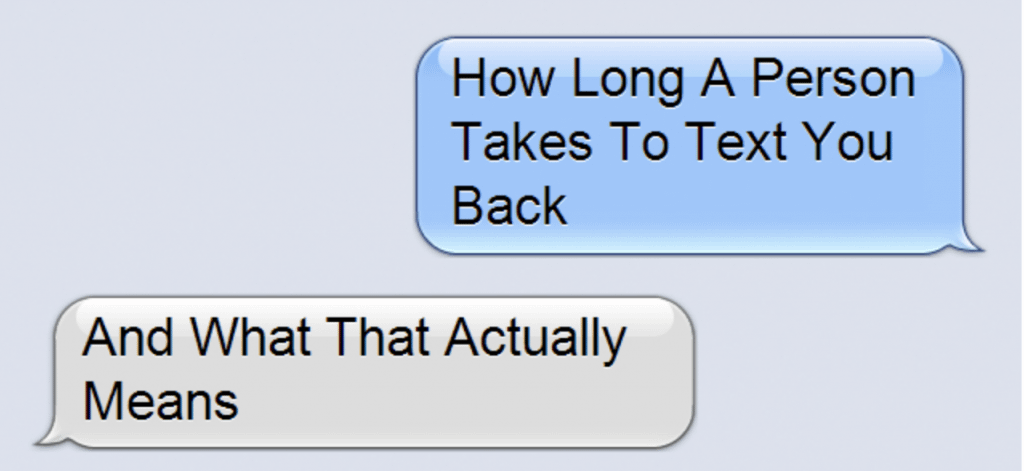
    Text response times, ghosting, and being ‘left on read’ spawn memes all over the internet. We’re all agonising about why our messages aren’t being replied to immediately, while acknowledging we’re all overwhelmed with the volume of messages we receive every day.

    So, is it really ever OK just to ignore a text?

    Messaging is overwhelming us

    Before we answer that question, take a look at just how big the problem of messaging overwhelm is. In 2016 Mark Zuckerberg revealed that the daily message volume from Facebook Messenger and WhatsApp combined stood at three times the global volume of daily SMS messages, at 60 billion messages a day compared to 20 billion SMSs. And in 2012 we knew that adults 18-44 were individually sending and receiving between 50 and 120 texts a day.

    • Adults 18-24 sent and received over 128 texts every day.
    • Adults 25-34 sent and received over 75 texts a day.
    • Adults 35-44 sent and received about 52 texts a day.

    A decade later we have a glimpse into how those messages have proliferated. In the third quarter of 2021 in the UK alone the volume of SMS and MMS messages sent and received was around 10.6 billion messages.

    Take a look at your own phone for a minute and count up how many messages you sent and received across all messaging platforms yesterday. Had you any idea just how many it was?

    Do response times really = importance?

    A whole heap of (only partially) tongue-in-cheek analysis has been devoted online to what it really means when someone takes a takes a certain amount of time to text you back. 12+ hours apparently means “you’re definitely on the cusp of insignificance” whereas 5-60 seconds means “You are Christmas morning to this person!”.

    It’s OK to Ignore a Text (Sometimes)

    It’s worth noting though that even in the good news that you are “Christmas morning” to the speedy responder is buried the warning “Or they have no life at all”…

    So, does the length of response time really equate to where you are in the life importance hierarchy of the person receiving it? What if they’re in a meeting, on a call, in the gym? What if they’re having a really, really bad day (or equally a really, really good one, and are off out celebrating somewhere)? What if they’re sitting across a table from a friend who, maybe one day like you, needs their full attention right now?

    The agony of being ‘left on read’

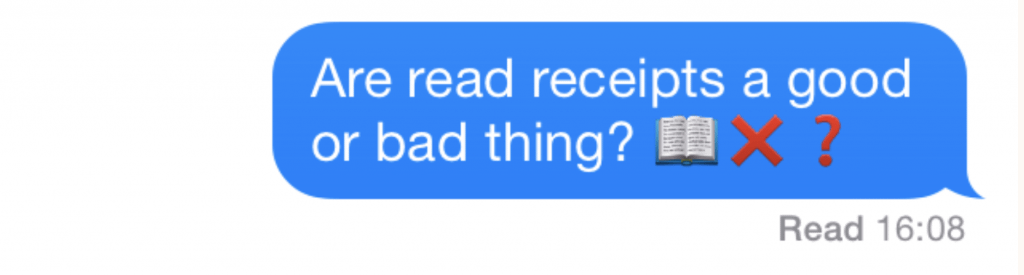
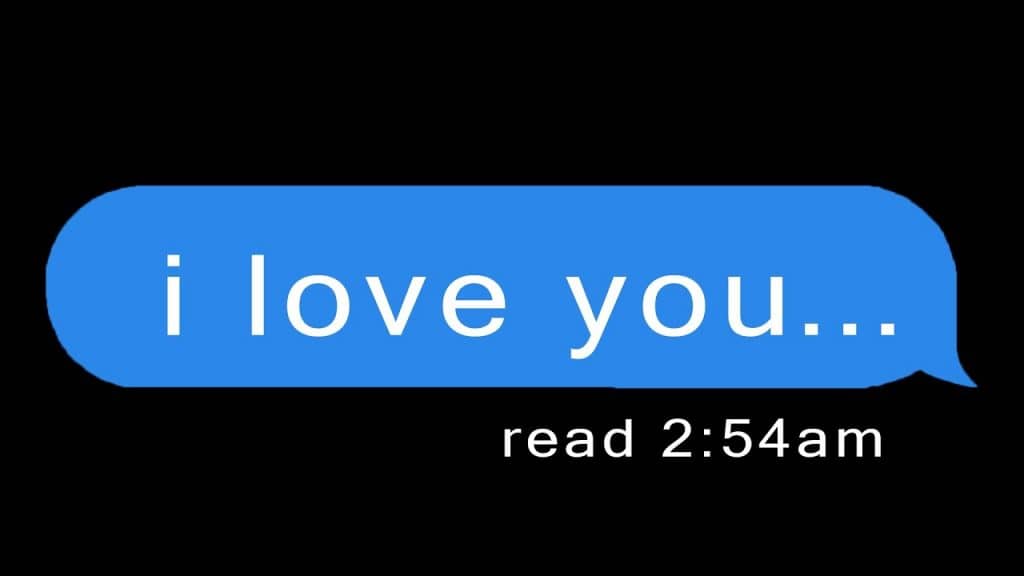
    Of course, it’s not as simple as just agonising over the gap between sending a message and receiving the response. ‘Read’ receipts, introduced by Apple in 2011, signalling when a message is ‘read’, rather than just ‘delivered’ (along with the timestamp) introduced a whole new realm of messaging-related anxiety. (Along with those evil blue ticks on WhatsApp).  Both the Apple and WhatsApp read receipts can now be switched off (whew) but Facebook and Snapchat, don’t allow that. Snapchat even cruelly lets us know whether a screenshot of a snap or message has been taken.

    It’s OK to Ignore a Text (Sometimes)
    How does this make you feel? Would it be better if you couldn’t see that ‘read’ timestamp?

    Knowing when something we’ve sent has been received isn’t new of course. Postal organisations have let us use ‘signed for’ services for decades, so we could find out when a parcel or package was received. Courier and delivery companies now even record and send a photo of a parcel actually being handed over on the doorstep. But the ‘read’ receipts of the online world seem to induce a particular type of agony. We are unequivocal in our advice on this for your mental health – turn read receipts off.

    It’s OK to Ignore a Text (Sometimes)
    We’re going to say ‘bad’.

    Digital triage

    One of our favourite digital gurus Cal Newport, whom we interviewed on our ‘It’s Complicated’ podcast, describes what we all need to do with digital and messaging overwhelm as ‘digital triage’. And digital triage inevitably means that yes, sometimes we are just going to have to ignore a text message for a while, if something much more urgent is in our in-box.

    triage (noun)

    (in medical use) the assignment of degrees of urgency to wounds or illnesses to decide the order of treatment of a large number of patients or casualties.

    Most of us have absolutely no choice but to get much better at digital triage and to make it a central part of our day, when we’re flooded with requests for Zoom calls, Slack messages, emails, texts and DMs. Instead of attempting the impossible task of replying to everything immediately, we need to stop and think before answering and work out which ones are urgent and which merely important, while not worrying about offending those who we place further down the triage list.

    Balancing good manners and self care

    Maybe our worries about how our response (or delayed response) will be perceived are actually more about us than the sender?  A November 2021 study found receivers tend to overestimate how quickly senders expect responses to non-urgent work emails, for example. Perhaps the same is true for messaging, and we can let ourselves off the hook a little more than we think?

    “You have to be a civil and decent person, but you don’t have to give your time and attention to everyone who asks for it.”

    Daniel Post senning, the emily post institute

    It’s all about how we ignore a text of course. No-one wants to be rude. So, set clear expectations for response times, use automated tools to let people know you won’t be responding for a while and remind yourself that, if you’re doing digital triage properly, not every message needs or deserves a response.

    The sanity checklist

    So, yes, we really do think there are times when it’s absolutely OK to ignore a text. But, unless you want to find yourself without any friends and with a very annoyed family, design your environment and communicate your new habits clearly so you can do this with the minimum of offence given. Here’s our checklist;

    • Tell everyone your ‘no go’ texting times ( ie “never after midnight”)
    • Disable all ‘read’ receipts
    • Make use of ‘do not disturb’ mode
    • Enable ‘auto reply’ features
    • Give others permission to ignore a text from you

    That last one is the most important of all. You can’t expect to be able ignore a text from a friend because it doesn’t come at a good time for you, then get upset when they do the same. Explain that this is about taking stress off everyone and that you’re completely OK with longer response times (just make sure you mean it, when you say it).

    It’s OK to Ignore a Text (Sometimes)It’s OK to Ignore a Text (Sometimes)

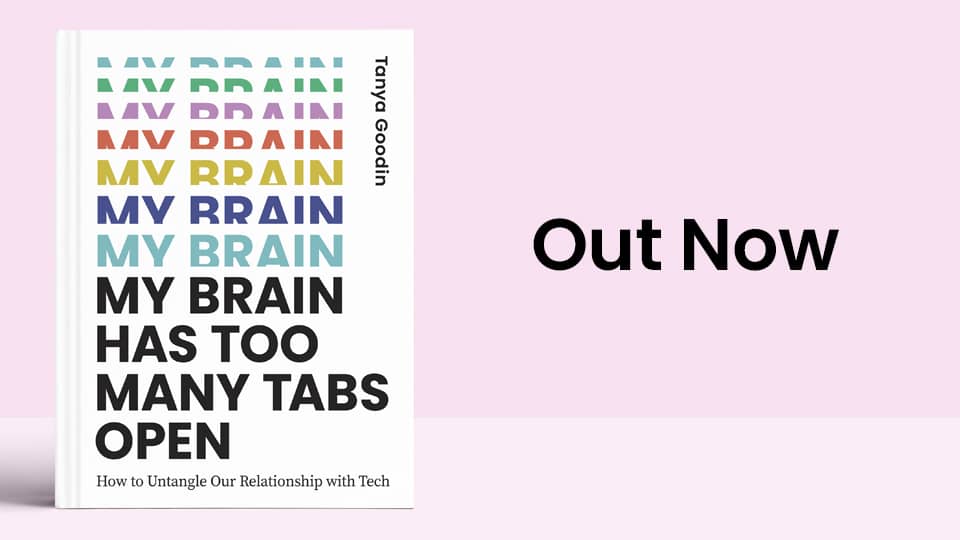
    For more about texting, messaging and the impacts of being over-connected to the digital world – pick up a copy of our new book: My Brain Has Too Many Tabs Open. Available to order here.

    View the original article at itstimetologoff.com

  • Spending money late at night on things you don’t really need? Beware ‘vampire shopping’.

    Spending money late at night on things you don’t really need? Beware ‘vampire shopping’.

    This is post 4 of 4 in the series “My Brain Has Too Many Tabs Open”

    1. Are You Guilty of Sharenting? How to Stop
    2. Have you been ‘phubbing’ your loved ones? We can help.
    3. Technoference: What it is and How to Stop Doing it.
    4. Spending money late at night on things you don’t really need? Beware ‘vampire shopping’.

    As we come out of the Christmas season, and on through the January sales, many of us will be seeing an increase in the number of packages delivered to our door on a weekly (sometimes daily..) basis. This phenomenon of excessive spending is not a seasonal issue. If we’re honest, we all know that come February and March we will all still be scrolling through clothes, home improvement and pet care sites, buying things we don’t really need. Compared to just 10 years ago we are buying exponentially more, and now those purchases have been moved online, removing the friction of in-person shopping trips of yore. It’s not simply a lack of willpower either, we are being manipulated into late night sprees we can’t afford with the same techniques used to hook us into social media: we are vampire shopping.

    What is Vampire Shopping?

    Vampire shopping is the act of online shopping late at night, usually between 1 and 4am. It is characterised by shopping largely from your bed, making more purchases than you would at any other time. Often buying things you may realise the next day were not entirely essential. If that sounds familiar, you are not alone. Over 1/3 of shoppers now spend more money at night than during the day. Perhaps not surprisingly the over-represented groups in the vampire shopping category are gamers and sleep deprived parents. It has become more and more prevalent because of the ease of spending money online: just one click away if you use ApplePay, “It doesn’t feel like real money” as one self-confessed vampire shopper exclaimed.

    Why is it a problem?

    Vampire shopping is a problem because it is characterised by buying things we don’t actually need, and haven’t thought enough about, because we make the decision in the stupor of late night scrolling. Not only that, but we are much more likely to make bad financial decisions later in the evening. If you scroll at night instead of during the day research shows you’re likely to spend 20% more. In a country like the UK, where our hours of night are greatly increased in the winter months this can mean that shoppers spend nearly 2.5 hours shopping at night in winter compared to 1.5 hours in the summer.

    How to stop

    If, like thousands of shoppers around the world, this is no longer sustainable for you – have no fear. We have some advice which should stop your late night sprees in their steps:

    1. Remove all your card details from auto-fill online and from any eWallet you may have. This reintroduces the friction which would exist in real life and gives you a second to evaluate your purchase.
    2. Leave the items in your basket overnight: if you are shopping late at night it is highly unlikely that what you want will have sold out tomorrow so give yourself a night’s sleep before you make the purchase: you will be surprised how frequently you decide you really don’t need it come sun up.
    3. Check in with yourself: if you are feeling Hungry, Angry, Lonely or Tired it’s time to HALT your late-night scrolling, and try and get some sleep.

    If you want to learn more about ‘vampire shopping’ and the many other ways in which our digital habits are changing our lives, pick up Tanya Goodin’s new book: ‘My Brain Has Too Many Tabs Open’.

    View the original article at itstimetologoff.com

  • Finding Focus and Concentration in an Always-On World

    Finding Focus and Concentration in an Always-On World

    Finding time for tasks that involve focus and concentration is increasingly difficult in our smartphone-dominated world. With our over-connectedness to our digital devices, our FOMO, and the move to more emphasis on working from home, carving out distraction-free blocks of time while we focus on something important feels almost impossible.

    Create ‘blocks’ of time to focus

    And carving out those blocks is exactly what we need to do as the first step towards improving our focus and concentration. The Pomodoro Technique is one way of working which has five simple steps to help you focus on one task at a time and, because you set a strict time limit with a break, it enables you to do that efficiently and without feeling burnout and exhausted at the end.

    The Pomodoro Technique is a great place to start to improve focus and concentration

    5 Steps to the Pomodoro Technique

    1. Select your first task.
    2. Set a timer for 25 minutes.
    3. Work on the task for 25 minutes.
    4. When the timer rings, take a 5-10 minute break to stretch, walk around or get a bit of fresh air.
    5. If you have more tasks, repeat the steps but take a longer 20-30 minute break after completing four tasks.

    The technique is incredibly popular with devoted adherents swearing it’s the secret key to unlocking improved focus and concentration, boosted productivity and creativity. However, the key to making it work lies not just in creating the blocks of time themselves, but in making sure you can completely focus while working through each block.

    Distance Yourself from Notifications While Working

    If you try and implement the technique while still picking up and checking your smartphone, the dedicated focus time you have created for yourself is eroded. Separating yourself from your smartphone while you’re focusing is essential to reap the benefits.

    Studies have shown that the mere presence of our smartphone while we are trying to focus on something cognitively demanding, can reduce our IQ. In other words, just seeing our smartphone can make us more stupid. And that’s because, of course, the anticipation of the dopamine-creating notifications (from social media, messaging apps and other forms of communication) distracts us hopelessly. Even if we think we’re consciously ignoring our phone, our sub-conscious is thinking about the pay-off our brain will get when we pick it up.

    So, put your smartphone in another room (the same studies show that even if it’s hidden from our view, but in the same room, it can still impact our focus and concentration) and carve out some dedicated time to focus on what’s important. Try it for just one 25 minute block of time before you dismiss it as impossible, or impractical, and see how much you get done.

    For more about how you can improve work habits and your focus and productivity as well as tackling bad digital habits that are changing our lives – pick up a copy of our new book: My Brain Has Too Many Tabs Open. Available to order here.

    View the original article at itstimetologoff.com

  • “Am I addicted to social media?” Take our NEW QUIZ

    “Am I addicted to social media?” Take our NEW QUIZ

    “Am I addicted to social media?” is one of the most-searched questions on Google. And it’s one of the questions we get asked the most at Time To Log Off too. So, we’ve been spending the last few weeks working on a new interactive quiz which might help you answer the question for yourself, and hopefully put your mind at rest.

    “Am I addicted to social media?”

    There are a few telltale signs to determine if you’re addicted to social media (no, we’re not going to tell you in this post, we really want you to take the quiz!) and we’ve designed our new quiz to check out how closely you match to the classical definition of social media addiction. Addiction to social media is what’s termed a ‘process addiction’ similar to an addiction to gambling, shopping or even exercise. It’s not quite the same as an addiction to a substance (such as alcohol or drugs), but the impact on your life can be very similar.

    In our best-selling digital detox course we explain all about the persuasive tech industry of Silicon Valley and about how so much of what we do in the digital world is designed to ‘hook’ us and spike dopamine (the feel-good chemical) in our brains. Social media addiction is one of the inevitable results. The quiz we’ve designed is intended to be a fun look at whether you’re spending too much time online, but if you’re concerned you should always see a mental health professional to discuss your habits if you think they might be getting out of control.

    The quiz has just nine questions which are deceptively simple but designed to probe into your habits – and importantly, how you feel about your habits.

    Are you addicted to social media?

    Our social media addiction quiz asks (amongst other things):

    1. How many accounts do you have?
    2. How often do other people comment (negatively) on your use?
    3. How often do you check social media?
    4. Have you tried to cut down? How hard did you find it?
    5. Does your social media habit interfere with the rest of your life?

    If you’re not worried about being addicted to social media, we have two other quizzes in the interactive quiz section of our website. Do take a look and if you haven’t already done those, why not give either of them a try?

    “Am I addicted to my smartphone?”

    Our most popular quiz on our website our “Am I Addicted to my Smartphone?” quiz is one way of working out if it’s you, or your smartphone, who is in charge of your daily habits.

    Are you addicted to your smartphone? Or have your habits just got a little bit out of control?

    Our smartphone addiction quiz will ask you:

    1. The last time you checked your phone.
    2. Where your phone is when you sleep.
    3. How often your phone is the first thing you check in the morning.

    And other questions designed to draw a picture of your habits. Give it a go.

    “Do I need a digital detox?”

    When you’ve done either (or both) of the addiction quizzes, it might be worth giving our final quiz a try to ask yourself “do I need a digital detox?“.

    Do you need a digital detox?

    Take all three of our fun interactive quizzes and check-in on your habits

    You could even give all three of our quizzes a go (they take about three minutes each quiz) or even recommend them to friends and family. And if you have any ideas for other quizzes we can develop – please get in touch!

    If you think you might be addicted to social media, your smartphone, or you think you might need to take a break from the digital world – pick up a copy of our new book: My Brain Has Too Many Tabs Open. Available to order here.

    To explore the concept of digital wellbeing further and to take a digital detox with us, check out our online course How to do a Digital Detox: The Ultimate Guide to Digital Wellbeing

    View the original article at itstimetologoff.com

  • Do you love your smartphone more than your partner?

    Do you love your smartphone more than your partner?

    This is post 5 of 6 in the series “#LogOffForLove”

    1. Valentine’s Day 7 Days to Digital Detox Challenge #LogOffForLove
    2. Valentine’s Day Digital Detox Challenge #LogOffForLove
    3. Valentine’s Day 2018: #LogOffForLove Digital Detox Challenge
    4. #logoffforlove this Valentine’s Day
    5. Do you love your smartphone more than your partner?
    6. #LogOffForLove This Valentines Day 2022

    As Valentine’s Day approaches we’re asking the tricky question “Do you love your smartphone more than your partner?” Are you making them feel like the third wheel in your relationship with your compulsive checking habits? It can be incredibly easy to do, and we have written about the dangers many times before: so here are the signs to watch out for!

    Do you ‘phub’ them?

    We are all aware of how phubbing (snubbing those around us by looking at our phone instead of engaging) can make people feel. We know how it feels when it happens to us (spoiler alert: not great) and many of us in recent years have taken to leaving our phone in a bag, or turning off notifications in order to fully commit time and energy to those we are with. Ironically it is when we are with our closest loved ones that we feel the least inclined to follow this rule. Perhaps it is because we see them all the time, perhaps it is because they know how vital that work email is, or perhaps we just don’t notice ourselves doing it. This has led to an epidemic of phubbing on unprecedented levels with more than 17% of people in a recent study admitted to phubbing those around them over four times a day. If you fall into that camp: beware!

    Is your phone in your bedroom?

    Another tell-tale sign that you may be prioritising your smartphone over your relationship is the physical spaces you allow it in. Are you, for example, winding down in the evenings by lying next to your partner on your phone: ignoring them? 40% of Americans take their phones to bed, so if you do too, you are not alone. But next time, remember how you feel when you want to talk with your loved one, listen to music together or just leave the space open for time together and you were shut down by them focussing solely on their phone. Maybe leave it outside the room tonight to give it a go?

    When was the last time you had a phone free meal?

    Similarly to the physical boundary of keeping your phone out of the bedroom, think about the boundaries you have around time such as meals. When you eat a quick breakfast or even leisurely dinner with your partner are you engaging with them? Or are you both sat together on your phones? Over 75% of Brits use their phones whilst eating, so again you are not in the minority but that doesn’t mean this is the healthiest practice for maintaining a solid relationship.

    Are you intentional about your relationship?

    Leading on from the last two: when you are using your phone with your partner present the most important question is whether you are using it intentionally. On average we check our phone every 12 minutes, often unconsciously. We can turn that off to a degree when spending time with those we don’t see often, and when we take part in planned activities. But, if you love your smartphone a bit too much, how often are you managing that level of concentration at home with your partner? Unfortunately in the age of smartphones we can’t simply relax into easy habits of communication: we must remember to intentionally make space and time for our partners without the distraction of screens. 70% of people have reported that smartphones regularly interfere with their relationships after all.

    Has it come up before?

    The last and most obvious clue that you love your smartphone more than your partner is if this is an issue in your relationship. Do you have conflict in the evenings, or at mealtimes over one of you focussing too much on your phone? Has it been mentioned by friends and family? Are you known as the one who can’t get off their phone? If that is the case then it’s time to make a change.

    For more about how you can improve your relationships by getting a handle on your tech habits – pick up a copy of our new book: My Brain Has Too Many Tabs Open. Available to order here.

    View the original article at itstimetologoff.com

  • #LogOffForLove This Valentines Day 2022

    #LogOffForLove This Valentines Day 2022

    This is post 6 of 6 in the series “#LogOffForLove”

    1. Valentine’s Day 7 Days to Digital Detox Challenge #LogOffForLove
    2. Valentine’s Day Digital Detox Challenge #LogOffForLove
    3. Valentine’s Day 2018: #LogOffForLove Digital Detox Challenge
    4. #logoffforlove this Valentine’s Day
    5. Do you love your smartphone more than your partner?
    6. #LogOffForLove This Valentines Day 2022

    We all choose to spend Valentines differently: some go all out with gifts, activities and grand gestures whilst others choose to spend the day much like any other, stay in or get a takeaway. Regardless of the importance you place on the day, nothing screams romance less than someone who is glued to their phone and doesn’t pay proper attention to their Valentine. We have written before about the impact which phubbing (snubbing someone with your phone) can have on a relationship, and that is not the only point of tension between phones and loved ones!

    So, we have put together some tips to help you log off for love this Valentines as part of our annual campaign encouraging you to prioritise relationships over devices.

    Give an analogue gift

    The most obvious display of Valentines spirit is in the gift giving, so this year we are challenging you to think outside of the box and give an analogue gift. From hand writing a card to booking a holiday for the two of you, there are lots of options for gifts which can focus on the person you love rather over technology! Especially on Valentines it is even more important that the thought behind your gift focuses on the real world, and demonstrates your investment in the relationship.

    Plan offline activities

    If you are celebrating the day in style with some Valentines related activities we recommend going for some offline events too! Perhaps you could play crazy golf, go up in a hot air balloon or simply cook them dinner and do a puzzle together. No matter how you celebrate there are lots of ways to spend time together in person and focus on quality time over consumption of media like going to the cinema or watching TV at home.

    Intentionally log off

    There will be lots of variety in ways that we all log off for love this Valentines but one thing we can all do throughout the day and incorporate into all our activities is to have the intention to log off. This means that we can plan in advance. If you know that you might be distracted by work emails, a match score or internet gossip instead of being fully focused on your partner take steps in advance to make sure that doesn’t happen. You could let your colleagues know you are going off-grid that night, or perhaps turn off notifications for the evening. We all know how easy it is to get distracted so get ahead of it!

    Keep your phone out of the bedroom

    One way in which you can plan ahead is to commit to leaving your phone outside of the bedroom, at least for this one night. We have written before about the damaging impact which having your phone in your room can have on sleep (only 20 mins can significantly impact sleep quality) and our mental health but it is equally damaging to our relationships as its presence can often cause us to split our attention and leave our partner neglected.

    Log off for love throughout the year!

    Finally, the best gift you can give this Valentines is to log off for love all year round. Take these tips and institute them in your day to day life beyond one celebration of love. Your partner deserves it, and so do you!

    View the original article at itstimetologoff.com

  • Spending money late at night on things you don’t really need? Beware ‘vampire shopping’.

    This is post 4 of 4 in the series “My Brain Has Too Many Tabs Open”

    1. Are You Guilty of Sharenting? How to Stop
    2. Have you been ‘phubbing’ your loved ones? We can help.
    3. Technoference: What it is and How to Stop Doing it.
    4. Spending money late at night on things you don’t really need? Beware ‘vampire shopping’.

    As we come out of the Christmas season, and on through the January sales, many of us will be seeing an increase in the number of packages delivered to our door on a weekly (sometimes daily..) basis. This phenomenon of excessive spending is not a seasonal issue. If we’re honest, we all know that come February and March we will all still be scrolling through clothes, home improvement and pet care sites, buying things we don’t really need. Compared to just 10 years ago we are buying exponentially more, and now those purchases have been moved online, removing the friction of in-person shopping trips of yore. It’s not simply a lack of willpower either, we are being manipulated into late night sprees we can’t afford with the same techniques used to hook us into social media: we are vampire shopping.

    What is Vampire Shopping?

    Vampire shopping is the act of online shopping late at night, usually between 1 and 4am. It is characterised by shopping largely from your bed, making more purchases than you would at any other time. Often buying things you may realise the next day were not entirely essential. If that sounds familiar, you are not alone. Over 1/3 of shoppers now spend more money at night than during the day. Perhaps not surprisingly the over-represented groups in the vampire shopping category are gamers and sleep deprived parents. It has become more and more prevalent because of the ease of spending money online: just one click away if you use ApplePay, “It doesn’t feel like real money” as one self-confessed vampire shopper exclaimed.

    Why is it a problem?

    Vampire shopping is a problem because it is characterised by buying things we don’t actually need, and haven’t thought enough about, because we make the decision in the stupor of late night scrolling. Not only that, but we are much more likely to make bad financial decisions later in the evening. If you scroll at night instead of during the day research shows you’re likely to spend 20% more. In a country like the UK, where our hours of night are greatly increased in the winter months this can mean that shoppers spend nearly 2.5 hours shopping at night in winter compared to 1.5 hours in the summer.

    How to stop

    If, like thousands of shoppers around the world, this is no longer sustainable for you – have no fear. We have some advice which should stop your late night sprees in their steps:

    1. Remove all your card details from auto-fill online and from any eWallet you may have. This reintroduces the friction which would exist in real life and gives you a second to evaluate your purchase.
    2. Leave the items in your basket overnight: if you are shopping late at night it is highly unlikely that what you want will have sold out tomorrow so give yourself a night’s sleep before you make the purchase: you will be surprised how frequently you decide you really don’t need it come sun up.
    3. Check in with yourself: if you are feeling Hungry, Angry, Lonely or Tired it’s time to HALT your late-night scrolling, and try and get some sleep.

    If you want to learn more about ‘vampire shopping’ and the many other ways in which our digital habits are changing our lives, pick up Tanya Goodin’s new book: ‘My Brain Has Too Many Tabs Open’.

    The post Spending money late at night on things you don’t really need? Beware ‘vampire shopping’. appeared first on Time to Log Off.

    Source: itstimetologoff