Tag: Big Pharma

  • The Pharmacy, the Pills and the Crisis

    The Pharmacy, the Pills and the Crisis

    Walgreens acted as its own distributor and, according to a lawsuit, failed to report suspicious orders of pain pills and prevent diversion to the black market.

    By Jenn Abelson, Aaron Williams, Andrew Ba Tran, Meryl Kornfield, Investigative Reporting Workshop

    At the height of the opioid epidemic, Walgreens handled nearly one out of every five oxycodone and hydrocodone pills shipped to pharmacies across America.

    Walgreens dominated the nation’s retail opioid market from 2006 through 2012, buying about 13 billion pills — 3 billion more than CVS, its closest competitor, according to a Drug Enforcement Administration database of opioid shipments. Over those years, Walgreens more than doubled its purchases of oxycodone.

    The company had “runaway growth” of oxycodone sales because it continued to send pills to stores “without limit or review,” Edward Bratton, Walgreens manager of pharmaceutical integrity, wrote to another employee in 2013. The email is among thousands of documents recently disclosed in a federal lawsuit that seeks to hold Walgreens and other businesses responsible for the nation’s opioid crisis.

    While most chain and independent pharmacies relied heavily on wholesalers to supply their prescription opioids, Walgreens obtained 97 percent of its pain pills directly from drug manufacturers, a Washington Post analysis of the data shows. This arrangement allowed Walgreens to have more control over how many pain pills it sent to its stores.

    By acting as its own distributor, Walgreens took on the responsibility of alerting the DEA to suspicious orders by its own pharmacies and stopping those shipments. Instead, about 2,400 cities and counties nationwide allege that Walgreens failed to report signs of diversion and incentivized pharmacists with bonuses to fill more prescriptions of highly addictive opioids.

    From 2006 through 2012, Walgreens ordered 31 percent more oxycodone and hydrocodone pills per store on average than CVS pharmacies, and 73 percent more than other pharmacies nationwide, according to The Post’s analysis of the DEA database, known as the Automation of Reports and Consolidated Orders System (ARCOS).

    When Walgreens considered surveying its pharmacies in Florida in 2011 to identify questionable pain pill customers, a company attorney advised caution: “If these are legitimate indicators of inappropriate prescriptions perhaps we should consider not documenting our own potential noncompliance,” according to an email disclosed in the case.

    In 2012, a drug distributor produced a report for Walgreens that flagged nearly half of the chain’s roughly 8,000 stores for dispensing high numbers of controlled substances, including oxycodone, court records show.

    After warnings from the DEA, Walgreens agreed in 2013 to pay $80 million — a record settlement for the agency at the time — to resolve allegations that the company failed to sufficiently report suspicious orders and negligently allowed controlled substances, such as oxycodone and other prescription pain medications, to be diverted for abuse and illegal black market sales.

    The large volume of pills flowing into Walgreens pharmacies made some stores targets for crime, including armed robberies and employee theft, according to police officials, board of pharmacy records and other published reports. In 2014, a pharmacy technician who stole about 25,000 pain pills from a Walgreens in Missouri told state investigators that another employee gave him instructions on how to pilfer the pills and sell them during breaks in the store bathroom and pharmacy parking lot.

    Now, Walgreens is one of the holdouts in the federal suit playing out in Cleveland after other major distributors and drug manufacturers reached a settlement with two Ohio counties on Oct. 21. The trial for Walgreens was postponed until next year. CVS and other major pharmacy chains are also defendants.

    “Because Walgreens had full visibility into all dispensing related information necessary to reveal red flags and criteria of suspicion, Walgreens might even be viewed as more culpable due to the wealth [of] data at its complete disposal,” the plaintiffs allege.

    “Walgreens might even be viewed as more culpable due to the wealth [of] data at its complete disposal.”

    The company denied that it incentivized pharmacists to inappropriately fill prescriptions and defended its practices in statements.

    “Walgreens is completely unlike the wholesalers involved in the national opioid litigation. We never sold opioid medications to pain clinics, internet pharmacies or the ‘pill mills’ that fueled the national opioid crisis,” the company said. “We never marketed or promoted opioid medications.”

    Walgreens also said the pain pill data is “misleading” because the records are seven years old and the chain stopped the internal distribution of controlled substances to its pharmacies in 2014.

    Employees were “incredibly diligent and careful” to ensure that pharmacies were not involved in diversion, the company said. “We proudly stand by our pharmacy professionals and their record of professional judgment and patient care.”

    A Directed Effort’ To Increase Sales

    Walgreens traces its roots to 1901, when Charles Walgreen Sr. pulled together enough money for a down payment on the pharmacy where he worked on Chicago’s South Side. He shook up the business by adding more merchandise and making some of the drugs himself to keep prices low.

    His model was successful, and over the next two decades he opened about 20 stores. Today, the company operates 9,277 pharmacies in all 50 states and the District of Columbia.

    As the demand for opioids increased in the early 2000s, Walgreens expanded its internal distribution network. The company added two facilities in Ohio and Florida that had special security to handle controlled substances, including oxycodone. It was an advantage over CVS, which relied entirely on outside suppliers for the medication.

    In 2006, though, regulators found problems with Walgreens’s distribution network. In May of that year, the DEA sent the company a letter detailing record-keeping and security deficiencies that the agency discovered during an investigation at the Walgreens facility in Perrysburg, Ohio, according to documents filed in the Cleveland court case.

    The DEA said Walgreens had an “insufficient” system for reporting suspicious orders of controlled substances. At the time, Walgreens identified questionable orders by analyzing the average daily prescriptions filled by stores in groups of 25, an internal memo shows. The DEA told the company that the size, pattern and frequency of orders should instead be used to flag suspicious ones.

    Two years later, Walgreens conducted an internal audit of its Perrysburg facility and discovered officials there had not properly overhauled the suspicious-order system to comply with the DEA. The audit, filed in court, noted this was an issue at all company distribution centers and “should be addressed to avoid potential DEA sanctions.”

    In 2009, Walgreens began testing a new method at several stores that identified suspicious orders based on order size and frequency. But an internal company document filed in court stated that Walgreens was “capturing data but not cutting orders.”

    As the opioid crisis deepened, the DEA stepped up enforcement against drug manufacturers, distributors and pharmacies. The agency again turned its attention to Walgreens and threatened in a 2009 letter to revoke the registration of a store in San Diego.

    A DEA investigation found that the San Diego store on Midway Drive had filled prescriptions issued by doctors who weren’t licensed in California. It also had dispensed prescriptions to people the pharmacy “knew or should have known were diverting the controlled substances,” agency enforcement records show. One customer over seven months obtained prescriptions for hydrocodone issued by four Florida physicians — an indication that she was “doctor-shopping” to procure pain pills, the DEA record shows.

    In April 2011, Walgreens entered into an agreement with the DEA to settle the case. The company promised to maintain a program to detect and prevent diversion of controlled substances from its stores across the country.

    The DEA would later discover that Walgreens had been engaged in “a directed effort to increase oxycodone sales,” agency records show. In a July 29, 2010, email, Walgreens sent out a spreadsheet to managers ranking all Florida pharmacies on their oxycodone dispensing with the instruction to “look at the stores on the bottom end . . . We need to make sure we aren’t turning legitimate scripts away.”

    Meanwhile, changes in the state’s laws over the years had shifted sales of prescription opioids from pain clinics to pharmacies. Soon the chain was grappling with a surge of pain pill customers in Florida.

    Kristine Atwell, who managed distribution of controlled substances at Walgreens’s Jupiter facility, had emailed corporate headquarters urging that stores justify their large volumes, including one pharmacy that ordered 3,271 bottles of oxycodone in a 40-day period.

    “I don’t know how they can even house this many bottle(s) to be honest,” Atwell wrote in early 2011 in an email previously reported on in The Post.

    A few months later, Walgreens decided to review the “significant increase” in controlled substance prescriptions in Florida, according to company emails filed in court.

    As part of its broader business initiative called “Florida Focus on Profit,” Walgreens officials discussed surveying some of its pharmacies. The proposed questions included, “Do pain management clinic patients come all at once or in a steady stream?” and “Do you see an increase in pain management prescriptions on the day the warehouse order is received?”

    But Dwayne Pinon, a Walgreens attorney, warned against “documenting our own potential noncompliance” and the questions were dropped from the survey, court records show. Pinon, through a company spokesman, declined to comment.

    Walgreens eventually renamed the survey effort “Focus on Compliance” after an employee in an email questioned the “Focus on Profit” title.

    For the first half of 2011, Walgreens accounted for 100 of the top 300 pharmacies in oxycodone purchases in Florida, and some of these company stores bought more than double the average amount of the opioid obtained by other pharmacies in the state, according to DEA enforcement records.

    For the first half of 2011, Walgreens accounted for 100 of the top 300 pharmacies in oxycodone purchases in Florida.

    Agency investigators met with Walgreens officials that August to express concerns about the high volume of pills. In advance of the meeting, Walgreens sent a disc to the DEA with a file labeled “suspicious drug” orders.

    “This gobbledygook is impossible to read and I stopped printing it when it reached 2” [inches] thick,” a DEA investigator wrote in an email to her colleagues after the meeting. “Obviously this is unacceptable.”

    Days after the DEA meeting, Walgreens devised a plan to restrict a store in Hudson, Fla., to a monthly 100 bottles of 30-milligram oxycodone, one of the most coveted pain pills on the black market because of its potency, according to DEA enforcement records. But the pharmacy routinely exceeded the limit, procuring 331 bottles in September 2011, 371 bottles in October, 200 bottles in November and 263 bottles in December, DEA enforcement records show.

    Some Walgreens stores attracted so many pain pill customers that the pharmacies had to hire security or call the police.

    In Oviedo, Fla., large crowds began waiting for the Walgreens on Lockwood Boulevard to open. Between August 2010 and November 2011, Oviedo police responded to 17 incidents at that location, arresting 35 people for charges related to controlled substances.

    Oviedo Police Chief Jeffrey Chudnow wrote dozens of letters and contacted Walgreens’s chairman and chief executive in March 2011 to plead for help and let them know the pharmacy parking lots at two company stores in the city had “become a bastion of illegal drug sales and drug use.”

    Chudnow, who has since retired, told The Post that he never received a response.

    The Lockwood Boulevard store doubled the number of 30-milligram oxycodone pills it ordered from 73,300 in March 2011 to 145,400 pills in July 2011, according to the DEA data. The Post and HD Media, which publishes the Charleston Gazette-Mail in West Virginia, fought a year-long legal battle for access to the DEA database.

    Nationwide, the explosion in pain pills helped fuel crime. Armed robberies spiked at independent and chain pharmacies. Some stores were repeatedly targeted.

    In Michigan, a Walgreens pharmacist purchased a gun to protect himself after the company refused to improve security following a 2007 robbery, the pharmacist alleged in a lawsuit. In 2011, the pharmacist shot at two masked gunmen during a robbery attempt on an overnight shift. No one was harmed, but the pharmacist was fired and sued Walgreens.

    Later that year, an armed gunman who fled after demanding painkillers at a Walgreens in Tennessee prompted a lockdown at nearby schools, according to police. In Colorado Springs, robbers hit multiple Walgreens pharmacies 14 times in 2011 and seven times in February 2012.

    Gaps in the System

    As pharmacy robberies made headlines, the DEA escalated its investigation of Walgreens. The agency served warrants on six stores scattered across Florida and the Jupiter distribution center in spring 2012.

    Walgreens responded by slashing shipments of opioids to the six stores. In the event of the DEA shutting down the Jupiter location, the chain planned to shift distribution to outside suppliers and its Perrysburg, Ohio, facility, the same one the DEA had cited in 2006, according to company emails filed in the court case.

    During a meeting with the DEA, Walgreens told the agency it wanted to “cooperate and avoid litigation,” as stated in an internal company presentation from July 2012.

    Walgreens officials detailed steps the chain was taking to address the DEA’s concerns, including updated training for pharmacists to identify suspicious prescriptions. The company said while its suspicious-order monitoring program “did not automatically halt suspicious orders upon identifying them, it did systematically decrease [controlled substance] order quantities if the quantity ordered exceeded certain thresholds.”

    Later that summer, DEA investigators interviewed pharmacists at Walgreens stores in Fort Pierce, Fla.

    The DEA found that one of the pharmacists had filled at least seven oxycodone prescriptions issued by a Miami gynecologist, ignoring warnings other employees had left about the doctor in pharmacy records, including: “FAKE CII DO NOT FILL ANY CII CANDY DR.”

    The note referred to doctors who appeared to be writing bogus prescriptions for substances listed on Schedule II of the Controlled Substances Act.

    Questioned by the DEA about the prescriptions, the pharmacist said, “We should not have filled them,” according to agency enforcement records.

    In September 2012, the DEA employed its most severe enforcement action: Agents padlocked a vault containing oxycodone and other controlled substances at the Walgreens distribution center in Jupiter and later threatened to revoke the registrations of the six pharmacies.

    Walgreens responded by launching a task force and discussing ways to tighten up oversight of opioids distributed to its stores.

    When pharmacies hit limits imposed by Walgreens, they could still transfer pills from other stores or order from outside suppliers, court records show. Pharmacies could also find workarounds by placing special PDQ orders, meaning “pretty darn quick,” from Walgreens internal network.

    The company proposed eliminating PDQ orders for oxycodone, but Kermit Crawford, then a top executive at Walgreens who oversaw the pharmacy business, objected to the change.

    “I was not under the impression this was a done deal. Concerned we are ‘all or none,’ ” Crawford wrote in an Oct. 1, 2012, email disclosed in the case. “We have to do what’s right for patients also.”

    Crawford, who later became president and chief operating officer of the Rite Aid chain, declined to comment.

    At the same time, Walgreens wrestled with other gaps in the system.

    In October 2012, a Walgreens pharmacy in Modesto, Calif., came under scrutiny because it was purchasing about 17,500 pills containing hydrocodone per week, putting the drugstore “over the corporate limit” of the number of pills it was permitted to order, according to a company email cited in court records.

    To obtain more hydrocodone, the Modesto pharmacy, on McHenry Avenue, ordered pills from the distributor Cardinal Health, the document noted. When that set off red flags at Cardinal Health, the store transferred opioids from nearby Walgreens pharmacies, procuring so many pills that it led to shortages at the other stores.

    Walgreens conducted an investigation and discovered “employee pilferage” and fired an employee, company emails filed in court show. The Modesto pharmacy also stopped filling prescriptions from two local doctors.

    Cardinal Health, which had paid a $34 million fine in 2008 to settle allegations that it failed to report suspicious orders, declined to answer questions about the Modesto orders and said, “We are proud of our rigorous analytics system, including conservative, customer-specific thresholds, that we use to spot, stop, and report to our regulators any opioid order that is suspicious.”

    The McHenry Avenue Walgreens was the single largest purchaser of pain pills in the entire Walgreens chain from 2006 through 2012, and one out of every five oxycodone pills ordered was a 30-milligram tablet, The Post’s analysis found. Robbers targeted the store five times for prescription opioids from 2016 through 2018, police said.

    Walgreens said demand for opioids at the pharmacy was driven by hospitals, surgery centers and other pain treatment facilities in the area.

    “Walgreens thoroughly investigated concerns regarding this Modesto pharmacy after Cardinal raised them,” Walgreens said in its statement. “We found that the pharmacy was fully complying with all applicable internal policies and procedures for filling prescriptions for controlled substances.”

    A Dramatic Step

    In November 2012, drug distributor Anda analyzed nearly 1.3 billion pills, including oxycodone, handled by Walgreens. The review “flagged” 3,768 of the chain’s pharmacies for dispensing high numbers of controlled substances in all 50 states, as well as Puerto Rico and Washington, D.C., court records show. The report, filed with redactions, identified 226 of 253 stores in Arizona, 64 of 69 pharmacies in Oregon and all 14 stores in Maine.

    Drug manufacturer Teva Pharmaceutical, which owns Anda, declined to comment.

    Soon after, Walgreens launched a new division called pharmacy integrity. Tasha Polster, who had served on the company’s task force, was tapped to lead that effort. (Polster is not related to Judge Dan Aaron Polster, who is presiding over the federal lawsuit).

    In December 2012, Polster emailed Dan Doyle, a Walgreens finance executive, and said without elaborating that the DEA was alleging the company’s suspicious-order monitoring program was “inadequate.” The DEA, she wrote in the email recently disclosed in court, was “demanding civil penalties, potentially totaling hundreds of millions of dollars.”

    Polster requested a team of a dozen people to review controlled substance orders before Walgreens shipped the drugs to its pharmacies.

    “The Company has enhanced its suspicious order monitoring program for controlled substances in an effort to convince DEA that the proposed penalty is excessive and that our new processes will ensure that similar incidents do not recur,” Polster wrote.

    A Walgreens spokesman said Polster and Doyle, who still work for the company, declined to comment.

    By the end of 2012, Walgreens’s orders of pain pills containing oxycodone and hydrocodone dipped to 2.2 billion from its peak of 2.4 billion the previous year, ARCOS data shows.

    But the DEA continued to investigate. In February 2013, the agency served a warrant and inspected the Perrysburg distribution center.

    In response, Walgreens halted shipments of controlled substances from Perrysburg. It was a dramatic move that Walgreens hoped would “eliminate any immediate need for further DEA administrative action,” three lawyers representing Walgreens wrote in a Feb. 20, 2013, letter to DEA officials that was filed in the court case.

    At first, Walgreens turned to Cardinal Health to distribute controlled substances to its pharmacies. But Cardinal Health had “red flagged” 367 Walgreens stores and would not ship to them because “they are considered suspicious,” according to internal emails between Walgreens employees.

    Cardinal Health, one of the defendants that recently reached a settlement in the national opioid litigation, did not respond to questions about its refusal to send pills to these Walgreens pharmacies.

    Walgreens soon found another distribution partner, AmerisourceBergen. In March 2013, Walgreens announced a deal that gave it an ownership stake in AmerisourceBergen in exchange for a distribution agreement.

    As the DEA investigations pressed on, Walgreens stopped filling pharmacy orders for opioids that exceeded certain limits, according to company documents filed in court.

    This prompted pill shortages and irate customers who complained to a corporate hotline.

    In June 2013, a pharmacy manager in Greenville, N.C., emailed the pharmacy integrity division that she had run out of oxycodone a week earlier and told customers the drugs would arrive that day. When the pills didn’t show up, she wrote that “luckily” she found bottles at another local Walgreens, court records show.

    “I placed a PDQ order for oxycodone . . . (one bottle will NOT be sufficient) – please send us this order ASAP! We are losing business over this!”

    The next day, Steven Mills, with the pharmacy integrity division, responded that PDQs should be used only in “an emergency situation.”

    “You have to realize the reason why we have issues with the DEA today, is due the high amounts of Oxycodone distributions over the past 3 years,” Mills wrote back in an email. “We had to create limits to all stores which protects the integrity of the Pharmacist, DEA license, and the Walgreen Company as a whole.”

    Half of the pain pills ordered by the Greenville store were oxycodone — nearly twice the average of all other pharmacies across the country, according to The Post’s analysis of DEA data from 2006 through 2012. Police said robbers targeted the store earlier this year and stole prescription pills, including opioids.

    The company said the Greenville pharmacy’s orders “were a legitimate reflection of the demands caused by its particular location and market, and Walgreens is unaware of any diversion of prescription pain medication at that pharmacy.” Mills, who still works at Walgreens, declined to comment through a company spokesman.

    On June 11, 2013, the DEA announced Walgreens had agreed to pay an $80 million civil penalty to resolve federal allegations that the pharmacy chain failed to sufficiently report suspicious orders and that the failure was a “systematic practice that resulted in at least tens of thousands of violations,” records show.

    In a statement at the time of the settlement, Crawford, of Walgreens’s pharmacy division, said, “As the largest pharmacy chain in the U.S., we are fully committed to doing our part to prevent prescription drug abuse.”

    Under the agreement, Walgreens admitted that it failed to uphold its obligations under the law and agreed to surrender its DEA registration for the Jupiter distribution center and six stores in Florida until 2014. The settlement addressed the claims in Florida and resolved open civil investigations into Walgreens by U.S. attorneys in Colorado, Michigan and New York, as well as other DEA field offices nationwide.

    In Colorado, federal investigators had identified over 1,600 violations of the Controlled Substances Act at Walgreens stores, including fraudulent prescriptions and the dispensing of controlled substances to customers without a prescription, according to the U.S. attorney’s office in Colorado.

    Employee Theft

    Walgreens eventually stopped the internal distribution of oxycodone and hydrocodone, although the company continued to purchase controlled substances from outside suppliers. The chain also removed sales of opioids from its bonus calculations for pharmacists, according to court records.

    The company declined to explain the change, but said dispensing volume was “one of many factors” used to determine bonuses. “The nominal compensation factor in question in no way incentivized pharmacists to inappropriately fill prescriptions for any medication,” Walgreens said.

    Although Walgreens had imposed limits on the number of opioid pills pharmacies could order, stores could submit override requests if they needed more.

    During 2014 and 2015, the company approved more than 95 percent of these override requests from stores for controlled substances — totaling thousands of orders — and boosted its overall sales of oxycodone, according to an internal presentation filed in court.

    As the pain pills kept flowing, so did problems with diversion. In 2015, Walgreens reported to the DEA that nearly 2 million doses of controlled substances were stolen or lost — a 16 percent increase from the previous year, documents filed in court show.

    Employee theft accounted for the largest share of missing pills, nearly one-third, followed by armed robberies and “unexplained loss,” the documents say. Pills containing oxycodone and hydrocodone topped the list.

    Walgreens’s business practices have drawn scrutiny from state regulators, as well. The boards that license the individual stores and pharmacists have documented problems at company stores such as inadequate security, delays in reporting thefts, inaccurate audits of controlled substances and insufficient vetting of employees.

    In Missouri, Walgreens employees allegedly have pilfered at least 138,000 pills containing hydrocodone and oxycodone from 19 stores since 2005, according to state board records. One of these cases involved a pharmacy technician at Walgreens who stole about 7,500 pain pills in summer 2016 and told investigators that she knew “how easy it would be” to take handfuls of pills and evade security cameras.

    The Post examined 67 investigations in 12 states in which pharmacy boards censured Walgreens or placed pharmacies on probation for violating state regulations, including inadequate security and theft of drugs. In some instances, the company had to pay fines.

    In July, Walgreens agreed to pay a $335,000 fine after the California State Board of Pharmacy discovered that the company had allowed a woman without a pharmacy degree or license to dispense prescriptions for over a decade.

    The employee, Kim Thien Le, had worked at Walgreens since 1999, rising from pharmacy cashier to pharmacy manager in 2016. She used the license numbers of other pharmacists to dispense 745,355 prescriptions at 395 pharmacies, including some remotely. In all, Le filled more than 100,000 prescriptions for controlled substances, such as oxycodone, hydrocodone and fentanyl, according to state records.

    Le, who was charged this summer with three felonies alleging she falsely impersonated licensed pharmacists, has a court date in January. An attorney representing Le declined to comment.

    The fine paid by Walgreens is one of the largest in the board’s history.

    Walgreens declined to answer questions about Le and other enforcement actions.

    “We take great pride in the judgment and patient care of our 28,000 pharmacists,” the company said. “In the event of a rare and isolated instance when we learn of an employee acting improperly, we act swiftly to address the matter and cooperate fully with law enforcement.”

    This story was originally published by the Investigative Reporting Workshop, a nonprofit,  nonpartisan newsroom at the American University School of Communication.

    View the original article at thefix.com

  • Prevent Opioid Overdose Deaths: A Call for Specific Prescribing Laws and Physician Oversight

    Prevent Opioid Overdose Deaths: A Call for Specific Prescribing Laws and Physician Oversight

    Make doctors precisely explain why they are prescribing opioids and why they decided on the pill count and refill allowance for each patient. 

    Recently, a friend’s teenage daughter underwent a procedure common for young adults: she had her wisdom teeth extracted. I had the same procedure performed in the late 1990s, at age 20. Back then, I was given a bottle of ibuprofen for the pain and, for the bleeding, told to apply tea bags. My friend’s daughter was given something just a tad stronger: 

    Vicodin.

    A teenager was given a strong opioid painkiller to numb the pain of a routine tooth extraction. It’s absurd that this is the accepted medication for this procedure when there are no complications, nothing that would indicate breakthrough pain on a level of requiring a narcotic that is given to cancer patients.

    However, the fight against opioid abuse is finally gaining promising victories by wielding an effective weapon: lawsuits. 

    Holding Big Pharma Accountable

    As the epidemic grew, many – myself included – called for state and local authorities to take drug companies to court for knowingly encouraging large-scale consumer usage of highly addictive prescription painkillers such as OxyContin, Vicodin and Percocet. Thousands of lawsuits have now been filed and in August, the $572 million decision won by Oklahoma against Johnson & Johnson became the first large-scale trial ruling concerning Big Pharma’s role in creating the opioid crisis. The state argued that J&J, which had supplied 60% of the opioids drug makers used for painkillers, aggressively marketed the drug to doctors and patients as safe. 

    Most recently the Sackler family – owners of Purdue Pharma, which makes OxyContin – reached a tentative settlement for$10-12 billion, a move that will result in the company’s bankruptcy

    They lied, we died, and now they have to pay up. Hopefully these are just the first few drips in an oncoming flood of restitution owed Americans by companies responsible for an unprecedented addiction crisis. They deserve whatever fates come their way – criminal, civil, or, as the 800-pound spoon left at Johnson & Johnson’s headquarters intended, shame-filled. 

    Now, as the overdose death rate shows signs of ebbing but has by no means abated – 68,000 Americans died in 2018 compared with 72,000 in 2017, hardly cause for celebration – it’s time to ask what’s next. 

    For years, drug companies pushed opioids as a panacea for all things pain-related. The result was an absolute avalanche of prescriptions: 191 million in 2017 alone, which averages to 58 opioid prescriptions for every 100 Americans. And despite guidelines intended to discourage opioid painkillers as a first-step approach to easing pain, primary care clinicians – most patients’ initial gateways to healthcare – wrote 45% of all opioid prescriptions. 

    Surgeons also have been implicated in widespread overprescribing. One study of nearly 20,000 surgeons, led by Johns Hopkins School of Public Health researchers, noted the common practice of prescribing dozens of opioid medications even for low-pain operations. Some prescribed over 100 opioid pills for the week following a surgery, along with usage instructions far exceeding guidelines from several academic medical centers. No wonder some six percent of all patients prescribed opioids post-surgery become dependent

    The diagnosis is simple: Doctors have proven incapable of, or unwilling to, exercise responsible discretion in determining which conditions and medical procedures necessitate painkillers notoriously linked to addiction, misuse, and overdose. 

    A Painful Backlash

    Complicating matters, the opioid crisis has become a two-way street. 

    In response to the backlash to the initial opioid free-for-all, many doctors have become so wary of prescribing opioids that those who truly need them are unjustly suffering. Much of this hesitancy is a reaction to guidelines issued by the Centers for Disease Control in 2016 that, according to Richard Lawhern, founder of the Alliance for the Treatment of Intractable Pain, has subjected patients with legitimate chronic pain to a “draconian reduction” in doctors willing to meet their needs with opioid-based medication.

    The problem with the CDC’s directive was vagueness of language. The guidelines state that opioids are appropriate for pain caused by cancer, end-of-life care, and “palliative care.” But “palliative” is a subjective term, and therefore confusing for doctors who, understandably, now have their guards up against malpractice suits in addition to opioid addiction and abuse. In a February 2019 reiteration of its guidelines, the CDC clarified that opioids are reasonable for chronic pain but, unfortunately, repeated its ambiguous wording concerning specific conditions. 

    However unintended, the result is patients who rely on opioids for legitimate medical reasons suffering for the sins of Big Pharma and, subsequently, the incompetence of government officials and the inadequacies – including cowardice – of doctors.

    The scale of the crisis and forcefulness of the backlash also has resulted in patients who, through no fault of their own, became dependent on opioids and, at the drop of a guideline, found themselves completely cut off from a highly addictive drug and dropped into a hellish withdrawal. The unsurprising consequence of this overreaction by doctors is patients turning to the streets for unregulated, often fentanyl-tainted heroin. Any laws written to specify opioid painkiller administration must include reasonable ways of relieving already-addicted patients through treatment centers and weaning agents like methadone and buprenorphine (suboxone). 

    However, the conviction permeating the chronic pain community – that doctors rather than laws should be the primary determinant of opioid prescriptions – simply doesn’t hold water. It’s become clear that doctors don’t necessarily know best. We need rules that hamstring the parasitic overprescribers while unhandcuffing the paranoid underprescribers.

    Guidelines Aren’t Enough

    It’s time for legislators to take the mystery out of this branch of medicine. If doctors can’t stop writing opioid prescriptions to those who don’t need them, or refusing to write prescriptions for those who do, then we must enact laws with clear prescribing instructions. 

    We’re all familiar with mandatory sentencing guidelines; we need mandatory dispensing guidelines – laws that bring harsh punishment for overprescribing pain medication when it’s not indicated, while reassuring doctors that they will not be unfairly punished for providing chronic pain patients with the relief they require.

    The time has come for customized ailment and procedure-related opioid painkiller dosing laws, complete with extensive medical rationale requirements. Make doctors precisely explain why they are prescribing opioids and why they decided on the pill count and refill allowance for each patient. 

    We also need to look at something else: ourselves. Especially in post-surgery settings, the opioid overprescribing epidemic was exacerbated by the naïve, altogether modern notion that patients should never feel discomfort or pain. 

    If alternatives to opioids don’t kill 100% of post-procedure pain, the new one-word answer should be “tough.” The idea that we can go through life without ever experiencing pain is not only delusional but, as we’re seeing, destructive. Things heal. Patients will need more, well, patience. 

    Numbing people literally to death is not the answer. It is irresponsible and dangerous to prescribe opioids for an ingrown toenail. Or for carpal tunnel syndrome. Or to a child following a tonsillectomy or, of course, a teenager after a tooth extraction. 

    On the flip side, it is cruel and flat-out stupid to deny patients with serious chronic pain access to a now-demonized family of medicines that for many has meant the difference between functioning and debilitation. 

    The time for general guidelines is behind us. We need strict, specific statutes that greatly diminish doctors’ discretion while placing transparency and responsibility squarely on their shoulders. 

    View the original article at thefix.com

  • Johnson & Johnson Called Opioid "Kingpin" In Oklahoma Lawsuit

    Johnson & Johnson Called Opioid "Kingpin" In Oklahoma Lawsuit

    The lawsuit names the multinational company as a “top supplier, seller and lobbyist” for prescription opioids.

    Johnson & Johnson is being named as a “kingpin” of the opioid epidemic in the first big trial targeting opioid manufacturers, which is set to take place in May 2019.

    The lawsuit, brought by the state of Oklahoma, is naming the multinational company as a “top supplier, seller and lobbyist” for prescription opioids, according to a report by Axios.

    Although Purdue Pharma is the most commonly cited company associated with the opioid crisis, there are several other pharmaceutical companies being targeted by the many hundreds of lawsuits being brought to court by local governments as well as individuals.

    Johnson & Johnson, most often associated with baby powder and lotion products, is classified as a pharmaceutical company. 

    Prior to the Axios report, Johnson & Johnson came under fire when it was discovered that the brand’s baby powder contained asbestos. The company was ordered by a California judge on Wednesday to pay $29 million to a woman who sued based on the claim that the powder was a “substantial contributing factor” in the development of her terminal cancer.

    In addition to everyday home products, Johnson & Johnson “produced raw narcotics in Tasmanian poppy fields, created other active opioid ingredients, and then supplied the products to other opioid makers—including Purdue Pharma,” according to the report.

    The company also allegedly boasted about the high morphine content of its poppies, targeted children and the elderly in its marketing, and funded multiple “pro-opioid groups.” A brochure made by one of the company’s subsidiaries even claimed that “opioids are rarely addictive.”

    The lawyers representing Oklahoma in the upcoming case have asked a court to release millions of pages of Johnson & Johnson’s confidential documents to the public, based on the fact that the company has divested from the opioid business and therefore shouldn’t have to worry about losing trade secrets.

    “The public interest in this information is urgent, enduring and overwhelming,” wrote Oklahoma Attorney General Mike Hunter.

    Johnson & Johnson provided Axios with a statement in the company’s defense, claiming that it “appropriately and responsibly met all laws and regulations on the manufacturing, sale and distribution of APIs (active pharmaceutical ingredients) and the raw materials that go into them” and that its “actions in the marketing and promotion of these important prescription pain medications were appropriate and responsible.”

    The company claims that it accounted for “less than one percent” of the total market share for opioid medications.

    However, the Axios report points out that Johnson & Johnson made $1 billion in 2015 by selling the opioid Nucynta and $2 billion from the fentanyl patch Duragesic, which it still sells to this day.

    View the original article at thefix.com

  • Purdue Pharma Considers Bankruptcy Over OxyContin Lawsuits

    Purdue Pharma Considers Bankruptcy Over OxyContin Lawsuits

    If Purdue were to file for bankruptcy, it could “halt” the lawsuits that have been brought against the company by plaintiffs across the country.  

    Purdue Pharma, maker of the prescription opioid OxyContin, is reportedly exploring the option of bankruptcy to deal with the nearly 2,000 lawsuits brought against the company in the wake of the opioid epidemic.

    Purdue has been accused of engaging in aggressive and misleading marketing tactics to pressure doctors to prescribe far more OxyContin than was necessary, leading to a massive spike in addiction and overdose cases. The drug company has denied the allegations, but the lawsuits keep coming.

    If Purdue were to file for bankruptcy, it would “halt the lawsuits and allow Purdue to negotiate legal claims with plaintiffs under the supervision of a U.S. bankruptcy judge,” according to sources who spoke with Reuters.

    In a statement from Purdue, the company declined to comment on the likelihood of turning to bankruptcy over fighting the many lawsuits at their doorstep.

    “As a privately-held company, it has been Purdue Pharma’s longstanding policy not to comment on our financial or legal strategy,” the statement reads. “We are, however, committed to ensuring that our business remains strong and sustainable. We have ample liquidity and remain committed to meeting our obligations to the patients who benefit from our medicines, our suppliers and other business partners.”

    In response to the news, Connecticut Attorney General William Tong has vowed to continue pursuing the state’s suit against Purdue Pharma and its owners.

    “We will oppose any attempt to avoid our claims, and will continue to vigorously and aggressively pursue our claims against Purdue and the Sackler family,” he said.

    Filing for bankruptcy to help handle their legal troubles does not necessarily mean that the drug company is in financial trouble. Many other companies have chosen the same route when faced with lawsuits in the past, according to Fast Company.

    This includes the asbestos manufacturer Johns Manville and Dalkon Shield, the company that created a faulty IUD birth control implant and faced 6,000 lawsuits after thousands of women suffered infertility, ectopic pregnancies, and/or death.

    These two companies created a precedent that is now regularly used by companies faced with high profile controversies, including USA Gymnastics, Pacific Gas and Electric Co., and even the Catholic church.

    Companies that use bankruptcy in this manner can continue on with their business once everything is settled. Unfortunately, victims often receive less compensation than they would if the lawsuits had been settled by a standard civil court with a jury.

    “Corporations don’t want to risk a jury giving, say, $700 million to a cancer victim who used talcum powder every day,” writes Melissa Locker. “Settlements like that could quickly drive them into Chapter 7 bankruptcy, which is the kind where they have to liquidate their assets and potentially cease to exist. That’s why corporations cut victims off at the pass, so to speak, and file for Chapter 11, where the court will take a stoic, logical approach to paying out claims based on dollars and cents, not emotional pleas for the damage done to them.”

    View the original article at thefix.com

  • Insys Execs Used Rap Video To Push Higher Doses Of Fentanyl Spray

    Insys Execs Used Rap Video To Push Higher Doses Of Fentanyl Spray

    The sales video parodied A$AP Rocky’s hit single “F—in’ Problems.”

    Jurors for a racketeering, fraud and conspiracy trial in Boston involving former Insys Therapeutics CEO John Kapoor saw a sales video made by the pharmaceutical manufacturer that showed company employees rapping about increasing prescription dosages and dancing with an individual dressed as a bottle of its powerful fentanyl spray Subys.

    Kapoor and four other former Insys managers and executives are accused of conspiring to pay doctors in exchange for prescriptions for Subsys, a fentanyl-based medication intended for use by cancer patients with severe pain. Kapoor and the other defendants have denied the charges.

    In the video, a parody of A$AP Rocky’s 2012 single “F—in Problems” which prosecutors said was shown during a national sales meeting in 2015, salesmen and other individuals rap about “titration,” a process by which employees persuade medical professionals to increase the strength of a prescription until their patients reach a certain dosage.

    At one point in the video, the person dressed as a Subsys bottle – which is notated with 1,600 micrograms, its highest dosage – is reportedly revealed to be Insys’ then-vice president of sales, Alec Burlakoff.  

    In November 2018, Burlakoff pled guilty to a charge of racketeering conspiracy, and according to NBC News, is expected to cooperate with prosecutors in the case against Kapoor.

    Another former Insys executive, ex-CEO Michael Babich, testified during the current trial that Kapoor encouraged employees to push for high dosages of Subsys so they would continue taking the drug.

    Attorneys for Kapoor claimed that Burlakoff was the architect of the kickback scheme, which according to CBS News, handed out more than $2 million to 18,000 doctors in 2016 alone.

    Kapoor’s lawyers also alleged that Burlakoff and Babich sought to reduce their sentences by providing false testimony against Kapoor, and have claimed that prosecutors have tried to link Insys to the national opioid crisis, noting that Subsys represents a fraction of the prescription opioid market

    Prosecutors, however, claim that Kapoor personally recruited physicians through expensive dinners and high-payment speaking engagements in order to ensure their commitment to higher dosages of Subsys. Kapoor, who resigned from Insys’ board of directors in 2017 after being arrested, along with Burlakoff, for their role in the kickback scheme on the same day that President Donald Trump declared the opioid crisis a public health emergency.

    Subsys, which is reportedly 100 times stronger than morphine, has been alleged to have played a role in hundreds of overdose deaths since the Food and Drug Administration approved it for use as cancer treatment for breakthrough pain in 2012. The drug, which helped to make Insys the best performing public offering in 2013, is now one of several opioid-related assets for which Insys Therapeutics, Inc., is currently seeking a buyer.

    View the original article at thefix.com

  • Connecticut Judge Dismisses Opioid Lawsuits Against Purdue Pharma, Others

    Connecticut Judge Dismisses Opioid Lawsuits Against Purdue Pharma, Others

    The Connecticut lawsuits are part of a nationwide effort to make pharmaceutical companies pay for a portion of the damage caused by this crisis.

    Judge Thomas Moukawsher in Connecticut ruled against 37 cities and towns within the state that brought lawsuits against pharmaceutical companies accused of fueling the opioid crisis in the U.S.

    According to the Associated Press, the judge ruled that the lawsuits were “not allowed because they were not filed as government enforcement actions authorized by state public interest laws.”

    “Their lawsuits can’t survive without proof that the people they are suing directly caused them the financial losses they seek to recoup,” Moukawsher wrote. “This puts the cities in the same position in claiming money as the brothers, sisters, friends, neighbors, and co-workers of addicts who say they have also indirectly suffered losses by the opioid crisis. That is to say—under long-established law—they have no claims at all.”

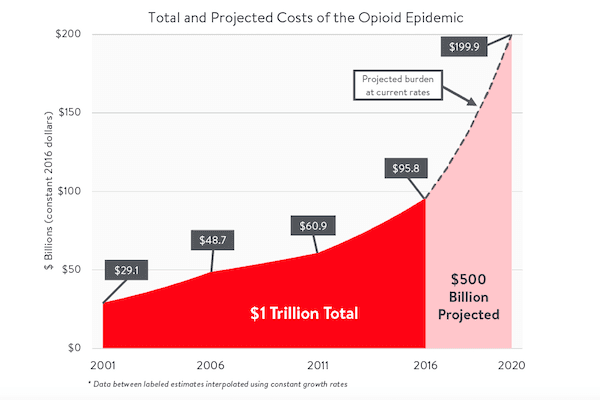
    Though this is a setback in the efforts of the plaintiffs to recoup the many billions of dollars spent to mitigate and combat the opioid crisis, appeals are already being considered.


    Source: ALTARUM

    The lawsuits in Connecticut are only a part of a nationwide effort to make pharmaceutical companies pay for a portion of the damage caused by this crisis. States, cities, counties and Native American tribal councils across the country are filing civil suits against some of the biggest drug manufacturers, claiming that misleading advertising and the alleged encouragement of physicians to over-prescribe opioids have fueled the epidemic of addiction and overdoses.

    According to Forbes, the collective action could become “the largest civil litigation settlement agreement in U.S. history.”

    The record is currently held by the settlement between 46 states and the tobacco industry—a case that some are pointing to as a precedent for the present-day opioid lawsuits. However, experts have pointed out that there are marked differences between these two cases.

    Addiction to prescription opioids is often caused by misuse, whereas there is a clear link between using tobacco products as directed and illness. This makes it easier to blame addiction, overdose and other health concerns on the opioid users themselves.

    “Individual plaintiffs who have sued pharmaceutical companies over how opioids have been marketed have rarely been successful, according to Richard Ausness, a professor at the University of Kentucky College of Law,” wrote Alana Semuels for The Atlantic in 2017. “Courts have made clear that they believe that individual victims are largely responsible for their addiction.”

    However, drug makers have been successfully sued in the past, though many of the lawsuits were settled out of court for a small portion of company profits. Purdue and others have continued to deny any allegations of deceptive marketing or other roles in the opioid crisis.

    Purdue Pharma released a statement about Judge Moukawsher’s ruling, praising him for “applying the law” and vowing to “help address this public health challenge.”

    View the original article at thefix.com

  • FDA Has "Cozy Relationship" With Pharmaceutical Companies, Says Adviser

    FDA Has "Cozy Relationship" With Pharmaceutical Companies, Says Adviser

    “The FDA has a lack of transparency. They use the advisory committees as cover,” said the head of the FDA’s opioid advisory council. 

    A Food and Drug Administration adviser says that the agency is putting the needs of pharmaceutical companies above the public by continuing to approve dangerous pain medications. 

    Speaking with The Guardian, Dr. Raeford Brown, head of the FDA’s opioid advisory council, said there are “cozy, cozy relationships between the pharmaceutical industry and various parts of the FDA.”

    Brown has been vocally opposed to the approval of the drug Dsuvia, an opioid more powerful than fentanyl that the FDA recently approved against the recommendation of the advisory committee. (The FDA is not bound by the recommendation of the committee.)

    Brown said that the committee voted to approve the drug while many committee members were away at a professional conference, which he believes was a willful manipulation of the system. 

    “There’s no question in my mind right that they did that on purpose. The FDA has a lack of transparency. They use the advisory committees as cover,” Brown said. 

    He pointed to Dsuvia’s approval as the latest sign that the FDA has allegiances to pharmaceutical companies. 

    He said, “I think that the FDA has learned nothing. The modus operandi of the agency is that they talk a good game and then nothing happens. Working directly with the agency for the last five years, as I sit and listen to them in meetings, all I can think about is the clock ticking and how many people are dying every moment that they’re not doing anything. The lack of insight that continues to be exhibited by the agency is in many ways a willful blindness that borders on the criminal.”

    This approach is fueling the rise in opioid-related deaths, he said. 

    “They should stop considering any new opioid evaluation. For every day and every week and every month that the FDA don’t do the right thing, people drop dead on the streets. What they do has a direct impact on the mortality rate from opioids in this country.”

    Brown pointed out that the FDA relies on pharmaceutical funding for 75% of the budget of the division that approves opioid medication. He explained that this allows pharmaceutical companies to unfairly influence the process, something that the FDA denies. Brown worries that despite the widespread deaths caused by the opioid epidemic and the resulting media coverage, little will change at the FDA.

    “Nothing is fundamentally being done to effect change in the regulation of opioids,” he said. “If the FDA continues to encourage the pharmaceutical industry to turn out opioid after opioid after opioid, and the regulation of those opioids is no better than it was in 1995, then we’ll be cleaning this up for a long time.”

    View the original article at thefix.com

  • What Does 2019 Hold For Opioid Lawsuits?

    What Does 2019 Hold For Opioid Lawsuits?

    Many are looking at the settlements with Big Tobacco to see how the opioid settlements—if there are any—might take shape.

    During 2018, as opioid overdose rates continued to soar, municipalities from around the country vowed to hold drug manufacturers and distributors accountable. This year, 2019, will show how many of the lawsuits around the opioid epidemic will pan out. 

    The plaintiffs — mostly local and county governments from around the country — hope that settlements from the lawsuits will help them recoup some of the costs of treating people addicted to opioids and maybe even help finance better treatment options going forward.

    “We are still in the throes of a public health crisis in Summit County,” Greta Johnson, a county official in Akron, Ohio, told NPR. In order to respond to that crisis, she said, the county needs funds from the major companies that caused or contributed to the epidemic. “We’re confident the court will see it that way as well.”

    Johnson’s argument, echoed in dozens of lawsuits, may sit well with Federal Judge Dan Polster, who is presiding over the largest group of lawsuits out of his Cleveland courtroom. Polster has called the opioid epidemic a “man-made plague,” and called for comprehensive solutions to the issues of addiction and recovery

    While defendants will likely try to have certain allegations dismissed on legal technicalities — like the statutes of limitations being up — Richard Ausness, a law professor at the University of Kentucky, told NPR that effort is unlikely to succeed entirely.

    “The judge has made it clear that he wants a settlement ultimately from this, along the lines of the tobacco settlement,” Ausness said. “If that is indeed the way that he feels, he is probably not going to let the defendants off the hook.”

    As the court cases proceed, the public could learn even more about practices that led to millions of Americans becoming hooked on opioids. Attorney Joe Rice, who represents some governments suing Big Pharma, said that he would like to see the information about misleading advertising and other unscrupulous practices become common knowledge. 

    “Our next battle is to get the documents that are being produced made available to the public instead of everything being filed under confidentiality agreements so we can get the facts out,” he said. 

    Many people are looking at the settlements with big tobacco to see how the opioid settlements — if there are any — might take shape. Tobacco companies have paid more than $100 billion in damages to Americans, some of which have been used to fund anti-smoking public health campaigns. A similar settlement with manufacturers and distributors could impact how future generations are educated about drug use.  

    View the original article at thefix.com

  • New Jersey Sues One Of Its Largest Employers Over Opioids

    New Jersey Sues One Of Its Largest Employers Over Opioids

    The lawsuit alleges that Janssen Pharmaceuticals minimized the risk of opioids and targeted older patients who were less aware of the dangers of the drugs.

    The pharmaceutical industry is a major economic driver for the state of New Jersey, but that did not stop the state’s attorney general from launching a lawsuit against Janssen Pharmaceuticals, one of the state’s largest employers, over its marketing practices around opioids.

    “It is especially troubling that so much of the alleged misconduct took place right here in our own backyard,” New Jersey Attorney General Gurbir Grewal said at a news conference, according to the New York Times. “New Jersey’s pharmaceutical industry is the envy of the world, with a long history of developing vital, lifesaving drugs. But we cannot turn a blind eye when a New Jersey company like Janssen violates our laws and threatens the lives of our residents.”

    The lawsuit alleges that Janssen minimized the risk of opioids, targeted older patients who were less aware of the dangers of the drugs, and made an effort to “embed its deceptions about the viability of long-term opioid use in the minds of doctors and patients.”

    The lawsuit focuses on the eight-year period that Janssen marketed two opioid products — Nucynta and Nucynta ER — before selling the rights to those medications for more than $1 billion in 2015. 

    Grewal said that the company intentionally fostered misinformation about those drugs. 

    “They funded bogus research,” he said. “They pushed bogus theories like pseudo-addiction, things that have been debunked. They positioned Nucynta and Nucynta ER as the safer alternative to other more powerful opioid drugs and, as the director mentioned, in fact, they were the same types of opioid drugs.”

    The lawsuit points out reportedly egregious prescribing practices, including one patient received 125 prescriptions for two opioids in just one year, totaling a 2,700-day supply of opioid pills. The doctor who wrote those prescriptions had taken hundreds of visits from Janssen representatives, the lawsuit said. 

    The pharmaceutical industry in New Jersey has shrunken slightly amid the opioid crisis, but still makes up about 8% of jobs in the state. However, Grewal said that did not factor into his decision over whether or not to pursue a lawsuit. 

    “We’re not shying away from holding folks accountable,” Mr. Grewal said. “If they’re culpable, we’ll hold them accountable.”

    This is the first time that New Jersey has taken legal action against a company based in the state, the New York Times reported. However, it’s not the first opioid-related lawsuit in the state. Former Governor Chris Christie’s administration launched legal action against Purdue Pharma and Insys Therapeutics, another opioid manufacturer. 

    View the original article at thefix.com

  • "Heroin Spoon" Art Exhibit Re-Emerges In Boston

    "Heroin Spoon" Art Exhibit Re-Emerges In Boston

    The artwork was placed as a “gift” to Massachusetts Attorney General Maura Healey outside of the State House.

    The massive, 800-pound “heroin spoon” sculpture has re-emerged.

    This past June, the guerrilla art exhibit sat in front of Purdue Pharma headquarters in Stamford, Connecticut, for about two hours before it was hauled away by city workers.

    The spoon appears burnt and bent at the handle. The artist, Domenic Esposito, said the purpose of the massive symbol is to “protest and hold accountable the people who in our minds have created this epidemic that has killed close to 300,000 people.” Purdue Pharma is the maker of OxyContin.

    Gallery owner Fernando Louis Alvarez was arrested and charged with obstruction of free passage, a criminal misdemeanor. But a judge has since agreed to erase the charge from his record upon completion of one year’s probation.

    Last Friday (Oct. 26), the 10.5-foot-long sculpture re-appeared in front of the Massachusetts State House in Boston. But this time, the artwork was placed as a “gift” to Massachusetts Attorney General Maura Healey for her efforts in holding Big Pharma accountable for its part in fueling the opioid crisis.

    In June, the state of Massachusetts filed a lawsuit against Purdue Pharma, accusing the company of recklessly promoting its opioid painkillers “without regard to the very real risks of addiction, overdose and death.”

    The lawsuit is the first in the U.S. to name company executives. Many other states, cities and counties have sued Purdue Pharma as well.

    “Purdue peddled falsehoods to keep patients away from safer alternatives,” Healey stated in her complaint. “Even when Purdue knew people were addicted and dying, Purdue treated the patients and their doctors as ‘targets’ to sell more drugs.”

    A group of mothers who have lost children to drug overdose peacefully rallied beside the spoon sculpture on Friday.

    The artist Esposito has personally been affected by the opioid crisis. He described the toll that his brother Danny’s nearly 14-year addiction to heroin, which began with OxyContin and Percocet, had on his family.

    “My mom would call me in a panic… screaming she found another burnt spoon. This is a story thousands of families go through. He’s lucky to be alive,” he said according to the Hartford Courant.

    “The spoon has always been an albatross for my family,” he added. “It’s kind of an emotional symbol, a dark symbol for me.”

    View the original article at thefix.com