Tag: childhood trauma

  • Gloria Harrison: True Recovery Is the Healing of the Human Spirit

    Although Gloria experienced trauma, violence, and institutionalized oppression, she never gave up hope. Now, in recovery, she is a counselor and staunch recovery advocate. 

    True recovery is the healing of the human spirit.
    It is a profound recognition that we not only have the right to live
    but the right to be happy, to experience the joy of life.
    Recovery is possible if only you believe in your own self-worth.

    -Gloria Harrison

    Although the dream of achieving recovery from substance use disorders is difficult today for people outside of the Caucasian, straight, male normative bubble, there is no question that progress has been made. If you want to know how difficult it was to get help and compassionate support in the past, you just have to ask Gloria Harrison. Her story is a stark reminder of how far we have come and how far we still must go.

    As a young gay African American girl growing up in a Queens household overrun with drug abuse and childhood trauma, it is not surprising that she ended up becoming an addict who spent years homeless on the streets of New York. However, when you hear Gloria’s story, what is shocking is the brutality of the reactions she received when she reached out for help. At every turn, as a girl and a young woman, she was knocked down, put behind bars in prisons, and sent to terribly oppressive institutions.

    Gloria’s story is heartbreaking while also being an inspiration. Although she spent so much time downtrodden and beaten, she never gave up hope; her dream of recovery allowed her to transcend the bars of historical oppression.

    Today, as an active member of Voices of Community Activists & Leaders (VOCAL-NY), she fights to help people who experience what she suffered in the past. She is also a Certified Recovery Specialist in New York, and despite four of her twenty clients dying from drug overdoses during the COVID-19 pandemic, she continues to show up and give back, working with the Harlem United Harm Reduction Coalition and, as a Hepatitis C survivor, with Frosted (the Foundation for Research on Sexually Transmitted Diseases).

    Before delving into Gloria’s powerful and heartbreaking story, I must admit that it was not easy for me to decide to write this article. As a white Jewish male in long-term recovery, I was not sure that I was the proper person to recount her story for The Fix. Gloria’s passion and driving desire to have her story told, however, shifted my perspective.

    From my years in recovery, where I have worked a spiritual program, I know that sometimes when doors open for you, it is your role to walk through them with courage and faith.

    A Cold Childhood of Rejection and Confusion

    Like any child, Gloria dreamed of being born into the loving arms of a healthy family. However, in the 1950s in Queens, when you were born into a broken family where heavy responsibilities and constant loss embittered her mother, the arms were more than a little overwhelmed. The landscape of Gloria’s birth was cold and bleak.

    She does not believe that her family was self-destructive by nature. As she tells me, “We didn’t come into this world with intentions of trying to kill ourselves.” However, addiction and alcoholism plagued so many people living in the projects. It was the dark secret of their lives that was kept hidden and never discussed. Over many decades, more family members succumbed to the disease than survived. Although some managed to struggle onward, addiction became the tenor of the shadows that were their lives.

    Gloria’s mother had a temper and a judgmental streak. However, she was not an alcoholic or an addict. Gloria does remember the stories her mother told her of a difficult childhood. Here was a woman who overcame a terrifying case of polio as a teenager to become a singer. Despite these victories, her life became shrouded in the darkness of disappointment and despair.
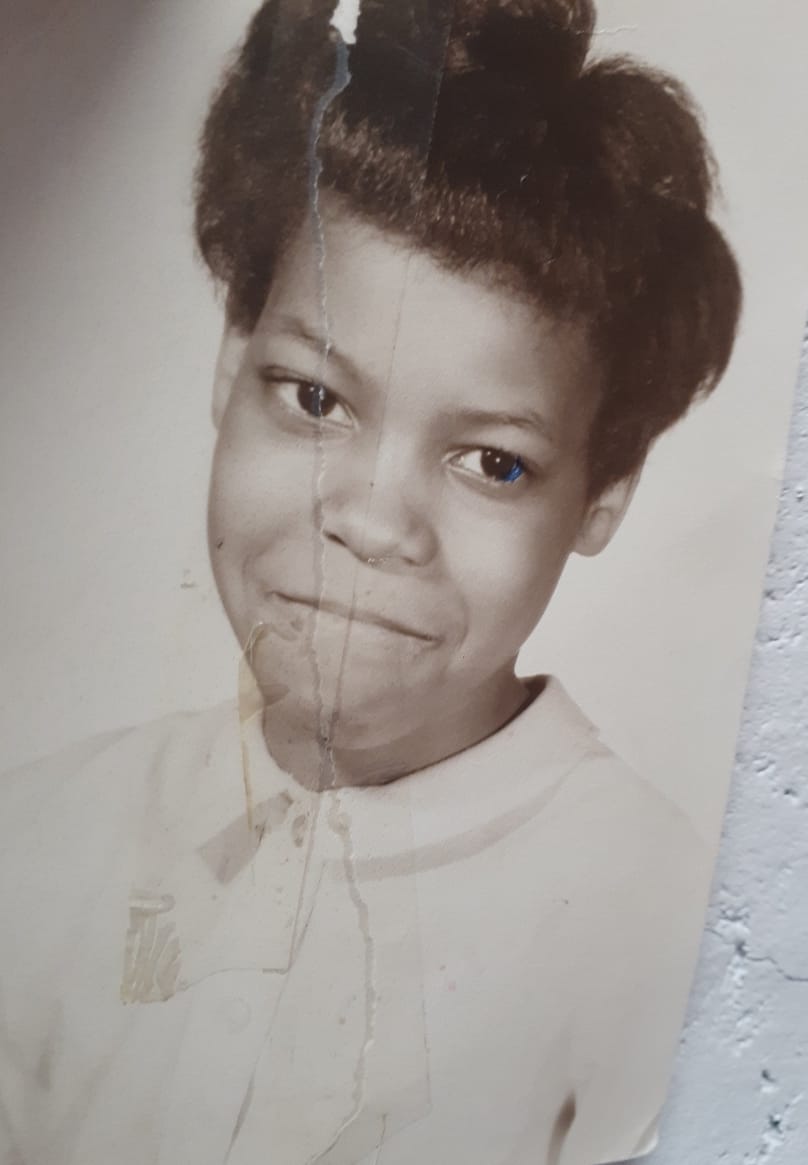
    Gloria Harrison: True Recovery Is the Healing of the Human Spirit

    In 1963, as a pre-teen, Gloria dreamed of going to the March on Washington with Martin Luther King, Jr., and the leaders of the Civil Rights Movement. Her mother even bought her a red beanie like the militant tam worn by the Black Panthers. Proudly wearing this sign of her awakening, Gloria went from house to house in Astoria, Queens, asking for donations to help her get to Washington, D.C. for the march. She raised $25 in change and proudly brought it home to show her mother.

    Excited, she did not realize it was the beginning of a long line of slaps in the face. Her mother refused to let her little girl go on her own to such an event. She was protective of her child. However, Gloria’s mom promised to open a bank account for her and deposit the money. Gloria could use it when she got older for the next march or a future demonstration. Gloria never got to turn this dream into a reality because her life quickly went from bad to worse.

    At thirteen, Gloria found herself in a mish-mash of confusing feelings and responsibilities. She knew she liked girls more than boys from a very early age, not just as friends. Awakening to her true self, Gloria felt worried and overwhelmed. If she was gay, how would anyone in her life ever love her or accept her?

    The pressure of this realization demanded an escape, mainly after her mother started to suspect that something was off with her daughter. At one point, she accused her daughter of being a “dirty lesbo” and threw a kitchen knife at her. Gloria didn’t know what to do. She tried to run away but realized she had nowhere to go. The only easy escape she could find was the common escape in her family: Drugs seemed the only option left on the table.

    The High Price of Addiction = The Shattering of Family Life

    In the mid-sixties, Gloria had nowhere to turn as a young gay African American teen. There were no counselors in her rundown public high school, and the usual suspects overwhelmed the teachers. Although the hippies were fighting the war in Vietnam on television, they did not reach out to troubled kids in the projects. Heck, most of them never left Manhattan, except for a day at the Brooklyn Zoo or Prospect Park. The Stonewall Riots of 1969 were far away, and Gay Rights was not part of almost anyone’s lexicon. Gloria had no options.

    What she did have was an aunt that shot heroin in her house with her drug-dealing boyfriend. She remembers when she first saw a bag of heroin, and she believed her cousin who told her the white powder was sugar. Sugar was expensive, and her mom seldom gave it to her brothers and sisters. Why was it in the living room in a little baggie?

    Later, she saw the white powder surrounded by used needles and cotton balls, and bloody rags. She quickly learned the truth, and she loved what the drug did to her aunt and the others. It was like it took all their cares away and made them super happy. Given such a recognition, Gloria’s initial interest sunk into a deeper fascination.

    At 14, she started shooting heroin with her aunt, and that first hit was like utter magic. It enveloped her in a warm bubble where nothing mattered, and everything was fine. Within weeks, Gloria was hanging out in shooting galleries with a devil may care attitude. As she told me, “I have always been a loner even when I was using drugs, and I always walked alone. I never associated with people who used drugs, except to get more for myself.”

    Consequences of the Escape = Institutions, Jails, and Homelessness

    Realizing that her daughter was doing drugs, Gloria’s mother decided to send her away. Gloria believes the drugs were a secondary cause. At her core, her mother could not understand Gloria’s sexuality. She hoped to find a program that would get her clean and turn her straight.

    It is essential to understand that nobody else in Gloria’s family was sent away to an institution for doing drugs. Nobody else’s addiction became a reason for institutionalization. Still, Gloria knows her mother loved her. After all, she has become her mother’s number one contact with life outside of her nursing home today.

    Also, Gloria sometimes wonders if the choice to send her away saved her life. Later, she still spent years homeless on the streets of Queens, Manhattan, the Bronx, and Brooklyn. Of the five boroughs of New York City, only Staten Island was spared her presence in the later depths of her addiction. However, being an addict as a teenager, the dangers are even more deadly.

    When her mother sent her away at fourteen, Gloria ended up in a string of the most hardcore institutions in the state of New York. She spent the first two years in the draconian cells of the Rockefeller Program. Referred to in a study in The Journal of Social History as “The Attila The Hun Law,” these ultra-punitive measures took freedom away from and punished even the youngest offenders. Gloria barely remembers the details of what happened.

    After two years in the Rockefeller Program, she was released and immediately relapsed. Quickly arrested, she was sent to Rikers Island long before her eighteenth birthday and put on Methadone. Although the year and a half at Rikers Island was bad, it was nothing compared to Albany, where they placed her in isolation for two months. The only time she saw another human face was when she was given her Methadone in the morning. During mealtimes, she was fed through a slot in her cell.

    Gloria says she went close to going insane. She cannot recall all the details of what happened next, but she does know that she spent an additional two in Raybrook. A state hospital built to house tuberculosis patients; it closed its doors in the early 1960s. In 1971, the state opened this dank facility as a “drug addiction treatment facility” for female inmates. Gloria does remember getting lots of Methadone, but she does not recall even a day of treatment.

    Losing Hope and Sinking into Homeless Drug Addiction in the Big Apple

    After Raybrook, she ended up in the Bedford Hills prison for a couple of years. By now, she was in her twenties, and her addiction kept her separate from her family. Gloria had lost hope of a reconciliation that would only came many years later.

    When she was released from Bedford Hills in 1982, nobody paid attention to her anymore. She became one more invisible homeless drug addict on the streets of the Big Apple. Being gay did not matter; being black did not matter, even being a woman did not matter; what mattered was that she was strung out with no money and no help and nothing to spare.

    Although she found a woman to love, and they protected each other when not scrambling to get high, she felt she had nothing. She bounced around from park bench to homeless shelter to street corners for ten years. There was trauma and violence, and extreme abuse. Although Gloria acknowledges that it happened, she will not talk about it.

    Later, after they found the path of recovery, her partner relapsed after being together for fifteen years. She went back to using, and Gloria stayed sober. It happens all the time. The question is, how did Gloria get sober in the first place?

    Embracing Education Led to Freedom from Addiction and Homelessness

    In the early 1990s, after a decade addicted on the streets, Gloria had had enough. Through the NEW (Non-traditional Employment for Women) Program in NYC, she discovered a way out. For the first time, it felt like people believed in her. Supported by the program, she took on a joint apprenticeship at the New York District College for Carpenters. Ever since she was a child, Gloria had been good with her hands.

    In the program, Gloria thrived, learning welding, sheet rocking, floor tiling, carpentry, and window installation. Later, she is proud to say that she helped repair some historical churches in Manhattan while also being part of a crew that built a skyscraper on Roosevelt Island and revamped La Guardia Airport. For a long time, work was the heart of this woman’s salvation.

    With a smile, Gloria says, “I loved that work. Those days were very exciting, and I realized that I could succeed in life at a higher level despite having a drug problem and once being a drug addict. Oh, how I wish I was out there now, working hard. There’s nothing better than tearing down old buildings and putting up something new.”

    Beyond dedicating herself to work, Gloria also focused on her recovery. She also managed to reconnect with her mother. Addiction was still commonplace in the projects, and too many family members had succumbed to the disease. She could not return to that world. Instead, Gloria chose to focus on her recovery, finding meaning in 12-Step meetings and a new family.

    Talking about her recovery without violating the traditions of the program, Gloria explains, “I didn’t want to take any chances, so I made sure I had two sponsors. Before making a choice, I studied each one. I saw how they carried themselves in the meetings and the people they chose to spend time with. I made sure they were walking the walk so that I could learn from them. Since I was very particular, I didn’t take chances. I knew the stakes were high. Thus, I often stayed to myself, keeping the focus on my recovery.”

    From Forging a Life to Embracing a Path of Recovery 24/7

    As she got older and the decades passed, Gloria embraced a 24/7 path of recovery. No longer able to do hard physical labor, she became a drug counselor. In that role, she advocates for harm reduction, needle exchange, prison reform, and decriminalization. Given her experience, she knew people would listen to her voice. Gloria did more than just get treatment after learning that she had caught Hepatitis C in the 1980s when she was sharing needles. She got certified in HCV and HIV counseling, helping others to learn how to help themselves.

    Today, Gloria Harrison is very active with VOCAL-NY. As highlighted on the organization’s website, “Since 1999, VOCAL-NY has been building power to end AIDS, the drug war, mass incarceration & homelessness.” Working hard for causes she believes in, Gloria constantly sends out petitions and pamphlets, educating people about how to vote against the stigma against addicts, injustices in the homeless population, and the horror of mass incarceration. One day at a time, she hopes to help change the country for the better.

    However, Gloria also knows that the path to recovery is easier today for facing all the “absurd barriers” that she faced as a young girl. Back in the day, being a woman and being gay, and being black were all barriers to recovery. Today, the tenor of the recovery industry has changed as the tenor of the country slowly changes as well. Every night, Gloria Harrison pictures young girls in trouble today like herself way back when. She prays for these troubled souls, hoping their path to recovery and healing will be easier than she experienced.

    A Final Word from Gloria

    (When Gloria communicates via text, she wants to make sure she is heard.)

    GOOD MORNING, FRIEND. I HOPE YOU ARE WELL-RESTED. I AM GRATEFUL. I LOVE THE STORY.

    I NEED TO MAKE SOMETHING CLEAR. MY MOTHER HAD A MENTAL AND PHYSICAL ILLNESS. SHE HAD POLIO AT THE AGE OF FOURTEEN BUT THAT DIDN’T STOP HER. SHE WENT THROUGH SO MUCH, AND I LOVE THE GROUND SHE WALKS ON. I BELIEVE THAT SHE WAS ASHAMED OF MY LIFESTYLE, BUT, AT THE SAME TIME, SHE LOVED ME. SHE GAVE ME HER STRENGTH & DETERMINATION. SHE GAVE ME HER NAME. SHE RAISED HER LIFE UP OVER HER DISABILITIES. SHE BECAME A STAR IN THE SKY FOR ALL AROUND HER.

    BEING THAT MY MOTHER WASN’T EDUCATED OR FINISHED SCHOOL, SHE DIDN’T KNOW ABOUT THE ROCKEFELLER PROGRAM. SHE ONLY WANTED TO SAVE HER TRUSTED SERVANT AND RESCUE HER BELOVED CHILD. SHE NEEDS ME NOW AND I AM ABLE TO HELP BECAUSE I WAS ABLE TO TURN MY LIFE AROUND COMPLETELY. SHE TRUSTS ME TODAY TO WATCH OVER HER WELLBEING, AND I FEEL BLESSED TO BE HER BELOVED CHILD AND TRUSTED SERVANT AGAIN. AS YOU HAVE MENTIONED TO ME, THE PATH OF RECOVERY IS THE PATH OF REDEMPTION.

    Postscript: A big thank from both Gloria and John to Ahbra Schiff for making this happen.

    View the original article at thefix.com

  • Addiction and Estrangement

    Remarkably, a tense relationship with a sister or brother in adolescence may contribute to substance abuse.

    Addiction can roil relationships with abuse, betrayal, and domestic violence, placing great stress on a family. Typically, parents and siblings who try to help or manage a family member’s addiction find themselves sapped of emotional energy and drained of financial resources. My survey shows as many as 10 percent of respondents suspect that a sibling is hiding an addiction.

    I wonder: Does the addiction produce family problems, or do a dysfunctional family’s issues result in addiction? It sounds like a chicken‑and‑egg question. I suppose at this moment the sequence of events doesn’t really matter to me. What I need is guidance on helping my brother conquer his alcoholism.

    Typically, when it comes to addiction, many experts advise using “tough love” to change behavior—promoting someone’s welfare by enforcing certain constraints on them or requiring them to take responsibility for their actions. The family uses relationships as leverage, threatening to expel the member who is addicted. The message of this model is explicit: “If you don’t shape up, we will cut you off.”

    Tough love relies on solid, established relationships; otherwise, the family member at risk may feel he or she has nothing to lose. My relationship with Scott is tenuous, anything but solid. He has lived without me for decades, and if I try tough love, he could easily revert to our former state of estrangement.

    I wonder if there might be another way.

    Possible Causes of Addiction

    Addiction is a complex phenomenon involving physiological, sociological, and psychological variables, and each user reflects some combination of these factors. In Scott’s case, because alcoholism doesn’t run in our family, I don’t think he has a biological predisposition to drink. I suspect my brother’s drinking results from other origins.

    Current research identifies unexpected influences that also may be at the root of addictive behavior, including emotional trauma, a hostile environment, and a lack of sufficient emotional connections. Addictive behavior may be closely tied to isolation and estrangement. Human beings have a natural and innate need to bond with others and belong to a social circle. When trauma disturbs the ability to attach and connect, a victim often seeks relief from pain through drugs, gambling, pornography, or some other vice.

    Canadian psychologist Dr. Bruce Alexander conducted a controversial study in the 1970s and 1980s that challenged earlier conclusions on the fundamental nature of addiction. Users, his research suggests, may be trying to address the absence of connection in their lives by drinking and/or using drugs. Working with rats, he found that isolated animals had nothing better to do than use drugs; rats placed in a more engaging environment avoided drug use.

    Similar results emerged when veterans of the war in Vietnam returned home. Some 20 percent of American troops were using heroin while in Vietnam, and psychologists feared that hundreds of thousands of soldiers would resume their lives in the United States as junkies. However, a study in the Archives of General Psychiatry reported that 95 percent simply stopped using, without rehab or agonizing withdrawal, when they returned home.

    These studies indicate that addiction is not just about brain chemistry. The environment in which the user lives is a factor. Addiction may, in part, be an adaptation to a lonely, disconnected, or dangerous life. Re‑ markably, a tense relationship with a sister or brother in adolescence may contribute to substance abuse. A 2012 study reported in the Journal of Marriage and Family entitled “Sibling Relationships and Influences in Childhood and Adolescence” found that tense sibling relationships make people more likely to use substances and to be depressed and anxious as teenagers.

    Those who grow up in homes where loving care is inconsistent, unstable, or absent do not develop the crucial neural wiring for emotional resilience, according to Dr. Gabor Maté, author of In the Realm of Hungry Ghosts, who is an expert in childhood development and trauma and has conducted extensive research in a medical practice for the underserved in downtown Vancouver. Children who are not consistently loved in their young lives often develop a sense that the world is an unsafe place and that people cannot be trusted. Maté suggests that emotional trauma and loss may lie at the core of addiction. Addiction and Estrangement

    A loving family fosters resilience in children, immunizing them from whatever challenges the world may bring. Dr. Maté has found high rates of childhood trauma among the addicts with whom he works, leading him to conclude that emotional damage in childhood may drive some people to use drugs to correct their dysregulated brain waves. “When you don’t have love and connection in your life when you are very, very young,” he explains, “then those important brain circuits just don’t develop properly. And under conditions of abuse, things just don’t develop properly and their brains then are susceptible then when they do the drugs.” He explains that drugs make these people with dysregulated brain waves feel normal, and even loved. “As one patient said to me,” he says, “when she did heroin for the first time, ‘it felt like a warm soft hug, just like a mother hugging a baby.’”

    Dr. Maté defines addiction broadly, having seen a wide variety of addicted behaviors among his patients. Substance abuse and pornography, for example, are widely accepted as addictions. For people damaged in childhood, he suggests that shopping, chronic overeating or dieting, incessantly checking the cell phone, amassing wealth or power or ultramarathon medals are ways of coping with pain.

    In a TED Talk, Dr. Maté, who was born to Jewish parents in Budapest just before the Germans occupied Hungary, identifies his own childhood traumas as a source of his addiction: spending thousands of dollars on a collection of classical CDs. He admits to having ignored his family—even neglecting patients in labor—when preoccupied with buying music. His obsessions with work and music, which he characterizes as addictions, have affected his children. “My kids get the same message that they’re not wanted,” he explains. “We pass on the trauma and we pass on the suffering, unconsciously, from one generation to the next. There are many, many ways to fill this emptiness . . . but the emptiness always goes back to what we didn’t get when we were very small.”

    That statement hits home. Though my brother and I didn’t live as Jews in a Nazi‑occupied country, we derivatively experienced the pain our mother suffered after her expulsion from Germany and the murder of her parents. Our mother’s childhood traumas resulted in her depression and absorption in the past and inhibited her ability to nurture her children.

    Still, in the end, it’s impossible to determine precisely the source of an addiction problem. Maybe it doesn’t matter anyway. The real question is, What can I do about it?
     

    Excerpted from BROTHERS, SISTERS, STRANGERS: Sibling Estrangement and the Road to Reconciliation by Fern Schumer Chapman, published by Viking Books, an imprint of Penguin Publishing Group, a division of Penguin Random House, LLC. Copyright © 2021 by Fern Schumer Chapman. Available now.

    View the original article at thefix.com

  • Avoiding Family Drama During the Covid-19 Pandemic

    When the pandemic broke out, for the first time since I left home, I felt conflicted between the need to learn my brothers are safe and my need to maintain a drama-free life.

    Several times since the Covid-19 pandemic broke out, I have wondered whether my brothers were safe. Knowing whether John*, my middle brother, was okay was easy. Although we’ve not talked to each other in 12 years, I found out through two of our mutual childhood friends that he was not one of the more than 350,000 people in his state who have contracted the virus.

    Finding out whether Marco* was okay took several weeks. Nobody in our family and none of my childhood friends can deal with him. He has bipolar disorder, and since his diagnosis 39 years ago, he has consistently refused meds. He’s verbally and physically abusive to most people he comes in contact with, especially women, which he came by honestly as the saying goes.

    I never needed a diagnosis to know something was seriously off with Marco. Looking back, he exhibited all the signs: stretches of mania followed by equally long bouts of depression, calculated and well-thought-out verbal and physical assaults, and rage that seemed to come from nowhere.

    When I was 10 (Marco is four years older than I) he planned out his first of two attempts to kill one of the neighbors in our Manhattan apartment building. He tied a thin wire across the top of the staircase. He then rang the doorbell and tried to lure this woman out of her apartment and down those marble stairs, where she would surely have fallen to her death. She saw the wire just in the nick of time and held onto the banister. Marco was hiding out of sight, snickering.

    He told our parents he did it because the neighbor wouldn’t let him play with her daughter. Laughing as he retold the story was creepy as hell.

    A few days later while staring out the window, Marco noticed the same neighbor climbing out of a cab. He had a 10-gallon garbage bag already filled with water, waiting beside the window. As she closed the car door, Marco dropped that 85-pound “water balloon” down 10 flights. It missed our neighbor by a hair and she did as anyone would do: she looked up and saw Marco looking out the window. He not only didn’t duck inside (as most people would have done), he yelled out to her, “Better luck next time!” Although none of us saw this happen, his version of events was identical to hers.

    With me Marco had a trigger hand, like our father. If our father didn’t like something I said or did, I would get knocked across the room. Our father beat all three of us whenever he felt like it, which was probably three to four times a week, as did his father to him growing up. When I was 14, I paid $25.00 from my babysitting money to a neighborhood kid to install a lock on my bedroom door. I couldn’t control the world outside my bedroom, but I could protect myself in my own room.

    And what was John doing as Marco was abusing his sister and trying to kill the neighbor? John has always been good at taking care of John and ignoring everyone else. Give him a substance and the world ceases to exist.

    Forgive and Forget Because Nothing is More Important Than Family

    Those who don’t know my family or think I’m exaggerating when I describe what it was like growing up usually say things to me like, “Nothing is more important than family,” “Whatever happened, just forgive him and move on” or “You’ll regret it when you get older.”

    The last comment has some merit. We are all in our 50s, and I’m acutely aware there are fewer years in front of us than behind. Our parents are now deceased, so they’re non-issues in the forgive and forget department. But for the living, reconciliation isn’t always so easy.

    It involves real work my brothers are too stuck to do. The apple rarely falls far from the tree, although the real mystery isn’t how one brother has bipolar and the other is an alcoholic. The question I’ve had my whole life is, why didn’t I become an alcoholic, have bipolar or both?

    Depression, bipolar disorder and alcoholism run on both sides of my family. My mother struggled with depression and used alcohol to self-medicate. She was a functional alcoholic—so functional that she was the editor for The New Yorker Magazine for years. While she rarely hit me, my mother was the queen of belittling. To give you an idea how biting her tongue could be, when I hit adolescence and my body started changing, she told me, “I don’t know what I did in life to deserve a mother, a best friend, a husband and a daughter who are all fat.”

    My father was a different variety of excrement. He just shit on everyone he knew and claimed to love. When he wasn’t confessing his mortal marital sins to my mother on a near-weekly basis, he was beating the crap out of us. He used whatever was handy: a book, a shoe, a belt, his fist, his legs to kick us, and when he was really frustrated, he’d throw things at us.

    My mother used to say, “Parents give their children unspoken commands their children learn to implicitly obey.” Marco and John learned at a young age to throw weapons instead of using their words. Their weapons of choice included a skateboard, a frying pan, scissors, lamps, glass bottles and a hammer. It amazes me they’re both still alive.

    Shorter and less muscular than Marco, John took up martial arts when he was 11. By the time he was 15, John was a black belt in three styles of Kung Fu. He was still shorter than Marco, but now his weapons became sharper, his hands and arms stronger, and he could inflict serious, life-altering damage. I lost count of how often I had to call the police because I wasn’t about to get in the middle of a fight between two rabid dogs.

    I used to pray for my parents and brothers to get arrested, so I could raise myself.

    Aleutian Islands: Same Name, Not Connected

    After I graduated from high school at 16, I rented a furnished room in the apartment of a different neighbor. By 17, I was in therapy, where I was diagnosed with PTSD and a panic disorder. I would end up spending seven years with Barbara, working through the damage of my childhood. Together, we dismantled me so we could put me back together. I was 24 when Barbara and I decided I was ready to go out into the world without an attendant.

    The first few years after I left home—especially while I was still in therapy—I hardly spoke with my parents or my brothers. I honestly didn’t know what Marco was doing, but I knew from various people he was fine and living with a woman in another state. Periodically, I’d run into John on the street. On those occasions we were cordial, but there was nothing to talk about. It was like seeing someone from my childhood I had nothing in common with now. We’d promise to catch up, knowing full well neither of us would make that call.

    Weeks turned into months and eventually years between check-ins with my brothers. I spoke with my parents every so often because, no matter how much work I’d done on myself, I was also raised with a sense of obligation, and daughters aren’t supposed to just cut off their parents. While they were still alive, I controlled the direction of the conversations to keep them from touching on areas that could trigger me.

    I once told Barbara in therapy that I felt like we were the Aleutian Islands. They were people I knew but had no connection to. I didn’t hate them; I felt nothing for them. My mother used to say, “The opposite of love isn’t hate. It’s indifference.” She was right.

    I met my husband in 1996 and we were married in 2001 while living in Southern California. Although all of my girlfriends who had previously gotten married and who were getting married opted to keep their maiden names, I couldn’t wait to change mine. Despite being every bit as feminist as my friends, for them the decision to keep their maiden name was about maintaining their identity. For me, the act of changing my last name meant adopting a new one.

    As important as leaving my home the first chance I got and staying in therapy for seven years (no matter how uncomfortable things got sometimes), changing my name allowed me to reinvent myself.

    The beauty of having a different last name is that, unless I tell people my maiden name, nobody knows I have any association with those people. It helps that I have an amazing relationship with my husband’s family, who have been my tribe for 23 years.

    Today, my husband and I live in Puerto Rico on an organic farm. We have rich relationships with people both in Puerto Rico and the States. When I think about the stark contrast between my life then and now, I’m reminded of a quote by Maya Angelou: “Family isn’t always blood, it’s the people in your life who want you in theirs: the ones who accept you for who you are, the ones who would do anything to see you smile and who love you no matter what.”

    Separate Lives in the Time of Covid-19

    My husband and I have talked with my brothers a handful of times over the last 24 years we’ve been together. My mother died in 1994 and, after my father’s death in 2002, I was named executor of my parents’ estate. I had to periodically be in touch with both brothers for signatures on this or that document required to sell our parents’ home, which we did in 2008. Between then and now, I had no desire to contact them.

    When the pandemic broke out, for the first time since I left home, I felt conflicted between the need to learn they’re safe and my need to maintain a drama-free life. Once I found John was alive, I felt I was halfway to feeling I wouldn’t need to expose myself.

    It took several weeks, but I was finally able to confirm Marco is also safe from Covid-19. I remembered a nickname he used to refer to himself when we were younger and during times he was manic. I started googling versions of the nickname and eventually came across his Twitter profile.

    He’s on his fourth wife, living somewhere in the Midwest. What I read were 75 tweets in rapid fire succession about everything that angers him that nobody reacted to or commented on. Based on my accelerated heart rate while reading them, I deduced he still isn’t treating his bipolar disorder. I got what I came for: I know he’s alive. Now that I know both my brothers are safe from Covid-19, and that I can continue to confirm it without reaching out to them, I no longer have to wonder and I can continue living my life.

    View the original article at thefix.com

  • Strung Out: An Interview with Erin Khar

    Strung Out: An Interview with Erin Khar

    When I was in a 12-step program, I had so much shame… Some people seemed pissed off when you relapsed. I get that it’s upsetting, but have a little compassion.

    Erin Khar is an award-winning writer known for her deeply personal essays on addiction, recovery, mental health, parenting and self-care. “Ask Erin,” her weekly Ravishly column, attracts more than 500K unique readers per month. Her work is published in SELF, Marie Claire, Redbook, and anthologies including Lilly Dancyger’s Burn It Down: Women Writing About Anger. Her first full-length memoir, Strung Out: One Last Hit and Other Lies That Nearly Killed Me (Park Row Books, February 25), will be released this month.

    Khar battled heroin for 15 years. Her intro to opioids came in pill form at age eight. It was the year her parents split up. In Strung Out she writes, “My Dad had moved out and my mother drifted from room to room in our old Spanish house with a weightlessness that I could tell threatened to take her away.”

    Khar suffered from overwhelming feelings that she didn’t understand. “A panic spread across my chest, filling my body with heat, trapping me. I ran to the bathroom and locked the door. As I reminded myself to breathe, some instinct led me to the medicine cabinet.”

    With anxiety pounding, the third grader fumbled past Band-Aids and Tylenol and found her grandmother’s bottle of Darvocet, which warned: “May Cause Drowsiness and Dizziness.” She wanted so badly to stop hurting she popped two big red pills into her mouth, then gulped from the faucet to wash them down. The burning heat of anxiety soon gave way to a “lightness of little bubbles.” Erin felt like she might float out of her body; this was the escape she’d yearned for.

    Strung Out depicts one person’s journey against the backdrop of America’s opioid crisis. The book is written in gorgeous, accessible prose. Candor and vulnerability come through in a natural, believable voice, conveying what many trauma survivors know intimately: pain, anxiety, rage, depression.

    Khar snorted heroin for the first time at age 13. At first, she’d said no to the boyfriend urging her to try it; her stolen pills felt like enough. But her guy persisted, describing it as a much better high. It was also the quickest route to forgetting. When Khar was four, a teen boy began molesting her. The abuse continued for years. Like many survivors, Khar told no one and desperately tried to block it from her mind. 

    “I needed to be somewhere else, someone else,” Khar told The Fix

    Strung Out is a page-turner that follows the progression of addiction: Narcotics seem like a magical solution until the relief morphs into a monster roaring for more. Opioids are now responsible for 47,000 deaths per year—that’s nearly two-thirds of all drug-related deaths in the U.S. 

    Reading Khar’s book felt like listening to a confidante, a kindred spirit who “got me.” We sat down in a New York City garden to talk about the hell of addiction and colossal relief of long-term recovery.

    What idea sparked this book?

    I wrote Strung Out because it was the book I wish I’d had when I was younger. I want to open up the conversation. Why do people take drugs? And why can’t they stop? The more we talk about it the more we can get rid of the stigma and shame surrounding it. Many people still don’t seem to understand addiction. I want to encourage empathy and compassion and give people hope.

    I love that your then 12-year-old son asked if you ever did drugs. Can you tell me about that?

    At first, I pretended I didn’t hear him. [Laughs] I tried not to cringe at my deflection.

    I stalled by saying, “That’s a complicated question.” I didn’t know what to say. I did use drugs. A lot of them. Heroin was on and off from 13 to 28. That’s when I got pregnant with him. But how much should I tell him? I’d smoked crack, done acid, taken Ecstasy.

    You describe childhood guilt and shame vividly. Looking back, do you think that was rage turned inward?

    Oh yeah. It definitely had to do with early trauma. All I knew then was a nagging feeling. It wasn’t until I was 19 that I came to terms with everything. Before that, I minimized what happened to me, trying to shove [memories] aside. It took a long time for me to see that my therapist was right: my anger had sublimated into guilt.

    Do you look back now and understand your feelings of shame?

    Yes. I took responsibility for things because it gave me the feeling that I was in control. Can anyone process that kind of childhood trauma all in one go? I don’t know. Maybe it takes a lifetime to process? Maybe I’m still processing it.

    Do you get triggered due to PTSD?

    Yes. Even though I’ve done a lot of work on myself, I still have hypervigilance. My body reacts strongly to some situations, like if I’m startled by something, and especially if I’m asleep.

    Can you describe things that helped? Especially for anyone who is trying but can’t stop using.

    The first thing was accepting that I wasn’t going to be fixed overnight. Then it was forgiving myself for relapsing constantly. For me, whatever I’m dealing with, if I break it down into small, digestible increments, it’s a lot easier to handle. Focusing on the big picture is not helpful. That’s why they say a day at a time.

    How did you stop relapsing?

    By being honest about relapses. When I was in a 12-step program, I had so much shame. It was detrimental to worry about being judged at meetings. [Some] people in AA seemed pissed off when you relapsed. I get that it’s upsetting but have a little fucking compassion. [So] I hid relapses, which made it a lot easier to do it again. Finally, I was honest about [chronically] relapsing and that helped me stop. You do not have to relapse. It’s not a requirement of recovery but I don’t think that we unlearn things in 30 days or 60 days or 90 days or a year. I don’t think it happens that quickly. For anyone who struggles with addiction, we want immediate relief. 

    Like pushing a button?

    Yes. I wanted to be numb. Stop thinking. In recovery, my biggest life lessons were learning to have patience, be honest, and work on accepting things I have no control over.

    Did you find things easier when you began opening up?

    First, I had to get through my fear that people were always judging me. It took work. I wouldn’t say it was easy but yes, I did get better. 

    How do you feel about your upbringing now?

    I definitely don’t blame my parents for any of the choices I made. Even the choices when I was really young. I hid the sexual abuse and my depression from them. I hid my suicidal feelings. If my parents had stayed together and everything had been perfect, I may still have hid things. It may be a function of my personality.

    Today I have a really good relationship with both of my parents and they have a really good friendship with each other. I will forever be grateful that no matter what happened, through everything I did, they never turned their backs on me. I have a very different idea about tough love than I used to. When I was first trying to get sober, the general idea of interventions and dealing with somebody who was addicted was this hard line of tough love. 

    I used to deal with people that way. But now, I really don’t think it works. That doesn’t mean that you should enable people. But, for me, I was lucky. Despite everything I had done to my parents—years of lying and stealing—our family connection remained. That door was still open when I finally asked for help.

    Erin Khar talks hope, shame, and recovery:


    Order Strung Out: One Last Hit and Other Lies That Nearly Killed Me


    View the original article at thefix.com

  • Treating the Growing Trauma of Family Separation

    War, disasters, trafficking and immigration are tearing millions of children from their parents all around the world. A psychologist explores how to help them recover.

    Q&A with Developmental Psychologist Hirokazu Yoshikawa

    The US immigration policy that has separated more than 5,400 children from their parents had spurred psychologists and pediatricians to warn that the young people face risks ranging from psychological distress and academic problems to long-lasting emotional damage. But this represents just a tiny part of a growing global crisis of parent-child separation.

    Throughout the world, wars, natural disasters, institutionalization, child-trafficking, and historic rates of domestic and international migration are splitting up millions of families. For the children involved, the harm of separation is well-documented.

    Hirokazu Yoshikawa, a developmental psychologist at New York University who codirects NYU’s Global TIES for Children, recently looked into research on the impacts of parent-child separation and the efficacy of programs meant to help heal the damage. Writing in the debut issue of the Annual Review of Developmental Psychology, he and colleagues Anne Bentley Waddoups and Kendra Strouf call for an increase in mental health training for teachers, medical doctors or other frontline service providers who can help fill the gap left by the lack of mental health providers available to cope with the many millions of children affected.

    Knowable Magazine recently spoke with Yoshikawa about the crisis and what can be done about it. This conversation has been edited for length and clarity.

    Are there any good estimates of the number of children throughout the world who’ve been separated from their parents?

    Exact numbers are hard to pin down, especially because several of the categories involved — like child soldiers and child-trafficking — aren’t well reported. What we know for sure is that the number of people around the world being displaced from their homes is at a historically high level. In 2018, some 70.8 million individuals were forcibly displaced due to armed conflicts, wars and disasters. That’s a record, and given that these phenomena often result in family separations and that more than half of these individuals were children under the age of 18, it suggests that historic numbers of children have been separated from their parents.

    Why have such family separations become more common?

    Many factors are driving it, but climate change is playing an increasing role in displacement and armed conflict all over the world. Climate change reduces access to dwindling resources and contributes to natural disasters, like floods, droughts, crop failures and famine. All of this increases conflicts, drives migration and breaks up families. This is not a blip in history; it’s a trend we will have to live with for generations to come.

    What’s most important to know about the damage that comes from children being separated from their parents?

    There are thousands of studies on the power of disruptions of children’s early attachments to their parents to cause longstanding problems. We’re talking about cognitive, social-emotional and other mental health impacts.

    The developmental study of the mechanisms that may explain why these separations are so harmful goes back to before World War II, with the work of psychoanalysts and scholars such as Anna Freud, John Bowlby and Mary Ainsworth. In 1943, Anna Freud and Dorothy Burlingame studied children who’d been evacuated from London and learned that in many cases being separated from their mothers was more traumatic for them than having been exposed to air raids. When families left London but stayed together, the children behaved more or less normally. But when children were separated from their mothers, they showed signs of severe trauma, such as wetting the bed and crying for long periods of time.

    Later on, Bowlby and Ainsworth published their more well-known studies of how infants form attachments with their mothers, and how sensitive and responsive parenting is key to forming secure attachments both with parents and later on with others. Researchers have found that this process can be disrupted in prolonged separations — say of more than a week — before the age of 5.

    More recently — for example, in the ongoing and high-profile studies of Romanian children who were raised in abysmally low-quality orphanages — researchers have shown how children in institutional care have suffered from poorer learning and social and emotional behavior due to the lack of intellectual and emotional stimulation and the opportunity to engage in relationships with caregivers.

    How seriously children are affected can depend on factors such as whether the separation was voluntary or not, how long it lasts and what kind of care exists in its wake. Permanent loss of parents can create some of the most severe consequences, while long periods of parent-child separation, even if followed by reunification, can seriously disrupt a child’s emotional health. Children are generally more vulnerable to long-term harm to their social-emotional development in early childhood, up to five or six years, but no period of development is immune.

    One major problem we see is that most children who are separated from their parents have already experienced some other trauma along the way, which then makes the separation even harder. When parents are present, they can often help buffer the impact of extreme adversity from bad experiences.

    What did you learn that most surprised you as you reviewed the scientific literature?

    The sheer range of outcomes was surprising to me — beyond learning and achievement and mental health outcomes, they include very basic human functions like impaired memory, auditory processing and planning. They also include a range of physiological outcomes related to stress that are themselves related to long-term disease and mortality. So parent-child separation as it is currently experienced can shorten lives and increase the chances of physical disease.

    Meanwhile, something that didn’t surprise me because I’m immersed in this literature all the time, but will probably surprise your readers, is that there are now about 8 million children in the world living in institutional care. This is a problem that reflects the lack of robust foster care and capacity of governments to facilitate placement with relatives, who will generally give more stable care than strangers. As we state in our review, even in otherwise good-quality institutional care, children suffer due to the high turnover of caregivers.  

    What relevance does your work have for US policies that have led to many parents and children being separated at the border?

    US officials should know that there’s a global consensus, expressed in the UN Convention on the Rights of Children, on how to respond to children’s needs in this context. Primarily that means avoiding separating children from parents whenever possible and, when it must happen, keeping it as short as possible. An overwhelming amount of research, going back to Bowlby, supports these guidelines.

    Unfortunately, we don’t have a lot of research findings on children separated from their parents while awaiting detention. And it doesn’t make it any easier that the Department of Homeland Security has had so much trouble keeping track of the kids involved.

    Yet there are hints of the kind of negative effects you might expect to see if you look at the research on children whose parents have been detained without warning, for example in large workplace raids to arrest undocumented workers. In these cases, researchers have found that children have missed school and suffered behavior problems and depressive symptoms.

    This brings up the fact that, in the United States, we’re talking about many more than 5,000 children being separated from parents. While the separations at the Mexican border have gotten a lot of media attention, millions of other children across our country are affected by the relatively recent harsher, sweeping policies resulting in more detentions and deportations of immigrants already living in the US. This has created a climate in which the threat of family separation is omnipresent.

    We’re particularly concerned that many children separated from their parents stop going to school, perhaps from lack of supervision or from the need to support themselves or family members. The humanitarian sector tends to focus on basic needs and that’s understandable — they want to save lives. But from a developmental perspective, we have to focus on whether children thrive, not just survive.

    Unaccompanied children who are trying to migrate are an increasing part of this global problem. What kind of special risks do they face?

    It’s true that there has been a significant increase in recent years in unaccompanied minors trying to migrate internationally. At the US border, this increase has been happening since the 1990s, due to both economic crises and increases in urban violence in Mexico and in Central American countries. But the trend is now accelerating. From 2015 to 2016, there were five times as many children estimated to be migrating alone than from 2010 to 2011. In 2017, more than 90 percent of undocumented children arriving in Italy were unaccompanied.

    Compared with refugee children who flee with their families, unaccompanied children are at greater risk for trauma and mental illness. One study of refugee children attending a clinic in the Netherlands found that the unaccompanied children were significantly more likely than those traveling with their families to have been victim to four or more traumatic events in their lives, including during their travels. They also had a higher rate of depressive symptoms and even of psychosis than refugee children living with their families.

    What are some of the best ways that governments and nonprofit organizations can help these children?

    Whatever can be done to avoid the separation from parents in the first place and to avoid detention and institutionalization of children whenever possible is in the children’s best interests. (That’s the guidance from the Global Compact for Refugees, Article 9 of the Convention on the Rights of the Child, and other global rights documents.) After that, it’s a matter of limiting the time away from parents or other caring adults as much as possible. The earlier and younger that children leave institutional care for stable foster care or adoption, the better it is for them.

    You can see this in some of the follow-ups of the study of children in Romanian orphanages. Children who left the orphanages for foster care by 15 months of age had trouble speaking and understanding in early childhood, but not later. Children placed before 30 months showed growth in learning and memory so as to be indistinguishable from other children by age 16. So recovery from early institutionalization is possible, but it may take longer if a child spent more time in the orphanage.

    What kinds of programs for children, if any, can help lessen the impacts of being separated from their parents?

    In general, programs that help equip children for their daily lives can be useful. That includes education in decision-making, problem-solving, communication and stress management.

    Teachers and doctors can play a major role, at minimum by identifying children who need mental health services and directing them to programs. The fact is we’ll never have enough mental health providers, so it makes sense to train members of the education and basic health systems that are already in place.

    In the review, we describe a few of these efforts. One that stood out for us took place in two schools in London where children on average aged 12 to 13 had been separated from one or both parents due to war or migration. They came from Kosovo, Sierra Leone, Turkey, Afghanistan and Somalia. Teachers identified children who needed services, and who then spent one hour a week for six weeks with a clinical psychology trainee doing cognitive behavioral therapy. The treatment helped reduce PTSD symptoms, and the children’s teachers later reported that the children were behaving better in the classroom.

    Granted, this was a very small study with no longer-term follow-up, so you can’t draw very strong conclusions, but it hints that even such a short-term intervention can be helpful in addressing children’s traumas. Studies have shown that even as few as 12 sessions of counseling from people trained in cognitive behavioral principles can help many people.

    Do we have any idea of how many kids are being helped by these sorts of interventions? Are we still mostly talking about small experiments?

    We’re not anywhere close to meeting the need for services. Unfortunately, health systems worldwide continue to overlook all kinds of mental health needs, particularly in low-income countries, even as depression and other mental illnesses take an economic toll, leading to reduced lifespans and reduced economic activity. The economic costs of mental health problems are huge, yet this may be one of the most underinvested areas in terms of health care.

    The largest program you describe is in China, which isn’t that surprising, given how many internal immigrants China has.

    Yes, there are potentially tens of millions of Chinese children and youth whose parents travel to cities to work and leave them behind, in the care of grandparents or other relatives. Between one-third and 40 percent of children in rural areas of China are in this situation. And there’s a lot of research documenting that these children are doing less well than children who are being raised by parents.

    We describe one community-based program involving 213 rural villages with nearly 1,200 left-behind children. For three years, each village designated a space for after-school activities for the youth and hired a full-time employee to provide welfare services. The findings suggest the approach helped reduce disparities between the left-behind and non-left-behind groups.

    What if anything gives you hope that this situation may improve?

    The outcry over the US policies has increased awareness about a very vulnerable population of children. That could be a silver lining of the crisis. These parent-child separations are going on not only at the border, but also all over the country. The hope is that the attention will increase support for organizations, such as the national Protecting Immigrant Families Coalition, that are working to make a difference.

    When it comes to children throughout the world who’ve been separated from their parents, we need a lot more people to be aware and concerned so as to provide the attention, stimulation and care that can help them recover.

    Editor’s note: This article was updated on January 24, 2020, to clarify that in addition to teachers and medical doctors, Dr. Yoshikawa and his colleagues also recommend mental health training for all frontline service providers.
     

    This article originally appeared in Knowable Magazine, an independent journalistic endeavor from Annual Reviews. Sign up for the newsletter.

    Knowable Magazine | Annual Reviews

    View the original article at thefix.com

  • Childhood Trauma, Body Dysmorphic Disorder, and Plastic Surgery Addiction

    Childhood Trauma, Body Dysmorphic Disorder, and Plastic Surgery Addiction

    Many people who have multiple plastic surgeries are looking for self-worth, not correction of a deformity.

    Most of the time when we talk about addiction, we’re referring to the compulsive or harmful use of substances. Only one behavioral addiction—gambling—is included in the Substance-Related and Addictive Disorders chapter of the DMS 5. Other behavioral addictions require further peer-reviewed research to become categorizable, diagnosable conditions. Addictive disorders involve a lack of ability to control substance use, social problems as a result of substance use, risk-taking to fulfill substance use urges, developing tolerance, and experiencing withdrawal symptoms when the substance is removed.

    Behavioral Addictions

    We no longer define addiction solely as physiological dependence on an ingested substance. We now have better categorizations for addictions, and the medical field is regularly adding more to the list, as society is constantly changing and addictive patterns become more apparent with time and research. The crux of what causes addiction is still an evolving conversation, one that keeps circling back to trauma.

    New Hampshire-based plastic surgeon Mark Constantian believes plastic surgery can become an addiction in people who have experienced childhood trauma. Outside of moral judgements, issues of class and privilege, and other health implications, plastic surgery is a choice, and for many people it has no negative mental health effects. Then there are those who get plastic surgery and are profoundly upset even though they obtain the exact aesthetic results they originally desired. Constantian became interested in the experiences of patients who responded with profound anger and disappointment despite good results.

    He describes this category of patients as being unhappy to an irrational degree. They expressed feelings of being betrayed and felt deceived. Constantian explains that they behaved “the way people behave when they’re traumatized and then triggered back to their childhood, they start acting and saying things that would have been appropriate to their abusers when they’re five or six years old but they’re no longer appropriate when they’re 40.”

    Constantian has been practicing since 1978 and has taught in his field with a focus on nasal surgery, particularly with people who have had prior nasal surgery. Patterns emerged, and he wrote a book chronicling his findings. He found that many people who have multiple plastic surgeries are looking for self-worth, not correction of a deformity.

    Body Dysmorphic Disorder

    Plastic surgery addiction, while not a diagnosable condition, seems to exist alongside body dysmorphic disorder, a mental illness defined in the DSM 5 as “preoccupation with one or more perceived defects or flaws in physical appearance that are not observable or appear slight to others.”

    According to Dr. Constantian, “Body dysmorphic disorder is looked at as a problem that arises out of the blue.” But that’s incorrect. “[A]ll of this starts in childhood. The family problems, the self-esteem problems are already there and it just percolates. Then you get to the teenage years and you start to compensate in some way, and you medicate the pain and it can be medicating with an eating disorder, with obesity, depression, cutting, drug or alcohol abuse. The characteristics I’m seeing are shared by all kinds of addiction.”

    People wanted to be different from who they were as children. “The original genesis of the original problem had nothing to do with the cosmetic issue.” The self-harming behaviors are fulfilling a need to soothe the loneliness and the isolation, which are the result of shame.

    Adverse Childhood Experiences Survey

    To test what he was seeing in his patients, Constantian surveyed patients using an adapted version of the Adverse Childhood Experiences survey (ACE). The ACE study is one of the biggest studies on childhood abuse and neglect and other difficult experiences, and how they affect health later in life. The ACE study has been found to be one of the best predictors of conditions in adulthood.

    Through years of neglect, abuse, or other traumas during childhood, we learn what adults are like. We learn how important we are in the world, what kind of space we occupy and how safe we are. We learn how dangerous the world is. How much we’re loved. Children learn to cope with those environments. 

    Constantian’s working theory was that if trauma works on the brain long enough, eventually it develops enough damage to create a disorder that a mental health professional can diagnose. It takes time to damage the brain to that extent. Traumatic experiences in childhood can influence an entire lifetime of decisions and alter how a person perceives themselves and the world around them. 

    Chronic unpredictable stress in childhood and adolescence can echo into adulthood with reverberations that translate into mental and physical health conditions. In Constantian’s study, he found that overall, 80% of surveyed plastic surgery patients had one or more Adverse Childhood Experience (compared to about 64% in the original study). For those with more than one cosmetic surgery, 90% had higher ACE scores than those in the original study. Emotional neglect was about four times higher. Drug abuse or alcoholism in the family was almost double. He noticed that emotional abuse was common in his patients.

    How to Prevent Plastic Surgery Addiction

    Categorizing someone as a poor candidate for plastic surgery cannot be calculated with something like the ACE score, because it leaves out a key feature: resiliency. Life changes and stressful situations arise for everyone at some point or another. Most people are able to recover from these conditions and adapt to change. 

    “Having cosmetic surgery is not a bad thing, as long as the reason for that is body dissatisfaction. As long as the person feels he or she has self-worth,” Constantian says. Lack of resilience is a huge factor in whether someone is more at risk of using plastic surgery as a maladaptive coping tool. Using the ACE study cannot rule out people not suitable for plastic surgery. Constantian couldn’t predict a patient’s trauma score, no matter how well he knew them.

    Resiliency is the ability to overcome challenges and bounce back from difficult, even traumatic, events. Resilience can be learned, although there is some evidence that suggests some people may develop resilience due to genetic and other natural factors. Children learn how to be resilient through their parents, or other caretakers. If those caretakers are unavailable, abusive, or otherwise neglectful, a child may not learn appropriate coping mechanisms and lack resiliency later in life. 

    Resilience is like the antidote to childhood trauma. Often people with strong resiliency and high ACE scores had someone in their life who created a sense of stability and support. It might have been a teacher, a religious leader, a friend’s parent, a coach. Someone who made them feel capable and loved, and could model healthy coping methods. 

    View the original article at thefix.com

  • The Link Between Genetics, Depression And Being Bullied In Childhood

    The Link Between Genetics, Depression And Being Bullied In Childhood

    Researchers found that bullying affected mental health in the short and long term. 

    People who are bullied as children and who have a genetic predisposition for depression are more likely to become depressed adults, according to a recent study that looked at the interplay between environmental and genetic factors in developing depression. 

    The study, published in JAMA Open Network, found that there is a complex interplay between environmental and genetic risk factors. Many factors are at play in determining a person’s risk for depression. 

    Researchers found that bullying affected mental health in the short and long term. 

    “Our findings highlight that being bullied in childhood is associated with both short-term and long-term consequences. Whether exposure to bullying has a lasting effect may depend on genetic liabilities to depression and bullying,” study authors wrote. 

    Risk Factors

    Speaking with Medical Xpress, study author Alex Kwong said that understanding that bullying is a risk factor can help identify children who may need additional mental health support as they grow. 

    “It’s important that we know if some children are more at risk of depression long after any childhood bullying has occurred,” Kwong said. “Our study found that young adults who were bullied as children were eight times more likely to experience depression that was limited to childhood. However, some children who were bullied showed greater patterns of depression that continued into adulthood and this group of children also showed genetic liability and family risk.”

    Dr. Rebecca Pearson, who studies psychiatric epidemiology, said that the results from the study can help guide professionals in spotting at-risk children. 

    “The results can help us to identify which groups of children are most likely to suffer ongoing symptoms of depression into adulthood and which children will recover across adolescence,” she said. “For example, the results suggest that children with multiple risk factors (including family history and bullying) should be targeted for early intervention but that when risk factors such as bullying occur insolation, symptoms of depression may be less likely to persist.”

    Environment vs Genetics

    Study authors pointed out that it is difficult to understand exactly how genetic and environmental factors come together to influence risk for depression. 

    “For example, stressful life events may cause more severe depression symptoms, but it is possible that genetically liable individuals may be more prone to stressful life events, thus making it hard to determine the direction of effects,” study authors wrote.

    “Therefore, while we cannot yet separate whether a risk factor operates through genetic or environmental mechanisms, examining both genetic and environmental risk factors could build better prediction models and provide a new understanding that could be translated into improved prevention and interventions.”

    View the original article at thefix.com

  • Memories Like Velvet: Fear and Panic in Childhood

    Memories Like Velvet: Fear and Panic in Childhood

    Knowing that it’s “an emotional thing” doesn’t help much when I’m going through the anxiety and the terror and the fear in me, wondering if it will ever go away.

    I listen to the radio mornings while I’m getting breakfast and I hear all of this bad news. I don’t like it. It’s too much. Too sad, too violent. Not my thing.

    All I can say is I’m glad these things don’t happen around me. Then people would really be sorry.

    I mean, the other day I had a dentist appointment. I was scared and jittery and I’d thought about calling the whole thing off. Of course my dentist is a man. He could have started right in, slipping his hand along my legs, up around my thighs and that would have been that.

    And Saturday I had to go shopping. Needed some shampoo and conditioner and things like that. I was sixth on line and there was only one cashier so it was taking forever. I felt the sweat build up then drip down my face in little droplets but I don’t think anyone noticed.

    The skinny lady ahead of me turned sideways once but I think that was to see the price on these furry little doggies hanging down that the store was trying to get rid of fast. I don’t think she was too impressed because it didn’t take her long to read the tag and turn forward again. To wait, bored, wait her turn.

    Meantime I kept shifting from foot to foot and back again but so did everyone else so I felt like part of the crowd.

    As I kept hopping around I kept praying that no one ahead of me would get grumpy and start a fight with the cashier because, slow as she was, it was one of my days and I would have burst right out crying. I can’t help it. People say “stop it” and they think that’s so easy to do but it ain’t. Just being around people fighting and cussin’ gets me going and once that starts there’s no telling what’ll happen next. It’s what I call unpredictable.

    It’s one of those emotional problems, that’s what they call it. All I know is when things are calm, I’m okay. But once people get to fussing, it touches off something inside — sort of a frightened part — and I get hysterical.

    Like the time Jessica and I were playing some music. Things were good — we had raided the refrigerator and gotten pretzels and Diet Cokes and everything we wanted when all of a sudden her parents burst in the front door yelling at the top of their lungs. It was a fight between them, I knew that, but that didn’t stop the upset that started rising.

    I tried telling myself that it was nothing, that it wasn’t my fault or Jessica’s but sure enough I felt the lump in my throat grow bigger and bigger and lodge itself right smack where I didn’t want it. My hands grew clammy and I got up and walked around.

    Jessica could tell that something was going on, something was definitely brewing. She asked, “What’s up?” but when I tried to respond the words just didn’t come out right. Sounded like I was talking backwards.

    Meantime they kept at it and I got frantic. Did they always fucking talk this way? They glanced over at us girls and I thought they knew something was wrong, thought they could tell I wasn’t right, but I guess since I didn’t show any outward sign, they couldn’t tell. They weren’t perceptive.

    They just kept going so Jessica called them to come quick and then — then — they knew that something was up so they stopped yelling at each other’s foolishness and insanity and concentrated on me and kept holding my hands asking what was wrong. I couldn’t even begin to explain.

    After a while of no yelling and peace and quiet, I came back to reality. I calmed down. My distress sure scared the hell out of them and out of me. Knowing that it’s “an emotional thing” doesn’t help much when I’m going through the anxiety and the terror and the fear in me, wondering if it will ever go away. Then wondering if this thing is a keeper. I don’t want it to be a keeper. Go away, I say to myself and sometimes out loud. Go away and don’t come back again. It’s a nice sentiment but the reality is that the peace, quiet, and calm don’t last. They never do.

    Last year and the year before that I thought drinking some beers would help the anxiety — so I drank myself senseless — but the beers didn’t help at all. The high just made me feel paranoid and during the lows I’d feel even more depressed than before I started drinking. So that was that. No more beers, I said to myself. It was a horror giving it up and going through the feelings. Going through the terror.

    Will this always be with me?

    Will “e” always mean “emotional” to me or will there come a time when, someday down the road, when I’m all grown up and working and thinking of other things, will the letter “e” represent anything else to me other than emotional? Will I maybe think of “enterprising” or “entrepreneurial” or even “evergreen”?

    Perhaps, but I doubt it. I think that my first thought will be “emotional.” And if you say “what’s an ‘a’ word,” I’ll always say “alcohol.” Hey, it’s the hand I was dealt. It’s the genes I got or maybe, just maybe I was conditioned to be fine-tuned. Sensitive is what some people call it.

    Some people react so strangely when they find out what’s wrong. They think it’s either imagined or it isn’t that bad. So they smile or wave or talk condescendingly to me. They use simple words and they try to placate me, and when the waves of panic are still riding over me I look at them like they’re crazy. Can’t they even imagine what sheer terror is like?

    In front of Jessica’s parents my anxiety passed eventually. It rode its course. I breathed again, normally, and the clamminess began to subside. They still looked at me funny, like Jessica’s friend here is a bit of an oddball but I looked at them funny, too, because why would they walk into their home yelling and screaming like some fucking idiots? Besides, I know what’s wrong with me. It’s emotional.

    Sometimes I think that the world is nice and sometimes I wonder what it’s all about. I can’t take it when people scream, as I already told you, or when pans crash to the floor. Or when a balloon bursts. When several balloons burst at the same time it’s not good. Not good at all.

    I hate it when we’re driving along nice and smooth and someone gets too close to our car and we hit the brakes hard, hard, hard; the screech of the tires on the road just gets right under my skin.

    Backed up lines on parkways? Traffic stopped on New York bridges? Especially when we’re at the highest point on the bridge — no longer going up and not yet heading down? That damn pinnacle is not my favorite place to be.

    I imagine all of us dangling over the side of that metal bridge with each one of us holding on with one hand, holding on for dear life and that sweat breaks out once again as I concentrate so hard to hold on and wait, wait, wait for someone to come along and rescue us. And I know it’s my overactive imagination at work, but why do the pictures it paints have to be so damned vivid?

    Walking along from one house to another when suddenly a lawn mower starts up so loudly I jump and cover my ears. Talk about breaking the sound barrier. That’s how it seems to me, anyway. I freeze in my tracks but then realize I’m not getting anywhere at all so I carry on, wondering why it is that a silent lawn mower can’t be made or at least a lawn mower that’s nice and quiet? That would be good. That shouldn’t be too hard to invent.

    I like the Fourth of July because everything looks so pretty with the sky all lit up like that with the pyrotechnics going off in various designs but I get so scared when a cherry bomb or something goes off next door. I just have to cry. I can’t help it.

    Noises aren’t the only things. Flashing lights set me off, too, like the time we had a school dance on a Friday night and someone hit the ceiling lights and suddenly those strobe lights were flashing, flashing, flashing and I know those disco lights were meant to add a certain ambiance to the party but my head started spinning and I had to just get out of there. Fast.

    It’s a weird thing. But the good times are good times. I like looking at flowers out in the backyard so closely, I want to squint to see every inch of them. Velvet they feel like.

    I love running around with my dog Penny, spinning and twirling and feeling the grass cool beneath my feet while an airplane flies gently overhead. You could call that one of my good days. It’s peace, quiet, and feeling comfortable. I call it progress. I’ll take it.

    I guess for once I feel I’m as free as the birds I see gliding overhead and I know there’s nothing to cry over and nothing to be afraid of anymore.

    View the original article at thefix.com

  • When Getting Sober Reveals an Underlying Illness

    When Getting Sober Reveals an Underlying Illness

    People who have had multiple traumatic events (adverse childhood experiences) in their youth are more likely to suffer from chronic illnesses, alcohol use disorder, and more in adulthood.

    Getting sober is often considered the ultimate solution to our problems. In many ways, it is: we stop the behaviors that led to the self-destruction to our bodies, our relationships, and how we live our lives. We wake up without feeling hungover or in withdrawal from drugs we’d taken the night before. By dealing with the issues that led to using, we begin to experience healing and generally feel better.

    But for some of us, that isn’t enough. Physically, we can actually feel worse after we stop using or drinking. We may discover that drugs and alcohol were masking the symptoms of a serious and deeply rooted illness.

    Discovering My Autoimmune Condition

    When you get sober, it usually isn’t all pink fluffy clouds and going about your day with a spring in your step. For me, in addition to the struggles of early sobriety, I’ve had to deal with something much greater: I’ve spent the last seven years with chronic fatigue so bad that many mornings I struggle to get out of bed — sometimes every day for three months at a time — and, at times, I have so much pain in my body that it hurts to even move my toes.

    I have an autoimmune disease — a condition in which the immune system mistakenly attacks the body’s own tissues. Some of the more commonly known autoimmune conditions include Type 1 diabetes, lupus, psoriasis, rheumatoid arthritis, celiac disease, and Crohn’s disease.

    And I, along with many others in recovery, suffer with a chronic and sometimes life-threatening condition that has a strong link to our childhoods.

    For years my autoimmune condition went undetected. I was told that its recurrence each year — with symptoms including chronic fatigue, aches and pains, low energy, lack of motivation to do anything apart from sleep and lie on the sofa — was simply an episode of depression. My doctor would sign me off work for a month. Doctors ordered rest and gave me a prescription for increasing doses of antidepressants. Invariably, after a month off, I’d get better. I had no reason to question the doctor’s advice because I was improving with their prescribed course of action.

    Then I moved to a new country.

    Moving to America caused a profound amount of stress both mentally and physically. I had to start my life over in an unfamiliar place. I launched a new business as a full-time writer and consultant, built a new life, and developed a new community of support. I didn’t have the luxury of paid leave or intensive medical care.

    Around this time, my fatigue became chronic for much longer periods than before. I’d get up at 8 a.m. and have to take a nap by 11. It was very challenging to function. I also started to suffer with chronic pain throughout my body, shooting nerve pain and numbness in my arms and legs, loss of strength, reduced thyroid function, degeneration of my teeth, weight gain, intestinal and digestive issues, chronic headaches, inability to focus, unexplained rashes and bruises, and abnormal blood work. I felt as stiff as a 90-year-old, not a 39-year-old.

    I had a dilemma: I could only work for short periods of time, but I wasn’t able to stop working because I had to support myself.

    For the last two years I’ve tried to determine exactly what’s been going on in my body. After many doctor visits, I was finally taken seriously enough to be referred to specialists for suspected multiple sclerosis, rheumatoid arthritis, or lupus. None of these conditions have a great prognosis, particularly MS, but it was a relief to finally be taken seriously after a lifetime of being dismissed, told I’m a hypochondriac, or diagnosed with depression. Only the coming months will tell exactly what I have and how to move forward.

    Being the curious person I am, I wasn’t able to just accept the fact that I had an autoimmune condition. I had to understand why I had it. Through nearly two years of therapy and by doing intensive research, I now understand the strong psychological link between my childhood and my sickness.

    The Link Between Childhood Trauma and Adult Illness

    Autoimmune conditions are more prevalent than you might think. They affect 23.5 million Americans, nearly 80 percent women. But why? And why do so many of us in recovery discover when we stop using that we have unexplained physical sickness?

    Simply, and more often than not, the answer is to be found in our childhoods. Gabor Maté, in his book When the Body Says No: Exploring the Stress-Disease Condition, talks extensively about the role of our childhoods on our ability to deal with stress, emotion, and sickness in later life. He believes it is crucial that we are taught these coping strategies and that we receive sufficient support in our upbringing.

    “Emotional competence requires the capacity to feel our emotions, so that we are aware when we are experiencing stress; the ability to express our emotions effectively and thereby to assert our needs and to maintain the integrity of our emotional boundaries; the facility to distinguish between psychological reactions that are pertinent to the present situation and those that represent residue from the past,” Maté writes.

    He goes on to say, “What we want and demand from the world needs to conform to our present needs, not to unconscious, unsatisfied needs from childhood. If distinctions between past and present blur, we will perceive loss or the threat of loss where none exists; and the awareness of those genuine needs that require satisfaction, rather than their repression for the sake of gaining the acceptance or approval of others. Stress occurs in the absence of these criteria, and it leads to the disruption of homeostasis. Chronic disruption results in ill health.”

    I had a very stressful childhood growing up in a household with substance misuse. I relocated to the UK at just three years old and started a new life in a single-parent family. I didn’t have the emotional support and attention that I needed, I suffered terribly from my father’s abandonment, and consequently I developed maladaptive coping strategies: eating disorders, smoking, and addiction.

    My story is no different from those of millions of others in recovery. The vast majority have had adverse childhood experiences.

    See a larger version of this image here.

    The Adverse Childhood Experiences Study

    One reason we get chronic illnesses is from the effects of stress on our bodies, and adverse childhood experiences create a lot of stress. These experiences include physical and or emotional neglect, parents’ substance use and mental illness, loss, abandonment, divorce, humiliation, and other types of abuse. Doctors Vincent Felitti and Robert Anda performed a large-scale study on these types of traumas, known as the Adverse Childhood Experiences (ACEs) study.

    Their results were profound. Felitti and Anda were able to predict the effects of ACEs on long-term health:

    • 64 percent of the population have at least one ACE
    • 12 percent have a score of four ACEs or more
    • Those who experienced ACEs are at a higher risk of autoimmune conditions
    • Having a score of four or higher:
      • doubles the chance of heart disease
      • doubles the chance of becoming a smoker
      • increases by seven times the likelihood of to developing alcohol use disorder
      • increases the risk of suicide by 1,200 percent
      • increases the risk of depression by 460 percent
      • doubles the chance of being diagnosed with cancer
    • For each ACE experienced by a woman, the risk of being hospitalized with an autoimmune condition rises 20 percent
    • A male with a score of 6 or more has a 46-fold (4,600 percent) increase in the likelihood of becoming an intravenous drug user

    Source: The Origins of Addiction: Evidence from the ACE Study, Vincent Felitti, MD, 2004

    Felitti concluded that adults were — largely unconsciously — using psychoactive drugs to gain relief from childhood traumas. However, he says, “Because it is difficult to get enough of something that doesn’t quite work, the attempt is ultimately unsuccessful, apart from its risks.” He continues, “The prevalence of adverse childhood experiences and their long-term effects are clearly a major determinant of the health and social well-being of the nation.”

    In my own experience, and the experience of many in recovery, once we remove the drugs, we remove the anesthesia from our adverse childhood experiences. So many of us reach for other addictive substances to cope: relationships, food, smoking, excessive exercising. The reality is that nothing really works. The pain only gets worse, and this is frequently when we discover we have autoimmune conditions.

    So what is the answer? Felitti says, regarding our traumatic childhoods: “Taking them on will create an ordeal of change, but will also provide for many the opportunity to have a better life.” For me, that means taking good care of my physical and mental well-being: trauma-focused psychotherapy, regular exercise, sufficient sleep, outdoor activities, community, alternative medicine, and referrals to specialists who can help treat the symptoms I am experiencing.

    The longer that I am in recovery, the more I realize we have more to recover from, and our childhoods are at the very heart of that pain.

    View the original article at thefix.com

  • Munchausen by Proxy: Mental Illness or Child Abuse?

    Munchausen by Proxy: Mental Illness or Child Abuse?

    Feldman has seen horrific cases of Munchausen by proxy, from mothers injecting their children with bacteria to cause infection to parents suffocating their infants. But most perpetrators are not motivated by a desire to see their child in pain.

    “That Bitch is dead!”

    The post would have been alarming on anyone’s Facebook page, but it was especially jarring when it appeared on the page of Dee Dee Blanchard, a single mom who was the full-time caregiver to Gypsy Rose, a teen with a host of medical issues ranging from muscular dystrophy to cancer.

    An even more alarming post — which talked about slashing Dee Dee’s throat and raping Gypsy — appeared soon after. Friends were horrified when they went to the Blanchard’s home and discovered that both women were missing, but all three of Gypsy’s wheelchairs, which she needed to get around, were still there. When police found Dee Dee’s body in her bedroom with multiple stab wounds, friends and neighbors became certain that Dee Dee and Gypsy had been targeted by a random and sadistic killer.

    The truth, it turned out, was much more complex. A few days after Dee Dee’s body was found, Gypsy Rose walked into a court — no wheelchair needed — to face charges that she planned her mother’s brutal murder. Encouraging her boyfriend to kill her mother was, she would later say, the only way that she could escape years of medical abuse.

    It soon became clear that Gypsy Rose was, for the most part, a perfectly healthy young woman (not a teen — her mom had changed her birth certificate and lied to Gypsy about her age). Dee Dee had fabricated much of Gypsy’s medical history, feigning her daughter’s illnesses in a pattern of behavior known as Munchausen syndrome by proxy. Dee Dee’s deceptions were so thorough that even Gypsy didn’t realize their extent. In fact, it wasn’t until her attorney told her that there was no medical record of her having cancer that she realized her mother had made that up too.

    “It shocked me,” Gypsy Rose said in a documentary that recently aired on Investigation Discovery. “I don’t have cancer? So what other illnesses don’t I have?”

    Since the well-publicized murder in 2015, the story of the Blanchards has captivated the attention of the media and the public. Although the case was extreme both in the extent of Dee Dee’s abuse and its ultimate violent ending, cases of Munchausen by proxy are not as rare as you might expect. Here’s the truth about this complex and disturbing phenomenon.

    What is Munchausen by proxy?

    Munchausen by proxy (MBP) occurs when a person in a position of control feigns, exaggerates or induces an illness in a child, vulnerable adult, or pet to gain emotional gratification or attention.

    “Munchausen syndrome by proxy is limited only by knowledge, creativity and motivation of the perpetrator,” said Dr. Marc D. Feldman, a clinical professor of Psychiatry and adjunct professor of Psychology at the University of Alabama and author of the book Dying to Be Ill: True Stories of Medical Deception.

    In 95 percent of cases the perpetrator is the child’s mother, and in the remaining cases the perpetrator is almost always a female relative or caregiver, Feldman said. Although the condition may seem far-fetched, it can occur in up to 1 percent of the population and is likely under-diagnosed.

    In the American Psychiatric Association’s Diagnostic and Statistical Manual of Mental Disorders (DSM-V), Munchausen syndrome by proxy is listed as a type of factitious disorder imposed on another (FDIA). FDIA is described as a psychiatric disorder in which individuals persistently falsify illness in another even when there is little or nothing tangible for them to gain from the behavior. But Feldman cautions against thinking of Munchausen by proxy as an illness.

    “People assume it’s a mental illness, but I tend not to view it as that, but as a form of abuse,” Feldman said. “The moment you consider it a mental illness, the perpetrator can argue that they’re the victim of a mental disorder and ask for a much lighter sentence or no sentence at all. This is a form of abuse like any other.”

    What causes a mother to hurt her child?

    In the nearly 30 years he’s worked with individuals affected by MBP, Feldman has seen horrific cases, from mothers injecting their children with bacteria to cause infection to parents suffocating their infants. But most perpetrators are not motivated by a desire to see their child in pain.

    “There are some perpetrators who are sadistic and enjoy the act of harming their children,” Feldman said. “[But] for most they are after the reaction: the sympathy, care and concern… all the emotions received as the result of having a terribly ill child.”

    Perpetrators like Dee Dee Blanchard, who may be fairly ordinary in their normal life, get emotional gratification by being painted as a loving and selfless caregiver. In Blanchard’s case, she also received financial benefits tied to Gypsy’s perceived illnesses including free trips, additional child support and even a home from Habitat for Humanity. Perpetrators don’t usually kill their victims, since they prefer the ongoing attention from their communities.

    Why don’t doctors intervene?

    One of the most mind-boggling aspects of the Gypsy Rose case is that Gypsy received actual medical treatment — including surgery — for conditions that Dee Dee had fabricated. Munchausen by proxy can be hard to spot, and Feldman said that doctors are cautious about questioning a parent whose child appears to be in medical distress. In addition, many perpetrators have some medical training, so they know how to make their case look compelling.

    These delays can lead to continued abuse: in most cases, there is a year and a half between when doctors first suspect MBP and when it is actually diagnosed.

    “That’s a hefty period of time, and speaks to the reticence of doctors to make the diagnosis,” he said.

    Feldman said that doctors tend to think they need a smoking gun before alerting police or social services to their suspicions. But in most states doctors are mandated reporters of child abuse, and just having a hunch should be enough to compel them to act.

    “The doctor doesn’t have to be a detective, they just have to have a suspicion.”

    Can Munchausen by proxy be treated?

    It is extremely rare for a perpetrator of MBP to be rehabilitated because there is usually deep denial about the behavior, Feldman said. In one case he worked on a mother was confronted with a video showing her suffocating her infant by putting her hands over the baby’s mouth and nose.

    “She said ‘I’m just tickling his mouth,’” Feldman recalled. “Perpetrators come up with bizarre explanations to explain away their actions.”

    In the face of such strong denial, it’s nearly impossible to establish a therapeutic rapport with the perpetrator in order to make progress in treating the condition, Feldman said. These issues are compounded when the perpetrator is jailed and has limited access to mental health care.

    Feldman has seen one case in which the mother was rehabilitated. That woman claimed that her child had seizure disorders and that her other children had died in infancy from the condition. When Munchausen by proxy was discovered, the child was removed from the mom’s custody. Ten years later the woman had another baby. In the interim she had undergone psychotherapy and Feldman was able to recommend that the whole family be reunited.

    “They’re doing beautifully together,” he said.

    What’s it like to be a victim of Munchausen by proxy?

    Most victims of MBP are young children or infants. Although the behavior and abuse usually occur in early childhood, there are lifelong effects, Feldman said. Many victims develop PTSD and can have trouble distinguishing reality. In some cases, victims develop Munchausen syndrome, which manifests in them making themselves sick.

    “They’re trying to master the trauma by doing it to themselves,” Feldman said.

    Gypsy Rose said that realizing her mother had made up all of her medical conditions was disorienting.

    “I was happy to know I was perfectly healthy, but at the same time it hurt because it’s like my whole world had been tossed up,” she told Investigation Discovery. “I realized that my mother wasn’t who I thought she was. I have a lot of complicated emotions for my mother.”

    After the murder, as the truth about the extent of Dee Dee’s abuse came out, many people were sympathetic toward Gypsy. In 2016, she pled guilty to second-degree murder and received a ten-year prison sentence for planning her mother’s killing.

    Gypsy’s ex-boyfriend, Nicholas Godejohn, was found guilty of first-degree murder last week. Godejohn was the one who actually killed Dee Dee, stabbing her multiple times. However, his attorney argued that he was manipulated by Gypsy and couldn’t fully understand the consequences of his actions because of his autism and intellectual delay. At Godejohn’s trial, the defense called Gypsy as a witness. When Gypsy was asked who spearheaded the murder plans, she answered: “I did, I talked him into it.”

    Despite this, Godejohn now faces a mandatory sentence of life in prison without the possibility of parole. Gypsy, on the other hand, will be eligible for parole in 2024 when she is 32. In the meantime, she is reportedly “thriving” in prison, according to her stepmom, Kristy Blanchard.

    “Despite everything, she still tells me that she’s happier now than with her mom,” Blanchard said. “And that if she had a choice to either be in jail, or back with her mom, she would rather be in jail.”

    “She feels freer in prison than she did in own home with her mother,” Feldman said. “That’s a really telling comment that speaks to the extent of the abuse.”


    Other notable cases of Munchausen by proxy:

    “Mommy Blogger” Lacey Spears

    Marybeth Tinning

    Blanca Montano

    Hope Ybarra

    View the original article at thefix.com