Tag: death by suicide

  • Marie Osmond Still Coping with 'Ripple Effect' of Son's Suicide

    Marie Osmond Still Coping with 'Ripple Effect' of Son's Suicide

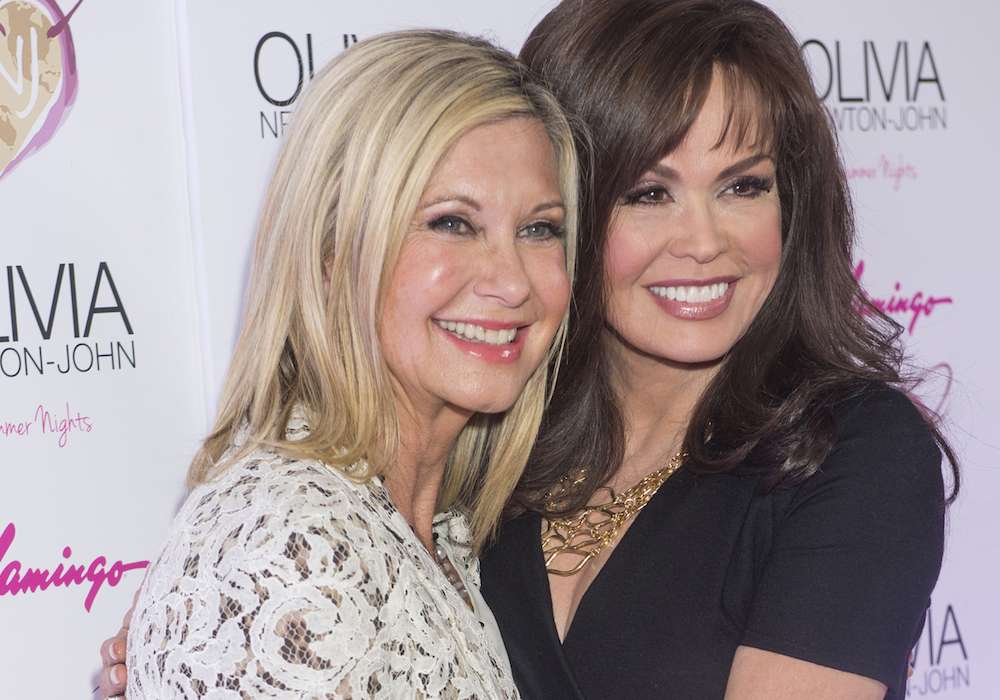
    Marie Osmond opened up about her son Michael Blosil’s death on CBS Sunday Morning.

    Singer Marie Osmond is still haunted by her son’s suicide nearly ten years after it happened, she revealed over the weekend. 

    Osmond’s son Michael was 18 in February of 2010 when he killed himself by leaping from the eighth-story balcony of his home in Los Angeles. Osmond said on CBS Sunday Morning that most days she relives the pain of that moment. 

    “You know, I don’t think you’re ever through it,” she said, according to People. “I think God gives you respites, and then all of a sudden it’ll hit you like the day it did. The ripple effect is so huge, what you leave behind.”

    Reflecting on Loss

    Osmond wrote about Michael’s death in her 2013 book The Key Is Love. “You cry until you can’t cry, and then you cry some more,” she wrote, according to People

    Osmond revealed that six months before Micheal’s death, she had a moment with a fan that would be significant to look back on. “A woman gave me a hug and said, ‘Oh, Marie. You’ve been through depression, divorce, kids in rehab… What haven’t you been through?’” Osmond wrote. “I answered, ‘I haven’t lost a child. That would be the worst thing.’”

    Osmond said she was at the Flamingo hotel with her daughter Rachael when her phone rang at 1:30 a.m. It was the security guard from Osmond’s gated neighborhood.  

    “He said, ‘Someone is here from the coroner’s office. They are coming to the Flamingo to see you,’” she wrote. “My heart dropped to the floor. I said to Rachael, ‘It has to be Michael.’”

    When the officer arrived at the hotel and confirmed that Michael had died by suicide, Osmond was gutted. “I thought someone had run a knife into my heart,” she wrote. 

    Rehab and Depression

    Michael had attended rehab in 2007, but it was not made public what he was being treated for. “My son Michael is an amazing young man, shown through his courage in facing his issues,” Osmond said at the time. 

    However, after his high school graduation, Osmond knew that Michael was depressed. She says that she replays the “what ifs” in her head, and wonders if there is anything she could have done to save her son.

    “When I heard him say to me, I have no friends, it brought back when I went through depression, because you really feel so alone,” she told Oprah nine months after Michael’s death. “I’m not a depressed person, but I understand that place, that darkness… I told him, I said, ‘Mike, I’m gonna be there Monday and it’s gonna be OK.’ But depression doesn’t wait ‘til Monday.”

    View the original article at thefix.com

  • "I Want You to Want to Live": Jody Betty's Viral Love Letter to People Contemplating Suicide

    "I Want You to Want to Live": Jody Betty's Viral Love Letter to People Contemplating Suicide

    “I know the things I want to hear when I am suicidal and I think that if my words can reach even one person in their moment of crisis, then sharing my pain was worth it.”

    Trigger Warning: The following story discusses attempted suicide and links to potentially triggering articles. Proceed with caution. If you feel you are at risk and need help, skip the story and get help now.

    Options include: Calling the U.S. National Suicide Prevention Hotline at 800-273-TALK (8255), calling 911, and calling a friend or family member to stay with you until emergency medical personnel arrive to help you.

    “Dear You,
    If you are reading this there is a small piece of you that wants to hold on…”

    Jody Betty wants you to live. Even more, Betty wants you to want to live. But perhaps most importantly, she wants you to know that every day she fights to live herself. 

    Betty is the author of “I Want You to Want to Live,” an essay with over 15,000 likes on The Mighty. The piece, she says, is one of the most referenced links in online searches that connect people who are contemplating suicide to her. No matter how depressed someone may be when they reach out to her, she says, the very act of reaching out tells her that at least a small part of them is still fighting to hold on. Betty describes the response to her essay over the past few years as “astounding.” She is grateful to serve as a resource when needed. 

    The Toronto-based 47-year-old writer, who is currently on disability due to mental health issues, first attempted suicide at the tender age of eight, and shares that she has lived with suicidal ideation for most of her life. Today, Betty is a source of hope and inspiration for those trying to fight their way out of the dark. She’s a mental health and suicide awareness and prevention advocate who wears her heart on her sleeve, putting both the good and the bad days out there in her writing on her Twitter feed, because she knows that it’s the shared experience and empathy that helps people find meaning and connection, and possibly the sustenance or hope they need to make it through another day.

    “I will remind you that although I don’t know what tomorrow will bring, I will be by your side to find out…”

    “Living with suicidal ideation most of my life has been incredibly hard. It is a constant battle in your mind to find reasons and hope to keep going, to keep fighting when you have a brain that is literally attacking you, convincing you that there is no more hope. It becomes emotionally and physically exhausting,” Betty says. “I wanted people to hear from someone actually suicidal, not someone who has been trained to deal with suicidal people. I have people who just need to be truly listened to in a safe environment, so that is why I leave my Twitter DM open for anyone in need.” 

    Being open and honest about the state of her mental health sometimes includes sharing the very suicidal ideations that have plagued her since she was a child with her social media followers. The motivation for this is twofold: letting people know that they are not alone in what may be their darkest hour and battling the stigma still so heavily associated with mental illness. 

    “You are incredibly strong. I won’t ever tell you that you are being dramatic and don’t really want to die…”

    “I firmly believe that talking about it lets other people know they are not alone in their feelings and that their feelings are valid, and in moments of crisis, knowing we are not alone is crucial,” Betty explains, adding that the stigma surrounding mental health is “real, hurtful, and harmful.” “It’s an illness. The brain, just like any other organ, can get sick.”

    We tend to judge what we don’t understand, which is exactly why it’s so difficult to shatter the prejudice and stigma surrounding mental health and the topic of suicide, says Betty, 

    “People generally do not seek out information on something they are not personally touched by in some way. You likely would not read up on cancer if it in no way touched your life, and the same applies for mental health,” she says.

    According to the most recent statistics from the Center for Disease Control and Prevention (CDC), suicide rates are still on the rise, making suicide the 10th leading cause of death in the United States. In 2016, the CDC’s Vital Signs reports, nearly 45,000 Americans ages 10 and older died by suicide. 

    “Suicide is a leading cause of death for Americans – and it’s a tragedy for families and communities across the country,” said CDC Principal Deputy Director Anne Schuchat, M.D. in the release. “From individuals and communities to employers and healthcare professionals, everyone can play a role in efforts to help save lives and reverse this troubling rise in suicide.”

    Betty is doing her part, she says, by sharing her story of hope and healing. 

    The CDC and Association for Suicide Prevention advise that anyone can help prevent suicide by taking such steps as learning how to identify the warning signs, how to appropriately respond to those at risk, and contacting the National Suicide Prevention Lifeline. Betty acknowledges that these steps are not to be ignored. Sometimes, though, the key to getting through to someone contemplating suicide is being able to practice empathy instead of sympathy. 

    “I don’t know you, but I do care because I can empathize with your pain; I feel it myself.”

    “I find sometimes the crisis lines seem very scripted, and often don’t say the right things simply because they have never been there,” Betty says. “They can sympathize but not empathize… and there is a big difference. I wrote [I Want You to Want to Live] from the heart. I know the things I want to hear when I am suicidal and I think that if my words can reach even one person in their moment of crisis, then sharing my pain was worth it.”

    Betty’s grateful when her words reach people in need at the right time.

    “The hardest thing to do is reach out your hand and ask for help but once you do, you would be shocked at the number of people who reach back.”

    Read “I Want You to Want to Live” by Jody Betty and follow her on Twitter.

    If you or someone you know may be at risk for suicide, immediately seek help. You are not alone.

    Options include:

    • Calling the U.S. National Suicide Prevention Hotline at 800-273-TALK (8255)
    • Calling 911
    • Calling a friend or family member to stay with you until emergency medical personnel arrive to help you.

    View the original article at thefix.com

  • Today I Celebrate My Brother's Suicide

    Today I Celebrate My Brother's Suicide

    My brother passed away from suicide seven years ago today. Without realizing it, he taught me that you never know what someone else may be going through, so I try to be kind.

    My brother passed away from suicide seven years ago today. It was a day I will never forget. I miss him very much and at times I am still overwhelmed with grief and sadness. When I think about him, warm tears instantly well up in my eyes and roll down my cheeks.

    But not today.

    Typically, those feelings catch me off guard: a song, a memory, a family event where for me his absence is always felt. Or a wedding or the birth of a baby, events that bring so much joy, yet I always remember that he will never experience two of life’s greatest moments.

    But I am prepared for today and what it means to me.

    The American Foundation of Suicide Prevention states that suicide is the tenth leading cause of death in the USA. The World Health Organization estimates that each year approximately 800,000 people die from suicide, which accounts for one death every 40 seconds. Some sources predict that by 2020 that will increase to one death every 20 seconds.

    These deaths are our sons, daughters, moms, dads, brothers, sisters, aunts, uncles, friends, neighbors, and co-workers. And in the approximately six minutes it takes you to read this article, nine people will have taken their life. Nine families will very shortly feel a pain like no other, their lives changed forever.

    The last time I saw my brother is etched forever in my mind.

    On December 3, 2011, I was driving to my mother’s house after work to pick up my family. Everyone was taking me out for dinner for my 43rd birthday, which was the next day. Our brutal winters typically start early in Alberta, slowing everything down; the roads weren’t the best. I was running a little late and was doing my best to hurry since we had a reservation at a nearby Italian restaurant at 6:30.

    I pulled up to a big snowbank in front of Mom’s house and honked the horn, once, twice and no one came. I jumped out and hurried through the front door, calling “Guys, c’mon, we’re going to be late.”

    “Surprise!!” they all yelled, my brother’s dog Yuma barking his welcome and running over to the door. And from behind the couch popped my brother Brett, holding a cup of coffee. “Surprise,” he said.

    We were not going out for dinner at all. I took in the beautifully decorated room and a couple of bags of gifts and smelled the sweet aroma of dinner filling the air. My sons Rick and Ryan looked so proud, beaming as they had managed to keep the party a complete secret. My mom had very obviously taken a great deal of effort to plan this evening, serving up salad and homemade lasagna.

    I was overwhelmed and grateful. I hadn’t seen my younger brother more than a handful of times over the previous five years and my sons had seen him even less. Since childhood, my brother had been my greatest friend, my confidant, the one who was there; the one I could always count on. Always. And vice versa.

    But sadly, things changed during our adulthood as he struggled with alcoholism and more severe mental health issues. I understand his illness so much better now. But back then, I had to set a healthy boundary between us, not because I gave up on him or didn’t love him, and not because I didn’t believe he could get well. My heart just couldn’t take the pain anymore of watching him self-destruct. He wasn’t sober much during those last years, so my love and support was from a safe distance.

    Once the meal was over at my mom’s, I sat on the floor and put on my party hat. Brett snapped a picture, then handed me a blue gift bag. Inside was a little rock.

    “It’s for peace and luck,” he said. “The other thing is kind of a joke.”

    As I pushed back the tissue paper, I found a black coffee mug with the familiar logo of a topless mermaid. I didn’t know what exactly he meant by “joke.” A reminder of our beautiful walk a couple of years earlier when he had been sober for a few months and we met at Starbucks? Or a nod to all those daily coffees we used to share on my front porch when we would just sit and talk and talk? Or was it just his funny way of letting me know that he knew I hated his habit of drinking coffee all day and late into the night, keeping him from sleeping. That is just a small example of me trying to give him advice that he never took.

    Maybe the mermaid mug was all those things—I didn’t care. My brother knew me and I knew him. How much joy you can get from such a simple gift; I love and cherish that mug and drink my morning coffee out of it even today.

    “Thanks,” I said with a warm smile.

    I reveled in seeing my sons, almost 19 and 21, interacting with their uncle, talking, laughing, and sharing what was going on in their lives. Watching Ryan and Brett side by side warmed my heart. Memories of our once-happy family filled my mind. How close Brett used to be with his nephews.

    As I sat and watched them, I felt a complete sense of pride and love. Ryan was taking Power Engineering at college, following in the career path of his uncle. Brett was showing Ry different websites and telling him all about the different engineering plants, which ones are better, what each has to offer. My heart melted for so many reasons. My brother’s addiction and struggles had caused him to miss years of my sons’ lives, but when I sorted through the pain, the destruction, and everything that we had all been through, I realized it had not changed how much they loved him. I hope he knew that. And he loved them, too.

    That cold, snowy evening ended as usual—a hug, a kiss on the cheek.

    “I love you,” I whispered in my brother’s ear.

    “I love you, too,” Brett replied to me, like a thousand times before.

    I never saw my brother again.

    Just after 3 a.m., on March 19, 2012, I was awoken by my husbands’ words, “Jodee, I think someone is here.” I still remember seeing the four black pant legs with yellow stripes on the doorstep as my husband opened the front door.

    My brother had taken his own life.

    My brother died 2,555 days ago today. But whereas others have moved on with their lives, I am one of the few left counting. Please don’t get me wrong, I am glad others have moved on. He would be glad too. But my life and how I see it has changed forever.

    My brother’s death taught me so much: I try to remember to cherish life every day, to be open-minded, empathetic, and understanding, and to tell the ones I care about that I love them. I strive to not be bitter and angry as those emotions serve no purpose other than to break my spirit. I work hard to remember that not everyone has the same opinion, that we all experience life and the circumstances surrounding it differently. So, I never get argumentative when others do not agree with my perspective. They have not lived my life, nor I theirs. Without realizing it, my brother taught me that you never know what someone else may be going through, so I try to be kind.

    Because of my brother and his absence, today, more than any other day of the year, the beauty of life is fresh in my mind.

    I will not spend today crying. It doesn’t mean that I don’t wish he was here, or that I don’t love him. It doesn’t mean I’m not feeling an underlying sense of sadness.

    But I have chosen today to be on a cruise with my husband of 28 years and two of our greatest friends, all of whom I love very much. Today, I will breathe the fresh Caribbean air; I will swim in the ocean and feel the warmth of sunshine on my face. Because of my brother, I remember how precious life is and you can’t take any day for granted. You never know what tomorrow may bring.

    Today, I celebrate life.

    Today, I celebrate everyone who has lost their lives to suicide and the families who loved them.

    Today, my sweet brother, I celebrate you.


    In loving memory of Brett John Tisdale, September 15, 1972 – March 18, 2012

    If you or someone you know needs help, call the National Suicide Prevention Lifeline at 1-800-273-TALK (8255) or Text HOME to 741741. If you think someone is in immediate danger, do not leave them alone, stay with them and call 911. Read about warning signs for suicide and more at mentalhealth.gov.

    View the original article at thefix.com
  • Doctors At High Risk For Depression & Suicide, Survey Says

    Doctors At High Risk For Depression & Suicide, Survey Says

    About 15% of physicians are depressed, and 44% say they are burned out, according to a recent survey.

    Physicians are tasked with taking care of others, but a new study suggests that their own health often suffers due to the pace and demands of their profession, putting them at high risk for burnout and even death by suicide. 

    According to Reuters, doctors are more likely than people in any other profession to die by suicide. About 15% of physicians are depressed, and 44% say they are burned out, according to a recent survey by Medscape. On average, a doctor dies by suicide more than once a day. 

    “There is a passionate argument surrounding the data and discourse about who’s to blame for this situation.” Dr. Carter Lebares, director of the Center for Mindfulness in Surgery at the University of California, San Francisco said that there are many factors contributing to this epidemic. 

    “Quotes from respondents in the Medscape survey capture this very poignantly: anger over a broken system, loss of time with patients, being asked to sacrifice dwindling personal time to ‘fix ourselves,’ and demoralization that the only way out is to quit or severely curtail our work,” she said. 

    The survey showed that administrative duties were the biggest cause of stress, with 59% of physicians feeling taxed by them. The other top stressors were spending too much time at work, not being paid enough or fretting over electronic records — about one-third of doctors said they were affected by each of these. 20% of respondents said they felt “like just a cog in a wheel.”

    Lebares said that doctors need to be taught to manage their stress in healthier ways. 

    “The approach we promote and champion in our research and programming for surgeons includes cognitive training for stress reduction through mindful meditation training; learning skills for advocacy; and engaging the institution to address broader change,” she said. 

    However, many physicians use unhealthy coping mechanisms to deal with the stress of the job. 21% of female and 23% of male doctors said that they drink alcohol to cope, while 38% of females and 27% of males turn to junk food. 

    Some have healthier habits for stress management: 52% of females and 37% of males say they talk to family and friends, while 51% of males and 43% of females exercise to alleviate burnout. 

    Lebares said that the medical system needs a cultural change, particularly with more doctors retiring, which may contribute to a physician shortage. 

    “Data are coming to suggest that an institutionally supported network of choices for wellbeing will be the answer — some combination of things like limited [electronic records] time, increased ratio of patient time, better food choices at work and home, room for personal health (like exercise breaks), tailored mindfulness-based interventions, financial planning services or untraditionally structured jobs,” she said.

    In the meantime, patients could be affected by physician burnout: Doctors reported making errors, expressing frustrations and not taking careful notes because of their exhaustion. 

    View the original article at thefix.com