Tag: drug overdoses

  • How Fentanyl Changed The Opioid Crisis

    How Fentanyl Changed The Opioid Crisis

    The prevalence and potency of illicit fentanyl has changed the course of the opioid crisis for the worse. 

    While prescription painkillers were previously attributed to the most deaths in the opioid epidemic, they no longer do. Instead, the leading cause of death in this context is now illegal fentanyl, according to a recent Bloomberg editorial.

    The National Center on Health Statistics states that in 2017, illegal fentanyl played a role in 60% of opioid deaths, in comparison to 11% of opioid deaths five years ago. 

    Fentanyl was created in 1960 and was used as a treatment for cancer pain. Illicit fentanyl has become common in the black market because it can be easily manufactured in a lab. Its potency also means it can be put into very small packages that are easy to conceal. 

    “Drug labs in China fulfill online orders from American users, or from traffickers in the U.S. and Mexico who add the fentanyl to heroin and other drugs to boost their effect, or press it into phony prescription-opioid pills,” the editorial reads. 

    Because of this, the editorial states, addressing the issue of illegal fentanyl needs to be focused first on China, which U.S. law enforcement officials claim is the source of nearly all illegal fentanyl. 

    The editorial states that the Obama administration had reached out to the Chinese government to ask for help in policing producers of fentanyl. But, with the Trump administration in place, that cooperation appears to have fallen by the wayside. 

    “What’s needed is a steady and purposeful diplomatic push, along with expert support for fortifying China’s capacity to inspect and regulate its thousands of drug labs,” the editorial board writes. 

    When fentanyl is exported from China, it mainly comes through the mail to both users and dealers. While Congress has allotted Customs and Border Protection more chemical-detection equipment, it is not possible to scan all packages entering the country. 

    “The task would be easier if Congress passed pending legislation to require the U.S. Postal Service to obtain basic identifying information from senders—including the name and address of sender and a description of package contents—as private parcel services do,” the editorial board writes.

    In addition to being sold on the dark web, fentanyl can also be found on regular websites, the board says. Scott Gottlieb, commissioner of the Food and Drug Administration (FDA), has spoken out about the need for internet companies to put more effort into taking down those listings. 

    While this all has to do with the supply, the aspect of demand must also be addressed, the board says. The more than 2 million Americans struggling with opioid or heroin use disorder need access to treatment, specifically medication-assisted treatment (MAT) and behavioral therapy.

    “Fentanyl and other opioids are killing more than 130 people a day. The crisis demands a thorough, well-coordinated national response. What the White House and Congress have come up with so far falls short,” the board concludes.

    View the original article at thefix.com

  • Lil Xan Says Mac Miller's Overdose Death Made Him Want To Quit Music

    Lil Xan Says Mac Miller's Overdose Death Made Him Want To Quit Music

    The 22-year-old rapper discussed how Miller’s death has impacted him during a recent podcast interview. 

    The death of hip-hop artist Mac Miller (born Malcolm James McCormick) has left many of his fans devastated, including fellow rapper Lil Xan, who has claimed that he will retire in the wake of his peer’s passing.

    In a recent appearance on a podcast, Leanos states that the news of McCormick’s death left him “crying in [his] apartment” and unwilling to “make music no more” [sic]. McCormick’s death, from what authorities have described as an apparent overdose, also gave Leanos pause to consider his own drug use and mental health issues, which he said he would be addressing in rehab if he did not have upcoming tour dates.

    Speaking live on Adam22’s podcast No Jumper on September 8—one day after McCormick was found dead in his home in Studio City, California—Leanos said that he was overwhelmed by the news. “I’ve been crying in my apartment, ‘Mac didn’t die, Mac didn’t overdose,”” he said. 

    He also recalled the last time he saw McCormick, which happened to be at the rapper’s final performance at the Hotel Café in Los Angeles shortly before his death. “Before I left, he was like, ‘Be safe,’” said Leanos. “People say that, you know: ‘Be safe.’ But he grabbed me, and he pulled me back, and he was like, ‘No, I mean, BE SAFE.’ That almost made me cry. That’s my idol right there. I keep thinking about that—how it resonated in my head, how those were his last words.”

    According to Leanos, the experience of McCormick’s words, followed by the news of his death, left him unwilling to continue his music career. “When your hero dies, f—k that s—t,” he said. “I don’t want to make music no more.” After the completion of his current recording contract, Leanos claimed that he planned to retire, though he did not elaborate on this particular decision.

    McCormick’s death also put Leanos in a reflective mood regarding his own substance use. His use of Xanax—the drug that gave him his stage name—and opiates like Norco have been well-publicized in the past, but in his No Jumper interview, Leanos suggested that he continued to struggle with sobriety.

    “I want to get sober now, completely sober, but it’s so hard,” he told Adam22, whose real name is Adam Grandmaison. “I just want to be off everything. I want to be like a normal person. If I didn’t have a tour coming up, I would be in rehab right now.”

    View the original article at thefix.com

  • Couple Accused Of Running Mobile Home Drug Drive-Through

    Couple Accused Of Running Mobile Home Drug Drive-Through

    A string of overdose cases led authorities back to a mobile home with a makeshift drug-dealing drive through.

    Authorities busted a drug-dealing couple in Florida who were found running a drive-through service for illicit drugs out of the kitchen window of their mobile home. The drive-through experience was complete with signs directing traffic flow and open/closed signs.

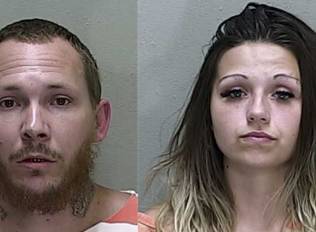
    William Parrish Jr., 32, and McKenzee Dobbs, 20, reportedly put together the whole system, according to Ocala Police, to prevent their business from drawing unwanted attention from customers constantly entering and exiting their abode. But several overdoses in the area, presumably by their products, were what finally brought the long arm of the law to their door.

    “We were seeing some overdose incidents that were happening in this particular area, specifically at this particular location,” said Capt. Steven Cuppy of the Ocala Police. “There [were] some heroin sales that were going on there. Subsequently, through the investigation, we were able to determine that product was laced with fentanyl.”

    Parrish has been charged with driving under the influence, keeping a dwelling used to sell drugs, possession of drugs with intent to sell and resisting arrest without violence. Dobbs was slapped with keeping a dwelling used to sell drugs, possession of drugs with intent to sell, possession of fentanyl and possession of fentanyl with intent to sell.

    Parrish’s father, William Parrish Sr., claimed his son was trying to get his life back on track and was visiting a methadone clinic. “He’s been trying to get himself straightened out,” Parrish Sr. said.

    Parrish Sr. maintains that the reports of the overdoses are “a lie.”

    This isn’t the first time dealers have tried to use the convenience of a drive-through to do business. Last year, a pair of Burger King employees were caught using the fast food chain’s drive-through to deal cannabis.

    Customers in the know would speak to the drive-through in code, asking if “nasty boy” was working and, if so, if they could have their “fries extra crispy.”

    This was the cue for Garrett Norris, 20, and Meagan Dearborn, 19, to slip a little bit of marijuana in with the order and collect the payment at the second window. The pair were caught in a police sting, though Dearborn later claimed that she simply handed over the food and never knew what was stashed inside.

    View the original article at thefix.com

  • International Overdose Awareness Day Is August 31st

    International Overdose Awareness Day Is August 31st

    The global event helps erase stigma about drug-related deaths while spreading the word about overdose prevention.

    This year’s International Overdose Awareness Day is Friday, August 31. It’s not only a day to remember the lives lost, but to remind each other that overdose deaths are preventable.

    Since 2001, people around the world have recognized Overdose Awareness Day by holding candlelight vigils, free naloxone trainings, and more. These are opportunities for people who have been affected by a drug overdose to come together, remember their loved ones, and empower each other to prevent more deaths.

    Fatal drug overdoses are most prevalent in North America, but it’s a global phenomenon. According to 2017 figures from the United Nations Office on Drugs and Crime (UNODC), there were an estimated 190,000 premature deaths caused by drugs.

    Opioids accounted for the majority of these drug-related deaths, and were preventable “in most cases,” according to the report.

    North America has the highest drug-related mortality in the world, accounting for 1-in-4 drug-related deaths globally.

    Opioids (which include prescription painkillers and heroin) may be the most prominent cause of a drug overdose currently—but alcohol, stimulants, and other prescription medication can also cause a person to overdose.

    When taking prescription medication, it is important to know the correct dose and time to take the medication. Certain drugs do not react well with each other—it’s important to know this when taking prescription medication as well.

    With regular drug use, one will develop a tolerance to the drug. Thus, the body may be more vulnerable to an overdose after a period of abstinence, when one’s tolerance has had a chance to go down. This is why, for example, one is at a higher risk of overdose after a period of detox or prison.

    The official website of International Overdose Awareness Day advises one to “always” call for emergency help if they believe a person is overdosing. Symptoms that indicate that a person is in need of emergency help are not limited to being unconscious.

    A person may also be in trouble and need emergency care if they are having a seizure; are extremely paranoid, agitated and/or confused; or experiencing severe headache, chest pain, or breathing difficulties. Showing one or two of these symptoms is a cause for concern.

    Snoring or gurgling are also potentially dangerous symptoms, as they could be a sign that a person is having trouble breathing. Bystanders are advised to try and wake up the individual immediately. And if they do not wake up, paramedics should be called.

    Naloxone is a common tool for reversing opioid overdose. Events all across the US for this year’s Overdose Awareness Day include free naloxone trainings, to equip people with the skills to save a life.

    Harm reduction organizations across the country have worked to equip as many people with naloxone and the training to go with it.

    In San Francisco, the DOPE Project (which is affiliated with the Harm Reduction Coalition) and its partners have trained 11,667 people to administer naloxone.

    The organization reported that between the fall of 2003 and June 2018, 5,149 overdoses were reversed.

    View the original article at thefix.com

  • More Than 70 People Overdose In Connecticut Park Over 24-Hour Period

    More Than 70 People Overdose In Connecticut Park Over 24-Hour Period

    K2 is to blame for the mass overdose in New Haven.

    Starting on Tuesday night, more than 70 people suffered a drug overdose in a 24-hour period in New Haven, Connecticut—most of them a stone’s throw from Yale University.

    According to CBS News, the Drug Enforcement Administration has confirmed that the cause of the mass overdose was, indeed, K2—the synthetic drug that’s been the suspect behind similar mass drug poisonings from Washington, D.C. to Skid Row.

    Initially, officials speculated that the mystery substance was “possibly laced with an opioid” such as fentanyl, the New York Times reported. But the DEA confirmed that no additives were detected.

    Most of the poisonings happened on New Haven Green, a park not far from Yale University. At least two people experienced “life-threatening symptoms,” but no deaths were reported. Three people were arrested in relation to the mass overdose.

    At the scene, the victims suffered “a multitude of signs and symptoms ranging from vomiting, hallucinating, high blood pressure, shallow breathing, [and] semi-conscious and unconscious states,” said Rick Fontana, New Haven’s director of emergency operations.

    Emergency personnel scrambled to reach all of the victims. They were “sprinting from patient to patient in the park,” with crews transporting people quickly “just to turn the cars around and get them back out,” according to Dr. Sandy Bogucki, the city’s director of emergency medical services.

    On July 4, there were 14 drug overdoses in the same area of New Haven, with K2 as the reported cause.

    Also in July, NBC News reported that more than 260 people were sickened by “synthetic drugs” in Washington, D.C. in a span of 10 days. Once again, K2 was the suspected cause.

    This marked a significant increase from the previous July, when just 107 were hospitalized for drug poisonings in Washington, D.C.

    K2 is also known as Spice and “synthetic marijuana.” However, as High Times notes, comparing the drug to cannabis is “being generous.”

    The only similarity that K2 may have to cannabis, however faint, is its physical appearance. But the effects couldn’t be more different.

    “In reality, the drug is a manmade chemical cocktail of various psychoactive substances,” High Times explains. “The chemical mixture is then sprayed onto dried herbs or plant material, giving the drug an appearance similar to botanical cannabis.”

    View the original article at thefix.com

  • Overdoses Increasingly Lead To Criminal Charges

    Overdoses Increasingly Lead To Criminal Charges

    Family members and the public aren’t convinced that prosecuting friends—who are often on drugs themselves—is the best use of resources. 

    When someone dies from an overdose it is undeniably a tragedy, but is there someone to blame? Increasingly, the answer—legally speaking—is yes.

    It’s becoming more common for authorities to charge family members, friends and dealers with homicide for their role in securing drugs, or even their presence when the drugs were taken, according to a report by The New York Times

    “I look at it in a real micro way,” Pete Orput, the chief prosecutor in Washington County outside Minneapolis, told the paper. “You owe me for that dead kid.”

    Mark S. Rubin, a county attorney in Minnesota who has brought charges related to overdoses, said that the situation is complicated, but ultimately there is criminal responsibility. 

    “People agree, you know, there’s nobody forcing someone to take the controlled substance. But somebody might agree to take it from their friend or their boyfriend or girlfriend and they end up dying because of it,” Rubin said. “We feel that constitutes a crime of possibly murder in the third degree, but at least manslaughter in the second degree.”

    The Times found that in 15 states that keep records, there have been more than 1,000 charges of homicides related to overdose deaths since 2015. Between 2015 and 2017, prosecutions of this nature nearly doubled.

    While law enforcement officials say that this tough approach is justified and will stem the use of drugs, family members and the public aren’t convinced that prosecuting friends—who are often on drugs themselves—is the best use of resources. 

    “It’s kind of like blaming the leaves on the tree, you know?” said Michael Malcolm, of Breckenridge, Colorado, whose younger son was charged with the death of his brother, who overdosed on drugs that the boys had bought together online. “What about the roots?”

    The Times investigation found that charges are brought under a variety of laws. Twenty states have specifically made delivering drugs that result in death a crime. Others use standard homicide and manslaughter charges. In some cases, friends and family have been charged with dealing or distributing drugs, even if they did not exchange drugs for money with the person who died. 

    “State laws vary, but drug ‘distribution’ or ‘delivery’ is generally not limited to selling,” the Times reporters wrote in an accompanying question and answer piece. “It can include sharing drugs, giving them away, or having a friend pay you back for drugs you bought.”

    Many states have Good Samaritan laws, which are meant to protect the person who calls 911 when someone is overdosing. Often, these laws protect someone who may also be using, but if that person was involved in securing the drugs that caused the overdose they can still be charged, according to the report. Vermont and Delaware are the only states that explicitly protect callers from prosecution.

    View the original article at thefix.com

  • Colleges Create Opioid Response Plans Amid National Crisis

    Colleges Create Opioid Response Plans Amid National Crisis

    Even though overdose deaths on college campuses are relatively rare, many schools are still choosing to put a plan in place. 

    Colleges across the country are focused on responding to the opioid epidemic, even as opioid abuse and overdose deaths remain very rare on campus. 

    According to the American College Health Association, about 7 to 12% of the college-aged population use opioids for non-medical purposes, and about 2 to 3% use heroin. Comparatively, about 5% of U.S. adults report misusing opioids. 

    “Colleges definitely have an obligation to address the opioid epidemic as it manifests on their campuses,” Beth DeRicco, director of higher education outreach at Caron Treatment Centers, told Inside Higher Ed. “While a small percentage of students misuse pain relievers, the danger of opioids and the way in which use has risen makes it an incredible concern.”

    In 2016, the American College Health Association released guidelines for how colleges can address opioids and opioid misuse. 

    Since then, campuses around the country have crafted their own responses to the opioid epidemic. At Bridgewater State University in Massachusetts, naloxone is now available in 50 defibrillator boxes around campus, including in all 11 dormitories. Asheville-Buncombe Technical Community College in North Carolina trained staff on how to recognize signs of opioid addiction, changed the locks on single-stall bathrooms and had school security officers begin to carry naloxone.

    The University of Wisconsin Madison hired two substance abuse counselors and made an agreement with Walgreens to allow students to purchase naloxone. 

    At the same time, a 2016 survey of students at the University of Wisconsin Madison found that just 0.8% of the campus population, or 55 students, reported having any issues with substance use disorder. Of those, only 5.4%—less than 3 students—reported opioid misuse. 

    One reason opioid abuse may be lower on campus is that opioid addiction is most common among people who have less education, fewer job prospects and live in poverty. However, reaching out to students might help those in their personal lives who are not enrolled in college. 

    For example, Anne Arundel Community College in Maryland has not seen any opioid overdoses, according to Tiffany Boykin, dean of student engagement. However, in the surrounding county 37 people overdosed in the first quarter of this year, she noted. 

    “It may not be a student who is actively engaged in practicing. They may have a parent or spouse or a friend who is affected,” Boykin said. “The majority of our students are working professionals. When they’re trying to cope with a family member or a loved one who is affected, it’s very difficult for them to be successful.”

    View the original article at thefix.com