Tag: e-cigarettes

  • Teen Injured By Exploding E-Cigarette

    Teen Injured By Exploding E-Cigarette

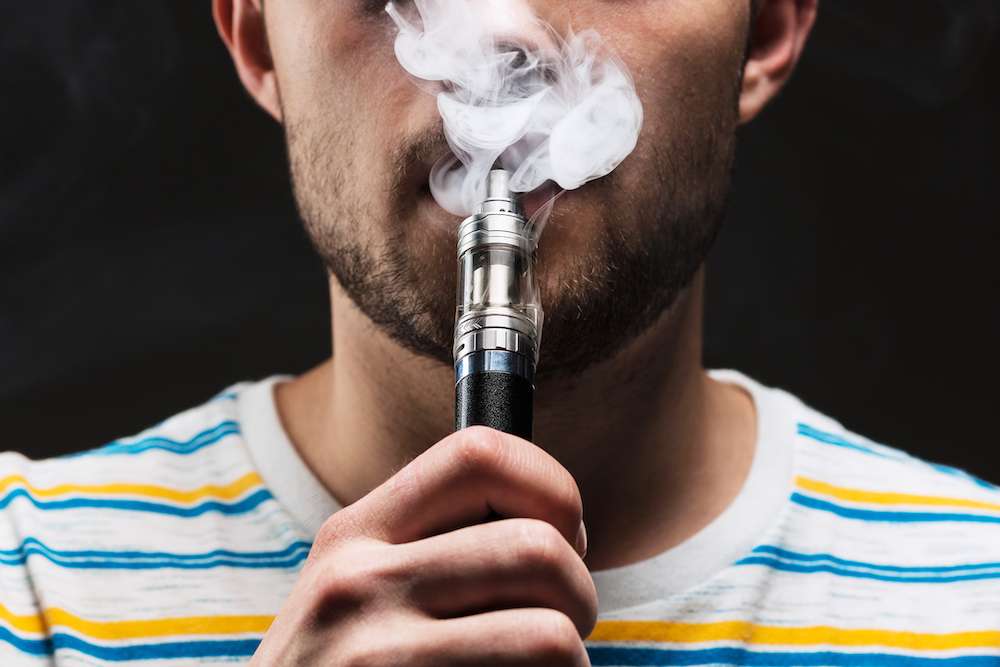
    The e-cigarette explosion caused extensive wounds to the young man’s mouth, including a broken lower jaw and missing teeth.

    A 17-year-old boy suffered severe facial injuries, including a broken jaw, when an e-cigarette exploded in his mouth.

    The incident and the extent of his injuries were detailed in a report published in the New England Journal of Medicine and penned by the pediatric trauma surgeon who treated him after the explosion.

    While incidents of e-cigarettes or “vapes” exploding are rare, they can cause serious injuries, and two fatalities have been reported as the result of such an explosion.

    According to coverage of the report by Live Science, the explosion, which took place in March 2018, required the teenager to be sent more than 200 miles from his home in Ely, Nevada to an emergency room in Salt Lake City, Utah, where he was treated by the report’s co-author Dr. Katie Russell, a pediatric trauma surgeon at the University of Utah and Primary Children’s Hospital in Salt Lake City. The boy had suffered extensive wounds to his mouth, as well as several missing teeth and a broken lower jaw.

    Russell and other doctors had to remove several additional teeth from the boy’s mouth because their sockets had been irreparably damaged. A dental plate was installed under his lower gums to stabilize his jawbone, and his jaw was wired shut for six weeks to allow his mouth to close properly.

    Russell told Live Science that she and her colleagues published the report because they had been shocked by the extent of the damage caused by the explosion.

    “When I met this patient, I had no idea that a vape pen could do this,” she said. “It takes a lot of force to break your jaw.”

    According to a report issued by “Tobacco Control,” an estimated 2,035 burn and explosion injuries from e-cigarette use were reported by U.S. hospital emergency rooms between 2015 and 2017.

    Since the event reported in the case study, more explosions have been reported, including an incident in January 2019 when a 24-year-old Texas resident died after a metal shard from an exploding vape entered his neck and severed an artery.

    The exact reason for the explosion has yet to be determined, but as the Times reported, various sources have suggested that the lithium-ion battery used in vape products can overheat to the point of explosion.

    A 2017 report from the Federal Emergency Management Agency noted that such batteries “are not a safe source of energy for such devices,” while a blog post from the Massachusetts General Hospital Research Institute said that vaping devices that employ an “open system” – which include a rechargeable battery with reservoirs that are filled with e-liquid – are less safe than ones with closed systems, which use pre-filled cartridges that attach to a rechargeable battery, or ones that can’t be recharged.

    The Food and Drug Administration offered a list of safety suggestions for e-cigarette users, including the use of devices with safety features, keeping loose batteries away from metal objects (to prevent an accidental charge), replacing wet or damaged batteries, and keeping vape devices away from extreme heat or cold.

    View the original article at thefix.com

  • FDA To Investigate Whether Vaping Causes Seizures

    FDA To Investigate Whether Vaping Causes Seizures

    The FDA will investigate cases of seizures possibly related to vaping—but no links have been made yet.

    The Food and Drug Administration announced Wednesday that it will be looking into 35 individual cases of people having seizures after vaping between 2010 and 2019.

    Most of these cases have happened to young adults or underage kids, and the FDA is concerned about the implications, according to CNBC.

    “While 35 cases may not seem like much compared to the total number of people using e-cigarettes, we are nonetheless concerned by these reported cases,” said FDA Commissioner Scott Gottlieb and Principal Deputy Commissioner Amy Abernethy.

    Vaping with e-cigarettes has grown in popularity, sparking concern among health experts who stress that even without the additives found in normal cigarettes, nicotine can still have negative health effects that get worse the younger the user is.

    It’s currently unclear whether the seizures in these 35 cases were caused by vaping, but these alarming and potentially dangerous neurological events can be caused by nicotine poisoning.

    “We’re sharing this early information with the public because as a public health agency, it’s our job to communicate about potential safety concerns associated with the products we regulate that are under scientific investigation by the agency,” Gottlieb and Abernethy said in their joint statement.

    Last December, U.S. Surgeon General Jerome Adams officially declared e-cigarette use among young people to be a national epidemic. E-cigarettes are often marketed as being safe alternatives to regular cigarettes and surveys have found that young people believe the hype.

    Vaping is no less addictive than combustible smoking, and according to an article in Yale Medicine, studies are finding that “vaping increases the risk a teen will smoke regular cigarettes later.”

    Health experts are also concerned about the high concentration of nicotine in each e-cigarette “pod”—the replaceable cartridges that contain the liquid form of the drug—compared to a combustible cigarette. Some of these pods contain higher concentrations than others, and some, called “pod mods,” are made from nicotine salts that have an even higher concentration of nicotine than the traditional e-cigarette pod.

    According to the Surgeon General Advisory on e-cigarettes, they can also contain heavy metals, chemical flavorants linked to lung disease, and “volatile organic compounds.” The FDA has had difficulty keeping up with the rapid development of the vaping industry, meaning that users may be unknowingly inhaling unsafe materials.

    The National Institute on Drug Abuse also found that a full two-thirds of teens who vape believe that their e-cigarettes only contain flavoring. Only 13.2% knew that they were inhaling nicotine.

    Still, the FDA acknowledges that there are many other factors that could have led to the seizures, including other drugs taken and prior histories of seizures. 

    “We want to be clear that we don’t yet know if there’s a direct relationship between the use of e-cigarettes and a risk of seizure,” they said.

    View the original article at thefix.com

  • Could Vaping Lead To Heart Attacks, Depression?

    Could Vaping Lead To Heart Attacks, Depression?

    The jury is still out on whether e-cigs are safer than cigarettes—but mounting evidence shows that vaping comes with its own health concerns.

    People who use e-cigarettes may be uninformed about the potential risks of vaping—though it is often portrayed as being a “safer” alternative to smoking traditional cigarettes.

    Health officials worry that young people are using e-cigarettes at rising rates. As a result, the Food and Drug Administration (FDA) has established tough regulations on vaping.

    Now, a hard-hitting new study on e-cigarettes—the “largest-ever study conducted” on the effects of vaping—claims that people who vape are more likely to suffer heart attacks, coronary artery disease and depression.

    Researcher Mohinder Vindhyal, an assistant professor at the University of Kansas School of Medicine Wichita, told Science Daily, “Until now, little has been known about cardiovascular events relative to e-cigarette use. These data are a real wake-up call and should prompt more action and awareness about the dangers of e-cigarettes.”

    According to Vindhyal’s findings, adults that indulge in vaping can be 56% more likely to have a heart attack, and 30% of them are more likely to have a stroke than people who don’t use tobacco products. Similarly, people who vape are also 55% more likely to have depression and/or anxiety than people who don’t use e-cigarettes.

    Vindhyal added, “When the risk of heart attack increases by as much as 55% among e-cigarette users compared to nonsmokers, I wouldn’t want any of my patients nor my family members to vape. When we dug deeper, we found that regardless of how frequently someone uses e-cigarettes, daily or just on some days, they are still more likely to have a heart attack or coronary artery disease.”

    Some look to vaping as a way to wean off of cigarettes—but while e-cigarettes are considered less dangerous than smoking tobacco, “that doesn’t mean that vaping is safe,” Vindhyal says.

    This study gathered information from over 96,000 respondents from the Centers for Disease Control and Prevention’s National Health Interview Survey over a period of several years.

    Vindhyal will present his research findings at the American College of Cardiology’s 68th Annual Scientific Session, which will be held in New Orleans on March 16.

    View the original article at thefix.com

  • FDA Discusses Using Drug Therapy To Help Teens Quit Vaping

    FDA Discusses Using Drug Therapy To Help Teens Quit Vaping

    The FDA recently held a public hearing to discuss the vaping epidemic among teens. 

    Many consider vaping to be a big problem, and many still don’t realize its potential harm. Now the FDA is so concerned about the popularity of vaping, they’re even considering drug therapy to help wean young people off vaping.

    Matthew L. Myers, who is the president of the Campaign for Tobacco-Free Kids, told CNN, “The FDA has concluded that the level of addiction it is seeing among youthful e-cigarette users is so disturbing and so unprecedented that it needs to at least ask whether we need a solution that goes beyond what we ever did with cigarettes.”

    Even with the partial government shutdown in effect, the FDA held a public hearing on Friday, January 18, to address the problem. One of the biggest problems with the vaping epidemic among young people is that more research needs to be done. There’s a different kind of chemistry that goes into vaping, and previous research on teens and cigarette addiction clearly doesn’t apply the same way.

    As Dr. Susanne Tanski, who is an associate professor of pediatrics at the Geisel School of Medicine, explained, “Clinicians urgently require new solutions to safely and effectively help stop [adolescents] using these and all tobacco products for good. There is unfortunately virtually no data on how to treat an adolescent with e-cigarette dependence.”

    But then the conversation switched to a different tactic, which is trying to keep young people from starting vaping at all. Tanski conceded that “preventing youth use in the first place should be FDA’s primary goal. We must all recognize that if an adolescent has developed a nicotine addiction as a result of vaping, we’ve already failed.”

    Several teens who got hooked on vaping also spoke at the public hearing. One teen first started Juuling in eighth grade, and he stated, “I see so many of my friends who had the same problem I did … and have no idea how to stop it.”

    One possible solution that was proposed at this meeting was having the FDA conduct a “pre-market review” of e-cigarettes, which would include a ban on flavors, one of the most appealing factors of e-cigarettes to young people.

    And while medication is being considered to help wean adolescents off vaping, non-drug therapy was strongly urged at this public hearing as well.

    Nonprofit tobacco control group Truth Initiative has a program that helps young people quit through text messaging. An executive for Truth Initiative said in a statement, “E-cigarette users don’t identify as smokers. They have different barriers to quitting, and, especially in the case of teens and young adults, many want an anonymous way to go about quitting without involving their parents or friends, which texting provides.”

    View the original article at thefix.com

  • How Hard Is It To Quit Vaping?

    How Hard Is It To Quit Vaping?

    A new report offers multiple firsthand accounts of the difficulties of quitting vaping.

    Many people are concerned about young adults and vaping. Juul, the biggest e-cigarette company around, has come under fire for being popular with teens and for making their products attractive to young people with their ad campaigns.

    Now a report in USA Today has revealed that withdrawing from vaping can be very difficult, and it can lead to symptoms of depression and anxiety.

    A mortgage banker named Andrea “Nick” Tattanelli told USA Today that quitting vaping was “hell” and that he suffered from depression for three days. “It’s delicious. It’s too attractive,” Tattanelli explained. “You don’t make something you can vape in a watermelon flavor and think people aren’t going to do it all the time.”

    Tattanelli is 39, and he turned to vaping to wean himself off cigarettes. Tattanelli had been a smoker since he was 17, and he did finally leave cigarettes behind, but the withdrawals he, and many others, have suffered, have made the FDA question if vaping is a good way to quit cigarettes.

    As one rehab director, Dr. Malissa Barbosa, said, “The studies aren’t fully available around vaping and I’m very conservative. This is new, and I say, ‘Why aren’t we thinking of traditional means of quitting?’”

    Another smoker, Kevin Kee, also tried vaping as a way to stop smoking, but he realized vaping was a harder habit to break. And yet another vaper, Elvijs Arnicans, wrote on Facebook that he had been off vaping for two weeks, and he wished he knew how tough it was going to be before he stopped.

    He experienced “intense tiredness for the first three days, and then the cravings intensify as the brain fog clears.” He also felt “no enjoyment in pleasurable activities experienced until about day three.”

    Barbosa told USA Today only one patient she treated has been able to stop vaping, and the patient suffered headaches, agitation and nausea.

    In a first person account for The Fix, Amy Dresner recalled that her first two days after quitting vaping weren’t bad, “but on day 3 or 4 it got gnarly. Unlike quitting cigarettes, I didn’t feel so much agitated as I felt physically ill; nausea, mouth sores, sore throat, achy and incredible lethargy. And then a mild depression came over me. As somebody who has ferociously struggled with clinical depression for over 20 years, just the hint of it popping back up alarms me.”

    On January 19, the FDA will be holding a hearing about teens and nicotine addiction. The FDA has good reason to be concerned, and regulators are now calling vaping an “epidemic.”

    The current stats report that 3.6 million people in middle and high school are using e-cigarettes, and close to 21% of high school seniors have confessed they’ve vaped in the last 30 days, an 11% jump from 2017.

    View the original article at thefix.com

  • Vaping Rates Double Among Teens, While Opioid Use Declines

    Vaping Rates Double Among Teens, While Opioid Use Declines

    Results from the 2018 Monitoring The Future survey show that teens have turned to vaping nicotine and marijuana and away from binge drinking and opioid use. 

    The percentage of teens who reported vaping nicotine nearly doubled this year, representing the largest increase in use of a substance since the national Monitoring the Future study began. 

    “To put the nicotine vaping increase in context, it is the largest out of more than one thousand reported year-to-year changes since 1975 for use of substances within the 30 days prior to the survey,” according to a press release from the University of Michigan, which conducts the annual survey of about 50,000 8th, 10th and 12th graders. 

    About 20% of high school seniors reported vaping nicotine in the past 30 days. In addition, more than a quarter of teens reported vaping “just flavoring,” but researchers believe these students may be confused or ill-informed about what they’re consuming, since many popular vaping devices don’t have nicotine-free options. Marijuana vaping also increased. 

    “Teens are clearly attracted to the marketable technology and flavorings seen in vaping devices; however, it is urgent that teens understand the possible effects of vaping on overall health; the development of the teen brain; and the potential for addiction,” Dr. Nora D. Volkow, director of the National Institute on Drug Abuse said. “Research tells us that teens who vape may be at risk for transitioning to regular cigarettes, so while we have celebrated our success in lowering their rates of tobacco use in recent years, we must continue aggressive educational efforts on all products containing nicotine.”

    Overall, 28.5% of high school seniors reported using nicotine of some variety in the past 30 days. Tobacco use was down slightly in 2018 but not a statistically significant amount. This shows that prevention efforts need to target teens who may see vaping as a safe alternative to smoking. 

    “Vaping is reversing hard-fought declines in the number of adolescents who use nicotine,” said Richard Miech, the lead author and investigator of the study. “These results suggest that vaping is leading youth into nicotine use and nicotine addiction, not away from it.”

    He said vaping is popular because it is easy to conceal. 

    “If we want to prevent youth from using drugs, including nicotine, vaping will warrant special attention in terms of policy, education campaigns, and prevention programs in the coming years,” Miech said.

    The survey found that binge drinking and use of opioids and tranquilizers decreased significantly, while use of other drugs, including meth, marijuana and molly remained stable. 

    “With illicit opioid use at generally the lowest in the history of the survey, it is possible that being in high school offers a protective effect against opioid misuse and addiction,” Volkow said. “We will be focusing much of our new prevention research on the period of time when teens transition out of school into the adult world and become exposed to the dangerous use of these drugs.” 

    View the original article at thefix.com

  • E-Cig Maker Called Out For Putting Erectile Dysfunction Meds In Vape Juice

    E-Cig Maker Called Out For Putting Erectile Dysfunction Meds In Vape Juice

    The FDA issued a warning to one e-cig maker that reportedly violated the Food, Drug, and Cosmetic Act.

    The FDA is casting a closer eye on HelloCig Electronic Technology, an e-cigarette manufacturer, after FDA researchers discovered that not only were the fruit-flavored products found to impair lung function in trials on mice, but the liquids contained prescription erectile dysfunction drugs as well.

    While e-cigarettes, vapes, and their ilk have been touted as a healthier alternatives to smoking for years, the truth is that the products were simply too new to allow any deep understanding about the possible adverse risks they carry as well as what product regulations should be put in place to protect consumers.

    This lack of regulation may have contributed to HelloCig’s inclusion of tadafil and sildenafil, usually used as the active ingredient to treat erectile dysfunction, in their e-cigarette liquids.

    “There are no e-liquids that contain prescription drugs that have been proven safe or effective through this route of administration,” said Scott Gottleib, FDA Commissioner.

    The FDA also undertook a surprise inspection of popular San Francisco e-cig manufacturer Juul, snatching up their marketing documents to ensure the company is not marketing to minors. Juul has been a runaway success, seeing a massive increase in sales from 2.2 million devices in 2016 to 16.2 million devices in 2017.

    Considering that 2 million high schoolers reported using e-cigarettes in a National Youth Tobacco Survey study, a significant portion of these sales made their way to the hands of minors.

    That’s why last September, the FDA warned and fined any e-cig manufacturers found to have sold products to minors and gave them 60 days to prove they had mechanisms in place to prevent minors from purchasing their products.

    The fruity flavors that are most attractive to teens have been linked to impaired lung function in mice. While this does not necessarily mean that the same effects will be seen in humans, it’s an important first step to determining the risks the products present.

    “Our findings suggest that exposure to e-cig vapor can trigger inflammatory responses and adversely affect respiratory system mechanics,” wrote the study’s authors. “We conclude that both e-cig vaping and conventional cigarette smoking negatively impact lung biology.”

    Groups of mice were exposed to cigarette smoke as well as different formulations of e-cigarette vapor. After three days, all the mice were found to have problems with inflammation, mucous production, and lung function.

    View the original article at thefix.com

  • Juul Faces Criticism, Concerns Amid Rising Success

    Juul Faces Criticism, Concerns Amid Rising Success

    The company is accused of marketing its product to teens. 

    Arguably the most well-known e-cigarette on the market, Juul has seen skyrocketing sales in the past year, increasing 800%. But the success of the company isn’t without concern.

    According to CNBC, Juul founders James Monsees and Adam Bowen, both former smokers, initially started a company called Ploom, which later became known as Pax Labs. In 2015, they introduced Juul, a type of e-cigarette. Two years later, it broke off into its own company called Juul Labs.

    The team that initially created Juul was made up of about 20 people on a $2 million budget, CNBC states. Since then, the product has seen exponential growth. Today, the company is valued at $15 billion and makes up about 75% of the e-cigarette market.

    “What we realized is people don’t want a safer cigarette, they want to move past cigarettes,” Monsees told CNBC. “It’s hard to imagine an area that can be more powerful to public health in particular than to eliminate cigarettes from the face of the earth. It is one of the most successful consumer products of all time, if not the most successful, and yet it kills more than half of all people that use them long term. We always intended to build this company around the idea of making cigarettes obsolete. We knew Juul would be the way to do that.” 

    Juul contains about 40 milligrams of nicotine per cartridge. It works by vaporizing a liquid containing nicotine salts which is then inhaled by the user.

    “There’s a lot of misunderstanding about this category and about nicotine,” Bowen told CNBC. “Many people think that it’s deadly, a serious disease agent—when really alone, nicotine is quite benign. It’s a mild stimulant, and is habit-forming and can lead to dependence, and for that reason alone, no non-smoker should ever touch this product.”

    While Juul’s growth has been widely successful, it hasn’t been without obstacles. The company has faced various lawsuits, as well as new FDA regulations. 

    “If you’d have interviewed me two years ago, I’d have said they’re maybe 25% as dangerous as a cigarette,” Stanton Glantz, UCSF Center for Tobacco Control and Education Director, told CNBC. “Now, I think they’re somewhere between three-quarters as dangerous as a cigarette and as dangerous.” 

    A main criticism of the product is that it appeals to youth. One reason for this is that Juul comes in a variety of flavors. Additionally, it appears as compact as a flash drive, making it possible for kids to bring into schools without raising suspicions.

    “Kids who use them have more asthma, more days off school,” Glantz told CNBC. “There is evidence linking them with chronic obstructive pulmonary disease and other diseases. Addiction is not a phase, it’s not something kids grow out of.”

    Juul’s early marketing was also accused of being problematic due to making the product appealing to youth with its social media-based campaigns. Now, the company has shifted to marketing by using testimonials from adult users of the product.

    Both founders Monsees and Bowen say it’s important to focus on tobacco use prevention among youth, and have invested $30 million into that cause.

    Juul must submit its product to the FDA for review by August 2022.

    “We estimate we switched over a million smokers to Juul in just three years, but there are about 38 million left in the U.S. so there’s still a lot of room to grow,” Bowen told CNBC.

    Juul Labs released the following statement to The Fix

    JUUL Labs’ mission is to eliminate cigarette smoking by offering existing adult smokers with a better alternative to combustible cigarettes. JUUL is not intended for anyone else. We strongly condemn the use of our product by minors, and it is in fact illegal to sell our product to minors. No minor should be in possession of a JUUL product.

    Our goal is to further reduce the number of minors who possess or use tobacco products, including vapor products, and to find ways to keep young people from ever trying these products. We approach this with a combination of education, enforcement, technology and partnership with others who are focused on this issue, including lawmakers, educators and our business partners.

    Nicotine is addictive. An individual who has not previously used nicotine products should not start, particularly youth. Recent science raises serious concerns about the adverse effect of nicotine on adolescent neurodevelopment.

    We encourage parents to talk with their children about the dangers of nicotine. As a company we also continuously seek ways to contribute to this dialogue and knowledge base.

    View the original article at thefix.com

  • FDA Cracks Down On Top E-Cig Brands To Curb Teen Vaping Epidemic

    FDA Cracks Down On Top E-Cig Brands To Curb Teen Vaping Epidemic

    Around 1,300 warning letters have been sent to retailers of e-cigarettes found to be illegally selling e-cigarette products to minors.

    The Food and Drug Administration, concerned about the rising numbers of teenagers who “vape,” is cracking down on major e-cigarette brands to try and stop this trend.

    In a press release issued on Wednesday (Sept. 12), the FDA announced that it is requesting major brands—JUUL, Vuse, MarkTen, Blu, and Logic—to submit plans to “immediately and substantially reverse these trends” of young people vaping.

    If they do not comply within 60 days, the agency “may require the companies to revise their sales and marketing practices, to stop distributing products to retailers who sell to kids and to stop selling some or all of their flavored e-cigarette products until they clear the application process,” according to CNBC.

    The latest crackdown is the result of a nationwide undercover sweep over the summer. Since then, 1,300 warning letters have been sent to retailers of e-cigarettes found to be illegally selling e-cigarette products to minors.

    The vast majority of the violations were for the illegal sale of JUUL, Vuse, MarkTen, Blu and Logic—which account for over 97% of the U.S. e-cigarette market.

    Initially, e-cigarettes were touted as a less harmful alternative to traditional cigarettes for people who want to quit. But growing use among young people is now a concern for the FDA.

    “In enabling a path for e-cigarettes to offer a potentially lower-risk alternative for adult smokers, we won’t allow the current trends in youth access and use to continue, even if it means putting limits in place that reduce adult uptake of these products,” said FDA Commissioner Scott Gottlieb in the press release.

    “We see clear signs that youth use of electronic cigarettes has reached an epidemic proportion, and we must adjust certain aspects of our comprehensive strategy to stem this clear and present danger,” Gottlieb declared, going on to say that promoting smoking cessation can’t come “at the expense of kids.”

    “We cannot allow a whole new generation to become addicted to nicotine,” he added.

    In the coming weeks, the FDA said it will take additional action under its Youth Tobacco Prevention Plan, and ramp up enforcement of the illegal sale of these products to kids.

    View the original article at thefix.com

  • Smoking Rates Hit An All-Time Low

    Smoking Rates Hit An All-Time Low

    The rising popularity of e-cigarettes has helped drive down traditional smoking rates.

    Americans are lighting up less than ever, according to newly released data from the federal government.

    After yet another downtick, only about 14% of U.S. adults were still smokers last year, an all-time low that has fallen from some 42% in the 1960s when smoking was ubiquitous. 

    “Everything is pointed in the right direction,” K. Michael Cummings with the tobacco research program at Medical University of South Carolina told the Associated Press.

    Part of the change stems from a decades-long shift in smoking bans and attitudes toward lighting up. In the 1950s and 1960s, indoor smoking was the norm in offices, planes, diners and hospitals. But as the medical community gained a better understanding of the associated health risks, anti-smoking campaigns and rising cigarette taxes pushed down cigarette use. 

    In recent years, the popularity of e-cigarettes—especially among young people—has also worked to drive down smoking rates. More kids are into vaping than smoking now, and teen smoking hit a new low last year. 

    While 9% of high school students reported smoking tobacco, roughly 13% said that they use e-cigs or other vaping devices, the AP reported. The practice is more prevalent among young people, as the most recent figures from 2016 estimate that only around 3% of adults choose to vape. 

    Despite its rising popularity, the health impacts of vaping aren’t well known. Although the Centers for Disease Control and Prevention (CDC) admitted that e-cigs “generally contain fewer harmful chemicals” than regular smokes, they still contain potentially carcinogenic substances and flavoring chemicals that are linked to lung damage, according to TIME

    But despite the growth in e-cig use, there are still around 30 million Americans who smoke traditional cigarettes. More men than women, and adults between the ages of 45 and 64 are the most likely to light up regularly, according to an annual survey by the National Center for Health Statistics

    The latest adult smoking figures are down 2 percentage points from the year before, when 16% of the population smoked. In 2006, that figure stood around 20%. 

    The new numbers come from the CDC’s annual survey, which interviewed roughly 27,000 adults last year for the latest findings.

    View the original article at thefix.com