Tag: Fentanyl

  • Prince’s Family Sues Doctor Who Reportedly Prescribed Him Pain Pills

    Prince’s Family Sues Doctor Who Reportedly Prescribed Him Pain Pills

    The lawsuit alleges that the doctor had to treat Prince’s opioid addiction prior to do his death but “failed to do so.”

    The family of Prince (born Prince Rogers Nelson) is suing a doctor accused of playing a “substantial part” in the music icon’s death.

    According to the Midwest Medical Examiner’s Office, the official cause of Prince’s April 15, 2016 death was an accidental overdose of fentanyl.

    The family is suing Dr. Michael Schulenberg in Hennepin County District Court in Minnesota, to replace the lawsuit filed in April in Illinois, according to the family’s attorney.

    The lawsuit alleges that Schulenberg and others—including the hospital where Schulenberg was working at the time)—had “an opportunity and duty during the weeks before Prince’s death to diagnose and treat Prince’s opioid addiction, and to prevent his death.” However, the family states, “They failed to do so.”

    The lawsuit seeks unspecified damages in excess of $50,000, ABC News reports.

    Authorities say the doctor admitted to prescribing oxycodone a week before his death, under his bodyguard’s name to protect his privacy.

    However, Schulenberg’s lawyer, Amy S. Conners, said in a statement that the doctor “never directly prescribed opioids to Prince, nor did he ever prescribe opioids to any other person with the intent that they would be given to Prince,” the New York Times reported in April 2017.

    Investigators later stated that it was possible that Prince was not aware that the medication he was taking contained fentanyl.

    “In all likelihood, Prince had no idea he was taking a counterfeit pill that could kill him,” said Carver County Attorney Mark Metz this past April, while announcing that no criminal charges would be filed in the musician’s death. “Others around Prince also likely did not know that the pills were counterfeit containing fentanyl.”

    Many of the medications found in the musician’s home were not in the original container provided by the pharmacy. “The evidence demonstrates that Prince thought he was taking Vicodin and not fentanyl,” Metz stated. “The evidence suggest that Prince had long suffered significant pain, became addicted to pain medications but took efforts to protect his privacy.”

    Walgreens Co., where some of the prescriptions were filled, is also named in the family’s lawsuit.

    Schulenberg’s attorney Paul Peterson maintained that the doctor did everything he could for the musician. “We understand this situation has been difficult on everyone close to Mr. Nelson and his fans across the globe,” said Peterson. “Be that as it may, Dr. Schulenberg stands behind the care that Mr. Nelson received. We intend to defend this case.”

    View the original article at thefix.com

  • Woman Reportedly Caught With 1.5 Million Lethal Doses Of Fentanyl

    Woman Reportedly Caught With 1.5 Million Lethal Doses Of Fentanyl

    A woman traveling from Los Angeles to New York City was reportedly caught with five pounds of fentanyl in a suitcase.

    Authorities in Kansas City arrested a woman at a bus station who was traveling across the country, from Los Angeles to New York, carrying five pounds of fentanyl—reportedly enough of the drug to cause 1.5 million lethal overdoses.

    Kansas City Police noticed 33-year-old Evelyn C. Sanchez was “intently watching” detectives as they searched through the luggage on the bus.

    When asked, Sanchez told authorities she was heading to New York for “maybe a week,” but the story fell apart when officers reportedly noticed she had not packed a lot of clothing in her luggage.

    Following her questioning, K-9 units sniffed inside the bus and indicated a suitcase near Sanchez’s seat on the bus. When the other bus passengers did not claim the suitcase as theirs, police asked Sanchez and she admitted it was hers before allowing officers to search it.

    Authorities noted that she seemed “very nervous.”

    When asked, Sanchez told police she had “drugs,” according to court records. She did not seem to know what exactly she had, “but it’s a lot.”

    Officers checked inside and did indeed find a lot of drugs—over five pounds of fentanyl, “capable of killing thousands of people,” according to Kansas City Police Chief Rick Smith.

    Local authorities cooperated with the Drug Enforcement Administration (DEA) in the investigation. The DEA estimates the amount of fentanyl could kill several orders of magnitude more people than Smith’s estimates, claiming the operation took “1.5 million lethal doses from the streets.”

    There’s no telling where the fentanyl was ultimately heading yet, but it was almost guaranteed to help drive up the number of overdose deaths in the United States and further exacerbate the impact of the opioid crisis.

    Of 72,000 overdose deaths in 2017, 50,000 of those were opioid-related—30,000 of which were from fentanyl or related synthetic opioids.

    The drug is even getting to people who don’t want them—of 907 samples of drugs sold as heroin in Vancouver, Canada, 822 contained fentanyl.

    The U.S. Attorney’s office says Sanchez is in federal custody and awaiting a court date to be scheduled.

    View the original article at thefix.com

  • Trump To Jeff Sessions: Sue Drug Companies For Opioid Crisis Role

    Trump To Jeff Sessions: Sue Drug Companies For Opioid Crisis Role

    The Attorney General said he would take action on Trump’s requests. 

    President Donald Trump has instructed Attorney General Jeff Sessions to file a federal lawsuit against pharmaceutical companies in Mexico and China, claiming that they have played a role in the US opioid epidemic.

    Last week, according to the New York Post, the president threw blame at China and Mexico for their roles in the opioid epidemic, claiming the countries had manufactured some of the illegal opioids coming into the United States.

    “In China, you have some pretty big companies sending that garbage and killing our people. It’s almost like a form of warfare. I’d like you to do what you can legally,” Trump said to Sessions.

    Fox News reports that Trump’s remarks came during a Cabinet meeting on Thursday, Aug. 16. Fox notes it was somewhat unusual that Trump asked for a new “major” lawsuit to be filed, rather than asking Sessions to join existing lawsuits filed by various US states. 

    “I’d also like to ask you to bring a major lawsuit against the drug companies on opioids,” Trump stated at the meeting, according to Fox. “Some states have done it, but I’d like a lawsuit to be brought against these companies that are really sending opioids at a level that — it really shouldn’t be happening. … People go into a hospital with a broken arm, they come out, they’re a drug addict.”

    Sessions said he would take action on Trump’s requests. 

    “We absolutely will,” Sessions said at the meeting. “We are returning indictments now against distributors from China; we’ve identified certain companies that are moving drugs from China, fentanyl in particular. We have confronted China about it … Most of it is going to Mexico and then crossing the border, unlawfully, from Mexico.”

    As of now, more than 25 US states have filed more than 1,000 lawsuits against opioid distributors and manufacturers.

    Last week, New York filed a lawsuit against Purdue Pharma, stating the manufacturer of the painkiller OxyContin has mislead medical professionals and patients about the dangers of the medication. Massachusetts also filed a lawsuit against the company in June, accusing the company of a “web of illegal deceit.” 

    According to recent estimates, overall overdose deaths in the US in 2017 were about 72,000 — an increase of 6,000 from 2016’s estimates.

    However, preliminary 2018 data implies that the “numbers may be trending downward in the wake of the Trump administration’s efforts to curb the epidemic.”

    View the original article at thefix.com

  • Fentanyl Found In Startling Number Of Heroin Samples In Canada

    Fentanyl Found In Startling Number Of Heroin Samples In Canada

    “Something like 60% of the drugs that we check are not what people think they are,” said the author of a new drug-testing study.

    Drugs in Vancouver, Canada may be even more dangerous than normal, according to a new pilot project. 

    The project from the B.C. Centre on Substance Use (BCCSU) found that more than 80% of drugs sold as heroin in Vancouver do not actually contain heroin, but rather a dangerous synthetic opioid called fentanyl. 

    For the project, the BCCSU gave local users the opportunity to test their drugs for fentanyl as well as other substances. The study took place from November 2017 to April 2018 at two supervised-consumption sites in the Downtown Eastside part of Vancouver.

    In total, 1,714 samples were tested with fentanyl test strips and an infrared spectrometer. 

    The results, which the Globe and Mail reports will be published in September in the Drug and Alcohol Dependence journal, demonstrated that fentanyl was present in a great deal of local drugs, especially heroin. The project also found that types of drugs such as stimulants and hallucinogens are more likely to contain the substance they are sold as.

    The findings, according to co-author Mark Lysyshyn, give insight into how problematic the contamination of various drugs is locally. 

    “Something like 60% of the drugs that we check are not what people think they are,” Lysyshyn said on Tuesday, according to the Globe and Mail. “We’ve always had the idea that drugs could be something different, but right now [the contamination rate] is really high.”

    During the study, the Globe and Mail states, authors found that the majority of drug samples (58.7%) were expected to be opioids. They received 907 samples of what was thought to be heroin, but only 160 (17.6%) contained heroin. Of the total 907, 822 contained fentanyl. 

    Lysyshyn says the results aren’t necessarily indicative of the illegal drug market as a whole since the study was concentrated in downtown Vancouver. 

    He also added that the intention of the study was not to prove whether an illegal drug is safe, but instead to encourage those who use the drugs to seek out more information about what they are putting into their bodies. 

    “I don’t think the purpose of drug checking is to say, ‘These are safe; take them recklessly.’ That’s not what we’re trying to do,” he said, according to the Mail and Globe. “We’re saying, here’s a bit more information about these substances; they still could be risky. Because even if you find out there’s no fentanyl in your heroin, heroin causes overdoses, too. We don’t want people to forget all about the other harm-reduction advice that we’re giving; this is just additional information that we think could be helpful.”

    View the original article at thefix.com

  • 2017 Worst Year Yet for Drug Deaths

    2017 Worst Year Yet for Drug Deaths

    Last year has usurped the dubious title from 2016 with the most lives claimed by drug overdoses ever.

    According to a preliminary report by the Centers for Disease Control and Prevention (CDC), over 72,000 people in the United States died from a drug overdose in 2017. The number translates to nearly 200 people lost per day.

    This shatters the record previously held by the year 2016, which saw about 64,000 overdose deaths. In both 2016 and 2017, “at least” two-thirds of the deaths could be linked to the use of opioids.

    For comparison, the number of drug overdose deaths in 2017 exceeds the number killed by guns, car accidents, or HIV/AIDS within the span of a single year. The number is also larger than the casualties in both the Vietnam and Iraq conflicts combined.

    These figures are simply estimates, with more accurate figures due later. However, the CDC claims a trend is clear: the massive uptick is correlated to the rise of fentanyl.

    Fentanyl is an opiate stronger than heroin, sometimes used to lace other opioid products. Its potency makes it a dangerous high, especially when added to heroin, especially east of the Mississippi. But apparently, this “trend” is moving West.

    “Dr. [Chris] Jones said there is some early evidence that drug distributors are finding ways to mix fentanyl with black tar heroin, which could increase death rates in the West,” reported New York Times’ Margot Sanger-Katz. “If that becomes more widespread, the overdose rates in the West could explode as they have in parts of the East.”

    Fentanyl has been exacerbating the already burgeoning opioid crisis in the United States. Experts say the crisis is a fixable one, with one solid step in the right direction being making access to addiction treatment more available.

    In France, doctors were given the green light to prescribe buprenorphine in 1995, leading to a 79% decrease in opioid deaths in four years, Vox noted.

    Another recommended step would be to enact harm reduction policies, including needle exchanges and making naloxone, the overdose reversal drug, more available. Such measures have resulted in steep drop-offs of deaths in states that have put such plans in place.

    The Trump administration, however, has not made significant progress in these steps, according to Senator Elizabeth Warren.

    “Experts and observers have concluded that your efforts to address the opioid crisis are ‘pathetic,’ and ‘ambiguous promises’ that are ‘falling far short of what is needed’ are ‘not… addressing the epidemic with the urgency it demands,’” she wrote in a letter to President Trump. “I agree, and I urge you to move quickly to address these problems.”

    View the original article at thefix.com

  • Fentanyl, Other Synthetic Drugs Drive National Overdose Rates Up

    Fentanyl, Other Synthetic Drugs Drive National Overdose Rates Up

    Nearly 30,000 Americans died from overdoses stemming from fentanyl and other synthetic opioids in 2017.

    Driven in large part by widespread opioid use, the number of drug overdoses nationwide shot up nearly 10% last year, according to preliminary federal figures. 

    The U.S. clocked more than 72,000 drug fatalities in 2017, the Centers for Disease Control and Prevention (CDC) reported last week. That’s up by more than 6,000 from the 2016 figures, bringing the tally to nearly 200 deaths a day—more than the total number of gun, car crash or HIV deaths in any single year, ever. 

    But the new numbers—which represent a two-fold increase over 10 years ago—could actually be underestimating the true scope of the problem as full data from some states still isn’t in yet. 

    A big chunk of the increase—nearly 50,000 fatalities—comes from opioid deaths, a category that’s more than quadrupled since 2002. An increase in cocaine fatalities is also feeding into the higher figures. 

    Meanwhile heroin, painkiller, and methadone fatality figures have started to flatten out; it’s fentanyl deaths that are continuing to rise. Last year, close to 30,000 Americans died from overdoses stemming from fentanyl and other synthetic opioids.

    “Seventy-five percent of the deaths we get are fentanyl-related,”  Al Della Fave, a spokesman for the Ocean County, New Jersey prosecutor, told the Washington Post. “It’s the heroin laced with synthetic opioids that we’re getting creamed with.”

    The biggest increases are in some of the East Coast states already hardest hit by opioids, including Ohio, West Virginia and New Jersey. 

    In part, that’s due to the geography of drug-trafficking patterns. On the East Coast, heroin typically comes in a stronger powdered form—a form more easily mixed with deadly fentanyl. But in the western part of the country, cartels bring in black tar heroin from Mexico, which is both weaker and harder to mix with fentanyl. 

    “It is the 2.0 of drugs right now, the synthetics,” Tom Synan, the police chief in Newtown, Ohio, told the Post

    The current influx in opioid fatalities is commonly traced back to the 1990s, when drugmakers pushed addictive painkillers and doctors overprescribed them.

    Over a decade later, heroin took hold again when a cheap supply reshaped the market. But in recent years, it’s the introduction of fentanyl and other powerful synthetics that has driven the crisis to a deadlier point.

    And now that there’s finally been a downturn in some types of opioid fatalities, experts predict that any downward trend could be gradual given the nature of addiction and the stigma surrounding it.

    “Because it’s a drug epidemic as opposed to an infectious disease epidemic like Zika, the response is slower,” University of California San Francisco professor Dan Ciccarone told the New York Times. “Because of the forces of stigma, the population is reluctant to seek care. I wouldn’t expect a rapid downturn; I would expect a slow, smooth downturn.”

    View the original article at thefix.com

  • Opioid Crisis Has Peaked, Former Cleveland Clinic CEO Suggests

    Opioid Crisis Has Peaked, Former Cleveland Clinic CEO Suggests

    The doctor says that while opioid prescribing is down, synthetic opioids are now driving the opioid epidemic.  

    The former CEO of the Cleveland Clinic said that the opioid epidemic has peaked now that more healthcare providers and laypeople are aware of the dangers of opioid painkillers.

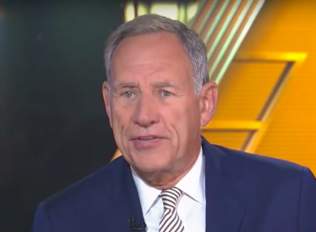
    “I think we’ve peaked,” Dr. Toby Cosgrove said on CNBC’s Squawk Box. “I think we’re starting to see the understanding of the problem, and getting to the point where people are certainly prescribing fewer drugs and people are recognizing how serious this is.”

    However, he said that synthetic opioids are continuing to drive opioid deaths. 

    “The other issue is that drugs are now being laced with fentanyl and carfentanil, which are highly potent,” said Cosgrove, a cardiac surgeon who led the Cleveland Clinic hospital for 13 years before stepping down in 2017.

    “Carfentanil is 10,000 times as potent as morphine. We just had an outbreak of deaths in Ohio from drugs being laced with very potent carfentanil and fentanyl,” Cosgrove noted.

    Cosgrove now works as an executive advisor to Google Cloud Healthcare and Life Sciences team, and is a proponent for healthcare reform. During his CNBC appearance he talked about ways to reduce healthcare costs.

    He noted that while the United States has the highest healthcare costs in the world, the country is about average in the amount spent on healthcare and social programs combined. He said that this shows that investing in social programs can help alleviate the burden of healthcare costs. 

    “Social programs, frankly, are driving down the healthcare costs” in other countries, he said. 

    Although there has been some leveling of opioid overdose rates in certain areas, the national overdose rate climbed in many places between 2016 and 2017. In fact, 45 states saw opioid overdoses increase 30% between July 2016 and September 2017, according to federal data.

    During that time period, the Midwest—including the area served by the Cleveland Clinic—saw opioid overdose rates increase 70%, driven largely by an influx of synthetic opioids. In fact, fentanyl is a factor in nearly half of opioid-related deaths. 

    As Cosgrove suggested, opioid prescribing is down. However, this isn’t necessarily linked to a reduction in overdose deaths. In fact, West Virginia decreased the amount of opioids prescribed by 12% between 2016 and 2017, but still saw opioid-related overdose deaths rise. Because of this, some medical experts warn that the opioid crisis could continue to get worse before improving. 

    “I think we have to realize that we’re on a trajectory that may get a lot worse before it gets better,” said Donald S. Burke, dean of the University of Pittsburgh’s Graduate School of Public Health. 

    View the original article at thefix.com

  • More Than 70 People Overdose In Connecticut Park Over 24-Hour Period

    More Than 70 People Overdose In Connecticut Park Over 24-Hour Period

    K2 is to blame for the mass overdose in New Haven.

    Starting on Tuesday night, more than 70 people suffered a drug overdose in a 24-hour period in New Haven, Connecticut—most of them a stone’s throw from Yale University.

    According to CBS News, the Drug Enforcement Administration has confirmed that the cause of the mass overdose was, indeed, K2—the synthetic drug that’s been the suspect behind similar mass drug poisonings from Washington, D.C. to Skid Row.

    Initially, officials speculated that the mystery substance was “possibly laced with an opioid” such as fentanyl, the New York Times reported. But the DEA confirmed that no additives were detected.

    Most of the poisonings happened on New Haven Green, a park not far from Yale University. At least two people experienced “life-threatening symptoms,” but no deaths were reported. Three people were arrested in relation to the mass overdose.

    At the scene, the victims suffered “a multitude of signs and symptoms ranging from vomiting, hallucinating, high blood pressure, shallow breathing, [and] semi-conscious and unconscious states,” said Rick Fontana, New Haven’s director of emergency operations.

    Emergency personnel scrambled to reach all of the victims. They were “sprinting from patient to patient in the park,” with crews transporting people quickly “just to turn the cars around and get them back out,” according to Dr. Sandy Bogucki, the city’s director of emergency medical services.

    On July 4, there were 14 drug overdoses in the same area of New Haven, with K2 as the reported cause.

    Also in July, NBC News reported that more than 260 people were sickened by “synthetic drugs” in Washington, D.C. in a span of 10 days. Once again, K2 was the suspected cause.

    This marked a significant increase from the previous July, when just 107 were hospitalized for drug poisonings in Washington, D.C.

    K2 is also known as Spice and “synthetic marijuana.” However, as High Times notes, comparing the drug to cannabis is “being generous.”

    The only similarity that K2 may have to cannabis, however faint, is its physical appearance. But the effects couldn’t be more different.

    “In reality, the drug is a manmade chemical cocktail of various psychoactive substances,” High Times explains. “The chemical mixture is then sprayed onto dried herbs or plant material, giving the drug an appearance similar to botanical cannabis.”

    View the original article at thefix.com

  • First Fentanyl Execution Carried Out In Nebraska

    First Fentanyl Execution Carried Out In Nebraska

    Fentanyl was one of four drugs used to kill Carey Dean Moore.

    Nebraska has become the first state to execute an inmate using the powerful synthetic opioid fentanyl. 

    On Tuesday, Aug. 15, the state used a lethal injection of fentanyl to execute Carey Dean Moore, a 60-year-old who was given the death penalty for killing two cab drivers, Reuel Van Ness and Maynard Helgeland, in 1979. 

    Fentanyl was one of four drugs used to kill Moore. According to the New York Times, the four-drug cocktail included “diazepam, a tranquilizer; fentanyl citrate, a powerful synthetic opioid that can block breathing and knock out consciousness; cisatracurium besylate, a muscle relaxant; and potassium chloride, which stops the heart.”

    The first drug was injected at 10:24 a.m., and Moore was pronounced dead at 10:27 a.m..

    As drug manufacturers increasingly refuse to allow states to use their products for lethal injections, states are looking for alternative execution means. Some people say that this is why states are using fentanyl, a painkiller that has become better known as a dangerous street drug and blamed for a spike in overdose deaths around the nation. 

    “There’s no particular reason why one would use fentanyl,” Robert Dunham, executive director of the Death Penalty Information Center, a Washington nonprofit group, told The Washington Post. “No one has used it before, and we’ve had hundreds and hundreds of executions by injection. That suggests that the state is using fentanyl because it can get its hands on it.”

    Scott R. Frakes, director of Nebraska’s Department of Correctional Services, said in a federal affidavit that states were very limited in the drugs they could use for executions. 

    “Lethal substances used in a lethal injection execution are difficult, if nearly impossible, to obtain,” he wrote. 

    In July, Nevada was slated to become the first state to use fentanyl as part of a lethal injection. However, the execution was stopped because Alvogen, maker of the sedative midazolam, objected to the drug’s use as part of a lethal injection. 

    After a judge blocked the execution, the company said that it “does not condone the use of any of its drug products, including midazolam, for use in state-sponsored executions.”

    After the court hearing the Nevada execution was put on hold indefinitely. 

    In a handwritten statement distributed Tuesday, Moore said that he did not wish to delay his execution after spending 38 years on death row. However, he urged people who are against the death penalty to turn their attention to the four individuals on death row in Nebraska who claim to be innocent. 

    “How might you feel if your loved one were innocent and on death row or if you were the innocent on death row,” he wrote. 

    View the original article at thefix.com

  • Paramedics Use Laughing Gas In Lieu Of Opioids To Treat Pain

    Paramedics Use Laughing Gas In Lieu Of Opioids To Treat Pain

    “We feel if we can prevent someone from getting an opioid we are ahead of the game,” said one Indianapolis emergency responder.

    Paramedics in one Indiana town have decided to switch from fentanyl to laughing gas in an effort to keep injured patients from taking the drug, a synthetic opioid which has a high potential for addiction. 

    The move comes as fentanyl is tightening its grip on the state’s capital, accounting for nearly 50% of opioid-related deaths in 2017—up from just 14% in 2013. 

    The shift won’t entirely eliminate the Fishers Fire Department’s use of the addictive painkiller, but it could cut it down by about two-thirds, Capt. John Mehling told the Indy Star

    “If it hurts a little, why give a lot?” Mehling said. “If you are going squirrel hunting, don’t bring an elephant gun.”

    For some cases—including head injuries and collapsed lungs—paramedics will still give out fentanyl. But when it comes to things like broken bones, they’ll turn to laughing gas instead. 

    “We feel if we can prevent someone from getting an opioid we are ahead of the game,” Mehling told the Indianapolis paper.

    After decades of use in dentistry, it wasn’t until relatively recently that laughing gas started making its way into emergency room settings. It offers some advantages over other painkiller options, including the fact that it’s not addictive and doesn’t require an IV. Also, it typically takes effect within about a minute and has a good safety record.

    But to use nitrous oxide, the patient has to be in good enough condition to put on the mask or tube and inhale to self-administer the gas. Then, three to five minutes later, they’ll need to do it again. Also, there have been some fatalities, and it can still present the potential for abuse, which makes it a potential target for thieves. 

    The shift at the Fishers Fire Department is just the latest in a growing trend. Paramedics in more than two dozen states have already started buying laughing gas for ambulances—though not always in an effort to avoid using opioids, according to the Associated Press.

    For some departments, laughing gas is convenient because it offers a means to combat pain even when medical workers who can legally provide narcotic painkillers are not along for the ride. 

    View the original article at thefix.com