Tag: Fentanyl

  • Prince’s Half-Sister Talks About His Death, Fentanyl

    Prince’s Half-Sister Talks About His Death, Fentanyl

    Sharon Nelson says the music icon was just trying to control his pain when he took the fatal dose of fentanyl.

    First came prescription drugs and heroin. Now, the synthetic opioid, fentanyl, is ripping through the country, killing scores of people who take heroin, cocaine or prescription pills that have been laced with fentanyl.

    That’s exactly what happened to Prince, according to his half-sister, Sharon Nelson. 

    Speaking with ABC News correspondent Bob Woodruff for a 20/20 segment that will air Friday night, Nelson said that her brother was just trying to control his pain. 

    “He wouldn’t have taken a pill like that at all,” Nelson, Prince’s oldest sister, said in a preview released by ABC. “When you’re in pain, you’re going to take a pill, hoping it relieves it. You’re not thinking like that; you’re not thinking like a normal person who isn’t in pain.”

    Woodruff said that Prince’s death made fentanyl a household name and raised awareness about the drug. 

    “This is kind of a wakeup call for people around the country about the power and danger of these pills, from a man who—no chance given his intelligence and position in life—would never have taken a pill with so much fentanyl,” Woodruff said. 

    Fentanyl can be used in a medical setting to control severe pain. However, toxicology reports showed that the levels of the drug in Prince’s blood when he died in April of 2016 were extremely high and were a “smoking gun,” as to his cause of death. 

    “The amount in his blood is exceedingly high, even for somebody who is a chronic pain patient on fentanyl patches,” Dr. Lewis Nelson, chairman of emergency medicine at Rutgers New Jersey Medical School, told the Associated Press earlier this year. 

    However, there are reports that the singer thought that he was taking Vicodin, not fentanyl pills. Nelson said the fact that her brother, an experienced opioid user, died from an overdose shows how dangerous fentanyl is.

    She said she hopes fans will realize that fentanyl is extremely dangerous and that it can be lurking anywhere—even when people think they know what drugs they are taking. 

    “After all that’s happened to Prince, I know, I can say for sure that his fans will never take that pill,” she said.

    The episode of 20/20 that Nelson appears on is focused on fentanyl, including investigating the source of illicit fentanyl from China and speaking with families who have lost loved ones to fentanyl overdose. 

    View the original article at thefix.com

  • Overdose Deaths Increase in New Jersey Even As Prescriptions Decline

    Overdose Deaths Increase in New Jersey Even As Prescriptions Decline

    State attorney General Gurbir S. Grewal says that despite the fatal OD increase “there are reasons for hope.”

    Opioid overdose deaths in New Jersey increased by 24% last year, even as the number of prescriptions written for opioids fell for the first time in recent years. 

    According to a press release from the state attorney general’s office, just over half of opioid overdose deaths in the state were caused by fentanyl and other synthetic opioids meant to mimic its strength. 

    “We still lose too many of our residents to drug overdoses, and the death toll continues to rise,” said Attorney General Gurbir S. Grewal. “But, if we look at the numbers, there are reasons for hope.”

    Despite the fact that an average of eight New Jersey residents die from an opioid overdose each day, Grewal said that policies to limit prescriptions of opioids are working. The state’s opioid prescription rate peaked in 2015, when 5.64 million opioid prescriptions were dispensed.

    By 2017, that number was down to 4.87 million, making last year the first “in recent memory when the number of opioid prescriptions fell below 5 million,” said the press release. 

    In March 2017, the state enacted a five-day limit on first-time opioid prescriptions. Since then, prescriptions of opioids have decreased 26%.

    Between January 2014 and March 2017 they were reduced just 18%, so this suggests a significant improvement in cutting back on opioid prescriptions. Overall, opioid prescriptions have been reduced by 39% between January 2014 and July of this year.

    “The decreasing rate of prescription opioids dispensed in New Jersey shows that a smart approach to the opioid epidemic can help turn the tide. If we persist in our efforts to prevent addiction and overdoses, we can save lives,” said Sharon Joyce, director of the Office of the New Jersey Coordinator for Addiction Responses and Enforcement Strategies (NJ CARES).

    In order to try and decrease the opioid overdose rate, the state will begin offering more information online, including data on naloxone administration rates and overdose rates for specific counties. 

    “The Attorney General is not only making his Department’s opioids data publicly available,” the press release said. “Through NJ CARES, the Department is relying on data to target its education efforts and identify its enforcement priorities.”

    The administration is also focusing on outreach efforts, including an ad campaign to highlight a safe disposal program for unused prescriptions.

    And the musical Anytown will be performing at middle and high schools across the state to raise awareness about the dangers of opioids. 

    View the original article at thefix.com

  • "Drug Llama" Allegedly Sold 50,000 Fentanyl Pills On Dark Web

    "Drug Llama" Allegedly Sold 50,000 Fentanyl Pills On Dark Web

    Investigators say the woman who reportedly calls herself “The Drug Llama” also sold Oxy, Percs and amphetamines through a dark web marketplace.

    A California woman known on the dark web as “The Drug Llama” is accused of shipping more than 50,000 fentanyl pills to consumers across the United States since 2016. 

    Melissa Scanlan, 31, is facing federal charges in Illinois and is also being investigated for two deaths in San Diego, where she lives, according to The San Diego Union Tribune.

    In those cases, investigators allege that she sold fentanyl that led to the deaths of a 10-month-old boy and a 41-year-old woman. The baby died after his father bought fentanyl—allegedly from Scanlan—and left it within reach of the child. The boy was found unresponsive in his parents’ bed.  

    These might be two of many deaths allegedly caused by Scanlan’s drugs. Assistant U.S. Attorney Sherri Hobson told a federal judge that Scanlan has trafficked more than 50,000 fentanyl pills, although the indictment against her only covers 400 grams of fentanyl. 

    Scanlan was the subject of a Drug Enforcement Administration (DEA) undercover operation in both San Diego and St. Louis. As the scope of the investigation expanded, the Food and Drug Administration, U.S. Postal Inspection Service and Department of Homeland Security also became involved. 

    Investigators say that Scanlan was selling drugs on the dark web marketplace called Dream Market, where she was known as “The Drug Llama.”

    In addition to selling fentanyl, she also offered oxycodone, amphetamines, morphine, Percocet, temazepam, flexeril, and an “opiate powder pack,” according to federal documents. Her fentanyl was pressed into blue pills that were disguised as oxycodone. The drugs arrived in leather pouches much like those sold by a company Scanlan owns. 

    Federal investigators ordered drugs from the “Llama” in July and were able to track Scanlan using the return address on the packages. The address listed was associated with an old business of Scanlan’s, and the name listed—Samantha Cooper—was later found to be the names of her two dogs. A Paypal account also linked Scanlan processed thousands of drug-related transactions. 

    In August, Scanlan was arrested on state drug charges after a search of her home. However, shortly after she was released she traveled to Mexico to arrange the shipment of more fentanyl to her house, and redirected her customers to another dark web marketplace where they could purchase the drugs. 

    She was arrested again on September 4 and admitted to buying fentanyl from a Mexican cartel. This time, federal prosecutors are arguing that she is a flight risk and a danger, noting that Scanlan is five months pregnant but continuing to engage in criminal activity. 

    View the original article at thefix.com

  • Bill Targeting Opioids Sent By Mail Up For Senate Vote

    Bill Targeting Opioids Sent By Mail Up For Senate Vote

    The STOP Act will require the U.S. Postal Service to collect electronic data on packages being shipped into the country.

    The Senate will likely pass a bill this week that aims to reduce the number of fentanyl shipments coming into the country via the U.S. Postal Service (USPS). 

    The STOP Act, which stands for Synthetics Trafficking and Overdose Prevention, will require the postal service to collect electronic data on packages being shipped into the country, including the sender’s and recipient’s addresses and the contents as described by the sender.

    Right now, only private courier services like FedEx, UPS and DHL require this information, which means that people can send opioids through the postal service and be virtually untraceable. 

    Illicit fentanyl can be easily made in China and shipped to the United States, since a small volume is immensely powerful and profitable. 

    “We are being overrun with fentanyl,” Senator Rob Portman (R-Ohio), who led an 18-month study of illegal imports, told the New York Times. “It is 50 times more powerful than heroin. It is very inexpensive. It is coming primarily from China and coming primarily through our U.S. Postal Service, if you can believe it.”

    In addition to requiring that the postal service gather additional information on packages, the bill would make is possible for the government to levy fines to the postal service if it does not comply. The postal service would also have the authority to block or destroy packages that have not been properly identified.

    Right now, the postal service must “obtain a warrant to inspect the contents of suspect parcels,” according to William Siemer, acting deputy inspector general of USPS, who testified before Congress this year.

    President Trump supports the measures, taking to Twitter to voice his enthusiasm. 

    “It is outrageous that Poisonous Synthetic Heroin Fentanyl comes pouring into the U.S. Postal System from China,” he wrote last month in a tweet. “We can, and must, END THIS NOW! The Senate should pass the STOP ACT—and firmly STOP this poison from killing our children and destroying our country.”

    The STOP Act has been languishing after it was introduced nearly 18 months ago, allowing shipments of opioids to continue. However, the House passed a similar initiative over the summer, prompting the Senate to move on the issue.

    In addition to addressing the dangers of opioid shipments, the bill would also expand access to treatment for infants born dependent on opioids, implement more stringent packaging requirements for some medications, and accelerate research into non-addictive painkillers that could potentially replace opioids. 

    View the original article at thefix.com

  • How Fentanyl Changed The Opioid Crisis

    How Fentanyl Changed The Opioid Crisis

    The prevalence and potency of illicit fentanyl has changed the course of the opioid crisis for the worse. 

    While prescription painkillers were previously attributed to the most deaths in the opioid epidemic, they no longer do. Instead, the leading cause of death in this context is now illegal fentanyl, according to a recent Bloomberg editorial.

    The National Center on Health Statistics states that in 2017, illegal fentanyl played a role in 60% of opioid deaths, in comparison to 11% of opioid deaths five years ago. 

    Fentanyl was created in 1960 and was used as a treatment for cancer pain. Illicit fentanyl has become common in the black market because it can be easily manufactured in a lab. Its potency also means it can be put into very small packages that are easy to conceal. 

    “Drug labs in China fulfill online orders from American users, or from traffickers in the U.S. and Mexico who add the fentanyl to heroin and other drugs to boost their effect, or press it into phony prescription-opioid pills,” the editorial reads. 

    Because of this, the editorial states, addressing the issue of illegal fentanyl needs to be focused first on China, which U.S. law enforcement officials claim is the source of nearly all illegal fentanyl. 

    The editorial states that the Obama administration had reached out to the Chinese government to ask for help in policing producers of fentanyl. But, with the Trump administration in place, that cooperation appears to have fallen by the wayside. 

    “What’s needed is a steady and purposeful diplomatic push, along with expert support for fortifying China’s capacity to inspect and regulate its thousands of drug labs,” the editorial board writes. 

    When fentanyl is exported from China, it mainly comes through the mail to both users and dealers. While Congress has allotted Customs and Border Protection more chemical-detection equipment, it is not possible to scan all packages entering the country. 

    “The task would be easier if Congress passed pending legislation to require the U.S. Postal Service to obtain basic identifying information from senders—including the name and address of sender and a description of package contents—as private parcel services do,” the editorial board writes.

    In addition to being sold on the dark web, fentanyl can also be found on regular websites, the board says. Scott Gottlieb, commissioner of the Food and Drug Administration (FDA), has spoken out about the need for internet companies to put more effort into taking down those listings. 

    While this all has to do with the supply, the aspect of demand must also be addressed, the board says. The more than 2 million Americans struggling with opioid or heroin use disorder need access to treatment, specifically medication-assisted treatment (MAT) and behavioral therapy.

    “Fentanyl and other opioids are killing more than 130 people a day. The crisis demands a thorough, well-coordinated national response. What the White House and Congress have come up with so far falls short,” the board concludes.

    View the original article at thefix.com

  • Couple Accused Of Running Mobile Home Drug Drive-Through

    Couple Accused Of Running Mobile Home Drug Drive-Through

    A string of overdose cases led authorities back to a mobile home with a makeshift drug-dealing drive through.

    Authorities busted a drug-dealing couple in Florida who were found running a drive-through service for illicit drugs out of the kitchen window of their mobile home. The drive-through experience was complete with signs directing traffic flow and open/closed signs.

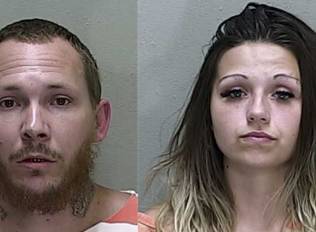
    William Parrish Jr., 32, and McKenzee Dobbs, 20, reportedly put together the whole system, according to Ocala Police, to prevent their business from drawing unwanted attention from customers constantly entering and exiting their abode. But several overdoses in the area, presumably by their products, were what finally brought the long arm of the law to their door.

    “We were seeing some overdose incidents that were happening in this particular area, specifically at this particular location,” said Capt. Steven Cuppy of the Ocala Police. “There [were] some heroin sales that were going on there. Subsequently, through the investigation, we were able to determine that product was laced with fentanyl.”

    Parrish has been charged with driving under the influence, keeping a dwelling used to sell drugs, possession of drugs with intent to sell and resisting arrest without violence. Dobbs was slapped with keeping a dwelling used to sell drugs, possession of drugs with intent to sell, possession of fentanyl and possession of fentanyl with intent to sell.

    Parrish’s father, William Parrish Sr., claimed his son was trying to get his life back on track and was visiting a methadone clinic. “He’s been trying to get himself straightened out,” Parrish Sr. said.

    Parrish Sr. maintains that the reports of the overdoses are “a lie.”

    This isn’t the first time dealers have tried to use the convenience of a drive-through to do business. Last year, a pair of Burger King employees were caught using the fast food chain’s drive-through to deal cannabis.

    Customers in the know would speak to the drive-through in code, asking if “nasty boy” was working and, if so, if they could have their “fries extra crispy.”

    This was the cue for Garrett Norris, 20, and Meagan Dearborn, 19, to slip a little bit of marijuana in with the order and collect the payment at the second window. The pair were caught in a police sting, though Dearborn later claimed that she simply handed over the food and never knew what was stashed inside.

    View the original article at thefix.com

  • Fentanyl Present In 90% Of Drugs, Massachusetts Officials Warn

    Fentanyl Present In 90% Of Drugs, Massachusetts Officials Warn

    The synthetic opioid is found more in combination with cocaine and benzodiazepines than heroin.

    Officials in Massachusetts are warning the public that the presence of the deadly synthetic opioid, fentanyl, is increasingly common in all types of illicit drugs in the state—not just in heroin or other opioids—raising the overdose risk for users of cocaine and other illegal substances. 

    “If an individual is using illicit drugs in Massachusetts, there’s a very high likelihood that fentanyl, which is so deadly, could be present,” said Dr. Monica Bharel, commissioner of the state Department of Public Health, according to New England Public Radio. “Anybody using illicit drugs should understand the risks, carry naloxone, and access treatment.”

    The state’s quarterly report found that fentanyl is present in 90% of overdose deaths in Massachusetts. It is found more in combination with cocaine and benzodiazepines than with heroin. In 2014, fentanyl was found in less than 30% of overdose deaths in the Bay State. 

    Because fentanyl is becoming more prevalent in cocaine and benzodiazepines, officials are advising family members of people who use illicit drugs to carry naloxone, the opioid overdose reversal drug. People who do not use opioids regularly are more susceptible to fentanyl overdose because they have not built up an opioid tolerance. 

    Because of this, the state is urging healthcare providers to help all drug users get into treatment, not just those who report that their primary drug of choice is an opioid. 

    “When analyzing opioid overdose deaths, we have become aware that a significant portion of the deaths are associated with concurrent cocaine use,” the state wrote in a letter to providers. “We believe this information is useful for you in your clinical work. Additionally, patients should be aware that polysubstance use can NOT be a reason for refusal for admission in the treatment system.” 

    The report also showed that overdose deaths are declining in Massachusetts for the third straight quarter, even as such deaths continue to rise nationally. This could be due in part to the rising rates at which EMTs in the state are administering naloxone, as well as public health campaigns, Bharel said. 

    “In Massachusetts we have a multi-pronged approach,” she said. “This is about prevention, raising awareness in our communities, and raising awareness among our prescribers.” 

    However, not all demographics are seeing the improvement. Hispanics are disproportionately likely to die of an overdose in Massachusetts, and the overdose rates for black men continue to rise. 

    “While the results of our efforts are having an impact, we must double down on our efforts to implement treatment strategies that meet the needs of the highest risk individuals and communities,” Health and Human Services Secretary Marylou Sudders said in a statement.

    View the original article at thefix.com

  • Dopesick: An Interview with Beth Macy

    Dopesick: An Interview with Beth Macy

    It takes the average user eight years and five to six treatment attempts just to achieve one year of sobriety. And in an era of fentanyl and other even stronger synthetic opioids, many users don’t have eight years.

    As recently as a few years ago, the opioid crisis could be referred to as a “silent epidemic,” perhaps in part due to its degrading nature. Opioid addiction is frequently described using metaphors of slavery, or enslavement, and those within its clutches are liable to feel acutely ashamed. No longer, however, is it possible to argue that the scourge of opioid addiction is being overlooked.

    No doubt that is partly due to the growing enormity of the problem. For each of the past several years, more people have died from drug overdoses than American service members were killed during the entire Vietnam War.

    Meanwhile, energetic and compassionate journalists have been doing outstanding work, covering the crisis from various vantages. Chief among them is Beth Macy, a New York Times-bestselling author, who first began noticing the effects of opioid addiction as a reporter for the Roanoke Times, where she worked for 25 years until 2014. Now she is out with Dopesick: Dealers, Doctors, and the Drug Company That Addicted America. Gracefully written and deeply reported, Dopesick should act as a vade mecum — a handbook, a guide, an essential introduction — for anyone who may be seeking insight into the deadliest and most vexing drug epidemic in American history. 

    Beth spoke to The Fix over email:

    The Fix: The first chapters of your book, on the origins of the opioid crisis, cover some material that others have explored (most notably Barry Meier, in Pain Killer: An Empire of Deceit and the Origin of America’s Opioid Epidemic). Still, I don’t have the sense that many people are aware of the role that Purdue Pharma played in setting off current epidemic. Briefly, what is their culpability? And why do think their crimes aren’t crimes better known? 

    Beth Macy: I think Meier’s book, Pain Killer, was too early, initially published in 2003, and it was largely set in central Appalachia — a politically unimportant place. Also, let’s not overlook the role that Purdue took in stifling Meier. As I write in the book, company officials had him removed from the beat after his book came out, arguing that he now had a financial stake in making Purdue look bad.

    After the 2007 plea agreement, in which the company’s holding company, Purdue Frederick, pled guilty to criminal misbranding charges and its top three executives to misdemeanor versions of that crime, Purdue and other opioid makers and distributors spent 900 million dollars on political lobbying and campaigns. Purdue continued selling the original OxyContin formula until it was reformulated to be abuse-resistant in 2010, continued for years after that pushing the motion that untreated pain was really the epidemic that Americans should be concerned about. Their culpability in seeding this epidemic is huge.

    You weren’t able to talk directly with any of the Purdue executives who made fortunes from OxyContin, and who criminally misled the public about its addictive potential. But you spent an afternoon interviewing Ronnie Jones, who is currently serving a lengthy prison sentence for running a major heroin distribution operation in West Virginia. How were Jones’s crimes (and his rationalizations for his behavior) different from those of the Purdue executives you wrote about?

    Great question. Jones refused to see that he brought bulk heroin to a rural community in ways that overwhelmed families and first responders in the region with heroin addiction; he told me he believed he was providing a service — his heroin did not have fentanyl in it, he argued, and it was cheaper than when people ran up the heroin highway to get it in Baltimore (and safer because they could stay out of high-crime places).

    At the 2007 sentencing hearing, Purdue executives and their lawyers repeatedly claimed they had no knowledge of crimes that were happening several rungs down the ladder from them; that the government had not proved their culpability in the specific crimes. According to new Justice Department documents unearthed and recently published by The New York Times , that was simply not true. For two decades, Purdue leaders blamed the users for misusing their drug; they refused to accept responsibility for criminal misbranding that resulted in widespread addiction and waves of drug-fueled crime that will be felt in communities and families for generations to come.

    You quote a health care professional who said that previous drug epidemics began waning after enough people finally got the message: “Don’t mess with this shit, not even a little bit.” That provoked a thought: Shouldn’t we be long past this point with opioids? On the one hand, I’m enormously sympathetic to anyone who is struggling with addiction. But it’s frustrating to realize that the opioid crisis is still building. Why aren’t more people as risk-averse about heroin as they obviously should be?

    The crisis is still building because the government’s response to it has largely been impotent. And it’s been festering for two decades. Opioid addiction doesn’t just go away. It takes the average user eight years and five to six treatment attempts just to achieve one year of sobriety. And in an era of fentanyl and other even stronger synthetic opioids, many users don’t have eight years. I hope we will soon get to the point of public education where no young person “messes with this shit, not even once,” but right now we still have 2.6 million people with opioid use disorder. Even though physicians have begun prescribing less, we still have all these addicted people who should be seen as patients worthy of medical care, not simply criminals. Too often that doesn’t happen until we’re sitting in their funeral pews.

    One of the women you write about, Tess Henry, slid down a long road. You got to know her and her family quite well, over a number of years. And some of the other stories in this book are just as heartbreaking.

    It was a lot of pain to absorb and process, yes. And yet my heartache was nothing at all compared to what these families are going through.

    In a couple instances, Tess reached out to you directly, asking you for help. How did you calculate how to respond?

    I took it case by case; I just went with my gut, and I got input from my husband and trusted friends along the way. I decided it was okay to drive Tess around to [Narcotics Anonymous] meetings, recording our interviews as I drove, with her permission. But it wasn’t okay when she texted me late one night to come get her from a drug house. (I referred her plea to her mother and recovery coach instead.)

    I occasionally gave her mother unsolicited advice because I cared about her and I cared about Tess, and I felt I had access to objective information about medication-assisted treatment that Patricia didn’t have. When Tess was murdered on Christmas Eve, I put my notes away and for several days just focused on being a friend to her mom. But I did accompany the family to the funeral home when they made arrangements (taking occasional notes), and I was there in the room of the funeral parlor with her mom and her grandfather when they said goodbye to her. It took funeral technicians two days to prepare her body for that. It was the most heartbreaking scene I’ve ever witnessed. There was no need to take notes in that moment. I will never forget it as long as I live. I said a tearful goodbye to our poet, too.

    Was there ever a risk, over the course of your reporting, of becoming too involved in the lives and predicaments of the people you were writing about? 

    Always there’s a risk, but I’ve been doing this for more than 30 years now, and I know that my greatest skill — which is that I get close to people — can also be my Achilles. When I trust my gut and try to do the right thing — always also getting advice from editor and reporter friends along the way, including my husband, who is just so smart and so spot-on always — it usually works out.

    I’m grateful to have read Dopesick. But at various times it left me infuriated, appalled, and depressed. Can you leave us with anything to be hopeful about? 

    There are some pretty heartening grassroots efforts that I spotlight at the book’s end, mostly involving providing access to treatment and harm-reduction services. And Virginia just became the 33rd state to approve Medicaid under the Affordable Care Act, which will help 300,000 to 400,000 people in the commonwealth have access to substance use disorder services. Seventeen more states to go! There is so much more work to be done, especially in Appalachia, where overdose deaths are highest and resistance to harm reduction programs (easy-access MAT and syringe exchange and recovery) can be severe. My goal is that Dopesick not only educates people but also mobilizes them to care and create what Tess Henry called “urgent care for the addicted” services in their own hometowns.

    View the original article at thefix.com

  • Tunnel Beneath KFC Connects Drug Smugglers in Arizona, Mexico

    Tunnel Beneath KFC Connects Drug Smugglers in Arizona, Mexico

    The county sheriff’s department called the discovery a “heavy blow to that transnational criminal organization that built this tunnel.”

    A routine stop for an equipment violation led law enforcement in Arizona to an operation that numerous media outlets compared to the AMC series Breaking Bad, with a near-600-foot tunnel that connected a former fast food restaurant to a private home in Mexico for the purposes of trafficking narcotics.

    Police pulled over Jesus Ivan Lopez Garcia on August 13 after he was observed removing several containers from an abandoned Kentucky Fried Chicken (KFC) franchise located one mile from the U.S.-Mexico border; a search of the vehicle turned up more than 200 packages of various narcotics, including 6.8 pounds of fentanyl.

    This led to a search of the restaurant, where a tunnel traversed the border to a home in San Luis Rio Colorado, Mexico. The county sheriff’s department described the discovery as a “heavy blow to that transnational criminal organization that built this tunnel.”

    According to CNN, court documents showed that Lopez Garcia had purchased the former KFC location in San Luis, Arizona in April 2018. The structure was described as “vacant in recent years,” which raised the suspicion of police when Lopez Garcia was seen taking the containers, including a tool box from the former restaurant and loading them into a trailer attached to a pickup truck.

    Officers then pulled him over for what was described as an unspecified equipment violation, and during the traffic stop, a K-9 officer alerted authorities to suspected drugs in the two containers.

    A search of the containers yielded more than 261 pounds of methamphetamine, 14 pounds of cocaine, 30 pounds of white heroin, 13.7 pounds of brown heroin and 6.8 pounds of fentanyl.

    Homeland Security Investigations (HSI) Special Agent in Charge Scott Brown told a CNN affiliate station in Arizona that the fentanyl “translates to over three million dosage units.” Authorities gave the total price of the drugs at more than $1 million.

    After obtaining a warrant, HSI conducted a search of the KFC location on August 14 and found an eight-inch hole with a depth of 22 feet.

    This led to a walkway that was five feet tall and three feet wide that ran 590 feet across the border to San Luis Rio Colorado in Mexico. Mexican authorities reported that a search of a residential property on August 15 found an entrance to the tunnel under a bed. 

    “There was no mechanism to physically come up to the small opening” in the KFC location, said Brown in a press conference. “The narcotics we believe were raised up by a rope [and] then loaded into the tool box and taken out of the abandoned restaurant.”

    Yuma Sector Chief Patrol Agent Anthony Porvaznik said that the tunnel will be filled with cement to keep others from using it.

    View the original article at thefix.com

  • Demi Lovato’s Alleged Dealer Claims She Knew Pills Were Risky

    Demi Lovato’s Alleged Dealer Claims She Knew Pills Were Risky

    Friends of Lovato’s said they became concerned when they learned that the singer had begun spending time with Brandon Johnson in April.

    The man who allegedly provided singer Demi Lovato with the pills that she overdosed on in July said that he warned the singer that the pills were “aftermarket” and that she knew the risks with taking them. 

    Brandon Johnson told TMZ that Lovato texted him at 4 a.m. on the day that she overdosed, asking him to come over. Johnson said that he brought pills over and warned Lovato that they were not pharmaceuticals, so they were likely to be stronger.

    TMZ has previously reported that Lovato’s overdose was likely caused by OxyContin pills laced with fentanyl and that Johnson got the pills from Mexico. 

    Johnson insinuated to TMZ that they had done drugs together in the past and that they had a sexual relationship.

    After freebasing the pills together, Johnson told TMZ that he and Lovato watched true crime TV. When he left around 7 or 8 a.m. Lovato was asleep but not in distress, he said. 

    However, when Lovato’s assistant arrived around 11:30 a.m. the singer was in respiratory distress. Paramedics responded and administered Narcan to the pop star who went on to spend two weeks in the hospital before going to rehab. 

    Johnson said that Lovato’s overdose had made him realize how dangerous the pills can be. He added that the incident was “a wake up call for [Lovato].”

    Friends of Lovato’s have told TMZ that Johnson is “bad news” and that they were worried when they learned that the singer had begun hanging around with him in April.

    Just a month before the two connected, Johnson was reportedly arrested with $10,000, a loaded semi-automatic handgun and drugs. However, it seems to have been common knowledge with the singer’s circle that Johnson was dealing Lovato pills. 

    After her overdose, Lovato took to Instagram to discuss her overdose. 

    “I have always been transparent about my journey with addiction,” she wrote. “What I’ve learned is that this illness is not something that disappears or fades with time. It is something I must continue to overcome and have not done yet.”  

    She thanked the hospital that cared for her, and her friends and family

    “I now need time to heal and focus on my sobriety and road to recovery. The love you have all shown me will never be forgotten and I look forward to the day where I can say I came out on the other side. I will keep fighting.”

    View the original article at thefix.com