Tag: Fentanyl

  • Fentanyl Brunch Joke Lands Restaurant In Hot Water

    Fentanyl Brunch Joke Lands Restaurant In Hot Water

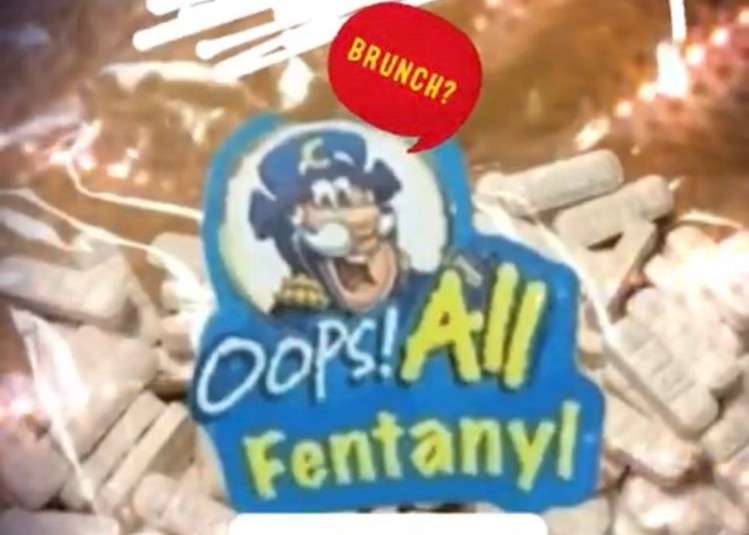
    An Ohio pub issued a public apology after parodying Cap’n Crunch with a joke menu item called “Oops! All Fentanyl.”

    Some jokes are best untold, as one restaurant and pub in Lakewood, Ohio is learning after a bungled social media post. On their Instagram account, the restaurant Yuzu posted a photo of a bag of fentanyl labeled “Oops! All Fentanyl” and “New brunch special? Sat & Sun.”

    The “joke” was likely referring to how many opioid drugs being sold have been unexpectedly cut with fentanyl, which has led to accidental fatal overdoses. Many Instagram users who saw it were not amused.

    “Screenshot from Yuzu Lakewood’s IG story. Not at all cool,” one person responded. “Making a joke of the opioid crisis is never funny ever.”

    The establishment’s owner, Dave Bumba, seemed to ignore the controversy his social media account created for about three days before finally responding on Facebook.

    “First, it’s never our intention to cause any malicious offense, and for that I do genuinely apologize for,” Bumba wrote in the post. “There’s a generational gap of humor; our target demo is 21 to 34. I’m aged out of our demo myself. Younger generations have developed a different sense of humor that more abstract, surreal, and darker than previous generations.”

    Bumba stopped short of calling the backlash a result of political correctness, instead turning into a meta-analysis of what’s a relatable coping mechanism versus what’s actually offensive.

    “It would be easy for me to blame this simply on an overly-politically-correct culture. A loud subset of people have been trained to seek out a reason to be offended. And while this might exist on some level, seeing some of the constructive criticism also made me think retrospectively about our social media content choices,” he posted. “Just because something exists and is perceived to be liked by enough of a subset of our demographic, does that make it the socially right choice to be relatable content?”

    Users considered the statement a non-apology, calling Bumba out on using a generational gap as cover.

    “Rather than sincerely apologizing for your offensive posts (which personally are not clever or funny and were in very poor taste), you backpeddle and still try to place blame on those you offended by implying they aren’t young or hip enough to get the joke,” wrote a user.

    Fentanyl has accelerated the number of deaths in the opioid crisis, hitting areas like Arizona especially hard. There, deaths from fentanyl overdoses have tripled between 2015 and 2017, mostly due to users believing they had a weaker opioid, like oxycodone, in hand.

    Street fentanyl is often disguised as legitimate prescription opioids, but these bootlegged pills are often made in primitive conditions with no quality control. And it only takes a little bit of fentanyl to send users into overdose.

    Users, including those of the targeted millennial demographic, have commented explaining why the joke wasn’t funny. Yuzu hasn’t posted anything further.

    View the original article at thefix.com

  • Police Station Evacuated After Possible Fentanyl Exposure

    Police Station Evacuated After Possible Fentanyl Exposure

    The substance believed to be fentanyl made its way into the police station after being confiscated from a suspect at See’s Candy.

    Sunnyvale, California police headquarters were evacuated this week after fentanyl sent multiple officers to the hospital.

    It began with a patrol officer at the Department of Public Safety headquarters. The officer was exposed to what police were told was the deadly synthetic opioid, fentanyl, according to a police report on Thursday, reported The Sacramento Bee.

    The report noted that the officer immediately felt “severe respiratory distress,” according to The San Jose Mercury News. The respiratory distress happened very quickly, according to Sunnyvale police spokesman Jim Choi.

    Police officers are aware of the risk of an accidental overdose due to fentanyl exposure, now more than ever. The Drug Enforcement Administration issued an officer safety alert (that included all first responders) warning of the possibility of such an overdose, the symptoms, and how to respond. Fentanyl is 30 to 50 times more potent than another deadly drug, heroin.

    Police officers can, according to some experts, have a dramatic and overdose-mimicking experience after contact with fentanyl that is essentially a placebo effect. Scottie Wightman, a Kentucky emergency medical technician, went unresponsive after one call. He was treated with naloxone, but a drug test later showed there were no drugs in his system.

    As a precaution, six officers from Sunnyvale’s Department of Public Safety were hospitalized and evaluated for possible fentanyl exposure. All of the officers have since gone home and the evacuation was lifted on the evening of the incident.

    However, Choi said the building was still under a “Level A” quarantine the next morning while crews processed police headquarters for hazardous materials, reported KTVU.

    After the headquarters were completely evacuated, a hazmat team entered to retrieve the suspected fentanyl and “decontaminated the affected areas,” police said.

    “The exposure was contained to DPS Headquarters and there is no threat to the community,” police wrote in a news release. “Police, fire and EMS services were not affected during this incident.”

    The substance believed to be fentanyl made its way into the police station after an officer responded to a business called See’s Candy. A call had been made that a man was urinating in public, and police eventually arrested the suspect on two outstanding warrants in San Luis Obispo County, according to police. The suspect’s name was not released.

    The suspect had a baggie that the police confiscated. The bag was filled with suspected narcotics, and the suspect reported to the police that fentanyl was part of the mix. Results are currently being procured at Santa Clara County’s crime lab, which according to Choi, is likely to take “some time.”

    View the original article at thefix.com

  • How Fentanyl Hysteria Leads to Harmful and Ineffective Drug Laws

    How Fentanyl Hysteria Leads to Harmful and Ineffective Drug Laws

    We might as well accept reality and direct our efforts towards making drugs less deadly, in the same way that we accept the risks of driving a car, but also try to prevent accidents.

    My only experience with fentanyl was when I was pregnant. I was on a hospital bed writhing in agony when a nurse injected me with the synthetic opioid commonly used for pain management in laboring women. The drug calmed me and I soon gave birth to a healthy baby girl.

    That was before fentanyl moved from the hospitals to the streets, tainting the illicit drug supply and ratcheting up an already alarming death toll from overdose.

    Since then, deaths from synthetic opioids (mostly fentanyl) have begun a steep climb, jumping 540% in the past three years alone. More than half of the opioids in the U.S. are now laced with fentanyl and the fear surrounding the drug is palpable. Some people claim you can overdose on the drug just from touching it. As a result of this hysteria, many first responders are afraid to respond to overdoses for fear of coming into contact with fentanyl. Meanwhile, states are scrambling to pass laws responding to the ever-changing landscape of fentanyl and its many derivatives.

    Alice Bell, who works to reduce overdose deaths through Prevention Point Pittsburgh, a syringe exchange program, says that there are reasons to be concerned about fentanyl. In Allegheny County, Pennsylvania, where her program operates, the opioid was involved in 20% of deaths in 2014. In 2016 the number tripled to 63% and today fentanyl is present in 74% of drug-related overdose deaths.

    “Fentanyl is much stronger than heroin and other opiates,” Bell explains. “It is easy to get a high dose without realizing it… Because it is fast acting there is a smaller window before people [overdose].”

    What Is Fentanyl and How Is It Dangerous?

    Fentanyl, a synthetic opioid created to mimic the effects of natural opioids (which are derived from opium poppy plants), was first introduced in 1959 as an anesthetic and pain reliever for surgery and cancer patients. It wasn’t until 2014 that unregulated forms of fentanyl began arriving in the U.S. from China. Because these analogues are cheap to buy and highly potent, they’re often mixed into supplies of other illicit drugs, such as heroin, cocaine, or pills. People buying or selling drugs on the streets may have no idea whether the product contains fentanyl, or how strong it is. This lack of knowledge has contributed to skyrocketing rates of overdose deaths across the country.

    As Bell explains, because illicit fentanyl is mixed into other drugs in unregulated environments, it is hard to mix it uniformly. Thus, one person might get a very strong dose while another might get a weaker dose, even though both samples came from the same supply. Bell likens it to “mixing pancake batter and getting chunks.”

    But although Bell acknowledges the dangers of a fentanyl-laced drug supply, she also emphasizes that much of the panic surrounding fentanyl and its effects is misleading—including false rumors about Narcan-resistant fentanyl or people overdosing just from touching the substance.

    Dan Ciccarone, a professor at the University of California, San Francisco who has spent the last four years studying fentanyl, agrees that while there are reasons to be concerned, responding to the challenge with policies rooted in fear and misinformation only makes matters worse. He points out that the problem is not so much fentanyl itself, but the fact that it’s being added to other drugs in unknown amounts.

    “We have to take some of the hysteria and the irrationally out of it,” he says. “If we say the problem is heroin and heroin contaminants, [we] treat the problem differently than if [we] say it’s a new drug and it’s killing our teenagers.”

    How to address the fentanyl-related overdoses is a question vexing many policymakers. In the past few years, state legislatures have spun off in wildly different directions. Some have attempted to curb overdoses through the introduction of 911 Good Samaritan laws and expanding availability of naloxone, syringe exchange programs, and treatment options for people who use drugs problematically. Some have implemented diversion programs and sentencing reforms designed to keep people who struggle with addiction out of jail and to connect them to programs that address the root cause of addiction. Others are enacting ever-harsher penalties for crimes involving fentanyl. In fact, many states are doing all of these things at once, oblivious, it seems, to the fact that some of these new policies contradict or even cancel each other out.

    Opioid Confusion and Contradictory Drug Policies

    In 2017, Louisiana passed a bill that reduced prison sentences for drug possession convictions. But the same law created a new mandatory minimum sentence for illegally possessing opioid painkillers (such as fentanyl). Maryland likewise enacted legislation in 2016 to reduce penalties for drug users and sellers, but the very next year created a new penalty for drugs containing fentanyl that extends prison sentences up to 10 years. In 2017, North Carolina cracked down on synthetic fentanyl and created a task force to reform opioid sentencing laws in literally the same bill. On the federal level, the passage of The First Step Act, which reduces mandatory minimum and three-strike laws, came on the heels of the former Attorney General’s declaration to relentlessly prosecute every case involving any amount of fentanyl.

    In essence, many governments are passing laws that lessen penalties for opioid-related crimes, while simultaneously enacting laws that further criminalize fentanyl (an opioid).

    For Michael Collins, Director of the Office of National Affairs at the Drug Policy Alliance, the confusion stems from a desire to respond and a lack of knowledge about the most effective way to do so.

    “Policymakers feel pressure to do something,” he explains. “In the absence of public health measures that they are familiar with, legislators will dust off their Drug War playbook and go towards punitive measures…certainly there is no evidence that those penalties will decrease overdose deaths.”

    Collins’ explanation echoes my own experience as a lobbyist advocating against drug-induced homicide laws in North Carolina. Like many states, North Carolina is responding to increases in fentanyl-related deaths by introducing legislation that would allow prosecutors to charge people with murder if they distribute a drug that leads to an overdose. It’s a typical punish-first response that not only is proven ineffective at reducing overdose deaths, but could potentially increase overdose deaths by negating the state’s 911 Good Samaritan law, which was enacted in 2013 to encourage people to call 911 to report an overdose. If lawmakers agree that fear of being charged with possession of drugs is enough to deter someone from calling 911, surely they see that fear of being charged with murder would even further discourage life-saving medical calls.

    But, as I discovered, it is hard to reason with a politician, a prosecutor, or a law enforcement official who is under intense pressure from their community to “do something.” Of course to address the problem of people selling drugs that lead to overdose, we need to tackle the underlying factors that lead people to sell drugs in the first place, such as the need to support a personal drug habit or lack of economic alternatives. But proposing solutions such as more drug treatment centers, jobs programs for low-income neighborhoods, greater investment in vocational education…all these are high-cost, long-term solutions. And officials are being pressured to find answers now.

    Increasing penalties against drug dealers is quick, relatively simple, and the cost is picked up by local court systems, not by the politicians who passed the law. Better yet, harsher penalties sound like a solution that satisfies the public’s need for accountability.

    Incarceration and Stricter Laws Cause More Crime and Deaths

    The problem with using the criminal justice system to address complex issues like drug use is that we imagine the system to be far more effective than it actually is. We probably wouldn’t celebrate laws that incarcerate more people if we realized that locking up one drug dealer merely causes another to take his place. We probably wouldn’t be so anxious to pour billions of dollars into law enforcement efforts to disrupt drug supplies if we realized that U.S. illicit drug market is estimated at $100 billion annually, while law enforcement only seize between $440 and $770 million in drug money per year—around 0.5% of the total value. We might not swallow the $1 trillion price tag of the War on Drugs if we realized that after all this money spent and all the families disrupted from incarceration due to nonviolent crimes, drugs are now cheaper, more plentiful, and more deadly than ever before.

    To effectively lower the demand for drugs or decrease overdose deaths, we need to think outside the box.

    Alice Bell explains, “If you want to encourage people to avoid more dangerous drugs, you have to allow people access to less dangerous drugs.”

    That is certainly not a solution that politicians want to hear. It doesn’t “sound good.” But it would do far more to reduce overdose deaths than all our efforts to slap people with longer prison sentences. We need to help politicians confront their fear of drugs and to understand that drugs always have been and always will be a part of our communities. We might as well accept reality and direct our efforts towards making drugs less deadly, in the same way that we accept the risks of driving a car, but also try to prevent accidents. Most people age out of addiction—if they live long enough to do so. There is no reason that taking a hit of a mood-altering substance should be akin to Russian Roulette.

    Conservative economist Milton Friedman once said, “Only a crisis—actual or perceived—produces real change. When that crisis occurs, the actions that are taken depend on the ideas that are lying around. That, I believe, is our basic function: to develop alternatives to existing policies, to keep them alive and available until the politically impossible becomes the politically inevitable.”

    Fentanyl may be that catalytic crisis needed to produce change. In that case, we should work to turn tragedy into opportunity.

    View the original article at thefix.com

  • Border Patrol Makes Historic Fentanyl Bust

    Border Patrol Makes Historic Fentanyl Bust

    Almost $5 million worth of fentanyl and meth were seized.

    Follow my blog with Bloglovin

    In the reportedly biggest-ever Border Patrol fentanyl bust, agents in Arizona seized more than 250 pounds of the powerful narcotic hidden away in the secret compartment of a truck carrying cucumbers from Mexico.

    The haul of more than 400 packages of drugs included $3.5 million of the high-powered opioid and $1.1 million—nearly 400 pounds—of methaccording to Customs and Border Protection (CBP).

    A drug dog at the Nogales port of entry sniffed out the narcotics on January 26, when a 26-year-old driver tried passing through with his truckload of produce. A secondary inspection uncovered a special compartment in the floor of the trailer, where would-be traffickers had hidden the pricey stash totaling nearly 650 pounds. 

    The fentanyl bust was the largest in the history of the CBP while the meth seizure was the third-largest at an Arizona port of entry.

    The bust came one day after President Trump announced an end to the federal government shutdown that left thousands of government employees furloughed or temporarily working without pay.

    “I want to express my gratitude to the CBP officers involved in this case and Nogales personnel who selflessly perform their duties with dedication, vigilance, and professionalism,” said Nogales Area Port Director Michael Humphries. “This past weekend our CBP officers were able to stop an enormous amount of these deadly narcotics from hitting our streets.” 

    The driver was arrested and turned over to Homeland Security officials, who charged him with two counts of possession with intent to distribute. He is currently in federal custody, though authorities have not identified him.

    The Mariposa commercial crossing sees more than 1,500 trucks per day during the busy winter produce season, when millions of pounds of fruits and vegetables are shipped over the border every day. The size of Saturday’s bust was a surprise, authorities said, even at a high-volume port in the region that typically nets the most seizures of the addictive drug.

    “Normally, the southwest border ports are intercepting the most fentanyl, compared to other ports of entry, airports, seaports, the northern border,” said Guadalupe Ramirez, who oversees all Arizona border crossings, according to USA Today. “In CBP, in the history of CBP, this is the largest fentanyl seizure.”

    View the original article at thefix.com

  • Some San Francisco IV Drug Users Choose Fentanyl Over Heroin, Report Says

    Some San Francisco IV Drug Users Choose Fentanyl Over Heroin, Report Says

    Harm reduction advocates in the city urge IV drug users who choose to use fentanyl to run additional drug tests to “see what else might be in the mix.”

    The synthetic opioid, fentanyl, currently tops the list of drugs with the greatest likelihood of causing a fatal overdose; more than 18,000 people died from fentanyl-related overdoses in 2017, according to a report from the National Center for Health Statistics. Fentanyl’s lethal potential has been the subject of countless media stories.

    But a recent article on Stateline, the Pew Charitable Trust’s research and analysis blog, reported that some IV drug users in San Francisco’s Tenderloin district are actively choosing fentanyl over heroin.

    City health officials state that a number of factors have contributed to the drug’s popularity, including a low death rate, a degree of transparency among dealers and a sizable supply of the overdose reversal drug Narcan from local health and harm reduction groups.

    While much of the country saw fentanyl enter the illicit drug market in the mid-2010s, it wasn’t widely available in California until 2015. But as the Stateline article noted, the toll taken on California’s drug community—and in particular, on San Francisco IV drug users—wasn’t as severe as the wave of deaths that swept through New England and the Appalachian region.

    Figures from 2016 show that the California death rate that year hovered at 4.9 deaths per 100,000 persons, while the national death rate was 13.3 deaths per 100,000.

    Part of the reason for the lower numbers can be attributed to treatment and prevention efforts. The Stateline blog noted that California expanded Medicaid to low-income adults in 2010 and established a strong baseline of treatment options in subsequent years. San Francisco, in particular, has open lines of dialogue between drug users that help to guide the city’s health policy.

    “San Francisco’s harm reduction community systematically talks to drug users about their preferences and experiences,” said Daniel Raymond, policy director of the national Harm Reduction Coalition. “[They] continuously feed that information to the San Francisco Department of Health, which uses that intelligence to inform its message and overdose prevention strategies.”

    When the drug arrived in San Francisco in 2015, public health and harm reduction groups banded together to increase treatment options, availability to Narcan and drug testing strips, and outreach programs. The drug is also clearly labeled by dealers, so there is less of a chance of accidental ingestion, and its street cost is lower than heroin. As a result, fentanyl is the drug of choice for about half of Tenderloin users, as well as those in some neighboring communities.

    “For drug users, it’s just like you or I making decisions about the products we choose when we grocery shop,” said drug test administrator Kristen Marshall in the Stateline article. “Fentanyl is stronger, you need less of it, and it’s cheaper. So why wouldn’t I, as somebody with limited funds, want to spend my money on something that’s a better value and therefore a better product?”

    To be clear, fentanyl remains a dangerous drug, even more so than heroin. And many Tenderloin drug users avoid it, especially those who overdosed on other drugs laced with fentanyl. But for those that deliberately choose it, Marshall said that a policy of less-is-more appears to work.

    “Use less of it, use it slower, use it with other people, and keep Narcan with you,” she said. “It’s also important to test your drugs. Even if you know you’re getting fentanyl, you need to run additional tests to see what else might be in the mix.”

    View the original article at thefix.com

  • Death by Fentanyl: Should the Powerful Opioid Be Used in Lethal Injections?

    Death by Fentanyl: Should the Powerful Opioid Be Used in Lethal Injections?

    When it comes to executing people by lethal injection, “Fentanyl is just an obvious choice. You have unfortunately an inexhaustible supply of this drug in state custody – why can’t it be used?”

    As the end drew near, Carey Dean Moore’s face turned red, and then purple. He breathed heavily, according to the witnesses who were there to see it, and coughed. Roughly 20 minutes later, he died.

    In his final weeks, the two-time killer had given up efforts to seek a reprieve. He’d expressed his scant apologies and written the final words condemned men write

    It was the 1,481st execution in the modern era of capital punishment, but Moore’s death was a first on more than one front. Not only was it the Cornhusker State’s first execution in more than two decades, but also it was the nation’s first ever lethal injection using fentanyl, the deadly drug at the center of the opioid crisis.

    More than 28,000 Americans — none of whom were on death row — died in connection with the powerful painkiller in 2017, according to federal data.

    Yet, as politicians and public advocates wrung their hands over how to stem the flow of drugs and stop the scourge of overdoses, behind closed doors corrections officials quietly asked a very different question: Can we use this drug in executions?

    As long as it’s available, the answer is yes.

    But as death penalty states struggle to obtain lethal drugs, it’s unclear whether fentanyl is the future of death chambers or just a fleeting interest. Will more states switch to opioid-based execution? Or will the course of capital punishment take a different direction?

    “It’s Not Like Anyone Thinks This Makes It Less Painful”

    Nationally, executions have been on the decline for close to two decades. But last year saw new legal developments and twists in the process. Washington outlawed capital punishment, Alabama witnessed a badly botched execution attempt, Tennessee returned to using the electric chair and Nebraska carried out Moore’s execution, which was the first time fentanyl was used as part of the lethal injection.

    Initially, Nevada was slated to be the first state to use the powerful painkiller in its death protocol, for the planned July execution of Scott Dozier. But a last-minute lawsuit halted the procedure after a pharmaceutical company — the maker of one of the other drugs in Nevada’s three-drug cocktail — accused the state of illegitimately acquiring the sedative midazolam. (Dozier later killed himself before the state could execute him.)

    For the execution of Moore, the state used a previously untested four-drug cocktail. The protocol first called for a dose of diazepam, which is the generic name for Valium. Executioners followed that with a dose of fentanyl — at which point Moore began coughing and breathing heavily before turning purple, according to the Lincoln Journal-Star. One minute later, Moore was given cisatracurium, a paralytic that would have rendered him unable to breathe. Finally, the protocol ended with a shot of potassium chloride to stop the heart.

    All three of the other drugs have previously been used in executions, with some controversy — especially in the case of the cisatracurium, which experts worry could just mask signs of suffering with its paralytic effect.

    Supposedly, the fentanyl ensures the condemned is not conscious to feel the effects of the drugs that follow, but Dr. Joel Zivot, an associate professor of anesthesiology at Emory University School of Medicine who has testified as an expert in lethal injection litigation, questions that assumption.

    “Having given narcotics to maybe 10,000 or more people in my career, I can’t tell you that everybody gets high or gets pleasure out of it and even the pain relief is uneven,” he told The Fix. “I have certainly never given narcotics and thought, ‘This is going to take away the pain of dying.’ It’s not like anyone thinks this makes it less painful per se to die – it’s unmeasurable and unknowable.”

    It may be tempting to think that using a painkiller is a humane final gesture, but Zivot cautions against seeing it that way.

    “The Constitution doesn’t ask that you trade off cruelty for being stoned,” he said. “It’s not one or the other, or that being stoned takes away cruelty. It seems like a rather horrible and insensitive way of taking advantage of a terrible national epidemic.”

    To death penalty supporters, the opioid’s efficacy in killing — along with the ready abundance of the drug in confiscated supplies — is a selling point.

    “Every day people die from this, so it’s obviously effective,” said Houston-based capital punishment advocate Dudley Sharp. “Fentanyl is just an obvious choice. You have unfortunately an inexhaustible supply of this drug in state custody – why can’t it be used?”

    “Raised More Questions Than It’s Answered”

    Despite the finality of the outcome, some experts say it’s not entirely certain that the first fentanyl execution went as anticipated — because the witnesses couldn’t actually see key parts of the process.

    “The Nebraska execution has raised more questions than it’s answered,” said Robert Dunham, executive director of the Death Penalty Information Center. “It isn’t clear that the execution went as planned because the Nebraska prisons dropped the curtain before Carey Dean Moore died, and so none of the witnesses saw the actual death.”

    For 14 minutes, witnesses weren’t privy to the goings-on inside the execution chamber.

    And given the facial discoloration and signs of “air hunger” before the curtain closed, Dunham said, there’s a possibility the procedure “did not go properly,” a concern that could make fentanyl death protocols less appealing for other states considering the switch.

    “Had it been more transparent,” he said, “it might produce a different response from the other states – but the absence of transparency and the questions resulting from that make it unclear whether this was a quote-unquote ‘successful’ execution or just another problematic protocol.”

    Because They Could Get It

    Even though it’s come to be associated with overdoses, there’s no particular pharmacological reason to start adding fentanyl to death cocktails, according to experts.

    “Narcotics are not poison. You can die as a consequence of them,” Zivot said, “but they’re not poison; fentanyl is not made to kill.”

    It doesn’t kill better or quicker, and it’s not clear that it does so less painfully. But that’s not necessarily what states are looking for when they pick a new death drug; instead, they’re concerned with availability.

    “The way states have selected the drugs is pretty much: they see what other states do and then if it appears to work, they do it too,” Dunham said. “The history of which lethal injection drugs are used can be traced to which ones became unavailable and once drugs became unavailable — because drug companies didn’t want to sell them to prisons for executions — then states began looking for different drugs.”

    In recent years, drug companies have refused to provide their products to prisons planning to use them for executions and in some cases, as in Nevada, they’ve even filed suit to ensure their products aren’t used to kill. As a result, some drugs have become harder to get into the death chamber and new combinations have become more appealing.

    “When Nevada officials were asked why they chose fentanyl, they essentially said, ‘Because we could get it,’” Dunham said. But even fentanyl could become harder to obtain.

    “Eventually with any drug that the drug companies learn is being used in executions,” he continued, “the distribution controls will get progressively stricter.”

    But there’s one way to avoid the hurdles of those particular supply-side controls: use something that’s not a drug.

    “You Can’t Withhold Nitrogen Gas”

    1976: In Room 17 of a seedy Fort Worth motel, a handsome man named Charlie Brooks Jr. stuck a pistol to the face of used car dealer David Gregory.

    Six years later, Brooks became the first man in America executed by lethal injection. It was widely touted as a more “humane” way to kill, but the 40-year-old’s death gave pause to that claim.

    The four reporters who witnessed it all “appeared shaken by the experience” which “did not appear to be painless,” according to the New York Times.

    More than three decades later, the amount of pain condemned prisoners feel is still a source of debate and legal wrangling. It’s made its way into multiple lawsuits over the past year, formed the basis of last-minute appeals and requests for reprieve, and prompted some inmates to beg for alternate methods of execution.

    When Doyle Lee Hamm — who survived Alabama’s painfully botched execution attempt early in the year after executioners couldn’t find a suitable vein — sued the state, he cited the bloody procedure as reason not to try again. In June, Houston serial killer Danny Bible unsuccessfully argued that he, like Hamm, was in such bad health that any attempts to execute him could result in a similarly gruesome spectacle. (They did not.) Then in November, Joseph Garcia — one of the notorious “Texas 7” escapees — challenged his pending execution with questions about the safety record of the compounding pharmacy that allegedly supplied the drugs earmarked for his death. The courts refused his last-minute legal claims.

    And this winter in Tennessee, death row prisoners begged to die by a different method, ultimately choosing a return to electrocution rather than face the possibility of a botched injection.

    These concerns combined with the spread of roadblocks preventing states from getting the drugs they want could be enough to prompt a shift away from lethal injection altogether, some experts believe.

    “Lethal injection in the long-term is not viable,” said Sharp. “That’s why a lot of people have been saying to use nitrogen gas because you can’t withhold nitrogen gas.”

    In fact, Alabama, Oklahoma, and Mississippi have included nitrogen as part of their execution protocols, though none has actually used it yet. But, experts say, nitrogen might be the next logical option for executions, rather than fentanyl or any other injected drug.  

    So far, though, it’s an untested procedure.

    View the original article at thefix.com
  • Mass Overdose In California Leaves One Dead, 12 Hospitalized

    Mass Overdose In California Leaves One Dead, 12 Hospitalized

    “Every indication is that this mass overdose incident was caused from the ingestion of some form of fentanyl in combination with another substance,” said a police chief at the scene.

    The synthetic opioid fentanyl is most likely responsible for a cluster of overdoses in one Chico, California house. One person died after overdosing and four are in critical condition; a total of 12 people were taken to the hospital. 

    According to NPR, Chico police are fairly sure the mass overdose was caused by the use of fentanyl, in combination with another substance.

    “Every indication is that this mass overdose incident was caused from the ingestion of some form of fentanyl in combination with another substance. That is yet to be confirmed, but we do anticipate confirmation in the coming days,” Chico Police Chief Michael O’Brien said.

    According to Anna Lembke, MD, fentanyl (a synthetic opioid pain reliever) can be 50 to 100 times more potent than heroin. Lembke gives this chilling example: “If you ingest a ‘bag of heroin,’ which is typically 100 mg of heroin, and that bag contains 20% pure fentanyl in place of heroin, you will be ingesting the rough equivalent of 2,000 mg of heroin, enough to kill even a highly tolerant user.”

    Chico Fire Department Division Chief Jesse Alexander said it was the largest mass casualty incident he had seen in years, with six people receiving CPR simultaneously.

    Chief O’Brien reported on the crime scene. “Upon arrival, Chico police officers found multiple individuals in what appeared to be life-threatening, overdose conditions. . . . Officers began to both administer CPR and also naloxone to those individuals. . . . Unfortunately one male individual was pronounced dead at the scene.”

    Chico officers began carrying naloxone on their person one year ago, according to CNN, and in this case lives were saved with the opioid-reversing drug. Police Chief O’Brien reported that officers administered CPR and six doses of naloxone.

    After working the crime scene, two officers reported feeling fentanyl-like symptoms from possible exposure and were treated and later released from a local hospital.

    The Chico Enterprise-Record reported that all of the people hospitalized were over the age of 18, with most of them appearing to be in their 20s. The National Institute on Drug Abuse reports that in 2017 there were more than 72,000 drug overdose deaths, with the sharpest increase seen among deaths related to fentanyl and fentanyl analogs (synthetic opioids) for a staggering total of nearly 30,000 overdose deaths. 

    View the original article at thefix.com

  • The State Of Harm Reduction Around The Globe

    The State Of Harm Reduction Around The Globe

    A new report breaks down the status of harm reduction programs around the world. 

    Even as opioid use continues wreaking havoc on some parts of the globe, the availability of harm reduction measures worldwide are relatively stagnant, as documented in a massive new report released this month.

    The number of countries with needle exchange or opioid substitution treatment has stayed relatively stable over the past four years, and a lack of funding in middle- and low-income countries has stunted the growth of service options available in some of the places most severely impacted, according to the “Global State of Harm Reduction” 2018 report issued this month by Harm Reduction International

    But there’s a significant exception to that trend: North America. Here, as opioid overdose figures rise, the harm reduction response is blossoming. Naloxone access, fentanyl testing strips, and needle exchange programs have become more common in the US and Canada – all possible signs of forward-thinking responses to a well-documented crisis. 

    “The US now has the fastest annual percentage rise of drug-related fatal overdose ever recorded,” the report notes, “with an increase of 21.4% between 2015- 2016 alone.” 

    Currently, the United States has 335 needle exchanges – a 37% increase since the last harm reduction report. Meanwhile, Canada has taken harm reduction efforts a step further, opening a total of 26 supervised injection sites. That sort of progressive action is still barred by federal law in the US, though some communities have considered addressing it both legislatively and in local action plans.

    There are, of course, still significant gaps. The availability of harm reduction in prisons is “woefully inadequate, falling far short of meeting both international human rights and public health standards,” according to the report. 

    And, despite the response in North America, service offerings worldwide have stayed more stagnant.

    “While our coverage of harm reduction policies and services has evolved and broadened in scope, the same cannot always be said for harm reduction in practice around the world,” the report notes. “Despite [the] heavy burden of diseases, effective harm reduction interventions that can help prevent their spread are severely lacking in many countries.”

    Currently, 86 countries offer some sort of needle exchange program – down from 90 in 2016. Bulgaria, Laos and the Philippines have shuttered their exchange programs in the face of punitive drug policies, while Argentina and Brazil have stopped offering such services as the number of injection drug users falls in those nations. 

    While the number of countries that offer exchanges has fallen slightly, the number with opioid substitution drugs available has gone up a bit. Since 2016, Cote d’Ivoire, Zanzibar, Bahrain, Kuwait, Palestine, Argentina and Costa Rica have all introduced or re-introduced medication-assisted treatments. 

    Overall, methadone is still the most commonly prescribed of those treatments, with buprenorphine falling into second place. Despite research espousing the use of heroin-assisted treatment as a harm reduction option, it’s only available in seven countries: Belgium, Canada, Denmark, Germany, the Netherlands, Switzerland and the UK. Though that’s still considered a radical option in many countries, it’s just one of the solutions experts have increasingly examined as more potent drugs continue appearing in underground supply chains.

    “The rise of illicit fentanyls themselves is just about the clearest case one can make for harm reduction: despite a literally poisonous supply, millions of people are still taking street opioids in an underground market that lacks quality control,” journalist Maia Szalavitz wrote in an introduction to the report. “It’s hard to argue that anything short of providing a safer supply – both through traditional medications like methadone and buprenorphine and via prescription heroin, hydromorphone (Dilaudid) and perhaps others – will be able to end the crisis, if done to scale.”

    And, aside from the continued toll of opioid use, amphetamine use is on the rise as well – but harm reduction options for speed users “remain underdeveloped,” according to the report. Safe consumption sites – in the regions where they’re available – continue to focus largely on injection use, leaving out those who smoke or snort their drugs. And, free drug testing services are limited mostly to festivals and clubs. 

    “While this all paints a bleak picture of harm reduction worldwide, there are examples of innovation and perseverance in this report that give hope and demonstrate that progress is possible,” the report’s authors wrote. “It is important, too, to not overlook the fact that harm reduction has come a long way over the past two decades. The evidence is clearly in favour of harm reduction. It is time that more countries acknowledge this and implement the services that are proven to advance public health and uphold human rights.”

    View the original article at thefix.com

  • Feds Will Prosecute Fentanyl Dealers More Harshly in Baltimore

    Feds Will Prosecute Fentanyl Dealers More Harshly in Baltimore

    The feds are set to crackdown on fentanyl sellers in Baltimore, where there is expected to be twice as many overdose deaths as homicides in 2018.

    As part of the Trump Administration’s tough-on-crime stance, federal prosecutors will begin trying more fentanyl cases in federal court. They will be utilizing stronger resources and mandatory minimum sentences in an attempt to deter people from selling the deadly synthetic opioids in Baltimore, where there are expected to be twice as many overdose deaths as homicides this year. 

    Writing in an op-ed for The Baltimore Sun, US Attorney for Maryland Robert K. Hur said that the tougher tactics will hopefully curb fentanyl sales. As of last week, all fentanyl arrests in Baltimore are being reviewed by federal prosecutors who will decide whether the case will proceed in the state or federal system. This is part of the federal Synthetic Opioid Surge (SOS) initiative.

    “Federal prosecutors will pursue more cases involving fentanyl, bringing federal resources, laws and prison sentences to bear on those dealers who pose the greatest threat to public safety,” Hur wrote. “Word should spread that if you sell fentanyl on the streets, you run a very real risk of federal time.”

    Federal drug charges carry mandatory minimum sentences. Someone convicted of distributing 400 grams of fentanyl will face 10 years in prison; 40 grams will carry a five-year sentence. If the fentanyl is found to be involved in a death, there is a 20-year sentence. Because federal sentences are served in prisons far from home and have no possibility or parole or suspension, they’re seen as more harsh than state sentences. 

    “But criminal enforcement is essential to ending this crisis,” Hur wrote. “We need to target street dealers as well as corrupt pharmacists and medical providers. Treatment and prevention alone won’t stop the sellers, who are driven by profit and greed.”

    Hur shared the story of a 35-year-old woman who died of a fentanyl overdose. Before her death she texted a friend, “I don’t want to [be] this way. I worked and fought too hard to throw it all away. I almost overdose[d] the other night. I don’t know what to do.”

    “Law enforcement organizations know what to do in order to prevent more of these tragedies, and we are resolved to do it,” Hur wrote. 

    Former Attorney General Jeff Sessions first announced the SOS initiative in June, starting the program in 10 districts that were hard-hit by the opioid epidemic. 

    “We at the Department of Justice are going to dismantle these deadly fentanyl distribution networks. Simply put, we will be tireless until we reduce the number of overdose deaths in this country. We are going to focus on some of the worst counties for opioid overdose deaths in the United States, working all cases until we have disrupted the supply of these deadly drugs,” Sessions said in a press release at the time.

    View the original article at thefix.com

  • Are Police At Risk Of Overdose From Accidental Fentanyl Exposure?

    Are Police At Risk Of Overdose From Accidental Fentanyl Exposure?

    Medical professionals discuss the likelihood of first responders overdosing from accidental fentanyl exposure.

    Since fentanyl use has become widespread, there have been many reports of first responders overdosing accidentally through exposure at emergency calls. The Drug Enforcement Administration even issued an officer safety alert urging first responders to be careful to avoid exposure.

    However, medical professionals say the risk of accidental overdose to first responders is vastly overstated. 

    Toronto-based doctor David Juurlink, a researcher at Sunnybrook Health Sciences Centre, said that police officers and other first responders overdosing is highly unlikely.

    “I would say it’s extraordinarily improbable that a first responder would be poisoned by an ultra-potent opioid,” he told The New York Times. “I don’t say it can’t happen. But for it to happen would require extraordinary circumstances, and those extraordinary circumstances would be very hard to achieve.”

    Still, officers and other first responders are regularly warned about the dangers of being exposed to even trace amounts of synthetic opioids. Some people are concerned that being overly cautious will cause first responders to hold back on potentially life-saving treatments for people who call 911, in much the same way some doctors were afraid to treat HIV patients during the AIDS epidemic. 

    At Brigham and Women’s Faulkner Hospital in Boston, emergency room doctor Jeremy S. Faust, has a message for first responders.

    “I want to tell first responders, Look, you’re safe,” Faust said. “You can touch these people. You can interact with them. You can go on and do the heroic lifesaving work that you do for anyone else.”

    Despite the fact that an overdose from accidental exposure is very unlikely, police officers sometimes report feeling symptoms of overdose when they respond to opioid-related calls. Scottie Wightman, a Kentucky emergency medical technician, went unresponsive after one call. He was treated with naloxone, but a drug test later showed there were no drugs in his system. These symptoms are essentially a placebo effect, experts say. 

    Still, many people have been charged with crimes after calling 911 for fentanyl-related emergencies. Eric Weil, of New Hampshire, called police when a person staying in his house overdosed. Weil found fentanyl in his house, and after handling it, blew the drug off his hands.

    Police later said that Weil blew “a large cloud” toward them. He was charged with reckless conduct, the same charge he could get for brandishing a gun. He was convicted, but the verdict was eventually overturned. Still, Weil said he will not be calling 911 again. 

    “If ever I go into a situation where somebody’s O.D.-ing, I’m going to stand over them and watch them die,” he said. “If they say, why didn’t I call? Are you out of your mind? The last time I called somebody, I got a Class B felony.”

    Still, the police chief in the town where Weil was charged said that he needs to be proactive about protecting officers from synthetic opioids. 

    “I never want to be in a position where I have to go see a family member, a wife, kids, and explain to them why their father or husband is not coming home that evening, or ever, for that matter,” he said. “Everybody knows it’s a dangerous substance.”

    View the original article at thefix.com