Tag: Fortnite

  • Fortnite Being Sued For Designing Game To Be "As Addictive As Possible”

    Fortnite Being Sued For Designing Game To Be "As Addictive As Possible”

    Fortnite has previously been blamed for breaking up marriages and distracting students from schoolwork.

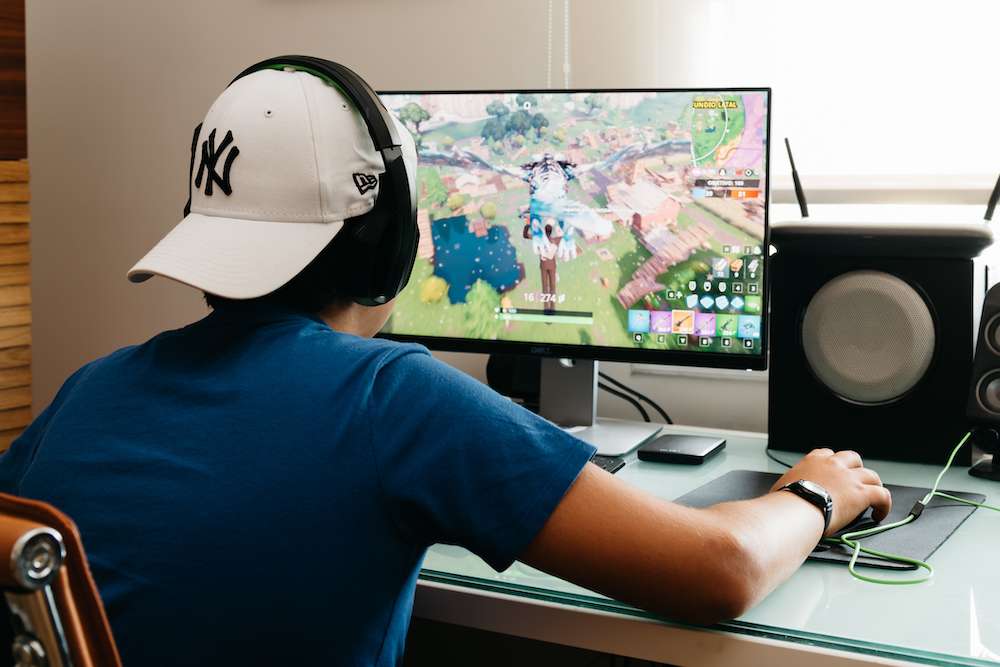
    The developer of the hugely popular online video game, Fortnite, is accused of designing the game to be “as addictive as possible,” with no effort to warn players of the addictive risk.

    Fortnite is free to download, but revenue is earned through in-game purchases such as outfits and “emotes” to customize a player’s virtual character. The game boasts nearly 250 million registered players around the world, its creator Epic Games revealed in March.

    Possible Class Action Lawsuit

    Now, a Montreal-based firm is seeking to file a class action lawsuit against Epic Games for not warning players that they may become hooked.

    The CBC reported on October 4 that the law firm, Calex Légal, filed a legal notice seeking authorization to launch the class action lawsuit, on behalf of parents of a 10- and 15-year-old.

    By playing Fortnite, players agree to waive their right to sue the company and must instead resolve any dispute in arbitration, according to the game’s terms of service. However, a Calex Légal attorney said that this “agreement” does not apply in Quebec, where companies are required by law to disclose any potential consumer risk associated with any product or service.

    Alessandra Esposito Chartrand, who is representing the plaintiffs, said that Epic Games not only designed the game to be “as addictive as possible,” the company also failed to warn players of the addictive risk.

    Lawyer Says There Was No Warning Of Game’s “Addiction Risks”

    “Epic Games, when they created Fortnite, for years and years, hired psychologists—they really dug into the human brain and they really made the effort to make it as addictive as possible,” said Chartrand. “They knowingly put on the market a very, very addictive game which was also geared toward youth.”

    They allege that the game triggers the release of “the pleasure hormone, dopamine” when played for a long period. 

    Epic Games failed to inform players of this risk, which is the company’s responsibility, the lawsuit argues.

    “In our case, the two parents that came forward and told, ‘If we knew it was so addictive [and] it would ruin our child’s life, we would never have let them start playing Fortnite or we would have monitored it a lot more closely,” Chartrand said.

    Waiting For Epic Games’ Response

    Epic Games has 30 days to respond to the legal action.

    The company is also involved in a federal case brought to the northern district of California in June, that alleges in part that Fortnite does not provide adequate “parental controls that would allow parents or guardians of minors to make informed decisions regarding in-app purchases.”

    According to Bloomberg, parents “have lost substantial amounts of money” from not being vigilant about their children making in-app purchases using their payment information.

    Last year, the World Health Organization classified “gaming disorder” as a diagnosable condition. Fortnite has been blamed for breaking up marriages and distracting students from schoolwork. Some young people are being sent away to receive help for their excessive playing.

    View the original article at thefix.com

  • Fortnite Addiction Leads Sports Team To Institute Ban

    Fortnite Addiction Leads Sports Team To Institute Ban

    The self-instituted ban was put in place so the team could focus on bonding with teammates.

    The popular video game Fortnite has caused problems in some marriages and in academic settings—and now it’s being banned from some professional sports teams for the same reason. 

    TSN 1040 reports that members of the Vancouver Canucks, a Canadian ice hockey team, have taken matters into their own hands, with a self-instituted ban on the game while on the road.

    Team Captain Bo Horvat told the radio station, “Yeah, that’s definitely a no-go on the road. No more Fortnite. No more bringing video games on the road. It’s strictly team meals, team dinners and hanging out with the guys. So we put an end to that.”

    Horvat also added that there are better options for killing time when traveling, such as bonding with teammates.

    “In my opinion, there’s better ways to spend time on the road, whether it’s hanging with the guys in the room or going to a movie with the guys,” Horvat said. “There’s a lot of cool cities we visit and to be cooped up in your room all night, playing Fortnite, is a waste of your time.”

    Personally, Horvat says he has never played the game.

    “Hopefully a lot of parents and little kids are listening right now,” he told the radio station. “I don’t play it. Nor will I ever.” 

    According to TechDirt, the Fortnite issue first arose for the Canucks last year when the team claimed a young player was “inactive and seeking counseling for video game addiction.”

    This isn’t the first time Fortnite play has disrupted professional sports teams. According to Fortune, players from the Ontario Hockey League were asked to remove Fortnite references from their social media accounts. 

    Reporter Renaud Lavoie says that executives in the sports world have spoken out about the issue. 

    “That GM told me it’s an issue,” Lavoie told Sportsnet 590. “Before, the athletes were going to bars. Now, they’re staying in hotel rooms or at home and playing video games for hours.”

    Major League Baseball has also claimed to have issues with the game, including one case of carpal tunnel syndrome. 

    Outside of sports, the game is causing issues in some families. In the UK, the game has been cited as a reason for divorce in 200 divorce petitions filed in the UK from January to September 2018.

    A nine-year-old British girl was admitted to treatment after her Fortnite addiction kept her up all night and affected her grades and health. The girl’s parents say the tipping point came when her father found her sitting in her own urine while playing the game. 

    “She was so hooked to the game, she wouldn’t even go to the toilet,” the girl’s mother told the Daily Mirror

    View the original article at thefix.com

  • Fortnite Addiction Is Ending Marriages In The UK

    Fortnite Addiction Is Ending Marriages In The UK

    The popular video game is becoming popularly cited in divorce petitions across the pond.

    The fact that video games can become addictive is not new. But the fact that they may play a role in divorce—especially one game in particular—is now coming to light.

    The video game Fortnite Battle Royale, according to UK-based website Divorce Online, has been mentioned in 200 divorce petitions filed on the website since January. This is about 5% of the total petitions the site has received in that timeframe.

    According to Quartz, Fornite Battle Royale is “a multiplayer Hunger Games–style shooter-survival contest where the goal is to kill off everyone else.”

    The game was released last year and is free to users. However, most users buy digital items within the game, spending an average of $85 for such items.

    According to Divorce Online, a spokesman stated that ”addiction to drugs, alcohol and gambling have often been cited as reasons for relationship breakdowns but the dawn of the digital revolution has introduced new addictions.”

    “These now include online pornography, online gaming and social media, so it is no surprise to us that more and more people are having relationship problems because of our digital addictions.”

    According to Fortune, it’s not just relationships that are suffering because of the video game. It’s become problematic in schools, especially since the release of the mobile app. In fact, some schools are even having wifi speed issues because of the number of students using the app. In some cases, it has even led to students fighting or disregarding school work. 

    The game has also been an issue for some professional sports teams. For example, Fortune notes, hockey players from the Ontario Hockey League have been asked to remove any references of the game from their social media accounts. Major League Baseball has also cited issues with the game, even reporting one case of carpal tunnel. 

    Even amid the issues it has caused, Fortune states, the game is growing in popularity. 

    “In July, the free-to-access game passed the billion-dollar threshold through in-game sales alone, and some colleges are even starting to offer scholarships to top players,” Fortune reports.

    According to Divorce Online, the numbers are indicative of the divorce market as a whole.

    “These numbers equate to roughly 5% of the 4,665 petitions we have handled since the beginning of the year and as one of the largest filers of divorce petitions in the UK, is a pretty good indicator,” a spokesman said.

    View the original article at thefix.com

  • Girl Admitted To Rehab For Fortnite Addiction

    Girl Admitted To Rehab For Fortnite Addiction

    “This is a serious issue and it is destroying our little girl’s life, and someone needs to step in to ban it before it becomes an epidemic,” said the girl’s mother.

    The Daily Mirror is reporting that a nine-year-old girl in England has allegedly been admitted to rehabilitation for a dependency on the hugely popular survival game Fortnite.

    The story quoted the girl’s mother, who claimed that her daughter would regularly play the game until dawn, which negatively impacted her grades and health. Her dependency eventually grew so severe that she would not interrupt her gameplay to use the bathroom, prompting her parents to take her to a counselor for “intensive” therapy.

    The girl’s story comes on the heels of Culture Minister Matt Hancock declaring video games as “potentially damaging,” a stance that appeared to be supported by the World Health Organization (WHO), which included gaming in a draft of its 2018 list of “disorders due to addictive behavior.”

    According to the Mirror, the girl’s parents noted that her personality began to change two months after she downloaded Fortnite on her Xbox. She reportedly began to lose interest in sports, and her teachers contacted the parents about missing homework and other issues.

    When the couple confronted the girl, she reportedly became “unusually argumentative”—which they chalked up to “hormones.”

    The girl’s mother stated that they discovered small but consistent charges on a credit card—Fortnite is free to download but offers in-app purchases—which caused the girl to lash out and allegedly strike her father when he confronted her.

    For the parents, the final straw came when the father found the girl sitting on a urine-soaked cushion while playing the game. “She was so hooked to the game, she wouldn’t even go to the toilet,” claimed the mother.

    The girl later confessed that she played the game every night, sometimes until dawn. Her parents contacted Steve Pope, an addiction counselor, who began treating her for the reported dependency. Pope told the Sunday People that hers was not an isolated case.

    “Over the last two months, I’ve been contacted by dozens of parents  with children as young as eight showing signs of addiction to Fortnite. I’ve been working in this field for three decades and never seen anything like it—how widespread and potentially damaging this is.”

    The girl’s mother called for government action to intervene in the growing problem. “This is a serious issue and it is destroying our little girl’s life, and someone needs to step in to ban it before it becomes an epidemic,” she told the Mirror.

    A ban against loot boxes—a game feature that allows players to acquire rewards through gameplay or for money—has already taken effect in Belgium, which declared the feature in violation of the country’s gambling legislation.

    In comments to the Daily Telegraph, Culture Minister Hancock expressed concern that “too much screen time could have a damaging impact on our children’s lives,” and specifically cited Fortnite as “aggressive” and potentially “addictive.”

    Hancock—who had previously voiced support for more active gaming business in the UK—also stated that the British government is working with game publishers and developers to promote safety and allay parental concerns.

    Though the WHO has submitted gaming addiction for consideration on its list of addictive disorders (the organization must still approve it for final inclusion), medical professionals are divided on the subject.

    Research from 2017 noted that gaming increases dopamine levels twofold, whereas drugs like heroin or cocaine increase the chemical response by ten times that amount.

    A 2016 study found that addiction to gaming occurred more frequently in individuals who already showed signs of depression or stress, and video games had become their chosen form of avoiding those feelings.

    View the original article at thefix.com