Tag: gaming addiction

  • Nintendo President Addresses Gaming Addiction

    Nintendo President Addresses Gaming Addiction

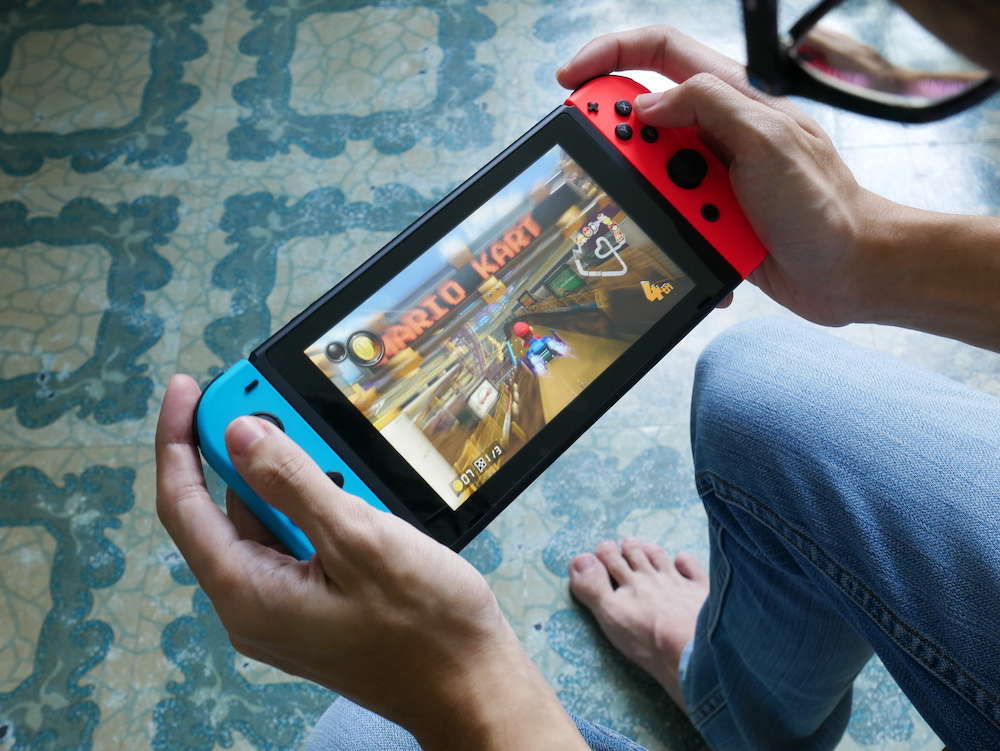
    Nintendo’s president Shuntaro Furukawa outlined the ways the company can help address gaming addiction during a recent Q&A.

    As the debate about whether a dependency on video games qualifies as a legitimate medical condition continues to rage in both the gaming and mental health communities, the president of Nintendo spoke about his company’s efforts to address the issue at a recent investor meeting.

    During a Q&A at a corporate policy and financial results briefing, Shuntaro Furukawa said that Nintendo has added features to its gaming products that will allow parents to reduce or limit the amount of time that children can spend with the game. Such features, said Furukawa, is “one way we can face the issues.”

    Furukawa said that the core of the problem was “more about becoming overly dependent on video games than is about any issues with the games themselves,” and assured investors that Nintendo had taken measures to address the concerns. “One thing we have done as a company that creates games is to implement features that allow parents to limit the time that their children can play games.”

    Such features, as well as making the public aware of them, is “one way” that the company can address concerns about gaming addiction, said Furukawa, though no additional measures were addressed during the Q&A.

    Furukawa’s comments come on the heels of a fact-finding survey issued by Japan’s Ministry of Health to estimate the number of people who may be addicted to gaming as well as the impact on their lives.

    According to the Japan Times, the ministry launched its investigation in late 2018 and will assemble data from medical institutions until March of 2019 at the earliest to provide statistics.

    Current numbers of individuals in Japan who qualify as dependent on gaming are unknown, but the Japan Times article cited figures from Susumu Higuchi, director of the National Hospital Organization Kurihama Medical and Addiction, who said that 1,500 people annually seek treatment at the center for internet addiction, and 90% of that number were described as “gaming addicts” between the ages of 10 and 19.

    In 2018, the World Health Organization (WHO) announced that it was including “gaming disorder” in its most recent revision of the International Classification of Diseases (ICD-11) compendium, and based its decision on “reviews of available evidence” and testimony from a “consensus of experts from different disciplines.” The decision was rejected by members of the international gaming industry, which cited the need for more research into the alleged disorder before it was included in the ICD-11.

    The Entertainment Software Association also cited statements by the American Medical Association (AMA) that opposed its addition to the Diagnostic and Statistical Manual of Mental Disorders, though as PC Games Insider noted, the AMA also expressed concern about the “behavioral, health and societal effects of video game and internet overuse.”

    View the original article at thefix.com

  • Why Men May Be More Susceptible To Internet Gaming Disorder

    Why Men May Be More Susceptible To Internet Gaming Disorder

    A new study examined the brain scans of men and women with online gaming disorder to figure out if there were any notable differences. 

    When it comes to issues with online gaming, men may be more likely to develop problematic habits than women. 

    According to CNN, new research has revealed that in the brains of men with internet gaming disorder, changes are indicated in the regions of the brain associated with impulsivity. In comparison, the brain scans of women also with the disorder showed no such changes. 

    Yawen Sun, senior author of the study and diagnostic radiologist at Ren Ji Hospital in China, told CNN via email that males may be more prone to internet gaming disorder. The disorder was only recently added to the World Health Organization’s International Classification of Diseases and is defined as when an “online gamer plays compulsively to the exclusion of other interests, including school and family life.”

    “Males with IGD (Internet Gaming Disorder) were found to be more affected by genetic influences than females with IGD,” Sun wrote. 

    She added that high levels of testosterone in younger males could add to behaviors “such as taking greater risks, being less responsive to punishment, and exhibiting more aggressive behaviors.”

    For the study, Sun and fellow researchers sought out 32 men and 23 women, all of whom had internet gaming disorder, as well as 30 males and 22 females without the disorder. 

    The 105 study participants all had resting-state functional MRI scans, according to CNN. Sun states that this particular type of scan “measures brain activity by detecting associated changes in blood flow.”

    In examining the results, the researchers found differences in the brains of men with the gaming disorder versus the brains of men without. In the brains of those affected with the disorder, Sun says there were alterations of brain function in the superior frontal gyrus, which is a part of the prefrontal lobe that has to do with impulse control. When comparing the scans of both sets of women, there were no such differences. 

    According to Sun, the brain changes that showed in the MRIs “may be one of the risk factors, not the result” of internet gaming disorder. 

    Sun also stated that “the cortex matures later in males and does not catch up to females in the prefrontal cortex regions by adulthood.” As such, she says younger males have demonstrated less impulse control than their female counterparts.

    “Numerous studies, including neuroimaging studies, have found that IGD and substance addiction share similar neural mechanisms,” Sun said. “I speculate that males are more susceptible to the effects of long-term online-game playing in comparison with females,” she added.

    Sun says more research is needed but that doing such research in China may prove difficult.

    “Most parents in China do not regard IGD as a disease,” she said. “They think there is no need to do the MRI examination.”

    View the original article at thefix.com

  • Fortnite Addiction Is Ending Marriages In The UK

    Fortnite Addiction Is Ending Marriages In The UK

    The popular video game is becoming popularly cited in divorce petitions across the pond.

    The fact that video games can become addictive is not new. But the fact that they may play a role in divorce—especially one game in particular—is now coming to light.

    The video game Fortnite Battle Royale, according to UK-based website Divorce Online, has been mentioned in 200 divorce petitions filed on the website since January. This is about 5% of the total petitions the site has received in that timeframe.

    According to Quartz, Fornite Battle Royale is “a multiplayer Hunger Games–style shooter-survival contest where the goal is to kill off everyone else.”

    The game was released last year and is free to users. However, most users buy digital items within the game, spending an average of $85 for such items.

    According to Divorce Online, a spokesman stated that ”addiction to drugs, alcohol and gambling have often been cited as reasons for relationship breakdowns but the dawn of the digital revolution has introduced new addictions.”

    “These now include online pornography, online gaming and social media, so it is no surprise to us that more and more people are having relationship problems because of our digital addictions.”

    According to Fortune, it’s not just relationships that are suffering because of the video game. It’s become problematic in schools, especially since the release of the mobile app. In fact, some schools are even having wifi speed issues because of the number of students using the app. In some cases, it has even led to students fighting or disregarding school work. 

    The game has also been an issue for some professional sports teams. For example, Fortune notes, hockey players from the Ontario Hockey League have been asked to remove any references of the game from their social media accounts. Major League Baseball has also cited issues with the game, even reporting one case of carpal tunnel. 

    Even amid the issues it has caused, Fortune states, the game is growing in popularity. 

    “In July, the free-to-access game passed the billion-dollar threshold through in-game sales alone, and some colleges are even starting to offer scholarships to top players,” Fortune reports.

    According to Divorce Online, the numbers are indicative of the divorce market as a whole.

    “These numbers equate to roughly 5% of the 4,665 petitions we have handled since the beginning of the year and as one of the largest filers of divorce petitions in the UK, is a pretty good indicator,” a spokesman said.

    View the original article at thefix.com

  • "Gaming Disorder" Officially Recognized As Mental Health Condition

    "Gaming Disorder" Officially Recognized As Mental Health Condition

    The World Health Organization decided to classify the condition so more health care professionals would be “alerted to its existence.” 

    The World Health Organization just added “gaming disorder” to its official International Classification of Diseases (ICD).

    Gaming disorder was officially added to the 11th edition of the ICD, released Monday. While health care professionals are divided on whether gaming disorder should be included—one expert called it “a little bit premature” to label this as a diagnosis—officials with WHO explained that the intent of the official classification is to raise awareness about gaming disorder and make it possible for more people to recognize it and seek help.

    The intent was not to “[create] a precedent,” but for health care professionals to be “more alerted to the existence of this condition” and ensure that “people who suffer from these conditions can get appropriate help,” Dr. Vladimir Poznyak of WHO’s Department of Mental Health and Substance Abuse told CNN.

    The International Classification of Diseases defines the universe of diseases, disorders, injuries and other related health conditions, according to the WHO website.

    Gaming disorder is defined in the 11th version “as a pattern of gaming behavior characterized by impaired control over gaming, increasing priority given to gaming over other activities to the extent that gaming takes precedence over other interests and daily activities, and continuation or escalation of gaming despite the occurrence of negative consequences.”

    According to the website, the decision to include gaming disorder follows the development of treatment programs for people with health conditions identical to those characteristic of gaming disorder in many parts of the world.

    According to Poznyak, a diagnosis of gaming disorder would refer to a “persistent or recurrent” behavior pattern of “sufficient severity” that has persisted for at least one year.

    Poznyak explained the three main diagnostic traits of gaming disorder. “One is that the gaming behavior takes precedence over other activities to the extent that other activities are taken to the periphery,” he told CNN. The second is showing a lack of control over the behavior: “Even when the negative consequences occur, this behavior continues or escalates.”

    And third, one’s personal, family, social, education or occupational life is affected negatively—this may include “disturbed sleep patterns, like diet problems, like a deficiency in the physical activity,” Poznyak explained.

    View the original article at thefix.com

  • Girl Admitted To Rehab For Fortnite Addiction

    Girl Admitted To Rehab For Fortnite Addiction

    “This is a serious issue and it is destroying our little girl’s life, and someone needs to step in to ban it before it becomes an epidemic,” said the girl’s mother.

    The Daily Mirror is reporting that a nine-year-old girl in England has allegedly been admitted to rehabilitation for a dependency on the hugely popular survival game Fortnite.

    The story quoted the girl’s mother, who claimed that her daughter would regularly play the game until dawn, which negatively impacted her grades and health. Her dependency eventually grew so severe that she would not interrupt her gameplay to use the bathroom, prompting her parents to take her to a counselor for “intensive” therapy.

    The girl’s story comes on the heels of Culture Minister Matt Hancock declaring video games as “potentially damaging,” a stance that appeared to be supported by the World Health Organization (WHO), which included gaming in a draft of its 2018 list of “disorders due to addictive behavior.”

    According to the Mirror, the girl’s parents noted that her personality began to change two months after she downloaded Fortnite on her Xbox. She reportedly began to lose interest in sports, and her teachers contacted the parents about missing homework and other issues.

    When the couple confronted the girl, she reportedly became “unusually argumentative”—which they chalked up to “hormones.”

    The girl’s mother stated that they discovered small but consistent charges on a credit card—Fortnite is free to download but offers in-app purchases—which caused the girl to lash out and allegedly strike her father when he confronted her.

    For the parents, the final straw came when the father found the girl sitting on a urine-soaked cushion while playing the game. “She was so hooked to the game, she wouldn’t even go to the toilet,” claimed the mother.

    The girl later confessed that she played the game every night, sometimes until dawn. Her parents contacted Steve Pope, an addiction counselor, who began treating her for the reported dependency. Pope told the Sunday People that hers was not an isolated case.

    “Over the last two months, I’ve been contacted by dozens of parents  with children as young as eight showing signs of addiction to Fortnite. I’ve been working in this field for three decades and never seen anything like it—how widespread and potentially damaging this is.”

    The girl’s mother called for government action to intervene in the growing problem. “This is a serious issue and it is destroying our little girl’s life, and someone needs to step in to ban it before it becomes an epidemic,” she told the Mirror.

    A ban against loot boxes—a game feature that allows players to acquire rewards through gameplay or for money—has already taken effect in Belgium, which declared the feature in violation of the country’s gambling legislation.

    In comments to the Daily Telegraph, Culture Minister Hancock expressed concern that “too much screen time could have a damaging impact on our children’s lives,” and specifically cited Fortnite as “aggressive” and potentially “addictive.”

    Hancock—who had previously voiced support for more active gaming business in the UK—also stated that the British government is working with game publishers and developers to promote safety and allay parental concerns.

    Though the WHO has submitted gaming addiction for consideration on its list of addictive disorders (the organization must still approve it for final inclusion), medical professionals are divided on the subject.

    Research from 2017 noted that gaming increases dopamine levels twofold, whereas drugs like heroin or cocaine increase the chemical response by ten times that amount.

    A 2016 study found that addiction to gaming occurred more frequently in individuals who already showed signs of depression or stress, and video games had become their chosen form of avoiding those feelings.

    View the original article at thefix.com