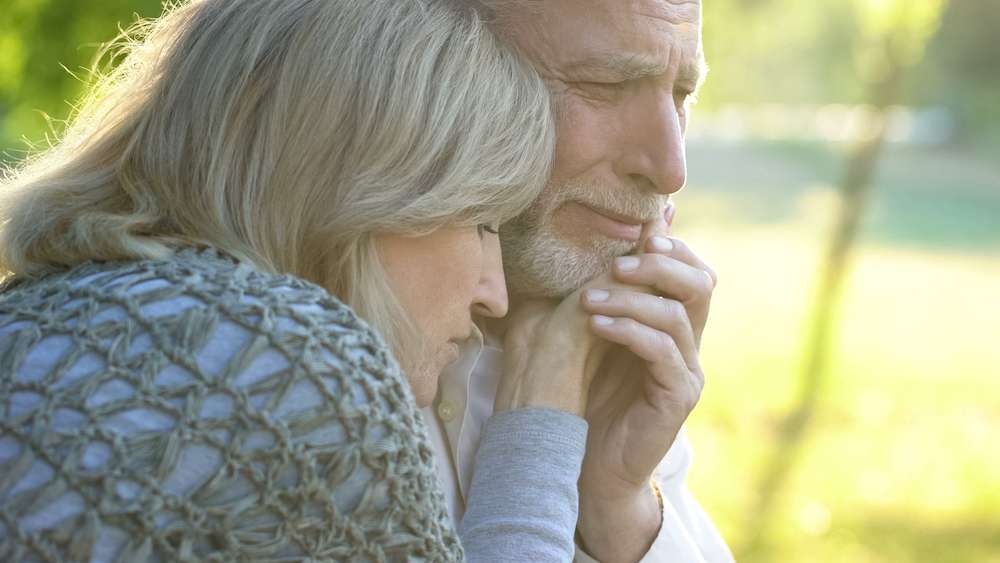
Tag: grieving

  • Finding Meaning in Tragedy: Addiction, Trauma, and Activism

    Finding Meaning in Tragedy: Addiction, Trauma, and Activism

    Turning grief into activism is a powerful way to process and give meaning to the pain of traumas like the death of a loved one who struggled with addiction. It is on the heels of tragedy that we can make voices of change be heard.

    Grief is complicated, individually experienced, and universal. And humans are not the only creatures on this planet who mourn their dead. Scientists continue to debate how complex the grief of non-human animals is, but the evidence points to many species grieving the loss of their kin and mates.

    For millennia, scholars have been searching for a way to explain the depths of human grief. Plato and Socrates mused on what death and dying meant and philosophized about the grieving man. Sigmund Freud, often considered the father of modern psychology, began psychological research into mourning in his 1917 essay “Mourning and Melancholia.” In 1969, Elisabeth Kübler-Ross published her influential book, On Death and Dying. The popular five stages of grief were born from her work.

    Social Media Affects How We Grieve

    Loss can be traumatic. Whether expected or sudden, close or removed but symbolic, grief can take hold when we lose someone or something significant. We mourn and ritualize loss as a means to process it. There are culturally distinct rituals for mourning families; processing the emotions that come with grief can be guided by these rituals. These customs help us find meaning in our grief, even when we don’t consciously recognize it.

    As social media continues to become a more ingrained aspect of modern life, people are developing new rituals to mark tragic loss. The social norms of these rituals (such as posting photos, posting on the wall of the recently deceased, or sharing a status that talks about special memories) is always in flux. But one norm that is constant in the age of social media is our immediate collective knowledge of loss. There is an urgency to information and the negotiation of emotions in a shared space. This immediacy is changing the old social norms of letting some time pass before talking about causes of death.

    There is another related but distinct way people sometimes process grief, and that’s by turning tragedy into a call for activism. Smithsonian Magazine published a powerful piece titled “The March for Our Lives Activists Showed Us How to Find Meaning in Tragedy.” The author, Maggie Jones, describes the instant response students had because they knew “time was not on their side.” With on-demand information, the collective conscience quickly moves from one tragedy to the next as new headlines take over. These Parkland students were not being inconsiderate in their quick call to activism, they were creating meaning from tragedy and were bolstered by the collective grief that took shape immediately, in large part because of social media.

    The Trauma of Drug-Related Deaths

    Across the United States, drug overdose deaths have been on the rise, particularly those involving synthetic narcotics (primarily fentanyl). Overdoses caused by the most commonly used drugs are tracked by the Centers for Disease Control and Prevention (CDC). And deaths due to overdose are underreported and misclassified. The stigma that surrounds addiction and the prejudice against people with Substance Use Disorder (SUD) relegates many overdose deaths to the world of whispers and rumors.

    My life has been marked by traumatic losses due to the effects of SUD. People close to me have overdosed, some survived and some died. I’ve also lost people to complications due to a lifetime struggle with Alcohol Use Disorder. Only recently have I seen these losses become conversation starters, where people will openly talk about the battles once fought by the brave folks who lost their lives to disease. Maybe that means we’re turning a corner in addiction stigma. Maybe we’re opening the door for people to feel less shame in talking about their struggles while they still have a chance to change the course of their lives. We can pay homage to our lost loved ones by sharing their stories and removing the stigma that may have kept them from receiving the help they needed.

    Recently a person in recovery told me that their co-workers do not know about their history and they will never tell them because multiple times they have made comments like “drug addicts are scum and should be shot” and “addicts are worse than rabid dogs.” The negative perceptions of people with SUD grated on this person and fed their alcoholism in a detrimental way. They believe they are simply a bad person who does not deserve help because addiction cannot be cured. This is a falsehood perpetuated by ignorant and fearful people.

    When we lose people and we share the entirety of our memories about them, from childhood to work life, and we share the truth of their battles with addiction, we are combating these dangerous preconceptions and prejudice.

    Overdoses aren’t the only way addiction kills. According to drugabuse.gov, “drug-related deaths have more than doubled since 2000 [and] there are more deaths, illness, and disabilities from substance use than from any other preventable health condition.” SUD is a diagnosable and treatable condition that deserves as much recognition as any other health issue for which there are awareness campaigns and funds devoted to find treatments to save and improve lives. Substance use disorders have the highest mortality rate of any mental and behavioral disorder.

    Tragedy as a Call for Activism

    In a world where so many people process aspects of their grief online and where tragic events unfold live for millions of people around the world at the same time, finding meaning in tragedy is necessary for our mental health. When we experience trauma, we are at risk of developing post-traumatic stress. Trauma can manifest as a strong psychological or emotional response to a distressing or disturbing event or experience. We can be traumatized when we lose someone; we can even be traumatized when we hear that someone we care for went through a terrifying ordeal. If our ability to cope is overwhelmed, that is trauma. When someone develops post-traumatic stress disorder (PTSD), their sense of self in relation to the world around them has become damaged. Trauma has the potential to shatter our beliefs about our place in the world and our sense of safety.

    Finding meaning in tragedy can go a long way in preventing the development of post-traumatic stress and can be a marker in recovery from PTSD.

    In our changing experience of bereavement, tragedy is a call for activism. It is on the heels of tragedy that we can make voices of change be heard. Tragedy creates space in which people listen. Frequently, we want to connect with others when we experience loss; sharing grief reduces its intensity. Turning grief into activism is a powerful way to process and give meaning to the pain of traumas like the death of someone who struggled with addiction.

    View the original article at thefix.com

  • Daniel Baldwin's New Documentary Spotlights Loved Ones Of Overdose Victims

    Daniel Baldwin's New Documentary Spotlights Loved Ones Of Overdose Victims

    The idea for the documentary came to Baldwin after he learned about the overdose death of his friend PJ Raynor.

    An upcoming documentary will focus on an area of the drug epidemic that isn’t often talked about: the experiences of friends and family members who are left behind when someone overdoses. 

    The documentary, called My Promise To PJ is being produced by Daniel Baldwin, the brother of Alec, Stephen and William Baldwin. 

    Losing PJ

    The idea for the documentary came after Baldwin, who is in recovery, learned about the overdose of P.J. Raynor. Baldwin had helped Raynor get sober, but after more than three years in recovery, Raynor relapsed and died on June 28, 2017.

    “I felt robbed,” Baldwin told WECT News about Raynor’s death. “I felt this is not the way the script was written by me. He finally got it, he had three and a half years sober and then I got a phone call that the first time he went back out and used heroin again it was laced with fentanyl and he overdosed.”

    Raynor’s parents, Patrick and Barbara Raynor, will participate in the film, and share how their lives have been changed since their son’s death. 

    “I’m a different person now,” said Patrick Raynor. “Not always a good thing when you’re changed by something like this. Never a good thing actually.” 

    Long-Term Sobriety

    Baldwin hopes that the film project will help other people with substance use disorder and their families.

    He said that it is healing for him to work on the project. “The service portion of my sobriety in my program is imperative for my staying sober,” he said. “So, another reason I’m doing this film is because unlike the one kid I’m going to take to coffee and take to a meeting and try to help him, I might reach five million people by doing this movie, and that’s part of what keeps me sober.”

    Baldwin pointed out that long-term sobriety is a challenge, especially in communities that have been heavily-impacted by the opioid epidemic. 

    “You have such a concentrated problem, when they come back from rehab, they’re thrust with the same people, places, and things that they were around and they don’t have long-term sobriety,” he said. 

    It’s a problem that Baldwin knows firsthand. He did nine stints in rehab before he successfully got sober in 2006. Since then, he has used his celebrity status to work on projects about addiction. 

    “By my taking those actions and being of service, it keeps my disease right in front of me and allows me to give away what was so freely given to me when I was in need,” he told The Fix in 2016. “It’s the cycle of life.”

    Filming of My Promise to PJ recently began, but a release date hasn’t yet been set for the film. 

    View the original article at thefix.com

  • Robin Williams’ Son Opens Up About Grieving, Suicide For New Campaign

    Robin Williams’ Son Opens Up About Grieving, Suicide For New Campaign

    The legendary entertainer’s son opened up about focusing on his own healing since losing his father as part of an awareness campaign.

    Robin Williams’ oldest son, Zak Williams, is speaking out about his grief and moving on after suicide as part of a campaign to support people who have had a loved one take their own life. 

    Williams, 36, appears on the Instagram page for FacesOfFortitude

    “There’s no education in place to tell you how to deal with this,” Williams said in the first post. “To balance how to grieve privately with your family and then also to have to grieve publicly. While it was nice to be heard, I was spending time on the outer layer instead of on the inside. It wasn’t just the survivor network for me, it was the whole world.”

    Robin Williams took his own life in August 2014 at the age of 63. In addition to Zak, Williams left behind two other children, Cody and Zelda, who are younger than Zak. 

    In another post, Zak talked about how he has had to focus on his own healing over the past few years. 

    “I started to feel bad for myself, I was seeking solace and healing through my grieving,” he said. “Once I took out all the inputs and elements of self medications, it all became really raw. It was super painful. I had to stop thinking big and expansive to heal everyone and look inward. I found a lot in there. I realized I wasn’t broken. There was a lot of strength I didn’t know was in there.”

    This isn’t the first time that Williams has spoken about his father’s death and their relationship. He told a biographer that is was difficult to watch his father’s well-being fade, according to Vanity Fair

    “It was really difficult to see someone suffering so silently,” he said. “But I think that there were a series of things that stacked, that led to an environment that he felt was one of pain, internal anguish, and one that he couldn’t get out of. And the challenge in engaging with him when he was in that mindset was that he could be soothed, but it’s really hard when you then go back into an environment of isolation. Isolation is not good for Dad and people like him. It’s actually terrible.”

    Williams also told the biographer that his father carried a lot of guilt about ending his marriage to the mother of his children, despite the fact that the kids told him he needed to move on. 

    “He couldn’t hear it. He could never hear it. And he wasn’t able to accept it,” Williams said. “He was firm in his conviction that he was letting us down. And that was sad because we all loved him so much and just wanted him to be happy.”

    Today, Williams serves on the board of Bring Change to Mind, an organization started by actress Glenn Close to reduce the stigma around mental illness. 

    View the original article at thefix.com

  • Relapse Prevention: Staying Sober Through Life Setbacks

    Relapse Prevention: Staying Sober Through Life Setbacks

    Without recovery tools or a relapse prevention plan, it can be difficult to stay sober while dealing with a significant life setback. The lure of the drink or drug to ease the pain and bring comfort becomes too great to resist.

    When people at treatment centers or in 12-step meetings say that relapse is part of recovery, it turns my stomach. Although the door to recovery remains open after a relapse—as long as a person survives such dangerous waters—relapse is not part of recovery. At the same time, however, the slip and slide process that leads to a relapse does happen in recovery.

    Whether we are newly clean and sober or have stacked up many years—even decades—of sobriety, the triggers that lead to a relapse happen before we pick up the first drink or drug. But if we have done the work and have recovery tools in place, these triggering events can be processed successfully instead of leading to a relapse. We acquire recovery tools through 12-step programs, SMART Recovery, therapy, or whichever recovery pathway we have chosen, and we use them for relapse prevention.

    Without recovery tools, it can be immensely difficult to stay sober while dealing with a significant life setback. The lure of the drink or drug to ease the pain and restore a sense of comfort becomes too great to resist. It reminds me of the mantra of Dr. Gabor Maté: “The question is not why the addiction, but why the pain.”

    But we have to know how and when to use the tools properly, which requires practice. We gain this practice by working the 12 steps or taking other constructive actions in our recovery pathway well before a triggering event occurs. Then, when we hit a life setback, we are prepared.

    Here are four life setbacks which can lead to relapse if we do not have recovery tools.

    1. The loss of a job, a promotion, or a major work opportunity

    One of my favorite sayings in 12-step programs is that an expectation is a resentment under construction. When you miss out on a significant work opportunity or you’re let go from your job or passed over for a promotion, it is natural to feel crushed and overwhelmed. Many people in recovery take professional setbacks personally, punishing themselves for a perceived failure. There is a reason alcoholism is called a disease of perception. We will drink or use to escape the pain of a perceived failure, or—in a masochistic fashion—to inflict more damage on themselves as the vicious punishment for such a failure. When you consider the consequences, this outcome can be devastating.

    Rather than sinking into depression and self-blame, you can use recovery tools to put the setback into context. Did you know people change jobs an average of 12 times during their career? In January 2018, the Bureau of Labor Statistics reported that the median employee tenure was 4.3 years for men and 4.0 years for women. The very nature of employment is a roller coaster ride of ups and downs.

    Given these statistics, it’s easy to apply the second and third steps to a career setback. If you turn over the disappointment to a higher power and have faith that another opportunity will arise, then relapse is less likely to occur. If you discuss the problem in a group, you will receive support and learn from the similar experiences of other people.

    2. Global events like elections, terrorist attacks, and natural disasters

    People in recovery tend to take everything personally. We sometimes use big events that may have no direct impact on our lives as reasons to drink or use. After the last presidential election, I heard many people in meetings bitterly joke that they were either moving to Canada or having a drink. Luckily, most of them did neither, regaining their focus on the microcosm of their own lives. They focused on what was right in front of them, remembering to take things one day at a time.

    When seemingly apocalyptic moments arise, there is an urge to console ourselves. We feel the pain and horror of terrorist attacks and natural disasters and use those feelings as a justification for a relapse.

    An essential recovery tool for sidestepping this kind of relapse is avoiding isolation. When we are alone and in our heads, we are in dangerous neighborhoods. By going out and spending time within a supportive community, the disaster loses some of its power over us. We come to understand that it’s not only our tragedy and can share our pain with others. We do not minimize the horror or sadness of what happened, but we also do not use it as a reason to relapse. We don’t have to make our lives worse in response to disaster.

    3. The death of a family member or a close friend, and the pain of mourning

    Death can be one of the hardest challenges to face for anyone in any context. The loss of a family member, a loved one, or a close friend can be incredibly painful, both spiritually and emotionally. For someone in recovery, the situations in which we grieve present their own unique difficulties. In circles of mourning, alcohol is a conventional lubricant. It can be easy for someone without recovery tools to pick up a drink during this time.

    By talking about your feelings and reaching out for support, you can be guided through the pain. You will learn that by staying sober and clear, you have the opportunity to be present for your family and friends. You can be of service in a time of great need. Moreover, you honor your loved one by maintaining your sobriety. If you feel like you were not able to make amends for a past wrong, then make a living amends by staying sober and honoring their memory.

    4. The end of a relationship

    Have you ever heard the story of a person in early recovery who started dating and turned their partner into their higher power? Rather than focus on their own recovery and sanity, they focus on the relationship. What they fail to realize is that whenever recovery becomes supported mainly by a human relationship, the recovery (and usually the relationship) are on thin ice.

    Sometimes, the end of such a relationship leads to a relapse. When someone in early recovery focuses with such fervor on a partner, they no longer can keep the focus on themselves. This is why you hear the recommendation to stay out of relationships during the first year of recovery, or until you’ve worked all 12 steps.

    The end of a healthy relationship in long-term recovery can be dangerous as well. Breaking up can hurt so deeply that you feel you can’t bear it; having a drink or taking a drug seems to be the only way to stop the heartache. However, the pain is so much worse when it’s kept inside and remains unspoken; and while drinking or using may look like a way to find quick relief, you can’t actually escape this hurt. You only postpone the feelings and frequently the relapse brings more misery. By sharing the pain and talking about it with other people, you can obtain perspective. Although applying the principles of recovery to a breakup may help you avoid a relapse, it’s not a cure-all. When love ends, we suffer, and such suffering takes time to heal.

    Whatever life setback you might face today or in the future, taking a drink or using a drug will not help resolve the difficulty and in the vast majority of cases, it will make a bad situation much worse. Instead, cut the cord that connects drinking and using with pain relief. It’s a temporary and usually ineffective fix. For people who have lived with addiction or substance use disorders, the most powerful recovery tool is the simple and honest realization that drugs and alcohol are never the solution.

    What’s in your recovery toolkit? How do you deal with life setbacks without using or drinking?

    View the original article at thefix.com

  • Recent School Shooting-Related Suicides Highlight Need For Survivor Care

    Recent School Shooting-Related Suicides Highlight Need For Survivor Care

    Two survivors of the Parkland school shooting have died by suicide since the tragic event.

    A second death by suicide by a survivor of the Marjory Stoneman Douglas High School shooting reportedly occurred on Saturday, March 23—one week after another student, 19-year-old Sydney Aiello, died by suicide.

    Her mother said that Aiello suffered from PTSD and survivor’s guilt following the deadly mass shooting that occurred in Parkland, Florida on February 14, 2018, and ended with 17 people dead.

    One week after Aiello’s death, another report of a suicide death surfaced, this time by a yet unidentified 16-year-old boy. This took place one day before the one-year anniversary of the international March For Our Lives protests that were organized by students to demand action against gun violence.

    Ryan Petty, a parent who lost his daughter in the Parkland shooting, alluded to this second suicide death by posting “17 + 2” with a broken heart emoji on Twitter. He told The New York Times that those close to the shooting survivors have been fearing these tragedies.

    “What we feared could happen is happening,” he said.

    In the wake of this second suicide, the American Association of Suicidology (AAS) issued a press release inviting those who are grieving and anyone else at risk to reach out to them, as well as urging Marjory Stoneman Douglas High School and other institutions to properly care for survivors of mass shootings and similar traumas. 

    “Youth involved in traumatic experiences are often at higher risk for a number of mental health issues, including experiences of suicidal thoughts,” the memo reads. “In the United States, youth aged 10-24 are already at especially high risk for suicide, which is the second leading cause of death for this age range.”

    AAS also warns readers about the phenomenon of suicide contagion in which simply hearing about another suicide, especially one that is reported on by national news, can increase the risk of further suicide deaths. Those vulnerable to suicide, such as other school shooting survivors, may need extra care during this time.

    “The Parkland survivors have been heroes in their advocacy efforts since the tragedy, but the deaths of these students are a sobering reminder that they are not only young advocates, but also trauma victims and gun violence loss survivors,” said AAS Firearms and Suicide Committee co-chair Michael Anestis.

    In addition to the two Parkland students, the father of one of the victims of the Sandy Hook Elementary School shooting in 2012 died by suicide Monday morning. Jeremy Richman, 49, was a neuroscientist and co-founder of The Avielle Foundation, a non-profit named for his late daughter. In a statement, the foundation called Richman a “champion father” and vowed to keep his mission alive.

    “Jeremy’s mission will be carried on by the many who love him, including many who share the heartache and trauma that he has suffered since December 14, 2012,” the statement reads. “We are crushed to pieces, but this important work will continue, because, as Jeremy would say, we have to.”

    If you or someone you know needs help, call the National Suicide Prevention Lifeline at 1-800-273-TALK (8255) or Text HOME to 741741. If you think someone is in immediate danger, do not leave them alone, stay with them and call 911.

    View the original article at thefix.com

  • Heartbreaking Billboard Aims To Raise Awareness About Addiction

    Heartbreaking Billboard Aims To Raise Awareness About Addiction

    The billboard spotlights a brief, powerful message: “Tim Hatley: Addiction Can Lead to Death.”

    Amidst the pre-fab buildings and snow of northern Michigan sits a stark reminder for the Hatley family.

    It’s a roadside billboard with a simple message: “Tim Hatley: Addiction Can Lead to Death.” 

    On a rural road outside the town of Grayling – population 1,800 – the signage is aimed at raising awareness about addiction, using the story of a former high school football player who died by suicide last year after struggling with addiction. 

    “When he turned 19 he moved out of my house and moved down the street with a friend and that’s kind of when it all started that he started snorting Norcos,” his mother Karen told CBS affiliate WWTV. “He had a huge addiction with the Norcos, went through three withdrawals with him.”

    It started after he was prescribed painkillers for a sports injury. Afterward, he kept using the pills and pain management gave way to a larger problem. After more than a decade of drug misuse, he turned from opioids to meth, his mother said. 

    A month before his death, he had a psychotic episode. On Dec. 30 of last year he killed himself.

    “His fiancé had called me and said ‘he’s gone’ and hung up on me. And I was like ‘what is she’s talking about?’” Hatley told the TV station. “I called my husband and said ‘you need to come home now.’ So, he came home, and when he walked in he was crying, and just shook his head and I fell to the ground.”

    So this year, she paired up with the Crawford County Partnership for Substance Abuse Prevention to put up a billboard reminding passersby of her son’s story and offering a solution. “If you need help, recovery starts here. Call 1-800-834-3393,” the sign says.

    “I chose the billboard going towards the high school because I want kids on a bus to see that every single day, and I want parents to get the message that you know, you’re [sic] kid doesn’t have to be a troubled kid to end up this way,” Hatley said. “This loss is the worst thing I’ve ever had to go through, and I don’t want anyone else to go through this.”

    View the original article at thefix.com

  • Is Anxiety The Sixth Stage Of Grief?

    Is Anxiety The Sixth Stage Of Grief?

    One therapist provides compelling examples of the relationship between loss and anxiety. 

    Is anxiety the sixth stage of grief? Therapist and author Claire Bidwell Smith thinks so, and she shares why in a recent column in the Washington Post

    Bidwell Smith writes that a few years ago, she began seeing an increased number of patients reporting anxiety after the loss of a loved one. Some of the patients had dealt with anxiety before, but she says for the majority it was a new issue. 

    “Grief and anxiety are inextricably linked,” Bidwell Smith explains. “We experience anxiety after a loss because losing someone we love thrusts us into a vulnerable place. It changes our day-to-day lives. It forces us to confront our mortality, and facing these fundamental human truths about life’s unpredictability causes fear and anxiety to surface in profound ways.”

    When Bidwell Smith began experiencing the increase in patients dealing with anxiety and grief, she began to research. Though she says there was little information about the connection between the two, she was able to use her own experiences with anxiety and grief after losing her mother at age 18. 

    She says she soon came to realize that much of the anxiety in such situations stemmed from not having processed the loss thoroughly due to expectations from society to move on from a loss

    “Unfortunately, this is a common experience for many people who lose a loved one,” she writes. “Our culture is not very adept at making space for grief. That was true over 20 years ago when I was going through it, and is still largely true today.”

    Bidwell Smith references one case in particular where a patient in his 40s had lost his father and had come to see her about six months later, as he’d been dealing with panic attacks and bursts of anger. 

    Bidwell Smith worked with the patient to confront his loss, after which he began to feel relief from the anxiety and anger. Additionally, she says it is important to address how loss makes us “confront our mortality.”

    “When we lose someone significant, we are starkly reminded of how precarious life is, how the unexpected lurks at every turn and how wide-ranging the actual impact of loss can be,” she writes.

    According to Bidwell Smith, treating anxiety brought on by grief is doable through cognitive behavioral therapy, deep grief processing and meditation techniques. But it’s also important that the societal narrative around grief begins to change. 

    “Working through these components is vital to healing ­grief-related anxiety,” Bidwell Smith writes. “As a culture, we tend to push away our thoughts, fears and questions about death. Given how reluctant our society is to deeply explore this topic, it’s no wonder that we falter individually when faced with it. After all, at the root of most anxiety is fear. And what are most people afraid of more than death?”

    View the original article at thefix.com

  • Lil Xan Says Mac Miller's Overdose Death Made Him Want To Quit Music

    Lil Xan Says Mac Miller's Overdose Death Made Him Want To Quit Music

    The 22-year-old rapper discussed how Miller’s death has impacted him during a recent podcast interview. 

    The death of hip-hop artist Mac Miller (born Malcolm James McCormick) has left many of his fans devastated, including fellow rapper Lil Xan, who has claimed that he will retire in the wake of his peer’s passing.

    In a recent appearance on a podcast, Leanos states that the news of McCormick’s death left him “crying in [his] apartment” and unwilling to “make music no more” [sic]. McCormick’s death, from what authorities have described as an apparent overdose, also gave Leanos pause to consider his own drug use and mental health issues, which he said he would be addressing in rehab if he did not have upcoming tour dates.

    Speaking live on Adam22’s podcast No Jumper on September 8—one day after McCormick was found dead in his home in Studio City, California—Leanos said that he was overwhelmed by the news. “I’ve been crying in my apartment, ‘Mac didn’t die, Mac didn’t overdose,”” he said. 

    He also recalled the last time he saw McCormick, which happened to be at the rapper’s final performance at the Hotel Café in Los Angeles shortly before his death. “Before I left, he was like, ‘Be safe,’” said Leanos. “People say that, you know: ‘Be safe.’ But he grabbed me, and he pulled me back, and he was like, ‘No, I mean, BE SAFE.’ That almost made me cry. That’s my idol right there. I keep thinking about that—how it resonated in my head, how those were his last words.”

    According to Leanos, the experience of McCormick’s words, followed by the news of his death, left him unwilling to continue his music career. “When your hero dies, f—k that s—t,” he said. “I don’t want to make music no more.” After the completion of his current recording contract, Leanos claimed that he planned to retire, though he did not elaborate on this particular decision.

    McCormick’s death also put Leanos in a reflective mood regarding his own substance use. His use of Xanax—the drug that gave him his stage name—and opiates like Norco have been well-publicized in the past, but in his No Jumper interview, Leanos suggested that he continued to struggle with sobriety.

    “I want to get sober now, completely sober, but it’s so hard,” he told Adam22, whose real name is Adam Grandmaison. “I just want to be off everything. I want to be like a normal person. If I didn’t have a tour coming up, I would be in rehab right now.”

    View the original article at thefix.com

  • Ariana Grande Talks Manchester Attack, Anxiety In Emotional Interview

    Ariana Grande Talks Manchester Attack, Anxiety In Emotional Interview

    “You try not to give in to fear. You want to keep going. You want to not be afraid.”

    In a new interview, singer Ariana Grande described how “everything” changed after the 2017 bombing attack on her concert at Manchester Arena in England.

    Ebro Darden of Beats 1 radio addressed speculation that “Get Well Soon,” a song on her new album Sweetener, had to do with the aftermath of the Manchester attack.

    “You have really been working through recovering from what took place in Manchester with your fans, with your family, with yourself,” Darden said. “Was that song important to put out some of that energy and let people know that we’re all working to get well?”

    In her emotional response, Grande said the song was about that and more. “[The song is about] just being there for each other and helping each other through scary times and anxiety,” she said. “We just have to be there for each other as much as we can because you never fucking know.”

    She continued, “It’s also about personal demons and anxiety, more intimate tragedies as well. Mental health is so important. People don’t pay enough mind to it… People don’t pay attention to what’s happening inside.”

    At the time, NBC News reported that 22 people were killed and about 59 were wounded.

    “You try not to give in to fear,” Grande said. “That was the point of finishing my tour, to set an example for my fans, who were fearless enough to show up to the shows. You want to keep going. You want to not be afraid.”

    Less than a month after the attack, Grande returned to Manchester for the One Love Manchester benefit concert, which featured Justin Bieber, Miley Cyrus, Katy Perry, Pharrell Williams, and Coldplay. The pop star performed in front of 55,000 people that night.

    Grande, who previously addressed the emotional scar that the attack left on her in a Vogue interview, told Darden that in the aftermath of Manchester, she can’t help but fear for her safety.

    “You don’t want to give in, you don’t want to be afraid, but it’s still there,” she said. “It changes everything, changes your life quite a bit. You want to be more present and follow happy impulses and figure it out later and stay in the moment.”

    In a June interview with Vogue, Grande said the attack left her with a crippling amount of anxiety. “I think a lot of people have anxiety, especially right now. My anxiety has anxiety,” she said. “I’ve always had anxiety. I’ve never really spoken about it because I thought everyone had it, but when I got home from tour it was the most severe I think it’s ever been.”

    View the original article at thefix.com