Tag: harm reduction programs

  • Germany Doesn’t Have An Opioid Crisis. Here’s Why. 

    Germany Doesn’t Have An Opioid Crisis. Here’s Why. 

    One German doctor believes the country’s hesitance to prescribe opioids plays a major role in helping avert a crisis.

    With recent stories warning about addiction taking hold in India and Australia, it can seem like the opioid epidemic is much larger than North America. However, Germany has largely avoided the crisis, in part because of its approach to pain management and in part because when addiction does arise, it is treated more quickly and effectively. 

    While opioid prescription rates in the United States have been rising exponentially, they’ve only increased slightly in Germany, NBC News reported.

    Dr. Peter Raiser is the deputy managing director at the German Center for Addiction Issues. He said that healthcare providers in the country take a much more controlled approach to opioid pain pills. That’s kept prescription rates relatively stable, even while they skyrocketed in other Western countries. 

    Raiser said, “Among the most important reasons we do not face a similar opioid crisis seems to be a more responsible and restrained practice of prescription.”

    Doctors Need Special Permission To Prescribe Opioids

    A major difference is that opioids are not a first-line option for pain management in Germany, as they often are in the United States. Doctors need special permission to prescribe opioids to a patient. In order to be granted that permission, they need to show that they’ve trial alternative treatments and medications, and that those have been unsuccessful. Then, patients need to be screened for addiction risk. 

    University of Hamburg psychiatrist Dr. Dieter Naber said those precautions lower the number of opioid prescriptions that are written. 

    He said, “Here in Germany, they prescribe opiates if all the other drugs don’t work. It’s much, much, much more difficult.”

    Affordable Healthcare Means More Doctor Visits

    In part because opioids are less prevalent, opioid use disorder is also less common in Germany. About 0.2% of Germans live with opioid use disorder, compared with 0.6% of Americans. 

    One reason may be because Germans are more likely to keep in touch with the doctors that prescribed their opioids, since healthcare is cheaper than it is in the United States. Since they’re seeing patients more frequently, doctors are better able to spot signs of opioid abuse. 

    When Germans do become addicted to opioids, they’re much less likely to die than their American counterparts with substance use disorder, since treatment is more affordable and widely available.

    Naber explained, “Money regarding treatment is really not an issue here.” 

    In 2016, 198 Americans per one million died of drug overdoses, compared to just 21 Germans per million

    Harm Reduction In Action

    For people who are not willing to go into treatment, Germany has harm reduction programs, including more than 20 safe injection sites. The United States has none (although some cities are considering plans). 

    Dr. Andres Roman-Urrestarazu, a University of Cambridge researcher, said the German approach recognizes addiction as a more complicated and nuanced problem that requires a variety of solutions. 

    “We know harm reduction works in terms of dealing with the problem of mortality,” he said. 

    View the original article at thefix.com

  • Safe Injection Site In Philadelphia Ruled Federally Legal By Judge

    Safe Injection Site In Philadelphia Ruled Federally Legal By Judge

    The ruling goes against the wishes of the US Justice Department, which sued to stop the facility from opening.

    A federal judge has ruled that a planned supervised injection site, where individuals can go to use illicit drugs safely under medical supervision, does not violate U.S. federal law. This has opened the door for the city of Philadelphia, where the facility in question would be located, to host the first legal safe injection site in the country.

    “Crackhouse Statute” Does Not Apply

    According to the Philadelphia Inquirer, U.S. District Judge Gerald A. McHugh ruled on Wednesday that a 30-year-old law created to address what was commonly referred to as “crack houses” does not apply to the safe injection site proposed by the non-profit organization Safehouse.

    “The ultimate goal of Safehouse’s proposed operation is to reduce drug use, not facilitate it,” McHugh wrote in the document explaining his decision.

    The ruling goes against the wishes of the U.S. Justice Department, which sued to stop the facility from opening. The government argued that the drugs that would be used are dangerous and the act of using them is illegal.

    “This is in-your-face illegal activity using some of the most deadly, dangerous drugs that are on the streets. We have a responsibility to step in,” said U.S. attorney for the Eastern District of Pennsylvania William McSwain in February. “It’s saying, ‘Safehouse, we think this is illegal. Stop what you’re doing.’”

    Saving Lives, Not Encouraging Drug Use

    However, the Safehouse lawyers have argued that the purpose of a safe injection site, also referred to as overdose prevention sites, is to save lives and encourage the individuals who frequent it to get into addiction treatment.

    “I dispute the idea that we’re inviting people for drug use. We’re inviting people to stay to be proximal to medical support,” said Ilana Eisenstein, chief attorney for Safehouse, in September.

    Multiple studies on safe injection sites, including those that have opened across Europe and in Canada, show that they reduce the number of overdose deaths in the area without resulting in an increase in overall illicit drug use.

    They also lessen the spread of dangerous viruses such as HIV and hepatitis by offering clean needles and a place to safely dispose of used ones. These successes have led the American Medical Association to endorse the bringing of these sites to the U.S. However, the Justice Department is determined to continue the fight.

    “The Department of Justice remains committed to preventing illegal drug injection sites from opening,” said McSwain. “Today’s opinion is merely the first step in a much longer legal process that will play out. This case is obviously far from over.”

    View the original article at thefix.com

  • Feds Try To Block Philly Safe Injection Site

    Feds Try To Block Philly Safe Injection Site

    Advocates and opponents of a proposed safe injection site pled their case during a recent federal hearing. 

    In Philadelphia, drug addiction is rampant. The city has struggled to clean up homeless encampments riddled with drug use and disease, but that just pushed the problem elsewhere.

    Now, the city’s mayor and other officials support a controversial plan: opening America’s first supervised injection site. 

    The federal government, however, is fighting to stop that. The Trump administration filed a lawsuit in February, and on Thursday (Sept. 5) during a federal hearing, William M. McSwain, United States Attorney for the Eastern District of Pennsylvania, personally argued that the proposed safe injection site is illegal. 

    Crack House Statute

    “If this opens up, the whole point of it existing is for addicts to come and use drugs,” McSwain said, according to the Philly Voice. That would violate the so-called “crack house statute,” a portion of the Controlled Substances Act introduced in the 1980s that makes it illegal to “manage any site for the purpose of unlawfully using a controlled substance,” the Voice reported. 

    In court, advocates and opponents debated the purpose of a safe injection site. McSwain and his team argued that the purpose is for people to use drugs, making the site illegal. But attorneys for Safehouse, a nonprofit that plans to open the proposed site, said that the purpose is to save lives and connect people with treatment. 

    Saving Lives, Offering Treatment

    “I dispute the idea that we’re inviting people for drug use. We’re inviting people to stay to be proximal to medical support,” said Ilana Eisenstein, chief attorney for Safehouse. 

    Ronda Goldfein, vice president of Safehouse, said that although the idea seems radical, it is not inherently different from the work that’s already being done with needle exchanges and Narcan programs. 

    She said, “If the law allows for the provision of clean equipment, and the law allows for the provision of naloxone to save your life, does the law really not allow you to provide support in that thin sliver in between those federal permissible activities?”

    However, McSwain argued that the seemingly small difference is a big deal. 

    “If Safehouse pulled an emergency truck up to the park where people are shooting up, I don’t think [the statute] would reach that,” he said. “If they had people come into the unit, that would be different.”

    The judge in the case could make a ruling at this point, or could request more hearings to decide whether or not the plans for the safe injection site can move forward. Safehouse and many people around Philly are holding out hope for another tool in the fight against overdose deaths. 

    “We recognize there’s a crisis here,” Goldfein said. “The goal would be to open as soon as possible.”

    View the original article at thefix.com

  • Elizabeth Warren, Bernie Sanders Endorse Supervised Injection Facilities

    Elizabeth Warren, Bernie Sanders Endorse Supervised Injection Facilities

    Warren, Sanders and de Blasio are the only 2020 presidential candidates who have voiced support for SIFs. 

    US Sens. Elizabeth Warren and Bernie Sanders endorsed safer consumption spaces in late August, a position lauded by harm reduction advocates.

    Safer consumption spaces, also known as supervised injection facilities (SIFs) or overdose prevention sites, “are clinical but community-oriented spaces” where people may use under medical supervision and have a place to access information about treatment for substance use disorder.

    Those in favor of SIFs say “the facilities keep people alive during the drug-using phases of their lives, while also offering them a hand up to a new and better life.” 

    Their Endorsements

    Both Warren and Sanders, who are running for president, said they would support SIFs, if elected.

    As reported by The Hill, Sanders would “legalize safe injection sites and needle exchanges around the country, and support pilot programs for supervised injection sites, which have been shown to substantially reduce drug overdose deaths.”

    Warren would “support evidence-based safe injection sites and needle exchanges and expand the availability” of naloxone.

    Lindsay LaSalle, director of public health law and policy with the Drug Policy Alliance, said the candidates’ endorsement is “significant.” “It shows that there are candidates who, in the context of the opioid crisis… that they’re willing to think outside of the box and look at interventions that have proven successful in other countries.”

    SIFs Around The World

    There are approximately 120 safer consumption spaces currently operating in 12 countries, according to the Drug Policy Alliance

    A visit to Vancouver’s Insite was able to convince Philadelphia Police Commissioner Richard Ross that his city needed to follow suit. He said the experience changed him from being “adamantly against [the sites] to having an open mind.”

    Safehouse, the organization trying to open the nation’s first safer consumption spaces in Philadelphia, will fight the good fight in court against the federal government, which has sued the organization for violating federal law.

    “Either way it’s decided, it will set the first legal precedent in the country,” said LaSalle.

    Harm reduction and recovery advocate, Ryan Hampton, told Truthout that he would have attempted recovery sooner had he had access to safer consumption spaces.

    “I would have found my way into recovery much sooner, because I would have established trust with a clinician, a qualified health care provider, instead of some shady treatment center that was just trying to rip off my insurance company, or my mother,” Hampton said.

    View the original article at thefix.com

  • Harm Reduction Nonprofit Sues Facebook Over Censorship

    Harm Reduction Nonprofit Sues Facebook Over Censorship

    “We are fighting for the rights of all users of the Internet to appeal from social media giants’ decisions,” the nonprofit’s rep told The Fix. 

    A Polish non-profit organization is suing Facebook for allegedly censoring its harm reduction content by deleting groups and pages on the social media platform that were related to helping people who use and are addicted to drugs.

    The Civil Society Drug Policy Initiative (Społeczna Inicjatywa Narkopolityki, or SIN) filed the lawsuit in May and received a favorable ruling by the District Court in Warsaw in June, though Facebook can still appeal. 

    The case is ongoing, but the court made an interim ruling prohibiting the social media company from removing any more fan pages, profiles or groups run by SIN on Facebook or Instagram.

    The ruling also requires Facebook to store backups of the pages, profiles and groups it already deleted so that they can be restored should SIN win the overall suit. Facebook can appeal the ruling, but SIN is encouraged by this result.

    The Bigger Issue

    A recent report by Vice outlined the larger problem of Facebook pages, groups, posts, and ads being deleted and accounts being banned for promoting harm reduction principles and products.

    In one case, the social media manager for a nonprofit organization called BunkPolice was banned from placing any ads on the platform after submitting and getting approval for ads promoting fentanyl testing kits.

    The kits are used to test batches of illicit drugs for the extremely potent opioid, fentanyl, which has been responsible for a large percentage of the recent overdose deaths in the U.S. However, they got caught up in Facebook’s efforts to stop drug trafficking on its platform.

    Fighting Censorship

    In response to this problem, SIN has launched a “#blocked” campaign to speak out against what it considers to be a worrying spread of content control by large social media companies and censorship.

    “Online platforms such as Facebook, YouTube and Twitter increasingly control what you can see and say online. Algorithms follow users’ activity, while filters and moderators address alleged breaches of terms of service,” the campaign website reads. “Unfortunately, there has also been a number of instances when legal and valuable content was removed, including historical photos, war photography, publications documenting police brutality and other human rights’ violations, coverage of social protests, works of art and satire.”

    The NGO also published a corresponding video on YouTube the day after filing its lawsuit against Facebook. The video warns about social media giants having too much control over the content that everyday people see, and cautions that “you too could end up on their blacklist.” For SIN, this goes beyond the goal of harm reduction to freedom of speech rights for all internet users.

    “We are fighting for the rights of all users of the Internet to appeal from social media giants’ decisions,” said SIN representative Jerzy Afanasjew in an email to The Fix.

    View the original article at thefix.com

  • Facebook Users Promoting Harm Reduction Face Bans And Deleted Pages

    Facebook Users Promoting Harm Reduction Face Bans And Deleted Pages

    Facebook is reportedly “still investigating” cases of entire pages and groups for harm reduction being deleted.

    A new Facebook campaign to combat the opioid crisis appears to have unintentionally targeted harm reduction efforts on its own social media platform as ads for fentanyl-testing kits result in bans and pages created by harm reduction organizations are deleted.

    A report by Vice found and interviewed multiple individuals who have been targeted by the platform in ways that are hampering their efforts to prevent overdose deaths.

    Facebook recently teamed up with Partnership for Drug-Free Kids for the “Stop Opioid Silence” campaign, but their efforts to fight drug trafficking on the massive social platform looks to have created more opioid-related silence.

    This is causing serious problems for organizations such as the Southside Harm Reduction Services that post warnings on their Facebook pages about local batches of illicit drugs that had been found to contain fentanyl, the extremely potent opioid responsible for many of the overdose cases and deaths in recent years. These posts are being rejected or experiencing “reduced distribution,” meaning that those that do get posted are not being seen by the community.

    In one particularly severe case, the social media manager of BunkPolice, Colin Marcom, was permanently banned from placing any ads on Facebook after he used the platform to advertise BunkPolice’s fentanyl testing kits.

    These simple kits can easily test for fentanyl, which is a tasteless and odorless synthetic opioid easily mixed in heroin, cocaine, ecstasy, and other common illicit drugs.

    “Facebook banned my personal account from ever being able to place ads on Facebook again, b/c of an ad, with this picture, that they approved for $20 & it ran for 7 days,” wrote BunkPolice in a Twitter post. “7 days, no warning – right to suspension – I submitted a sensible appeal, they said I was promoting drug use.”

    While harm reduction efforts like these have been repeatedly found to save lives without increasing drug use, as some people feared, Facebook seems to be treating these efforts like they’re a drug-trafficking scheme. To make matters worse, recent attempts to appeal bans and deleted posts and pages have been rejected. 

    After Vice contacted Facebook for comment, multiple posts from harm reduction pages that were previously flagged and deleted were restored, suggesting that the problem may be automated. It’s also possible that the vague language in their “regulated goods policy,” that allows for posts about drug use “in a recovery context,” was misinterpreted by employees who reviewed the appeals. 

    An extended report published by The Verge earlier this year found that Facebook moderators are chronically overworked, confused by ever-changing policies, and in some cases have been diagnosed with PTSD from viewing so much extremely disturbing content.

    According to the report, these moderators spend less than 30 seconds on an average flagged post before deciding whether to allow or delete.

    Facebook is reportedly “still investigating” cases of entire pages and groups for harm reduction being deleted.

    View the original article at thefix.com

  • Most Drug Users Willing To Utilize Safe Injection Sites, Study Finds

    Most Drug Users Willing To Utilize Safe Injection Sites, Study Finds

    A new study found that 77% of drug user were willing to utilize safe consumption sites.

    “Safe consumption sites” provide a space to use drugs under medical supervision, away from the streets and with clean equipment such as syringes. They have existed abroad since the ‘80s but not in the U.S. (at least not legally). Some are for them, some are against them. But what about the drug using community?

    Safe consumption programs (also known as supervised injection facilities or SIFs) in Canada and Australia have reported reductions in fatal overdoses and the spread of HIV and hepatitis B and C. As the U.S. faces crisis-level opioid abuse and overdose, it is now forced to confront the potential of SIFs across the country.

    A new study confirmed the willingness of “high-risk opioid users” to utilize these sites as a form of harm reduction. In a survey of 326 people who reported using heroin, fentanyl and illicit opioid pills, about 77% of them reported that they were willing to go to SIFs.

    Among the respondents, 60% reported habitually using drugs in “public or semi-public” spaces, and more than a third had overdosed in the past six months.

    The research was led by a team at Johns Hopkins Bloomberg School of Public Health and was published in the Journal of Urban Health in June.

    “On the whole, we found a strong willingness to use safe consumption spaces,” said study lead author Ju Nyeong Park. “This is important because often the voices of people who use drugs are not included in policy debates or in the implementation of public health interventions.”

    The research confirmed that the majority of respondents are “motivated to be safe and take precautions to reduce their exposure to harm,” said study senior investigator Susan Sherman.

    “It’s encouraging because even though these are people engaging in very high-risk behaviors in very different contexts… they were willing to use this harm-reduction intervention,” said Park.

    100 Safe Consumption Sites In 12 Countries

    Currently there are more than 100 such facilities in 12 countries, though none are in the United States. A legal battle taking place in Philadelphia may affect the future of SIFs in the U.S.

    In April, it was reported that Safehouse, a local non-profit organization involved in efforts to establish the nation’s first SIFs in Philadelphia, countersued the government in its attempt to block efforts to open the sites. They argued that SIFs are less about drugs and more about providing a medical service, in addition to giving people the option to access treatment.

    View the original article at thefix.com

  • Women Push For Gender-Targeted Harm Reduction, Drug Treatment Programs

    Women Push For Gender-Targeted Harm Reduction, Drug Treatment Programs

    A handful of harm reduction organizations are beginning to take steps to design programs with women’s unique needs in mind.

    Women around the world are being failed by harm reduction and drug addiction treatment programs designed for men, according to a report published in the Pacific Standard.

    In order to address this problem, organizations such as Women and Harm Reduction International Network and Harm Reduction International are taking steps to design programs with women’s unique needs in mind and ensuring that women are well-represented in leadership. 

    In spite of the fact that women who use drugs are just as likely to develop an addiction disorder as men who use, drug policy in many countries has only left women facing additional hurdles to treatment and a massive amount of stigma.

    Women have unique challenges such as pregnancy and the threat of being seen as a “bad mom,” higher rates of becoming victims of domestic abuse, and an expectation of performing sex work in relationships where both partners use drugs. Bree Cassell, a young woman who has struggled with heroin addiction and who was interviewed for the report, says that women assume “he can’t sell his body, I have to sell mine.”

    Sex work exposes these women to a significant additional risk of violence, but when their work is criminalized, they cannot safely report it to authorities.

    If pregnancy occurs when a woman is addicted to drugs, there is an expectation that drug use stops immediately. This is not only unrealistic, it is extremely dangerous to the embryo or fetus. It’s safer to keep using opioids, especially if the switch can be made to methadone or another opioid addiction treatment drug. However, the fear of having their children taken away can keep these women away from treatment programs altogether.

    There are also more addiction treatment programs for men only than for women only, and coed programs can be uncomfortable for women who have experienced abuse, which is more likely among women with addiction disorders.

    In order to try and combat these problems, harm reduction organizations are trying to build programs designed for women from the ground up. Not only do they offer women-only days for their needle exchange programs and offer to bring these services to women’s homes rather than making the patients travel to them, their leadership is structured with women in mind.

    “Men are welcome to participate in Reframe the Blame planning and events, but the campaign is designed from a feminist model in which leadership and decision-making is shared among participants, rather than controlled by a single head,” Tessie Castillo writes. “The model recognizes that women may benefit from different leadership models than those currently operating at most businesses and non-profits.”

    These are essential steps to take as gender gaps in addiction and overdose deaths continue to close and women who inject drugs suffer higher rates of HIV.

    View the original article at thefix.com

  • HIV Prevention Pill Offered to Opioid Users in Philadelphia

    HIV Prevention Pill Offered to Opioid Users in Philadelphia

    A recent op-ed makes the case that Philly doctors should evaluate all medication-assisted treatment patients for PrEP. 

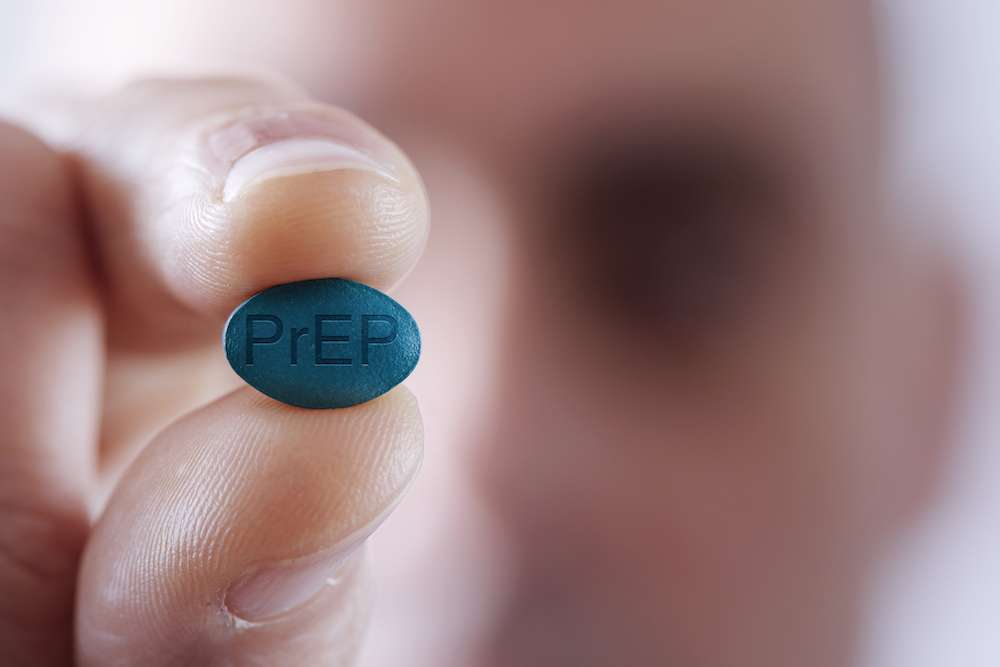
    An increase in the number of IV drug users infected with HIV in Philadelphia has spurred the city’s health department to train medical providers in the use of pre-exposure prophylaxis (PrEP), a pill that can prevent HIV infection.

    An op-ed piece in the Philadelphia Inquirer suggested that making PrEP and medication-assisted treatment (MAT) available to this demographic could not only provide much-needed assistance to an at-risk population, but as the story’s author noted, would also place Philadelphia at the forefront of helping to prevent the spread of HIV among that demographic. 

    The Inquirer noted that while the overall number of new HIV cases has been on the decline since the mid-2000s, with current statistics showing that 19,199 Philadelphia residents live with HIV, the number of individuals who acquired HIV through IV drugs rose from 45 cases in 2017 to 61 in 2018.

    The newspaper also cited a study by the National HIV Behavioral Surveillance System, which linked the rise in new infections to a high number of sex workers in Philadelphia. According to the study’s findings, 51% of women with new infections and 30% of male subjects had traded sex for money, drugs or other goods.

    Coverage of the rise in cases by the Philadelphia Tribune found that city health agencies have increased education efforts regarding the use of PrEP among HIV patients. These include the Philadelphia Department of Public Health, which trained doctors in areas with high rates of HIV about talking to their patients about the medication.  

    The non-profit syringe exchange program Prevention Point worked directly with IV drug users to let them know about how to get PrEP. The Tribune piece noted that the emergency departments of Temple University Hospital and Episcopal Hospital offered screenings for HIV and STDs. 

    The city’s Federally Qualified Health Centers and many primary care physicians offer PrEP as well. If the patient is found to be HIV-positive, doctors at these hospitals, centers and practices work with the individual to begin immediate treatment with PrEP. The medication is fully covered by most health plans, and when taken under the supervision of a medical provider, has reportedly few to no side effects.

    Despite this, the Inquirer op-ed noted that many local providers and treatment centers may not be aware of the availability of MAT with PrEP for HIV. The story advocated consistent referral of the medication to not only stem the tide of new cases, but to establish Philadelphia at the forefront of such treatment.

    “These type of local emerging best practices offer a way bridging national policy, clinical guidelines, local contexts and patient choice,” wrote the op-ed’s author, Kevin Moore, who serves as director of care coordination at ARS Treatment Centers.

    View the original article at thefix.com

  • Legal Battle Over Safe Injection Site Could Be Game Changer For US

    Legal Battle Over Safe Injection Site Could Be Game Changer For US

    Safehouse is engaged in a historic legal battle with the government over their attempt at opening the country’s first safe injection site.

    The outcome of a legal battle over whether to open the nation’s first supervised injection facility (SIF) rages on in Philadelphia. The result could influence other efforts to do the same elsewhere in the U.S.

    In February, Pennsylvania prosecutors and the federal Department of Justice filed a civil lawsuit attempting to stop a local non-profit organization, Safehouse, from opening SIF locations in Philadelphia.

    They cite the “crack house statute” under the Controlled Substances Act, which made it a crime to “knowingly open, lease, rent, use, or maintain any place, whether permanently or temporarily… for the purpose of unlawfully manufacturing, storing, distributing, or using a controlled substance.”

    In response, Safehouse is countersuing the government in federal court. They argue that the “crack house statute” does not apply to SIFs. “Safehouse is nothing like a ‘crack house’ or drug-fueled ‘rave.’ Nor is Safehouse established ‘for the purpose’ of unlawful drug use,” stated Ilana Eisenstein, a lawyer for Safehouse.

    They argue that SIFs are less about drugs and more about providing a medical service. By giving people a safe place to use under medical supervision rather than alone on the street, SIFs save lives. Another important feature of SIFs, proponents say, is that they offer access to treatment and support. 

    “If you find a place that accepts the fact that you’re going to be consuming drugs and still offers you services in a non-judgmental way, you’re going to start to trust them,” says Ronda Goldfein, vice president and co-founder of Safehouse. “And once there’s a trust relationship, you’re more inclined to accept the range of treatment they’re offering, which includes recovery.”

    Safehouse also cites the Religious Freedom Restoration Act of 1993 in its countersuit. “[This] service is an exercise of the religious beliefs of its Board of Directors, who hold as core tenets preserving life, providing shelter to neighbors, and ministering to those most in need of physical and spiritual care,” stated Safehouse lawyer Eisenstein.

    Seattle, New York, Denver, Maryland, Maine and more are also considering opening supervised injection facilities, as opioid abuse and overdose have become increasingly problematic throughout the country.

    William McSwain, the U.S. Attorney for the Eastern District of Pennsylvania who is suing Safehouse, says the outcome of the legal battle could have a ripple effect across the U.S.

    “This is something that I think people will be looking at as, in a sense, a test case that will have implications in other districts,” he said.

    View the original article at thefix.com