Tag: lindsey weedston

  • Michael Douglas Relieved To Have Son Back After Long Addiction Battle

    Michael Douglas Relieved To Have Son Back After Long Addiction Battle

    Cameron will soon be releasing a memoir about his decades-long struggle with addiction to cocaine and heroin.

    Michael Douglas spoke to People this week about his son Cameron’s long battle with addiction and his six-year stay in prison.

    The 75-year-old actor, who recently appeared in Avengers: Endgame, addressed the fear of losing his child and the cautious relief he has felt since Cameron returned to acting in 2017.

    “There were moments when hope dwindled… and then it’s just a train out of the station,” said Michael. “You go from compassion for somebody you love and worry about and you balance that with your own hostility and anger as it begins to increase… I remember him looking at me and I said, ‘Listen, you know I love you but I am going to protect myself and the family.’”

    Losing His Half-Brother To Overdose 

    Michael knows the pain of losing a family member to addiction, having lost his half-brother Eric to an overdose in 2004. Eric was only 46 when his maid found him dead in his Manhattan apartment. Toxicology reports found that he overdosed on a mix of alcohol, tranquilizers, and painkillers.

    However, after a lot of personal work and some time in a halfway house, Cameron has remained sober and hope has returned to the family.

    “It went from feeling [cautious] to relief, to the joy of having Cameron back,” Michael told People. “It’s like this huge storm has passed and the sun came out and you can enjoy your life again without looking over your back. It’s a wonderful feeling of being complete.”

    Long Way Home

    Cameron will soon be releasing a memoir about his decades-long struggle with addiction to cocaine and heroin titled Long Way Home. He also appeared in the short film Dead Layer in 2018, but he’s mostly been enjoying forming a closer bond with his father as well as his 22-month-old daughter Lua.

    He hopes that his book will inspire others struggling with addiction to get help and that he might even “save a life.”

    “It’s the sneaky power, the stranglehold that addiction has when you’re in the throes of it,” he said of his disease. “When you get that far down the rabbit hole, there are a couple options: there’s prison and then there’s death.”

    Michael expressed his pride in his son for sticking with the treatment program and passing his story on to others.

    “I’m very proud of him, not only for the book but for the way he conducts his life,” he said. “He’s talking the talk and walking the walk.”

    View the original article at thefix.com

  • Author Brené Brown Speaks On 23 Years Of Sobriety For Glassdoor Series

    Author Brené Brown Speaks On 23 Years Of Sobriety For Glassdoor Series

    “I can’t separate anything powerful or good in my life from my sobriety,” Brown said.

    Author and presenter of one of the most viewed TED Talks of all time, Brené Brown, spoke on vulnerability and sobriety as the first interviewee for Glassdoor’s new career podcast In Pursuit.

    Brown’s TED Talk, titled “The Power of Vulnerability,” has been viewed over 44 million times, putting it in the top five most popular talks and launching Brown into an unexpected level of fame. She has since written several books including her latest, Dare to Lead, and starred in one of Netflix’s first stand-alone talk specials, The Call to Courage.

    Exploring Vulnerability

    Brown is also a research professor at the University of Houston and has been sober for 23 years. During a seven-year study looking into what makes for good leaders and what are the biggest barriers to courage, Brown realized that a fear of vulnerability was holding leaders, and herself, back.

    “But in interviewing all of these folks who I thought were such brave leaders, they said, ‘I’m afraid every day. I’m afraid all day long,’” she said to host Amy Elisa Jackson, Glassdoor’s editorial director. “It’s not fear that gets in the way of courageous leadership, it’s armor. It’s how we self-protect.”

    That was good news for Brown, who described herself as a “recovering armored person.”

    She Credits Her Family For Her Sobriety

    Brown credited her sobriety for everything good that has happened to her in the past 23 years, saying it gave her the strength to keep showing up when things got hard, including with her own family.

    “I can’t separate anything powerful or good in my life from my sobriety,” she said. “Whether it’s being able to look at my kids—and I’ve got a daughter who’s 20 now, a son who’s 14—and be proud of the way that I’m raising them to [hold] onto a marriage.”

    “That’s because I just have built a practice of not tapping out with beer, with taking care of other people, with numbing.”

    Thankfully, Brown quit drinking early after discovering the extensive alcohol addiction history in her family tree. She was able to recognize just how much she enjoyed drinking and partying and made the conscious decision to embrace sobriety.

    Now, 23 years later, she still uses her 12-step program on a daily basis.

    “Working the program and kind of doing these fearless inventories of kind of who I am and how I tap out of pain, and how I cause other people pain because I’m not willing to be clear because I don’t want to be disliked or disappoint people,” Brown explained. “That was the real work and that’s everyday work for me.”

    View the original article at thefix.com

  • Demi Lovato In Mourning After Friend's Death: "Addiction Is No Joke"

    Demi Lovato In Mourning After Friend's Death: "Addiction Is No Joke"

    An overdose survivor herself, the singer also encouraged her fans to seek help if they or someone they know is struggling with a substance use disorder.

    Demi Lovato posted a tribute to her friend Thomas last Wednesday after he passed away following a long struggle with addiction. The “Sober” singer revealed on her Instagram Stories that she was “devastated” by her friend’s death, sharing a black-and-white photo of the young man.

    “Please hold your loved ones tight. Tell them they are special and that you love them,” she wrote. “Make sure they know it. RIP to my boo @sirtruss.”

    An overdose survivor herself, the singer also encouraged her fans to seek help if they or someone they know is struggling with a substance use disorder.

    “Addiction is NO joke,” she said. “Heaven gained this beautiful angel last night because of that terrible disease. I’m crushed and will always miss you @sirtruss. If you or someone you know is struggling please know it’s okay to ask for help.”

    Sharing Her Own Addiction Struggles

    Lovato suffered a near-fatal overdose in July 2018 after years of struggling with addiction, bipolar disorder and an eating disorder. She spoke out on these issues and her overdose on social media in the following month, thanking her fans for standing by her while she fought to regain her health.

    “I have always been transparent about my journey with addiction. What I’ve learned is that this illness is not something that disappears or fades with time. It is something I must continue to overcome and have not done yet,” Lovato wrote in an Instagram post. “The love you have all shown me will never be forgotten and I look forward to the day where I can say I came out on the other side. I will keep fighting.”

    Living With Bulimia & Bipolar Disorder

    Around the one-year anniversary of her overdose, sources close to Lovato reported to People that she was doing well, focusing on her health and spending time with friends. This was just months after she blasted reporters for commenting on her “fuller figure” in spite of the fact that she had been previously open about her struggles with disordered eating.

    “I AM MORE THAN MY WEIGHT,” she wrote alongside a screenshot of the article.

    In August, it was revealed that Lovato will be returning to acting as part of the cast of Eurovision, a Netflix original movie and comedy centered around the European song competition. She will also have a guest role on the final season of Will & Grace. At the same time, she dropped hints that she’s working on her music and a new album is on the way.

    View the original article at thefix.com

  • Dax Shepard & Kristen Bell Talk Sober Parenting, Wine Memes

    Dax Shepard & Kristen Bell Talk Sober Parenting, Wine Memes

    The celebrity couple discussed “mommy juice,” vacationing with others who imbibe and wine memes in a recent interview. 

    Celebrity couple Kristen Bell and Dax Shepard spoke of parenting without relying on alcohol to relax and making the “wine mom” memes work for them while living mostly sober lives in an interview with HuffPost.

    Shepard himself has been totally sober since 2004, and while Bell still has an occasional drink, she doesn’t imbibe as much as her friends. Shepard does get jealous sometimes, though.

    “We vacation almost exclusively with three other families who all have kids, and certainly at night, I’m super jealous of them because I’m like, f**k yeah I would love to drink something that turned down the volume of everyone in this house,” Shepard explained. “So I’m a little bit jealous in the evenings.”

    But then the hangover-free morning comes.

    “At 6:45 when we’re all up, I’m like, Oh I’m crushing right now. I feel great. And they’re miserable. And those voices are three times as loud with a hangover.”

    Shepard is trying to focus on the positives, such as those high-energy mornings with his young kids Delta Bell and Lincoln.

    Wine Memes In Online Parenting Communities

    Kristin Bell, meanwhile, may not drink every day, but she’s found a way to relate to the “mommy juice” memes that online parenting communities love.

    “So, the wine memes, for me, they’re all-encompassing in the fact that they represent, ‘Remember that you’re an adult. It’s OK if your kids are stressful and annoying. It’s OK to take time for yourself,’” she said. “But to me, that doesn’t necessarily ever mean alcohol.”

    Instead of always turning to alcohol, Bell finds comfort and stress relief in her husband.

    “I personally don’t have wine every day, but my wine is Netflix and cuddling with my husband or our date night.”

    Dax Doesn’t Mind Being Around People While They Drink

    Embracing a sober or mostly-sober lifestyle has spread into something of a trend, with an increasing number of celebrities trying it out. Bell and Shepard have been at the forefront, often speaking out about the benefits and challenges. Thankfully, their friends have been supportive and Shepard doesn’t find it difficult when others drink around him.

    “Dax has never been triggered by people drinking around him,” said Bell. “In fact, our friends are usually sensitive to it, and they look to me like, ‘Is it OK if I pour myself a drink?’ And Dax will notice and say, ’Oh no listen, I lost my privilege of drinking, but you didn’t lose your privilege. I think you should have a drink.′ So I’m very lucky there.

    View the original article at thefix.com

  • Sonic Youth's Kim Gordon: I Was Thrown In Disney Jail For Weed

    Sonic Youth's Kim Gordon: I Was Thrown In Disney Jail For Weed

    The rocker says her unique experience at the mega theme park highlighted how “consumerism is killing us.”

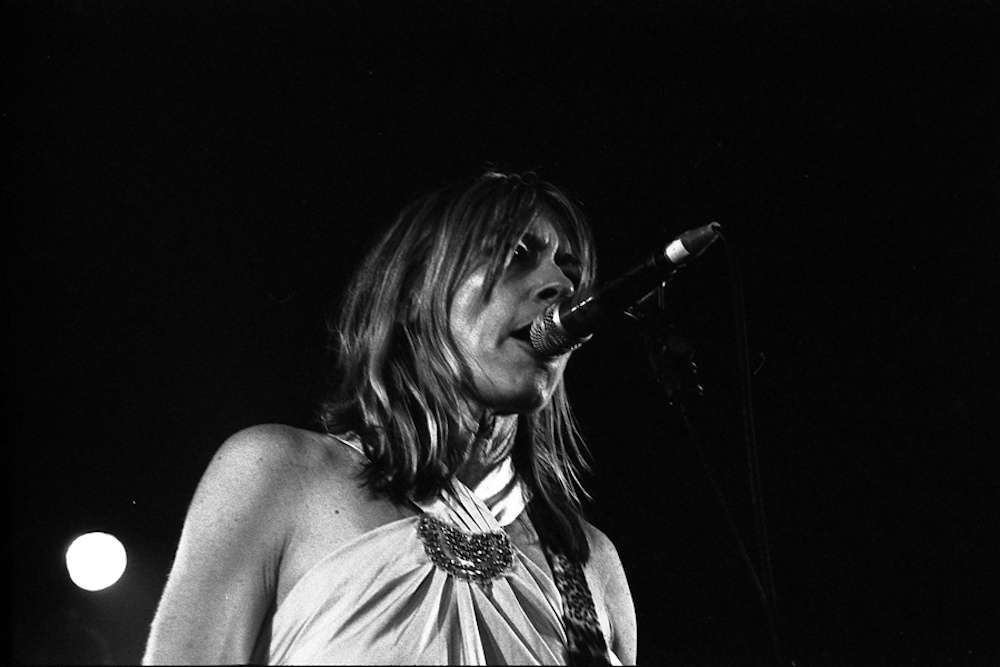
    Former Sonic Youth bassist Kim Gordon told a story of getting nabbed by Disneyland security for smoking cannabis on Tom Sawyer’s Island in an interview with The Guardian ahead of the release of her solo album.

    Nabbed At Tom Sawyer’s Island

    According to Gordon, she and a friend lit up a joint on the pirate-themed island described by Disney as a “secret island hideaway,” when the security officers found them and hauled them off to “Disney jail”—a juvenile detention cell in a secret underground area beneath the park.

    There, the musician recalls seeing “Mickey Mouse with a walkie-talkie” and being sexually harassed by one of the guards who asked her if her mother knew she was “not wearing a bra.” During this harrowing experience, Gordon was less concerned about being caught with marijuana than she was about justice.

    “I was writing this paper in my head about Disneyland and how fascist it was,” Gordon said, having been in a political science class at the time. “It confirmed my beliefs about American consumerism… Consumerism is killing us.”

    Gordon is no stranger to political discourse, having been a part of the famous punk band Sonic Youth for 30 years, playing songs like “Youth Against Fascism” and “Peace Attack.” In a 2016 interview with Billboard, she expressed her distaste for then-presidential candidate Donald Trump’s campaign slogan and what it meant for the country.

    “And now, with Trump saying ‘Make America Great Again,’ no one ever asked him what that means,” she said. “When was America great to you? The decay of Detroit and the auto industry.”

    Aside from some early weed-smoking, Gordon didn’t have the same struggles with drugs that many musicians face, at least not publicly. She spent her time outside of the band acting, creating visual art, producing records, and dabbling in the fashion industry.

    Solo Album

    Her debut solo album No Home Record comes out on October 11 after she spent much of the eight years since Sonic Youth broke up in 2011 focusing on her career as a visual artist, which she always preferred to making music.

    “Playing bass was never my desire,” she said to The Guardian. “It was a byproduct of wanting to make something exciting.”

    Making art in a male-dominated field hasn’t been easy for her, however.

    “There’s some unseen wall of faceless men that I have to climb over,” she said, “as if on a mission.”

    The new album also explores political topics, including the “end of capitalism,” sexual harassment, Donald Trump, and forgiveness.

    View the original article at thefix.com

  • Oregon To Vote On Legalizing Shrooms, Decriminalizing All Drugs

    Oregon To Vote On Legalizing Shrooms, Decriminalizing All Drugs

    The Psilocybin Service Initiative of Oregon (PSI 2020) would allow residents to legally access psilocybin-assisted therapy.

    Oregon voters will soon decide on two major drug reform ballot measures that could result in the biggest changes to any state’s drug policies since Colorado and Washington state legalized cannabis in 2012.

    One measure would legalize psychedelic mushrooms, commonly referred to as “shrooms” or “magic mushrooms,” and another would decriminalize all drugs within the state.

    Oregon In Unique Position For Decriminalization

    According to Vice reporter Jon Walker, a combination of factors that make Oregon unique are responsible for the fact that total drug decriminalization is possible anywhere in the U.S. in 2020.

    “There is no single reason the state is so well-positioned to be a laboratory for drug reform,” Walker writes. “Instead, imagine a vast, multi-layered Venn diagram including public health needs, quirks of local history, unique funding opportunities, costs, arcane ballot access rules, demographics, and politics.”

    So far, only the cities of Denver and Oakland have decriminalized shrooms. The Psilocybin Service Initiative of Oregon (PSI 2020) would allow residents to legally access psilocybin-assisted therapy, which has been increasingly tested as a remedy for a number of mental illnesses including treatment-resistant depression and PTSD.

    Psilocybin is the active ingredient in shrooms and is a naturally occurring psychedelic that can produce sensory hallucinations and intensify states of emotion.

    “We see this not only as a template for Oregon but for the rest of the country and the world,” said Sheri Eckert, a PSI 2020 petitioner. 

    “We feel that Oregonians are ready to take an innovative approach to mental health care and the problem of addictions, because the current modalities and delivery systems have proven inadequate,” added Eckert’s husband, Tom.

    Policy Modeled After Portugal

    At the same time, the 2020 Drug Addiction Treatment and Recovery Act (DATRA) is on its way to the ballot. This bill is modeled after drug policy reform in Portugal, where all low-level possession of drugs has been decriminalized and funding is funneled away from law enforcement and into addiction treatment programs.

    After passing this sweeping drug reform in 2001, Portugal saw its rates of problem drug use, HIV and hepatitis infection, overdose deaths, and drug-related crime plummet.

    According to chief DATRA petitioner Anthony Johnson, in spite of Oregon’s progressive history of drug policy reform, much more work needs to be done.

    “Oregon ranks 50th in the country in access to drug addiction treatment, and I’m hopeful about the prospect of redirecting a portion of cannabis tax revenue so that everyone struggling with addiction can have access to the treatment services they need,” said Johnson to Marijuana Moment.

    View the original article at thefix.com

  • Safe Injection Site In Philadelphia Ruled Federally Legal By Judge

    Safe Injection Site In Philadelphia Ruled Federally Legal By Judge

    The ruling goes against the wishes of the US Justice Department, which sued to stop the facility from opening.

    A federal judge has ruled that a planned supervised injection site, where individuals can go to use illicit drugs safely under medical supervision, does not violate U.S. federal law. This has opened the door for the city of Philadelphia, where the facility in question would be located, to host the first legal safe injection site in the country.

    “Crackhouse Statute” Does Not Apply

    According to the Philadelphia Inquirer, U.S. District Judge Gerald A. McHugh ruled on Wednesday that a 30-year-old law created to address what was commonly referred to as “crack houses” does not apply to the safe injection site proposed by the non-profit organization Safehouse.

    “The ultimate goal of Safehouse’s proposed operation is to reduce drug use, not facilitate it,” McHugh wrote in the document explaining his decision.

    The ruling goes against the wishes of the U.S. Justice Department, which sued to stop the facility from opening. The government argued that the drugs that would be used are dangerous and the act of using them is illegal.

    “This is in-your-face illegal activity using some of the most deadly, dangerous drugs that are on the streets. We have a responsibility to step in,” said U.S. attorney for the Eastern District of Pennsylvania William McSwain in February. “It’s saying, ‘Safehouse, we think this is illegal. Stop what you’re doing.’”

    Saving Lives, Not Encouraging Drug Use

    However, the Safehouse lawyers have argued that the purpose of a safe injection site, also referred to as overdose prevention sites, is to save lives and encourage the individuals who frequent it to get into addiction treatment.

    “I dispute the idea that we’re inviting people for drug use. We’re inviting people to stay to be proximal to medical support,” said Ilana Eisenstein, chief attorney for Safehouse, in September.

    Multiple studies on safe injection sites, including those that have opened across Europe and in Canada, show that they reduce the number of overdose deaths in the area without resulting in an increase in overall illicit drug use.

    They also lessen the spread of dangerous viruses such as HIV and hepatitis by offering clean needles and a place to safely dispose of used ones. These successes have led the American Medical Association to endorse the bringing of these sites to the U.S. However, the Justice Department is determined to continue the fight.

    “The Department of Justice remains committed to preventing illegal drug injection sites from opening,” said McSwain. “Today’s opinion is merely the first step in a much longer legal process that will play out. This case is obviously far from over.”

    View the original article at thefix.com

  • Bam Margera Sent To Hospital Because Of Bipolar Meds

    Bam Margera Sent To Hospital Because Of Bipolar Meds

    Margera took to Instagram to clarify the reasons behind his hospital visits.

    Former Jackass star Bam Margera was reportedly hospitalized twice in one week after a fall that he says was caused by side effects from a new medication for his bipolar disorder.

    According to the reality star, he was sleepwalking when he fell and hit his head, resulting in a laceration that required six staples. 

    According to unCrazed, he suffered a kick to the wound while playing in the pool with his son, sending him back to the hospital. “I got karate kicked in a pool in the neck surgery playing with Phoenix with community kids by accident,” he said.

    Margera was unable to remember the name of the medication he was given, saying that it “starts with a Z” in an Instagram video he made to dispel rumors that his trips to the hospital meant that he was once again using drugs. 

    “I am in treatment in Huntington Beach,” he explained. “I’ve been in treatment for a long, long time, and I’m gonna be here for a longer, longer time. And I’m gonna miss all of autumn in Pennsylvania.”

    In & Out Of Treatment

    Margera has been in and out of rehab for most of 2019, most recently agreeing to enter treatment after an intervention staged by his wife and talk show host Dr. Phil. He appeared to have left the rehab facility and may have been intoxicated in a video taken in August that showed the troubled celebrity refusing to leave a hotel lobby after allegedly harassing bar patrons, claiming someone had paid him to catch one of them cheating.

    After the police were called, Margera was arrested and taken back to the rehab facility, where he was allowed to return after agreeing to commit to the program.

    He appears to have stayed out of trouble since then. He was in the news in September, but only for an appearance on Dr. Phil in which he opened up about his mental health and credited his son, Phoenix, for keeping him from ending his life.

    Baring All To Dr. Phil

    “I had such a mental breakdown that I really thought like I… could just go to the lake and be free,” he said. “I was like the pain was gone and I had to beg for pain back. I was like, ‘Please just give me back my pain so I could stay because I want to be with him.’”

    Phoenix turns two in December, and Bam has only good things to say about him.

    “He is the raddest kid ever,” he told Dr. Phil. “He’s so interested in skateboarding. I have all these toys everywhere and he just goes right to the skateboard. He’s like my best friend and I’ve known him for not even two years.”

    View the original article at thefix.com

  • 10 Dead In 26 Hours From Overdose In Ohio, Fentanyl Suspected

    10 Dead In 26 Hours From Overdose In Ohio, Fentanyl Suspected

    Ohio has experienced multiple mass overdose cases in past few months, with six dead in a single day in August and nine people dead in 48 hours in July.

    At least 10 people died of drug overdoses in a period of 26 hours in Ohio, according to medical officials. This high number within a short time frame has the Franklin County Coroner’s Office suspecting the involvement of fentanyl, the synthetic opioid that is 50 times more potent than heroin and is often mixed with other drugs to make them more powerful.

    “As of about 10 a.m. this morning we have had 10 people die of overdoses in about 26 hours. This is an unusually high number for our county in this period of time,” the coroner’s office said in a statement. “At this time we know fentanyl can be mixed into cocaine and methamphetamine. These can be deadly combinations for those who are using.”

    According to ABC News, Ohio has been hit particularly hard by the national opioid epidemic. They have experienced multiple mass overdose cases in past few months, with six dead in a single day in August and nine people dead in 48 hours in July.

    The statement about this latest rash of overdose deaths was posted on Facebook by Franklin County Coroner Dr. Anahi Ortiz. The coroner urged those with loved ones who use illicit drugs to carry naloxone, the medication that blocks opioid receptors in the brain and reverses an overdose. She also encouraged those who use risky drugs to take advantage of fentanyl testing strips.

    Fentanyl-Related Overdose Deaths Rise

    Batches of drugs tainted with fentanyl are considered to be largely responsible for the alarming increases in overdose deaths in recent years. Thankfully, many areas are seeing these numbers level off from 2017 to 2018, likely due to widespread efforts to make naloxone available to the public and educate people on how to administer the lifesaving drug.

    Funding for these efforts has also increased substantially in the past couple of years.

    Earlier this month, the Trump administration announced that it will be allocating a new wave of funding to fight the opioid crisis, with senior officials saying that the Department of Health and Human Services (HHS) will be getting an extra $1.8 billion for that purpose.

    First Drop In Overdose Deaths Announced

    “Our country is seeing the first drop in overdose deaths in more than two decades, more Americans are getting treatment for addiction, and lives are being saved,” said HHS Secretary Alex Azar. “At the same time, we are still far from declaring victory. We will continue executing on the Department’s 5-Point strategy for combating the opioid crisis, and laying the foundation for a healthcare system where every American can access the mental healthcare they need.”

    View the original article at thefix.com

  • Sitting Presidents Have Biggest Influence Over Public Cannabis Approval

    Sitting Presidents Have Biggest Influence Over Public Cannabis Approval

    Some believe that if a Democrat takes office in 2020, federal cannabis legalization will soon follow, as all major candidates support the issue.

    recent study found that the sitting U.S. president has a high level of influence over public perceptions around cannabis and whether the substance should be legalized on a state or federal level.

    The study, published in the journal Defiant Behavior, looked at “the relationship between the president and Americans’ attitudes toward marijuana legalization from 1975 through 2016” using data from the General Social Survey and the American Presidency Project,

    “Findings indicate that confidence in the executive branch, fear of crime, and presidential drug rhetoric predict attitudes toward legalization despite controls for other factors such as estimated levels of marijuana use and arrests,” write study authors Dr. Richard J. Stringer and Professor Scott R. Maggard. 

    Shifting Attitudes Toward Marijuana 

    Over the past decade, presidential attitudes toward the Schedule I drug have shifted from “just say no” to the current president, who has expressed a desire to leave the legalization and regulation of cannabis up to the states and focus the energy of the Justice Department elsewhere, following in the footsteps of former President Barack Obama.

    Trump reiterated this stance as recently as late August, after he was asked by a reporter whether the drug would be federally legalized while he was in office.

    “We’re going to see what’s going on. It’s a very big subject and right now we are allowing states to make that decision,” Trump said at the press briefing. “A lot of states are making that decision, but we’re allowing states to make that decision.”

    According to Marijuana Moment, the study on presidential influence over public attitudes toward cannabis found that for every percent increase in the number of words about drugs in a president’s State of the Union address, odds of favoring legalization decrease by 6%.

    At the same time, those who have high confidence in the administration “correlated with 29% decrease in supporting legalization.”

    As of October 2018, 62% of the U.S. population favored federal cannabis legalization.

    Saying No To “Just Say No”

    The data examined by researchers starts with the administration of former President Gerald Ford, who was more moderate on marijuana than his predecessor, Richard Nixon, who launched the failed “war on drugs.”

    However, Ford’s presidency did not result in much change to federal drug policy. The Reagan administration then launched the famous “Just Say No” campaign, resulting in a 27% drop in public support for cannabis.

    It’s largely expected that if a Democratic candidate takes the Oval Office in 2020, federal cannabis legalization will soon follow, as all major candidates have expressed support for this action.

    View the original article at thefix.com