Tag: mental health advocate

  • Taraji P. Henson Reveals Depression, Anxiety Battle

    Taraji P. Henson Reveals Depression, Anxiety Battle

    “When they yell ‘Cut’ and ‘That’s a wrap,’ I go home to very serious problems. I’m still a real human,” Henson said.

    Academy Award-winning actress Taraji P. Henson has opened up to Variety about her battle with depression and anxiety.

    ”I suffer from depression,” the Empire actress revealed. “My anxiety is kicking up even more every day, and I’ve never really dealt with anxiety like that. It’s something new.”

    Henson has had a prolific and successful career in Hollywood, but she admits that while the lives of the rich and famous may appear to be filled with non-stop glamour, they also deal with real-world problems. 

    “I think there’s a misconception with people in the limelight that we have it all together, and because we have money now and are living out our dreams, everything is fine. That’s not the case,” Henson explains. “When they yell ‘Cut’ and ‘That’s a wrap,’ I go home to very serious problems. I’m still a real human.”

    Last year, she launched a new foundation to help raise awareness for mental health in the African American community.

    ”We’re walking around broken, wounded and hurt, and we don’t think it’s OK to talk about it,” she says. “We don’t talk about it at home. It’s shunned. It’s something that makes you look weak. We’re told to pray it away. Everyone was always asking me, ‘Do you have a charity?’ Well, dammit, this is going to be my calling, because I’m sick of this. People are killing themselves. People are numbing out on drugs. Not everything is fixed with a pill.”

    As Inside Philanthropy reports, the organization is called the Boris Lawrence Henson Foundation, and Taraji named it after her late father. In a statement, the organization explained, “Silence for Black people must end. We want to provide a safe environment for African-Americans to discuss their concerns in a space where they will not be persecuted or misunderstood.”

    Henson was inspired to launch this foundation because of her father’s struggles with mental illness. Boris Henson was a veteran of the Vietnam War, and he suffered from alcoholism and PTSD.

    As Henson explains, “My dad fought in the Vietnam War for our country, returned broken, and received little to know physical or emotional support. I stand in his absence, committed to offering support to African Americans who face trauma daily, simply because they’re black.”

    One of the goals of the Boris Lawrence Henson Foundation is to provide more mental health support for African-American youths, as well as provide backing for re-entry programs for people coming out of prison. The Foundation also wants to increase the presence of African-Americans in the mental healthcare field in the hope that it will encourage more African-Americans to get the mental health help they need.

    The Foundation’s website reports, “One in five Americans suffer from mental illness. African-Americans are the least likely population to seek treatment. We were taught to hold our problems close to the vest out of fear of being labeled and further demonized as inept, weak, and / or inadequate. African-Americans also have a history of being misdiagnosed, so there is mistrust associated with therapy.”

    As the Foundation statement continues, “People trust who they know and what they know. Having an African-American or culturally competent therapist gives way to the idea of opening up.”

    Henson explains, “My white friends have standing appointments with their therapists. I was like, ‘Why aren’t we doing that?’ In our culture, it’s taboo.”

    Henson also had personal traumas of her own that inspired the launch of her foundation, including the murder of her son’s father. Henson and her son both went into therapy, and she hopes her presence will encourage more people to get help themselves.

    As she explained to the Chicago Sun Times, “I think people feel safe when they see someone they look up to, and can go, ‘Oh wow. She’s just like me!’ We’re all humans. And we’re all in this thing called life, together. I’m trying to use my platform to do some good. If you know someone or if you are someone suffering from mental illness, just know you are not alone.”

    View the original article at thefix.com

  • Lady Gaga Addresses Mental Health During Grammy Speech

    Lady Gaga Addresses Mental Health During Grammy Speech

    Gaga highlighted mental health during an acceptance speech at the 2019 Grammys. 

    Mental health awareness is something that has always been close to Lady Gaga’s heart. 

    In fact, while accepting a Grammy for her co-performance of the song “Shallow” in the film A Star Is Born, Gaga took the opportunity to speak to the importance of looking out for one another. 

    “If I don’t get another chance to say this, I just want to say I’m so proud to be a part of a movie that addresses mental health issues. They’re so important,” Gaga said, according to Harper’s Bazaar. “A lot of artists deal with that. And we gotta take care of each other. So if you see somebody that’s hurting, don’t look away. And if you’re hurting, even though it might be hard, try to find that bravery within yourself to dive deep and go tell somebody and take them up in your head with you.”

    Gaga also took a moment to acknowledge Bradley Cooper, her co-star in the film, who was not present at the awards show.

    “I wish Bradley was here with me right now,” she said. “I know he wants to be here. Bradley, I loved singing this song with you.”

    This was not the first time Gaga has taken to the stage and spoke about mental health awareness. In November, according to Harper’s Bazaar, she spoke at the Patron of the Artists Award about the necessity of bringing mental health conversation to the forefront. 

    “When I speak about mental health, especially when I’m speaking about mine, it is often met with quietness,” she said. “Or maybe, a somber line of fans, waiting outside to whisper to me in the shadows about their darkest secrets. We need to bring mental health into the light.”

    In October 2018, Gaga was named one of ELLE’s Women in Hollywood. During her acceptance speech, she touched on various serious topics, including her experience with sexual assault. 

    “As a sexual assault survivor by someone in the entertainment industry, as a woman who is still not brave enough to say his name, as a woman who lives with chronic pain, as a woman who was conditioned at a very young age to listen to what men told me to do, I decided today I wanted to take the power back,” Gaga said during her speech, according to ELLE.  

    Gaga also addressed mental health during the same speech, stressing the importance of coming together. 

    “It is my personal dream that there would be a mental health expert teacher or therapist in every school in this nation and hopefully one day around the world,” Gaga added. “Let’s lift our voices. I know we are, but let’s get louder. And not just as women. But as humans.”

    View the original article at thefix.com

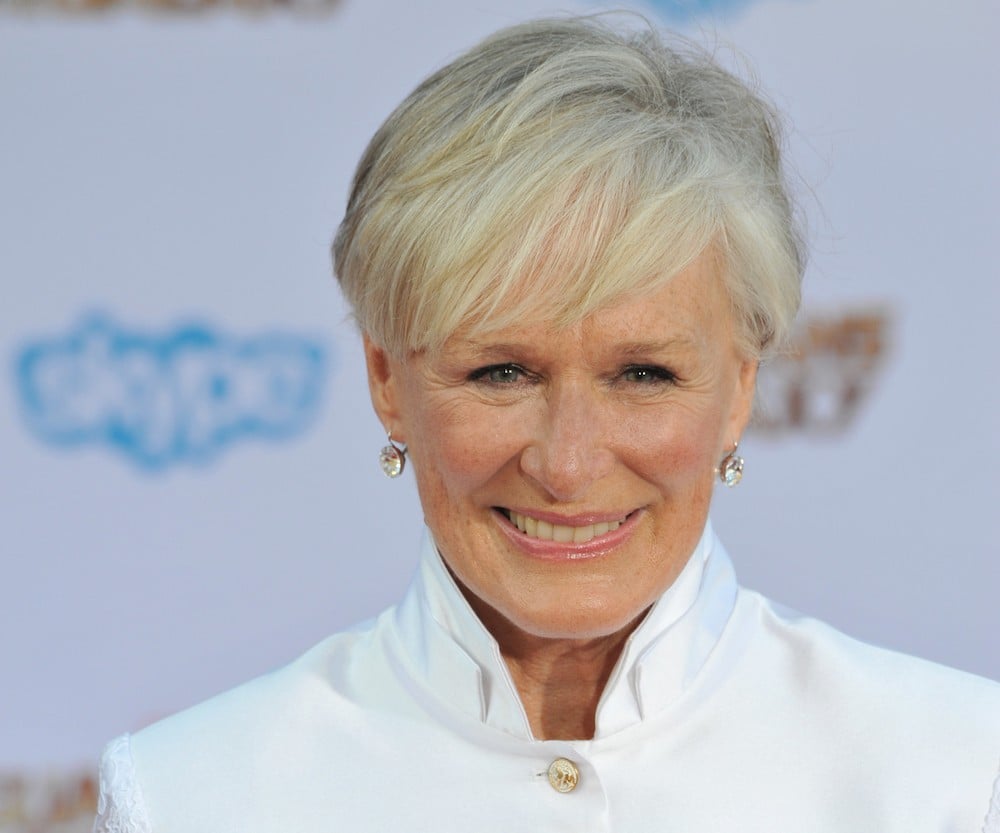
  • Glenn Close Discusses Mental Health Stigma

    Glenn Close Discusses Mental Health Stigma

    The “Damages” actress spoke about the stigma surrounding those with mental health issues during a recent lecture. 

    Golden Globe winner and vocal mental health advocate Glenn Close took another opportunity to speak on the dangers of stigma against mental illness during a recent lecture in central Ohio.

    The renowned actress was invited to speak as part of the Jefferson Series, described as “a collection of stimulating forums featuring some of the world’s most compelling and esteemed thinkers” that takes place in New Albany, Ohio each year.

    During her lecture, Close talked about mental illness in her family and about her book Resilience: Two Sisters and a Story of Mental Illness. Her sister, Jessie Close, has bipolar disorder and Glenn Close herself has dealt with depression at times throughout her life.

    However, due largely to stigma against mental illness and a silence around the issue within their family, Jessie remained undiagnosed until the age of 50.

    According to a CBS interview from March 2018, Glenn Close was alarmed to discover how often those with bipolar disorder die by suicide and realized that she could have easily lost her sister.

    According to an analysis published in the US National Library of Medicine, researchers have found that anywhere from 25 to 60% of people with bipolar disorder have a history of attempting suicide. In the general adult population in the US, the rate of attempted suicide is 0.5%.

    These revelations led the two Close sisters to establish the anti-stigma foundation Bring Change 2 Mind in 2010. Glenn Close has since used her fame to speak out against the stigma surrounding mental illness that kept her family quiet on the issue for so long.

    “I come from a family that had no vocabulary for mental illness,” Close wrote in 2016. “Toxic stigma and the social mores of the time made any conversation about possible mental health issues taboo. The lack of conversation was very costly.”

    In addition to the sisters’ illnesses, Jessie Close’s son, Calen, has schizophrenia and spent two years in a hospital for those with mental health issues.

    In her recent lecture, Close encouraged people to examine their own attitudes around mental illness that might be preventing them from seeking help or offering help to a struggling family member.

    “You have to examine yourself to see whether you have any kind of stigma that’s just been inadvertently fed into you and then realize your family member can lead a viable life,” she said. “You can have a life, but you have to get help. And the sooner you get help, the better your life will be.”

    View the original article at thefix.com

  • Taraji P Henson Talks Breaking Mental Health Stigma, Therapy

    Taraji P Henson Talks Breaking Mental Health Stigma, Therapy

    “I go home to problems just like everybody else. I’m here to tell you, I have a therapist. I probably need to see her more often.”

    Actress Taraji P. Henson is continuing her campaign to create dialogue about mental health in the black community.

    In a recent appearance on GMA Day, Henson got personal with some strong words about mental health. “When I go to set and you see me as Cookie and they yell ‘Cut,’ I go home to problems just like everybody else. I’m here to tell you, I have a therapist. I probably need to see her more often,” she said on the morning show.

    In August, the Empire actress launched the Boris Lawrence Henson Foundation (BLHF) in honor of her late father. “My dad fought in the Vietnam War for our country, returned broken, and received little to no physical and emotional support,” Henson said at the time. “”I stand now in his absence, committed to offering support to African Americans who face trauma daily, simply because they are black.”

    Through her foundation, the actress is targeting the African American community specifically to eradicate the stigma around mental health issues, hoping to break the silence and encourage the community to be open about their struggles.

    “Why aren’t we embarrassed to talk about our thyroid problem but we’re embarrassed to talk about our mental [health]? As far as African Americans, we don’t include that in total health care and that’s a problem,” said Henson.

    The three main goals of the BLHF are to provide mental health support in urban schools, increase the number of African American mental health professionals, and reduce the prison recidivism rate.

    “We need psychologists in urban schools. These kids are coming to school every day trying to learn and they’re coming from really traumatic situations at home,” Henson said on GMA Day.

    By increasing the number of black mental health professionals in the US, and having a presence in schools, BLHF is hoping to build trust between the black community and mental health professionals.

    “You have to understand the culture,” said Henson. “If you go into a therapist session and you’re looking at the person and you feel like, ‘I can’t say this. What would they think about me if I say this?’ Then we’re not getting any work done.”

    Another barrier to mental health support in the black community is the perception of weakness. “We’re told to pray [mental illness] away. We’re told that it’s a weakness or we’re demonized because we express these feelings that have been bottled up for so long,” said Henson.

    By attacking the stigma with a multi-faceted approach, Henson is hoping to break the silence, and the cycle, of mental illness.

    View the original article at thefix.com