Tag: mental health treatment

  • Is There A Link Between Gun Violence And Mental Health?

    Is There A Link Between Gun Violence And Mental Health?

    A new study found that a history of mental illness had no significant association with gun violence.

    A study by the University of Texas found that access to firearms, high hostility levels, and impulsiveness made people more likely to engage in gun violence, while mental illness did not.

    The study appears to have been motivated by a “public, political, and media narrative that mental health is at the root of gun violence,” and the results look to have soundly debunked that narrative which some have worried will increase stigma against those with psychological disorders.

    Dr. Yu Lu and Dr. Jeff R. Temple interviewed 663 “emerging adults” and found that those with access to firearms were 18.15 times more likely to have threatened someone with a gun in their lifetimes than those without. While this might seem like a predictable result, they also found that a history of mental illness had no significant association with gun violence or carrying a gun in public.

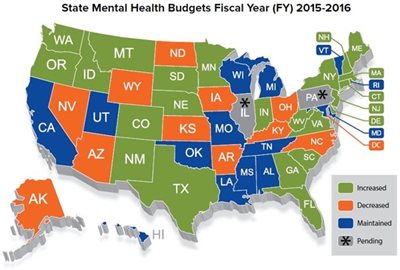
    Source: Wikimedia Commons

    Additionally, people who were found to have “high hostility” were 3.51 times more likely to have threatened someone with a firearm, and those with high impulsivity were 1.91 times more likely than others to have carried a gun outside of the home.

    The psychological disorders named in the study included depression, anxiety, PTSD, and borderline personality disorder. They also included stress, impulsivity, and hostility as symptoms of mental health issues, but Lu and Temple still concluded that it is access to firearms, including gun ownership or other access, that creates the primary risk for violence.

    “Counter to public beliefs, the majority of mental health symptoms examined were not related to gun violence. Instead, access to firearms was the primary culprit,” they wrote. “The findings have important implications for gun control policy efforts.”

    Gun violence in the U.S. continues to be a major problem, accounting for an average of 30,000 to 40,000 deaths each year. Depending on the definition of mass shooting, by some accounts there was a mass shooting in the U.S. nearly every day in 2018.

    When a shooting is severe enough to make it into national news, the issue of whether gun violence is caused by a lack of gun control or by mental illness is often raised.

    The University of Texas study describes this as a question of “dangerous people” versus “dangerous weapon.” Lu and Temple point out that research on links between mental illness and gun violence is lacking and often limited to those with severe disorders or mentally ill individuals who have already been arrested for violent crime.

    This may have been the first study in the U.S. to look at “the temporal association between gun violence and mental health symptoms,” according to the study’s conclusion. Lu and Temple also noted that the sample size, the focus on emerging adults, and the inclusion of only some of the many psychological disorders and related symptoms were possible limitations for this study.

    As always, further research into the issue of gun violence in the U.S. will provide greater insights into the likely causes of this growing problem.

    View the original article at thefix.com

  • Justin Bieber Reportedly Getting Treatment For Depression

    Justin Bieber Reportedly Getting Treatment For Depression

    A source close to Bieber says the singer is “confident he will feel better soon.”

    Justin Bieber has been struggling with depression and is seeking treatment, according to sources close to the star. These sources tell Elle that the pop star been “down and tired. He has been struggling a bit.”

    Bieber’s career began when he was 13 years old.

    “He started off as a typical sweet, Canadian teen,” a source said. “He was such a great kid, honestly super sweet and very polite and nice to everyone around him. Having this huge amount of fame completely changed him. He had access to anything and everything and was surrounded by people who just said ‘Yes.’”

    The sources were quick to dispel any allegations that this bout of depression has anything to do with his new marriage to model Hailey Baldwin.

    “It has nothing to do with Hailey—he is very happy being married to her,” said the source. “It’s just something else that he struggles with mentally. He has good help around him and is receiving some treatment. He seems confident he will feel better soon.”

    Bieber’s grappling with fame from an early age manifested in his acting out, the singer said in a recent interview in Vogue. “I started really feeling myself too much. People love me, I’m the shit—that’s honestly what I thought. I got very arrogant and cocky,” he said. “I found myself doing things that I was so ashamed of, being super-promiscuous and stuff, and I think I used Xanax because I was so ashamed.”

    He gained particular attention when he was arrested in 2014 for a DUI, where he was racing his red Lamborghini in a residential area while drunk. The arresting officers noted Bieber “was not cooperating with the officer’s instructions” and smelled strongly of alcohol.

    “At first, he was a little belligerent, using some choice words questioning why he was being stopped and why the officer was even questioning him,” said Miami Beach Police Chief Raymond Martinez.

    More recently, Bieber has admitted to abusing Xanax to distance himself from his “legitimate problem” with promiscuity.

    All this is a result of being in the public eye since he was young, say those close to him.

    “He’s emotional and struggles a lot with the idea of fame—being followed, having his every move stalked by fans, cameras in his face,” said the source. “It all sets him off and he often feels like everyone is out to get him.”

    Bieber also ended his Purpose tour early last summer, stating that he needed some time for himself.

    “I got really depressed on tour,” Bieber told Vogue. “I haven’t talked about this, and I’m still processing so much stuff that I haven’t talked about. I was lonely. I needed some time.”

    View the original article at thefix.com

  • Can SSRIs Interfere With Opioid Pain Relief?

    Can SSRIs Interfere With Opioid Pain Relief?

    A new study examined whether patients who were on SSRIs received less pain relief from certain opioids.

    SSRIs—the most common type of antidepressant—can make some opioid pain relievers less effective, exposing patients to higher levels of pain, according to a new study. 

    For the study, published in the journal PLOS ONE, researchers examined medical records of 4,300 patients who underwent a major operating room procedure at a medical center between 2009 and 2016. They found that patients who were on SSRIs and who received a certain type of opioid had less pain relief following their operations. 

    To understand the study, it’s important to note that opioids come in two varieties, according to NPR. Direct opioids, including morphine and OxyContin, begin working as soon as they are administered. Prodrugs, which include Vicodin and hydrocodone, have to be broken down in the liver before they can begin relieving pain. 

    SSRIs interrupt this process. This is because they affect a liver enzyme that is needed to break down prodrugs. With less of the enzyme breaking down drugs, the pain relief is less effective. 

    “There was theoretical evidence that suggested SSRIs might block prodrug opioids, but we didn’t know if it actually affected patient outcomes,” said Tina Hernandez-Boussard, who authored the study. 

    People on SSRIs who were prescribed prodrug opioids were in more pain up to two months after their procedure. 

    Because SSRIs and opioids are some of the most common prescriptions in the country, the study could have widespread implications for how pain is handled, said Jenny Wilkerson, a professor who teaches pharmacodynamics at the University of Florida.

    “This is an important study,” she said, before calling for additional research. 

    People who get less effective pain relief from opioids are likely to take more pills, which “could lead to misuse or abuse down the road,” Hernandez-Boussard said. 

    “If the opioids aren’t being activated and you’re not getting appropriate pain management, you’re going to take more opioids and you’re going to take them for a longer period of time,” she said. 

    One way around this would be to prescribe direct-acting opioids to patients on SSRIs. 

    “Every opioid has a side effect, not one opioid that is better than another. Possibly for patients taking SSRI, morphine or oxycodone, direct-acting drugs which don’t need to be broken down by the liver might be a better choice,” Hernandez-Boussard said. 

    Wilkerson said that patients should be confident in advocating for themselves when it comes to effective pain relief. 

    “Patients shouldn’t feel stigmatized for being depressed or in pain. Patients have to advocate for their best personal care.”

    However, Hernandez-Boussard acknowledged that this can be difficult for people who are depressed. Instead, she believes the medical community should work to better understand the interaction of SSRIs and opioids. 

    She said, “We need to think about how we can tailor treatment towards more vulnerable groups. More work needs to be done, but this is a good first step.”

    View the original article at thefix.com

  • Evan Rachel Wood Gets Candid About Psychiatric Hospital Stint At 22

    Evan Rachel Wood Gets Candid About Psychiatric Hospital Stint At 22

    The Westworld actress penned a powerful testimony about her time at a psychiatric hospital for Nylon magazine.

    Evan Rachel Wood first broke through in the movie Thirteen, where she played a troubled teenager. Wood is currently starring on the hit sci-fi show Westworld, and now she’s revealed to Nylon that she checked into a psychiatric hospital when she was 22 years old.

    Wood wrote about her experiences in an essay, where she states, “When I was 22, I willingly checked myself into a psychiatric hospital, and I have absolutely no shame about it. Looking back, it was the worst, best thing that ever happened to me.”

    Wood realized she needed help after a suicide attempt. In the morning, she called her mother: “Mom? It’s me…I just tried to kill myself…I need to go to a hospital.”

    At the time, Wood was more worried about how her mother would take her cry for help.

    “This is how much I worried about others and not myself,” she says today. “I had almost died, but the guilt and responsibility I felt toward others was so extreme.”

    Wood says, “I had collapsed under the stress and pressure of being alive.” She was suffering from PTSD, which she says was the result of suffering “multiple rapes and a severely abusive relationship that went on for years.”

    Her mother asked her why she took what could have been a final step, and Wood told her, “I just wanted some peace.”

    After some searching, Wood found a facility and checked in. She paid “a significant amount of money” for her hospital stay, and she says, “Mental health shouldn’t be a luxury for the rich. It felt like I barely made it by the skin of my teeth – and I am privileged. Imagine how hard it is with no health insurance or money or resources?”

    Wood had seen movies that dealt with mental illness like Girl, Interrupted and One Flew Over the Cuckoo’s Nest, yet she thankfully realized getting help didn’t fit this Hollywood stereotype.

    After several days of rest, she finally opened up to fellow patients and would later participate in group therapy. Once she started interacting with her fellow patients, she discovered, “…We were incredibly loving and empathetic to each other, even when we disagreed or someone lost their shit. We forgave, very easily.”

    Looking back on this event, Wood says it was “the first time in my entire life” she “asked for help. I admitted I could not go on without someone intervening, to pick me back up off the floor.”

    Wood is still in therapy, and admitted, “I still struggle with PTSD, but I know that I will get through it. I have better tools now to get through what seems like the impossible times, and most importantly, I know my worth.”

    Wood writes, “There is no economic class, race, sexuality, or gender that is safe from their own mind. We know success doesn’t cure depression, we know that people telling you they love you doesn’t cure depression, we know that just thinking positively doesn’t cure depression. Depression isn’t weakness, it’s a sickness. Sometimes a deadly one. And sometimes all people need is to know that they are loved and that others are there for them. They may not take your hand right away, but knowing it’s there could save their life one day. Or who knows, you might help save your own.”

    If you or someone you know may be at risk for suicide, immediately seek help. You are not alone.

    Options include:

    Calling the U.S. National Suicide Prevention Hotline at 800-273-TALK (8255)

    Calling 911

    Calling a friend or family member to stay with you until emergency medical personnel arrive to help you.

    View the original article at thefix.com

  • Mental Health Care Access Remains An Obstacle For Inmates

    Mental Health Care Access Remains An Obstacle For Inmates

    Across the country, facilities are struggling to provide the care needed for inmates with mental health issues.

    For inmates like Ashoor Rasho, who has been diagnosed with severe depression, schizophrenia and borderline personality disorder, seeking help for mental health issues while incarcerated proves difficult. 

    “Even if they would label us schizophrenic or bipolar, we would still be considered behavioral problems,” Rasho tells NPR. “So the only best thing for them to do was keep us isolated. Or they heavily medicate you.”

    Rasho’s sentence, according to NPR, was extended numerous times due to him assaulting prison staff after being set off by various triggers. 

    In 2007, Rasho was among 12,000 other inmates who sued the Illinois Department of Corrections for not adequately treating those with mental health diagnoses, and instead punishing them.

    In 2016, the case reached a settlement and the state decided to re-assess and improve its mental health care. 

    Even so, NPR reports that a federal judge maintains that such care is still “grossly insufficient” and “extremely poor.” 

    The issue isn’t just in Illinois. Across the country, correctional facilities are struggling to provide the care needed for inmates with mental health issues. State and federal prison data from 2011 through 2012 indicated that about 40% of inmates have been diagnosed with a mental health disorder, yet only about half of those were received medication or counseling. 

    In Illinois specifically, providing adequate care has been a central area of struggle.

    “Corrections in Illinois was a little slow to recognize we are the mental health system for Illinois,” John Baldwin, director of the state’s corrections department, tells NPR. “Whether we want to be or not, we are; and we have to start acting like it.”

    According to Baldwin, change is in motion. He says that since he started in his position in 2015, more mental health staff has been hired and training has been implemented. He says most of the state’s inmates spend about eight hours per day outside their cells and see a therapist weekly.

    He also notes that around 765 of the inmates with the most serious diagnoses have been moved to a residential facility for treatment.

    The Joliet Treatment Center, located southwest of Chicago, is one of the prison facilities making strides in such care. A few years back, the prior youth detention center underwent a $17 million renovation to become the current mental health treatment facility for inmates. 

    Warden Andrea Tack tells NPR that inmates at Joliet dedicate about 30 hours weekly to activities and individual treatment plans. 

    Alan Mills, one of the attorneys from the 2007 lawsuit, says he has witnessed some transformations in inmates in such facilities. 

    “And it’s a difficult transition,” he tells NPR, “because you’ve been treated in a place where you’re continually traumatized, and then you get to a place where actually people care about you.”

    View the original article at thefix.com

  • Man's Emotional Support Alligator Raises Eyebrows

    Man's Emotional Support Alligator Raises Eyebrows

    The man said that staying close with the alligator has helped him stay off of prescriptions for his depression. 

    For most people, being in close company with a five-foot-long alligator would be the opposite of comforting. But when Joie Henney feels symptoms of depression coming on, he snuggles up with Wally, his emotional support alligator.

    “I had Wally, and when I came home and was around him, it was all OK,” Henney told Philly.com. “My doctor knew about Wally and figured it works, so why not?”

    The doctor certified Wally as an emotional support alligator, likely the first of his kind. 

    Henney, who hosted a wildlife show on ESPN from 1989 to 2000, says he is familiar with dealing with wild animals and is aware that the alligator could hurt him. He rescued Wally when the alligator was 14 months old, and the alligator now spends time in an indoor pool, snacking on chicken wings and comforting Henney when he’s feeling down.

    Henney said that staying close with Wally has helped him stay off of prescriptions for his depression. “He comforted me,” Henney said. “I got over my depression.”

    Henney first realized that Wally could help him feel better when he went through a series of sudden losses of friends and family. “I lost three in a week, two in less than 24 hours. I was laying down one day, he literally crawled up on the cot with me and laid his head on top of my face.”

    At just four years old, Wally is still growing. He’s could be 16-feet long one day, but Henney insists their relationship will endure. 

    “He likes to give hugs,” by resting his snout on Henney’s face, the owner explained. 

    Wally makes public appearances with Henney, and Henney insists that he’s not that unusual from more traditional pets. “He’s just like a dog,” Henney said at one event. “He wants to be loved and petted.”

    Henney said he isn’t the only one who has benefitted from Wally’s attention. “He is registered as my emotional support animal, but he has done a lot for others.”

    Henney has even used Wally to help raise money for a child with autism.

    But despite the feel-good aspects of Henney and Wally’s connection, many people question whether the use of emotional support animals has gone overboard.

    Getting an animal certified as an emotional support animals can allow the animal to come into public places, but some people say that the proliferation of emotional support animals is undermining the role of guide dogs and others trained to help people with medical conditions.  

    View the original article at thefix.com

  • Addiction or Mental Illness: Which Should You Treat First?

    Addiction or Mental Illness: Which Should You Treat First?

    Substance use can alter behaviors, moods, and personalities so severely for people with addiction that without specialized knowledge and experience, it’s difficult to determine underlying causes such as mental illness or trauma.

    I credit psychological intervention for pushing me into recovery from alcoholism.

    Addiction is a mental illness, but is it one that needs to be treated before anything else? Or should we be stopping people from hitting their addiction bottom and helping them recover from their comorbid conditions concurrently?

    What Is Addiction?

    Before we can discuss treatment, we need to understand what addiction is and how it is defined. The two major guidelines for diagnosing mental health conditions around the world are the DSM and the ICD. The DSM (Diagnostic and Statistical Manual of Mental Disorders) is the standard diagnostic tool for mental health conditions in the United States and often used in North America. The ICD (International Classification of Diseases) is endorsed by the World Health Organization and often used in Europe.

    In the DSM-5, substance abuse and substance dependence are combined under the same name of substance use disorder, which is diagnosed on a continuum. Each substance has its own sub-category, but behavioral addiction is also in the DSM-5, with gambling disorder listed as a diagnosable condition. Other similar entries, such as internet gaming disorder, are listed as needing further research before being formally added as a diagnosis. In the ICD-11 there is a subset of mood disorders called “substance-induced mood disorders,” which are conditions caused by substance use. To qualify for this category, one must not have experienced the mood disorder symptoms prior to substance use.

    Hypothetically, a person who has alcohol-induced mood disorder might find health with abstinence alone, but substance use disorders do not occur in a vacuum and no one can go through the experience of addiction without it altering their mind and body, sometimes irreversibly. With enough time, substance-induced disorders change the function of the brain and alter emotion regulation. That doesn’t mean that addiction will cause another mental disorder; addiction is a mental disorder.

    Not everyone with an addiction is concurrently experiencing another mental disorder. Substance use can alter behaviors, moods, and personalities so severely for people who are addicted that without specialized knowledge and experience, it’s difficult to determine what, if any, underlying cause is responsible for the changes. Drugs, even those that are prescribed and used as directed, can have side effects that seem to mimic the symptoms of other diagnosable conditions. These effects can also appear if a person is in withdrawal. Because of this inability to isolate co-occurring conditions, there was a time when it was popular for doctors and clinicians to first treat substance use disorders before exploring the possibility of other mental illnesses. That is no longer considered the best approach to care.

    My Story: Therapy Helped Me Recognize My Alcoholism

    I started therapy before I could realize my excessive drinking was actually alcoholism. I was riddled with anxiety and constantly on edge. I lied compulsively about the most unnecessary and mundane things. My partner helped me start therapy, calling the first point of contact for me and taking me to my first two appointments, and then patiently waiting outside for me. He wasn’t enabling me by keeping me from hitting bottom, he was supporting me and protecting me in a loving way; in a way that worked.

    In the early days of therapy, my psychologist gently guided me towards recognizing my alcohol use as problematic. My therapist convinced me to go to a psychiatrist who started me on antidepressants and gave me anti-anxiety medication to use when needed. My treatment was moving forward, but I was still drinking. I spent most therapy sessions crying, but my ability to live day to day was slowly changing.

    I was Googling local 12-step meetings while hungover and then deleting my search history while drinking. I was taking my medications but still getting drunk on the regular. I had to do some work on my crippling anxiety and debilitating depression to get to the point that I could even fathom walking into a new space with new people. I drank because alcohol made it easier to have fun and to talk to people. I was living with undiagnosed post-traumatic stress disorder (PTSD) and alcohol worked to calm symptoms like hyperarousal and insomnia. I was using alcohol to cope with issues that my shame wanted to keep buried and my therapy wanted to draw forth. It took nearly nine months of therapy before I quit drinking.

    Once I was able to cross that threshold, things really began to change for me. My medication was able to work as intended because I wasn’t combining it with other mood-altering substances, and my therapeutic work could go deeper because I wasn’t self-medicating with alcohol. I gained tools to manage my mental health challenges. My alcoholism treatment has gone so well because I have concurrently received care for my comorbid conditions.

    Integrated Treatment

    That’s just one personal story of recovery and successful treatment of co-occurring mental illnesses. But it turns out that’s actually the best treatment: individualized integrated care. In the book The Anatomy of Addiction, Dr. Akikur Mohammad writes that the “best approach to treating a dual diagnosis…is…integrating mental health and addiction treatment in a single, comprehensive program designed to meet the individual needs of the specific patient.” How do we determine a patient’s needs? According to Dr. Mohammad, “the best diagnostic instrument is the clinician’s experience in treating addiction.”

    How many times have you heard the adage: “You have to let an addict hit bottom”? If you take a seat in any 12-step recovery meeting, you’ll likely hear someone speaking about their own experience hitting bottom. The idea is that one must reach a point of complete and utter desperation before being able to start recovery. Being desperate enough to change because your life is wretchedly entwined with addiction makes for a good story, but waiting to fall into such desperation doesn’t make for a solid treatment plan. The evidence base supports this view, but people don’t necessarily believe it.

    Generally, public views about drug addiction are incongruent with current medical knowledge on the disease. A 2014 study that surveyed over 700 adults across the country found that the majority of Americans hold stigmatized views. Forty-three percent of those surveyed said they oppose giving people with drug addiction equivalent insurance benefits compared to 21 percent who believe the same about those with mental illness. Half of all respondents were against increased government spending for treatment of drug addiction, compared to 33 percent for mental illness. About a third of folks don’t believe recovery is even possible for someone with either a drug addiction or a mental illness. And the number of people who believe that treatment options are not effective? Fifty-nine percent for drug addiction and 41 percent for mental illness.

    Consequences of Discrimination Against People with SUD

    These public opinions have real world consequences. They translate into low support for policies that could provide equal insurance coverage and policies that could allocate government funds into public health programs to improve the success rate of (and access to) evidence-based treatment. Drug addiction or substance use disorder (SUD) is a mental illness, but in the United States it’s treated as distinct from mental illness as a whole.

    Did I hit bottom? In retrospect, I find solace in the narrative that I hit “my” bottom. That’s the problem with the notion of rock bottom, it is a storytelling plot point that can only be defined in hindsight. Not even the precepts of Alcoholics Anonymous (the original peer support program that all 12-step groups are derived from) says that a person needs to hit rock bottom. According to the 12 Traditions, which are the general guidelines for 12-step groups, “The only requirement for membership is a desire to stop [fill in behavior or addiction here].”

    One thing is undeniable: people with real or perceived substance use and/or mental disorders face discrimination and an uphill battle to a healthier life. Everyone is different, and different treatment plans will have different outcomes for different people. Relying on one method of recovery for all people is irresponsible, illogical, and ineffective.

    View the original article at thefix.com

  • For Millennials, Accessing Mental Health Care Is A Major Issue

    For Millennials, Accessing Mental Health Care Is A Major Issue

    The high cost of mental health care and a lack of mental health availability make it harder for millennials in need.

    Aishia Correll, 27, grew up in a world where therapy was not an option. So, when the Philadelphia woman began struggling with her mental health, she turned to painting instead. 

    But now, Correll tells The Bristol Herald Courier, she is a health care strategist and is working to increase access and affordability for mental health care, especially for millennials, women of color and the LGBTQIA community – all of whom are in desperate need of increased access.

    According to a 2018 survey by the American Psychological Association, millennials and Generation Z are at a higher likelihood of rating their mental health as fair or poor in comparison to other generations. In the same survey, millennials were found to have the highest stress levels of all generations. 

    However, the survey also revealed that millennials and other young adults were more likely to seek out professional mental health care than older generations. In fact, over one-third of millennials and Generation Z said they were receiving treatment or therapy from a mental health professional.

    The Bristol Herald Courier also reports that since 2014, millennials have continually reported the highest stress levels. In Philadelphia specifically, one barrier to treatment is not having health insurance. According to a Pew report from 2014, 22% of those ages 18-34 in Philadelphia had no health insurance. 

    Jennifer Schwartz, inaugural director of Drexel University’s Psychological Services Center and an associate professor in the department of psychology, tells The Bristol Herald Courier that without insurance, therapy can cost anywhere from $75 to $200 for one session.

    At Drexel, Schwartz states, patients are offered a sliding scale price that is based on income, and services are provided by doctoral students.

    “We have a large demand for our services, bigger than we could possibly provide,” Schwartz said. “We do get people who call us and are upset by the lack of services that they’ve been able to locate and access.”

    According to executive director of the Black Women’s Health Alliance, Brenda Shelton-Dunston, this issue is even bigger for millennial women of color.

    “There is a void in mental-health availability and access to mental-health prevention and support services for women of color in Philadelphia,” she told The Herald Courier.

    According to Correll, one solution could be services focused on millennials and located in the right areas. 

    In the meantime, she is continuing to turn to art as a means of therapy and is hoping to provide a space for others to do the same through her creation of a “healing” art gallery in North Philadelphia. 

    “I didn’t see that my family had a place like that,” she said. “I want to make sure I have a place like that.”

    View the original article at thefix.com
  • Parents Give Up Custody Of Adopted Kids To Get Them Mental Health Help

    Parents Give Up Custody Of Adopted Kids To Get Them Mental Health Help

    “To this day, it is the most gut-wrenching thing I’ve ever had to do in my life,” said one parent who gave up custody of his child.

    Every year, adoptive parents find themselves with no choice other than to give up custody of their mentally ill children to the state. This issue is outlined in a recent profile done by NPR about a family that was torn apart because the state of Illinois failed to provide the care they were supposed to give to an adopted child. 

    Daniel Hoy endured severe neglect as an infant before he was adopted by Toni and Jim Hoy when he was still a baby. In spite of a happy childhood, Daniel began to exhibit signs of severe mental illness after he entered the public school system at age 10. He began to experience bouts of violent behavior, attacking classmates and his siblings due to his severe anxiety and PTSD.

    When intensive inpatient care was recommended, the Hoys’ health insurance company denied coverage for the $100,000 per year treatment plan. Although states are supposed to cover mental health treatment for any children adopted through the government, Illinois also denied the family coverage for the desperately needed program.

    Eventually, after Daniel threw his brother down the stairs, state authorities gave Toni and Jim an ultimatum. They could either take Daniel home and be charged with child endangerment the next time he harmed one of his siblings or leave him in the hospital, lose custody and be charged with neglect.

    If Daniel was in the custody of the state of Illinois, the government would be forced to give him the recommended $100,000 treatment. Desperate and out of options, Toni and Jim abandoned their little boy. 

    “To this day, it is the most gut-wrenching thing I’ve ever had to do in my life,” Jim told NPR. “. . . I was crying terribly. . . . But it was the only way we figured we could keep the family safe.”

    The Hoys had to sue the state of Illinois in order to force them to cover the treatment, but by the time he was back in the family, he was 15 years old. 

    This has been a problem for thousands of other families across the US who find that the child they adopted has mental health issues. A study by the Government Accountability Office published in 2003 found that there are around 12,000 cases like this each year. More recent figures are not available as only one third of US states keep track of how many kids are given up in order to ensure they get proper mental health care.

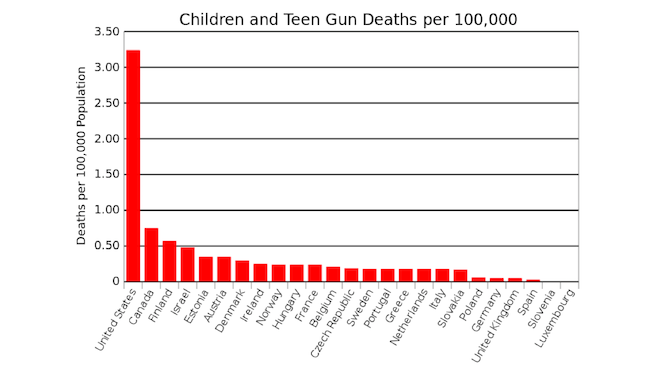
    According to mental health experts, the care these kids do get is often too little, too late. Unfortunately, state mental health services are often woefully underfunded by the federal government, and even less goes into preventative care and early intervention.

    Source: NAMI

    Early intervention is important. Children with severe mental illnesses who receive prompt intensive care tend to fare much better than those who have to wait due to money issues or a simple lack of programs in the area.

    “The research has shown that the earlier we can intervene, particularly with evidence-based interventions, the better outcomes we see later on,” said New York psychologist Danielle Rannazzisi, PhD. “The early years of childhood lay a foundation for future academic, social, emotional, and behavioral success.”

    Many states were forced to make severe cuts to mental health services during the recession of 2007 to 2009. That funding never recovered, and funding for mental health has been cut further under the Trump administration. Without that funding, states can’t afford to provide the care needed by kids like Daniel.

    View the original article at thefix.com

  • Can Music Therapy Help Ease Anxiety For Pregnant Women?

    Can Music Therapy Help Ease Anxiety For Pregnant Women?

    Researchers examined whether music could work as a tool to help calm symptoms of anxiety in pregnant women.

    With four prior miscarriages, 42-year-old Elizabeth Larsen of Huntley, Ill., struggled with severe anxiety during her pregnancy. But Larsen says she found relief through music therapy, in which music is used to improve health.

    New research indicates that mothers with anxiety during pregnancy, like Larsen, can benefit from such therapy.

    “I wanted to find wellness tools to ensure that my baby and I would have a safe and wonderful birth,” Larsen told The Washington Post. “Music therapy opened up my bodily senses and helped me to relax.” Recently, researchers studied music and mental health during pregnancy. There were 409 participants, all in their third trimester of pregnancy.

    None had a history of anxiety. Of the group, half underwent music therapy where they listened to a relaxing CD three times per week. The other half of the group did not do so. Upon completion of the study, researchers found that those who had taken part in music therapy were overall less anxious than the other group.

    “During pregnancy, fears and anxieties about the health of the baby are very common. Many of the women in our study were anxious about the stress test, an ultrasound that examines the health of the baby,” lead researcher Jessica Garcia-Gonzalez told the Post.

    She added that the study indicates that “anxiety during pregnancy can increase a woman’s risk of postnatal anxiety and depression, but music therapy can help reduce stress.”

    According to Postpartum Support International, anxiety and depression before and after a child’s birth are not rare. The organization says about 6% of pregnant women and 10% of new mothers struggle with anxiety, and about 15% of women grapple with depression after a child is born.

    Karen Kleiman, a psychotherapist who specializes in maternal mental health, told the Post that it is vital for mothers and pregnant women to seek treatment for such issues. “Anxiety is associated with prenatal health concerns like preeclampsia, preterm delivery, and low-birth weight, which is why it’s important for women to learn coping strategies to minimize their worries during pregnancy,” she said.

    As a board-certified music therapist and birth doula, Kate Taylor told the Post she often provides music therapy for her clients. “I use music as a teaching tool,” she said. “We might analyze song lyrics or listen to instruments or music that can aid in relaxation. Songs can bring up intense emotions for women, which can help them connect with the baby, and openly share their worries and feelings about motherhood.”

    For Larsen, music therapy resulted in a more calming pregnancy overall. “During our sessions, we listened to the acoustic guitar,” she told the Post. “At home, I listened to relaxing music on my headphones. The music calmed my anxiety, which helped me stay positive.”

    View the original article at thefix.com