Tag: mental health treatment

  • #MyFavoriteMeds Hashtag Fights Psychiatric Medication Stigma

    #MyFavoriteMeds Hashtag Fights Psychiatric Medication Stigma

    People who rely on medication to keep their mental health in check sometimes experience judgment from others, but this social media movement is trying to change that.

    People who take pills for their mental health sometimes are chastised for pumping themselves full of unnatural chemicals in a last-ditch effort to hold themselves together.

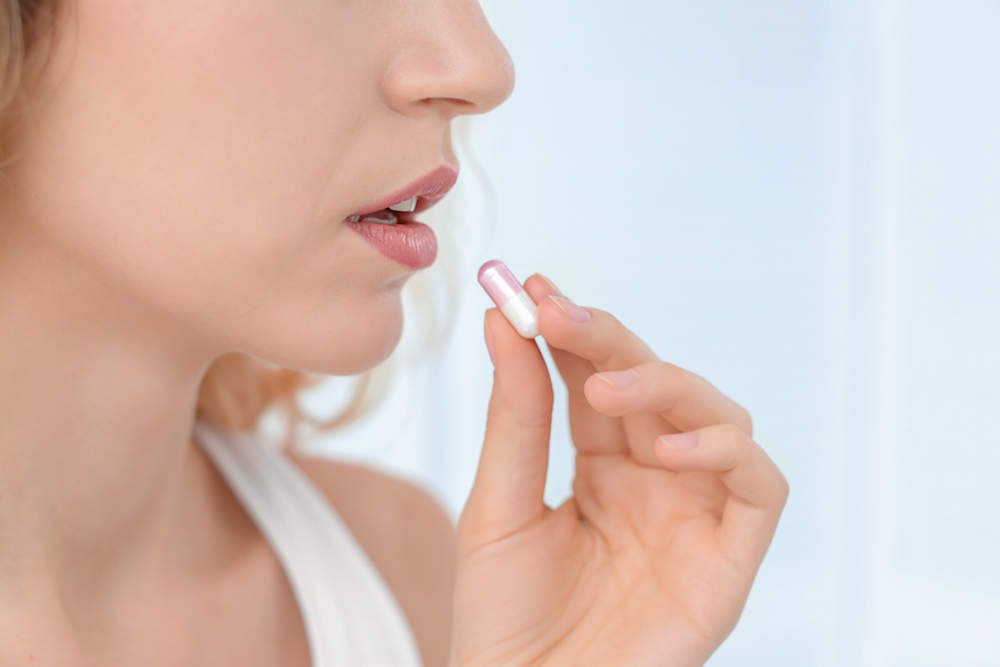
    In truth, the pills can save those who take them. It’s yet another facet of mental health stigma that needs fighting, and the Instagram hashtag #MyFavoriteMeds is doing its part by giving users the opportunity to reflect on the positive impact these medications have had on their lives.

    The hashtag was started by Jen Gotch, who hosts a podcast about mental health called Jen Gotch is OK… Sometimes, after she posted a photo of a pill sitting in her open palm. Fellow podcaster Georgia Hardstark, who co-hosts My Favorite Murder, followed suit and posted a photo of her own hand full of the mental health pills she takes. 

    “Good morning from my crew. (Effexor & Wellbutrin) Inspired by @jengotch,” Hardstark captioned her post. “Show me yours, hashtag #myfavoritemeds (credit to @graceisgold). #hardstarking”

    Fans of the MFM podcast picked up on the hashtag and the movement took off. With the hashtag taking over in an online public space, Gotch and Hardstark hope to make others who also rely on such drugs feel safe to speak about it. Otherwise, those who really need these medications may hesitate to seek out a prescription because they feel ashamed and alone.

    “Taking medication for mental health has always been a normal thing amongst my family and friends, so I sometimes forget that it’s a taboo subject for so many people,” Hardstark told Bustle. “As soon as I saw Jen Gotch’s post showing her medication it hit me what a simple but powerful message it was to just say ‘I need a little help and I’m not ashamed of it.’”

    The “little help” the medications provide isn’t the whole solution, but it can be a critical component of some mental health treatment plans.

    “Medication is not a cure all. It’s important to have a holistic approach to your personal and mental wellness,” said Gotch. “But for those of us that suffer and are committed to doing everything we can to feel good, it is a vital part of the equation. Treating your mental illness is a major responsibility that should be approached with self awareness, emotional intelligence, knowledge, and qualified professional help.”

    The #MyFavoriteMeds hashtaggers want to push the message that medications aren’t a last ditch, desperate attempt to treat mental health issues by a weak person but an equally viable treatment used in tandem with therapies and lifestyle changes.

    “I think it’s important to let people know that having your shit together isn’t an easy thing, and attempting to make your life better through pharmaceuticals is something that demonstrates self-care, not weakness,” Hardstark shared. “I’ve read so many of the posts from the hashtag and it just fills me with hope, which is hard to come by these days.”

    Lately, many high-profile people with platforms have spoken out about their own struggles to fight the stigma that surrounds mental health. Ellen DeGeneres recently spoke about her fight with depression on the podcast Armchair Expert. Comedian Pete Davidson also has been candid about his own issues, and rapper Lil Xan publicly shared that he was going to rehab.


    View the original article at thefix.com

  • Can Internet-Based Therapy Effectively Treat Depression?

    Can Internet-Based Therapy Effectively Treat Depression?

    Scientists investigated whether internet-based platforms that offer treatment for depression were actually effective. 

    Technology may soon have a larger role in treating severe depression, as new research has determined that cognitive behavioral therapy sessions via an app can be effective.

    Cognitive behavioral therapy, according to Medical News Today, is a type of therapy that works to change people’s thought patterns over time. When delivered via an app, it is referred to as internet-based CBT or iCBT. 

    In the past, it has been deemed effective for depression, anxiety and panic disorder, bipolar, substance use disorders and various other mental health disorders. 

    However, until recently, it was unknown whether iCBT was effective for severe depression or for those struggling with both depression and anxiety/alcohol use disorder. 

    According to Lorenzo Lorenzo-Luaces, a clinical professor in the Department of Psychological and Brain Sciences at Indiana University in Bloomington and lead study author, iCBT is effective in such cases. 

    Lorenzo-Luaces says the criteria for major depressive disorder is met by about one in four people.

    “If you include people with minor depression or who have been depressed for a week or a month with a few symptoms, the number grows, exceeding the number of psychologists who can serve them,” he told Medical News Today.

    In the study, Lorenzo-Luaces and his team analyzed 21 existing studies and determined that iCBT apps were, in fact, effective for treating mild, moderate and severe levels of depression.

    Many of the existing studies compared iCBT apps to “sham apps,” or apps that are meant to make weaker recommendations to their users. In these cases, the iCBT apps were far more effective for users. 

    “Before this study, I thought past studies were probably focused on people with very mild depression, those who did not have other mental health problems and were at low risk for suicide,” Lorenzo-Luaces said.


    “To my surprise, that was not the case,” he added. “The science suggests that these apps and platforms can help a large number of people.”

    Even so, Lorenzo-Luaces says it’s important that people don’t interpret this evidence as a reason to stop taking a medication and rely solely on iCBT.

    In conclusion, Lorenzo-Luaces and his team note that iCBT is on par with other treatment methods for severe depression.

    “A conservative interpretation of our findings is that the patient population sampled in the literature on self-guided iCBT is relatively comparable with that of studies of antidepressants or face-to-face psychotherapy.”

    View the original article at thefix.com

  • Inadequate Mental Health Treatment Hinders Massachusetts Residents

    Inadequate Mental Health Treatment Hinders Massachusetts Residents

    Only about 50% of Massachusetts mental health providers accept payment from the state and federal Medicaid program. Private insurance isn’t much better.

    Patients in Massachusetts are struggling to receive adequate mental health care but not because of lack of insurance coverage. 

    The Boston Globe reports that based on a new Blue Cross Blue Shield of Massachusetts Foundation survey of 2,201 residents, more than half recently sought mental health or substance use disorder treatment but had difficulty receiving such treatment.

    Of those surveyed, 39% went without treatment altogether and about 13% resorted to an emergency room visit even though about half of those admitted that their care was not an emergency. 

    Though insured, the majority of patients struggled to find care because certain providers did not take their insurance or because practices were not accepting new clients at the time. 

    In October, the Globe reported that Massachusetts was home to more mental health care providers per capita than any other US state. It also has more psychiatrists than any other state, with the exception of Washington, DC, and more child psychiatrists than all states but Rhode Island and DC. 

    Even so, residents of the state are struggling. According to The Globe, only about 50% of Massachusetts providers accept payment from the state and federal Medicaid program. And private insurance isn’t much better, as only about half the psychiatrists in the Northeast accept it. 

    Audrey Shelto, president of the foundation that conducted the survey, told The Globe that this was the first time since the survey began a decade ago that it asked about mental health and substance use disorder treatment access.  

    “If change is going to happen at the magnitude that’s needed, it’s going to be necessary that we start building a more solid evidence base,” Shelto said.

    According to Shelto and others in the field, one possible solution would be paying psychiatrists, psychologists and social workers more, because private insurers and Medicaid currently do not pay them enough. Those in the practice also spend a great deal of time on applications for insurance networks as well as paperwork for patient treatment. 

    According to The Globe, Health and Human Services has stated that between 2016 and 2020, Medicaid is increasing fees to mental health providers by $100 million. 

    But Vic DiGravio, president of the Association for Behavioral Healthcare in Natick, told The Globe this isn’t enough to convince more providers to join the program. 

    DiGravio adds that access to prescribers such as psychiatrists are one of the biggest battles being faced currently. 

    “For a clinic to have a doctor on staff to see patients on a regular basis, the rates don’t cover their time,” he said.

    View the original article at thefix.com

  • Mental Health Specialists Strike Over Staffing, Resource Issues At Kaiser Permanente

    Mental Health Specialists Strike Over Staffing, Resource Issues At Kaiser Permanente

    Approximately 4,000 mental health specialists are expected to strike over Kaiser Permanente’s lack of mental health staff and resources in California.

    Thousands of mental health workers began a five-day strike on December 10, 2018 to protest what they view as shortages in patient resources at Kaiser Permanente facilities across California.

    Approximately 4,000 psychologists, therapists, nurses and addiction specialists are expected to picket the non-profit HMO’s medical centers in Sacramento, Modesto, Stockton and other locations in an attempt to demand increased staffing for mental health patients, whom the union claims often have to wait more than a month for appointments due to a lack of medical professionals.

    Kaiser Permanente condemned the strike as “disheartening,” especially at the holidays, when patients may need more mental health assistance.

    The strike was organized by the National Union of Healthcare Workers (NUHW), which has reportedly been locked in conflict with Kaiser for years. At the heart of the union’s concerns is what they described in a statement as a “long history of forcing patients to endure extensive waits for therapy appointments.”

    The union cited a 2013 fine imposed on Kaiser by the California Department of Managed Health Care (DHMC) for violating the state’s Mental Health Parity Act, which requires insurers to provide equal coverage for physical and mental health conditions and Timely Access to Care standards, which limits wait time for access to care. The statement also claimed that in 2017, the DHMC required Kaiser to accept outside monitoring of its mental health services.

    Though Kaiser patients can now see physicians within state-appointed timeframes, the union stated that many have to wait one month or more for a follow-up appointment. It also claimed that 1/3 of patients in Southern California are sent out of Kaiser’s network for therapy and must find quality, affordable treatment on their own while dealing with what the union said are serious mental health issues. Addressing these concerns would require the HMO to reduce follow-up wait times for appointments, the number of patients sent to non-Kaiser treatment and balance the number of returning patients to intake patients.

    “When you delay treatment appointments, it substantially delays recovery times, and it increases morbidity rates and mortality rates,” said Fred Seavey, the union’s research director, to USA Today. “It has huge implications for people’s lives . . . It has impacts on their incomes, their families and their relationships with loved ones.”

    In response to the union’s claims, Josh Nelson, vice president of communications at Kaiser, called the strike “completely unnecessary” and pointed to a 30% increase in the number of mental health professionals statewide since 2015 as evidence of its compliance with patient needs. “When necessary, we contract with community providers to further ensure its members have access to the care they need,” he added.

    A statement from Michelle Gaskill-Hames, chief nurse executive for Kaiser Permanente in Northern California, claimed that the strike was “particularly disheartening” during the holidays, “when many of our patients with mental health needs may be at their most vulnerable.” But Sonoma County Supervisor Shirlee Zane is galled by the notion that Kaiser would decry a five-day strike as harmful to patients.

    Zane’s husband struggled with anxiety and depression and sought treatment with Kaiser therapists in 2010. He was instead sent to an anxiety group and finally saw a therapist in late December of that year. After two appointments, the therapist told him that he was ineligible for a follow-up for two months. Three days later, Zane’s husband took his own life.

    Zane, who told USA Today that Kaiser asked her to remain neutral in the strike, said, “They’re making the point that somehow or other, this is irresponsible for therapists to leave their patients for five friggin’ days. They could put a patient on a five-week waiting list and not blink an eye, and then they’re worried about five days?

    “My husband’s dead, my kids don’t have a father, my grandkids don’t have a grandfather,” she said. “I’m glad these therapists are striking.”

    View the original article at thefix.com

  • Psychiatric Directives May Be A Game Changer For Mental Health Patients

    Psychiatric Directives May Be A Game Changer For Mental Health Patients

    Psychiatric advance directives give mental health patients a way to express ahead of time, when they are in a sound state of mind, how they would like to be treated during hospitalization or treatment.

    Steve Singer, who has bipolar and borderline personality disorders, knows that he sometimes needs to go to the hospital. However, he also knows that certain treatments from staff — like getting the police involved or keeping Singer in a locked room — can make his condition much worse, not better. 

    Because of this, Singer drafted a psychiatric advance directive, a document that is entered in his medical chart and dictates his wishes, even when he is unable to express them. 

    “That psychiatric advance directive, I think is so important,” he told The New York Times. “It allows me to turn things around.”

    For mentally ill patients and their families, hospitalization and treatment can be terrifying. While people are experiencing psychosis or other symptoms of mental illness they are often desperate for support, but certain treatments or medications can exacerbate the situation rather than calm it. 

    Psychiatric advance directives allow people with mental illness agency over how they are treated by giving them a means to express ahead of time, when they are in a sound state of mind, how they would like to be treated. The documents can cover issues such as which medications should be avoided, what words can help cut through psychosis or which family member can make decisions during crisis. The directives are added to a patient’s chart and should be followed as long as the conditions within meet the patient’s best interests. 

    This type of advance directive is authorized in 27 states and can be incorporated into different types of medical directives in other states. Now, the Substance Abuse and Mental Health Services Administration is considering ways to encourage directives, and Medicare and Medicaid are requiring hospitals to ask if patients have a directive. As awareness grows, clinics are being held around the country to help patients draft psychiatric advance directives.

    Effective directives “would enhance people receiving appropriate treatment,” said Dr. Mark Rapaport, chairman of psychiatry and behavioral sciences at Emory University. “But this is going to be really hard to do.”

    The directives need to be notarized and given to medical professionals or be logged in the state’s system. They also need to be realistic, requesting treatment that medical professionals can provide in a crisis. 

    Dr. Marvin Swartz, a Duke psychiatry professor, said that just the act of drafting a directive can be empowering for patients and improve their interactions with their health care team. He offered 239 patients the opportunity to write a directive and found that those who did had fewer crises and involuntary hospitalizations. 

    View the original article at thefix.com

  • Inside The Mental Health Crisis In Federal Prisons

    Inside The Mental Health Crisis In Federal Prisons

    At some federal prisons in the midst of a mental health crisis, the number of inmates receiving care has fallen by 80% in the past four years.

    Despite promises for better health care and oversight, the Federal Bureau of Prisons has dramatically cut the number of inmates on its mental health caseload, according to an investigation by the Marshall Project.

    In part, that’s because the prison system didn’t add more employees while officials promised more care, increasing the workload for the existing mental health staff without providing the resources to do it. 

    “The catchphrase in the bureau was ‘Do more with less,’” Russ Wood, a long-time federal prison psychologist, told the Marshall Project. “The psychologists were getting pulled off to work gun towers and do prisoner escorts. We’re not really devoted to treating.”

    As of February 2018, only 3% of federal prisoners were classified as mentally ill enough to need treatment. At some facilities, the number of inmates getting mental health care has fallen 80 or more percent in the past four years.

    Afterward, suicides and self-harm increased, data shows. Between 2015 and 2017 the figures for suicides, suicide attempts and self-injuries rose by nearly one-fifth. And, having fewer prisoners on the proper medication or receiving the care they need could have other effects on the prison system; the average monthly rate of prison assaults bumped up 16% between 2015 and 2016. 

    FCI Hazelton in West Virginia—the lock-up where Whitey Bulger was killed earlier this year—had among the largest decreases in mental health care treatment, accompanied by a sharp increase in the assault rate which rose from 29 per 5,000 inmates per month to 40 per 5,000 inmates per month. 

    In addition to failing to hire mental health providers, the federal prison system has come under scrutiny for reassigning non-security staff to cover for guards—who also face understaffing problems. Using a practice called augmentation, federal prisons routinely force teachers, medical workers, counselors and cooks to work as correctional officers, a USA Today investigation found earlier this year. 

    The paper reported on the problem two years ago, but since then it seems only to have gotten worse, according to prison workers. 

    “The problems have only escalated,” said Eric Young, president of the union for prison workers. “Some of the facilities are making those assignments every day to avoid paying overtime to corrections officers.”

    View the original article at thefix.com

  • Modest Mouse On Medical Marijuana For Mental Health

    Modest Mouse On Medical Marijuana For Mental Health

    “After taking the antidepressants, I started to realize cannabis was probably the better way to go,” Modest Mouse drummer Jeremiah Green says about his medical marijuana use.

    Some members of the band behind the album The Moon & Antarctica are turning to marijuana to help deal with anxiety.

    Jeremiah Green, the drummer of Modest Mouse, was forced to temporarily leave the band due to his depression. He’s been trying to treat it over the past few years with marijuana.

    “I went on antidepressants, and I got all manic and weird,” Green explains to High Times. “I just blew up one day. I was acting hella weird. I ended up in the hospital for six hours and realized pretty quick I didn’t want to be there.”

    Green never intended to quit the band, it just kind of happened that way, he says.

    “It basically took me a long time to call them because I was embarrassed,” Green confesses. “All of a sudden all of that happened, and within a week or so, I was off antidepressants and I figured out what the fuck had gone on. I got back to normal and was like, ‘Holy shit, I ruined my whole life basically.’ [Laughs] I sat around depressed for like a year. I didn’t do shit. Luckily, those guys were cool and got me back in the band.”

    Despite Green’s absence, the band moved forward with Benjamin Weikel in his place. With Weikel on the drummer’s stool, the band found commercial success in their 2004 album Good News for People Who Love Bad News. When Green finally did return, his bandmates weren’t sure what to expect.

    “It was a good opportunity for him to see if he wanted to be a part of the band,” said Modest Mouse frontman Isaac Brock.

    Things were rough with Green self-medicating with marijuana all the time.

    “When he got back, he was getting super-high all the time. He had normal-people weed-smoking abilities at that point. It was super-weird, because he’d be [drumming] super-slow or super-fast. It was never right. Then he got super-good at weed smoking, if that’s a thing—and I think it is,” Brock recalled. “Master-expert level is where he is now. He can walk on tight ropes and do trigonometry with it and shit. He’s always Jeremiah. I love the guy. Even when he was crazier than a shit-house rat, I had patience for it. His crazy was kind of interesting.”

    Nowadays, Green’s bandmates, including Brock and Tom Peloso, sometimes smoke with him. However, Green still does most of the smoking.

    “I smoke regularly,” Green said. “After taking the antidepressants, I started to realize cannabis was probably the better way to go. I’ve smoked for so long I don’t really get high anymore. I just sort of smoke on a low.”

    The band is currently on tour for their album Strangers to Ourselves.

    View the original article at thefix.com

  • State Of Mental Health In America "Still Quite Bleak," Report Says

    State Of Mental Health In America "Still Quite Bleak," Report Says

    New data shows “alarming increases in adult suicidal thoughts and major depression in youth.”

    Talking about mental health is becoming less taboo, but is this making a real difference? 

    According to a new report that offers a snapshot of mental health in the United States, overall the picture is “still quite bleak.”

    The annual State of Mental Health report, compiled by Mental Health America (MHA), saw encouraging trends since the release of the first report. These include slight decreases in the number of American adults who have mental health concerns (18.19% to 18.07%) or substance use problems (8.76% to 7.93%).

    However, according to president and CEO of MHA Paul Gionfriddo, the data shows “alarming increases in adult suicidal thoughts and major depression in youth.”

    An estimated 9.8 million adults experience suicidal thoughts—an increase of 200,000 people since 2017. And more than 2 million young people were diagnosed with severe major depression, according to the report.

    Overall, more than 24 million Americans living with mental health issues go untreated.

    “Despite mental health being something that more and more people are talking about—far too many people are still suffering. People are simply not receiving the treatment they need to live healthy and productive lives—and too many don’t see a way out,” said Gionfriddo in a press release.

    The MHA report ranked all 50 states and Washington, D.C. based on rates of mental health issues and access to treatment. Minnesota came out on top at #1, with Nevada ranked #51. States ranked higher were deemed to have lower prevalence of mental health issues and better access to treatment, while states ranked lower were deemed to have more mental health issues with less access to care.

    The report also studied the long-term impact of childhood trauma, and determined that youth affected by trauma are more likely to have problems at school such as missing school, being removed from classrooms, and struggling with schoolwork.

    Thus MHA “strongly supports” integrating mental health services in schools. Early intervention and education can prevent the development of more severe mental health problems and help kids deal with trauma.

    This year, New York became the first state to require mental health education across all grades. Virginia enacted a similar rule this year, requiring mental health education to be taught in the 9th and 10th grades.

    “When young people learn about mental health and that it is an important aspect of overall health and well-being, the likelihood increases they will be able to effectively recognize signs and symptoms in themselves and others will know where to turn for help—and it will decrease the stigma that attaches to help-seeking,” said NY’s Education Commissioner MaryEllen Elia.

    View the original article at thefix.com

  • Michelle Williams Talks Depression, Getting Treatment In New Interview

    Michelle Williams Talks Depression, Getting Treatment In New Interview

    “For months, I was slipping and slipping and slipping [and] before you knew it I was at the bottom of the pit looking up.”

    This past spring, Michelle Williams reunited with Beyoncé and Kelly Rowland for a Destiny’s Child reunion at Coachella. Not long after, Williams checked into the hospital to deal with her depression.

    Williams sat down with Good Morning America to give the world an update on her mental health.

    Williams appeared on the show with her fiancé, Chad Johnson. She told Robin Roberts, “I am just sitting here and fighting back tears. I’m just thankful to be here to tell this story.”

    Williams fought her depression as hard as she could, but she eventually realized she couldn’t do it without help.

    “I was like, ‘Just fight it, you’ve been here before. I’m identifying it… I just didn’t do enough,” she said. “So for months, I was slipping and slipping and slipping [and] before you knew it I was at the bottom of the pit looking up like, ‘Am I really here again?’ And I suffered by myself. I didn’t want to tell anybody.”

    Williams had struggled with depression since she was 13. “I didn’t want anyone to be like, ‘Oh my gosh, here we go again. I thought you were over it.’”

    Johnson knew something was wrong, but he confessed that he didn’t understand what was going on with Williams at first. “The relationship just seemed to be slipping out of my hands. I could see [her] spiraling, but I had no idea that it was depression.”

    Once Williams decided to get help, she announced on Instagram, “I recently listened to the same advice I have given to thousands around the world and sought help from a great team of healthcare professionals.” She also vowed to “always lead by example as I tirelessly advocate for the betterment of those in need.”

    As a celebrity in the public eye, Williams also wants to help reduce the stigma many have with mental health that often prevents them from getting treatment.

    “When I was in the mental health facility, I didn’t see anybody that looked crazy,” she says. “I didn’t see anybody strapped up, I didn’t see anybody doing crazy behavior. And literally since then, I watch my mouth. I don’t call people crazy anymore. Some people… they just need help.”

    View the original article at thefix.com

  • A Medication For Postpartum Depression?

    A Medication For Postpartum Depression?

    Currently, there are no FDA-approved drugs specifically to treat postpartum depression.

    The FDA is considering the approval of a new medication that would treat severe postpartum depression.

    While most women experience “baby blues” after childbirth, some experience more severe, longer-lasting symptoms, known as postpartum depression (PPD).

    Currently there are no FDA-approved drugs specifically to treat PPD. And data on the efficacy of existing antidepressants on PPD is limited.

    Brexanolone (brand name Zulresso) may change that, Fortune reports.

    How does brexanolone differ from existing antidepressants?

    Brexanolone mimics the functioning of the human hormone known as allopregnanolone. Allopregnanolone increases in a woman’s body during pregnancy and peaks during the third trimester. After delivery, however, levels of allopregnanolone fall abruptly, the FDA explains.

    Brexanolone, an injection, works to return women to pre-delivery levels of allopregnanolone. 

    Postpartum depression is considered a life-threatening condition because of the risk of suicide, the FDA says. “It also has profound negative effects on the maternal-infant bond and later infant development.”

    According to the FDA, suicide is the most common cause of maternal death after childbirth in the developed world. Approximately 12% of births are affected by PPD in the United States.

    Despite how many women experience PPD, some say it is not talked about enough.

    “I think people need to talk about it more because it’s almost like the fourth trimester, it’s part of the pregnancy,” said tennis champ Serena Williams, while sharing her own experience with PPD.

    “How can I feel this way when everything is so great? I’ve had a hard time coming to terms with that, and I hesitated to even talk about this,” said TV personality Chrissy Teigen.

    “I couldn’t figure out why I was so unhappy. I blamed it on being tired and possibly growing out of the role: ‘Maybe I’m just not a goofy person anymore. Maybe I’m just supposed to be a mom,’” the Lip Sync Battle host said.

    Symptoms of postpartum depression can arise within the first few weeks after giving birth. Some may begin earlier (during pregnancy) or later (up to a year after birth), according to Mayo Clinic.

    An FDA advisory committee voted 18-0 that Zulresso is effective in treating PPD—however, they mentioned “some reservations about the safety of home infusion,” Seeking Alpha reports.

    A decision by the FDA is expected by December 19.

    View the original article at thefix.com