Tag: mental health

  • When Love Is Not Enough: How We All Failed My Sister

    When Love Is Not Enough: How We All Failed My Sister

    These are the ugly, dark parts of mental illness and drug addiction that no one talks about, and by not talking about it, it stays hidden, and shameful, and powerful, and deadly.

    My sister had 765 “friends” on Facebook. I don’t think I even know that many people. But I can count on one hand how many of those friends came to visit my sister during her four-month hospital stay. So apparently they were friends, but not quite that close.

    I believe that if regret had a smell, it would be the smell of something burnt and visceral, and sharp in your nostrils. I think of that every time I listen to the last voicemail that my sister left me. It was so normal, absolutely nothing special about it, like the countless other messages we had left each other.

    “Hi baby girl, it’s me. Call me back. Love you.”

    Sometimes I listen to it just so that I can hear her voice, but often I find myself straining to hear something that I must have missed. Did she know that she was dying? Was there some sort of resolve in her voice? Or was that loneliness? But mostly what I hear is regret. Mine, of course, not hers. Because no matter how much I loved her, I couldn’t save her. I am painfully aware that I failed my sister. Sometimes I think that we all did.

    Malika and I were two years and 10 months apart, and about as different as two people carved from the same parents can be. She was always the pretty one, the free spirit, and she had the goofiest sense of humor. The boys simply didn’t see me when we were together—she shone that brightly—and we could fight like nobody’s business. But above all, she was amazing to me.

    My sister was diagnosed with bipolar disorder and schizophrenia in high school, which apparently is a common age for that to rear its ugly head. We both shared a sort of rebellious streak borne out of a sometimes-tumultuous home life and an ugly divorce between our parents, but she never really grew out of hers. She had a self-destructive side but it was always directed inwards—she never set out to hurt anyone but herself. I can see clearly now that for years, she was self-medicating.

    There were many times over the last few years that I had no way of getting hold of her. She often changed her phone number, and she and her boyfriend moved around a lot, either by choice or necessity. That was the thing about my sister: when she was healthy enough and able to be around people, she was great. Absolutely great. But often, and particularly in the last several years, when she didn’t want to be found, she went completely off the grid. I had heard rumors that at one point she was seen in the city begging for money for drugs. Another time I heard she was staying in the house we had grown up in while it was empty and in foreclosure.

    I ask myself all the time what I could have done differently, or what I should have done. But you cannot save someone who doesn’t want to be saved, and you certainly can’t force them to get help. If you give them money, you know where it’s going to end up, but do you do it anyway? I’ve been on both sides of this, and I know that you’re damned if you do and damned if you don’t. And when you don’t, they hate you and disappear again—proving that it was the only reason they resurfaced in the first place.

    I don’t even know how many times my sister tried rehab over the years. I do know that she tried. She had been in a day treatment program and was on methadone when she was admitted to the hospital last August. She was confused, bloated, and had no idea where or who she was, and she didn’t recognize me when I first came to see her. She had every drug you can think of in her bloodstream. They said that the confusion was caused by a bacterial abscess on her cervical spine just below her brain that had developed from repeated IV drug use with a dirty needle, and they started treating her on a wide spectrum of antibiotics. About a week in, she started coughing up blood and spiked a fever. Despite being on so many antibiotics, the infection in her bloodstream had attached itself to a valve in her heart, and every time her heart beat, it scattered more of the infection throughout her bloodstream. She slipped into a coma at that point and ran a fever that ended up lasting for weeks.

    Watching her go through that was a special kind of hell, wondering if she was ever going to wake up. She went in and out of consciousness and agitation as the doctors wrote things down like acute respiratory distress (ARDS), MRSA, MMSA, endocarditis, pneumonia, and acute pulmonary edema. All the while her fever kept climbing and I sat with her completely helpless, watching the numbers climb and her cooling blanket sweating into a puddle on the floor. Eventually they had to do a tracheostomy because she wasn’t breathing properly on her own.

    At the end of October, they finally managed to keep her fever below 100 degrees for a full 48-hour window and were able to take her into surgery to replace the heart valve that by now had been completely destroyed. The surgeon very kindly and very gently told me to prepare for the worst because even in a very healthy patient, open heart surgery brings significant risks. In Malika’s severely compromised state, the odds were not at all good that she’d wake up from surgery.

    But true to form and consistent with her defiant and rebellious spirit, she did. Amazingly, I began seeing my sister come back to me. Despite all the odds, she started to bounce back and gradually brought her spunky personality and wicked sense of humor with her. I’ll never forget the day I walked into her room and she simply smiled and said “Hi Shawn,” like it was no big deal. I remember that I actually stopped walking and that when I tried to speak, I was so caught off guard that it came out in a strangled sob; just that morning, she was finally improving enough that the doctors were able to take her trach out, and she was able to speak for the first time in I don’t even know how many weeks.

    I wish I could say at this point that her story became a fairy tale and she walked out of the hospital and into a brand new life with the second chance she was given. But addiction is not all sunshine and roses. The truth is, the better she got, the more she simply wanted out, and all the talks we had about rehab gradually fell away. She made up her mind that she was fine and just wanted to be free of all the IVs and round-the-clock medical care. What everyone involved in her treatment overlooked was that during the entire four months she was hospitalized, there were no concrete plans being made for her recovery, no drug treatment, no 12-step program, nothing to work on the addiction that had been slowly killing her since we were teenagers.

    This realization fully hit me for the first time when she was caught by one of her nurses trying to drink the alcohol gel beads inside one of her ice packs. The nurse told me that she had been asking for them on a regular basis and had apparently been hoarding them for just this purpose. Up until that moment, I’d never understood why they took away perfumes and mouthwash and anything else with even trace amounts of alcohol when you check into rehab. Malika was not clean or sober during those four months she was hospitalized. She was simply separated from her addiction.

    Which is why, after seeing her nearly every day for those four months that she was in the hospital, she quietly pulled away from me after she was discharged at the end of December. She never did check into the rehab or residential facility that she promised she’d go to when she got out. Gradually, she stopped returning my calls and texts.

    So I wasn’t that surprised when the hospital called on May 25, 2018, just five months later, to tell me my sister was admitted back into the ICU and that, as her healthcare proxy, they needed my consent to treat her since she was wasn’t coherent. This time, the doctor said that the spots on her arms were a sign of heart failure, and an MRI showed that the confusion was caused by scattered spots of bacteria throughout her brain. That beautiful, robust new heart valve that had given her a glorious second chance at living just a few months before was now infected from a dirty needle again. And when the doctor said that her fever this time upon admission was 109 degrees, I was sure I heard him wrong. I didn’t even know that was possible, and that was while she was wrapped in a cooling blanket. They watched her around the clock for seizures and told me she would likely have brain damage when she woke up. When her fever finally broke and she came to a couple days later, I remember thinking that the light in her eyes had dimmed. She never really bounced back this time.

    When I went up for my daily visit with her at lunchtime on June 5th, we had one of the best visits we’d had in months. I remember very clearly telling her how much I loved her hair short, and how she was sitting on the side of her bed swinging her feet like a little kid. I remember her telling me that she was so sick of being in the hospital and that there was never anything good on television. But for the life of me, I cannot remember how we ended that visit. Every single time I left the hospital after spending time with her—every single time—she made me promise that I’d come back to see her. And I’d always laugh and tell her of course I would, I always do. It had almost become a ritual: I knew she’d say it, childlike and sweet, and she knew exactly how I’d respond. Maybe it was reassuring to her and she just needed to hear it. Or maybe I just wanted to remind her that I’d always come back. But I have replayed our conversations from that day over and over and over again, and I cannot remember her asking me to make that promise to her on that afternoon, or what I said to her when I left. And it haunts me.

    That night, just before midnight, I was woken by someone banging on the front door and the dog flipping out. My husband opened the door bleary-eyed. A friend of my mom’s stood there, frantic, saying that we had to come right away to the hospital; they had been trying to call me and couldn’t reach me. She said my sister’s heart had stopped and she was dying. I couldn’t comprehend her words. I told her I’d just seen my sister that afternoon and we had a great visit and she was fine. We don’t have time, she said. Just come

    When I grabbed my phone, I saw I had seven missed calls from the hospital. Seven. We got to the hospital in record time; a nurse was waiting for us and waved us to her room.

    Malika died a few minutes before we got there. Minutes. I will always believe her death occurred after one of those seven calls, and that I was too late to save her, again. They told me that the overnight nurse came to check her vitals and found her in bed, unconscious with foam on her lips. They think she must have had a seizure, and her heart, which had already been through so much, finally gave out. One of the nurses rode the gurney doing CPR all the way up the elevator and into the intensive care unit, but they were never able to bring her back. She was 43.

    Most of that night is a blur, stretched out unnaturally long in some places and disjointed and quick in others. But what I remember most clearly is the look on my sister’s face, and I carry that image with me, especially on the hardest days. I had come into her hospital room countless times when she was sleeping, and sometimes I just sat with her while she slept, while other times she woke up to talk with me for a while. But in all of those times, she kept this tiny wrinkle in her brow while she slept—like she was trying hard to remember something important. That night, though, that little wrinkle was gone, and she looked relaxed, peaceful, even. I realize that sounds so cliché, but it’s the only way I can describe it. She was finally, finally free of the demons she’d been running from for most of her adult life.

    These are the ugly, dark parts of mental illness and drug addiction that no one talks about, and by not talking about it, it stays hidden, and shameful, and powerful, and deadly. And I am not ashamed of any of this—just unbearably sad for what my sister went though—and I am so angry at myself for not having done better. For not knowing what to do, or what she needed, and believing that she wanted me to stay at an arm’s length when she must have been in so much pain. In all the days since my sister passed, I’ve promised her that I would do something on her behalf, so that what she went through wasn’t in vain. I am still working on this.

    But for now, I will continue to take my sons to the memorial bench that we bought for their Aunt Malika in the middle of a wildflower garden at a nature park near our first house, and I regularly talk to them about their goofball aunt who loved them more than life itself. I want to be sure they remember her at her best, while also understanding in no uncertain terms that if she could have beaten this horrific addiction, she would have, and she’d still be here to watch them grow up. I want to share her story because she was so much more than the addiction that claimed her life in a horrific and painful slow-motion free fall.

    Malika was beautiful, wickedly smart, funny, kind, and free-spirited. I want people to remember her as the girl who followed Phish for a month one summer with her old boyfriend and their dog in a piece of crap van that they took across the country. Or the girl who wore her long, curly hair in pigtailed knots while she danced with my sons in the kitchen to Christmas songs in July and would do absolutely anything to make them laugh. Or the girl who could talk to and make friends with anyone, absolutely anyone, with ease.

    It is that girl that I remember when I sit on her bench with the sun on my face and my eyes closed, remembering the sound of her laugh. I hope she knows how sorry I am that I didn’t do better for her, and how much I love her. And that even though I sat with her every day, I was ultimately no better than the 765 friends who did not. Because I didn’t know how to fix this.


    View the original article at thefix.com

  • Hailey Baldwin: Mental Health Should Be A Top Priority

    Hailey Baldwin: Mental Health Should Be A Top Priority

    “There’s a lot of different levels of self-care, like eating right, drinking water and working out. It’s really good for your mentality,” Baldwin said.

    Many are concerned about Justin Bieber after he spoke out earlier this month on social media about struggling with depression and asking fans for their prayers.

    Now his wife Hailey Baldwin has told People that mental health “should be number one, and it falls to the side a lot.”

    As Baldwin explained, “I think there’s more attention on mental health these days, and I see why and get why. I think you have to know what works for you.”

    Baldwin also spoke of the benefits of the beach, and she and Bieber spent some time by the ocean while speculation swirled about Bieber’s mental state. Baldwin felt that spending time at the beach can be “grounding. The sound of the ocean, being in the sun – there are so many things that are healthy about the beach to me.”

    Baldwin added, “There’s a lot of different levels of self-care, like eating right, drinking water and working out. It’s really good for your mentality.”

    While Baldwin wasn’t speaking directly about Bieber’s mental health, a source close to the couple said, “Justin is still receiving treatment, but is doing okay. He is very, very focused on getting better. He wants to be in a great place for his own and Hailey’s sake. He is still confident that he will get there.”

    The source added that Baldwin is putting no pressure on Bieber to get better. “She only wants him to focus on his mental health.”

    In addition to admitting he was “struggling a lot,” Bieber also wrote on his Instagram post that he’s “just feeling super disconnected and weird.”

    But he also showed his determination to get better when he added, “I always bounce back so I’m not worried, just want to reach out and ask for you guys to pray for me. God is faithful and ur prayers really work, thanks…the most human season I’ve ever been in facing my stuff head on.”

    Baldwin and Bieber have postponed their plans to have a more formal at the altar wedding while the singer gets help and heals. The source close to the couple concludes that “there are so many people who love and care for him and are helping him deal with what he needs to deal with. Hailey is definitely one of those people.”

    View the original article at thefix.com

  • New Postpartum Depression Drug May Be Hard To Access

    New Postpartum Depression Drug May Be Hard To Access

    The new medication currently costs $34,000 per treatment.

    Last week, the FDA approved the first-ever drug for postpartum depression, but critics says that access to the drug will continue to be a challenge. 

    Writing in a New York Times opinion piece, Elisa Albert, a doula, and Jennifer Block, a journalist who covers women’s health, point out problems with the new treatment. 

    “Let’s be real about who will have access to Zulresso: women with very good insurance, the ability to advocate for themselves, and the flexibility to leave home for three days for treatment,” they write. 

    The treatment—which provides fast postpartum depression relief by mimicking a hormone in the brain—costs $34,000 per treatment. Because it is only approved for intravenous delivery right now, women who get the treatment must spend three days in the hospital, likely away from their young infant.

    These factors mean that Zulresso will likely not be a treatment for the women who need it most, said Florida midwife and childbirth advocate Jennie Joseph.  

    “If you’re actually needy, in deep postpartum depression,” she said, you’re “not going to be able to get yourself to the hospital. Where are you a few days after having a baby? You’re in your house being ignored.”

    Albert and Block point out that Zulresso reduced depression symptoms by two-thirds, but a placebo treatment reduced symptoms by half. This suggests that women benefit from increased care and attention in the postpartum period, something that can’t simply be substituted with medication. 

    “If insurers are willing to throw down tens of thousands of dollars for a mother’s mental health, we can think of some alternatives that might have a better cost-benefit ratio: Six months paid leave. A live-in doula and a private sleep-training coach. Weekly massages and pelvic-floor rehab sessions,” Albert and Block write. “In the meantime, we fear that Zulresso is just a stopgap, and yet another instance of pathologizing a very sane reaction to our very insane culture.”

    Postpartum depression is the most common complication from childbirth, affecting 1 in 9 women. Women in lower socioeconomic brackets face an even higher risk, but may have trouble accessing Zulresso, especially if Medicaid delays on covering the treatment. 

    “Those who have the highest rates of postpartum depression and who would benefit the most, I fear it will be limited access to them,” University of Michigan professor of psychiatry and OB/GYN, Dr. Maria Muzik, told NPR

    Options like delivering the treatment in a mother-baby unit could help alleviate some of the barriers to care, she said. 

    “Over the next six months, I think [there] will be big developments.”

    View the original article at thefix.com

  • Americans Are Unhappy And The Opioid Epidemic May Be A Factor

    Americans Are Unhappy And The Opioid Epidemic May Be A Factor

    For the third straight year, the U.S. has dropped in the rankings of the World Happiness Report.

    The United States is now the 19th happiest country on Earth, its ranking falling for the third consecutive year. 

    This is according to the most recent World Happiness Report, released on Wednesday (March 20) or the United Nations’ International Day of Happiness.

    The Washington Post reports that the seventh annual report surveyed 156 different countries and took into account six factors: GDP per capita, healthy life expectancy, the freedom to make life choices, social support, generosity and perceptions of corruption.

    The top 10 countries in the report were Finland, Denmark, Norway, Iceland, Netherlands, Switzerland, Sweden, New Zealand, Canada and Austria.

    “We finished 19th on the list behind Belgium,” Jimmy Kimmel said on his late night show. “The people who feel the need to put mayonnaise on their french fries are happier than we are. Cheer up, everybody.”

    While the report doesn’t specify why each country ranked where it did, the authors of the report have speculated in a news release that substance use disorder and the opioid epidemic contributed to America’s ranking.

    “This year’s report provides sobering evidence of how addictions are causing considerable unhappiness and depression in the U.S.,” said Jeffrey Sachs, a Columbia University professor and the author of the “Addiction and Unhappiness in America” section of the report. 

    “The compulsive pursuit of substance abuse and addictive behaviors is causing severe unhappiness. Government, business, and communities should use these indicators to set new policies aimed at overcoming these sources of unhappiness,” Sachs added.

    Sachs also noted that the results of the report serve as building blocks for countries moving forward. 

    “The World Happiness Report, together with the Global Happiness and Policy Report offer the world’s governments and individuals the opportunity to rethink public policies as well as individual life choices, to raise happiness and wellbeing,” Sachs said. “We are in an era of rising tensions and negative emotions (as shown in Chapter 2) and these findings point to underlying challenges that need to be addressed.”

    According to the news release, this year’s report specifically honed in on happiness and the community, taking into account how technology, social norms, conflict and government policies have played a role in shaping each country. 

    “The world is a rapidly changing place,” Professor John Helliwell, co-editor of the report, said in the news release. “How communities interact with each other whether in schools, workplaces, neighborhoods or on social media has profound effects on world happiness.”

    View the original article at thefix.com

  • Is Neurotechnology The Future Of Mental Health Treatment?

    Is Neurotechnology The Future Of Mental Health Treatment?

    Scientists believe that one day neurotechnology may be able to erase mental illness from the brain.

    Imagine being able to completely erase any unpleasant thought from your brain.  

    For some future-oriented people, this idea may not be too far-fetched. According to OZY, some believe that one day, humans may be able to erase depression and other mental health issues from our brains via neurotechnology. 

    In simple terms, neurotechnology has to do with mapping activity in the brain and stimulating the brain via magnetic pulses. Neurotechnology could allow a medical professional to examine the brain and determine which parts link to depression, then deactivate that area. 

    Although the idea exists, the implementation is a ways off. 

    “First, we need to better understand the neural circuits that are responsible for those kinds of mental states,” E.J. Chichilnisky, lead researcher in the Stanford NeuroTechnology Initiative, tells OZY. “In the future, the hope is that, rather than just hit a reset button, we can dialectically manipulate the system in order to put things in a better state.”

    But if it comes to the point where this type of neurotechnology is possible, it begs the question: just because we can, does that mean we should? 

    In his book The Hypomanic Edge, psychiatrist John D. Gartner points out that in some cases, those with diagnoses such as bipolar disorder actually experience benefits, too, and disabling that portion of the brain would rid them of those. 

    “Hypomania is a kind of sub-manic state where people with bipolar have an enormous amount of energy, confidence, drive and creativity,” Gartner writes. 

    While this type of neurotechnology does not yet exist, other helpful technologies could be closer to reality. According to OZY, a neural implant could one day help predict depression symptoms before they take hold. 

    Then there’s the technology that already exists, OZY points out, such as the mobile app 7 Cups which allows users to anonymously reach out for help via their phones.

    “People have 2,600–2,700 touches on their cell phones per day,” Arpan Waghray, psychiatrist and chief medical officer for Well Being Trust, tells OZY. “We now have a way in which we can continuously monitor for certain symptoms.”

    Despite the forward steps in technology, the future of mental health isn’t all focused there. In fact, going back to the basics continues to be vital for maintaining one’s mental health. 

    According to OZY, one example is getting good quality sleep. In 2007, founder of the Huffington Post Arianna Huffington fell and broke her cheekbone due to exhaustion. After the experience, she started Thrive Global, an organization that promotes a healthy lifestyle.

    “Chronic sleep problems are found in 50 to 80 percent of those seeking help for mental health issues,” Huffington said. “Sleep deprivation always predisposes us to rumination, to negative bias, to those things that, if they’re not arrested, become depression and anxiety.”

    For more information on these topics, check out OZY’s new podcast, The Future of X

    View the original article at thefix.com

  • Today I Celebrate My Brother's Suicide

    Today I Celebrate My Brother's Suicide

    My brother passed away from suicide seven years ago today. Without realizing it, he taught me that you never know what someone else may be going through, so I try to be kind.

    My brother passed away from suicide seven years ago today. It was a day I will never forget. I miss him very much and at times I am still overwhelmed with grief and sadness. When I think about him, warm tears instantly well up in my eyes and roll down my cheeks.

    But not today.

    Typically, those feelings catch me off guard: a song, a memory, a family event where for me his absence is always felt. Or a wedding or the birth of a baby, events that bring so much joy, yet I always remember that he will never experience two of life’s greatest moments.

    But I am prepared for today and what it means to me.

    The American Foundation of Suicide Prevention states that suicide is the tenth leading cause of death in the USA. The World Health Organization estimates that each year approximately 800,000 people die from suicide, which accounts for one death every 40 seconds. Some sources predict that by 2020 that will increase to one death every 20 seconds.

    These deaths are our sons, daughters, moms, dads, brothers, sisters, aunts, uncles, friends, neighbors, and co-workers. And in the approximately six minutes it takes you to read this article, nine people will have taken their life. Nine families will very shortly feel a pain like no other, their lives changed forever.

    The last time I saw my brother is etched forever in my mind.

    On December 3, 2011, I was driving to my mother’s house after work to pick up my family. Everyone was taking me out for dinner for my 43rd birthday, which was the next day. Our brutal winters typically start early in Alberta, slowing everything down; the roads weren’t the best. I was running a little late and was doing my best to hurry since we had a reservation at a nearby Italian restaurant at 6:30.

    I pulled up to a big snowbank in front of Mom’s house and honked the horn, once, twice and no one came. I jumped out and hurried through the front door, calling “Guys, c’mon, we’re going to be late.”

    “Surprise!!” they all yelled, my brother’s dog Yuma barking his welcome and running over to the door. And from behind the couch popped my brother Brett, holding a cup of coffee. “Surprise,” he said.

    We were not going out for dinner at all. I took in the beautifully decorated room and a couple of bags of gifts and smelled the sweet aroma of dinner filling the air. My sons Rick and Ryan looked so proud, beaming as they had managed to keep the party a complete secret. My mom had very obviously taken a great deal of effort to plan this evening, serving up salad and homemade lasagna.

    I was overwhelmed and grateful. I hadn’t seen my younger brother more than a handful of times over the previous five years and my sons had seen him even less. Since childhood, my brother had been my greatest friend, my confidant, the one who was there; the one I could always count on. Always. And vice versa.

    But sadly, things changed during our adulthood as he struggled with alcoholism and more severe mental health issues. I understand his illness so much better now. But back then, I had to set a healthy boundary between us, not because I gave up on him or didn’t love him, and not because I didn’t believe he could get well. My heart just couldn’t take the pain anymore of watching him self-destruct. He wasn’t sober much during those last years, so my love and support was from a safe distance.

    Once the meal was over at my mom’s, I sat on the floor and put on my party hat. Brett snapped a picture, then handed me a blue gift bag. Inside was a little rock.

    “It’s for peace and luck,” he said. “The other thing is kind of a joke.”

    As I pushed back the tissue paper, I found a black coffee mug with the familiar logo of a topless mermaid. I didn’t know what exactly he meant by “joke.” A reminder of our beautiful walk a couple of years earlier when he had been sober for a few months and we met at Starbucks? Or a nod to all those daily coffees we used to share on my front porch when we would just sit and talk and talk? Or was it just his funny way of letting me know that he knew I hated his habit of drinking coffee all day and late into the night, keeping him from sleeping. That is just a small example of me trying to give him advice that he never took.

    Maybe the mermaid mug was all those things—I didn’t care. My brother knew me and I knew him. How much joy you can get from such a simple gift; I love and cherish that mug and drink my morning coffee out of it even today.

    “Thanks,” I said with a warm smile.

    I reveled in seeing my sons, almost 19 and 21, interacting with their uncle, talking, laughing, and sharing what was going on in their lives. Watching Ryan and Brett side by side warmed my heart. Memories of our once-happy family filled my mind. How close Brett used to be with his nephews.

    As I sat and watched them, I felt a complete sense of pride and love. Ryan was taking Power Engineering at college, following in the career path of his uncle. Brett was showing Ry different websites and telling him all about the different engineering plants, which ones are better, what each has to offer. My heart melted for so many reasons. My brother’s addiction and struggles had caused him to miss years of my sons’ lives, but when I sorted through the pain, the destruction, and everything that we had all been through, I realized it had not changed how much they loved him. I hope he knew that. And he loved them, too.

    That cold, snowy evening ended as usual—a hug, a kiss on the cheek.

    “I love you,” I whispered in my brother’s ear.

    “I love you, too,” Brett replied to me, like a thousand times before.

    I never saw my brother again.

    Just after 3 a.m., on March 19, 2012, I was awoken by my husbands’ words, “Jodee, I think someone is here.” I still remember seeing the four black pant legs with yellow stripes on the doorstep as my husband opened the front door.

    My brother had taken his own life.

    My brother died 2,555 days ago today. But whereas others have moved on with their lives, I am one of the few left counting. Please don’t get me wrong, I am glad others have moved on. He would be glad too. But my life and how I see it has changed forever.

    My brother’s death taught me so much: I try to remember to cherish life every day, to be open-minded, empathetic, and understanding, and to tell the ones I care about that I love them. I strive to not be bitter and angry as those emotions serve no purpose other than to break my spirit. I work hard to remember that not everyone has the same opinion, that we all experience life and the circumstances surrounding it differently. So, I never get argumentative when others do not agree with my perspective. They have not lived my life, nor I theirs. Without realizing it, my brother taught me that you never know what someone else may be going through, so I try to be kind.

    Because of my brother and his absence, today, more than any other day of the year, the beauty of life is fresh in my mind.

    I will not spend today crying. It doesn’t mean that I don’t wish he was here, or that I don’t love him. It doesn’t mean I’m not feeling an underlying sense of sadness.

    But I have chosen today to be on a cruise with my husband of 28 years and two of our greatest friends, all of whom I love very much. Today, I will breathe the fresh Caribbean air; I will swim in the ocean and feel the warmth of sunshine on my face. Because of my brother, I remember how precious life is and you can’t take any day for granted. You never know what tomorrow may bring.

    Today, I celebrate life.

    Today, I celebrate everyone who has lost their lives to suicide and the families who loved them.

    Today, my sweet brother, I celebrate you.


    In loving memory of Brett John Tisdale, September 15, 1972 – March 18, 2012

    If you or someone you know needs help, call the National Suicide Prevention Lifeline at 1-800-273-TALK (8255) or Text HOME to 741741. If you think someone is in immediate danger, do not leave them alone, stay with them and call 911. Read about warning signs for suicide and more at mentalhealth.gov.

    View the original article at thefix.com

  • Judge: Insurer Discriminated Against People With Mental Illness, Addiction

    Judge: Insurer Discriminated Against People With Mental Illness, Addiction

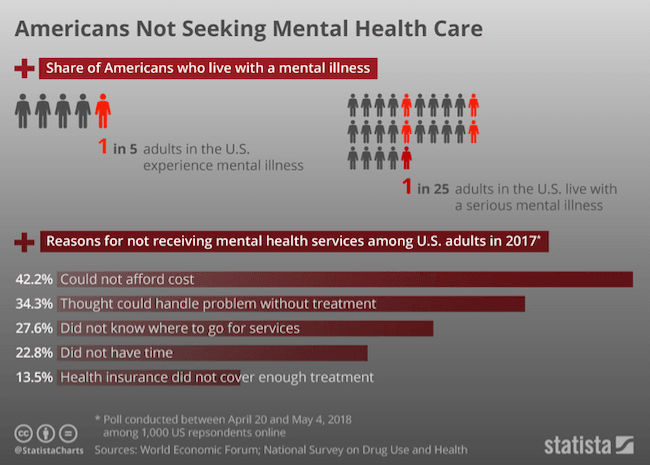
    People attempting to access mental health treatment are still being denied coverage at twice the rate of those seeking physical healthcare.

    A federal court has ruled that one of the largest health insurance companies in the U.S. has been discriminating against people with mental illness and addiction disorders by failing to apply coverage standards equally across physical and mental ailments. U.S. Chief Magistrate Judge Joseph C. Spero issued a “blistering” 106-page ruling stating that United Behavioral Health, a subsidiary of UnitedHealth Group, effectively discriminated against thousands of people seeking treatment for these issues from 2011 to 2017, according to The Los Angeles Times.

    The Mental Health Parity and Addiction Equity Act in 2008 made it illegal for insurers to apply different criteria to patients experiencing mental health issues than those experiencing physical health issues when determining what to cover. Unfortunately, people attempting to access mental health treatment are still being denied coverage at twice the rate of those seeking physical healthcare.

    According to the report by Anita Raghavan, the blame for this rests on a lack of enforcement of the 2008 law by the overstretched Employee Benefits Security Administration (EBSA).

    Labor Secretary R. Alexander Acosta wrote in a 2018 report that this small division of the Department of Labor has only 400 investigators and 100 benefit advisors working to keep track of about 5 million health benefit plans across the country.

    In the space of two years, the EBSA was only able to issue 136 citations to health insurance companies for violating the Mental Health Parity and Addiction Equity Act. To make matters worse, the agency can’t assess civil monetary penalties to deter future violators.

    The inability to get coverage for mental health issues have left many without desperately needed treatment. This is such a common problem that the National Alliance on Mental Illness (NAMI) has a guide for what individuals can do if they’ve been denied such coverage.

    This includes a list of “commonly denied types of care,” which appears to include all levels of care from diagnosis and common psychotherapy, “intermediate” care like outpatient or partial inpatient treatment, and full residential hospitalization.

    Source: Statista/National Survey on Drug Use and Health

    Meanwhile, reports of families struggling to get the appropriate care for mentally ill family members proliferate. In September 2018, WFYI did a story on Matthew Timion and his fight to get coverage for treatment that his adopted son desperately needed.

    “He was cutting himself and he’s hearing voices and he is threatening to run away and kill me,” Timion said. “The insurance company says, ‘Well, he hasn’t done that in three or four days now, he’s good to go home.’ And the hospital said, ‘No, he has to stay.’”

    The problem has become so severe that parents are increasingly resorting to giving up custody of their children because once they do, the state will be forced to pay for the necessary mental health treatment. Adoptive parents call this decision “gut-wrenching,” but without health insurance coverage for expensive treatment plans, they often have little choice.

    View the original article at thefix.com

  • Justin Bieber Reveals Mental Health Struggles

    Justin Bieber Reveals Mental Health Struggles

    The recently married pop star took to Instagram to get candid about his mental health with fans.

    In an Instagram post on March 10, Justin Bieber told the world that’s he’s experiencing disconnection and feeling “weird.”

    Bieber posted on Instagram that he wanted to update his fans on what he’s been going through. “Been struggling a lot. Just feeling super disconnected and weird. I always bounce back so I’m not worried…just wanted to reach out and ask you guys to pray for me. God is faithful and ur prayers really work thanks.. the most human season I’ve ever been in facing my stuff head on…”

    Teen Vogue reported that the comment section of Instagram shows Justin’s fans came through with prayers and support. One fan shared that they also experience depression, and: “Love you always and I hope you can find a way to feel better and more like yourself again.” Another Belieber (the fond nickname for the pop star’s fans) told the singer, “We all believe in you!”

    Justin has used social media in the past to connect with fans and discuss his mental health. In 2016, he posted that participating in a lot of meet and greets contributed to his depression.

    “The pressure of meeting people’s expectations of what I’m supposed to be is so much for me to handle and a lot on my shoulders,” he wrote at the time. “I end up feeling so drained and filled with so much of other people’s spiritual energy that I end up so drained and unhappy.”

    Justin’s ex-girlfriend Selena Gomez has also struggled publicly with mental health issues. Selena Gomez and Julia Michaels released a song called “Anxiety” that Selena shared was personal to her.

    Justin and those who work for him claim that his current struggles have “nothing to do with Hailey,” but in a recent couple’s interview with Vogue, Hailey and Justin called their marriage “very hard.”

    They discussed the strain of being married so young and their struggle to get over things like their initial breakup, and Justin’s past, faster life with random sex and drugs.

    The Vogue journalist wrote, “It is impossible not to feel, in Justin’s presence, that he is still recovering from something—the fame whose price was his childhood, the mortification of a thousand magnified adolescent peccadilloes, an accumulated uncertainty about the attentions of those in his orbit—and these scars crowd the surface like his innumerable tattoos.”

    View the original article at thefix.com

  • 7 Tips to Help You Find the Right Therapist (and Why You Need One)

    7 Tips to Help You Find the Right Therapist (and Why You Need One)

    It was a therapist who first told me that I wasn’t in therapy because I was bad and out of control, like my mother said; I was in therapy to learn how to deal with having an emotionally unstable mother.

    My mother believes everyone needs therapy. And she’s right, they do. After being around her. Everyone, that is, except her. Don’t be like my mother, requiring the world to change around you. (It won’t.) And don’t be like my Dad either, who tells me I’m overreacting every time I have an emotion. Don’t be like me, either, an asshole exploiting her parents for profit. Wait. 

    Do you need therapy? Probably. Could you benefit from therapy? Definitely. Can you afford therapy? More easily than you think. Many therapists keep sliding scale spots open in their practice, for those who need help but don’t have health insurance or a large income. I found my current gem of a therapist through Open Path Collective, a network of clinicians who offer therapy at a rate of $30 to $60 per session for individuals.

    It was a therapist who first told me that I wasn’t in therapy because I was bad and out of control, like my mother said; I was in therapy to learn how to deal with having an emotionally unstable mother. And I didn’t talk too much and ask too many questions; actually I was curious, the therapist said, and had a lot to say.

    It was a therapist who said: “I can’t see you and your husband at the same time, the relationship is too damaged and he just shuts down and threatens to end it.” The same therapist asked “Are you drinking every single night?” And, “Have you tried AA?” And when I couldn’t get myself to stop or go to AA, she found a rehab, called my parents, and helped make all the arrangements from her office.

    It hasn’t been all Aha! moments and cleansing cries on couches though. I’ve had a couple of negative experiences. None, however, were as negative as the summer I tried to therapize myself on my own with just books. That experiment ended with me smoking crack for the first time, shooting up heroin while smoking crack (neither of those were my thing, but that summer!), and my first DUI.

    Maybe you’re surviving – but you could be thriving. 

    It might be helpful to look for a therapist who specializes in addiction or whatever you believe your specific issues are, but it’s not necessary. Your intuition is your greatest asset in your search. If you don’t like your therapist, leave and find another one. Repeat until you have the seven experiences I describe below.

    1. Your emotions are validated.

    Therapy helps you accept that your emotions are valid, something our culture certainly doesn’t want you to do. Allowing yourself to feel your feelings is an underrated gift. Your emotions may seem out of proportion to the event that caused them, and that’s okay. You learn that they are actually a response triggered by the event to a deeper, older wound. You will learn, as the poet Rumi said, to “meet them at the door laughing and invite them in.”

    2. You get to talk about anything you want.

    This is one of the most exciting things with a trusted therapist, thinking what would I like to discuss today? The toxic friendship I want to find the courage to give up; that awful conversation with my dad; or do I want to recount everything that happened this week? It’s all up to you! You can plan it in advance, and you don’t even have to stick to the plan, you can talk about whatever comes up! Where else do you have this kind of freedom, where you don’t have to dance around sensitive issues, where there is no fear of being judged that isn’t your own projection, where you are safe, completely safe, to talk about the most trivial and most traumatizing of issues? What joy! The time is truly yours.

    3. You don’t have to caretake or worry about anyone else’s thoughts or feelings.

    If you aren’t worried about your friend’s thoughts and feelings at all and constantly dump your problems on them, quit being an asshole. That isn’t their job, even if they think it is. The only thing addicts are better at finding than their drug is codependents. Your therapist is one of only people in the world with whom you don’t have this burden. This doesn’t mean you should abuse them, just that you don’t have to worry if they are sick of hearing about your dumb boyfriend again. 

    4. Unconditional presence.

    Therapists are masters at the art of holding space. They are fully with you as you explore the pains and confusions of life. You are never too much, never unacceptable. You just are. We live in a culture that doesn’t teach anything unconditional, least of all love and presence. People have to learn how to do it. Your therapist knows how, and it is their job to provide this for you. Your therapist isn’t invested in pushing the journey to a certain place for their own benefit. They are just there to walk with you along the way. My therapist held that space and accepted me until I could learn to accept myself. When I beat myself up after another relapse, she didn’t join in. Her unconditional presence and nonjudgmental interest helped me to finally break that pattern.

    5. You’re given the space to work out your problems on your own.

    Therapists aren’t there to solve your problems for you. They are impartial witnesses, bringing a gentle, open, and noncritical attitude to your experience. It’s the exact opposite of my childhood. I can tell you from experience that nothing feels better than figuring out a problem on your own, with someone with no skin in the game standing by as a witness, someone who only wants to see you do well and who isn’t going to scold you when you fall (but will encourage you to explore why).

    6. They notice, and can help point out your patterns.

    After I stopped obsessing about a man who treated me carelessly, my therapist pointed out that I had a pattern of acting as if sex was all I had to offer and offering it to people who didn’t deserve it. I remember the moment because she said it so gently, as a question, and then she paused. She knew to bring it up only after I had described a scenario which shown I had grown in self-love and respect. It blows my mind how she is able to hold back until the moment is right. I had a previous therapist who I never let get a single word in, and when I finally asked after a year, “What do you think?” She said, “I thought you’d never ask!” She told me that she had been planning to bring it up soon, but that she sensed that it was going to take what it took for me to learn to trust her.

    7. Safety.

    Before we can change anything, we first need to get to a place of safety. I breathe a huge sigh of relief every time I walk into my therapist’s office. There is nothing more important than feeling safe. And it is so rare in this world, in this time. To paraphrase the great Eddie Pepitone, “It’s a sign that a society is falling apart when murder is entertainment, though the Ted Bundy special was very good.” I can’t think of anyone I know who hasn’t had their car broken into, or their body broken into, or their mind hijacked by the needs of another who didn’t see them as real. Therapy is a true safe space. And in therapy, you can learn to create safe space within yourself, which is something nobody can take from you. 

    In conclusion, get a therapist. I mean it. What are you waiting for? Give your friends a break. Learn to see your parents as flawed humans who did the best they could. Lean on your sponsor for no more and no less than they can handle. Get. A. Therapist. You don’t have to stay stuck anymore, you don’t have to keep hurting yourself with a million tiny infractions. Help yourself. Allow yourself to be helped.

    I love you. Especially the nastiest among you. You need it the most. Leave your excuses in the comments.

    View the original article at thefix.com

  • Should Your Mental Health Determine How Your Pain Is Treated?

    Should Your Mental Health Determine How Your Pain Is Treated?

    Patients with a mental health condition might have a hard time accessing opioids for pain relief, while patients with unexplained pain are often referred to psychiatric care, which does little to alleviate their symptoms. Finding treatment can be frustrating and humiliating.

    Four years ago, Dez Nelson’s pain management clinic demanded that she complete a visit with a psychologist. Nelson was surprised, since she had no history of mental illness, but she didn’t feel that she could push back on the request.

    “Of course I said okay — I didn’t want to lose my treatment,” Nelson told The Fix. “I was not happy about it, but I did it.”

    Nelson, 38, went to the appointment and had a mixed experience with the psychologist. She hasn’t been back since and the pain clinic hasn’t asked her to visit a psychologist again. Still, Nelson said that the experience highlighted — yet again — the discrimination pain patients face.

    “It was a condition of my continued care,” she said. “It seemed like they’re bringing it up in a beneficial light, as part of a multi-pronged approach to pain care. But I don’t think [mental health treatment] should be forced on a patient who doesn’t think they need it.”

    Chronic pain and mental illness are among the most stigmatized conditions in modern medicine. The conditions frequently intersect and change the way that patients are cared for and treated. Patients who have a mental illness might have a hard time accessing opioids for pain relief, while patients with unexplained pain are often referred to psychiatric care, which does little to alleviate their physical symptoms. At the same time, research suggests there is a strong connection between mental health and pain: depression can cause painful physical symptoms, while living with chronic pain can cause people to become depressed.

    All of this makes treating chronic pain and mental illness complex and frustrating for doctors and patients alike.

    A Mental Health Diagnosis Affects the Way Your Doctor Treats You

    Elizabeth* is a professor in her mid-thirties who had undiagnosed Lyme disease for eight years. Her Lyme contributed to the development of an autoimmune disease that has led to widespread inflammatory and nerve pain throughout her body. Elizabeth also has bipolar disorder. Despite the fact that she has been stable on medication for a decade, her mental health diagnosis complicates her pain treatment.

    “Doctors’ demeanor changes when I tell them my medications. When I say I have bipolar disorder, it’s a whole different ballpark. To them that’s clearly a risk factor and red flag for drug abuse,” Elizabeth said.

    Opioids are one of the only treatments Elizabeth has found that works to alleviate her pain. But she also takes benzodiazepines on an as-needed basis to control her anxiety (usually once a week). Even though Elizabeth is well aware of the risk of combining the two medications and knows better than to take the two pills together, doctors refuse to prescribe both. They don’t seem to trust her not to abuse them.

    “I could tell them that I wouldn’t take them together. But that’s not a valid choice,” Elizabeth said.

    While doctors were extremely cautious about this drug interaction, they didn’t focus on another drug-related risk: medications that are used to treat nerve pain can cause adverse reactions in patients with bipolar disorder. No one warned Elizabeth of this danger, and she ended up being hospitalized for psychosis after a long stretch of stability.

    “The doctors didn’t talk about it because it’s just a side effect, not a liability concern,” she said.

    On the flip-side, Elizabeth has experienced psychiatric providers who were skeptical of her pain diagnosis.

    “They wrote in my chart that I had a delusion that I had Lyme disease,” she said.

    The Intersection of Pain and Mental Illness

    Treating patients with pain and mental illness is complicated because both conditions rely on patient reports rather than objective tests for a diagnosis and to create or adjust a treatment plan.

    “Pain is a subjective symptom of the people feeling it. There is no way to measure it,” said Dr. Medhat Mikhael, a pain management specialist and medical director of the non-operative program at the Spine Health Center at Memorial Care Orange Coast Medical Center in Fountain Valley, California

    Pain and mental illness can exacerbate each other. In addition, medications for the conditions can interact in rare and serious ways, like what Elizabeth experienced. Finally — and at the forefront for many pain specialists — is the fact that many people with mental health conditions also develop substance use disorders and treating them with highly-addictive opioids can be dangerous. 

    “We address these issues with patients head on, explain that staying on these medications is very risky for them,” Mikhael said.

    Mikhael said that there’s a reason doctors ask patients so frequently about their mental health and substance abuse history. While some patients find that exhausting and repetitive, Mikhael feels it is his responsibility to be constantly evaluating the risk and benefits of using pain medications for people more susceptible to substance misuse or addiction.

    “I have to give them the benefits of the doubt, particularly if the history does not show they’re going doctor shopping. I have to trust them and I have to help them,” he said. “But trust has limits. I can’t say I trust the patient and let go.”

    My Body Is in Pain, I Do Not Need Psychiatric Care

    As the medical community grapples with how to manage pain in light of the opioid epidemic, there is an increased focus on holistic approaches to pain management. Nelson, however, believes this can be harmful to patients who need the pain-relieving power of opioids.

    “They’re trying to turn into bio-psycho-social model, and there are people with real diseases who are dying,” Nelson said. “My pain has nothing to do with my psyche. It has to do with the fact that my body is sick.”

    Before she was diagnosed with arthritis, emphysema and hemiplegic migraines, Nelson was often sent to psychiatric care when she arrived at the emergency room in pain. She had one provider tell her that facial paralysis — later found to be a symptom of her migraines — was psychogenic.

    “Instead of doing their jobs and investigating the physiological issues, they jumped right to the psychological,” she said, pointing to the long history of doctors believing that women’s pain was not real. Eventually, these experiences began to take a toll on Nelson.

    “There was a time when I began to question my own sanity. I thought ‘maybe they’re right, maybe this is just in my head.’”

    Untreated Pain Is Like a “Time Bomb.”

    Both Nelson and Elizabeth have been able to advocate for themselves. While they’ve still struggled with the medical community, they’re been able to improve their care. Yet many people with chronic pain and mental illness don’t have the ability to advocate for themselves in this way.

    “I’ve had a lot of education, so I feel comfortable and confident talking to a doctor,” Elizabeth said. She also has the money to be able to travel to a pain clinic and the support of a spouse and therapist.

    “I have a lot of these privileges that a lot of people don’t have,” she said. “I’m grateful for that, but I shouldn’t have to be. It should be ordinary.”

    Elizabeth often thinks about patients who have uncontrolled or treatment-resistant mental illness, and how that might affect their access to pain relief.

    “Should they just not get pain management because they’re not well with their mental illness? Of course not.”

    Having in-depth conversations, sharing information between different specialists, and providing community support could all help improve outcomes for people dealing with chronic pain and mental health conditions, she said.

    “People need help, not a punitive approach of taking [pain management] away,” she said. “Energy should be put into safe approach to dealing with pain. You can’t ignore it — it’s like a time bomb.”

    View the original article at thefix.com