Tag: mental health

  • How Addiction Stigma Prevents People from Getting Help

    How Addiction Stigma Prevents People from Getting Help

    The doctor believed that people with addictions are sneaky and dishonest, and maybe this is why. My treatment has repeatedly been delayed or denied because I’ve been honest. Do other people have to lie to get medical care?

    My name is Sara and I am 28 years old. I grew up in a two-parent household with a loving family, had excellent grades in high school, and graduated from college. I currently work full time. I love children, nature, animals, family, and my many friends.

    Self-Medicating with Opioids

    I have also struggled with depression, anxiety, and OCD since I was in my early teens. At age 18, my life was changed forever when I was prescribed an opiate painkiller after the removal of my wisdom teeth. I discovered, with that one prescription, that opioids made me feel normal. And yet, opioids are what put me through a roller coaster of hell for the next eight years. They also introduced me to my good friend “Heroin.”

    From early on in my addiction, I wanted help but was too ashamed to ask for it. I also figured I could beat this thing myself, but I couldn’t. I needed help. My parents encouraged me to contact a rehab facility, which I did immediately. The nurse who did the intake was very kind and said I could come the next day to be admitted for detox, but she first needed to get approval from the insurance company.

    I, and my family, were so relieved that I would begin a journey of recovery. This is when I experienced the stigma of addiction for the first time. The nurse from the rehab center called me back and said that my insurance company would not approve me to go to detox and rehab because I had not yet been incarcerated.

    Several months later, I was finally approved for rehab, but only after I possessed a misdemeanor charge.

    “Sneaky Drug Addicts”: Doctors Perpetuate Stigma

    After detox, rehab, and a six-month stay at a sober living facility, I came home and began looking for work. I found a job quickly, but I needed paperwork completed for a physical. Although the job did not require a drug test and there was nothing on the form requesting drug testing, my primary care provider refused to give me a physical or sign the form unless I agreed to a drug test. It didn’t matter that I was in recovery and was also attending outpatient rehab which routinely drug-tested me.

    Even now, with two years in recovery from addiction, I still experience prejudice and stigma in health care settings. Recently a bout of severe food poisoning and dehydration sent me to the emergency room. There, I was accused of going through withdrawal. I provided the nurse with the list of my medications, which included Vivitrol—an opioid blocker. I was also honest and told her that I used marijuana occasionally to help with anxiety. After I was sent for testing in Radiology, the doctor told my mother that he was quite sure that I was going through withdrawal and that he wanted a urine screen. My mother told him that she was sure I wasn’t going through withdrawal because I had always been upfront and honest with her when I relapsed in the past.

    “Well, you know how sneaky drug addicts can be,” the doctor said.

    When I returned and the doctor told me his suspicions, I agreed to the urine test but told him that I expected an apology after he got the results and I only tested positive for marijuana. I watched as two nurses outside the room laughed and looked toward my room. I knew they were laughing at me—the drug addict.

    Half an hour later, the doctor walked in and said, “Well, I guess you were right, you aren’t going through withdrawal. We only found a small trace of marijuana in your system. But, you understand why I had to test you, don’t you?”

    He never did apologize to me.

    In Recovery and Denied Therapy

    Part of my recovery is getting a monthly injection of Vivitrol which is an opioid blocker that also helps reduce my cravings. The provider that gives me the Vivitrol requires that I also go to a counselor, which I was more than willing to do. But at my intake interview at the local mental health agency, I was honest about my occasional marijuana use for anxiety and as a result I was denied counseling services. I even appealed it to the medical director, but that didn’t help. It didn’t matter to them that the anxiety, depression, and OCD—which is relieved by the marijuana—may have been partly responsible for my addiction to opioids in the first place.

    That ER doctor held the belief that people with addictions are sneaky and dishonest, and maybe this is why. My treatment has repeatedly been delayed or denied because I’ve been honest. Do other people have to lie to get medical care? If someone is sent to a counselor for emotional eating, are they refused counseling if they have given up everything but potato chips? And even if the providers believe smoking marijuana is a condition of addiction, wouldn’t that be all the more reason to offer me care and a provider? To this day, I have been unable to find a counselor who will take me.

    My wish is that every person who has substance use disorder is treated with respect and compassion. When you are addicted, you already beat yourself up every day. Every time you look in the mirror, you see an addict. We certainly don’t need to be reminded by the people that chose a sacred profession and took an oath to help people that we aren’t worth it. That only puts us deeper in the depths of destruction rather than building us up for a path to recovery.

    Healing: Compassionate Health Care Providers

    My experience isn’t unusual, but I have also encountered many health care workers who were compassionate. Those were the people who gave me a reason to keep fighting for my life. There was a nurse in the emergency department (the one time I was there to get help for withdrawal after I had relapsed) who gave me a big hug when I was leaving and said, “Don’t give up. Keep trying. You are worth it.” And then I watched as she hugged my mother as she sobbed on her shoulder.

    “I know it’s scary, Mom, but she will get through this. The good thing is, she wants to get help,” she said.

    Another nurse told me how proud she was at how far I’ve come and not to take other people’s biases to heart. And then there was my Health Home Nurse — she just works her magic and does whatever’s needed to help you stay in recovery. She is nothing short of amazing and I owe my life to her. Those are the people who make me want to continue my recovery and the ones I will be thankful to for the rest of my life.

    I am Sara. I am a survivor who is recovering from substance use disorder. I could be your daughter, your niece, your granddaughter, your next door neighbor, or your co-workers daughter. I am worthy of being treated with respect and compassion just as much as every human being struggling with this disease is worth it. With the right kind of support, people can and do recover.

    Note: My mother, who has worked in the healthcare industry for over 30 years, has been frustrated witnessing firsthand the stigma I’ve faced when trying to obtain care and services. She’s often had to advocate on my behalf. She currently volunteers with an organization called Truth Pharm, which works with local providers to reduce stigma in healthcare settings. She asked if I would be willing to share my story, and that’s why I wrote this.

    View the original article at thefix.com

  • Is There A Link Between Gun Violence And Mental Health?

    Is There A Link Between Gun Violence And Mental Health?

    A new study found that a history of mental illness had no significant association with gun violence.

    A study by the University of Texas found that access to firearms, high hostility levels, and impulsiveness made people more likely to engage in gun violence, while mental illness did not.

    The study appears to have been motivated by a “public, political, and media narrative that mental health is at the root of gun violence,” and the results look to have soundly debunked that narrative which some have worried will increase stigma against those with psychological disorders.

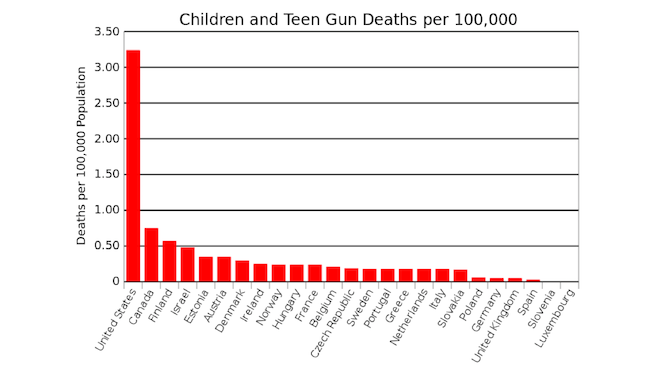
    Dr. Yu Lu and Dr. Jeff R. Temple interviewed 663 “emerging adults” and found that those with access to firearms were 18.15 times more likely to have threatened someone with a gun in their lifetimes than those without. While this might seem like a predictable result, they also found that a history of mental illness had no significant association with gun violence or carrying a gun in public.

    Source: Wikimedia Commons

    Additionally, people who were found to have “high hostility” were 3.51 times more likely to have threatened someone with a firearm, and those with high impulsivity were 1.91 times more likely than others to have carried a gun outside of the home.

    The psychological disorders named in the study included depression, anxiety, PTSD, and borderline personality disorder. They also included stress, impulsivity, and hostility as symptoms of mental health issues, but Lu and Temple still concluded that it is access to firearms, including gun ownership or other access, that creates the primary risk for violence.

    “Counter to public beliefs, the majority of mental health symptoms examined were not related to gun violence. Instead, access to firearms was the primary culprit,” they wrote. “The findings have important implications for gun control policy efforts.”

    Gun violence in the U.S. continues to be a major problem, accounting for an average of 30,000 to 40,000 deaths each year. Depending on the definition of mass shooting, by some accounts there was a mass shooting in the U.S. nearly every day in 2018.

    When a shooting is severe enough to make it into national news, the issue of whether gun violence is caused by a lack of gun control or by mental illness is often raised.

    The University of Texas study describes this as a question of “dangerous people” versus “dangerous weapon.” Lu and Temple point out that research on links between mental illness and gun violence is lacking and often limited to those with severe disorders or mentally ill individuals who have already been arrested for violent crime.

    This may have been the first study in the U.S. to look at “the temporal association between gun violence and mental health symptoms,” according to the study’s conclusion. Lu and Temple also noted that the sample size, the focus on emerging adults, and the inclusion of only some of the many psychological disorders and related symptoms were possible limitations for this study.

    As always, further research into the issue of gun violence in the U.S. will provide greater insights into the likely causes of this growing problem.

    View the original article at thefix.com

  • Justin Bieber Reportedly Getting Treatment For Depression

    Justin Bieber Reportedly Getting Treatment For Depression

    A source close to Bieber says the singer is “confident he will feel better soon.”

    Justin Bieber has been struggling with depression and is seeking treatment, according to sources close to the star. These sources tell Elle that the pop star been “down and tired. He has been struggling a bit.”

    Bieber’s career began when he was 13 years old.

    “He started off as a typical sweet, Canadian teen,” a source said. “He was such a great kid, honestly super sweet and very polite and nice to everyone around him. Having this huge amount of fame completely changed him. He had access to anything and everything and was surrounded by people who just said ‘Yes.’”

    The sources were quick to dispel any allegations that this bout of depression has anything to do with his new marriage to model Hailey Baldwin.

    “It has nothing to do with Hailey—he is very happy being married to her,” said the source. “It’s just something else that he struggles with mentally. He has good help around him and is receiving some treatment. He seems confident he will feel better soon.”

    Bieber’s grappling with fame from an early age manifested in his acting out, the singer said in a recent interview in Vogue. “I started really feeling myself too much. People love me, I’m the shit—that’s honestly what I thought. I got very arrogant and cocky,” he said. “I found myself doing things that I was so ashamed of, being super-promiscuous and stuff, and I think I used Xanax because I was so ashamed.”

    He gained particular attention when he was arrested in 2014 for a DUI, where he was racing his red Lamborghini in a residential area while drunk. The arresting officers noted Bieber “was not cooperating with the officer’s instructions” and smelled strongly of alcohol.

    “At first, he was a little belligerent, using some choice words questioning why he was being stopped and why the officer was even questioning him,” said Miami Beach Police Chief Raymond Martinez.

    More recently, Bieber has admitted to abusing Xanax to distance himself from his “legitimate problem” with promiscuity.

    All this is a result of being in the public eye since he was young, say those close to him.

    “He’s emotional and struggles a lot with the idea of fame—being followed, having his every move stalked by fans, cameras in his face,” said the source. “It all sets him off and he often feels like everyone is out to get him.”

    Bieber also ended his Purpose tour early last summer, stating that he needed some time for himself.

    “I got really depressed on tour,” Bieber told Vogue. “I haven’t talked about this, and I’m still processing so much stuff that I haven’t talked about. I was lonely. I needed some time.”

    View the original article at thefix.com

  • Club Drug Ketamine Nears FDA Approval for Depression Treatment

    Club Drug Ketamine Nears FDA Approval for Depression Treatment

    Ketamine can relieve the symptoms of depression, but it’s especially effective at reducing suicidal thoughts quickly, sometimes within 40 minutes.

    Within an hour of Matthew Ayo’s first ketamine infusion treatment, his mother looked at him and said “I have my son back.”

    Ayo, who is now 23, had been treated for depression, anxiety, and other mental disorders throughout his teens and early twenties. A little more than a year ago his psychiatrist recommended that he try ketamine infusion therapy. For Ayo, the results were immediate and life-changing. He shows off a graph charting his depressive symptoms: “That first sky-rocket up was my first infusion,” he said. “I went from severe depression to no depression symptoms.”

    A year later, Ayo has remained depression-free and has gone from needing 24 pills each day to just 6. He’s moved out of his family’s home, secured a job, and is social. Although he still gets panic attacks, he says he’s better able to handle them.

    “It helped with every aspect: anxiety, depression, psychosis,” Ayo said. “I know that’s not what it’s for, but in my case it changed everything.”

    Stories like Ayo’s are awe-inspiring. Anyone who has experienced depression or watched helplessly as a loved one tries medication after medication hoping to find relief knows that too often the current treatments for depression and other mental illnesses just don’t work. Against this backdrop, ketamine infusion therapy can seem like a miracle treatment. When it works, it works quickly and effectively, often causing a dramatic reduction in symptoms of depression. However, medical providers caution that while ketamine shows a lot of promise, there’s still a long way to go toward understanding how the drug should be used to treat mental health conditions.

    A Conceptual Leap

    Ketamine — also known as the club drug “Special K” or “K”— is a well-established anesthetic, used since the 1970s to sedate people for medical procedures. Because it is safe and effective, ketamine is used widely by the military. During the wars in Iraq and Afghanistan, doctors began noticing that soldiers who were given ketamine for anesthesia often had fewer symptoms of post-traumatic stress disorder (PTSD), according to Dr. Steven Mandel, president of The American Society of Ketamine Physicians.

    “It took a conceptual leap for people to really wrap their heads around that this anesthetic somehow was acting as a mood elevator,” Mandel said.

    Mandel has practiced as an anesthesiologist for decades, but also has a master’s degree in psychology. As he looked into the research on ketamine, he became convinced that it could benefit people with depression, anxiety, and trauma. In 2014, he opened the Ketamine Clinics of Los Angeles and began offering treatments directly to patients, including Ayo. Mandel says that in his patients, ketamine treatments relieve the symptoms of depression 83 percent of the time and stop suicidal ideation more than 90 percent of the time.

    “It almost sounds too good to be true,” he said.

    Like Mandel, the wider medical community has been impressed by ketamine’s potential for treating psychiatric disorders. Although the Food and Drug Administration had only approved ketamine for anesthesia, providers began to use it off-label in ketamine infusion therapy — an intravenous administration of the drug — to provide swift relief of depression symptoms. At the same time, pharmaceutical companies hurried to develop a ketamine formulation specifically for treating mental health conditions.

    The result is Esketamine, developed by Johnson & Johnson, a nasal spray based on ketamine that can be used to treat depression. On Tuesday, February 12th, an FDA expert panel recommended that Esketamine receive federal approval. If approved, the medication will be covered by many insurance plans. Currently, almost all patients must pay out-of-pocket for ketamine infusions, which cost thousands of dollars. Doctors are hopeful that this will change as insurance companies realize that even off-label ketamine treatments can reduce the medical costs for people with mental illness.

    Risk-Benefit Analysis

    Speaking to Mandel and his patients, it’s impossible not to feel excited about ketamine. However, other providers are more cautious in their optimism.

    “There are certain scenarios where ketamine makes a whole lot of sense, and there are certain scenarios where it’s very unclear what the role of ketamine should be,” said Dr. Nolan Williams, assistant professor of Psychiatry and Behavioral Sciences at the Stanford University Medical Center. “I think that the idea that ketamine is going to be a treatment for everyone chronically for their depression forever is not realistic.”

    Most providers still reserve ketamine treatments for people who have already tried more traditional treatments. While the side effects of older medications like SSRIs (such as Prozac and Zoloft) are well understood, there still isn’t a firm medical understanding of ketamine for psychiatric use, said Dr. Robert C. Meisner, the medical director of the Ketamine Service in the Psychiatric Neurotherapeutics Program at McLean Hospital, which is affiliated with Harvard Medical School.

    “One must balance clinical necessity with clinical uncertainty, as well as availability of other treatments,” he said. “We know more about [first-line treatments like SSRIs], so the risk-benefit is easier to access.”

    Meisner oversees ketamine treatments daily for his patients, but says he would like to see further research into the long-term effects of ketamine, what an optimal dose is, and what markers might indicate that a person will respond positively to ketamine.

    The early indications are reassuring, he said. Ketamine appears to be very safe and have a low risk for addiction or dependency. However, studies of recreational users have shown that people who use high levels of ketamine for long periods can have complications in the bladder, liver, biliary tract and suffer cognitive deficits. In order to be more comfortable with ketamine, scientists need to better understand at what point the drug goes from relatively harmless to potentially dangerous.

    “As the risks and benefits become better defined, especially over the long run, it is possible that there may come a point where ketamine isn’t a second- or third-line option, but is used earlier,” Meisner said. “As the research comes in, people will become more or less comfortable recommending ketamine sooner.”

    A Life-Saving Medication

    One area where people have been more apt to use ketamine is among patients who are highly suicidal. Ketamine is especially effective at reducing suicidal ideation, in as little as 40 minutes, making it a potentially powerful medication for people who are acutely suicidal in the emergency room.

    Even outside of emergency situations, ketamine can be lifesaving for people at risk for suicide. SSRIs and other antidepressant medications start working slowly, sometimes not reaching their peak effectiveness until six to eight weeks have passed. This period of time between starting the medication and the onset of full therapeutic effects is considered high-risk for suicide, because someone who is acutely depressed might still be suicidal, but now have enough energy to follow through on a plan that they previously couldn’t execute. Ketamine can be used as a bridging agent in these situations, giving quick, short-term relief of symptoms.

    “Relatively speaking, this is a fast way to rescue some percentage of people with depression from the horrific depths of it, and sustain them until the medication to which we’re bridging becomes therapeutic and can take over,” Meisner said.

    What the Future Holds

    Today, experts and the public hold diverging views about ketamine. Some, like Mandel and Ayo, see ketamine infusion therapy as a life-changing treatment. Much of the medical community, however, is waiting to see more research and to follow the results from these early uses of ketamine.

    “Some argue there is an ethical imperative to move quickly to ketamine,” Meisner said, but he also points out that it’s only been used to treat psychiatric illness in the last ten years, which is not long at all in terms of medicine.

    “Many doctors who work in neurotherapeutics see IV ketamine not as the end of the story, or the treatment that has at last arrived, but as a treatment modality that is evolving and will change as the mechanism is better understood and drugs that leverage that novel mechanism are developed,” he said. “I have high hopes for where the early work on ketamine leads us as we better understand its complex mechanisms.”

    View the original article at thefix.com

  • How Digital Hoarding May Affect Mental Health

    How Digital Hoarding May Affect Mental Health

    Cluttered desktops and unread emails may be taking more of a toll on the psyche than previously thought.

    When people think of hoarding, they often imagine people from the TV show Hoarders, who amass heaping piles of junk that they were never able to part ways with. But there is also a phenomenon called “digital hoarding,” where people can’t get rid of digital items.

    Some experts believe that digital hoarding may be harmful to your mental health.

    In a recent survey from Summit Hosting, 6.6% of people in the United States are holding on to 1,000-3,000 unread emails, while 1.9% have over 20,000 unread emails. The average American has also saved nearly 600 cellphone pictures, as well as nearly 100 bookmarked webpages, and has over 20 icons on their desktops, and even more clutter filling up cyberspace.

    A case study published in the journal BMJ on digital hoarding examined a man in his late forties who would take thousands of pictures every week, and spend hours everyday organizing them on his computer. As it turns out, the man wasn’t just hoarding digital files, but he was also hoarding clutter in his apartment that he didn’t need like paper scraps and bicycle parts.

    In the case report, Dr. Martine van Bennekom, a psychiatrist, explained that the man “enjoyed taking the photos. However, the processing and saving of the digital pictures caused suffering and distress.”

    While treating the man, Bennekom felt that digital hoarding should indeed be “classified as a subtype of hoarding disorder,” according to Live Science.

    Bennekom feels that if “digital hoarding” is defined as a disorder, it would be much easier for doctors to diagnose and treat people. Yet other doctors aren’t so sure about this and feel it could still be too early to classify digital hoarding as a disorder. (Funnily enough, some doctors who treat hoarders often encourage them to save items digitally to help make more space in their homes.)

    Healthline reports that Jo Ann Oravec, PhD, a professor at the University of Wisconsin-Whitewater, saw the effects of digital hoarding in her students. With an overload of notes, PowerPoint information, PDFs, and personal items, her students felt overwhelmed by the volume of material they piled up over time.

    For these students, digital hoarding also became a self-perpetuating cycle where they kept adding to their piles.

    As Oravec explains, “Educational and social technologies were designed to make it easier for student to engage in critical thinking and analysis as well as in interpersonal interaction. Nevertheless, [they’ve] triggered a sense that ‘more is better.’”

    Oravec would find her students coming to her “with inches of printed materials they’ve accumulated and then asking, ‘How do I find more?’”

    Many hoarders hang on to things they think they’ll need in the future, or that they’re attached to emotionally. If you already exhibit signs of being a hoarder, you’re more likely to be hoarding things digitally as well.

    Nick Neave, the director of the Hoarding Research Group, says that “everyone appears to be at risk of digital hoarding, especially in relation to work. Organizations bombard their employees with all manner of information that they don’t know what to do with, and just to be ‘safe,’ they keep it.”

    View the original article at thefix.com

  • Lady Gaga Addresses Mental Health During Grammy Speech

    Lady Gaga Addresses Mental Health During Grammy Speech

    Gaga highlighted mental health during an acceptance speech at the 2019 Grammys. 

    Mental health awareness is something that has always been close to Lady Gaga’s heart. 

    In fact, while accepting a Grammy for her co-performance of the song “Shallow” in the film A Star Is Born, Gaga took the opportunity to speak to the importance of looking out for one another. 

    “If I don’t get another chance to say this, I just want to say I’m so proud to be a part of a movie that addresses mental health issues. They’re so important,” Gaga said, according to Harper’s Bazaar. “A lot of artists deal with that. And we gotta take care of each other. So if you see somebody that’s hurting, don’t look away. And if you’re hurting, even though it might be hard, try to find that bravery within yourself to dive deep and go tell somebody and take them up in your head with you.”

    Gaga also took a moment to acknowledge Bradley Cooper, her co-star in the film, who was not present at the awards show.

    “I wish Bradley was here with me right now,” she said. “I know he wants to be here. Bradley, I loved singing this song with you.”

    This was not the first time Gaga has taken to the stage and spoke about mental health awareness. In November, according to Harper’s Bazaar, she spoke at the Patron of the Artists Award about the necessity of bringing mental health conversation to the forefront. 

    “When I speak about mental health, especially when I’m speaking about mine, it is often met with quietness,” she said. “Or maybe, a somber line of fans, waiting outside to whisper to me in the shadows about their darkest secrets. We need to bring mental health into the light.”

    In October 2018, Gaga was named one of ELLE’s Women in Hollywood. During her acceptance speech, she touched on various serious topics, including her experience with sexual assault. 

    “As a sexual assault survivor by someone in the entertainment industry, as a woman who is still not brave enough to say his name, as a woman who lives with chronic pain, as a woman who was conditioned at a very young age to listen to what men told me to do, I decided today I wanted to take the power back,” Gaga said during her speech, according to ELLE.  

    Gaga also addressed mental health during the same speech, stressing the importance of coming together. 

    “It is my personal dream that there would be a mental health expert teacher or therapist in every school in this nation and hopefully one day around the world,” Gaga added. “Let’s lift our voices. I know we are, but let’s get louder. And not just as women. But as humans.”

    View the original article at thefix.com

  • For My Mother, Putting Down the Alcohol Wasn't Enough

    For My Mother, Putting Down the Alcohol Wasn't Enough

    As an adult, I struggled to reconcile how my mother could be bone sober but still function like the manipulative, bewildering, and self-absorbed alcoholic I sat next to in all those corner bars as a kid.

    A fruit fly was floating in a glob of liquor stuck to the bar. Next to it was a plastic, black ashtray holding a mound of white ash and lipstick-ringed cigarette butts. The butts belonged to my mother, who I was sitting next to and whose free hand was wrapped around a bottle of Budweiser. The bartender, a pasty man with a few thin strands of black hair matted to his head, slammed a Shirley Temple down in front of me. The base of the glass landed in the puddle of liquor smashing the already dead fly.

    My mother didn’t notice my barstool nearly tipping over as I swung my legs forward and back to inch my seat closer to the bar. If she were paying attention, she would’ve noticed my arms weren’t long enough to reach my Shirley Temple. Instead, she was focused on a random guy at the opposite end of the bar. They were yelling over each other, which made it impossible to understand their argument. Their words clashed in midair and became one tangled cluster of sound. But by the tense curl of my mother’s upper lip, and from the way she wildly poked and whipped her lit cigarette in the air, I knew she was miles from sober.

    For me, at six years old, this was how I understood my mother. I didn’t know who she was or how her mind worked without alcohol. But I believed if she put the bottle down, she would become the stable and sane woman I wanted her to be.

    Unfortunately, it took my mother roughly 30 years to become sober. And during that time, we were estranged. Over those decades, with little to no contact, I had no idea how paralyzing my mother’s habit had become. I didn’t know she’d swapped out beer for hard liquor and was downing a bottle or two a day. I didn’t realize she’d reached a point in her addiction where she was so consistently drunk, she had to crap in an adult diaper. Her live-in artist boyfriend kept her shelves stocked with liquor and changed her as needed.

    At some point in her early 50s, my mother walked into her first AA meeting. In those rooms, she discovered sobriety. Eventually, she found a sponsor, broke up with her caretaker boyfriend and replaced her stockpile of booze with tins of Maxwell House coffee. My mother went on disability, found a primary doctor, and saved money to fix up her home.

    On the outside, she appeared to have reached sobriety nirvana. And when, in my early 30s, I was told by a relative that my mother, then in her 60s, had been clean for a decade, I couldn’t fathom it. My mind couldn’t hold an image of her without a mouthful of beer and a cigarette twisted between her fingers. I struggled to believe it: if she was certifiably sober I needed to experience it for myself. It took me a few days, but after some digging I found her phone number and called.

    “Hi Mom, it’s me… Dawn,” I told her.

    “What? My daughter?” she said. “You can’t be. My daughter’s dead.”

    “No… Mom. What?” I didn’t know whether to laugh or hang up. “I swear it’s me,” I repeated. “I’m not dead.”

    “No, no, no,” she said. “My daughter’s dead. You stole her identity.”

    Given how bizarre our exchange was, perhaps I should’ve proceeded with more caution, but when I discovered the rumors of her sobriety were true, I decided to reach out again. After all, if my six-year-old self was right, all my mother needed to do was put down the bottle.

    Over the next year, through measured contact, I discovered the holes in my mother’s recovery revealed an intricate system of emotional IEDs. Each one, when detonated, caused a familiar flinching in my gut and appeared to be constructed from the same materials she so deftly used when I was a kid. As an adult, I struggled to reconcile how my mother could be bone sober but still function like the manipulative, bewildering, and self-absorbed alcoholic I sat next to in all those shitty corner bars as a kid. Luckily, I had enough therapy to know I was under no obligation to fix my mother or to stay in contact with her.

    During our last phone call, I let my mother know I’d reached my limit with our relationship. And in response, at every point where there was the slightest pause in the conversation, she repeated, “I get it, I get it,” which pushed the exchange far beyond confusing. Days before, my mother had erupted when I missed her phone call, but when I told her I was walking away from whatever our relationship was, she appeared oddly understanding and supportive.

    Before we hung up, my mother said she loved me, that she was proud of the woman I’d become, and that she was sorry for being an alcoholic instead of the mother I needed her to be. Unlike in previous exchanges, there wasn’t a trace of sarcasm in her voice, which made me wonder if I’d misunderstood my mother’s behavior. Were my instincts leading me in the wrong direction? Was the guilt I felt actually punishment for potentially hurting my mother? Was I too defensive? At that time, no matter how hard I obsessed over the questions, I couldn’t lock down the answers.

    But eventually, my mother showed me everything I needed to know.

    Several years passed, and during that time my mother and I remained estranged. While I enjoyed the overall emotional freedom the distance created, I occasionally got snagged by lingering doubt and guilt. To cope, I began writing about my experience, and soon I landed a gig with a popular, national magazine. They commissioned me to write about estrangement and the challenges I faced growing up with an alcoholic mother. Not only was this my chance to validate my experience, but I also hoped the finished product would provide comfort to other women emotionally scarred by their mother’s addiction.

    For months I worked on the draft, and during that time I relived many of the disturbing events that destroyed my relationship with my mother: the nights my pajamas reeked of cigarette smoke from the bar, the incident when she flipped into a drunken rage and attempted to throw me out of a third-story window, and the times, when I was a kid, that she chased me around the house, swinging a serrated steak knife at my back, threatening to kill me.

    Days before the piece was set to go live, my editor informed me that for legal reasons the magazine needed to acquire my mother’s consent to publish. Given that I hadn’t spoken to her in years, I was torn over how to proceed. I didn’t want to hurt or shame my mother, but at the same time, I felt compelled to tell my story. Ultimately, I embraced the unknown and passed on her number. Nearly a week passed before I heard from my editor.

    “I spoke with your mom today, and the conversation was very positive,” my editor excitedly shared over the phone.

    “Are you serious?” I responded in disbelief.

    “She’s given her consent, admitted to being a long-time alcoholic, and she’s totally supportive of you telling your story,” she told me.

    “So… she didn’t give you a hard time or anything?”

    “No, not at all.”

    Although I had no idea what to expect from my mother, her positive reaction left me dizzy. And while I felt an unparalleled sense of accomplishment knowing my piece and my story would be floating, unencumbered, across the internet, my gut churned with guilt. Admittedly, my mother’s response would’ve been easier to process if she had reacted with the rage I expected her to. But because she gave her consent without a tinge of condemnation, I felt I betrayed her. I felt as if I hadn’t given her sobriety a chance. Perhaps I failed to give her the credit she deserved.

    Again I was obsessed with a nagging question I couldn’t answer: Was my mother finally the sane and sober woman I’d always wanted her to be? But then, a few days later, I received another call.

    “I’ve got bad news,” my editor told me. “Your mom called me today and has changed her mind, saying she disputes everything and denies ever being an alcoholic.”

    “You’ve got to be kidding me,” I sighed.

    “Your mom sounded completely different on the phone… aggressive and unhinged,” my editor explained. “I can’t be sure, but I think she may have been drinking.”

    With one phone call, not only was my piece killed, but I also realized that the confusion and doubt I wrestled with over the depth of my mother’s sobriety were instinctive warnings. On all accounts, my mother was sober: she hadn’t picked up a drink in 10 years. But she wasn’t in recovery. She hadn’t yet faced the issues that convinced her a life of perpetual hangovers and adult diapers was better than living with whatever reality had to offer. My mother no longer slurred her words, but she was as unstable and unreliable as ever.

    Today, I’m convinced my instincts instantly picked up on the disparity between my mother’s sobriety—or abstinence—and her lack of real recovery. Looking back, I realize there were numerous times that I was in contact with her as an adult when I felt like a confused six-year-old kid again, sitting next to her at some shitty corner bar, watching her get loaded. Thankfully, my confusion finally made sense.

    While I can’t speak for every person with alcoholism or addiction, and I prefer not to generalize when it comes to an individual’s sobriety, I know at least for my mother, putting down the bottle—as difficult as that may have been—was only the first step. And now it’s up to her to keep on walking.

    View the original article at thefix.com

  • Depression Might Make You Angry

    Depression Might Make You Angry

    Some medical experts would like to see anger added to the list of symptoms for depression.

    Depression is associated with fatigue and melancholy, but there’s another often-overlooked symptom of depression, professionals say: anger. 

    Some medical providers, including psychiatrist Maurizio Fava, who practices at Massachusetts General Hospital and teaches at Harvard Medical School, would like to see anger included as a symptom of depression in the Diagnostic and Statistical Manual of Mental Disorders (DSM).

    “[Anger is] not included at all in the adult classification of depression,” Fava told NPR, despite the fact that it is a listed symptoms of depression for children and teens. “Why would someone who happens to be irritable and angry when depressed as an adolescent suddenly stop being angry at age 18?”

    Because anger isn’t listed as a symptom of depression, people present with anger as a primary symptom can be misdiagnosed. 

    “We see in our clinics patients who are labeled as having other diagnoses because people think, ‘Well, you shouldn’t be so angry if you are depressed,’” Fava said. 

    Still, he said about 1 in 3 patients have told him about angry outbursts associated with depression, something Fava calls “anger attacks.”

    “They would lose their temper, they would get angry, they would throw things or yell and scream or slam the door,” he said. 

    Fava would like the medical community to study anger more closely in order to fully understand depression. 

    “I don’t think that we have really examined all the variables and all the levels of anger dysregulation that people experience,” he said.

    Mark Zimmerman, who teaches psychiatry at Brown University, conducted a poll in which two-thirds of people seeking first-time psychiatric treatment reported feelings of anger. The fact that anger associated with mental illness, specifically depression, hasn’t been studied means that it is hard to know what treatment might work to alleviate this symptom. 

    “The most frequently used scales to evaluate whether or not medications work for treating depression don’t have any anger-specific items,” Zimmerman said.

    Kevin Einbinder, who handles communications for the Depression and Bipolar Support Alliance, said that looking back over his life he can see that anger played a big role in many of his relationships, although he didn’t realize it until a journalist posed the question. 

    “I thought of all the people in my life who have interacted with me — my family, the counselors, psychiatrists, even employers, significant others, and I realized that anger was an underlying factor in all those relationships,” Einbinder said. 

    If he had realized this at the time, or if his providers had known to ask about this symptom, he could have learned to cope with it earlier on, he said. 

    “I think that would have provided a tremendous amount of context for what’s adding to my depression and in helping me, early on in my life, with more effective coping mechanisms.”

    View the original article at thefix.com

  • 6 Things Everyone Should Know About Children in Families with Mental Illness

    6 Things Everyone Should Know About Children in Families with Mental Illness

    We don’t talk enough about the children who live with, and rely on, a family member with a mental illness. What sort of support do they need and how can we provide it?

    I grew up with a mentally ill father. More than once, I woke up on the “morning after” my father was institutionalized during a mental breakdown. My father would hallucinate that someone or something was out to get him: aliens, God, the FBI, his coworkers, famous people. It was usually the culmination of months of paranoia—a hard stop on reality during which my father would scream accusations at people in public, moan and sob at the top of his lungs, and act like a trapped animal trying to elude capture if someone came near him.

    My mother always found a way to trick my dad into checking into a hospital for treatment. Waking up midweek at either of my grandparents’ houses was a sure sign that something had gone wrong with my dad.

    My father’s illness progressed gradually over time. He was briefly institutionalized when I was five, again when I was six, and then, lastly, when I was 12. All three times, my family welcomed back a functional, but not healed, father. Although doctors deemed him treated and sent him home, his behaviors remained bizarre and upsetting to me.

    When I was younger, my father was distant, yet never disturbing. We did some of the typical father-son activities: went to football and basketball games at the local university, talked about sports, and visited his parents to have snacks and throw darts with my grandfather. But then, when I was 12, he publicly accused my family of being aliens sent to harvest his testicles.

    After that, he changed forever: talking to himself in public, watching Catholic mass on TV three times daily, and amassing a basement full of unopened books, records, CDs, and videos. My father’s illness had a huge impact on who I was and how I developed as a teenager, and also on how I’ve developed as an adult.

    We frequently turn our attention to mental illness in the aftermath of horrific acts. We wonder what makes people do crazy things, and how we can we prevent these tragedies. Politicians debate the issue, yet we see little movement towards a resolution. Our community members ask why there isn’t more support for identifying and treating mental health problems. Children in families with mental illness ask this same question every day.

    But we don’t talk enough about the children who live with, and rely on, a family member with a mental illness. What sort of support do they need and how can we provide it?

    Here are six things I think everyone should know about children in families where one or more members have a mental health condition.

    1) They need to know that their loved one is not “nuts,” “crazy,” and “psycho.”

    I hated having a crazy family. I knew it was bad and I knew it made me a bad person, without even thinking about it. The media handed me much of the stigma I attached to mental illness. I saw reports on the news of a “psycho” killer on the loose. The TV roared with recorded laugh tracks when someone did something “nuts” and acted like a “loony”—words that sound silly unless you internalize them because they reflect someone responsible for your creation.

    The media portrays crazy as synonymous with criminal, violent, and murderous.

    I remember lying in bed the night before my father was due to come home from the hospital. I vowed to keep an eye on him. I knew he would come home and want to kill his family. The TV told me this is what crazy people do. I’d protect my mother and sister, damn it. Instead, he moped around acting confused, talking to himself, and spending all his money on useless records, CDs, and videos that sat piled and unopened in the basement. My father ignored me completely. He managed to hold down his job, but his family fell apart around him.

    I turned into the one who wanted to become violent. Watching my functional yet useless-to-me-as-a-parent father enraged and embarrassed me. The homeless men on the streets of D.C. were the only other people I saw talking to themselves in public as adamantly as my father talked to himself in public and at home. I walked the halls of my school fearing I had “Son of a crazy man” written on my chest. I stood as far from my father as possible when we were in public. He didn’t seem to notice. He was busy crossing himself and muttering in a half-shout about God and the devil.

    The media freely hands out stigmas, particularly for mental illness. This is unacceptable. Many successful people are managing mental illness, and most never harm a soul. Numerous friends and family members are better people because they know and love someone who has a mental health diagnosis. We should discuss mental illness as a serious topic, worthy of respect to both the people with the mental health condition and their families.

    2) They feel they are alone.

    Growing up, I usually felt alone. I was the only person I knew with a family like mine, except for my younger sister. I looked at my friends’ families and they seemed normal.

    My father hallucinating Martians with a mission to harvest his testicles had replaced his family. He talked to himself and gestured wildly in public. I didn’t see any of my friends’ parents doing that.

    My father’s life, a non-stop cycle of work, watching mass on TV, and then shopping for media, seemed different and bad compared to the lives I thought everyone else was living. I didn’t want people to know this about me.

    I felt disconnected and unable to communicate with friends. I was afraid of discussing my home life, particularly my father. I always preferred to play or stay at a friend’s house. I lived in fear of being exposed as the child with a crazy father. I never brought my father up in conversation. If any of my friends ever met him, I told them my mother was planning to divorce him—something I prayed for daily. I knew it would never happen. She told me she was sticking to her wedding vows. She firmly believed we were better off as a whole family than as a single mom raising two kids on her income alone.

    I didn’t realize at the time how prevalent mental illness is. Many of my friends likely had parents with mental illness, parents with addictions, or abusive parents. If I had realized anyone had a family life like mine, I would have reached out to try to connect with someone else my age. I was alone and aloof in the solitude I created. In a high school with over a thousand students, I did my best to go unnoticed. I refused to bare my soul, express my emotions, or have anything related to a deep conversation with friends. I knew if I spoke up I might reveal my embarrassing secret—a mentally ill father. All I had to do to feel my stomach squeeze with anxiety was to imagine my peers knowing about my family. I carried the stigma of mental illness internally. No one else had to tell me I was inferior.

    Keep this in mind if you know a child with a family member with a mental health problem. These children need to know their situation isn’t unique; many others have experienced mental illness or live with someone who has. They know they’ve been dealt an unfair hand. You can’t change that, but you can provide comfort and understanding. My mother used to say that my sister and I were dealing with something that wasn’t fair for kids. That was true. I felt like she understood me when she made statements like that. Empathy goes a long way for helping children in families with mental illness.

    3) They need free access to behavioral health services.

    I saw a counselor for a number of years. My mother demanded I attend the meetings at first. As an adult, I am appreciative that she did. I know it cost money she didn’t have. At the time, I was angry and confused at everything. It wasn’t until afterward that I realized the value in seeing the counselor. He was truly my only outlet for emotions. We teach children to go to their parents or a teacher if something is bothering them. If you are in a family with mental illness, you learn to keep your thoughts to yourself. You don’t want to risk having your feelings invalidated by a maniacal laugh or an accusation that you are an alien.

    In middle school, I called a helpline. The guy answering the call thought I was a liar when I described my father’s actions. He told me nothing I said made sense. I hung up feeling empty, because if the person staffing a helpline couldn’t acknowledge my situation, it proved my family life was shameful and wrong.

    As an adult, I found out these helplines are often staffed by volunteers, most likely taking social work courses in college. Helpline volunteers need training to handle calls from children such as myself. Never tell a child from a family with mental health problems that what they have seen or heard doesn’t make sense. Of course it doesn’t. We must help children deal with how to process the odd acts and the pain their family situation causes. Validating their situation is the first step toward accomplishing this.

    Children witnessing mental illness up close and personal do not feel like they can share their life with others. Often things aren’t all right, but you won’t find out just by asking. Mental health care services by trained professionals should be the norm for children with mental illness in the family, ideally free of charge. Without mental health interventions, we increase the likelihood that the children will struggle with a mental health challenge themselves. Heredity already increases this risk. Social and economic costs increase exponentially when we fail to treat an illness at the onset—mental healthcare for a child should be proactive, and can be preventative.

    4) Simple things mean the world to them.

    Children with a family member who has a mood disorder or other mental health condition fantasize about being “normal.” For me, this meant having a dad who came home and threw a baseball with me. Or better yet, a dad who took me to baseball games, called me “slugger,” and told me how proud he was of me, but didn’t cross himself and utter to God while we sat in the bleachers. I was fully invested in the most prominent cliché about American fatherhood, and I certainly wasn’t seeing examples of my father portrayed in cartoons or sitcoms.

    Families with mentally ill members need a sense of normalcy. Community support systems need to include an understanding of the trauma these children are going through. Our focus should shift from what we consider normal to how a family with mental illness might define normal. Children going home to unstable or destructive parents need outside support so they can focus their energy on constructive tasks and find their talents. They want understanding and love.

    5) They don’t trust stabilitythey crave the excitement of drama.

    You quickly get used to a series of peaks and valleys when you live with mentally ill family members: the adrenaline rush of watching your father screaming that the FBI is after him as he refuses to come inside the house; the thrill of a car ride when your father tells you he might get reassigned to an office in outer space, as he swerves through rush hour traffic; waking up every day unsure what to expect. These adrenaline rushes become addictive.

    I realized in my mid-30s that I was living a cycle of adrenaline-fueled drama. I could never sit still and accept the current situation. If things were okay, I’d have to get drunk and destroy something. I’m less than two years out of an abusive relationship with alcohol—one that stunted my professional and personal growth almost as much as growing up with a father with mental illness. I pressed the reset button on progress every time I chose to get drunk. I found comfort in the whirlwind of negative activity that followed a binge drinking session that might end with me sleeping in the backseat of my car.

    If things were bad, I’d have to stay up all night worrying about what was next. My mind was stuck on finding the drama in every situation. I reflect on my childhood and I can see where this started: fretting over the next breakdown, experiencing the adrenaline rush of watching my father start speaking in tongues in the middle of the mall, and knowing that any calm moment was just the prelude to the next screaming match between my parents.

    Youth in these families develop a craving for drama. We don’t have the right to judge these children. We have the responsibility to understand that a child might continually act out in school, commit crimes to end up in juvenile detention, set fires, or create lists of people they would like to see harmed. These children spend a lot of time contemplating their fate. Will they suffer from the same illness as their parent? This question swirled in my head and rung in my ears as I grew up. I made a number of poor decisions with the mindset that insanity might be my destiny, so why worry about the future.

    6) They need exposure to adults who behave like adults.

    One of the most confusing things for me was leaving the family and not realizing what a responsible adult male is supposed to do. I graduated high school into a great abyss of confusion. My male role model taught me everything I didn’t want to be, but I had no clue how to go about finding what I wanted to be. Yes, I had years of counseling that was comforting during the time I was in it. But I did not have a roadmap or even a trail of breadcrumbs to follow a path to becoming a responsible adult. I had fear and uncertainty.

    Children without suitable adult role models at home need to see how adults take on their duties and responsibilities. We need to connect children, especially once they are teenagers, with role models through school and after-school programs. We should be proactive in offering our advice and experience to children in mentally ill families.

    We are all part of raising the future, whether our children are from families with mental illness or not. We need to have a generation that stops passing along the stigma of mental illness. We need to remove the belief that being mentally ill means you aren’t a part of the “normal” piece of society. We can do this by publicly saying that someone can successfully manage mental illness and have a great life, and by not blaming what goes wrong on “crazy” people.

    View the original article at thefix.com

  • AI May Soon Be Trained To Diagnose Mental Illness

    AI May Soon Be Trained To Diagnose Mental Illness

    Some scientists believe that AI-diagnosed mental illness will be a reality in the space of years, not decades.

    Scientists in multiple fields of psychology are actively gathering data and undergoing testing in an effort to teach artificial intelligence programs to diagnose mental illness in humans. This is according to a report in The Verge written by B. David Zarley, who himself has borderline personality disorder, as part of its Real World AI issue.

    Zarley met with multiple scientists who are each taking their own approach to machine learning in the service of finding a better way to diagnose psychological disorders.

    The current model, based on referring to the DSM to guide psychiatrists to make diagnoses around a patient’s self-reported symptoms, is inherently biased and considered by many in the field of psychology to be flawed. The current director of the National Institute of Mental Health (NIMH), Dr. Joshua Gordon, feels that way himself.

    “We have to acknowledge in psychiatry that our current methods of diagnosis—based upon the DSM—our current methods of diagnosis are unsatisfactory anyway,” Gordon told Zarley in an interview.

    Diagnosing people based on purely physical data is not yet within reach the way that diagnosing people with physical illness is. With advances in computer science, however, it is finally possible to train AI software to compile data and recognize patterns in a way that a human brain simply could not handle.

    “Machine learning is crucial to getting [Psychologist Pearl Chiu’s] work out of the lab and to the patients they are meant to help,” Zarley writes. “‘We have too much data, and we haven’t been able to find these patterns’ without the algorithms, Chiu says. Humans can’t sort through this much data—but computers can.”

    Additionally, scientists envision using MRI technology to help discover the root of certain mental illnesses or their symptoms and even treat them by allowing patients to directly see the results of their thoughts and better understand how their brains function.

    “[Research coordinator Whitney] Allen was asked to project her brain into the future, or focus on the immediate present, in an attempt to help find out what goes on under the hood when thinking about instant or delayed gratification, knowledge which could then be used to help rehabilitate people who cannot seem to forgo the instant hit, like addicts.”

    Many of the scientists Zarley spoke with believe that AI-diagnosed mental illness will be a reality in the space of years, not decades. However, there are both practical and ethical concerns to be considered.

    AI built and taught by humans, who are biased, cannot help but be biased itself. Zarley points out that “different cultures think of certain colors or numbers differently.” Data for the AI program also must be collected from human samples, and that is much easier done from a developed nation in an area with a university. That leaves entire populations from poorer nations and even rural populations in the U.S. largely out of the picture.

    There are also numerous ethical concerns any time the idea of artificial intelligence is raised. In their paper The Ethics of Artificial Intelligence, Nick Bostrom of the Future of Humanity Institute and Eliezer Yudkowsky of the Machine Intelligence Research Institute address multiple concerns. 

    “Responsibility, transparency, auditability, incorruptibility, predictability, and a tendency to not make innocent victims scream with helpless frustration: all criteria that apply to humans performing social functions; all criteria that must be considered in an algorithm intended to replace human judgment of social functions; all criteria that may not appear in a journal of machine learning considering how an algorithm scales up to more computers.”

    Regardless, AI is on its way, and the scientists Zarley interviewed are optimistic about future results.

    View the original article at thefix.com