Tag: News

  • Wendy Williams Reportedly Relapses After Sober Home Announcement

    Wendy Williams Reportedly Relapses After Sober Home Announcement

    Last week, Williams announced on-air that she was in living in a sober home. 

    Less than a week after revealing on-air that she was living in a sober home, talk show host Wendy Williams apparently relapsed and was reportedly hospitalized because of alcohol intake. 

    According to The Daily Mail, Williams, 54, checked herself out of her sober living facility on Monday after finding out that her husband’s mistress had a baby. 

    “She was in a bad way and disappeared from the studio after her show Monday. She went back to the sober house only to check herself out and decided to start drinking,” a source told The Daily Mail

    The source continued, “It’s not clear where she went but she headed in the direction of her home in Jersey and managed to find alcohol along the way. Word got back to the studio and there was panic and concern, everyone was looking for her, no one knew whether there would be a show [Tuesday]. She was eventually found and was drunk, she was immediately taken to the hospital.”

    After getting a bag of IV fluids, Williams was apparently released from the hospital. She did make it to record her show on Tuesday. 

    “Everyone was amazed that she made it in to the studio this morning to do the show,” the source said. 

    William’s husband, Kevin Hunter, reportedly had an affair with Sharina Hudson, 33. Hudson delivered a baby last week, which may have prompted Williams’ relapse. 

    “Wendy is considering divorcing Kevin. She’s really distraught over the situation, she knew about Sharina but didn’t think a baby would arrive, she didn’t think Kevin would go this far, she’s lost and everyone is worried for her,” the source said. 

    Williams was spotted without her wedding ring on Monday, although she had it on during the taping of her show on Tuesday. By Wednesday, however, TMZ reported that Williams said she was “doing wonderful” and was spotted wearing her wedding ring.

    Last week when Williams announced that she had been living in a sober home, she said that her husband was the only person who she had confided in about her treatment. 

    “Only Kevin knows about this. Not my parents, nobody. Nobody knew because I look so glamorous out here,” she said, according to PEOPLE. “I am driven by my 24-hour sober coach back to a home that I live in the tri-state with a bunch of smelly boys who have become my family.”

    Last week, Hunter said that he and his wife were working together to strengthen their family

    “We’re doing well as a family,” he said. “We are moving forward with working on her sobriety and doing the work to help others, not just ourselves.”


    View the original article at thefix.com

  • "192aDay" Campaign Spotlights Heartbreaking Toll Of Addiction

    "192aDay" Campaign Spotlights Heartbreaking Toll Of Addiction

    The campaign aims to spread awareness about addiction and offer resources for recovery and treatment options.

    Each day, 192 people die from a drug overdose in the United States.

    “That’s like a plane crashing each day, day after day,” write the leaders of #192aday, an initiative from the Addiction Policy Forum, an organization that aims to bring awareness to drug addiction and fight for better treatment.

    The friends and relatives of people killed by addiction penned an open letter, highlighting the things they wish they had known. “We hope that this knowledge, painfully earned, can help you and your family,” they write.

    It’s important that family members and friends familiarize themselves with the signs of addiction. Although they can be hard to spot, follow your intuition if you feel there is something more going on, the family members write.

    “We now know that we should’ve been more proactive in the very beginning,” said Barbara. Her son died of a fentanyl overdose at 46, but a teacher had first expressed concern decades earlier, when he was in 8th grade.

    Even experimenting with seemingly harmless substances like cigarettes or marijuana can be cause for concern, the family members say.

    And once you realize your loved one is abusing drugs, don’t wait until they hit rock bottom to offer them help. “Now with fentanyl, rock bottom was an overdose, a fatal overdose,” said Justin, who lost her son Aaron to an overdose at 20.

    When your loved one is ready for help, realize that recovery takes time. “I wish I would’ve known that recovery is not about 3 months, 6 months, a year in rehab. It’s a lifetime. When they release someone from rehab, it’s not the end. It’s the very beginning,” said Karla, whose daughter Alicia overdosed at 28.

    Finding quality treatment can be lifesaving, so talk with other families and organizations to identify the best treatment option for your loved one. “Resources are much easier to find these days because people are finally talking about the disease,” said Katie, whose brother died of a drug overdose.

    Family members should be open to all courses of treatment, and help their loved one connect with the type of treatment that is most likely to help him or her succeed. “I’d thought medication-assisted treatment (MAT) was ludicrous, just trading one addiction for another, but I was wrong,” Katie said. “Since losing my brother, I often wonder if MAT would’ve helped Zachary succeed. When someone has cancer, we don’t choose between chemo and radiation—we layer treatments.”

    Even failures can be important for recovery, or serve as warning signs for the family. Aimee D’Arpino found out after her son died that he had received Narcan at least seven times in prior overdoses. “That is seven missed opportunities to intervene and save our son’s life,” she said.

    Although it’s difficult to talk about, family members need to be open about the connection between substance use and suicide, said Jim, whose son Scott died by suicide. “His relapse led to his suicide,” Jim said.

    Lastly, no matter how your loved one is doing in managing their recovery, it’s important that family members seek out their own support and resources.

    “It feels like you’re drowning when you’re worried about your kid and desperately trying to find help,” said Doug Griffin, whose daughter Courtney died from an overdose. “And the stigma around this disease can mean backlash and judgment from some of the people closest to you, but help does exist. Reach out. There are so many people right next door who are dealing with addiction too and so much support we can give each other.”

    View the original article at thefix.com

  • New Postpartum Depression Drug May Be Hard To Access

    New Postpartum Depression Drug May Be Hard To Access

    The new medication currently costs $34,000 per treatment.

    Last week, the FDA approved the first-ever drug for postpartum depression, but critics says that access to the drug will continue to be a challenge. 

    Writing in a New York Times opinion piece, Elisa Albert, a doula, and Jennifer Block, a journalist who covers women’s health, point out problems with the new treatment. 

    “Let’s be real about who will have access to Zulresso: women with very good insurance, the ability to advocate for themselves, and the flexibility to leave home for three days for treatment,” they write. 

    The treatment—which provides fast postpartum depression relief by mimicking a hormone in the brain—costs $34,000 per treatment. Because it is only approved for intravenous delivery right now, women who get the treatment must spend three days in the hospital, likely away from their young infant.

    These factors mean that Zulresso will likely not be a treatment for the women who need it most, said Florida midwife and childbirth advocate Jennie Joseph.  

    “If you’re actually needy, in deep postpartum depression,” she said, you’re “not going to be able to get yourself to the hospital. Where are you a few days after having a baby? You’re in your house being ignored.”

    Albert and Block point out that Zulresso reduced depression symptoms by two-thirds, but a placebo treatment reduced symptoms by half. This suggests that women benefit from increased care and attention in the postpartum period, something that can’t simply be substituted with medication. 

    “If insurers are willing to throw down tens of thousands of dollars for a mother’s mental health, we can think of some alternatives that might have a better cost-benefit ratio: Six months paid leave. A live-in doula and a private sleep-training coach. Weekly massages and pelvic-floor rehab sessions,” Albert and Block write. “In the meantime, we fear that Zulresso is just a stopgap, and yet another instance of pathologizing a very sane reaction to our very insane culture.”

    Postpartum depression is the most common complication from childbirth, affecting 1 in 9 women. Women in lower socioeconomic brackets face an even higher risk, but may have trouble accessing Zulresso, especially if Medicaid delays on covering the treatment. 

    “Those who have the highest rates of postpartum depression and who would benefit the most, I fear it will be limited access to them,” University of Michigan professor of psychiatry and OB/GYN, Dr. Maria Muzik, told NPR

    Options like delivering the treatment in a mother-baby unit could help alleviate some of the barriers to care, she said. 

    “Over the next six months, I think [there] will be big developments.”

    View the original article at thefix.com

  • Second Man Dies Of Meth Overdose In Democratic Donor Ed Buck's Apartment

    Second Man Dies Of Meth Overdose In Democratic Donor Ed Buck's Apartment

    A wrongful death suit brought against Buck alleges that he has a “well-documented history of isolating black men for predatory sexual encounters.”

    Prominent Democratic donor and activist Ed Buck is being accused of preying on vulnerable black men and providing them drugs, after a second man was found dead in his home of a methamphetamine overdose. 

    Timothy Dean, 55, died in Buck’s apartment in early January. Gemmel Moore, 26, died in the apartment in July 2017. Although both deaths were determined to be caused by accidental methamphetamine overdose, Buck was initially considered a suspect in Moore’s death, according to The New York Times.

    However, the charges were dropped because the prosecution could not show “beyond a reasonable doubt that suspect Buck furnished drugs to Gemmel Moore or that suspect Buck possessed drugs,” according to court documents. 

    Following Dean’s death, the Los Angeles County Sheriff’s Department said that it would be investigating. 

    “It is suspicious that this has happened twice now, so we’re going to conduct a thorough investigation to determine if it is criminal in nature,” Lt. Derrick Alfred said in January. The department would not provide an update on the investigation this week.

    Buck, 64, has maintained his innocence. “Mr. Buck had nothing to do with the death,” his lawyer said. 

    Moore’s mother has filed a wrongful death suit against Buck, alleging that he had a “well-documented history of isolating black men for predatory sexual encounters.” These included giving the men drugs and looking on as they “cling to life,” the suit alleges. 

    Some in the black LGBTQ community have been outspoken about Buck’s predatory behavior. Social activist Jasmyne Cannick looked into the circumstances of Moore’s death and posted the following warning on Twitter before Dean died, according to NBC News:

    “If another young, Black gay man overdoses or worse dies at Democratic donor Ed Buck’s apartment it’s going to be the fault of the sheriff’s department and LA District Attorney for not stopping him when they had the opportunity to.”

    Cannick said that the deaths highlight the grim reality of a dynamic that is often overlooked. 

    “Our stories aren’t told and our lives are seen as expendable. It’s very easy to write off someone who dies of a drug overdose who was working as a sex worker, but Gemmel was as much a part of our community as the many other young men like him,” Cannick said. “It may not be pretty, but white gay men taking advantage of young Black men in our community is not unusual—it’s just not talked about in mainstream America.”

    View the original article at thefix.com

  • Oklahoma Lawsuit Against Purdue Pharma Settles For $270 Million

    Oklahoma Lawsuit Against Purdue Pharma Settles For $270 Million

    The bulk of the settlement will go to Oklahoma State University to fund an addiction treatment center and addiction treatment medicine.

    The first lawsuit of around 2,000 filed against Purdue Pharma and other drug manufacturers/distributors has settled for $270 million, Reuters reports. The money which will go toward mitigating the opioid crisis.

    The lawsuit was filed by Oklahoma Attorney General Mike Hunter and would have gone to court in May.

    It accused pharmaceutical companies Purdue Pharma (the maker of OxyContin), Johnson & Johnson, and Teva Pharmaceutical Industries of deceptive marketing that fueled the national opioid epidemic.

    The $270 million settlement is with Purdue Pharma only, so Johnson & Johnson and Teva are still expected in court on May 28 of this year.

    According to Reuters, the state of Oklahoma was seeking a total of $20 billion in damages caused by opioid addiction and overdose. The bulk of the $270 million from the settlement will be granted to Oklahoma State University to fund an addiction treatment center and addiction-fighting medications.

    $12.5 million will be given to local governments to help them recover from the opioid epidemic, and $60 million will be paid in legal fees. Members of the Sackler family who own Purdue Pharma will pay an additional $75 million to the university.

    This settlement has been encouraging news for critics of drug companies who believe this is a sign of more settlements to come. Purdue Pharma had been considering bankruptcy as a way to halt the roughly 2,000 lawsuits against it.

    However, it appears that Purdue may instead be opting for a far-reaching settlement across the many similar lawsuits. This is how the legal battles against the tobacco industry ended in 1998—with a $246 billion settlement, Reuters noted.

    University of Connecticut School of Law Professor Alexandra Lahav believes that the Purdue settlement “may be the start of the dominoes falling” for the company.

    According to the White House Council of Economic Advisers, the opioid epidemic has caused over $500 billion in economic damages across the U.S. in the year 2015 alone.

    That number likely rose in 2016, when the total number of deaths from opioid-related overdoses jumped from 33,091 to over 42,000.

    Between deaths, the costs of treating overdose cases and addiction, missed work by those affected, and crime related to illicit opioids, the crisis has been economically devastating to communities across the nation.

    Purdue Pharma and members of the Sackler family have continued to deny its alleged role in fueling the opioid epidemic, stressing that prescription opioids come with FDA warnings about addiction and overdose. This argument, however, has proved to be an ineffective deterrent. 

    View the original article at thefix.com

  • Big Sean Gets Candid About Depression, Anxiety

    Big Sean Gets Candid About Depression, Anxiety

    “I wasn’t feeling like myself and I couldn’t figure out why. I just felt lost—and I don’t know how I got there,” the rapper revealed on Instagram.

    Rapper Big Sean is getting candid about mental health—and according to the BBC, it’s inspiring other men of color to do the same.  

    Recently the 31-year-old rapper utilized Instagram videos to discuss a period of his life that he says was difficult because of anxiety and depression. He says around his 30th birthday, he sought therapy for issues needing “special attention.”

    “I wasn’t feeling like myself and I couldn’t figure out why,” he said on Instagram. “I just felt lost—and I don’t know how I got there.”

    The rapper continued, “I got a good therapist. I was blessed enough to talk to some super spiritual people. They made me realize one thing I was missing in my life, and the one thing I was missing was clarity. Clarity about who was around me, what I was doing.”

    Sean also mentioned that since the age of 17, he has leaned on meditation to manage depression and anxiety, but this time around he needed more. Sean says that seeking therapy brought him “clarity,” especially in relationships.

    “I had a lot of toxic relationships around me,” he said in the videos. “Even the relationship with my mum was getting to a point where we weren’t talking like that. It was just weird because it had never been like that with me and her.”

    Sean also touched on how his mental health affected his career, stating that he lost the enjoyment he initially had in music. 

    “I realized that it all started with me,” he said. “I couldn’t point the finger at anyone else, I had to point it at myself, nurture those relationships that were important to me but most importantly nurture the relationship with myself.”

    Sean’s openness about mental health has had a positive impact on other men of color, including Ben Hurst, who works to promote gender equality in young men and boys. 

    “I’m in awe that he’s having that conversation,” Hurst told the BBC. “It just makes it OK. I started therapy recently and I remember when I started, I didn’t tell my family, there was a big reluctance inside of me to tell my friends and to have that conversation.”

    Hurst tells the BBC that when he was younger, it was ingrained in him to not discuss his feelings. 

    “Particularly in POC (people of color) communities, there’s a big pushback on talking about emotion, especially for men,” Hurst added. “It’s almost like when you’re young, you’re taught to not air business out in public, to not talk about stuff outside of the house.”

    Alex Leon, a charity worker, tells the BBC that openness from public figures such as Sean makes a difference when it comes to the dialogue around mental health. 

    “Sometimes we see statements where artists, musicians or activists talk about ‘difficult periods’ but they rarely give the name and say they were suffering from anxiety or depression—or, more importantly, say they saw a therapist,” said Leon. 

    “What Big Sean has done is a good step in the right direction for us to be able to tell men of color in the media that they should be speaking more openly because we need that representation,” he added.

    View the original article at thefix.com

  • White House Says Fentanyl Is Turning Up In Marijuana, Experts Say It's Fake News

    White House Says Fentanyl Is Turning Up In Marijuana, Experts Say It's Fake News

    “This is part of a wider fentanyl panic that goes beyond having alternative facts [and] leads to bad decisions,” says one drug policy expert.

    The White House and the National Institute on Drug Abuse (NIDA) are leading Americans to believe that there is a real risk of marijuana users accidentally consuming fentanyl, say drug policy experts.

    White House counselor Kellyanne Conway used a news briefing last week to announce that illicit fentanyl is turning up in many drugs—including marijuana.

    “People are unwittingly ingesting it,” Conway said. “It’s laced into heroin, marijuana, meth, cocaine, and it’s also just being distributed by itself.”

    Drug policy and public health experts disagreed. “This is part of a wider fentanyl panic that goes beyond having alternative facts [and] leads to bad decisions,” Northeastern University drug policy expert Leo Beletsky told BuzzFeed News.

    “It’s crazy that this story is coming out from our leaders,” epidemiologist Dan Ciccarone of the University of California, San Francisco, told BuzzFeed News. “It shows that concerns about fentanyl have reached the level of moral panic. Fear outweighs rational evidence. There is scant evidence for cannabis laced with fentanyl.”

    Jill Head, a senior chemist at the Drug Enforcement Administration (DEA), stated at a National Drug Early Warning System briefing that no marijuana laced with fentanyl has been found.

    What has been called “fentanyl hysteria” is based on the fact that fentanyl is deadly in small amounts, and when it is added to other drugs the user often does not know they are ingesting it, or how much.

    As illicit fentanyl is mixed with other drugs in non-clinical settings, it is near impossible to evenly distribute. People using the same supply might get wildly different doses of the same drug.

    Incorrect information on fentanyl and marijuana has come partly from police reports that show data from ultra-sensitive test strips that can detect fentanyl at concentrations as low as one-billionth of a gram. As BuzzFeed notes, it’s not a stretch for trace amounts of fentanyl to be detected in marijuana handled by people who sell or use many kinds of illicit drugs. 

    And synthetic cannabinoids (known as K2 or spice), which are chemicals sprayed onto plant matter, can be incorrectly reported as marijuana. This occurred in Connecticut where 71 people overdosed in one day. News outlets speculated that the synthetic marijuana was laced with fentanyl.

    View the original article at thefix.com

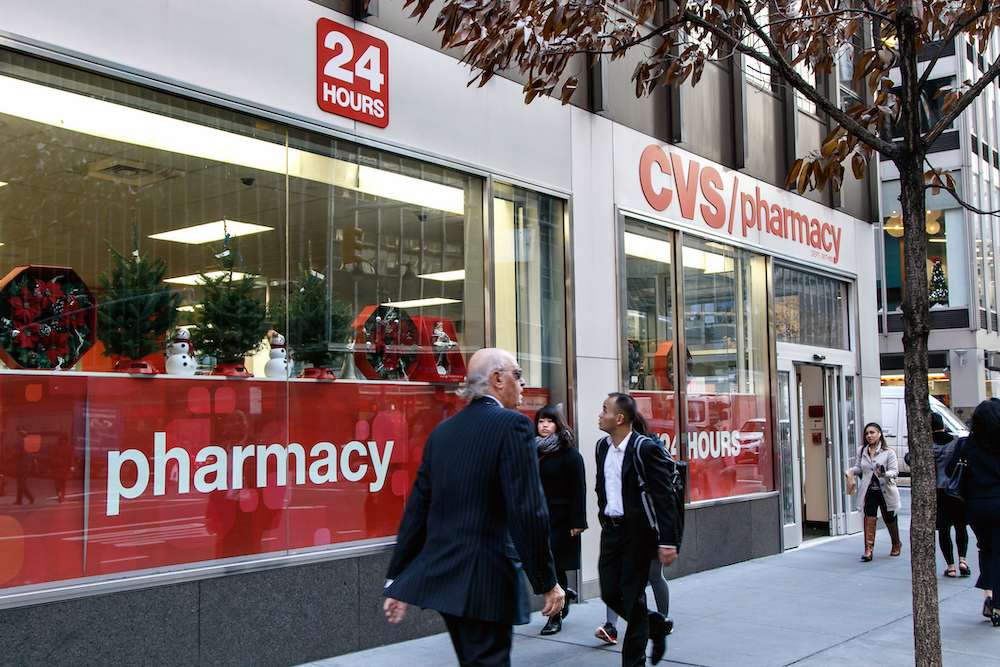
  • CVS Stores Will Offer CBD Products In 800 Locations

    CVS Stores Will Offer CBD Products In 800 Locations

    A line of topical cannabis-derived products will be available in 800 CVS locations across eight states. 

    CVS announced that it will now offer CBD topical products to customers in eight states across the United States.

    The pharmacy chain, which is the largest in the country with more than 9,900 retail locations, has entered into a deal with cannabis retailer Curaleaf Holdings to carry its line of cannabis-derived products in 800 stores located across eight states.

    Curaleaf CEO Joseph Lusardi told investors that he hopes to see an increase in the number of CVS locations carrying his products soon.

    CBD, or cannabidiol, is a naturally occurring cannabis compound that does not have a euphoric effect on the user.

    While the Food and Drug Administration (FDA) regards CBD as a drug, and has banned its use in foods and beverages that are pending regulation, proponents consider it therapeutic for a variety of health conditions. CBD is included in numerous and widely available products, including the creams, sprays, roll-ons, lotions and salves sold by Curaleaf that will be available to consumers at CVS.

    As MarketWatch noted, CVS stores in Alabama, California, Colorado, Illinois, Indiana, Kentucky, Maryland and Tennessee will sell Curaleaf products. Recreational marijuana is legal in California and Colorado, and medical marijuana is legal in Illinois and Maryland, but both are prohibited in the other four states on the list. None of the locations will sell food products or health supplements containing CBD.

    Lusardi also said that Curaleaf—which operates 40 cannabis dispensaries in 12 states—is in the process of striking similar deals with other large consumer chains. 

    “We’ve been having dialogue with national retailers for many months now,” he said. “We’ve got a number of potentially exciting partnerships in the pipeline.”

    MarketWatch also noted that the announcement of the distribution deal sent stock prices up for both companies on March 21st. It was good news for Curaleaf, which had reported net losses of $16.5 million for the fourth quarter just one day prior, but the news of the deal sent shares up 20% to more than $8 per share the following day.

    Revenue for the quarter was also up by a significant amount—$32 million, up from $6.3 million in 2018. In all, Curaleaf stock has risen more than 50% in the last three months, while shares in CVS rose more than 2% in Thursday’s trading.

    View the original article at thefix.com

  • California Jail Guards Get Narcan After Possible Fentanyl Exposure

    California Jail Guards Get Narcan After Possible Fentanyl Exposure

    This is not the first time that an officer has been hospitalized or received Narcan after being exposed to fentanyl.

    Two guards at a California jail were given Narcan and taken to the hospital after they began showing symptoms of opioid exposure. 

    According to SF Gate, guards at Santa Rita Jail in Dublin searched a woman who was being booked in the jail. They found a black substance on the woman, but could not identify the drug. They examined it closely trying to discern what type of drug it was, while wearing gloves. 

    However, after the examination was complete, one officer began feeling sick and showing signs of confusion. Soon after, the other officer complained of sickness as well. The staff at the jail suspected that the pair had been exposed to an opioid, and administered Narcan before transporting them to the hospital. 

    First responders and law enforcement officials have been warned about the dangers of accidental fentanyl overdose, and this is not the first time that an officer has been hospitalized or received Narcan after being exposed to the drugs. 

    “The presence of [synthetic opioids] poses a significant threat to first responders and law enforcement personnel who may come in contact with this substance. In any situation where any fentanyl-related substance, such as carfentanil, might be present, law enforcement should carefully follow safety protocols to avoid accidental exposure,” the Drug Enforcement Administration said in an officer safety alert issued last year

    However, some research indicates that it is unlikely that first responders or others could accidentally overdose on even the most powerful synthetic opioids by touching the substance. 

    “I would say it’s extraordinarily improbable that a first responder would be poisoned by an ultra-potent opioid,” Dr. David Juurlink, a researcher at Sunnybrook Health Sciences Centre, told The New York Times. “I don’t say it can’t happen. But for it to happen would require extraordinary circumstances, and those extraordinary circumstances would be very hard to achieve.”

    According to Vox, reports have shown that fentanyl is not easily absorbed through the skin, so accidental overdose is very unlikely. In one video by harm reduction advocate Chad Sabora, he tries to dispel this myth

    Some people believe that the reports of first responders being harmed by exposure to synthetic opioids can trigger a type of placebo effect. That may have been the case with Scottie Wightman, a Kentucky emergency medical technician who became unresponsive after one call. Wightman was treated with Narcan and was seemingly revived, but drug tests later showed there were no drugs in his system. 

    Jeremy S. Faust, an emergency room doctor in Boston, emphasized that first responders shouldn’t let fear of opioid exposure deter the care they give to the public. 

    “I want to tell first responders, Look, you’re safe,” he said. “You can touch these people. You can interact with them. You can go on and do the heroic lifesaving work that you do for anyone else.”

    View the original article at thefix.com

  • Could Parental Support Be The Key To Managing Childhood Anxiety?

    Could Parental Support Be The Key To Managing Childhood Anxiety?

    A new study examined whether parents’ accommodation of a child’s anxiety had a positive or negative effect on their mental health.

    Parental support may be equally as effective as individual treatment when it comes to managing childhood anxiety, a new report suggests. 

    According to Yale Daily News, the Yale Child Study Center recently conducted a study in which researchers randomly assigned 124 children with anxiety into one of two groups: a traditional, therapy-based group or a group with parents only. 

    The children in the therapy group went to 12 weekly meetings where they learned to use exposure therapy to manage their symptoms and fears. The children in the parent-only group did not speak to a therapist, but instead their parents were taught to “stop accommodating the child’s behavior and to be supportive of the child’s ability to cope with anxiety themselves,” according to the Daily News.

    The parent-only treatment was referred to as Supportive Parenting for Anxious Childhood Emotions (SPACE). 

    At the conclusion of the study, researchers found that children in the SPACE group had reduced anxiety symptoms, similar to those in conventional therapy. But in the SPACE group, the parents also reported stronger relationships than the parents in the other group.

    Study author and associate director of the Anxiety and Mood Disorders Program, Eli Lebowitz, tells the Daily News that SPACE is a treatment method equally as effective as traditional therapy. 

    “The results of the study were really quite remarkable,” he said. “Regardless of what measure we used to look at the outcomes, children whose parents received SPACE were as improved and as likely to be cured from their anxiety problem as children who had 12 sessions of some of the best CBT therapy available. And that is truly a remarkable outcome.”

    Lebowitz added that while it’s normal for parents to try to adjust to and accommodate a child’s anxiety, doing so may be detrimental in the long run and could lead the child to have greater anxiety.

    In the study, researchers worked with parents in the SPACE group to learn to use words of support and express confidence in their child instead. 

    In a 2013 study about SPACE, also by Lebowitz, parents were encouraged to follow this script:

    “We understand it makes you feel really anxious or afraid,” the script said. “We want you to know that this is perfectly natural and everyone feels afraid some of the time. But we also want you to know that it is our job as your parents to help you get better at things that are hard for you, and we have decided to do exactly that. We are going to be working on this for a while and we know it will probably take time, but we love you too much not to help you when you need help.”

    Lebowitz tells the Daily News that while the SPACE study results are promising, more research is necessary in order to determine how psychological pathways in a child’s brain are changed by practicing SPACE. 

    View the original article at thefix.com