Tag: News

  • Creed's Scott Stapp Is Five Years Sober

    Creed's Scott Stapp Is Five Years Sober

    “Nothing is more important than my sobriety,” the Creed singer said.

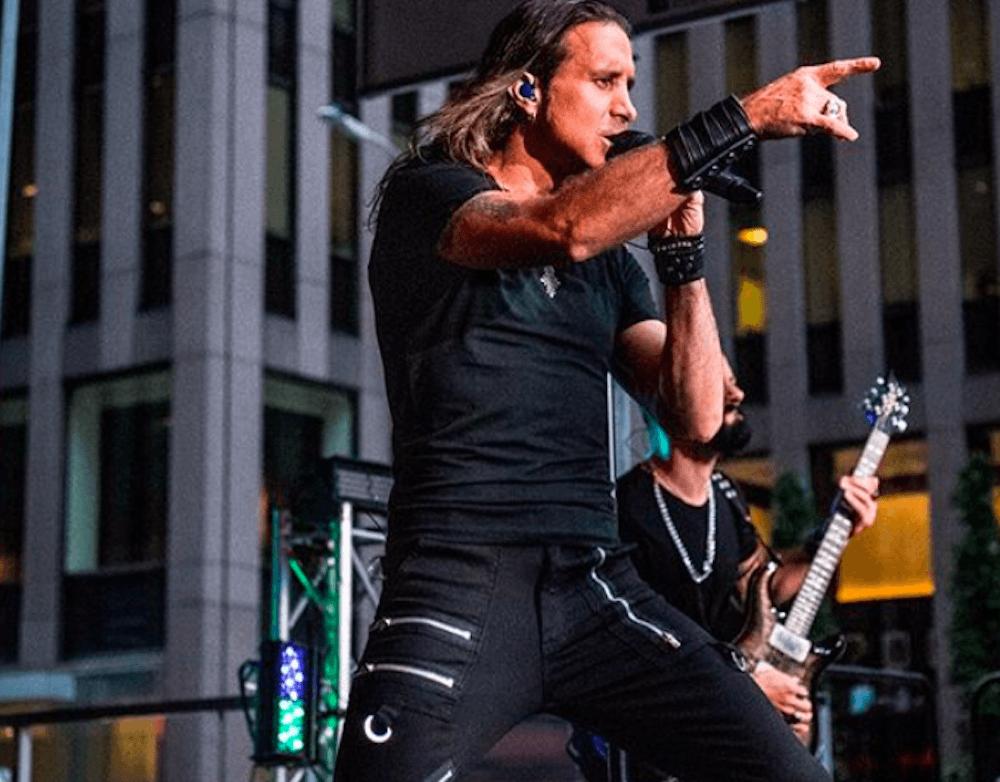
    Rock star Scott Stapp, frontman for the band Creed, took to Instagram to show off a new, clean-cut hairstyle as he heads into his fifth year of sobriety. 

    Stapp shared a picture on Instagram of him with his 14-month-old son, but without his signature long hair.

    “Headed to Puerto Rico for a show this Saturday at Luis A. Ferré Performing Arts Center in Bellas Artes. Going to miss my little guy. I think he’s digging the new cut,” Stapp wrote, according to People

    Recently, Stapp signed with Napalm Records, according to Blabbermouth, and said that his continued career success is possible because he always focuses first on his recovery.

    “Nothing is more important than my sobriety,” he said. 

    At a recent MusiCares event, Stapp thanked the organization for supporting musicians who are trying to get sober. 

    He said, “I still have a lot of music ahead me and without MusiCares that wouldn’t have been possible. They provided support and helped educate my wife and I on what we were going through, that it was a disease, and if I did my part, it could be treated and recovered from. Thanks to MusiCares and my family, I’m going on five years sober.”

    2014 was a dark year for the singer, and he talked about being broke, financially and emotionally. However, his family helped him get sober and realize that he was dealing with an underlying mental health issue. 

    “A couple of years ago when I really hit bottom, and realized that I was dealing with more than just addiction, and fighting bipolar [disorder], untreated,” Stapp, who is now 45, told People in 2016. “That was a huge turning point for me, and then coming to the place where I almost lost my family. That was really an eye-opener, and it put me in a position where I’d be willing to do anything for that not to happen. And that’s really where you’ve got to be to make changes in your life.”

    Once he was able to get sober, he was able to focus on his family and welcome their newest addition, Anthony, who smiled in Stapp’s recent Instagram post. 

    “I’m in recovery, I’m sober, and really experiencing life all over again for the first time,” he said. “It’s an exciting time and it’s good to feel, and to be able to share this with my family.”

    He said his family is what keeps him sober. 

    “It’s been the only thing in my life that has given me purpose to fight the demons, and to keep going on. Without their love, and without these kids here, there were times when I just didn’t know whether to go on anymore.”

    View the original article at thefix.com

  • Black Market Marijuana Thrives In New Jersey

    Black Market Marijuana Thrives In New Jersey

    A New Jersey police chief says that with legal marijuana expected to be taxed at $42 an ounce, people will keep buying their weed illegally. 

    Lawmakers in New Jersey are moving ahead with legalizing recreational marijuana, but when legal businesses come to the state they will have to compete with a thriving black market where customers can buy high quality, low cost cannabis products. 

    When Mike Davis, a reporter for Asbury Park Press, attended a pop-up marijuana event near Trenton, New Jersey, he found an array of marijuana products from bud to edibles, for sale. Davis’ experience at the event illustrated how sophisticated illegal sellers have become. 

    The products at the pop-up event were professionally packaged and the merchants accepted mobile payment—essentially everything you’d expect to see in a legitimate marijuana retailer. 

    The buyers and sellers at the underground event were confident in the illegal market for cannabis. 

    David, who was DJing the event and selling marijuana, said he’s not concerned about legalization. “People want legalization until they get here and see what the black market has to offer. They see that what we have is cheaper than legalized weed, that it’s much better,” he said. “You can change their mind.”

    One woman selling marijuana brownies for $10 each said that she would love to make a living selling marijuana products, but she was wary of the cost of starting a legal business. 

    “I would love to quit my 9-to-5 and open a cannabis bakery full-time. That’s my dream,” she said. “But they make it so hard. You have to take out loans, and have certain qualifications to even think about it. Why are we adding greed to the equation? That’s when it becomes evil.” 

    Even if the state legalizes marijuana and legal businesses enter the space, she is confident that she will continue to have customers. “The state has no idea what they’re doing. They have no idea what the people want. The underground will always stay in business, whether they legalize, decriminalize or not.”

    John Zebrowski, police chief in Sayreville, New Jersey, agreed—although for different reason. He said that with legal marijuana expected to be taxed at $42 an ounce, people will keep buying their weed illegally. 

    “Clearly, there’s always going to be a demand—and some of that demand is going to be satisfied by the black market, where there’s a reduced price and higher potency,” said Zebrowski. “And it’ll be very hard for the state to compete with the black market when, obviously, part of what they’re trying to do here is create an income base through taxes.”

    Although he hadn’t heard of pop-up events like the one the reporter attended, he said that the black market is becoming more accessible. 

    “The black market has adapted and become more customer-friendly. They’ll always have different ways to survive.”

    View the original article at thefix.com

  • Ben Affleck Opens Up About Alcoholism

    Ben Affleck Opens Up About Alcoholism

    “Some people are sort of uncomfortable, but it doesn’t really bother me to talk about alcoholism. Being an alcoholic is part of my life; it’s something I deal with,” Affleck said.

    Over the years, Ben Affleck has been increasingly transparent with the public about the place that drinking has had in his life, and in a recent interview with Today, he continued that honesty.

    “I had a problem and I really want to address it and I take some pride in that,” he told Hoda Kotb. “It’s about yourself, your life, your family… we encounter these kinds of hurdles and we have to deal with them.”

    Affleck continued, “I mean, some people are sort of uncomfortable, but it doesn’t really bother me to talk about alcoholism. Being an alcoholic is part of my life; it’s something I deal with.”

    While alcoholism is something that Affleck lives with, he’s determined not to let it define him.

    “It doesn’t have to subsume my whole identity and be everything but it is something that you have to work at,” he said.

    In 2012, Affleck interviewed with Barbara Walters and explained how alcoholism had defined his childhood.

    “[My father] was an alcoholic… I did know that as a child. He drank a lot. My father was a—what did they call him—a real alcoholic. He, you know, drank all day, drank every day, and to his credit, he got sober ultimately. He’s been sober for several decades, which I think is pretty impressive.”

    Affleck stopped drinking at age 24, after he and Matt Damon won the Oscar for their movie Good Will Hunting.

    Then in 2001, after a highly-publicized break-up with Gwyneth Paltrow, Charlie Sheen drove Affleck to Malibu Promises. “I went to rehab for being 29 and partying too much and not having a lot of boundaries and to clear my head and try to get some idea of who I wanted to be,” Affleck later told The Hollywood Reporter.

    From 2004 until 2018, Affleck was married to Jennifer Garner. Married life with three kids was quiet until Garner and Affleck split, and since then Affleck has had a series of semi-public incidents with alcohol, the last culminating in having alcohol delivered to his house.

    Shortly after, toward the end of 2018, the actor was photographed in the back of a car with Garner driving him to rehab.

    On Today, Affleck called Garner a “great mom” and said he was lucky to co-parent with her.

    View the original article at thefix.com

  • Church Hosts Summit About Marijuana’s Impact On Black Community

    Church Hosts Summit About Marijuana’s Impact On Black Community

    Industry leaders discussed topics ranging from marijuana’s impact on business, to criminal justice, to healthcare at the summit.

    As the senior pastor at the Emmanuel Baptist Church in Brooklyn, New York, Anthony Trufant is used to preaching about subjects that affect his community. Last week, he discussed the importance of black people and other minorities becoming involved with the soon-to-be legal marijuana industry in New York. 

    Trufant was speaking to more than 1,000 people who attended the Business of Cannabis summit held at the church, according to NBC News

    “It is a matter of economic justice,” said Trufant. “There are opportunities for investment, for employment and for microbusiness. Last but not least, it is a matter of political justice.”

    The church organized the cannabis summit to bring together industry leaders to talk about how legal recreational marijuana will affect the black community in areas ranging from business, to criminal justice, to healthcare. 

    Trufant spoke about the need for people to have their criminal records expunged of marijuana-related offenses. In New York City, blacks are eight times more likely than whites to face low-level marijuana charges.

    The state’s Attorney General Letitia James, the first African-American woman to hold the position, acknowledged this when she said, “This war on drugs has far too long been a war on people of color and a war on poor Americans and that’s mostly impacted my brothers, sons, fathers, and my friends.”

    In addition, Trufant and industry experts spoke of the importance of minorities being able to access marijuana for medical reasons. 

    “We recognize that in a time when there are soaring health care prices, that cannabis is really a matter of protection for people who are suffering from cancer and other ailments,” he said. 

    Registered nurse Kebra Smith-Bolden said that people who have grown up in high-stress areas often turn to marijuana to self-medicate for medical conditions that have not been diagnosed. 

    “People who grew up in the ‘hood, people who saw violence in their lives, they are literally checking off every box [for PTSD symptoms]. People who assume that people are just getting high; they are actually trying to medicate themselves. But they need to learn how to do it properly.”

    In addition to benefitting from easier access to marijuana, organizers and presenters at the summit want minorities to be able to enter the cannabis industry and benefit monetarily from legalized cannabis. 

    “I hope that today some minds were shifted,” said Gia Morón, executive vice president of Women Grow, an organization that helps women enter the cannabis industry. “I hope today, some questions were answered and I also hope that we have invited more people to join us in this industry, because I would love to be less the minority and I’d love to become the majority.”

    View the original article at thefix.com

  • Square Co-Founder Tristan O'Tierney Dies at 35

    Square Co-Founder Tristan O'Tierney Dies at 35

    O’Tierney was open about his ongoing struggles with addiction. 

    Tristan O’Tierney, who co-founded the payment company Square, died on February 23 in a hospital in Florida.

    No official cause of death was released at the time of the announcement, though his mother, Pamela Tierney, told the San Francisco Chronicle that it “was in relation to his addiction.” Tierney, a software engineer who developed Square’s original mobile payment app in 2009, had been in a three-month rehabilitation program in Ocala, Florida, and had previously discussed his struggles with unspecified dependency issues on social media.

    A graduate of the Rochester Institute of Technology, O’Tierney began working in Bay Area software companies like Apple and VMWare in 2005 before joining forces with Twitter co-founder Jack Dorsey and Jim McKelvey in 2009 to co-found Square, which allows individuals to accept credit card payments on their smartphone or tablet computer. O’Tierney, who created the company’s original mobile payment app from Dorsey’s napkin sketches, remained with Square until 2013.  

    The company issued a statement in regard to O’Tierney’s passing that read, “Tristan was a part of Square’s founding story and we are deeply saddened by his passing. Our thoughts are with his family and friends.”

    After leaving Square, O’Tierney turned to photography, which he described as his “singular creative outlet.” His website showcased examples of his landscape images and portraits, taken at locations throughout the world. 

    O’Tierney addressed his struggles with dependency via social media. In 2018, he wrote, “As some of you know, I’ve been battling with addiction for these past few years. With some success. A lot of failure too though (sic).” 

    Tierney’s mother said that she had recently visited her son at the Ocala rehab facility, and reported that he was doing well. “We had a great time,” she said. “We just kept hoping and hoping.”

    Pamela Tierney said to the Chronicle that at the time of his death, a doctor informed her that O’Tierney had experienced kidney failure and was in cardiac arrest. “I know he got to the hospital, he couldn’t breathe, and they couldn’t revive him,” she said.

    Friends and former Square colleagues posted tributes to O’Tierney on their own social media accounts. Dom Sagolla, a former associate and roommate of O’Tierney, told the Chronicle that he wanted “his memory and legacy to last.”

    In addition to his parents, O’Tierney is survived by his parents, daughter, Rumi Ari O’Tierney, his half-sister, Terri, and girlfriend Anjela Ramos. A memorial is scheduled for March 2 at Brookside Funeral Home in Houston, Texas.

    View the original article at thefix.com

  • Woman Celebrates 364 Days Of Sobriety After 33 Years Of Addiction

    Woman Celebrates 364 Days Of Sobriety After 33 Years Of Addiction

    “The longer I’m clean the more I like myself the way I am and I don’t need all those things,” said the Washington-based woman.

    A year ago, if residents of Port Angeles, Washington, saw Jenni Tiderman standing on a street corner, it was likely that she was panhandling or trying to score her next fix. This week, however, Tiderman was out for an entirely different reason, holding a sign on the street corner celebrating 364 days of sobriety. 

    “I’ve received so much support from this community, it’s amazing,” Tiderman told The Peninsula Daily News. “At first people thought I was out there panhandling… but this is just to spread awareness and hope that this can be done. If you knew me when I was out there in my active addiction, where I’m at right now is absolutely amazing.”

    Tiderman was addicted to meth, marijuana, alcohol for 33 years, she said.

    However, she has now been sober for a year. “The longer I’m clean the more I like myself the way I am and I don’t need all those things.”

    She couldn’t celebrate publicly on her one-year anniversary because her sister was getting married that day. It’s clear that family is important to Tiderman, who has been able to reconnect with her six children over the course of the year.

    Her sister, Tami Maupin, has been sober from meth and heroin for two years and was on hand to celebrate Tiderman’s milestone. 

    “I get to give her the one year coin,” said Maupin. “I didn’t know she could make it here… but I feel more confidence in her daily. She’s doing the stuff she’s supposed to be doing and I’m so proud of her.”

    Maupin said that she keeps a close eye on her sister, helping her navigate recovery. 

    “She’s come so far in a year and she has a long ways to go. She’s far from cured, but I trust her and I couldn’t say that a year ago. I trust her today, and that’s pretty huge.”

    Tiderman’s father, Dale Tiderman, said that his family is all healing now that Tiderman is sober. 

    “We’re all just really proud of her and how she’s been doing,” he said. “You can’t force someone to get better; they have to want it themselves. She finally found and seized the opportunity and she’s doing it.”

    The Rev. Jason Himmelberger, who is Tiderman’s pastor, said that she is an example of what can happen when the community supports people in recovery. 

    “The community support has helped her quite a bit and that’s where I think it’s so important for us as a community to remember that people struggling with addiction are sons and daughters too. If we are to apply that same support to all of them, what would that do in their lives?”

    View the original article at thefix.com

  • Does Restricting Prescription Opioids Save Lives In The Long Term?

    Does Restricting Prescription Opioids Save Lives In The Long Term?

    A new study found that over a five- to 10-year period, policies limiting the prescription of opioids would initially increase deaths as many individuals turn to heroin or fentanyl.

    Combating the opioid epidemic is complicated for a number of reasons—one of which, according to new research, is that cutting back on prescriptions may cause more deaths in the short-term, despite saving them in the long-term.

    This information comes from a simulation study recently published in the American Journal of Public Health. The study determined that over a five- to 10-year period, policies limiting the prescription of opioids would initially increase deaths as individuals may turn to heroin or fentanyl.

    The simulation study was led by Stanford University researchers Allison Pitt, Keith Humphreys and Margaret Brandeau.

    “This doesn’t mean these policies should not be considered,” said Humphreys, who was a former senior policy adviser at the White House Office of National Drug Control Policy (ONDCP) during the Obama administration. “Over longer periods, they will reduce deaths by reducing the number of people who initiate prescription opioids.”

    Austin Frakt, director of the Partnered Evidence-Based Policy Resource Center at the VA Boston Healthcare System, wrote in a New York Times opinion piece that restrictions on prescribing opioids seem to be a logical response to curbing the crisis. As many as 80% of heroin users in the U.S. are estimated to have previously used prescription opioids.

    However, the idea of limiting prescriptions becomes more complicated when individuals who are truly in need of the medications for pain management are taken into account. 

    It’s a situation in which there has to be a trade-off of some sort, according to Frakt.

    “This is the fundamental trade-off opioids present, with which we have been battling for decades,” Frakt writes. “As the pendulum swung further toward treating pain, opioid-related deaths ballooned. Now to stem the deaths, it is swinging back, challenging us to treat pain in other ways.”

    According to the researchers of the simulation study, there is no one policy that would solve the crisis or even make a significant difference. The policy that could be most effective, according to the researchers, is increasing access to naloxone, an opioid overdose antidote. Even so, this would likely only bring the deaths down about 4% over the next decade. 

    “Expanding access to naloxone is inexpensive and saves lives,” Pitt said. “That’s an attractive combination, but we should be realistic that it will only save a small percentage of opioid deaths.” 

    As such, researchers note that combining policies such as increasing naloxone access, expanding treatment and more needle exchanges could help to save twice that number of lives. 

    “Policy interventions can prevent many deaths, as well as the other destruction that opioids bring to individuals, families and communities,” Frakt concludes. “But prescription opioids are neither all bad nor all good. Policies that sound sensible—potentially helping many people—could also cause a lot of damage, particularly in the short run.”

    View the original article at thefix.com

  • Richard Pryor's Son Talks Addiction, Growing Up With The Comic Icon

    Richard Pryor's Son Talks Addiction, Growing Up With The Comic Icon

    “I would just do drugs over and over. It consumed me. Finally one night, I called my dad and told him I needed help,” Richard Pryor Jr recalled in a recent interview.

    Richard Pryor Jr, son of the iconic comedic legend, recently spoke out about his past addiction, and how he thankfully didn’t follow in his late father’s tragic footsteps.

    Pryor Jr spoke with Fox News on the eve of the release of his memoir, In a Pryor Life.

    “I’ve always been around drugs. Especially with my dad’s side of the family. There was always marijuana around,” he explained to Fox News. “I don’t remember when my dad was doing coke, but there were times when I would see bags, not really knowing what it was. And I’m not talking about little bags. I’m talking about sugar bags. In Hollywood, especially in comedy clubs, it was always present. It was always in your face.”

    By the time he was in his twenties, Pryor Jr had developed his own drug habit.

    “The very first time, I called him up with a needle in my arm,” he recalled. “I was shooting cocaine in my arms. I didn’t know what I was doing. But he was really calm about it. He was probably high himself during the same time…He was just like, ‘Son, it’ll be OK. It’ll be alright. Just trust me, it’s gonna be OK.’”

    By the late 80s, Pryor Jr was deep in the throes of addiction with his drug use becoming more dire during the filming of the movie Critical Condition in 1987. 

     “I was so far gone I was doing cocaine every single day and then Valium on top of it. I used cocaine to be productive, and Valium to bring me down. We filmed in this abandoned hospital and I remembered I had drugs hidden on every floor. I would just do drugs over and over. It consumed me. Finally one night, I called my dad and told him I needed help.”

    Pryor told Authority Magazine he struggled with drugs until he was in his late twenties. He says having a son inspired him to get clean. “I also decided I wanted more for myself. I knew I had the potential to do more and I knew I had it in myself to be something. I wanted to get out of the dark place I was living in and find strength and encouragement.”

    Pryor felt that if his father were alive today, “he’d be happy to see me in a good place where I can help others.”

    View the original article at thefix.com

  • John Mayer Talks Sobriety On "Ellen"

    John Mayer Talks Sobriety On "Ellen"

     “I completed my course in drinking. Thankfully, for me – I’m very lucky – I didn’t go all that deep. I just went, ‘You know, I think I’m done,’” Mayer said.

    Grammy-award winning singer/songwriter John Mayer recently marked two years alcohol-free and he opened up about it to Ellen on The Ellen Degeneres Show

    “I just finished,” Mayer explained to DeGeneres. “I completed my course in drinking. Thankfully, for me – I’m very lucky – I didn’t go all that deep. I just went, ‘You know, I think I’m done.’ It’s like Forest Gump running and he just stops running at some point. ‘I think I’m out.’ So I punched out.”

    Mayer also added that he stopped drinking after he had “a good, long talk” with himself.

    Mayer told Complex that the turning point was when he attended Drake’s 30th birthday, “and I made a fool of myself…I was in my sixth day of the hangover…I went, ‘Okay John, what percentage of your potential would you like to have. The voice in my head said, ‘OK. Do you know what that means?’ I went, ‘We don’t have to talk anymore. I get it.’”

    Once Mayer stopped drinking, his productivity went through the roof. “The next year, I did four tours, I was in two bands, I was happy on airplanes.” In 2017, Mayer publicly announced on social media, “I want people to know that ‘that’s enough for now’ is on the menu, so to speak.”

    Last year in Rolling Stone, Mayer revealed that he entered the “cannabis life,” and has also been pushing for the legalization of marijuana on Jimmy Kimmel Live! “I put [weed] where drinking used to go, and the quality of life has gone up considerably. Drinking is a f*****g con.”

     Mayer is also launching a foundation that will help vets dealing with PTSD. The Heart and Armor Foundation has been in the works since 2012.

    “We’re going to the public with things like published research papers and having raised enough money to really build some pilot programs,” Mayor said. “We have some really great data and we want it to be working first so that a lot of the questions were answered before we brought things to people by way of awareness.”

    View the original article at thefix.com

  • FDA Admits Past Mistakes In Handling Opioid Crisis

    FDA Admits Past Mistakes In Handling Opioid Crisis

    The Food and Drug Administration addressed its missteps in handling the crisis and outlined its future plans in a new statement.

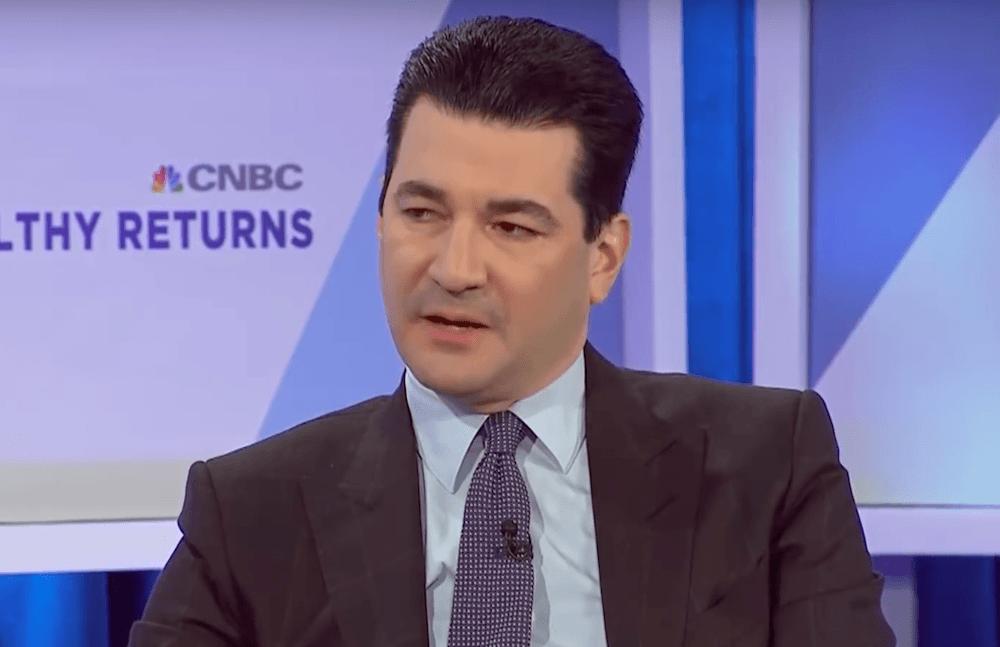
    FDA Commissioner Scott Gottlieb issued a far-ranging statement about his agency’s most recent and upcoming actions, while also addressing past missteps, in regard to the national opioid epidemic.

    Noting that the FDA’s previous wait-and-see policy in regard to evidence and intervention left it “a step behind a crisis that was evolving quickly,” Gottlieb said in the statement that his agency will implement more effective measures to reduce exposure to opioids, including prescription and labeling changes, promotion of treatment therapies, and approval of non-dependency-forming pain treatment.

    Calling the opioid crisis “a top priority” of both Secretary of Health and Human Services Alex Azar and the Trump Administration as a whole, Gottlieb wrote that faster and more decisive action will define the FDA’s policy in 2019.

    The rise in synthetic opioids like fentanyl and the “continued prevalence” of opioid prescriptions with overly long durations has prompted the agency to “step up its intervention,” according to Gottlieb.

    The commissioner also noted that the FDA’s previous approach—”waiting for the accumulation of definitive evidence of harm” put them in a position of catching up to the crisis as it ravaged “vulnerable communities.”

    “We don’t want to look back five years from now, at an even bigger crisis, with regret that there were more aggressive steps that we could have taken sooner,” wrote Gottlieb. “All options are on the table.”

    As Gottlieb outlined in his statement, these options have included expanded information on drug labeling. Passage of the Substance Use-Disorder Prevention that Promotes Opioid Recovery and Treatment (SUPPORT) for Patients and Communities Act in October 2018 has also given the agency new authority to assess and reduce dependency and misuse of opioids, including requirements for packaging on opioids and other drugs that carry a high risk of abuse or overdose.

    According to the statement, FDA will issue a report on their recommendations for prescription guidelines at the end of 2019.

    The FDA is also considering an option to require certain immediate-release formulations of opioids be made available in blister packages containing one- and two-day dosages, which would “comport with evidence demonstrating that a day or two of medication is sufficient” and could “reduce the overall amount of dispensed drugs available for misuse, abuse and diversion.”

    Gottlieb also wrote that the agency will consider a formal evaluation of prospective opioid drugs to determine its application for specific patients, and whether or not the newer application is safer or more effective for treatment than existing, non-addictive medication. The Risk Evaluation and Mitigation Strategies (REMS) program, which measures the benefits of a particular drug over its potential risks, will also be subject to review to determine if it is properly addressing such concerns.

    The FDA will also prioritize the development of new and effective forms of medication-assisted treatment (MAT) to treat opioid dependency and non-addictive pain medication, and expand access to the overdose reversal drug naloxone.

    The agency will also continue to partner with U.S. Customs and Border Protection to reduce the marketing and distribution of illegal opioids through national borders and through international shipping.

    View the original article at thefix.com