Tag: News

  • Lady Gaga Addresses Mental Health During Grammy Speech

    Lady Gaga Addresses Mental Health During Grammy Speech

    Gaga highlighted mental health during an acceptance speech at the 2019 Grammys. 

    Mental health awareness is something that has always been close to Lady Gaga’s heart. 

    In fact, while accepting a Grammy for her co-performance of the song “Shallow” in the film A Star Is Born, Gaga took the opportunity to speak to the importance of looking out for one another. 

    “If I don’t get another chance to say this, I just want to say I’m so proud to be a part of a movie that addresses mental health issues. They’re so important,” Gaga said, according to Harper’s Bazaar. “A lot of artists deal with that. And we gotta take care of each other. So if you see somebody that’s hurting, don’t look away. And if you’re hurting, even though it might be hard, try to find that bravery within yourself to dive deep and go tell somebody and take them up in your head with you.”

    Gaga also took a moment to acknowledge Bradley Cooper, her co-star in the film, who was not present at the awards show.

    “I wish Bradley was here with me right now,” she said. “I know he wants to be here. Bradley, I loved singing this song with you.”

    This was not the first time Gaga has taken to the stage and spoke about mental health awareness. In November, according to Harper’s Bazaar, she spoke at the Patron of the Artists Award about the necessity of bringing mental health conversation to the forefront. 

    “When I speak about mental health, especially when I’m speaking about mine, it is often met with quietness,” she said. “Or maybe, a somber line of fans, waiting outside to whisper to me in the shadows about their darkest secrets. We need to bring mental health into the light.”

    In October 2018, Gaga was named one of ELLE’s Women in Hollywood. During her acceptance speech, she touched on various serious topics, including her experience with sexual assault. 

    “As a sexual assault survivor by someone in the entertainment industry, as a woman who is still not brave enough to say his name, as a woman who lives with chronic pain, as a woman who was conditioned at a very young age to listen to what men told me to do, I decided today I wanted to take the power back,” Gaga said during her speech, according to ELLE.  

    Gaga also addressed mental health during the same speech, stressing the importance of coming together. 

    “It is my personal dream that there would be a mental health expert teacher or therapist in every school in this nation and hopefully one day around the world,” Gaga added. “Let’s lift our voices. I know we are, but let’s get louder. And not just as women. But as humans.”

    View the original article at thefix.com

  • Inside NFL Players' & Retirees' Rising Use Of Prescription Opioids

    Inside NFL Players' & Retirees' Rising Use Of Prescription Opioids

    “If I didn’t play in the NFL, I know I wouldn’t have been in this situation,” said one former offensive tackle who battled a painkiller addiction.

    NFL players and retirees have been misusing opioid painkillers at a much higher rate than the general population, according to a report recently published in The New York Times.

    The problem has become worse in recent years as football players have become physically larger and their prescribed opioids have had to be more potent in order to be effective.

    Injuries and subsequent surgeries leave professional football players in a lot of pain. Combined with the pressure to get back on the field as soon as possible, these athletes regularly turn to high potency painkillers.

    In recent years, these have very often been powerful and addictive opioids like OxyContin. Team doctors have been only too willing to prescribe these drugs, according to players.

    “Earl Campbell, a former All-Pro running back in the NFL, said the first painkillers he took came in a small brown packet that a trainer gave him on the team plane,” The New York Times reports. Others talked about bowls of over-the-counter painkillers in locker rooms and taking a “handful” of Percocet.

    This pill-popping behavior has turned into full-blown addictions for an alarming number of retired NFL players. Aaron Gibson, a former offensive tackle for multiple NFL teams, thought he would stop taking pills after he retired. Instead, he ended up taking as many as 200 pills every day before he finally faced his problem. “If I didn’t play in the NFL, I know I wouldn’t have been in this situation,” he said.

    A 2018 study found that 26.2% of surveyed former NFL players said they had used prescription opioids within the past 30 days, and half of those men admitted to misusing them.

    Another study from 2011 found that 7% of retired players were misusing painkillers, which was more than four times the national rate. A total of 71% of players admitted to misusing drugs at some point during their NFL career. 

    In comparison, a survey done by the World Health Organization found that 42.4% of all individuals in the U.S. had used cannabis—the most commonly used illicit substance—at any point in their lives. Meanwhile, a report by the National Institute on Drug Abuse found that about 20% of people have misused a prescription drug in their lifetimes.

    NFL commissioner Roger Goodell called this issue a “huge priority” after he was asked about it in a pre-Super Bowl press conference. He claimed that NFL leadership is consulting with pain management experts and is seeking recommendations, but didn’t go into specifics.

    Failure to act on the problem, however, has resulted in multiple lawsuits brought by players with chronic pain and addiction disorders as well as federal investigations against the league. The NFL has already come under fire for failing to properly support players who have suffered multiple concussions.

    “We don’t want to change the sport,” said former Chicago Bears quarterback Jim McMahon in an interview about the advocacy group Players Against Concussions. “What made the game great is the violence—but we want to get these guys properly treated after the violence. That’s the problem—they don’t take care of the guys when they’re finished.”

    View the original article at thefix.com

  • Vet Sentenced For Surgically Implanting Puppies With Liquid Heroin

    Vet Sentenced For Surgically Implanting Puppies With Liquid Heroin

    The 39-year-old Colombian vet’s role in the puppy-implanting plot dates back to 2004.

    After a decade on the run and three years in federal custody, a Colombian veterinarian was hit with six years in prison for surgically implanting live puppies with liquid heroin in an effort to aid a South American drug-smuggling ring.

    Andres Lopez Elorez appeared in Brooklyn federal court last Friday for sentencing, months after pleading guilty and admitting he conspired to import heroin into the U.S.  

    “I have made mistakes,” he told the judge, according to The New York Times. “I know I cannot justify my actions.”

    Authorities hailed the outcome as a positive step in fighting the long-term rise in opioid overdoses.

    “Every dog has its day, and with today’s sentence, Elorez has been held responsible for the reprehensible use of his veterinary skills to conceal heroin inside puppies as part of a scheme to import dangerous narcotics into the United States,” said federal prosecutor Richard P. Donoghue, who apparently likes bad puns in his press releases. “This office and our law enforcement partners will continue to investigate and prosecute drug trafficking organizations, operating here and abroad, to reduce the availability of opioids and save American lives.” 

    The 39-year-old Colombian man’s role in the puppy-implanting plot dates back to 2004, according to the Drug Enforcement Administration. In September of that year, Elorez leased a farm in Medellín, where he “secretly raised dogs” that he used to aid in his drug smuggling efforts. 

    Police raided the place on Jan. 1, 2005, and found 17 bags of liquid smack, including 10 already implanted in the pups. All told, the drugs weighed in at nearly three keys, according to the feds.

    Authorities surgically removed the dope, but three of the animals died from viruses they got after the operation. Twenty-two Colombian nationals were arrested in connection with the case the following year, according to NBC News.

    One of the dogs was adopted by an officer with the Colombian National Police and another—named Heroina—became a drug dog for the agency. 

    Elorez, meanwhile, went on the run. Police didn’t catch him until 2015, when he was arrested in Spain. Three years later, he was finally extradited to the U.S. to face charges.

    “Traffickers will go to great lengths,” DEA Special Agent in Charge James Hunt said at the time. “These guys are evil geniuses in ways to think and hide the drugs, secret them. This case was exceptionally heinous.” 

    After the 39-year-old finishes his sentence, he will be deported.

    View the original article at thefix.com

  • Justin Bieber On Past Xanax Addiction: "It Got Pretty Dark"

    Justin Bieber On Past Xanax Addiction: "It Got Pretty Dark"

    “I think there were times when my security was coming in late at night to check my pulse and see if I was still breathing,” Bieber told Vogue.

    Justin Bieber spoke frankly about his past struggles with substance use in a far-ranging cover story for the March 2019 issue of Vogue.

    The pop singer said that his “super-promiscuous” behavior led to using Xanax as a means of “put[ting] a screen” between him and his actions. Bieber said that his faith helped him not only gain sobriety but also brought him to model Hailey Baldwin, whom he married in September 2018. “I believe that God blessed me with Hailey as a result,” he told Vogue.

    In the interview – his first full-length conversation with the media in more than two years, according to Entertainment Tonight – Bieber said that his Xanax use was spawned in part from his meteoric rise to fame.

    “I was real at first,” he recalled. “And then I was manufactured, as, slowly, they just took more and more control.”

    Bieber took his stardom as proof of his own infallibility, and “got very arrogant and cocky.”

    “I was wearing sunglasses inside,” he explained.

    Bieber indulged heavily in the pop/rock lifestyle, which manifested itself in “doing things that I was so ashamed of” – namely, a penchant for promiscuity that he numbed through Xanax use. “My mom always said treat women with respect,” he said. “For me, that was always in my head while I was doing it, so I could never enjoy it.”

    Eventually, Bieber found that he had a “legitimate problem” with sex that was borne from the clash between his values and the emptiness he felt about his stardom. “I think sex can cause a lot of pain,” he said. “Sometimes people have sex because they don’t feel good enough. Because they lack self-worth.” 

    The drug use, too, contributed to Bieber feeling unmoored and out of control. “Drugs put a screen between me and what I was doing,” he explained. “It got pretty dark. I think there were times when my security was coming in late at night to check my pulse and see if I was still breathing.”

    Bieber eventually found help through a detox in 2014, and has remained abstinent from drugs since then without the lack of outside assistance. “To do it without a program, and to stick with it without a sober coach or AA classes – I think he’s extraordinary,” said Baldwin about her new spouse.

    As for his intimacy issues, Bieber said that he stayed celibate prior to meeting Baldwin in order to “rededicate myself to God in that way, because I really felt it was better for the condition of my soul.”

    Now that the couple are married, Bieber feels that “God blessed me with Hailey as a result [of his abstinence]. There are perks. You get rewarded for good behavior.”

    View the original article at thefix.com

  • Government Contractor Accused Of Plotting To Sell Drugs On Cruise

    Government Contractor Accused Of Plotting To Sell Drugs On Cruise

    The contractor allegedly laid out the details of the drug-dealing scheme on his work computer.

    Two would-be tourists were collared earlier this month in Miami as they boarded a gay cruise, where officials said they planned to sell drugs. 

    Peter Melendez and Robert Koehler allegedly hatched the idea in a series of emails before the ship was set to sail. They were caught, according to NBC News, because one of the men worked as a government contractor and sent the messages from his work computer. 

    When authorities picked them up, they allegedly had 27 grams of MDMA, 18 grams of ketamine, 246 grams of the “date rape drug” GHB, 7 grams of Viagra and 5 grams of the ADHD medication Adderall in their luggage.

    It’s not clear when the emails were sent or what, exactly, they said. But, according to a police report, it was Melendez’ decision to send them from his work computer that flagged the interest of Homeland Security investigators. Reports did not specify which agency Melendez worked for. 

    The men are due to be arraigned sometime in March.

    Last year, 38-year-old Storm Chasers star Joel Taylor overdosed on a gay cruise. In the hours before he died on an Atlantis Events-chartered ship, other passengers reported spotting him so drugged up he needed help back to his room. His death later sparked a broader discussion about drug use on party ships, and some dinged the floating festivities for failing to embrace harm reduction efforts that could prevent future fatalities. 

    “The comments online say people need to take responsibility for their own actions—if they use drugs, they’re responsible—and I completely agree with that,” LGBTQ activist Jim Key told Quartz. “But because the promoters know that there are people at their parties who are going to be doing drugs, they share some responsibility there. If you say you have zero tolerance for drugs, that’s not going to stop people from using drugs—but it is going to stop people from seeking treatment.”

    At the time, the CEO of Atlantis—which brands itself as the world’s biggest gay and lesbian cruise producer—told the online news outlet that the company went to great lengths to ensure guest safety and offered full medical facilities and an intensive care unit on each ship. And, he added, medical staff don’t share information with the police.

    View the original article at thefix.com

  • Humorously Named S.420 Bill is Serious About Pot Legalization

    Humorously Named S.420 Bill is Serious About Pot Legalization

    The S.420 bill is the second marijuana-related legislation to have 420 in its name this year.

    Senator Ron Wyden (D-OR) submitted the bill S.420 to Congress on Thursday, aiming to legalize marijuana. If it passes, the bill would deschedule marijuana from its restrictions according to the Controlled Substance act, set up a permit structure for marijuana businesses, and tax the new industry’s sales.

    It’s the second bill this year to have 420 in its name, sharing the reference to stoner culture with the bill H.R.420, which seeks to regulate marijuana like alcohol.

    Bills are prefixed depending whether they first arise in the Senate or the House of Representatives, so having two such bills arise from both chambers of Congress might indicate Capitol Hill is changing how it thinks about marijuana.

    The reference is sure to turn heads and crack some smiles, but Sen. Wyden isn’t joking when it comes to legalizing it.

    “S. 420 may get some laughs, but what matters most is that it will get people talking about the serious need to end failed prohibition,” Sen. Wyden wrote in a statement.

    He expanded on his statement on Twitter.

    “The federal prohibition of marijuana is wrong – plain and simple. Too many lives have been wasted and too many economic opportunities have been missed,” Sen. Wyden tweeted. “It’s time for Congress to respect the will of the voters in Oregon and nationwide, who are demanding common-sense drug policies.”

    These statements are nearly a mirror image of the one released by Representative Earl Blumenauer (D-OR), who submitted H.R.420.

    “While the bill number may be a bit tongue in cheek, the issue is very serious. Our federal marijuana laws are outdated, out of touch and have negatively impacted countless lives,” Blumenauer wrote in his press release. “Congress cannot continue to be out of touch with a movement that a growing majority of Americans support. It’s time to end this senseless prohibition.”

    This isn’t the first time the number has been humorously referenced in legislation. California’s 2003 landmark bill to establish statewide medical marijuana regulations was called SB 420. Rhode Island introduced a legalization bill in 2017 called S 420.

    View the original article at thefix.com

  • "Tsunami" Of Meth Discovered In Record-Breaking Drug Bust

    "Tsunami" Of Meth Discovered In Record-Breaking Drug Bust

    The historic 1.9 ton meth haul was worth over a billion dollars.

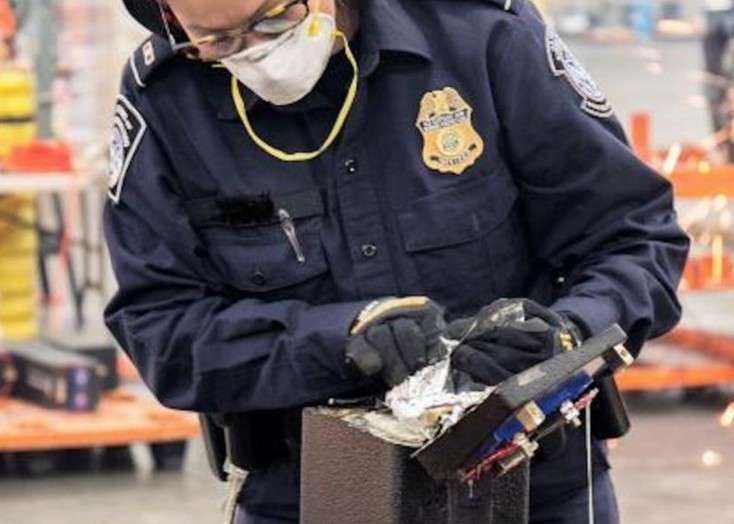
    US border officials in California seized a record-breaking shipment of meth, about 1.9 tons (3,800 pounds) worth around $1.3 billion, hidden in speakers and headed down under.

    Authorities say that the haul of meth broke two records, winning the dubious honor of being the largest amount of meth to be seized on US soil as well as the largest amount ever to be shipped to Australia. Some cocaine and heroin were also found hidden inside the speakers.

    The seizure was a joint effort between US Homeland Security, the DEA and the Australian Federal Police (AFP). On January 11, they managed to discover the drugs hidden inside the housing of a huge shipment of speakers which were packed away in dozens of metal boxes.

    Authorities have arrested two US citizens and four Australian citizens in connection with the shipment, believing them to be part of a larger US-based drug syndicate shipping drugs worldwide.

    The Australian authorities involved say that the bust prevented “a tsunami of ice” from reaching their country, which would have manifested as an estimated 17 million hits of meth. This would have been an especially large problem for the Australian state of Victoria, where the meth was headed, as sewage drug monitoring has found that the 6.3 million people living there use about 2 tons of meth a year.

    AFP Assistant Commissioner Bruce Hill claims that these drugs originate from Mexican cartels that have been pushing hard to get their products into Australia.

    “They have been sending smaller amounts over the years. This is now flagging intent Australia is now being targeted,” Hill told reporters. “The cartel is among one of the most powerful and violent drug trafficking syndicates in the world.”

    The previous largest seized meth shipment ever headed to Australia was a 1.3 ton shipment caught in December of 2017.

    View the original article at thefix.com

  • Woman Claims Food In IHOP Break Room Contained Meth

    Woman Claims Food In IHOP Break Room Contained Meth

    An IHOP spokesperson says the allegations are “completely unfounded.”

    A Texas woman says that she felt intoxicated and ill after eating food in an IHOP employee break room. She now alleges the food was contaminated with methamphetamine. 

    According to the Dallas Morning News, the woman ate food that was free for employees during her break. She started feeling sick and went to her doctor and then the emergency room for treatment. That’s when she tested positive for methamphetamine and told police that the drugs must have entered her system from the food at IHOP because she is not a recreational drug user. 

    A report from the Abilene Police Department noted that the woman “does not use drugs and believes someone put that in the food she ate,” according to Big Country. The police are investigating whether the food was tampered with, but a police officer said that the investigation hadn’t been able to confirm the woman’s story. 

    An IHOP spokesperson noted that the chain usually passes health inspections with flying colors, but said that the restaurant is working with police in this case. 

    “The safety and well-being of team members and guests is a top priority. These allegations are completely unfounded. The franchisee of this location is continuing to investigate this individual’s claim, including working with local authorities,” the spokesperson said. 

    The story may seem far-fetched, but similar stories indicate that it could possibly be true.

    Last year, a North Carolina woman was charged after she reportedly laced a coworker’s drink with methamphetamine following a workplace dispute. In that case the coworker drank the beverage and started feeling sick. When he tested positive for methamphetamine at the hospital he told police that he had been poisoned. 

    The man was lucky to get out of the situation relatively unscathed, said Hudson Police Chief Richard Blevins, who was involved with the case. 

    “With an unknown amount of a controlled substance like methamphetamine, you never know what dangers it may pose,” he said. “You never know what underlying health conditions that may have a negative effect on so it’s definitely a very dangerous situation.”

    Also last year, authorities in Germany began investigating a man who they believe killed 21 coworkers over 20 years by poisoning their lunches. According to The Takeout, the man was caught on camera sprinkling his coworkers’ food with “lead acetate, a poison that could have caused severe organ damage,” according to a criminal lab report. 

    The man had worked at the company where he poisoned people for 38 years, and was described as “conspicuously inconspicuous.” He had not commented on the charges. 

    View the original article at thefix.com

  • Feds Sue To Stop Safe Injection Site In Philadelphia

    Feds Sue To Stop Safe Injection Site In Philadelphia

    Federal authorities are invoking a “crack house statute” from the ’80s in their attempt to stop the opening of the site.

    Federal authorities in Philadelphia are suing to stop the opening of a safe injection site in the city. 

    “These folks have good intentions and they’re trying their best to combat the opioid epidemic,” William McSwain, the U.S. attorney for the Eastern District of Pennsylvania, told NPR. “But this step of opening an injection site crosses the line.”

    McSwain is suing to stop Safehouse, a nonprofit, from opening a supervised injection site. The organization has said that it has support of city officials and plans to open the site this year. However, McSwain said that the site—where people would bring drugs to inject under medical supervision—is illegal.  

    “If Safehouse or others want to open this type of site, they need to steer their efforts to get the law changed,” he said. 

    The federal authorities cite a portion of the Controlled Substances Act that was written during the 1980s when people were concerned about the crack epidemic. The so-called crack house statute makes it illegal to operate a place to make, store, distribute or use illegal drugs. The law was originally written to prosecute people operating crack houses, but authorities have used it in other circumstances, said Alex Kreit, a law professor at Thomas Jefferson School of Law in San Diego and a drug policy specialist. 

    However, Kreit noted that this is the first time authorities will try to use the law against a safe injection site. 

    “It is completely untested in terms of how federal law will apply to safe injection sites,” he said. “People will be watching this very closely—particularly in other cities that have expressed their intention of starting a safe injection site.”

    Although Philadelphia has been at the forefront of the supervised injection site debate, other cities from around the country are considering similar measures. There are no safe injection sites in the U.S., but data from Canada and other countries indicate that such facilities can help stop the spread of disease and reduce overdose deaths because medical professionals are on hand.

    Proponents also argue that the sites will be able to connect drug users with resources including treatment. 

    Despite this, McSwain said in a letter to Safehouse that the law “makes no exception for entities, such as Safehouse, who claim a benevolent purpose.”

    Safehouse’s vice president and attorney Ronda Goldfein said that she’s confident that a federal judge will recognize that the site is not the intended target of the statute. 

    “We have a disagreement on the analysis and intention of the law. We don’t think it was intended to prevent activities such as this, and perhaps it will take a court’s ruling to move the issue forward.”

    View the original article at thefix.com

  • Comedian Rob Delaney Celebrates 17 Years Of Sobriety

    Comedian Rob Delaney Celebrates 17 Years Of Sobriety

    The Catastrophe actor took to Instagram to pen a somber note about his sober milestone and his late son.

    Rob Delaney, creator and star of the celebrated Amazon Prime show, Catastrophe, announced his 17th year of sobriety on February 4th. This milestone is all the more meaningful for the comedian, who nearly a year ago lost his toddler son, Henry, to cancer.

    On Monday, Delaney wrote about his sober anniversary and his son Henry in a reflective post. Henry died in January 2018 after struggling with brain cancer. Rob and wife Leah Delaney had three boys, and not long after Henry’s death, another son was born.

    Delaney wrote on Instagram:

    “As of today I’ve been sober 17 years. 17 years ago I was in jail in a wheelchair. Today I’m not. I am profoundly grateful to the alcoholics who shined a light on the path for me and helped equip me with the skills to live life well.”

    In his memoir Rob Delaney: Mother. Wife. Sister. Human. Warrior. Falcon. Yardstick. Turban. Cabbage. wrote about his drunk-driving accident that landed him in jail and rehab.

    “Twelve years ago I was in jail, in a wheelchair. The hospital gown I was in was covered in blood from my bleeding face. My top front right tooth was missing a piece. My right arm and my left wrist were broken. They were broken so badly they both required surgery. My knees had slammed into the dashboard of the car I was driving the night before and split open to the bone. They weren’t broken, but they’d been operated on and sewed shut in the emergency room of Cedars-Sinai hospital, just before I went to jail.”

    “This has been a brutal year for my family and me,” Delaney continued on Instagram. “Our first year without our son and brother Henry. Had I not been sober it would have been far worse. As it was, I squeaked by,” he confessed.

    “Sobriety allowed me to be a reasonably good dad, husband and worker though it all. (If you average it out. I think.) Sobriety allows me to grieve fully, and grief is an expression of love. Thank you to everyone who has helped me. I can’t do it alone.”

    Delaney announced on Facebook in February 2018 that his son Henry had died of cancer. Henry was diagnosed with a brain tumor in 2016, and after treatment the cancer reoccured in fall 2017.

    “Henry was a joy. He was smart, funny, and mischievous and we had so many wonderful adventures together,” Delaney wrote at the time. “Thank you, beautiful Henry, for spending as much time with us as you did. We miss you so much.”

    View the original article at thefix.com