Tag: News

  • Positive Drug Tests At Work Continue To Rise

    Positive Drug Tests At Work Continue To Rise

    Marijuana is the substance most often detected in workplace drug screenings, according to a new study.

    More and more employees are testing positive for drugs in workplace screenings, an increase that is concerning for some employers and safety specialists. 

    According to a study by Quest Diagnostics, positive drugs tests have increased significantly in a two-year period between 2015 and 2017. Marijuana is the substance most often detected in workplace drug screenings, and analysis found that it was detected 33% more often in 2017 than in 2015. That jump may be expected, as more states make cannabis legal for recreational and medicinal use. 

    However, it’s alarming that the industry with the most significant increase was transportation and warehousing. In this industry, people often operate heavy machinery, and being intoxicated could put them at risk for accidents, human resources expert Rob Wilson, president of Employco USA, told WXYZ Detroit

    “Test results showed that there was a double-digit jump of marijuana use in transportation and warehouse fields, which could be very problematic as operating heavy machinery while under the influence of marijuana could be very dangerous indeed,” he said.

    Despite the fact that more states are legalizing cannabis, employees could still put their jobs at risk by using it. Whether or not medical use of cannabis is protected is the subject of many legal battles, but Wilson said that employers can treat cannabis like other legal substances: employees can use them, but not at work. 

    “While it is against the law to discriminate against someone simply because they have a medical marijuana card, as this could be seen as discrimination against someone with a disability, you can still require sobriety among your employees and treat marijuana the same way you would alcohol or prescription drugs like Vicodin. Whether an employee is driving heavy machinery or approving loans, you need your workers to be clear-headed and capable of performing at a high level,” he said. 

    However, this can complicate drug testing because the tests usually just show whether a substance is in someone’s system, without indicating the level, which is needed to know whether someone is currently under the influence of marijuana

    In addition, employers could face pushback for testing employees, Wilson said. 

    “Your ability to monitor drug use among your employees is going to depend on whether or not you are a unionized or private workplace,” he explained. “While you have the right to expect and require sobriety from workers on the job, it can become a bit tricky when you suspect drug use and want to act on your fears.”

    In addition to marijuana, more people also tested positive for cocaine and amphetamines, suggesting that the rise in positive tests can’t be wholly explained by cannabis legalization. 

    View the original article at thefix.com

  • Charging Heroin Dealers With Homicide A Common Practice In Pennsylvania

    Charging Heroin Dealers With Homicide A Common Practice In Pennsylvania

    Pennsylvania leads the nation with more than 500 drug-induced homicide charges filed.

    In Lancaster County, deep in the heart of Amish country, authorities have gone after more drug-induced homicide charges than any other place in the nation, according to figures from Mission LISA, a data aggregation project.

    Last year alone, prosecutors in the southeast Pennsylvania county filed roughly 60 such charges, more than the 37 in nearby Bucks County or the 35 in York County. Four of the most prosecution-prone counties were in the Keystone State, which led the nation with more than 500 drug-induced homicide charges filed.

    It’s a controversial practice, often condemned by harm reduction advocates. But Lancaster County District Attorney Craig Stedman swears the charge—levied against dealers who sell fatal doses of the drug—is working. 

    “I don’t think this is a magic bullet that’s going to end the opioid crisis, but is it part of the solution?” he told WITF. “I’m absolutely convinced it is, and there’s just something about being held accountable.”

    By way of example, Stedman highlighted an interaction with one man accused of selling drugs. “One guy in particular, they arrest him, he’s a long-time heroin dealer, and he was arrested for cocaine. They said, what are you doing? You’re a long-time heroin dealer. And he said, look, message received. I’m not catching a body in Lancaster County.” 

    But advocates decry the practice, as Drug Policy Alliance attorney Lindsay LaSalle explained to the PA Post in 2018.

    “We see this kind of flip,” she said, “where you have the compassion for the person who used but you want to throw the hammer at the person who sold. And this is an absolutely false dichotomy. The distinction between user and seller is often patently false.”

    The high numbers in Lancaster County come amid a long-term increase in drug-related homicide charges, according to the Mission LISA data.

    Going all the way back to 1975, the organization’s data set accounts for 2,741 drug-induced homicide charges—but the figures show a sharp uptick starting around 2010. In that year, there were 67 such charges filed across the nation; by 2015 that figure rose to 300.

    In 2016, it peaked at just over 660, though since then has fallen to under 400.

    View the original article at thefix.com

  • Being "Sober Curious" Helps Some Explore Relationship With Alcohol

    Being "Sober Curious" Helps Some Explore Relationship With Alcohol

    “Being sober curious is about ­questioning every impulse or expectation to drink and using the answers to inform whether or not you actually drink,” says the author who coined the term.

    Make room, Dry January—there’s another sobriety exploration method in town. 

    In recent months, the term “sober curious” has become more prominent. Rather than abstaining completely from alcohol, those who are sober curious may choose to take a break from drinking and give some thought to their relationship with alcohol. 

    The concept, according to Time, was coined by Ruby Warrington and is the title of her new book as well. 

    In the book, Warrington explores the idea of reexamining one’s relationship with alcohol. Time reports that while Warrington never struggled with substance use disorder, she did use alcohol to be more at ease in social situations and to cope with or cover her feelings. 

    “Being sober curious is about ­questioning every impulse or expectation to drink and using the answers to inform whether or not you actually drink,” Warrington tells Cosmopolitan

    While Warrington doesn’t necessarily press the idea that alcohol should be cut out of one’s life forever, she does think there are benefits to stepping back from it. She says, according to Time, that rather than squeeze out confidence from alcohol, it can come from healthier methods, like positive affirmations and power poses. 

    In addition to helping her mentally, Warrington tells Cosmopolitan that cutting down alcohol helped her feel better physically. “My anxiety levels were lower. I woke up fresh. I had so much more energy,” she said.

    In the book, Warrington also addresses the idea of FOMA, or “fear of missing alcohol.” She provides some advice to get around this fear, such as taking part in new hobbies or ditching dinner plans and going out for brunch instead. 

    Psychotherapist Alison Stone tells Bustle that being “sober curious” isn’t restrictive and allows people to make decisions based on their feelings. 

    “Identifying as sober curious prevents us from falling into a black and white way of thinking, feeling, and behaving,” she said. “It can help us better understand our relationship with alcohol, too—when do we drink more than we intended to? Are we drinking because we want to, or because we feel we need to? Having curiosity opens up the possibilities to better understand ourselves and our motives for doing things.”

    Stone adds that when something in one’s life is restricted or completely off limits, it may just make that person want it more. In that way, being sober curious is beneficial. “That is partially due to the psychological impact of making an extreme decision—there are often parts of us that want to do the exact opposite of that decision,” Stone stated. 

    But while being sober curious may work for some, others may need to stick to complete abstinence from alcohol. 

    View the original article at thefix.com

  • Are Rehab Centers Equipped With Meds To Treat Opioid Use Disorder?

    Are Rehab Centers Equipped With Meds To Treat Opioid Use Disorder?

    In spite of the availability of opioid addiction medications, many treatment centers have continued to rely only on abstinence programs and talk therapy. 

    A study published in the January issue of Health Affairs found that only 36% of addiction treatment centers in the U.S. carry any of the medications approved for the treatment of opioid addiction. Not only that, but only 6% carry all three: buprenorphine, naltrexone, and methadone.

    As the opioid crisis has exploded in the U.S. and abroad, cities are scrambling to combat spiking overdose deaths and the massive costs associated with the epidemic. In addition to law enforcement and education campaigns, increasing funds have been allocated to the development of medication that can treat opioid addiction.

    For many years, methadone was the only option for those who needed more than abstinence, therapy, and rehabilitation programs to combat their powerful and relentless disease. Buprenorphine and naltrexone arrived on the scene in 1981 and 1984, respectively, and have shown promising results.

    In spite of the availability of these drugs for decades, many addiction treatment centers have continued to rely only on abstinence programs and talk therapy. The study, led by Johns Hopkins School of Public Health Professor Ramin Mojtabai, looked at 10,000 outpatient facilities in the U.S. via surveys collected between 2007 and 2016.

    In 2007, only 20% of the centers offered even one of the medications, so at least some progress is being made in this respect. 

    “Medication treatment (MT) is one of the few evidence-based strategies proposed to combat the current opioid epidemic,” reads the study abstract. “The findings highlight the persistent unmet need for MT nationally and the role of expansion of health insurance in the dissemination of these treatments.”

    Image Source: NIDA

    Lindsey Vuolo, associate director of health law and policy at the Center on Addiction, assured U.S. News & World Report that these medications work.

    “Overall, approximately 50 percent of patients who receive medications for opioid addiction are successfully treated, while less than 10 percent of patients are successfully treated without these medications,” she said. At the same time, only 10 to 20% of people with substance use disorders seek any treatment at all.

    Though Dr. Mojtabai feels that increased attention to the opioid crisis may continue the trend toward more treatment centers offering addiction-combating medications, Vuolo notes that most of the facilities offering these drugs are concentrated in wealthy urban and suburban areas, and is generally more pessimistic.

    “The number of people receiving treatment has not changed significantly, even in light of the unrelenting opioid epidemic,” said Vuolo. “I don’t think research will show significant changes between 2016 and 2019 on a national scale.”

    View the original article at thefix.com

  • Backstreet Boy AJ McLean Discusses Addiction, Sobriety

    Backstreet Boy AJ McLean Discusses Addiction, Sobriety

    “To be 41 and still be sitting here talking to you is a miracle within itself.”

    Boy band legends Backstreet Boys are back with a new album, DNA, a new tour in support of it, and a Grammy nomination for the single “Don’t Go Breaking My Heart.”

    As the band looks back on their career, AJ McLean is also looking back on the substance abuse they’ve suffered in the past.

    As he told NPR, “I just turned 41. To be 41 and still be sitting here talking to you is a miracle within itself. With drugs and alcohol and all these things that I’ve had to overcome will forever be a daily struggle.”

    McLean has been open with the public about his struggles for years, adding, “We’ve always prided ourselves on just being honest with our fans and being honest with each other. That is probably one of the biggest reasons why we’ve been together for almost 26 years. We’re family, we’ve seen the highs and lows with each other…We’ve literally lived lives together – good, bad or indifferent.”

    McLean has taken trips to rehab in 2001, 2002 and 2011 for depression and alcoholism, and he admitted to relapsing in 2018. As he told People, “It’s no secret that this is a disease, and that it’s a daily struggle…It will win if you don’t take care of yourself.”

    McLean also renewed his fight to stay sober after the overdose death of rapper Mac Miller last year. “With what recently happened with Mac Miller, people need to really understand how serious addiction is. It’s a huge killer and you’ve just got to surround yourself with the right people, go to your meetings and get a sponsor. It’s a marathon, not a race.”

    Like many who’ve struggled with addiction, McLean’s family has also been a big saving grace for him in his recovery. “They’re my everything,” he told Entertainment Tonight. “Them and my wife. So, I would never in a million years want to let them see me drunk or high or dead or in jail. I want to talk both my girls down the aisle…when they’re 35!”

    McLean also posted on Instagram that he’s going to be cutting down on social media, which he says can be “overconsuming.” Again, family has been McLean’s focus, not allowing “social media [to] control me and my time – my valuable time with my kids especially.”

    View the original article at thefix.com

  • Connecticut Judge Dismisses Opioid Lawsuits Against Purdue Pharma, Others

    Connecticut Judge Dismisses Opioid Lawsuits Against Purdue Pharma, Others

    The Connecticut lawsuits are part of a nationwide effort to make pharmaceutical companies pay for a portion of the damage caused by this crisis.

    Judge Thomas Moukawsher in Connecticut ruled against 37 cities and towns within the state that brought lawsuits against pharmaceutical companies accused of fueling the opioid crisis in the U.S.

    According to the Associated Press, the judge ruled that the lawsuits were “not allowed because they were not filed as government enforcement actions authorized by state public interest laws.”

    “Their lawsuits can’t survive without proof that the people they are suing directly caused them the financial losses they seek to recoup,” Moukawsher wrote. “This puts the cities in the same position in claiming money as the brothers, sisters, friends, neighbors, and co-workers of addicts who say they have also indirectly suffered losses by the opioid crisis. That is to say—under long-established law—they have no claims at all.”

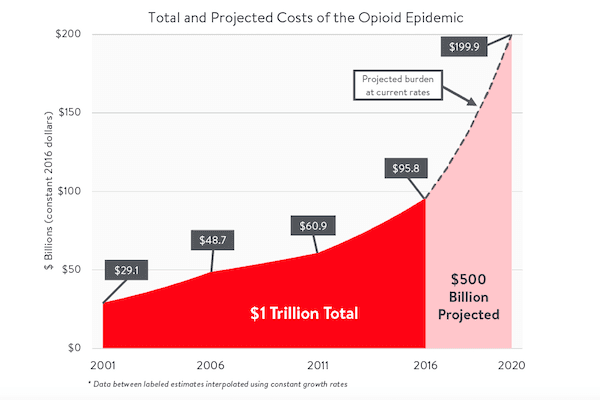
    Though this is a setback in the efforts of the plaintiffs to recoup the many billions of dollars spent to mitigate and combat the opioid crisis, appeals are already being considered.


    Source: ALTARUM

    The lawsuits in Connecticut are only a part of a nationwide effort to make pharmaceutical companies pay for a portion of the damage caused by this crisis. States, cities, counties and Native American tribal councils across the country are filing civil suits against some of the biggest drug manufacturers, claiming that misleading advertising and the alleged encouragement of physicians to over-prescribe opioids have fueled the epidemic of addiction and overdoses.

    According to Forbes, the collective action could become “the largest civil litigation settlement agreement in U.S. history.”

    The record is currently held by the settlement between 46 states and the tobacco industry—a case that some are pointing to as a precedent for the present-day opioid lawsuits. However, experts have pointed out that there are marked differences between these two cases.

    Addiction to prescription opioids is often caused by misuse, whereas there is a clear link between using tobacco products as directed and illness. This makes it easier to blame addiction, overdose and other health concerns on the opioid users themselves.

    “Individual plaintiffs who have sued pharmaceutical companies over how opioids have been marketed have rarely been successful, according to Richard Ausness, a professor at the University of Kentucky College of Law,” wrote Alana Semuels for The Atlantic in 2017. “Courts have made clear that they believe that individual victims are largely responsible for their addiction.”

    However, drug makers have been successfully sued in the past, though many of the lawsuits were settled out of court for a small portion of company profits. Purdue and others have continued to deny any allegations of deceptive marketing or other roles in the opioid crisis.

    Purdue Pharma released a statement about Judge Moukawsher’s ruling, praising him for “applying the law” and vowing to “help address this public health challenge.”

    View the original article at thefix.com

  • Will Florida Repeal Its Ban On Marijuana Smoking?

    Will Florida Repeal Its Ban On Marijuana Smoking?

    Florida’s newly elected governor says the ban was not “up to snuff.” 

    Newly elected Florida Governor Ron DeSantis has asked his state’s legislature to drop a ban on smoking marijuana.

    DeSantis, a Republican, announced his decision at a press conference on January 17, where he said the ban was not “up to snuff,” and doubled down on his decision by stating that if lawmakers don’t implement the change by mid-March, he’ll drop former governor Rick Scott’s appeal of a judge’s ruling which prohibited the ban because it violated the state’s amendment to legalize medical cannabis

    Amendment 2 was intended to legalize the use of medical marijuana for individuals living with a variety of debilitating conditions or ailments with the approval of a licensed state physician. Though 71% of voters approved the bill in 2016, the state legislature did not implement Amendment 2 in 2017, prompting Scott to call for a special session in the summer of that year to address its implementation.

    The Florida State Legislature then passed Senate Bill 8A, which established regulations for the amendment. These included a cap on the number of retail dispensaries, as well as a ban on smoking medical marijuana—though cannabis in spray, oil or vapor form was allowed.

    Orlando attorney John Morgan filed a lawsuit to challenge the smoking ban, which a Leon County circuit court judge ruled in favor of in May 2018. The Florida Health Department appealed the ruling, which is the subject of DeSantis’ request.

    “What the Florida legislature has done to implement the people’s will has not been done in accordance with what the amendment advised,” said DeSantis at the January 17 announcement. “Whether patients have to smoke it or not, who am I to judge that? I want people to be able to having their suffering relieved. I don’t think this law is up to snuff.”

    DeSantis also plans to remove regulations and drop appeals in several other cases involving licensing for medical marijuana companies to grow, manufacture and sell their own product. 

    “We have a lot of fish to fry in Florida,” he said. “The last thing I want to be doing is cleaning up something that should have been done two years ago. I don’t want to continue fighting some of these old battles.”

    In an interview after the press conference, John Morgan called the governor’s decision a “victory for the people of Florida. This plant was put into nature by God for us, and it works.”

    View the original article at thefix.com

  • Binge Eating Now Most Common Eating Disorder In US

    Binge Eating Now Most Common Eating Disorder In US

    Binge eating disorder is more common than schizophrenia, HIV and breast cancer.

    Binge eating is now the most common of all eating disorders, despite the fact that it has only been recognized as a specified eating disorder since 2013. 

    According to Cooking Light, there are three times more cases of binge eating disorder (BED) than there are of anorexia and bulimia combined. The Binge Eating Disorder Association notes that binge eating disorder is more common than schizophrenia, HIV and breast cancer. 

    Binge eating, according to the National Eating Disorder Association (NEDA), is “a severe, life-threatening, and treatable eating disorder.” 

    Some of the signs of BED include eating large amounts of food at least once weekly for three months or longer, a feeling of lack of control when eating, feelings of guilt or shame afterward, and using unhealthy methods such as purging afterward. 

    “Binge eating disorders differ from bulimia, as binge eaters don’t always use exercise, laxatives, or other forms of purging to try to ‘erase the binge,’” Cooking Light reports. “Instead of falling into binge-purge cycles, those with a BED will most likely isolate themselves,  or even try to go to sleep, instead of attempting to fix the problem with harmful interventions.”

    NEDA says a binge-eating episode includes three or more of these behaviors within two hours: eating faster than normal, eating to discomfort, eating large amounts of food even if not hungry, feeling out of control and lacking ability to stop, eating alone due to embarrassment and feeling shame or guilt afterward. 

    Binge eating can happen any time of day. In some cases, it can be the result of restricting calories throughout the day, not addressing emotional and mental health problems, or can be done out of boredom. 

    Chevese Turner, chief policy and strategy officer for NEDA, told Cooking Light that subjective binges are also something to be aware of. A subjective binge is when a person eats a normal amount of food but still battles feelings of being out of control or guilty. 

    While about 70% of those with BED are overweight or obese, anyone can struggle with the eating disorder. Past research has shown that women who diet are about 12 times more likely to battle BED. Men who diet are also more likely to have it.

    Additionally, those with mental health issues or substance use disorders may be at higher risk of developing BED.

    Turner also tells Cooking Light that those with “a perfectionist or overachiever mentality” may be more likely to struggle with BED. 

    There are a number of consequences of BED, including weight cycling, the body becoming insulin-resistant, and gastrointestinal problems. There is also a high risk of emotional trauma. 

    One way to determine if you or a loved one is struggling with BED is by using NEDA’s screening tool. NEDA can also be reached at 1-800-931-2237.

    View the original article at thefix.com

  • Inmates With Mental Health Issues Kept After Release Dates, Lawsuit Alleges

    Inmates With Mental Health Issues Kept After Release Dates, Lawsuit Alleges

    “Our clients are told, often on the day they expect to be released from prison, that they will not be leaving and must stay until community housing is located,” said the executive director of Disability Rights New York.

    In theory, MG is not in prison. His release date was in May 2017.

    And yet, every day he wakes up in a windowless cell in the Auburn Correctional Facility. He wears green prison clothes, stands for count and identifies himself by the seven-digit number emblazoned on his shirt.  

    That’s because MG is mentally ill and bound for community-based mental health housing—but there’s no space. So instead, the New York prison system has kept him, locking him up even after his sentence has technically ended. 

    But MG isn’t the only prisoner held long past the expiration of his sentence. That’s why the Legal Aid Society and Disability Rights New York last week filed a class action lawsuit against the state’s prison system, the New York State Office of Mental Health, the prison system and Governor Andrew Cuomo, claiming violations of the Americans with Disabilities Act and demanding that the state come up with better mental health housing options.  

    “Our clients are told, often on the day they expect to be released from prison, that they will not be leaving and must stay until community housing is located,” said Timothy Clune, executive director of Disability Rights New York. “Further, documents produced by the Defendants show that New York State is well aware of the shortage of mental health housing for this population. Instead of addressing this shortage the State has been ignoring the problem and our clients.”

    The six prisoners at the center of the new federal lawsuit are all mentally ill and at risk of homelessness, so the state decided they should be sent to supportive housing. But right now there isn’t enough, and when that happens, officials instead transfer prisoners like MG to one of 13 “residential treatment facilities”—all of which are in medium and maximum security prisons.

    In effect, according to the lawsuit, the prison system is lengthening their sentences because they’re mentally ill, in the process “undermining the most basic principle undergirding the criminal justice system: that a criminal sentence, once imposed by a judge, means what it says.”

    The state hasn’t responded in court to the legal claim just yet, and an Office of Mental Health official said they hadn’t been formally notified when reporters first started asking for comment.

    “This lawsuit was served to the media before it was served to us, so we can’t comment on its details,” spokeswoman Jessica Riley told The Albany Times-Union. “However, New York funds one of the most robust supportive housing networks in the nation for individuals with mental illness.”

    The state pours nearly $500 million a year into community-based housing for people with serious mental illness. Currently, that funds around 44,000 housing units statewide, and there’s plans to have 6,000 more online by 2021. 

    The other men in the lawsuit have stories similar to MG’s. 

    CJ, who has bipolar disorder, was supposed to get out of prison in September 2017—but he’s still locked up in the Green Haven unit in Stormville, according to the legal filing. He got a GED and vocational certificate during his time behind bars, and had hoped to get a job and rebuild a life for himself near his family in Orange County. Instead, he’s spent the past year-and-a-half in and out of barren psychiatric observation cells where he’s been put on suicide watch after repeatedly telling prison staff he’d rather die than stay in prison.

    MJ, who also has bipolar disorder, expected to get out in June 2018, according to court papers. Instead, he too was sent to Green Haven, where he’s been put in solitary twice for rules infractions—even though he shouldn’t be in prison to begin with.

    JR has depressive disorder and post-traumatic stress. He’s repeatedly attempted to harm himself, and he should already be out of prison—but he’s still at the Fishkill Correctional Facility in Beacon. Prison staff have already asked him to sign release papers and told him he’s considered a parolee instead of an inmate, even though he’s still in prison, the suit claims.

    DR, who has bipolar disorder, was slated for release in December 2017.

    Yet, he’s still being held at the Fishkill facility, the suit alleges. He proposed living with his aunt, but officials denied him and insisted that he must wait for community-based mental health housing to open up, according to the federal claim.

    It’s stories like these that prompted the legal advocates to file suit. They’re asking for class status; an order declaring the state’s actions unconstitutional; money for lawyers’ fees; and a permanent injunction forcing the state to make sufficient housing available and to come up with a better plan for mentally ill inmates in the future. 

    It’s not part of their requested relief but, as the suit notes: “Plaintiffs want to be free from prison.”

    View the original article at thefix.com

  • Kevin Zegers Defends Decision To Tell His Young Kids About Alcoholism

    Kevin Zegers Defends Decision To Tell His Young Kids About Alcoholism

    After posting a video where his three-year-old twins call him an alcoholic, Kevin Zegers later explained his decision to inform them about his condition.

    Kevin Zegers won praise for his response to online uproar about a post on his Instagram page in which his young children described their father as an “alcoholic.” Zegers, 34, an award-winning actor whose credits include Transamerica, Fear the Walking Dead and most recently, Dirty John, is currently in recovery for alcohol dependency, which in his response, he described as “part of his life.”

    He defended his decision to inform his children about his condition as an effort teach the girls “some empathy and understanding about addiction,” and chose to share the video as a means of “crack[ing] the window open so others can see what’s possible on the other side.”

    In the video, posted on January 22, 2019, Zegers’ wife, talent agent Jamie Feld, is heard asking the couple’s twin three-year-old daughters, “What is Daddy?” Both answer, “An alcoholic.” She then asks them where Zegers is at that moment, and then tells them that he is at an Alcoholics Anonymous (AA) meeting. Zegers himself added the caption, “Learning ’em young. #aameeting.”  

    While response from some of Zegers’ followers was positive, others considered the couple’s transparency as giving the children information that may beyond their understanding.

    On January 23, 2019, Zegers himself posted a response to the latter followers, which began simply with “Being in recovery is a part of my life. Being an ‘alcoholic” doesn’t mean that I drink.”

    Zegers went on to explain that his decision to inform his daughters about his condition was inspired by their own questions about where he was at their bedtime. “Instead of lying to them, or projecting an archaic stigma, we choose to tell them the truth. ‘Daddy’s at a meeting,’” he wrote.

    In addition to imparting “empathy and understanding” about addiction on his children, Zegers also hoped that they would come to understand that inspite of his dependency, he has “chosen to live a clean and sober life that involves much more than drinking” for the past eight years.

    He also noted that his decision to make the video public was an attempt to directly address people like those who posted negative or questioning comments, whom he described as “want[ing] to share people with addiction and mental health issues back into the shadows. My choice is to crack the window open so others can see what’s possible on the other side.”

    Zegers has been frank about his alcohol dependency in the past. In a 2013 interview for the Canadian Broadcasting Corporation, Zegers said that while he never drank while working on a film or television show, he did find that his career had leveled off after the critical success of Transamerica in 2006 because he either refused or “messed up, either intentionally or unintentionally” film projects that followed because of his struggles with alcohol. “But once I actually got sober, things started falling back into the order they were before,” he noted.

    View the original article at thefix.com