Tag: opioid epidemic

  • Opioid Epidemic Will Get Worse, Researchers Says

    Opioid Epidemic Will Get Worse, Researchers Says

    Using computer modeling, researchers predicted that overdose deaths will kill 81 ,700 people in 2025 unless drastic changes are made.

    Researchers from Massachusetts General Hospital have grim news about the opioid epidemic: It’s likely to continue worsening in the coming years, unless widespread, drastic policy changes are taken to address illicit drug use. 

    The study, published in the journal JAMA Network Open, showed that even with efforts to more tightly control access to prescription opioids, overdose deaths will continue to rise.

    Using computer modeling, researchers predicted that overdose deaths will kill 81 ,700 people in 2025, most of whom will die from illicit opioids. Further restricting access to prescription opioids will only reduce that number by 3%-5.3%, researchers found. 

    “This study demonstrates that initiatives focused on the prescription opioid supply are insufficient to bend the curve of opioid overdose deaths in the short and medium term,” Dr. Marc Larochelle of the Grayken Center for Addiction at Boston Medical Center said in a press release. “We need policy, public health and health care delivery efforts to amplify harm reduction efforts and access to evidence-based treatment.”

    Jagpreet Chhatwal, who co-authored the paper with Larochelle and others, said that more drastic measures are needed to target the use of illicit opioids. 

    “If we rely solely on controlling the supply of prescription opioids, we will fail miserably at stemming the opioid overdose crisis. Illicit opioids now cause the majority of overdose deaths, and such deaths are predicted to increase by 260%—from 19,000 to 68,000—between 2015 and 2025,” said Chhatwal. “A multi-pronged approach—including strategies to identify those with opioid use disorder, improved access to medications like methadone and buprenorphine, and expansion of harm reduction services such as the overdose-reversal drug naloxone—will be required to reduce the rate of opioid overdose deaths.” 

    Chhatwal said that while easy access to prescription opioids may have contributed to the crisis, today the epidemic is more about illicit opioids including fentanyl and its analogues. Because of this, efforts to reduce overdose deaths need to focus on addressing the population of people who are using illegal drugs. 

    “The opioid epidemic started with a sharp increase in opioid prescriptions for pain in the 1990s; but since 2010 the crisis has shifted, with a leveling off of deaths due to prescription opioid overdoses and an increase in overdose deaths due to heroin,” he said.

    “In the past five years, deaths have accelerated with the introduction of the powerful synthetic opioid fentanyl into the opioid supply, leading to a continuing increase in overdose deaths at time when the supply of prescription opioids is decreasing.”

    View the original article at thefix.com

  • Opioid Crisis Activists "Die In" At Guggenheim Over Sackler Family Ties

    Opioid Crisis Activists "Die In" At Guggenheim Over Sackler Family Ties

    After the Guggenheim, protesters walked two blocks to the Metropolitan Museum, which has a wing named after the Sackler family

    Protesters dropped fake prescriptions from balconies, handed out empty pill bottles and laid down as if they were dead at the Guggenheim Museum in New York City to call attention to the opioid epidemic and call for the museum and others like it to stop acknowledging the billionaire philanthropists of the Sackler family, members of which founded the company that would become Purdue Pharma, the manufacturers of OxyContin

    “I want the Guggenheim and others publicly to disavow themselves from the Sacklers and refuse future funding from them, and I want them to take down the Sackler name from the museums,” Nan Goldin, who organized the protest, told The Guardian.

    Goldin, a photographer who art displayed in the Guggenheim, has been an outspoken critic of the Sackler family after she nearly died of an opioid overdose, following an addiction that she says started when she was prescribed OxyContin, a pill produced by Purdue Pharma. 

    The Sackler family has its name on the Guggenheim and other museums and institutes for the arts. Since the opioid epidemic — and Purdue’s misleading advertising claims — have been in the spotlight more, some have called on these institutions to distance themselves from the family.

    “We’re here to call out the Sackler family. By failing to disavow them now, by refusing to take down their names, the museums are complicit in the opioids crisis.”

    Distributing fake prescriptions from the balconies was meant to call attention to comments made by one member of the Sackler family, claiming that the launch of OxyContin would “followed by a blizzard of prescriptions that will bury the competition,” said Goldin. 

    According to The New Yorker, the fake scripts were for 80 milligrams of OxyContin to be taken 24 times a day. They also contained a quote: “If OxyContin is uncontrolled, it is highly likely that it will eventually be abused. . . . How substantially would it improve our sales?” The words were pulled from court filling in Massachusetts, where Purdue is being sued for its prescribing practices. 

    After the Guggenheim, protesters walked two blocks to the Metropolitan Museum, which has a wing named after the Sackler family

    Visitors to the Guggenheim were initially confused, but a few who spoke to The Guardian said that the protest resonated with them. 

    “It reminded me of stories of protesters laying down in Wall Street during the Aids epidemic. These institutions all have dirty hands,” said Alex Viteri.

    Another man was visiting from New Hampshire, one of the states hardest hit by the opioid epidemic. The man said that his brother-in-law became hooked on opioids after being prescribed OxyContin. Like many people, the brother-in-law progressed to illicit opioids and died of a drug overdose. 

    View the original article at thefix.com

  • Did Abuse-Deterrent OxyContin Lead To Uptick in Hep-C Cases?

    Did Abuse-Deterrent OxyContin Lead To Uptick in Hep-C Cases?

    Researchers examined a possible link between the arrival of abuse-deterrent Oxy and the increase in hepatitis C cases for a new study.

    In 2010, concern about the opioid epidemic was largely centered around the misuse of OxyContin. That year, Purdue Pharma, which manufactures the opioid painkiller, reformatted the drug to make it harder to misuse.

    However, researchers say this caused people to use heroin instead, which ultimately let to an increase in cases of hepatitis C. 

    Officials have known that cases of hepatitis C (HCV), which can be passed through intravenous drug use, had increased rapidly beginning in 2010. In a recent study published in Health Affairs, researchers found that HCV spread more quickly in states that previously had higher than average rates of OxyContin abuse. This confirmed the connection between the reformulation of OxyContin and the higher rates of HCV.

    David Powell, the study’s lead author, said that the findings prove that well-intentioned policies can have serious effects on public health. 

    “These results show that efforts to deter misuse of opioids can have unintended, long-term public health consequences,” he said, according to Science Daily. “As we continue to develop policies to combat the opioid epidemic, we need to be careful that new approaches do not make another public health problem worse.”

    Previous research has shown that the reformulation of OxyContin—which made it harder to crush, snort or inject—led some people to turn to heroin.

    In the recent study, researchers solidified the connection between the reformulation and HCV rates. They found that in states with above-average misuse of OxyContin before the reformulation, rates of HCV increased 222% between 2010 and 2015. In states that had lower than average rates of OxyContin misuse, there was a rise of just 75%.

    Rosalie Liccardo Pacula, a study co-author, said that this steep increase in infections was concerning, although it has tapered off in recent years. 

    “Even with recent advancements in the treatment for hepatitis C, the dramatic increase in infections represents a substantial public health concern that can have tremendous long-term costs if infected people are not identified and treated,” she said. 

    Pacula cautioned that lawmakers need to consider the unintended consequences that certain drug policies may have, and plan for how those risks will be addressed. 

    “It is important that strategies that limit the supply of abusable prescription opioids are paired with policies to ease the harms associated with switching to illicit drugs, such as improved access to drug treatment and increased efforts to identify and treat diseases associated with injection drug use,” said Pacula.

    View the original article at thefix.com

  • Anti-Diarrhea Medication Abuse Continues To Skyrocket

    Anti-Diarrhea Medication Abuse Continues To Skyrocket

    Cases of loperamide exposure are up 90% over a five-year period.

    People who are trying to avoid opioid withdrawals or get a high are more frequently turning to an over-the-counter diarrhea medication, leading to an increase in overdoses from the drug. 

    Researchers from Rutgers University found that overdoses from loperamide—known as “the poor man’s methadone” and sold under the brand name Imodium AD—increased steeply between 2011 and 2016, although they remained very rare, with only 26 cases reported, according to the study published in the journal Clinical Toxicology. At the same time, calls to poison control about the drug rose more than 90%.

    Despite the relatively low numbers, the trend caused alarm for people who see loperamide as an opioid that is easy to access and hard to detect in drug tests.

    Diane Calello, executive and medical director of the New Jersey Poison Control Center at Rutgers New Jersey Medical School and lead study author, said in a news release that loperamide is safe when taken as instructed.

    However, some opioid users take up to 50 times the recommended dosage, at which point the drug becomes very dangerous.  

    “When used appropriately, loperamide is a safe and effective treatment for diarrhea—but when misused in large doses, it is more toxic to the heart than other opioids which are classified under federal policy as controlled dangerous substances,” she said. “Overdose deaths occur not because patients stop breathing, as with other opioids, but due to irregular heartbeat and cardiac arrest.”

    Calello said that over the past years there have been multiple deaths related to loperamide in New Jersey. Because of this, Calello and others recommend that there be changes to the way that loperamide is sold, as well as more public awareness about the risks of the drug. 

    She said, “Possible ways of restricting loperamide misuse include limiting the daily or monthly amount an individual could purchase, requiring retailers to keep personal information about customers, requiring photo identification for purchase and placing medication behind the counter. Most importantly, consumers need to understand the very real danger of taking this medication in excessive doses.”

    In May 2018, the Food and Drug Administration announced changes to the way that loperamide is packaged and sold. FDA head Scott Gottlieb requested that online retailers stop selling large quantities of the drug, and that it be packaged in blister packs, which require users to individually open each pill. These requirements could curb misuse, while also keeping the drug available to people with digestive issues who need it regularly. 

    “We’re very mindful of balancing benefit and risk and the needs of patients in our mission to promote and protect public health,” Gottlieb wrote.

    “The FDA’s actions to address drug misuse and abuse must be informed by an understanding of the complex social environment in which changing patterns of drug consumption occur. The agency is committed to addressing emerging issues of abuse and misuse while taking steps to safeguard the needs of patients who depend on these medicines.”

    View the original article at thefix.com

  • Border Patrol Makes Historic Fentanyl Bust

    Border Patrol Makes Historic Fentanyl Bust

    Almost $5 million worth of fentanyl and meth were seized.

    Follow my blog with Bloglovin

    In the reportedly biggest-ever Border Patrol fentanyl bust, agents in Arizona seized more than 250 pounds of the powerful narcotic hidden away in the secret compartment of a truck carrying cucumbers from Mexico.

    The haul of more than 400 packages of drugs included $3.5 million of the high-powered opioid and $1.1 million—nearly 400 pounds—of methaccording to Customs and Border Protection (CBP).

    A drug dog at the Nogales port of entry sniffed out the narcotics on January 26, when a 26-year-old driver tried passing through with his truckload of produce. A secondary inspection uncovered a special compartment in the floor of the trailer, where would-be traffickers had hidden the pricey stash totaling nearly 650 pounds. 

    The fentanyl bust was the largest in the history of the CBP while the meth seizure was the third-largest at an Arizona port of entry.

    The bust came one day after President Trump announced an end to the federal government shutdown that left thousands of government employees furloughed or temporarily working without pay.

    “I want to express my gratitude to the CBP officers involved in this case and Nogales personnel who selflessly perform their duties with dedication, vigilance, and professionalism,” said Nogales Area Port Director Michael Humphries. “This past weekend our CBP officers were able to stop an enormous amount of these deadly narcotics from hitting our streets.” 

    The driver was arrested and turned over to Homeland Security officials, who charged him with two counts of possession with intent to distribute. He is currently in federal custody, though authorities have not identified him.

    The Mariposa commercial crossing sees more than 1,500 trucks per day during the busy winter produce season, when millions of pounds of fruits and vegetables are shipped over the border every day. The size of Saturday’s bust was a surprise, authorities said, even at a high-volume port in the region that typically nets the most seizures of the addictive drug.

    “Normally, the southwest border ports are intercepting the most fentanyl, compared to other ports of entry, airports, seaports, the northern border,” said Guadalupe Ramirez, who oversees all Arizona border crossings, according to USA Today. “In CBP, in the history of CBP, this is the largest fentanyl seizure.”

    View the original article at thefix.com

  • "Don’t Punish Pain" Rallies Held Across The Nation

    "Don’t Punish Pain" Rallies Held Across The Nation

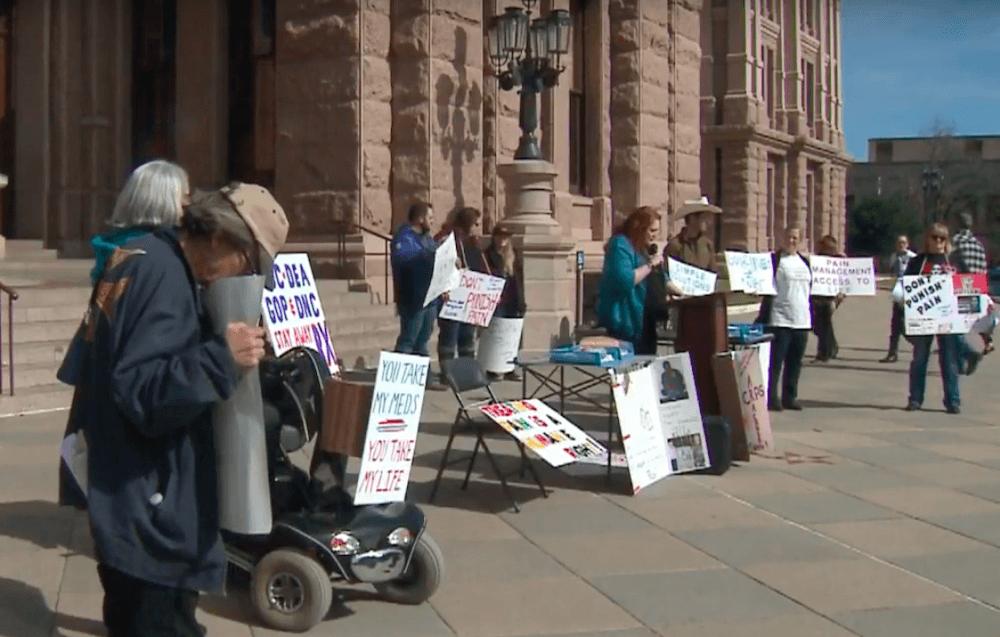
    Pain patients gathered around the US to bring attention to the damage caused by restrictive opioid prescribing guidelines.

    While the opioid epidemic has claimed thousands of lives, the regulations meant to stem the death toll are having unintended consequences for people who live with chronic pain, according to people who rallied across the country Tuesday Jan. 29 as part of the “Don’t Punish Pain” event. 

    In Concord, New Hampshire, Lauren Benson was one of the younger people at the rally. Nine years ago, when she was just 23, Benson injured her back working as an EMT, and has been disabled since.

    She told The Union Leader that she and many other people who need opioids to control their pain have a harder time accessing the drugs because of tightening prescription regulations. This is especially frustrating for pain patients who have used opioids responsibly for decades, she said. 

    “They’ve been on pain medication longer than I’ve been alive and all of a sudden it’s: ‘No, stop, no more for you.’ What are they supposed to do? They’ve been taking their meds properly.”

    Many pain patients are afraid that they won’t be able to access the pills that make their lives bearable. Many have already had doctors taper their dosage or have had to go through humiliating questioning and drug tests to get their opioids. 

    “For over 10 years, I took the same dose and because of the Oklahoma opioid task force, my doctor had to cut my prescription by 75%,” Patrick Burdette, who attended a rally in Oklahoma City, told Fox 25 News. “It caused me to sit at home in bed most days.”

    There’s a misconception that pain patients can choose alternatives to opioids, according to many patients, who say that this isn’t an option for everyone. 

    “My physical therapist would come to my house and I just basically sat there and cried because the pain was so bad,” said Patty Loveless, who was also at the Oklahoma rally. 

    In Tucson, Arizona, one patient carried a sign proclaiming that pain patients are “afflicted, not addicted,” according to The Tucson Sentinel

    “You know that horrific pain that takes about a minute or so to go away?” said Debra Hickey, whose doctor recently reduced her pain medications. “Can you imagine if you were in that kind of pain 24/7 with no opioids? That’s the pain I’m in.”

    In 2016, the Centers for Disease Control and Prevention issued guidelines about the amount of opioids that most patients should be on. This year, Medicare has plans to further restrict access to opioids. However, pain patients say that their lives are being negatively-affected by these well-intentioned measures. 

    “It is borderline genocide,” Lauren DeLuca, founder of the Chronic Illness Advocacy and Awareness Group, told The Fix last year. 

    View the original article at thefix.com

  • Young People With Opioid Addiction Face Barriers To Treatment

    Young People With Opioid Addiction Face Barriers To Treatment

    Access to medication-assisted treatment is a major issue for young adults with opioid addiction.

    Opioid use among minors has drastically increased since the 1990s—parallel to adult use—yet young people with opioid addiction are largely without access to proper treatment.

    Yale University published a study revealing that nearly 9,000 minors (20 years old and under) in the U.S. died from prescription and illicit opioid poisonings between 1999 and 2016. The related mortality rate increased almost 270% during that same time period, and were mostly unintentional overdoses of kids ages 15 to 19.

    The youth in the study were addicted to and dying from the same opioids as adults, including fentanyl, the deadly drug that is often mixed in with other opioids.

    The National Institute on Drug Abuse writes that research shows that when treating opioid addiction, medication should be the first line of treatment, in tandem with behavioral therapy or counseling. The accepted medications to treat opioid addiction are buprenorphine, naltrexone and methadone.

    Lindsey Vuolo, associate director of health law and policy at the Center on Addiction, assured US News & World Report that these medications work.

    “Overall, approximately 50% of patients who receive medications for opioid addiction are successfully treated, while less than 10% of patients are successfully treated without these medications,” she said. Yet many rehabs do not offer any medication-assisted treatment.

    Adolescents with opioid addiction have an even more difficult road than adults in becoming aware of and accessing medication-assisted treatment.

    Dr. Scott Hadland, a pediatrician, assistant professor at Boston University and researcher at Boston Medical Center’s Grayken Center for Addiction, spoke with US News about the results of his study on opioid treatment and youth.

    Hadland and others looked at close to 5,000 Medicaid-enrolled young people between the ages of 13 and 22 with a diagnosed opioid use disorder in 2014 and 2015. The results were clear: less than a quarter received medication for their treatment within three months of being diagnosed, with most of the youths receiving only behavioral health services. A mere 5% of those under age 18 received timely treatment with medication. 

    Dr. Sharon Levy, director of the Adolescent Substance Use and Addiction Program at Boston Children’s Hospital and an associate professor of pediatrics at Harvard Medical School, was the lead author of the American Academy of Pediatrics’ 2016 recommendations that called for “increasing resources to improve access to medication-assisted treatment of opioid-addicted adolescents and young adults.”

    The recommendations urged pediatricians to consider offering medication as treatment for young patients with severe opioid use disorders. Levy says that negative perceptions about medicated-assisted recovery (that the person is replacing one addiction with another) are outdated and the benefits of the medications outweigh any associated risks.

    “Policies, attitudes, and messages that serve to prevent patients from accessing a medication that can effectively treat a life-threatening condition may be harmful to adolescent health,” her AAP article states.

    Naltrexone is approved by the Food and Drug Administration for patients age 18 and older, and buprenorphine is approved for patients 16 and older.

    View the original article at thefix.com

  • Charging Heroin Dealers With Homicide A Common Practice In Pennsylvania

    Charging Heroin Dealers With Homicide A Common Practice In Pennsylvania

    Pennsylvania leads the nation with more than 500 drug-induced homicide charges filed.

    In Lancaster County, deep in the heart of Amish country, authorities have gone after more drug-induced homicide charges than any other place in the nation, according to figures from Mission LISA, a data aggregation project.

    Last year alone, prosecutors in the southeast Pennsylvania county filed roughly 60 such charges, more than the 37 in nearby Bucks County or the 35 in York County. Four of the most prosecution-prone counties were in the Keystone State, which led the nation with more than 500 drug-induced homicide charges filed.

    It’s a controversial practice, often condemned by harm reduction advocates. But Lancaster County District Attorney Craig Stedman swears the charge—levied against dealers who sell fatal doses of the drug—is working. 

    “I don’t think this is a magic bullet that’s going to end the opioid crisis, but is it part of the solution?” he told WITF. “I’m absolutely convinced it is, and there’s just something about being held accountable.”

    By way of example, Stedman highlighted an interaction with one man accused of selling drugs. “One guy in particular, they arrest him, he’s a long-time heroin dealer, and he was arrested for cocaine. They said, what are you doing? You’re a long-time heroin dealer. And he said, look, message received. I’m not catching a body in Lancaster County.” 

    But advocates decry the practice, as Drug Policy Alliance attorney Lindsay LaSalle explained to the PA Post in 2018.

    “We see this kind of flip,” she said, “where you have the compassion for the person who used but you want to throw the hammer at the person who sold. And this is an absolutely false dichotomy. The distinction between user and seller is often patently false.”

    The high numbers in Lancaster County come amid a long-term increase in drug-related homicide charges, according to the Mission LISA data.

    Going all the way back to 1975, the organization’s data set accounts for 2,741 drug-induced homicide charges—but the figures show a sharp uptick starting around 2010. In that year, there were 67 such charges filed across the nation; by 2015 that figure rose to 300.

    In 2016, it peaked at just over 660, though since then has fallen to under 400.

    View the original article at thefix.com

  • Connecticut Judge Dismisses Opioid Lawsuits Against Purdue Pharma, Others

    Connecticut Judge Dismisses Opioid Lawsuits Against Purdue Pharma, Others

    The Connecticut lawsuits are part of a nationwide effort to make pharmaceutical companies pay for a portion of the damage caused by this crisis.

    Judge Thomas Moukawsher in Connecticut ruled against 37 cities and towns within the state that brought lawsuits against pharmaceutical companies accused of fueling the opioid crisis in the U.S.

    According to the Associated Press, the judge ruled that the lawsuits were “not allowed because they were not filed as government enforcement actions authorized by state public interest laws.”

    “Their lawsuits can’t survive without proof that the people they are suing directly caused them the financial losses they seek to recoup,” Moukawsher wrote. “This puts the cities in the same position in claiming money as the brothers, sisters, friends, neighbors, and co-workers of addicts who say they have also indirectly suffered losses by the opioid crisis. That is to say—under long-established law—they have no claims at all.”

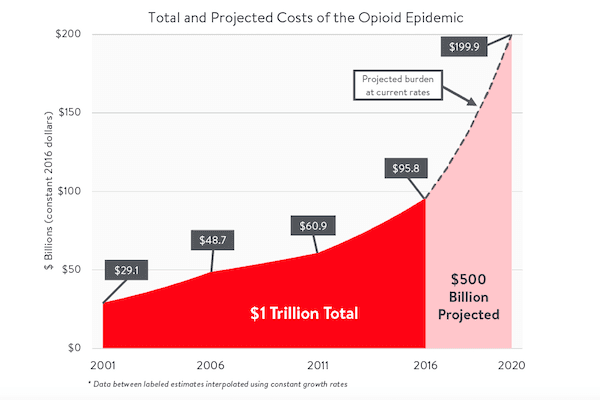
    Though this is a setback in the efforts of the plaintiffs to recoup the many billions of dollars spent to mitigate and combat the opioid crisis, appeals are already being considered.


    Source: ALTARUM

    The lawsuits in Connecticut are only a part of a nationwide effort to make pharmaceutical companies pay for a portion of the damage caused by this crisis. States, cities, counties and Native American tribal councils across the country are filing civil suits against some of the biggest drug manufacturers, claiming that misleading advertising and the alleged encouragement of physicians to over-prescribe opioids have fueled the epidemic of addiction and overdoses.

    According to Forbes, the collective action could become “the largest civil litigation settlement agreement in U.S. history.”

    The record is currently held by the settlement between 46 states and the tobacco industry—a case that some are pointing to as a precedent for the present-day opioid lawsuits. However, experts have pointed out that there are marked differences between these two cases.

    Addiction to prescription opioids is often caused by misuse, whereas there is a clear link between using tobacco products as directed and illness. This makes it easier to blame addiction, overdose and other health concerns on the opioid users themselves.

    “Individual plaintiffs who have sued pharmaceutical companies over how opioids have been marketed have rarely been successful, according to Richard Ausness, a professor at the University of Kentucky College of Law,” wrote Alana Semuels for The Atlantic in 2017. “Courts have made clear that they believe that individual victims are largely responsible for their addiction.”

    However, drug makers have been successfully sued in the past, though many of the lawsuits were settled out of court for a small portion of company profits. Purdue and others have continued to deny any allegations of deceptive marketing or other roles in the opioid crisis.

    Purdue Pharma released a statement about Judge Moukawsher’s ruling, praising him for “applying the law” and vowing to “help address this public health challenge.”

    View the original article at thefix.com

  • Death Certificate Project Goes Too Far, Addiction Specialist Says

    Death Certificate Project Goes Too Far, Addiction Specialist Says

    “Scaring providers into not prescribing opioids, I think that is not the ethically appropriate way to go forward,” said one addiction expert.

    Dr. Ako Jacintho, a family practitioner in San Francisco, says that he saw the opioid epidemic coming. His patients were asking for stronger medications and more pills. Instead of filling their requests, Jacintho trained as an addiction specialist, hoping to head off the problem, according to NPR

    However, that hasn’t protected him from an investigation that the California Medical Board is conducting into possible misuse of prescriptions. Jacintho received a letter from the board as part of the Death Certificate Project, which is examining death records in the state and seeking information from doctors who wrote prescriptions that may have contributed to fatal overdoses. 

    In Jacintho’s case, the board wanted to know about a 2012 methadone prescription that he wrote for a patient who later fatally overdosed on methadone and Benadryl. Jacintho reviewed the patient’s records—which the medical board had requested—but stuck by his decision to use methadone to treat the patient’s pain. 

    “If they’re looking for clinicians who are overprescribing, I’m the wrong doctor,” he said.

    Jacintho said that it’s especially unfair to look at prescribing practices from seven years ago in light of our new understanding of opioids. In 2012, when he wrote the prescription, doctors were told to treat pain aggressively, even by the California Medical Board’s own recommendations. 

    “It actually says that no physician will receive disciplinary action for prescribing opioids to patients with intractable pain,” Jacintho said. ”This person had intractable pain.”

    The letter from the board alleged that Jacintho prescribed toxic levels of the medication, but the doctor argues that it’s not that clear cut. “Toxicity is a very subjective word. What’s a toxic level for someone may not be a toxic level for someone else.”

    After the letter, Jacintho further reduced the amount of opioids that he prescribes to patients, something that worries Dr. Phillip Coffin, director of substance use research at the San Francisco Department of Public Health.

    “It’s like leaving a pair of scissors in an abdomen after surgery. If you’re just going to discontinue opioids, basically you’re ripping out the scissors and telling the person: ‘Good luck.’ Let them deal with the intestinal perforation on their own,” he said. “Scaring providers into not prescribing opioids, I think that is not the ethically appropriate way to go forward.”

    Kim Kirchmeyer, executive director of the medical board, said that most of the doctors who have received letters have not faced disciplinary action, although formal complaints have been filed against 25 doctors. She said that despite concern the death certificate project will continue, systematically working through records from previous years. 

    “If we save one life through this project, that is meeting the mission of the board, and that makes this project so worth it,” she said.

    View the original article at thefix.com