Tag: opioid epidemic

  • HHS Secretary Discusses "Plateau" Of The Opioid Epidemic

    HHS Secretary Discusses "Plateau" Of The Opioid Epidemic

    Health Secretary Alex Azar discussed the state of the opioid epidemic at a recent health summit.

    Drug overdose deaths in the U.S. may be plateauing, but it’s still too soon to know for sure.

    “We are so far from the end of the epidemic, but we are perhaps, at the end of the beginning,” said U.S. Health Secretary Alex Azar at a recent Future of Health Summit in Washington, D.C. on Tuesday (Oct. 23).

    Azar said that the rate of drug overdose deaths had “begun to plateau” toward the end of 2017 and beginning of 2018. More than 70,000 Americans died of drug overdose in 2017, a 10% increase from 2016, according to preliminary figures by the Centers for Disease Control and Prevention (CDC).

    Azar’s remarks also reflect recent CDC figures from this month which show that from December 2017 to March 2018, the rate of increasing drug overdose deaths over the last 12 months has gone down from 10% to 3%, suggesting a slow-down. However, these figures won’t be final until all death investigations are completed.

    “It appears at this point that we may have reached a peak and we may start to see a decline,” says Bob Anderson, senior statistician with the National Center for Health Statistics, according to AP. “This reminds me of what we saw with HIV in the ‘90s.”

    Azar, who heads the U.S. Department of Health and Human Services, cited the success of multi-pronged efforts to mitigate the opioid crisis.

    Promoting medication-assisted treatment (with drugs like buprenorphine, naltrexone and methadone), the use of naloxone, and increasing scrutiny on doctors’ prescribing practices have all played a part.

    However, AP reports that while opioid deaths may be leveling off, “deaths involving fentanyl, cocaine and methamphetamines are on the rise.”

    The New York Times reported in February that “meth has returned with a vengeance.”

    “At the United States border, agents are seizing 10 to 20 times the amounts they did a decade ago,” the Times reported. “Methamphetamine, experts say, has never been purer, cheaper or more lethal.”

    Fentanyl is now notorious for being the synthetic opioid that is 50-100 times more potent than morphine. Though traditionally it is a pharmaceutical drug, illicitly-made fentanyl is said to have fueled rising rates of drug overdose deaths in the U.S.

    This month, the maker of Narcan (naloxone) announced plans to release a new opioid overdose antidote that will match the strength of increasingly potent fentanyl analogs.

    “Compounds like fentanyl, carfentanil and other synthetic opioids act for longer periods of time. The concern is that naloxone’s half-life doesn’t provide sufficient cover to prevailing amounts of fentanyl in the blood,” said Roger Crystal, the creator of Narcan and CEO of Opiant Pharmaceuticals, in a past interview.
    View the original article at thefix.com

  • Global War On Drugs Is A Failure, Report Says

    Global War On Drugs Is A Failure, Report Says

    According to a new report, in the last decade, drug-related deaths have increased by 145%.

    The International Drug Policy Consortium (IDPC, a non-governmental network of 177 organizations) released a report calling the United Nations’ global war on drugs a failure.

    The report addressed the United Nations’ goal to eliminate the illegal drug market by 2019 through a “War on Drugs” approach—which has had negligible effects on global drug supply while negatively impacting human rights, development, and security.

    The report recounted the terrible statistics: in the last decade, drug-related deaths have increased by 145%—with 71,000 estimated overdose deaths in the United States in 2017.

    In the past decade, at least 4,000 people were executed for drug-related offenses worldwide. The policy of extremism regarding drug dealers in the Philippines resulted in thousands of extrajudicial killings.

    In the United States, drug laws have resulted in mass incarceration. In many cases, inmates are convicted for personal possession of a drug. One in five inmates is currently imprisoned for drug offenses.

    According to CNN, the IDPC report asked the UN General Assembly Special Session on Drugs to look for an alternate narcotics strategy for the next 10 years.  

    “The fact that governments and the UN do not see fit to properly evaluate the disastrous impact of the last ten years of drug policy is depressingly unsurprising,” Farhan Haq, deputy spokesman for the UN Secretary-General, said to CNN. “Governments will meet next March at the UN and will likely rubber-stamp more of the same for the next decade in drug policy. This would be a gross dereliction of duty and a recipe for more blood spilled in the name of drug control.”

    In March, U.S. President Donald Trump proposed making drug trafficking a capital offense. The report states that while international standards do not allow for the death penalty for drug offenses, 33 jurisdictions retain the death penalty and stand in violation of the agreed standard.

    “What we learn from the IDPC shadow report is compelling. Since governments started collecting data on drugs in the 1990s, the cultivation, consumption and illegal trafficking of drugs have reached record levels,” said Helen Clark, former Prime Minister of New Zealand and a member of the Global Commission on Drug Policy, in the report’s foreword.

    “Moreover, current drug policies are a serious obstacle to other social and economic objectives and the ‘war on drugs’ has resulted in millions of people murdered, disappeared, or internally displaced.”

    View the original article at thefix.com

  • Will Naloxone Be Co-Prescribed With Opioid Painkillers In The Future?

    Will Naloxone Be Co-Prescribed With Opioid Painkillers In The Future?

    While some states already require the co-prescription, the FDA is considering making it a requirement across the US.

    In an effort to decrease overdose deaths, doctors could soon be required to prescribe an opioid overdose antidote any time they prescribe prescription painkillers, according to Food and Drug Administration (FDA) Commissioner Scott Gottlieb.  

    The idea of co-prescription, according to the Washington Examiner, isn’t a new idea. In fact, some states such as Arizona, Virginia, and Vermont, already require the co-prescription of the overdose reversal drug known as naloxone.

    Naloxone comes in the form of a nasal spray as well as an auto-injection so it may be administered by those not in the medical field.  

    Other states considering such laws include California, Florida, New York, Ohio, Texas, and Utah. 

    Such laws are supported by the manufacturers of popular overdose antidotes, such as Adapt Pharma, the company that distributes Narcan. 

    “We are trying to do anything we can to build awareness and broaden support,” said company chairman and CEO Seamus Mulligan, according to the Examiner

    Kaleo, the manufacturer of the naloxone auto-injector, is also supportive, telling the Examiner in May that it “welcomes” the idea of co-prescribing.

    “We believe that doctors, pharmacists and other healthcare professionals play a critical role in developing and managing a comprehensive treatment plan for their patients, as well as helping a patient and their loved ones recognize the potential risk for opioid emergencies, even when pain medications are taken as directed,” the company said.

    Current laws vary from state to state. In Vermont, prescription rules are connected to other laws requiring doctors to check patient databases before prescribing an opioid.

    In Virginia, it’s recommended that high doses of pain prescriptions are given with an overdose antidote prescription as well.

    Additionally, doctors are encouraged to prescribe the antidote when prescribing opioids and benzodiazepines, as the two can lead to overdose.

    The Centers for Disease Control and Prevention (CDC) has made similar recommendations in its guidelines to doctors. 

    While naloxone can save lives, it’s not considered a treatment for substance use disorder. 

    “Naloxone allows someone another day to have an opportunity to overcome their addiction,” New York state Sen. George Amedore Jr. said, according to the Examiner. “It’s not the whole answer or the cure-all.”

    As such, some officials are also calling for wider access to buprenorphine, a medication that helps to lessen cravings and withdrawals. 

    The FDA will hold a meeting on Dec. 17-18 to determine more ways to make the overdose antidote more readily available. 

    View the original article at thefix.com

  • New PSA Follows Woman As She Publicly Detoxes From Opioids

    New PSA Follows Woman As She Publicly Detoxes From Opioids

    “I am the most camera shy person in the world. But if making my detox public is going to help somebody…I’m all for it,” said the 26-year-old.

    The Truth Initiative, which has produced 20 years of anti-tobacco public health messaging, just released a new opioid PSA.

    This time, we meet 26-year-old Rebekkah, who agreed to allow her opioid detox to be filmed for the Truth Initiative to show the world.

    “I know these next few days aren’t going to be pretty,” she says in the six-minute video. “And I am the most camera shy person in the world. But if making my detox public is going to help somebody—even just one person—I’m all for it.”

    Rebekkah was once a promising dancer and athlete, but that all came to a halt when she was 14 and blew out her ankle during cheerleading practice. A doctor prescribed opioid painkillers, and as she says, it was all downhill from there.

    “That decision I made, to go to the doctor and not get the surgery, that’s the worst decision I ever made in my whole life,” she said. Her painkiller addiction eventually turned to heroin.

    The video fast-forwards through the early days of Rebekkah’s detox, describing the withdrawal symptoms that arise with each day. The video is shown in a public space, what appear to be busy New York City streets, as the public watches on.

    Day 3 is characterized by nausea and vomiting, diarrhea, drug cravings and depression. “I have a lot of self-image issues. My mind doesn’t tell me anything nice,” says Rebekkah.

    As the days go by, things are looking better. “Each day that passes I feel more and more alive,” she said.

    Rebekkah’s story—titled “Treatment Box”—marks the second installment of the Truth About Opioids public awareness campaign, made possible by a collaboration between the Truth Initiative, the Ad Council, and the U.S. Office of National Drug Control Policy (ONDCP).

    The first round of anti-opioid PSAs released in June went for shock value. The four ads profiled four individuals who went to extreme lengths to obtain prescription opioids.

    Allegedly based on true stories, “Chris from Atlanta” breaks his own arm by slamming it in a door, “Kyle from Dallas” breaks his own hand with a hammer, “Joe from Maine” crushes his body under a car, and “Amy from Columbus” crashes her car into a dumpster.

    Critics of the ads say they were “disingenuous and misleading.”

    Aside from PSAs, Truth also offers resources on its website to educate and help those who need support—such as “What if your doctor wants to prescribe you opioids? Here are 12 questions to ask your doctor,” and how to locate a treatment center near you.

    View the original article at thefix.com

  • "The Conners" Producer Discusses Roseanne's Overdose Death

    "The Conners" Producer Discusses Roseanne's Overdose Death

    “We could’ve gone down other avenues, but we felt it was the right thing for the character. As you know, it’s a crisis in this country.”

    The return of Roseanne was one of the biggest comeback stories of the year—until Roseanne Barr got fired for posting inflammatory tweets this May.

    The show has since been rebooted without her as The Conners, and as rumored, her character dies of an opioid overdose.

    Before Barr was fired, her character was keeping “secret bottles” of Vicodin stashed in her home because the family couldn’t afford an operation and she was trying to deal with chronic pain in her knee.

    Like many who suffer from chronic pain, Roseanne Conner got her meds illegally, buying them through her neighbor Marcy (played by Mary Steenburgen).

    Through Steenburgen, Dan Conner (John Goodman) realizes that many in the neighborhood are getting their meds this way.

    “We thought we’d include issues such as a lack of proper healthcare and the prohibitive costs of medications that many face,” said executive producer Tom Werner to Forbes. “I think the conversation between Marcy and Dan made the story quite affecting because, obviously it was an accident, but an accident that seems to be happening frequently. Their conversation became part of a larger issue of people in a community passing along drugs either not being prescribed them by a doctor, or drugs being too expensive and unaffordable. This is part of a bigger issue in this country.”

    In making the decision to kill off Roseanne, Werner added, “Obviously, it is important for us to do the show respectfully. We could’ve gone down other avenues, but we felt it was the right thing for the character. As you know, it’s a crisis in this country.”

    Bruce Helford, who is the showrunner of The Conners, told The Hollywood Reporter, “There was a lot of chatter in the ether about how we should explain Roseanne’s absence: Should she have a heart attack, a mental breakdown or go off into the sunset on a boat with her son? But we firmly decided against anything cowardly or far-fetched, anything that would make the fierce matriarch of the Conners seem pathetic or debased.

    “I wanted a respectful sendoff for her,” Helford continued. “One that was relevant and could inspire discussion for the greater good about the American working class, whose authentic problems are often ignored by broadcast television.” 

    View the original article at thefix.com

  • "The Connors" Producer Discusses Roseanne's Overdose Death

    "The Connors" Producer Discusses Roseanne's Overdose Death

    “We could’ve gone down other avenues, but we felt it was the right thing for the character. As you know, it’s a crisis in this country.”

    The return of Roseanne was one of the biggest comeback stories of the year until Roseanne Barr got fired for posting inflammatory tweets this May.

    The show has since been rebooted without her as The Conners, and as rumored, her character dies of an opioid overdose.

    Before Barr was fired, her character was keeping “secret bottles” of Vicodin stashed in her home because the family couldn’t afford an operation and she was trying to deal with chronic pain in her knee.

    Like many who suffer from chronic pain, Roseanne Conner got her meds on the black market, buying them through her neighbor Marcy, played by Mary Steenburgen.

    Through Steenburgen, Dan Conner (John Goodman) realizes that many in the neighborhood are getting their meds this way.

    The show’s executive producer, Tom Werner, told Forbes, “We thought we’d include issues such as a lack of proper healthcare and the prohibitive costs of medications that many face. I think the conversation between Marcy and Dan made the story quite affecting because, obviously it was an accident, but an accident that seems to be happening frequently. Their conversation became part of a larger issue of people in a community passing along drugs either not being prescribed them by a doctor, or drugs being too expensive and unaffordable. This is part of a bigger issue in this country.”

    In making the decision to kill off Roseanne, Werner added, “Obviously, it is important for us to do the show respectfully. We could’ve gone down other avenues, but we felt it was the right thing for the character. As you know, it’s a crisis in this country.”

    Bruce Helford, who is the showrunner of The Conners, told The Hollywood Reporter, “There was a lot of chatter in the ether about how we should explain Roseanne’s absence: Should she have a heart attack, a mental breakdown or go off into the sunset on a boat with her son? But we firmly decided against anything cowardly or far-fetched, anything that would make the fierce matriarch of the Conners seem pathetic or debased.

    “I wanted a respectful sendoff for her,” Helford continued. “One that was relevant and could inspire discussion for the greater good about the American working class, whose authentic problems are often ignored by broadcast television.” 

    View the original article at thefix.com

  • Fentanyl In Cocaine Could Be Unintended

    Fentanyl In Cocaine Could Be Unintended

    One harm reduction expert thinks cross-contamination may be to blame for cocaine “laced” with fentanyl.

    More often, fentanyl is being found in cocaine, increasing the risk of opioid overdose and leaving officials scrambling to figure out why the drugs are being mixed, and if dealers actually intend to combine them.

    “It’s something we have to be very concerned about,” Dan Ciccarone, a public health researcher, told Rolling Stone. “[We have] to keep following the data.”

    Fentanyl is dangerous enough in the heroin and opioid supplies. However, it is especially deadly for users of cocaine, many of whom do not know what they are ingesting. Because these people are not regular opioid users they have not built up a tolerance to the drug and are therefore more susceptible to overdose.

    “Part of the challenge is just how potent fentanyl is that even a small amount, particularly in someone who doesn’t regularly use opioids, can be so deadly,” said Dr. Sarah Wakeman, an addiction medicine physician. “More and more, we’re hearing stories of people who either have only used cocaine and are not a person who uses opioids, or who says ‘I bought what I thought was cocaine,’ and they suffer an overdose and it turns out to be fentanyl.”

    To make matters worse, most dealers don’t even realize that their product contains fentanyl. “The street dealers are just as clueless as the users are at this point,” Ciccarone said.

    In order to address the issue, experts are trying to figure out how and why fentanyl is making its way into the cocaine supply. 

    “Lots of experts are being asked this question and making guesses, but they are all guesses,” said Keith Humphreys, a Stanford professor and drug policy expert. “It’s quite possible that this is happening way up stream over the head of dealers, and it’s something higher up in the supply chain that isn’t very well understood.”

    Although putting fentanyl in cocaine might seem malicious, experts say that likely isn’t the intent. 

    “Nobody wants to kill off their customer,” said Tino Fuentes, a harm reduction and overdose reversal specialist. Some people have hypothesized that dealers are trying to get customers hooked on opioids, which are more addictive than cocaine, but Fuentes said this is unlikely.

    “Nobody’s trying to put fentanyl in their shit to get their coke customers [to switch] over to heroin when their business is coke,” he said.

    Fuentes says that cross-contamination may be to blame. 

    “They’re not cleaning the scales. They’re not cleaning the grinders. They’re not cleaning the strainers,” he said. “So whatever’s left there is going to be picked up in the first batch of coke.”

    View the original article at thefix.com

  • Moving Obituary For Mom With Opioid Addiction Goes Viral

    Moving Obituary For Mom With Opioid Addiction Goes Viral

    The obituary recounts Madelyn Ellen Linsenmeir’s ensuing addiction to opioids and her family’s determination to help her overcome it.

    The heartbreaking and loving obituary written for Madelyn Ellen Linsenmeir after her overdose death has gone viral. Her family shared Madelyn’s long struggle with addiction while reaching out to those still struggling, asking them to hold on to hope and keep trying.

    Madelyn Ellen Linsenmeir died on October 7, 2018, leaving behind her family and a small son, Ayden. Madelyn’s family recounted how after a move from Vermont to Florida, she took her first OxyContin pill at a party.

    The obituary, which was originally published in the Burlington Free Press, recounts Madelyn’s ensuing addiction to opioids and her family’s determination to help her overcome it.

    Madelyn’s family also emphasized that she was, first and foremost, a human being who was loved.

    “It is impossible to capture a person in an obituary, and especially someone whose adult life was largely defined by drug addiction. To some, Maddie was just a junkie—when they saw her addiction they stopped seeing her. And what a loss for them. Because Maddie was hilarious, and warm, and fearless, and resilient. She could and would talk to anyone, and when you were in her company you wanted to stay. In a system that seems to have hardened itself against addicts and is failing them every day, she befriended and delighted cops, social workers, public defenders, and doctors, who advocated for and believed in her till the end.”

    Madelyn’s family wrote about her determination to stay sober after the birth of her son. “After having Ayden Maddie tried harder and more relentlessly to stay sober than we have ever seen anyone try at anything. But she relapsed and ultimately lost custody of her son, a loss that was unbearable.”

    The family continued with unusual honesty to recount the reality of what an ongoing drug addiction does to a person. “During the past two years especially, her disease brought her to places of incredible darkness, and this darkness compounded on itself, as each unspeakable thing that happened to her and each horrible thing she did in the name of her disease exponentially increased her pain and shame.”

    Yet they cherished every moment with her, writing, “For 12 days this summer she was home, and for most of that time she was sober. For those 12 wonderful days, full of swimming and Disney movies and family dinners, we believed as we always did that she would overcome her disease and make the life for herself we knew she deserved. We believed this until the moment she took her last breath.”

    In 2016, 63,600 Americans fatally overdosed with nearly two-thirds of deaths involving a prescription or illegal opioid. Since 2016 the problem has only increased.

    Linsenmeir’s family is just one of many that have written searingly honest obituaries illustrating the ultimate cost of addiction. When Gwen Knox lost her son Kurt to an overdose at 49 years old, she also wrote an honest and loving obituary on the reality of Kurt’s addiction that went viral.

    The family asked for donations in Madelyn’s name be made to the Turning Point Center. They asked those who judge addiction issues to “educate yourself about this disease, because that is what it is. It is not a choice or a weakness.”

    View the original article at thefix.com

  • Nurse Prescribed Patient 51 Pills Per Day, Kept License

    Nurse Prescribed Patient 51 Pills Per Day, Kept License

    The nurse practitioner was the ninth most heavy-handed opioid prescriber in Tennessee.

    Forty opioid pills, four muscle relaxers, six Xanax and an Ambien in a day would likely do more harm than good for even the sickest of patients, but that’s the amount that a Tennessee nurse prescribed a patient eight years ago, exceeding today’s opioid recommendations by more than 31 times.

    And yet, the nurse is still licensed to prescribe today. 

    Christina Collins, a nurse practitioner near Knoxville, was the ninth most heavy-handed opioid prescriber in Tennessee, and officials now say that she must have known that her patients were not taking the pills as she prescribed them. 

    “In short, Mrs. Collins was a machine that dispensed prescriptions without regard for any professional responsibility,” Mary Katherine Bratton, a Tennessee Health Department attorney, wrote in state documents analyzed by The Tennessean. “Her own lawyers argued that Mrs. Collins engaged in patient-led prescribing, simply giving patients whatever dangerous drugs they requested.”

    Last year, officials attempted to have Collins’ license revoked, but the state nursing board opted to instead put her on professional probation, which means she can still write prescriptions. She still works as a nurse in the Knoxville area.

    However, the state’s health department and attorney general are now appealing that decision in a move that a spokesperson called “rare but not unprecedented.” 

    Collins and her lawyer claim that despite doing things like telling one patient to wear three fentanyl patches at once in addition to taking other medications, Collins thought she was giving good medical advice at the time the prescriptions were written. 

    “She became a victim of her environment and the medical community and the ideas that were floating around out there at that time period,” said Eric Vinsant, her lawyer. “This case stretches from 2011 and 2012, which was a time before Tennessee really began looking at the prescribing of opioids and other controlled substances for pain, and there was really a very limited amount of guidance for practitioners on what was expected and what were best practices.”

    Vinsant added that there was “no real evidence” that Collins’ pills were resold on the black market. 

    During a hearing with the nursing board last year, Collins said that she left the clinic she was with at the time when she became suspicious that Dr. Frank McNiel, who ran the clinic, was overprescribing. McNiel surrendered his medical license. 

    “When I initially started there … obviously I did not think that there was anything below the standard of care or anything wrong with the patients or the prescriptions they were taking,” Collins said, according to a transcript of the hearing. “If I were looking at doses like that in today’s time after the guidelines and everything that I’ve learned, yeah, I would think that was very high amounts.”

    View the original article at thefix.com

  • Fingerprint Test Can Identify Drug Use With Striking Accuracy

    Fingerprint Test Can Identify Drug Use With Striking Accuracy

    The testing device is already being used in some morgues and at treatment centers in the UK to detect drug use.

    Drug testing is important, whether to determine how someone died or to show that someone was under the influence of drugs while behind the wheel.

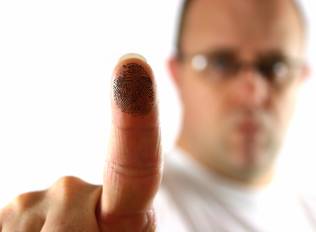
    However, current drug-testing methods that use samples of blood, saliva or hair are slow, invasive and expensive. Now, a fingerprint drug-testing system has been proven to detect the presence of drugs in sweat with up to 99% accuracy. 

    A study, published in the Journal of Analytical Toxicology, found that the Reader 1000, manufactured by U.K. firm Intelligent Fingerprinting, can detect cannabis, amphetamines, opiates, and cocaine, the substance that make up the majority of illicit drug use.

    The device works by analyzing sweat from the fingerprints of people who are alive or dead. The sweat contains metabolites that show that the body was clearing certain illicit substances. Using the device speeds up the process of drug testing. 

    “This new research highlights how our [device] can screen rapidly for drug use in individuals using a fingerprint sample with a sample collection time of only five seconds, and a total analysis time of ten minutes,” David Russell, an Emeritus Professor at the University of East Anglia, who is co-author of the research and founder of the manufacturer, told The Daily Mail.

    For the study, researchers used the Reader 1000 on 75 dead bodies, as well as testing those individuals with traditional blood and urine drug screenings.

    Comparing the readings, researchers found that the Reader 1000 was up to 99% effective at detecting cannabis, 95% for cocaine, 96% for opiates and 93% for amphetamines.

    “We matched the coroners’ drug test results obtained using our fingerprint drug screen with a second sample tested in laboratory conditions, achieving excellent correlation in terms of accuracy,” Russell explained.

    The research proved the concept of analyzing sweat collected through fingerprints, Intelligent Fingerprinting argued.

    “This important research demonstrates how there is sufficient sweat present in a subject’s fingerprint, regardless of whether the person is alive or dead, to enable our fingertip-based drug screening system to detect the presence of four major drugs of abuse at the same time,” Intelligent Fingerprinting’s Dr Paul Yates said in a news release.

    The device is already being used in some morgues and at treatment centers in the UK to detect drug use. Testing is underway to make it available at prisons and in other law enforcement settings. Although the device was able to detect the presence of opioids and other drugs, its ability to measure the amount of the substances was not studied.

    View the original article at thefix.com