Tag: opioid lawsuits

  • Purdue Reaches $10 Billion Settlement In Opioid Lawsuits

    Purdue Reaches $10 Billion Settlement In Opioid Lawsuits

    The deal does not include any admission of wrongdoing by Purdue Pharma or the Sackler family

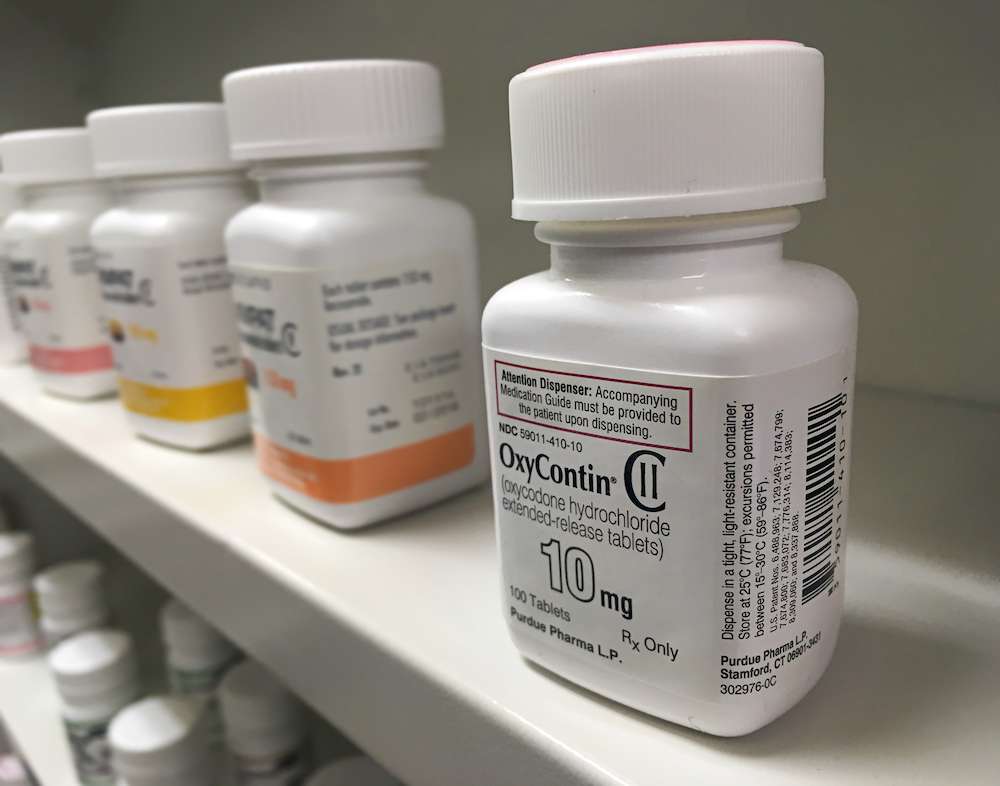
    Purdue Pharma, the most infamous manufacturer of prescription opioid pills, has reached a multi-billion dollar settlement with thousands of state, city and county governments that are suing the maker of OxyContin for its alleged role in the opioid epidemic. 

    The deal was first reported Wednesday evening (Sept. 11). The details were not immediately made public, but The New York Times reported the basics of the settlement: Purdue will declare bankruptcy.

    What Happens To Purdue?

    A new company will be formed to sell OxyContin, and the profits from those sales will go to Purdue’s settlement payout. The Sackler family, which owns Purdue, will contribute $3 million to the settlement over seven years. In addition, Purdue will donate prescriptions, including those for addiction treatment. NBC News reported that the settlement is worth $10-12 billion overall. 

    The deal does not include any admission of wrongdoing by Purdue Pharma or the Sackler family

    According to NBC News, as of Thursday (Sept. 12), at least 20 states have rejected the deal while legal officials in 27 states are reportedly in favor of the deal, which still needs to be approved by a bankruptcy judge and the board of Purdue Pharma. 

    “We are proud to participate in the nation’s most significant step in addressing this deadly crisis,” Texas attorney general Ken Paxton said through a spokesperson. 

    Tennessee Attorney General Herbert Slatery, who earlier this week predicted that Purdue would likely file for bankruptcy, said the settlement “would secure billions of dollars nationwide to go toward addressing the devastating effects of the opioid epidemic and will result in the Sackler family divesting themselves of their business interests in the pharmaceutical industry forever.”

    Florida Attorney General Ashley Moody said that the settlement was historic and will help provide treatment. 

    “Sadly, this agreement cannot bring back those who have lost their lives to opioid abuse, but it will help Florida gain access to more life-saving resources and bolster our efforts to end this deadly epidemic,” Moody said. 

    The Opposition Calls The Settlement “An Insult”

    However, not everyone was satisfied with the settlement. At least 20 states have opted not to sign on to the deal. New York Attorney General Letitia James had one of the strongest reactions, calling the settlement “an insult, plain and simple.”

    Other states want to hold onto their right to sue the Sackler family personally. 

    “If Purdue cannot pay for the harm it inflicted, the Sacklers will,” said New Jersey Attorney General Gurbir S. Grewal. 

    Massachusetts Attorney General Maura Healey wanted to see Purdue Pharma and the Sackler family forced to admit wrongdoing. 

    “It’s critical that all the facts come out about what this company and its executives and directors did, that they apologize for the harm they caused, and that no one profits from breaking the law,” she said. 

    View the original article at thefix.com

  • 'Kingpin Within the Drug Cartel' Tries to Avoid Federal Opioid Trial

    'Kingpin Within the Drug Cartel' Tries to Avoid Federal Opioid Trial

    Mallinckrodt has proposed to settle with two Ohio counties, which would allow the drug maker to avoid a forthcoming federal opioid trial in October.

    Mallinckrodt Pharmaceuticals, a lesser known but still a major player in opioid manufacturing, has reached a tentative settlement with two Ohio counties as part of federal opioid litigation. 

    Mallinckrodt agreed to pay $24 million to Cuyahoga and Summit Counties and donate $6 million in pharmaceuticals, including addiction treatment drugs, to those counties, The New York Times reported. 

    The Proposed Settlement

    The settlement would allow Mallinckrodt to avoid being part of the first federal bellwether trial of drug makers, distributors and retailers, which is slated to begin in October. The agreement “gives us the necessary time to continue to work towards a global resolution of the opioid lawsuits,” Mallinckrodt’s General Counsel Mark Casey said in a statement. 

    Judge Dan Polster has pushed for a settlement in the opioid lawsuits, which include more than 2,300 suits from cities, states and counties. 

    Although it is common in settlements for documents relating to the case to be sealed, most of the documentation in the federal opioid cases will remain open. That’s significant, said Adam Zimmerman, a law professor in Los Angeles. 

    “It means that all of this information in the federal litigation, which is so vital to our understanding about what happened, how we got here, will remain open,” he said. 

    DEA Called It the ‘Kingpin Within the Drug Cartel’

    Mallinckrodt Pharmaceuticals isn’t as well known as Purdue Pharma or Johnson & Johnson, but the company played a massive role in the opioid epidemic, authorities say. The company controlled 38% of opioid sales between 2006 and 2012. Purdue, for comparison, held just 3% of the market during that time. 

    Barbara J. Boockholdt, former chief of the regulatory section at DEA’s Office of Diversion, said even she didn’t realize how massive Mallinckrodt’s hold was until she checked the data. 

    “I was shocked; I couldn’t believe it, Mallinckrodt was the biggest, and then there was Actavis,” she told The Washington Post. “Everyone had been talking about Purdue, but they weren’t even close.”

    The details of the settlement have not yet been finalized. However, the funds and the pharmaceuticals will give “both counties critically needed resources in the ongoing response to the opioid crisis as well as protection in any future insolvency proceeding by Mallinckrodt,” lawyers for the counties said in a statement. 

    The company’s stock fell up to 40% after reports emerged saying that Mallinckrodt was exploring bankruptcy, but president and CEO Mark Trudeau said those reports were unfounded. That caused stock to rebound partially. Trudeau added that his company will likely stop selling opioids. 

    He said, “Fundamentally we are just not the best owners of this business.”

    View the original article at thefix.com

  • Courtney Love Refuses to "Sell Out" to OxyContin Heiress at NYFW, Takes It to Instagram

    Courtney Love Refuses to "Sell Out" to OxyContin Heiress at NYFW, Takes It to Instagram

    “This request from Joss Sackler is shameless and offensive after everything I, many of my friends, and millions of other addicts have been through with OxyContin,” Love told Page Six.

    Manhattan socialite Joss Sackler could not escape the controversy of her family name during this year’s New York Fashion Week.

    Ahead of the NYFW presentation of her line, “LBV care of Joss Sackler,” on Monday, Page Six reported that the “OxyContin heiress” offered more than $100,000 and a dress sewn with 24 carat gold thread to Courtney Love to attend the show.

    Ties to OxyContin

    The Sackler Family owns Purdue Pharma, the manufacturer of OxyContin. Purdue is fighting a barrage of lawsuits alleging that the pharmaceutical company played a role in fueling the opioid crisis. The company is currently negotiating a settlement ahead of a much anticipated federal trial scheduled to begin in October.

    State attorneys general have vowed to go after the family’s wealth as retribution. “I won’t let them get away with their crimes,” said Pennsylvania Attorney General Josh Shapiro on Twitter. “I will sue them personally, so that we can dig into their personal pocketbooks.”

    David Sackler, Joss’s husband, is the grandson of Raymond Sackler, one of the three company’s founders. David served on Purdue’s board of directors from 2012 to 2018, before the couple “fled town” to escape the controversy, as Page Six reported in May, trading their $6.5 million Upper East Side apartment for a place in Palm Beach, Florida.

    Rejected by Courtney Love

    Joss Sackler and her team, who are “huge fans” of Courtney Love, assured the Hole rocker that “The brand has no relation to Purdue… other than Joss is married to the family,” according to Page Six.

    But Love wasn’t having it. “I am one of the most famous reformed junkies on the planet—my husband died on heroin—what is it about me that says to Joss Sackler, ‘I will sell out to you?’ Well I won’t.”

    She continued, telling Page Six, “This request from Joss Sackler is shameless and offensive after everything I, many of my friends, and millions of other addicts have been through with OxyContin.” Love is sober but says she will “always be an opioid addict… I am just in recovery.”

    Sackler countered, posting an email screenshot suggesting that Love, instead of rejecting her offer, sought “$275,000 minimum” to attend Sackler’s NYFW event. She wrote “Fake news” in the caption and tagged Love’s Instagram handle. Love responded: “Check me out you bitch. Come for me. Lying sack of #sacklerlies shit.”

    Fashion Show

    Sackler’s event went ahead as planned on Monday at the Bowery Hotel Terrace. The atmosphere was described by one journalist as “redolent of defiant wealth.”

    A friend of the family, Jaya Karamores, defended Joss. “It’s unfair,” she told the Daily Beast. “She’s her own woman and people should see the line before they open their mouths. All she’s seen as is a man’s wife. For her to run a business is amazing.”

    View the original article at thefix.com

  • OxyContin Maker Expected To File for Bankruptcy

    OxyContin Maker Expected To File for Bankruptcy

    Purdue Pharma is expected to file for bankruptcy protection as the company reportedly failed to settle thousands of opioid lawsuits against them.

    After years of reaping massive profits from allegedly deceptive marketing practices around its opioid painkillers, Purdue Pharma is expected to file for Chapter 11 bankruptcy soon, since negotiations to reach a settlement in the scores of lawsuits against the company have failed. 

    Tennessee Attorney General Herbert Slatery and North Carolina Attorney General Josh Stein updated attorneys general around the country over the weekend, and their letter was obtained by the Associated Press

    “As a result, the negotiations are at an impasse, and we expect Purdue to file for bankruptcy protection imminently,” Slatery and Stein wrote. 

    A spokesperson for Purdue responded, “Purdue declines to comment on that in its entirety.” In March, Reuters first reported that Purdue was exploring bankruptcy, although there was no official word from the company. 

    Filing for Bankruptcy

    If Purdue Pharma does make a move to file for bankruptcy, it would complicate more than 2,000 lawsuits that municipalities and states around the country have filed against the company. It would almost certainly mean that Purdue would not be part of the opioid lawsuit taking place in federal court Ohio. The first trial in that batch is expected to start next month. 

    One speculation is that a bankruptcy payout from Purdue could be worth $10 to $12 billion over time, but others say that the payout could be as little as $1 billion, which is small considering the amount of lawsuits against the company.

    Seeking Damages

    Attorneys vowed that they would continue to seek damages from the company. 

    “Like you, we plan to continue our work to ensure that the Sacklers, Purdue and other drug companies pay for drug addiction treatment and other remedies to help clean up the mess we allege they created,” Slatery and Stein wrote in their letter. 

    In some cases, states are personally suing the Sackler family, which has reportedly pulled billions of dollars out of Purdue and moved that personal wealth offshore. Pennsylvania Attorney General Josh Shapiro is among those who plans to sue the Sackler family

    “I think they are a group of sanctimonious billionaires who lied and cheated so they could make a handsome profit,” he said. “I truly believe that they have blood on their hands.”

    Shapiro took to Twitter Saturday to emphasize his point. 

    “The Sacklers pioneered our #OpioidEpidemic,” he wrote. “They have blood on their hands. And on behalf of PA’ns, I will sue them personally, so that we can dig into their personal pockets & retrieve some of the money they made. We need this for treatment and other life saving efforts.”

    View the original article at thefix.com

  • Purdue Pharma Would Pay Billions In Proposed Opioid Settlement

    Purdue Pharma Would Pay Billions In Proposed Opioid Settlement

    The newly proposed deal would involve the Sackler family giving up control of Purdue, and paying at least $3 billion toward the settlement.

    Purdue Pharma may be close to reaching a settlement. The OxyContin maker—named in more than 2,000 lawsuits for fueling, and then aggravating, the opioid crisis—is seeking to resolve the lawsuits through a multibillion dollar settlement, NBC News reported.

    The company’s lawyers were in Cleveland last Tuesday (Aug. 20) to meet with the plaintiffs’ attorneys, including state attorneys general, to discuss the proposal, anonymous sources relayed to NBC.

    The company would settle for $10 billion to $12 billion, and declare bankruptcy. The deal would involve the Sackler family giving up control of Purdue, and paying at least $3 billion toward the settlement. The family has owned Purdue since 1952.

    Purdue Speaks

    “The people and communities affected by the opioid crisis need help now,” the company said in a statement to NBC. “Purdue believes a constructive global resolution is the best path forward, and the company is actively working with the state attorneys general and other plaintiffs to achieve this outcome.”

    The company is blamed for fueling the opioid crisis by “downplaying the risks of addiction to OxyContin while exaggerating its benefits.”

    The death toll of the opioid crisis has exceeded 400,000 between 1999-2017, the CDC says.

    The Sacklers

    The legacy of the wealthy Sackler family—a major donor to the arts—has been tarnished by their affiliation with OxyContin. The Sackler name has been removed from the Louvre, and major institutions including the Metropolitan Museum of Art and the Guggenheim have agreed to stop accepting gifts from the family, following anti-Sackler rallies organized by photographer Nan Goldin, who herself is in recovery from prescription opioid abuse.

    This wouldn’t be the first time Purdue had to pay for the “alleged” damage inflicted by OxyContin. In 2007, the company paid a fine of $635 million and top executives pleaded guilty in federal court to criminal charges that they duped regulators, medical providers and patients about the drug’s potential to be abused, as the New York Times reported.

    The company also agreed to pay Oklahoma $270 million in March, avoiding the trial that just concluded this month with only Johnson & Johnson as the remaining defendant. Johnson & Johnson was ordered to pay the state $572 million to offset the cost of the opioid crisis.

    View the original article at thefix.com

  • What To Expect After The Johnson & Johnson Verdict 

    What To Expect After The Johnson & Johnson Verdict 

    The Oklahoma ruling has changed expectations for how other opioid trials will be resolved. 

    When an Oklahoma judge ordered Johnson & Johnson to pay $572 million for its role in contributing to the state’s opioid epidemic, he made history by holding an opioid-related company accountable for damages in court for the first time. 

    With thousands of similar cases pending across the country—including 1,600 consolidated lawsuits slated to go before a federal judge in Ohio this October—the Oklahoma ruling has changed expectations for how other opioid trials will be resolved. 

    “It’s the first time that any of these claims have been trial tested,” Joe Khan, an attorney representing municipalities from Pennsylvania, New Jersey and Mississippi in opioid-related cases, told TIME

    The Aftermath

    Khan said that following the verdict in Oklahoma, more drug manufacturers and distributors may be apt to settle their cases. In the Oklahoma case, Purdue Pharma settled for $270 million, while Johnson & Johnson chose to proceed to trial. All other defendants in the case made smaller settlements. The fact that Johnson & Johnson had to pay so much more than Purdue could prompt other companies to err on the side of caution. 

    This “sends a very strong signal to defendants [that] rolling the dice (and going to trial) was not the winning strategy,” said Khan. 

    Professor emeritus of law at George Washington University, Peter Meyers, said that the Oklahoma case was a “game-changer” that strengthens the cases for other municipalities. Even if the judgment were overturned on appeal, that would not happen before the federal cases begin in October, so the impact of the Oklahoma case will be large, he said. 

    He compared the current litigation to lawsuits from the 1990s against Big Tobacco. Ultimately, all 50 states reached a massive settlement, that saw the top five tobacco companies paying $9 billion a year in perpetuity. 

    Meyers said, “The world changed when all states began bringing cases on behalf of their constituents.”

    Still, following the ruling, Johnson & Johnson’s stock price rose, indicating that the company’s investors were relieved by the result. The state was asking for billions in damages. 

    Analyst Joshua Jennings told The New York Times, “As silly as it sounds, a $600 million decision was, relative to expectations, a positive outcome. It was less onerous than many had expected.” 

    Setting a Precedent

    In addition, other legal precedents could compete with the Oklahoma ruling. The Oklahoma case was based on public nuisance laws: the state essentially argued that drug manufacturers and distributors had created a nuisance with their aggressive and misleading sales tactics.

    Although that line of reasoning worked in this case, University of Georgia law professor Elizabeth Burch pointed out that similar cases have failed against gun manufacturers, which could indicate trouble for future opioid lawsuits. 

    She said, “You can draw an analogy there, mainly because once you sell a gun, it is no longer in the control of the gun manufacturers.”

    View the original article at thefix.com

  • Johnson & Johnson Ordered To Pay $572 Million For Role In Oklahoma Opioid Crisis

    Johnson & Johnson Ordered To Pay $572 Million For Role In Oklahoma Opioid Crisis

    According to the ruling, the pharmaceutical company “engaged in false and misleading marketing of both their drugs and opioids generally.”

    In a decision that may have far-reaching implications for pharmaceutical companies across the United States, an Oklahoma judge has ruled that Johnson & Johnson must pay more than $572 million for its alleged role in helping create the state’s opioid crisis. Cleveland County District Judge Thad Balkman wrote in his ruling that the company and its pharmaceutical subsidiary, Janssen, “engaged in false and misleading marketing of both their drugs and opioids generally,” which he deemed a “public nuisance.”

    Johnson & Johnson denied the allegation and plan to appeal Balkman’s verdict, which observers on both sides of the argument have been closely monitoring to determine its impact on a federal trial involving nearly 2,000 cases against opioid manufacturers slated for the fall of 2019.

    Deceptive Marketing Practices

    As both NBC News and CNN noted, final filings submitted earlier this month and statements in court by Oklahoma Attorney General Mike Hunter and other attorneys for the state argued that Johnson & Johnson had aggressively pursued medical professionals to prescribe opioid medication while minimizing the potential risk of addiction and/or overdose death through deceptive marketing practices.

    Testimony from some of the relatives and friends of the more than 6,000 Oklahomans who died from opioid overdoses underscored Hunter’s assessment that the company had ignored scientific research in pursuit of a “magic pill” that would produce major profits.

    The result, as Hunter said, was the “worst man-made public nuisance this state and our county has ever seen: the opioid crisis.”

    Attorneys for Johnson & Johnson argued that the state failed to prove any elements of its case, from Janssen’s specific role in contributing to the opioid crisis to the impact of their marketing promotions. They added that the public nuisance accusation was nothing more than “potshots taken from promotional statements” and a misinterpretation of a law initially employed in property cases.

    But Judge Balkman sided with the state, noting that the allegedly misleading marketing was “more than enough to serve as the act or omission necessary to establish the first element of Oklahoma’s public nuisance law.”

    Major Public Health Crisis

    The state initially asked for an abatement plan of approximately $17 billion, which would be applied to addiction treatment and prevention programs over a period of 30 years. The plan, calculated by Christopher Ruhm, a professor of public policy and economics at the University of Virginia, included the costs of addiction treatment, physician education plans, care for babies born with neonatal abstinence syndrome, prescription tracking programs, grief support and more over the next three decades.

    “It is a lot of money. It’s also a major public health crisis,” Ruhm said.

    Balkman’s verdict called for an abatement program of $572,102,028 – about one year’s worth of payments under the state’s proposals. In his ruling, he wrote that “The state did not present sufficient evidence of the amount of time and costs necessary, beyond year one, to abate the opioid crisis.”

    Johnson & Johnson Plan to Appeal

    Johnson & Johnson’s executive vice president and general counsel, Michael Ullmann, said in a statement that his company was innocent of any wrongdoing and planned to appeal.

    He also wrote “The unprecedented award for the State’s ‘abatement plan’ has sweeping ramifications for many industries and bears no relation to the Company’s medicines or conduct.”

    But as CNN noted, the case could also have considerable impact on the numerous lawsuits filed against drugmakers by states, cities and communities across the country. Carl Tobias, a professor of law at the University of Richmond in Virginia, said in early August that attorneys have been “watching and learning from the case Oklahoma has assembled, while defendants have been watching for vulnerabilities.”

    View the original article at thefix.com

  • Two Drugmakers Settle Ahead Of Federal Cases

    Two Drugmakers Settle Ahead Of Federal Cases

    Endo and Allergan will still face ongoing litigation with dozens of other municipalities.

    Two drug makers have settled with two Ohio counties ahead of an upcoming federal opioid trial in Cleveland.

    Endo International and Allergan will pay a combined $15 million in damages to Cuyahoga and Summit counties in Ohio. Both companies avoided admitting any wrongdoing. 

    The settlement comes ahead of a landmark trial slated to start Oct. 21—which will hear arguments by local governments, Native American tribes and more from around the country alleging that the drug companies fueled the opioid crisis.

    Right now, other major drug manufacturers and distributors including Purdue Pharma, Teva, Johnson & Johnson, McKesson, and AmerisourceBergen will still proceed to trial in the fall, according to STAT News

    Although Endo settled, the company faces ongoing litigation with other municipalities, including more than 2,300 cases filed by counties and cities. 

    The Deal

    Endo’s deal with the Ohio counties indicates that the company could settle its suits globally for about $1.8 billion, according to FiercePharma. That’s lower than the $4 billion in settlements that was initially predicted for the company. One analyst said that the lower-than-expected settlement amount indicates that drug manufacturers may be “out of the woods.”

    After the settlement was announced, Endo and other pharmaceutical stocks were trading higher, indicating that investors were pleased with the settlement amount. Although Allergan did not comment on the settlement, Matthew Maletta, Endo’s executive vice president and chief legal officer said that the agreement was a “favorable outcome.”

    One analyst, John Leppard, said that the settlement amount from Endo was likely calculated based on what the company thought it would cost to go to trial. 

    The agreement “appears designed only to spare Endo the expense of the bellwether trial, rather than satisfying their overall potential costs in a comprehensive resolution of government-related opioid claims with the approximately 2,000 cities and counties party to the multi-district litigation,” he wrote. “The cash portion of this settlement appears intended to reflect Endo’s estimated costs of having to participate in the bellwether trial itself, rather than their overall liability or culpability.”

    In addition to the $10 million cash settlement, Endo agreed to provide the counties with up to $1 million of the drugs Vasostrict and Adrenalin free of charge. Vasostrict is a hormone used to treat diabetes, blood pressure and other conditions. Adrenalin is used in EpiPens. 

    The settlement could be an indication of the amounts that other pharmaceutical companies may settle for ahead of thousands of other upcoming lawsuits. 

    View the original article at thefix.com

  • Sacklers "Siphoned" Money From Purdue To Avoid Payouts, Lawsuit Alleges

    Sacklers "Siphoned" Money From Purdue To Avoid Payouts, Lawsuit Alleges

    A spokesperson for the Sackler family said that they were within their rights as shareholders to withdraw profits from Purdue Pharma.

    The state of Arizona has gone directly to the U.S. Supreme Court with a bold lawsuit alleging that members of the Sackler family took $4 billion from Purdue Pharma between 2008 and 2019 when they knew that the company would likely need the funds to settle opioid-related lawsuits. 

    “These transfers all took place at times when company officials, including the Sacklers, were keenly aware that Purdue was facing massive financial liabilities and that these transfers could prevent it from satisfying eventual judgments,” the suit argues

    “We want the Supreme Court to make sure that we hold accountable those individuals who are responsible for this epidemic,” Arizona’s Attorney General Mark Brnovich told The New York Times. “We allege that the Sacklers have siphoned billions of dollars from Purdue in recent years. They did this while knowing the company was facing massive financial liabilities.”

    The Long Shot

    The state hopes that the U.S. Supreme Court will hear the case because it involves a state as a party. However, that may be unlikely since the court rarely hears cases that have not first gone through lower courts. 

    “I do think it’s a long shot,” Brnovich said. “It’s a little different. It’s a little unorthodox. Sometimes you’ve just got to throw deep.”

    He said that the pressing need for funds to combat the opioid crisis calls for intervention at the highest level of the court system. “We don’t have time for this to take years to wind through the courts. The Supreme Court has jurisdiction, and we think they have to act.”

    Another lawyer for the state, William S. Consovoy, said that the state is looking for a quicker resolution to the case. “The urgency is a big deal here. It’s very important that we get this resolved expeditiously, and that’s one of the key reasons why the Supreme Court is the right place to do this and to do this now.”

    Sacklers’ Statement

    A spokesperson for the Sackler family said that they were within their rights as shareholders to withdraw profits from Purdue Pharma. The spokesperson added that the allegations in the lawsuit are “inconsistent with the factual record.” The Sacklers “will vigorously defend against them,” the spokesperson said.  

    The Sackler family, in addition to Purdue Pharma, have become regular targets for opioid-related lawsuits, in part for their alleged misleading marketing of the drug OxyContin

    It is not clear when the court will decide whether or not to hear Arizona’s lawsuit. 

    View the original article at thefix.com

  • States Fight For Control Over Opioid Master Settlement

    States Fight For Control Over Opioid Master Settlement

    A coalition of 39 state attorneys general signed a letter stating that the negotiations should be left up to the states, not local governments.

    With billions in payouts at stake, a national settlement between companies that manufacture and distribute opioid medication and municipalities across the United States that have sued for the companies’ alleged role in fueling the opioid crisis is being negotiated—but not without a fair share of hurdles to overcome.

    On Tuesday (Aug. 6), Judge Dan Polster, the federal judge overseeing the lawsuits, expressed his support for an “ambitious” proposal to reach a resolution at a hearing in Cleveland. 

    Inside The Proposal

    The proposal, suggested by the plaintiffs’ lawyers, would allow “all 34,000 towns, cities and counties… to vote on settlement offers,” the New York Times reported. Whatever they vote on—if the offer is approved—will be the final outcome. After that, plaintiffs “will be bound by the outcome and can bring no further suits.”

    The proposal would stop additional lawsuits and give each voting community a portion of the damages.

    However, as the Times reported, state attorneys general have criticized the plan, arguing that the lawsuits filed by towns, cities and counties undermine the states’ efforts to reach a settlement with the drug companies. By contrast, the municipalities have hired private lawyers to handle the lawsuits.

    A coalition of 39 state attorneys general signed a letter stating that the negotiations should be left up to the states, not local governments—i.e. it should be resolved “from the top down, not bottom up.”

    “In my view, it’s the plaintiffs’ lawyers using local governments to hijack the sovereignty of the states and create ‘city states.’ But this is not the United City-States of America,” said Dave Yost, Ohio’s attorney general.

    Local Municipalities Push Back

    There’s a reason for the local municipalities’ decision to pursue a settlement on their own, the Times explained. With the 1998 Master Tobacco Settlement reached by cigarette manufacturers and 46 states, a bulk of the $250 billion payout went to discretionary state spending rather than efforts to fix the damage inflicted by tobacco products like prevention and treatment programs.

    “Still bitter about those outcomes, communities whose coffers had been depleted by the opioid crisis decided to sign with private lawyers, circumventing the states,” the Times reported.

    In a recent op-ed, Mark A. Gottlieb, executive director of the Public Health Advocacy Institute at Northeastern University School of Law, emphasized the importance of securing a portion of the settlement that will go to future safeguards against similar public health crises. 

    “We must ensure that we do not squander the opportunity to address the opioid crisis through a coordinated public health approach in the next settlement,” he wrote.

    View the original article at thefix.com