Tag: opioid lawsuits

  • Families, Activists Protest At Opioid Lawsuit Hearing In Massachusetts

    Families, Activists Protest At Opioid Lawsuit Hearing In Massachusetts

    Protestors gathered outside of Suffolk County Superior Court  to bring attention to the personal losses incurred by the opioid crisis.

    Protestors, including family members who lost loved ones to overdoses, gathered outside a courthouse in Boston, Massachusetts, to draw attention to the human toll of the opioid epidemic as a judge weighed a request to dismiss a lawsuit brought by the Bay State against OxyContin manufacturer Purdue Pharma and the Sackler family, which owns the company.

    The suit – one of approximately 2,000 currently pending against Purdue, which manufactured the aforementioned prescription pain medication, and other pharmaceutical companies – alleged that Purdue made false claims about OxyContin’s addictive properties, and targeted prescribers with aggressive sales techniques. 

    Attorneys for Purdue and the Sacklers have alleged that the suit has made distorted and broadly general claims in order to lay blame for the epidemic on a single manufacturer.

    Losing Loved Ones

    Approximately 100 protestors gathered outside of Suffolk County Superior Court on August 2 to bring attention to the personal losses incurred by the opioid crisis.

    “They need to see the families,” said Cheryl Juaire, who lost her 23-year-old son to a fatal overdose in 2011. “They need to be held accountable for the deaths of our children. We need restitution.”

    Massachusetts Attorney General Maura Healy has attempted to speak to those needs with the suit, which she filed in 2018 against Purdue, its executives and the Sackler Family. The suit was unique in that it focused only on Purdue and not other manufacturers or wholesalers and was the first to name Sackler family members as defendants. The tactic has since been adopted by other states and cities in their lawsuits against the company.

    As Time noted, the suit cited a statement by former Purdue Pharma president Richard Sackler, who said at a launch party for OxyContin in 1996 that the new medication would be “followed by a blizzard of prescriptions that will bury the competition.” 

    Purdue Pushes Back

    In court filings, the family stated that Sacklers’ remarks had been taken out of context, and actually referred to a real blizzard that had made him late for the event.

    Lawyers for Purdue and the Sackler family have sought to downplay the state’s allegations, which they called a “misguided and very political effort to try to place blame on a single manufacturer,” and noted that federal and state data which showed that Purdue’s drugs accounted for a fraction of drugs distributed in Massachusetts, and that overdose deaths were now largely fueled by heroin and fentanyl.

    But state attorneys countered these claims by alleging that Purdue’s sales representatives targeted Massachusetts-based prescribers and established a pain program at Massachusetts General Hospital to reportedly promote their drugs. 

    Protestors at the Suffolk County court hope that any money recovered by lawsuits like the one in Massachusetts goes to individuals impacted by the opioid crisis and not to other sources. Ryan Hampton, a Los Angeles resident who organized the August 2 rally, pointed to Purdue’s recent settlement in Oklahoma, where $200 million of a $270 million payment by the company will go to a national resource center at Oklahoma State University.

    “We have an opportunity to fund solutions,” said Hampton to Time. “So it’s worrisome that we’ll see this firehose of money from settlements and it’ll just be misspent and all of this work to bring some justice to this will go to waste.”

    View the original article at thefix.com

  • Consulting Firm Urged Johnson & Johnson, Purdue To Sell More Opioids 

    Consulting Firm Urged Johnson & Johnson, Purdue To Sell More Opioids 

    The firm urged Johnson & Johnson to “get more patients on higher doses of opioids” and find techniques “for keeping patients on opioids longer.”

    The well-known consulting firm McKinsey & Company urged Johnson & Johnson and Purdue Pharma to sell more of their opioid products, according to recent reports. 

    McKinsey & Company urged Johnson & Johnson to “get more patients on higher doses of opioids” and find techniques “for keeping patients on opioids longer,” according to reporting by The New York Times. High doses of opioids and long-term use are both associated with increased risk of dependency and misuse. 

    The information was revealed as part of opioid trials in Oklahoma, Massachusetts and New Jersey. 

    During the Oklahoma trial, the state argued that Johnson & Johnson used misleading and irresponsible marketing for its fentanyl patch, Duragesic, at the urging of McKinsey & Company consultants.

    Powerpoint Tells All

    The state showed a Powerpoint presentation that McKinsey consultants made for Johnson & Johnson executives in 2002, which questioned whether the company was marketing opioids enough. 

    “Are we properly targeting and influencing prescription behavior in pain clinics?” one slide read. 

    The presentation recommended specifically marketing opioids to doctors who worked with patients in long-term care and those who treated elderly people with back pain. 

    In the Massachusetts case, the state presented documents including a 2013 report from McKinsey with recommendations for Purdue to “turbocharge” sales of OxyContin, which was already linked to opioid addiction at that point. The consulting firm even recommended that Purdue begin a mail order system in order to avoid pharmacies, which were beginning to clamp down on opioid prescriptions at that time. In addition, the firm called on Purdue to target doctors with more sales meetings. 

    Stepping Back

    McKinsey & Company said in a statement that it no longer provides consulting services related to opioids. 

    “Our historical work for clients in this industry was designed to support the legal prescription and use of out clients’ products. Opioids have had a devastating impact on our communities, however, and we are no longer advising clients on any opioid-specific business on a global basis,” the statement said. 

    The consulting firm said that the presentation prepared for Johnson & Johnson was “designed to support the legal use of a patch that was then widely understood to be less susceptible to abuse.”

    Testifying at the Oklahoma trial, Johnson & Johnson representative Kimberly Deem-Eshleman said that the blunt language about marketing was “McKinsey’s words,” not those of Johnson & Johnson. However, she confirmed that the company did not terminate its relationship with McKinsey over the recommendations. In fact, the companies still work together today for “different projects.” 

    View the original article at thefix.com

  • Walmart, CVS And Walgreens Targeted In Massive Opioid Lawsuit

    Walmart, CVS And Walgreens Targeted In Massive Opioid Lawsuit

    The retailers are accused of violating laws that require pharmacies to alert the DEA of suspicious drug orders.

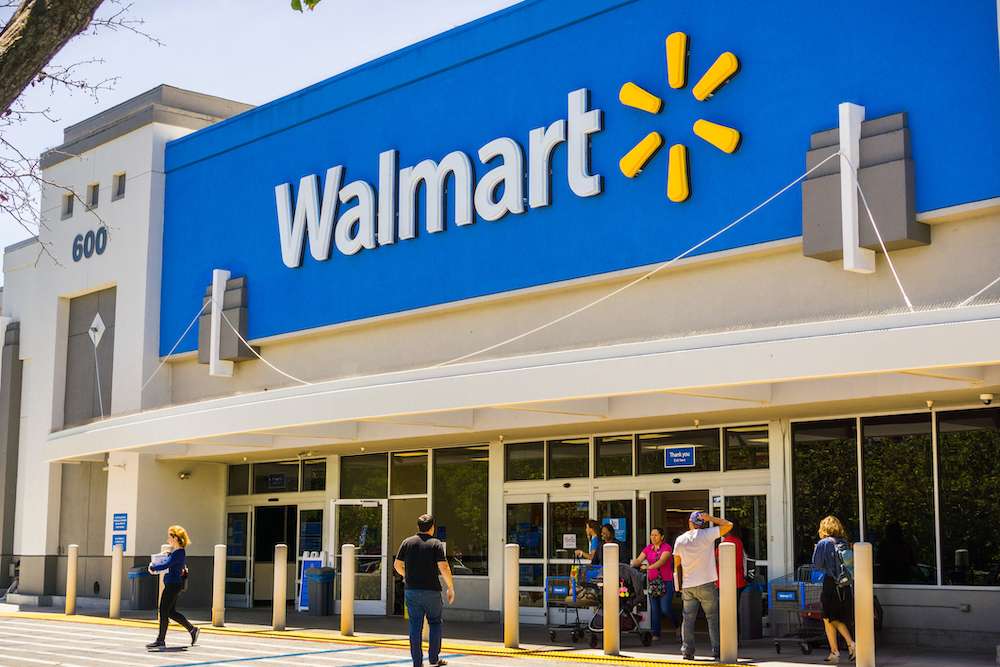
    Supermarkets and large chain drugstores such as Walmart, CVS, Rite Aid and Walgreens are the subjects of a massive national lawsuit seeking restitution for the harm caused by the U.S. opioid epidemic that killed hundreds of thousands of people in less than 20 years.

    Cities, counties, and Native American tribes across the country have combined nearly 2,000 cases into what is to be the largest civil case in U.S. history. The trial is set to take place this October.

    Plaintiffs will seek billions of dollars in damages from the companies, each of which is accused of violating laws that require pharmacies to alert the Drug Enforcement Administration (DEA) of suspicious drug orders.

    One such case accused Walgreens of failing to act on a flagged email in 2011 containing an order of 3,271 bottles of the opioid, oxycodone, for a town in Florida with a population of 2,831 people. 

    Walmart Allegations

    Walmart has additionally been accused of failing to properly train its pharmacy employees or “enacting policy to monitor suspicious orders” before 2011 despite the fact that the opioid epidemic was already raging and warnings had been issued about the role of prescription drugs in the crisis.

    All of these alleged failures have resulted in the additional charge of creating a “public nuisance” as part of a system that created and/or fed the opioid crisis.

    According to The New York Times, these companies’ actions worsened a situation “that affects the far reaches of public health, including neonatal intensive care, foster care, emergency services, detox and rehabilitation programs and the criminal justice system.”

    Earlier this month, the trial of Johnson & Johson came to a close in Oklahoma. The company and its subsidiary, Janssen Pharmaceuticals, was the sole defendant in the lawsuit filed by the state of Oklahoma. Prior to the trial, the state reached settlements with two other defendants named in its lawsuit: Purdue Pharma (for $270 million) and Teva Pharmaceuticals (for $85 million).

    During the seven-week trial, state attorneys argued that Johnson & Johnson created a “public nuisance” by causing harm to the public including injury to public health. A ruling is expected in August.

    The Retailers’ Response

    The stores listed in this most recent lawsuit have all denied wrongdoing, with Walmart claiming that the chain “distributed less than 1.3% of the opioids” that were sent to the counties named in the suit and Walgreens claiming that it “has been an industry leader in combating this crisis in the communities where our pharmacists live and work,” according to statements provided to Vox.

    Purdue Pharma and other manufacturers also denied wrongdoing all the way up to reaching a settlement, but ultimately decided that the $270 million bill was worth avoiding a trial.

    View the original article at thefix.com

  • Suboxone Maker To Pay $1.4 Billion In Largest US Opioid Settlement To Date

    Suboxone Maker To Pay $1.4 Billion In Largest US Opioid Settlement To Date

    Reckitt Benckiser denied any wrongdoing in a statement but decided that taking the deal was its best option.

    Suboxone manufacturer and distributor Reckitt Benckiser (RB) Group will pay a total of $1.4 billion to the U.S. government after taking a settlement offer by the Department of Justice. This will end civil and criminal probes into the multinational company and is so far the largest opioid-related settlement in U.S. history.

    RB was under investigation due to alleged misconduct by its former subsidiary company, Indivior. The subsidiary is still under investigation and is set to go to trial over the allegations in May 2020.

    Accusations

    Indivior has been accused of making misleading claims in its marketing materials and of running a program that was supposed to be a resource for people with opioid use disorder but was allegedly used to connect people with doctors who were known to prescribe Suboxone.

    According to a statement by the Department of Justice, these doctors were prescribing the addiction treatment drug and other opioid-based medications “to more patients than allowed by federal law, at high doses, and in a careless and clinically unwarranted manner.”

    Suboxone contains both buprenorphine, a low-intensity opioid that can treat or prevent opioid withdrawal symptoms without getting a patient high, and naloxone, which blocks opioid receptors in the brain and is commonly used to treat opioid overdoses. The naloxone in Suboxone is only activated if the tablets are crushed or dissolved for snorting or injecting the drug, which is meant to prevent its abuse.

    In spite of this precaution, Suboxone still contains an opioid and can be abused, so it remains a controlled substance under the U.S. government. 

    Although Indivior is no longer a part of RB, the former parent company agreed to hand over $647 million in proceeds received from Indivior as well as paying $700 million in civil settlements across six states and to the federal government, plus an additional $50 million to the Federal Trade Commission.

    The Terms

    Under the terms of the settlement, they will also refrain from manufacturing, marketing, or selling Schedule I, II, or III controlled substances in the U.S. for three years.

    RB denied any wrongdoing in a statement but decided that taking the deal was the best option.

    “While RB acted lawfully at all times and expressly denies all allegations that it has engaged in any wrongful conduct, after careful consideration, the board of RB determined that the agreement is in the best interests of the company and its shareholders,” the statement reads.

    Officials of states participating in the lawsuit are pleased by this result.

    “This is a landmark moment in our fight to hold drug companies responsible for their role in the opioid crisis,” said Virginia Attorney General Mark Herring. “We will not allow anyone to put profits over people, or to exacerbate or exploit the opioid crisis for their own benefit.”

    View the original article at thefix.com

  • Oklahoma Trial Of Alleged Opioid "Kingpin" Johnson & Johnson Ends

    Oklahoma Trial Of Alleged Opioid "Kingpin" Johnson & Johnson Ends

    The judge’s ruling is expected by the end of August. 

    The trial of Johnson & Johnson came to a close on Monday (July 15). The judge’s ruling could be the first to hold a pharmaceutical company responsible for playing a significant role in fueling the opioid epidemic, NPR reported.

    The company and its subsidiary, Janssen Pharmaceuticals, was the sole defendant in the lawsuit filed by the state of Oklahoma. Prior to the trial, the state reached settlements with two other defendants named in its lawsuit: Purdue Pharma (for $270 million) and Teva Pharmaceuticals (for $85 million).

    The Kingpin

    In his closing argument, Oklahoma Attorney General Mike Hunter called Johnson & Johnson the “kingpin” of the opioid crisis. During the seven-week trial, state attorneys argued that the company created a “public nuisance” by causing harm to the public including injury to public health.

    “What is truly unprecedented here is the conduct of these defendants on embarking on a cunning, cynical and deceitful scheme to create the need for opioids,” said Hunter.

    The state’s expert witness, Dr. Andrew Kolodny, testified that the company not only practiced deceptive marketing of its opioid products, but until 2016 also benefited by manufacturing and selling raw ingredients for these drugs to other pharmaceutical companies including Purdue Pharma, the maker of OxyContin.

    Purdue Pharma and the Sacklers have been stealing the spotlight, but Johnson & Johnson in some ways, has been even worse,” Kolodny said.

    Larry Ottaway, who defended Johnson & Johnson in the trial, argued that the company’s opioid products had just a small market share in Oklahoma compared to competitors. Ottaway further argued that the company made every effort to prevent abuse and that it was providing important medication for people living with debilitating chronic pain.

    Compensation

    Oklahoma wants the company to pay $17.5 billion over a 30-year period to compensate the state for the public health crisis.

    Judge Thad Balkman’s ruling, which is expected by the end of August, may influence the outcome of nearly 2,000 similar opioid lawsuits across the U.S. pending in federal court.

    According to NBC News, both the state and Johnson & Johnson have indicated that, if they lose, they will appeal the judge’s decision.

    View the original article at thefix.com

  • Will Nearly 2,000 Pending Opioid Lawsuits End In A Master Settlement?

    Will Nearly 2,000 Pending Opioid Lawsuits End In A Master Settlement?

    Attorneys are attempting to put together a settlement that would make a “meaningful impact on the deeply tragic opioid crisis.”

    There are now nearly 2,000 opioid lawsuits pending in federal court. States, counties and cities across the U.S. are seeking to hold drug companies like Purdue Pharma, Johnson & Johnson and McKesson accountable for fueling the national opioid epidemic.

    The companies are accused of aggressive and improper marketing of opioid drugs like OxyContin and downplaying the risks of developing a drug use disorder.

    With so many lawsuits seeking money damages for the devastating impact that opioid abuse has inflicted on American communities, the question of how they will be dealt with remains.

    The Master Plan

    In June, a group of attorneys representing 1,200 counties, cities and towns proposed a plan to reach a settlement with two-dozen drugmakers and distributors. One of the attorneys, Joe Rice, was the architect of the 1998 Master Settlement between 46 states and major U.S. cigarette manufacturers, WBUR reported. “Tens of billions of dollars would be needed to make a significant—a real significant impact on this epidemic,” said Rice.

    The plan is “ambitious and creative but fundamentally flawed,” according to attorney Mark A. Gottlieb, executive director of the Public Health Advocacy Institute at Northeastern University School of Law. Gottlieb, wary of its potential impact, emphasized the importance of making a strong statement with the massive settlement that would provide closure for both parties. Ideally it would be a symbolic end to the opioid crisis.

    “While any new ‘master settlement’ must primarily compensate the plaintiffs for their losses, a settlement that simply moves money around, as the tobacco settlement did, has no chance at having a meaningful impact on the deeply tragic opioid crisis,” wrote Gottlieb in his commentary.

    Safeguarding The Future

    Gottlieb proposed securing a portion of the settlement that will go to future safeguards against similar crises. He suggests an independent foundation to serve as a watchdog over the pain management and addiction treatment industries, to provide opioid prescribing education, to fund treatment and prevention programs, to fund addiction-related medications such as naloxone and buprenorphine, and to advise policymakers on relevant legislation.

    “We must ensure that we do not squander the opportunity to address the opioid crisis through a coordinated public health approach in the next settlement,” Gottlieb wrote.

    View the original article at thefix.com

  • Drug Distributor Didn’t Report Large Opioid Orders To DEA, Document Reveals

    Drug Distributor Didn’t Report Large Opioid Orders To DEA, Document Reveals

    Evidence in an opioid lawsuit reveals that instead of complying with DEA regulations, Cardinal Health took enforcement into its own hands.

    A major drug distributor that is facing lawsuits for allegedly contributing to the opioid epidemic was warned as early as 2008 that it was not following protocol in reporting suspicious drug orders to the Drug Enforcement Administration (DEA), according to a document obtained during the discovery phase of those lawsuits. 

    According to NBC News, Cardinal Health hired a consultant in 2007 who had formerly worked for the DEA as chief compliance officer. The consultant warned the company’s lawyer that the firm was not in compliance with DEA regulations in regards to suspiciously large orders.

    The DEA required firms to report any orders that were unusually large, frequent, or otherwise different from a customer’s established ordering patterns. 

    Instead of doing that, Cardinal Health took enforcement into its own hands. It established a cap for the amount of pills that could be ordered—three times the amount of a customer’s previous order. Although the company did not fill orders larger than that, it also did not report the large orders to the DEA. 

    “Customer orders that are in excess of three times the average (which would be the threshold) would be held for further investigation,” Ronald Buzzeo, the consultant, wrote to a lawyer for Cardinal Health on Jan. 23, 2008. “Orders that were held would be reduced to the threshold and sent to the customer. Delayed orders would be investigated. If the order was cleared of suspicion, the remainder of the order would be furnished to the customer. If the order was not cleared of the suspicion, the order would not be filled above the threshold limit; however, no report would be made to the DEA.”

    Buzzeo pointed out that this did not meet federal requirements. Rather than taking this approach, the company should begin to “report all orders to the DEA that cannot be cleared of suspicion and cancel the entire order,” he wrote. 

    It’s not clear whether Cardinal Health took Buzzeo’s advice. However, the company was later fined $44 million for not reporting suspicious orders from 2009-2012, so it appears no major changes were made. 

    Cardinal Health said that Buzzeo’s letter was taken out of context. Hiring the consultant was an effort to meet the “significantly changing guidance” from the DEA about how large orders should be handled, the statement said. They insist that the company was in compliance with the Controlled Substances Act. The statement also claimed that the company has stopped millions of dosages by reporting suspicious orders to the DEA. 

    “Cardinal Health has learned from our experience and the threats the pharmaceutical supply chain faces, and as a result of the transition and a constantly adaptive approach, our anti-diversion program today is stronger and more effective as it continues to evolve,” the statement said. 

    View the original article at thefix.com

  • Expert: Johnson & Johnson Played Bigger Role In Opioid Crisis Than Purdue Pharma

    Expert: Johnson & Johnson Played Bigger Role In Opioid Crisis Than Purdue Pharma

    Johnson & Johnson is less well-known as an opioid manufacturer, but the company makes Duragesic, a fentanyl patch, and produced Nucynta, an opioid, until 2015.

    The company may be best-known for its sweet-smelling baby washes and lotion, but Johnson & Johnson has a sinister side, according to an expert witness who said that the company may have played an even bigger role in the opioid epidemic than Purdue Pharma. 

    Johnson & Johnson “did everything it possibly could to get doctors to prescribe more and more opioids,” said Dr. Andrew Kolodny, co-director of opioid policy research at Brandeis University’s Heller School for Social Policy and Management, according to Bloomberg

    “In some ways,” the company was “worse” than Purdue, Kolodny said, according to CNN

    Kolodny was speaking as an expert witness for the state of Oklahoma, which is suing Johnson & Johnson for contributing to the opioid epidemic. The state previously reached settlements with Purdue Pharma for $270 million and with Teva Pharmaceuticals for $85 million, although neither company admitted to wrongdoing. 

    Purdue Pharma, the maker of OxyContin, has become well-known for its deceptive marketing practices and lavish rewards to doctors who prescribed lots of opioid pills. The Sackler family, members of whom own the company, have been vilified for what many see as their active management of misinformation. 

    Johnson & Johnson is less well-known as an opioid manufacturer, but the company makes Duragesic, a fentanyl patch, and produced the opioid pill Nucynta until 2015, when it sold the product for $1 billion. Johnson & Johnson had products that were natural, semi-synthetic and synthetic opioids, meaning it was active in many spaces around opioid marketing. 

    “Until I had an opportunity to review discovery documents I really was not aware of how bad Johnson & Johnson was,” Kolodny said. 

    When he had tried to visit Tasmanian Alkaloids, a former subsidiary of Johnson & Johnson, Kolodny said it was “clear” that the company did not want him around. Kolodny also said that despite the fact that he has played a prevalent role in crafting opioid policy in response to the epidemic, no one from Johnson & Johnson ever reached out to him. 

    Despite the state’s assertion that Johnson & Johnson contributed to opioid abuse in Oklahoma, the company continues to deny responsibility. 

    “The testimony of the State’s witness, Dr. Kolodny, was filled with rampant speculation and conclusions not derived from facts,” the company’s attorney John Sparks said in a statement. “The evidence remains that Johnson & Johnson and its former subsidiaries appropriately and responsibly met all laws and regulations on the manufacturing, sale and distribution of active pharmaceutical ingredients and pharmaceutical products and did everything you’d expect a responsible company to do.”

    However, Kolodny maintained that the public needs to know about the role that Johnson & Johnson and other manufacturers played in the opioid crisis. 

    “All of that helped change the attitudes in this country about smoking,” he said. “I believe we can see the same benefit [from] opioid litigation.”

    View the original article at thefix.com

  • Opioid Manufacturer Teva Reaches $85 Million Settlement With Oklahoma

    Opioid Manufacturer Teva Reaches $85 Million Settlement With Oklahoma

    Teva did not acknowledge any wrongdoings in the settlement. 

    The state of Oklahoma has reached an $85 million settlement with Teva Pharmaceuticals, the world’s largest manufacturer of generic drugs. 

    The settlement was announced on Sunday, ahead of a trial slated to start on Tuesday (May 28). Purdue Pharma had previously reached a $270 million settlement with the state in the case, but the trial will move forward with Johnson & Johnson and its subsidiaries, which have not reached a settlement. 

    “Today’s announcement is a testament to the state’s legal team’s countless hours and resources preparing for this trial and their dedication and resolve to hold the defendants in this case accountable for the ongoing opioid overdose and addiction epidemic that continues to claim thousands of lives each year,” Attorney General Mike Hunter said in a statement. “Nearly all Oklahomans have been negatively impacted by this deadly crisis and we look forward to Tuesday, where we will prove our case against Johnson & Johnson and its subsidiaries.”

    Teva, like Purdue, did not acknowledge any wrongdoings in the settlement. 

    “The settlement does not establish any wrongdoing on the part of the company,” Teva representatives said in a statement, according to The Oklahoman. “Teva has not contributed to the abuse of opioids in Oklahoma in any way.”

    “The company has resolved this matter in a way that benefits the people who have suffered from abuse of opioids and to help stop the effects of the opioid crisis,” the statement said. That much is true—the state will allocate the funds to combat the opioid epidemic and increase access to treatment. 

    Teva faces other ongoing opioid lawsuits, including a large suit in federal court in Ohio. 

    “While the company has long stated that the courtroom is not a place to address the crisis, Teva is pleased to put the Oklahoma case behind it and remains prepared to vigorously defend claims against the company, including the upcoming federal court trial in Cleveland where the majority of the cases are pending,” the company’s statement said. 

    Hunter told NPR ahead of the trial’s start on Tuesday that he is confident that he can make the case that Johnson & Johnson and its subsidiaries are responsible for the opioid epidemic in the state.

    “We have looked at literally millions of documents, taken hundreds of depositions, and we are even more convinced that these companies are the proximate cause for the epidemic in our state and in our country,” Hunter said.

    Richard Ausness, a law professor at the University of Kentucky, said that the settlements and outcome in the Oklahoma case will set a precedent for the federal case. 

    “Lurking in the background is the multi-state litigation in Cleveland, where there will ultimately be a settlement in all likelihood, but the size of the settlement and the terms of the settlement may be influenced by Oklahoma,” he said. 

    View the original article at thefix.com

  • Johnson & Johnson Accused Of Marketing Opioids To Children

    Johnson & Johnson Accused Of Marketing Opioids To Children

    A rep for the company says Johnson & Johnson discussed children’s pain relief, but never targeted children with its drugs. 

    Johnson & Johnson contributed to the opioid crisis in Oklahoma in part by marketing opioid drugs to children, according to allegations made by the state of Oklahoma in a lawsuit against the company. 

    “In perhaps one of the most reprehensible documents produced by defendants, this shows the depths to which J & J would go to earn a profit on their products—target potential ‘replacement customers’ at an early age to get them using (and addicted to) opioids,” one court document reads, according to The Washington Post.

    The company strongly denies this claim. A representative said that Johnson & Johnson, whose subsidiaries manufacture opioid products, discussed children’s pain relief, but never targeted children with its drugs. 

    However, Bradley Beckworth, an attorney who is representing Oklahoma in the lawsuit, said that targeting children with dangerous products is not unheard of. 

    “The recruitment of children… is the same kind of thing the tobacco industry did,” he said. “It’s the same kind of thing that other drugs companies do. Just marketing opioids to cancer patients and surgery patients was not enough. They wanted to expand the customer base.” 

    The allegations stem from a lawsuit that Oklahoma brought against Johnson & Johnson, Purdue Pharma and Teva Pharmaceutical, which makes and distributes generic opioids.

    In March, Purdue Pharma settled with the state for $270 million without admitting wrongdoing. 

    Since then, the state has been focused on Johnson & Johnson and Teva Pharmaceutical. The lawsuit alleges that both companies, which provided materials for opioids, contributed quietly to the crisis behind the scenes. 

    “Johnson & Johnson helped create the worst public health crisis in United States history,” said Bradley Beckworth. “They grew the demand. They spread the lies and they fed it with their own product… We’ll show that at trial.”

    The state’s lawsuit aims to hold the drug manufacturers liable for the harm caused by their products under the state’s public nuisance laws. University of Oklahoma College of Law professor Andrew M. Coats said that the case is fairly solid. 

    He said, “It has a good deal of merit to it, because our statute on public nuisance is pretty broad,” he said.

    However, a representative for Johnson & Johnson said that the company was following the law. 

    “The production of raw materials and active pharmaceutical ingredients used to manufacture Schedule II medications in the U.S. is strictly controlled, limited and monitored by the DEA, FDA, and other regulators,” a statement from the company read. “The DEA sets quotas based on the agency’s assessment of the need for medicines containing these substances, and our businesses complied with these laws and regulations.”

    View the original article at thefix.com