Tag: opioid use disorder

  • Opioid Epidemic Will Get Worse, Researchers Say

    Opioid Epidemic Will Get Worse, Researchers Say

    Using computer modeling, researchers predicted that overdose deaths will kill 81 ,700 people in 2025 unless drastic changes are made.

    Researchers from Massachusetts General Hospital have grim news about the opioid epidemic: It’s likely to continue worsening in the coming years, unless widespread, drastic policy changes are taken to address illicit drug use. 

    The study, published in the journal JAMA Network Open, showed that even with efforts to more tightly control access to prescription opioids, overdose deaths will continue to rise.

    Using computer modeling, researchers predicted that overdose deaths will kill 81 ,700 people in 2025, most of whom will die from illicit opioids. Further restricting access to prescription opioids will only reduce that number by 3%-5.3%, researchers found. 

    “This study demonstrates that initiatives focused on the prescription opioid supply are insufficient to bend the curve of opioid overdose deaths in the short and medium term,” Dr. Marc Larochelle of the Grayken Center for Addiction at Boston Medical Center said in a press release. “We need policy, public health and health care delivery efforts to amplify harm reduction efforts and access to evidence-based treatment.”

    Jagpreet Chhatwal, who co-authored the paper with Larochelle and others, said that more drastic measures are needed to target the use of illicit opioids. 

    “If we rely solely on controlling the supply of prescription opioids, we will fail miserably at stemming the opioid overdose crisis. Illicit opioids now cause the majority of overdose deaths, and such deaths are predicted to increase by 260%—from 19,000 to 68,000—between 2015 and 2025,” said Chhatwal. “A multi-pronged approach—including strategies to identify those with opioid use disorder, improved access to medications like methadone and buprenorphine, and expansion of harm reduction services such as the overdose-reversal drug naloxone—will be required to reduce the rate of opioid overdose deaths.” 

    Chhatwal said that while easy access to prescription opioids may have contributed to the crisis, today the epidemic is more about illicit opioids including fentanyl and its analogues. Because of this, efforts to reduce overdose deaths need to focus on addressing the population of people who are using illegal drugs. 

    “The opioid epidemic started with a sharp increase in opioid prescriptions for pain in the 1990s; but since 2010 the crisis has shifted, with a leveling off of deaths due to prescription opioid overdoses and an increase in overdose deaths due to heroin,” he said.

    “In the past five years, deaths have accelerated with the introduction of the powerful synthetic opioid fentanyl into the opioid supply, leading to a continuing increase in overdose deaths at time when the supply of prescription opioids is decreasing.”

    View the original article at thefix.com

  • Who Should Be Held Responsible For The Opioid Epidemic?

    Who Should Be Held Responsible For The Opioid Epidemic?

    A new op-ed suggests that to receive “true justice” for the opioid epidemic, “we need to root out all the villains regardless of whether they have famous names.”

    When it comes to the opioid epidemic, no name brings frustration and anger like Purdue Pharma. It is commonly accepted that the maker of OxyContin contributed to the growth of the opioid epidemic by using aggressive and misleading sales tactics meant to get more powerful opioids into the hands of more Americans. 

    The Sackler family, members of which founded the company that would become Purdue Pharma, have also come under fire for their perceived role in the epidemic. Not only did the family profit vastly from the sale of OxyContin, but new court documents assert that they were directly involved with pushing for more sales.

    When it became clear that OxyContin was addictive they even considered making medications to assist in the treatment of addiction, which would have allowed them to double dip, profiting from both ends of the crisis. 

    The actions of Purdue Pharma were reprehensible, Robert Gebelhoff writes in an opinion piece for The Washington Post. However, he argues that in addition to punishing them, the country needs to seek punishment and retribution for others who contributed to the crisis.

    “The opioid epidemic is one of the worst systematic failures of health care in our country. For true justice, we need to root out all the villains, regardless of whether they have famous names,” he writes. 

    Gebelhoff calls for holding the medical community and other accountable. 

    He writes, “Even if states are able to turn these latest charges into some form of punishment for the Sacklers themselves, what about all those who promoted their cause? What about the researchers who accepted funding from drug manufacturers and carried out campaigns to destigmatize opioid painkillers? What about the officials at the Food and Drug Administration who not only approved OxyContin without any clinical studies on how addictive the drug might be, but also approved a package insert declaring the drug safer than its rival painkillers?”

    He also points to government officials who failed to intervene in the crisis, and even made it more difficult for the Drug Enforcement Administration to pursue concerning opioid sales.

    At the same time, government policy made it difficult for people to access medication-assisted treatment, which is widely accepted as the best treatment for opioid use disorder. This pattern continues today, according to recent VA research that shows too few people are getting access to medication-assisted treatment. 

    “Who holds such practitioners accountable?” Gebelhoff asks. 

    Gebelhoff points out that the Sacklers and Purdue are a good target, because they have enough money to help fund access to treatment and other interventions into the epidemic. However, he says it’s important that other entities be held responsible even if they don’t have deep pockets. 

    “The opioid saga — stemming from prescription painkillers — has irreparably damaged the lives of countless Americans over the past few decades,” he writes. “Don’t they deserve better?”

    View the original article at thefix.com

  • Opioid Epidemic Will Get Worse, Researchers Says

    Opioid Epidemic Will Get Worse, Researchers Says

    Using computer modeling, researchers predicted that overdose deaths will kill 81 ,700 people in 2025 unless drastic changes are made.

    Researchers from Massachusetts General Hospital have grim news about the opioid epidemic: It’s likely to continue worsening in the coming years, unless widespread, drastic policy changes are taken to address illicit drug use. 

    The study, published in the journal JAMA Network Open, showed that even with efforts to more tightly control access to prescription opioids, overdose deaths will continue to rise.

    Using computer modeling, researchers predicted that overdose deaths will kill 81 ,700 people in 2025, most of whom will die from illicit opioids. Further restricting access to prescription opioids will only reduce that number by 3%-5.3%, researchers found. 

    “This study demonstrates that initiatives focused on the prescription opioid supply are insufficient to bend the curve of opioid overdose deaths in the short and medium term,” Dr. Marc Larochelle of the Grayken Center for Addiction at Boston Medical Center said in a press release. “We need policy, public health and health care delivery efforts to amplify harm reduction efforts and access to evidence-based treatment.”

    Jagpreet Chhatwal, who co-authored the paper with Larochelle and others, said that more drastic measures are needed to target the use of illicit opioids. 

    “If we rely solely on controlling the supply of prescription opioids, we will fail miserably at stemming the opioid overdose crisis. Illicit opioids now cause the majority of overdose deaths, and such deaths are predicted to increase by 260%—from 19,000 to 68,000—between 2015 and 2025,” said Chhatwal. “A multi-pronged approach—including strategies to identify those with opioid use disorder, improved access to medications like methadone and buprenorphine, and expansion of harm reduction services such as the overdose-reversal drug naloxone—will be required to reduce the rate of opioid overdose deaths.” 

    Chhatwal said that while easy access to prescription opioids may have contributed to the crisis, today the epidemic is more about illicit opioids including fentanyl and its analogues. Because of this, efforts to reduce overdose deaths need to focus on addressing the population of people who are using illegal drugs. 

    “The opioid epidemic started with a sharp increase in opioid prescriptions for pain in the 1990s; but since 2010 the crisis has shifted, with a leveling off of deaths due to prescription opioid overdoses and an increase in overdose deaths due to heroin,” he said.

    “In the past five years, deaths have accelerated with the introduction of the powerful synthetic opioid fentanyl into the opioid supply, leading to a continuing increase in overdose deaths at time when the supply of prescription opioids is decreasing.”

    View the original article at thefix.com

  • Young People With Opioid Addiction Face Barriers To Treatment

    Young People With Opioid Addiction Face Barriers To Treatment

    Access to medication-assisted treatment is a major issue for young adults with opioid addiction.

    Opioid use among minors has drastically increased since the 1990s—parallel to adult use—yet young people with opioid addiction are largely without access to proper treatment.

    Yale University published a study revealing that nearly 9,000 minors (20 years old and under) in the U.S. died from prescription and illicit opioid poisonings between 1999 and 2016. The related mortality rate increased almost 270% during that same time period, and were mostly unintentional overdoses of kids ages 15 to 19.

    The youth in the study were addicted to and dying from the same opioids as adults, including fentanyl, the deadly drug that is often mixed in with other opioids.

    The National Institute on Drug Abuse writes that research shows that when treating opioid addiction, medication should be the first line of treatment, in tandem with behavioral therapy or counseling. The accepted medications to treat opioid addiction are buprenorphine, naltrexone and methadone.

    Lindsey Vuolo, associate director of health law and policy at the Center on Addiction, assured US News & World Report that these medications work.

    “Overall, approximately 50% of patients who receive medications for opioid addiction are successfully treated, while less than 10% of patients are successfully treated without these medications,” she said. Yet many rehabs do not offer any medication-assisted treatment.

    Adolescents with opioid addiction have an even more difficult road than adults in becoming aware of and accessing medication-assisted treatment.

    Dr. Scott Hadland, a pediatrician, assistant professor at Boston University and researcher at Boston Medical Center’s Grayken Center for Addiction, spoke with US News about the results of his study on opioid treatment and youth.

    Hadland and others looked at close to 5,000 Medicaid-enrolled young people between the ages of 13 and 22 with a diagnosed opioid use disorder in 2014 and 2015. The results were clear: less than a quarter received medication for their treatment within three months of being diagnosed, with most of the youths receiving only behavioral health services. A mere 5% of those under age 18 received timely treatment with medication. 

    Dr. Sharon Levy, director of the Adolescent Substance Use and Addiction Program at Boston Children’s Hospital and an associate professor of pediatrics at Harvard Medical School, was the lead author of the American Academy of Pediatrics’ 2016 recommendations that called for “increasing resources to improve access to medication-assisted treatment of opioid-addicted adolescents and young adults.”

    The recommendations urged pediatricians to consider offering medication as treatment for young patients with severe opioid use disorders. Levy says that negative perceptions about medicated-assisted recovery (that the person is replacing one addiction with another) are outdated and the benefits of the medications outweigh any associated risks.

    “Policies, attitudes, and messages that serve to prevent patients from accessing a medication that can effectively treat a life-threatening condition may be harmful to adolescent health,” her AAP article states.

    Naltrexone is approved by the Food and Drug Administration for patients age 18 and older, and buprenorphine is approved for patients 16 and older.

    View the original article at thefix.com

  • Connecticut Judge Dismisses Opioid Lawsuits Against Purdue Pharma, Others

    Connecticut Judge Dismisses Opioid Lawsuits Against Purdue Pharma, Others

    The Connecticut lawsuits are part of a nationwide effort to make pharmaceutical companies pay for a portion of the damage caused by this crisis.

    Judge Thomas Moukawsher in Connecticut ruled against 37 cities and towns within the state that brought lawsuits against pharmaceutical companies accused of fueling the opioid crisis in the U.S.

    According to the Associated Press, the judge ruled that the lawsuits were “not allowed because they were not filed as government enforcement actions authorized by state public interest laws.”

    “Their lawsuits can’t survive without proof that the people they are suing directly caused them the financial losses they seek to recoup,” Moukawsher wrote. “This puts the cities in the same position in claiming money as the brothers, sisters, friends, neighbors, and co-workers of addicts who say they have also indirectly suffered losses by the opioid crisis. That is to say—under long-established law—they have no claims at all.”

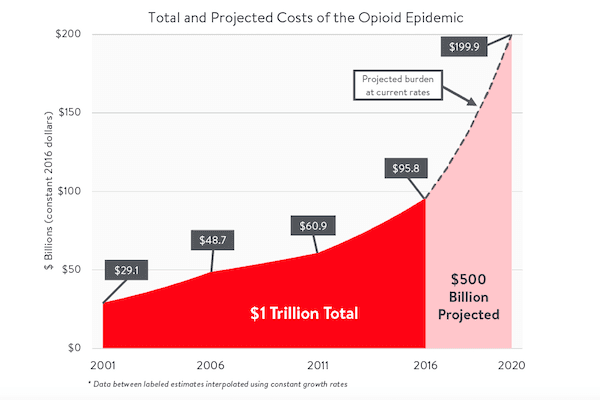
    Though this is a setback in the efforts of the plaintiffs to recoup the many billions of dollars spent to mitigate and combat the opioid crisis, appeals are already being considered.


    Source: ALTARUM

    The lawsuits in Connecticut are only a part of a nationwide effort to make pharmaceutical companies pay for a portion of the damage caused by this crisis. States, cities, counties and Native American tribal councils across the country are filing civil suits against some of the biggest drug manufacturers, claiming that misleading advertising and the alleged encouragement of physicians to over-prescribe opioids have fueled the epidemic of addiction and overdoses.

    According to Forbes, the collective action could become “the largest civil litigation settlement agreement in U.S. history.”

    The record is currently held by the settlement between 46 states and the tobacco industry—a case that some are pointing to as a precedent for the present-day opioid lawsuits. However, experts have pointed out that there are marked differences between these two cases.

    Addiction to prescription opioids is often caused by misuse, whereas there is a clear link between using tobacco products as directed and illness. This makes it easier to blame addiction, overdose and other health concerns on the opioid users themselves.

    “Individual plaintiffs who have sued pharmaceutical companies over how opioids have been marketed have rarely been successful, according to Richard Ausness, a professor at the University of Kentucky College of Law,” wrote Alana Semuels for The Atlantic in 2017. “Courts have made clear that they believe that individual victims are largely responsible for their addiction.”

    However, drug makers have been successfully sued in the past, though many of the lawsuits were settled out of court for a small portion of company profits. Purdue and others have continued to deny any allegations of deceptive marketing or other roles in the opioid crisis.

    Purdue Pharma released a statement about Judge Moukawsher’s ruling, praising him for “applying the law” and vowing to “help address this public health challenge.”

    View the original article at thefix.com

  • Death Certificate Project Goes Too Far, Addiction Specialist Says

    Death Certificate Project Goes Too Far, Addiction Specialist Says

    “Scaring providers into not prescribing opioids, I think that is not the ethically appropriate way to go forward,” said one addiction expert.

    Dr. Ako Jacintho, a family practitioner in San Francisco, says that he saw the opioid epidemic coming. His patients were asking for stronger medications and more pills. Instead of filling their requests, Jacintho trained as an addiction specialist, hoping to head off the problem, according to NPR

    However, that hasn’t protected him from an investigation that the California Medical Board is conducting into possible misuse of prescriptions. Jacintho received a letter from the board as part of the Death Certificate Project, which is examining death records in the state and seeking information from doctors who wrote prescriptions that may have contributed to fatal overdoses. 

    In Jacintho’s case, the board wanted to know about a 2012 methadone prescription that he wrote for a patient who later fatally overdosed on methadone and Benadryl. Jacintho reviewed the patient’s records—which the medical board had requested—but stuck by his decision to use methadone to treat the patient’s pain. 

    “If they’re looking for clinicians who are overprescribing, I’m the wrong doctor,” he said.

    Jacintho said that it’s especially unfair to look at prescribing practices from seven years ago in light of our new understanding of opioids. In 2012, when he wrote the prescription, doctors were told to treat pain aggressively, even by the California Medical Board’s own recommendations. 

    “It actually says that no physician will receive disciplinary action for prescribing opioids to patients with intractable pain,” Jacintho said. ”This person had intractable pain.”

    The letter from the board alleged that Jacintho prescribed toxic levels of the medication, but the doctor argues that it’s not that clear cut. “Toxicity is a very subjective word. What’s a toxic level for someone may not be a toxic level for someone else.”

    After the letter, Jacintho further reduced the amount of opioids that he prescribes to patients, something that worries Dr. Phillip Coffin, director of substance use research at the San Francisco Department of Public Health.

    “It’s like leaving a pair of scissors in an abdomen after surgery. If you’re just going to discontinue opioids, basically you’re ripping out the scissors and telling the person: ‘Good luck.’ Let them deal with the intestinal perforation on their own,” he said. “Scaring providers into not prescribing opioids, I think that is not the ethically appropriate way to go forward.”

    Kim Kirchmeyer, executive director of the medical board, said that most of the doctors who have received letters have not faced disciplinary action, although formal complaints have been filed against 25 doctors. She said that despite concern the death certificate project will continue, systematically working through records from previous years. 

    “If we save one life through this project, that is meeting the mission of the board, and that makes this project so worth it,” she said.

    View the original article at thefix.com

  • Opioid Use May Be Tied To Intestinal Disorder In Newborns

    Opioid Use May Be Tied To Intestinal Disorder In Newborns

    A new report explores the connection between opioid use and the intestinal birth defect.

    Infants whose mothers use opioids during pregnancy are at risk for a host of issues from small head size to dependency on the drugs. Now, a new report suggests an additional health concern for babies exposed to opioids: a possible increased risk of gastroschisis, a birth defect that causes infants to be born with their intestines outside their bodies.  

    The report, published in the Morbidity and Mortality Weekly Report through the Centers for Disease Control and Prevention, confirmed that rates of gastroschisis are increasing around the globe, something that doctors had reported anecdotally. Instances of the condition rose 10% when researchers compared two periods, 2006 to 2010, and 2011 to 2015.

    During this time, the rates of infants born exposed to opioids also increased. The report authors found that gastroschisis was more common when the rate of opioid use was also more common. 

    “Gastroschisis prevalence was higher in areas with high and medium opioid prescription rates, compared with that in areas with low rates,” the authors of the review wrote. “This ecologic analysis supports the findings from a large case-control study, which suggested that self-reported prescription opioid use in the first trimester was associated with gastroschisis.”

    Although researchers looked at the rate of prescription opioids — not illicit opioids — the findings suggest a connection between opioid use and the birth defect, and researchers said there is a need for more information about how opioid use may contribute to gastroschisis.

    “These findings provide compelling evidence of the need to better understand the potential contribution of opioid exposure in the etiology of gastroschisis as well as the possible role opioids have played in the observed increases in gastroschisis,” the authors wrote. 

    Speaking with Live Science, Dr. Saima Aftab, medical director at the Fetal Care Center at Nicklaus Children’s Hospital in Miami, said “there’s something changing” in the prevalence of gastroschisis. Although the condition can be corrected with surgery, infants face risks with their digestion early on. Babies with the condition may have to be hospitalized for months following their delivery and surgery. 

    Because the CDC report does not provide any concrete answers about why and how opioids may contribute to gastroschisis, the authors said it will be important to conduct more research into the correlation.  

    “The findings … can be used to prioritize basic science, public health, and clinical research on opioid exposure during pregnancy and its potential impact on birth defects,” they wrote. “Having a better understanding of all possible effects of opioid use during pregnancy can help provide evidence-based information to health care providers and women about the potential risks to the developing fetus.”

    View the original article at thefix.com

  • How Big Pharma's Payments To Doctors Affected Overdose Deaths

    How Big Pharma's Payments To Doctors Affected Overdose Deaths

    A new study examined the link between large payments and gifts to doctors from pharma companies and overdose deaths.

    In counties and states where opioid manufacturers offered large payments or gifts to doctors to promote their product, a new study has suggested that both opioid prescriptions and opioid-related overdose deaths were higher than in other areas.

    Coverage of the study in The New York Times showed that the study culled information from a variety of sources, including the Open Payments database, which tracks payments by pharmaceutical companies to doctors, and data from the Centers for Disease Control (CDC).

    Information from these sources suggested that spending on physicians was most highly concentrated in the Northeastern United States, where certain cities and counties claim some of the highest overdose death rates in the country.

    The study, conducted by researchers from Boston University School of Medicine, Boston Medical Center and New York University School of Medicine, and published in the Journal of the American Medical Association, filtered data from the aforementioned national databases through three criteria: total dollar value of marketing efforts by companies spent on doctors, number of payments and number of physicians that received any marketing. 

    According to the researchers, the pharmaceutical industry spent approximately $40 million promoting their opioid products to nearly 68,000 doctors between 2013 and 2015. The marketing efforts included paid meals, trips and consulting fees.

    By referencing overdose data and opioid prescription numbers from the CDC, they determined that for every three additional payments made to doctors per 100,000 people in a county, overdose deaths involving prescription opioids would rise 18% over a year’s time.

    Marketing to doctors dropped significantly in the period immediately following the years included in the study by 33%, which The New York Times attributed to public pressure on companies after the opioid epidemic began reaching critical levels.

    Cities and counties in the Northeastern US that received some of the largest payments also had some of the highest overdose rates, including Salem and Fredericksburg in Virginia, Cabell County in West Virginia and Lackawanna County in Pennsylvania.

    As The New York Times noted, the study authors also suggested that the number of interactions such as free meals appeared to be more strongly linked to overdose deaths than the amount spent on such interactions. 

    “Each meal seems to be associated with more and more prescriptions,” said study lead author Dr. Scott Hadland of Boston Medical Center’s Grayken Center for Addiction. Hadland and his co-authors also wrote that the study did have limitations: They were unable to differentiate between overdose deaths involving prescribed opioids and those caused by painkillers obtained through illegal means.

    “We acknowledge that our work describes only one part of the very complex opioid overdose crisis in this country,” said Hadland. “Even still, prescription opioids remain involved in one-third of all opioid overdose deaths, and are commonly the first medications that people encounter before transitioning to heroin or fentanyl. It is critical that we take measures now to prevent marketing from unnecessarily exposing new people to opioids they may not need.”

    View the original article at thefix.com

  • Judge Rules Firing Of Nurse Caught Stealing Opioids "Unfair" Because Of Addiction

    Judge Rules Firing Of Nurse Caught Stealing Opioids "Unfair" Because Of Addiction

    The nurse had falsified patient requests for drugs, used them, and then further falsified records that the medications were delivered to the patient.

    A nurse who was caught injecting herself with opioids she had reported as being delivered to patients has had her name cleared of wrongdoing because a judge has ruled her addiction a disease.

    Not only has the long-term care facility where she works been forced to take her back on the job, but the Regional Municipality of Waterloo has also been ordered to financially compensate the nurse for “injury to dignity, feelings and self-respect.”

    The presiding judge, arbitrator Larry Steinberg, argued that the nurse suffered from the disease of severe opioid use disorder, leaving her with “a complete inability or a diminished capacity” to resist stealing and using opioid medications meant for patients at her place of work.

    The nurse in question, named in records only as DS, was found to have falsified patient requests for drugs, used them, and then further falsified records that the medications were delivered to the patient. A fellow nurse also caught DS using patients’ drugs in the restroom.

    Faced with accusations from management, DS at first denied using the drugs but later admitted to becoming addicted after using drugs as part of her treatment for a kidney condition.

    The incidents that DS stands accused of happened in 2016, and DS said she has not used any such drugs since going to rehab later that year.

    Legal representatives for the long-term care facility argued that reinstating DS’ employee status would burden the facility with “undue hardship.” They claimed that if DS were to steal a fentanyl patch from one of the many patients there who suffer from dementia, the patients would not be aware enough to realize it and report her.

    Additionally, other nurses cannot be depended on to go above and beyond their duties to monitor DS to ensure she does not commit further thefts. Furthermore, they argued, DS was not fired for being addicted but for falsifying records and stealing.

    However, Steinberg ruled that the theft and falsification of records were symptoms of a disease DS suffered from.

    The nature of addiction became central to the case. An addiction expert who was brought in to weigh in on the case, a professor of psychiatry named Lawrie Reznek, testified that addiction is more like a “bad habit” than a disease. He did admit that his opinion “was a minority view in the psychiatric profession and that it was contrary, for example, to the DSM-5.”

    Steinberg argued that calling addiction a “bad habit” actually “stigmatizes these conditions and makes it harder for people to get help.” Science backs the judge’s opinion, as studies have found addiction to affect those with genetic predispositions to it and actually change the brain and body in measurable ways. 

    However, the Canadian justice system has not historically treated addiction as such, convicting several nurses accused of similar crimes.

    View the original article at thefix.com

  • How Opioids Hijack The Brain

    How Opioids Hijack The Brain

    Addiction experts and people who use opioids discuss how opioids impact their brains.

    Last year thousands of Americans died from opioid overdoses. Yet, despite the fact that the dangers of these drugs are well-publicized, new users continue to get hooked on opioids and succumb to their addictions. 

    To try to understand why, The New York Times spoke with addiction experts and users to understand just how opioids act on the brain, putting together a visual and text representation of what happens once someone tries opioids

    Twenty-four-year-old Amanda Ryan-Carr, of Pennsylvania, said that the first time she tried opioids was like a religious experience. 

    “It’s like being hugged by Jesus,” she said. 

    For Michigan resident Matt Statman, 48, the feeling was one of freedom from worry. 

    “I remember feeling like I was exhaling from holding my breath for my whole life. Just intense relief from suffering,” Statman said. 

    The Times pointed out that many opioid users remember where and when they were when they first used, and they end up chasing that euphoric feeling as addiction takes over their lives. 

    “It was like the high put on blinders to everything and made me not care about anything in the world, other than the heroin,” said Brandon N., a 26-year-old from Pennsylvania.

    Ivana Grahovac, 42, of California, said that opioids became her solution to any problem. 

    “Any time you start to feel like you’re getting antsy or anxious or a little stressed, your body says it knows exactly how to get out of this, and it’s telling you to just go get a little bit more of that heroin,” Grahovac said. 

    Once their bodies become used to having an opioid fix, users face painful withdrawals if they don’t take opioids. 

    Michigan resident Raj Mehta, 51, felt a sense of “doom and anxiety,” when withdrawals loomed, while Pennsylvania resident Jasmine Johnson, 29, said withdrawal was overwhelming. 

    “It’s like a demon crawling out of you. You’d rather just die and be done with it than go through that,” she said. 

    Eventually, users are no longer chasing a high, but just trying to hold off withdrawal symptoms. 

    “It’s like a time bomb,” Mehta said. “You’ve got 24 hours to get heroin, or you’re going to be really sick. You wake up, and your whole life is just based around it.”

    The lucky people are able to get access to treatment and begin a life in recovery. 

    “There was a push factor, which was the misery and the self-hatred and the depression and the cops, and then there was a pull factor, which was this amazing hope from this community of people who I knew understood me in a way nobody else in the world could,” Statman said. 

    However, many people feel like relapse is always looming. 

    “A lot of times in your addiction, things are getting better. You see a light at the end of the tunnel. And it ends up being the freight train coming at you,” Johnson said. 

    Even with bumps along the road, people in long-term recovery say that the work is worth it, allowing them to regain control of their lives and enjoy life without being fixated on their next high.

    “Colors get brighter and smells are more intense and emotions just are much more powerful, because opiates numb them,” said Dove Henry, a 26-year-old from Montana.

    View the original article at thefix.com